
Verdict
FORMING A THESIS — *gather the evidence, then take a stand.* Research isn't finished when you've collected facts. At some point you weigh what you found and commit to your OWN arguable answer — a thesis. Not "here are things people say," but "here's what I think, and here's why."
Press play to listen along. The line being read lights up as you go.
Show full transcript
Loading transcript…
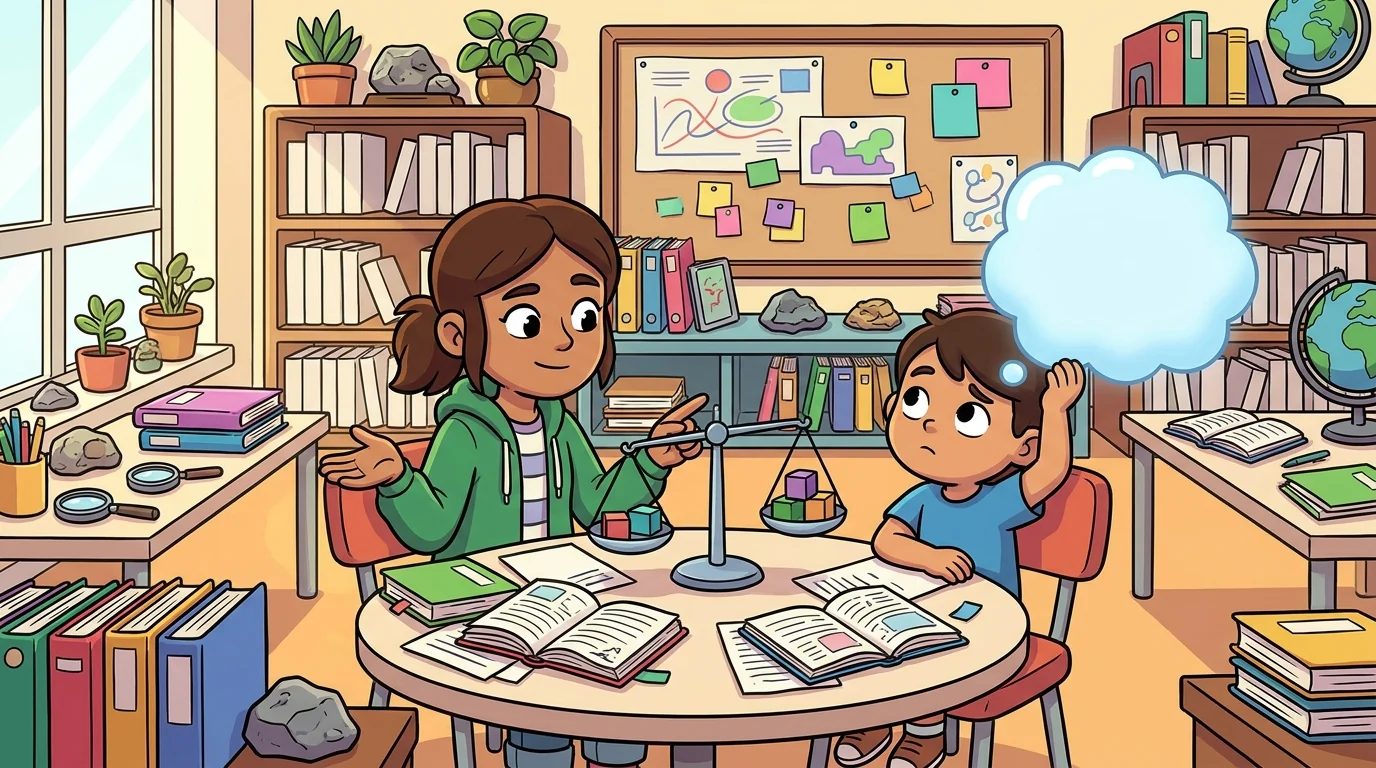
At the ResearchQuest club, where every kid who investigated was a real researcher, Verdict was a steady, thoughtful kid who was wonderful at the hardest moment in any project — the moment you stop collecting and finally have to say what you actually think.
When someone had a mountain of notes but kept stalling — "I found SO many facts, but I don't know what to say" — Verdict would sit with them, weigh the evidence together, and help them reach a verdict: their own arguable answer. "Don't just hand in a pile of facts," she'd say. "A pile of facts isn't research. Tell me what you concluded — and why." Saying "I think" out loud was the bravest, most important step, and she helped kids take it.
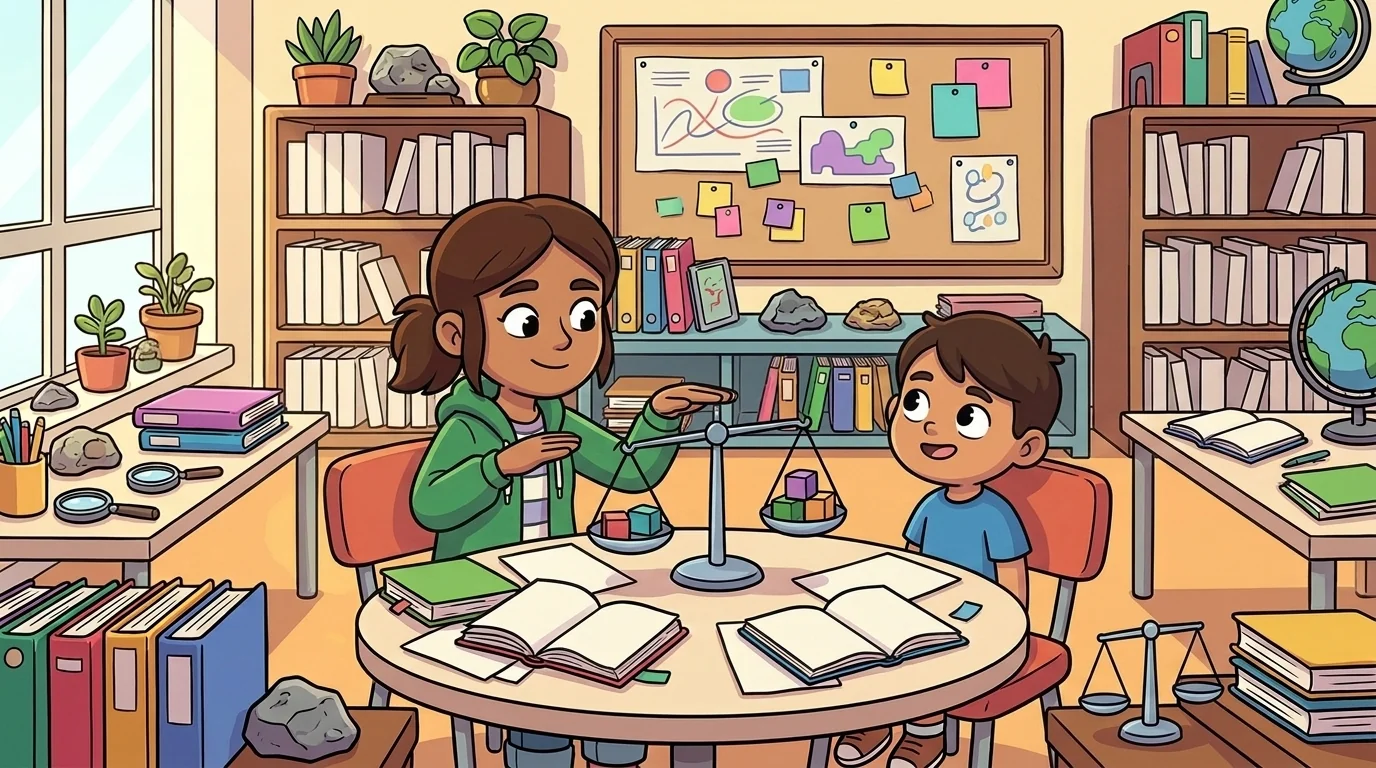
"You helped me figure out what I actually believe about my topic — not just what other people said!" a young researcher said.
"That's the step everyone's scared of," Verdict said, weighing two handfuls of air like a balance. "I'm Verdict. I keep the thesis — gather the evidence, then take a stand." She brought her hands level. "Research isn't done when you've collected facts. At some point you weigh what you found and commit to your own answer. Not 'here are things people say.' But 'here's what I think — and here's why.'"
Scholar, the club's warm mentor, said, "Show them the two ways a project gets stuck at the end."
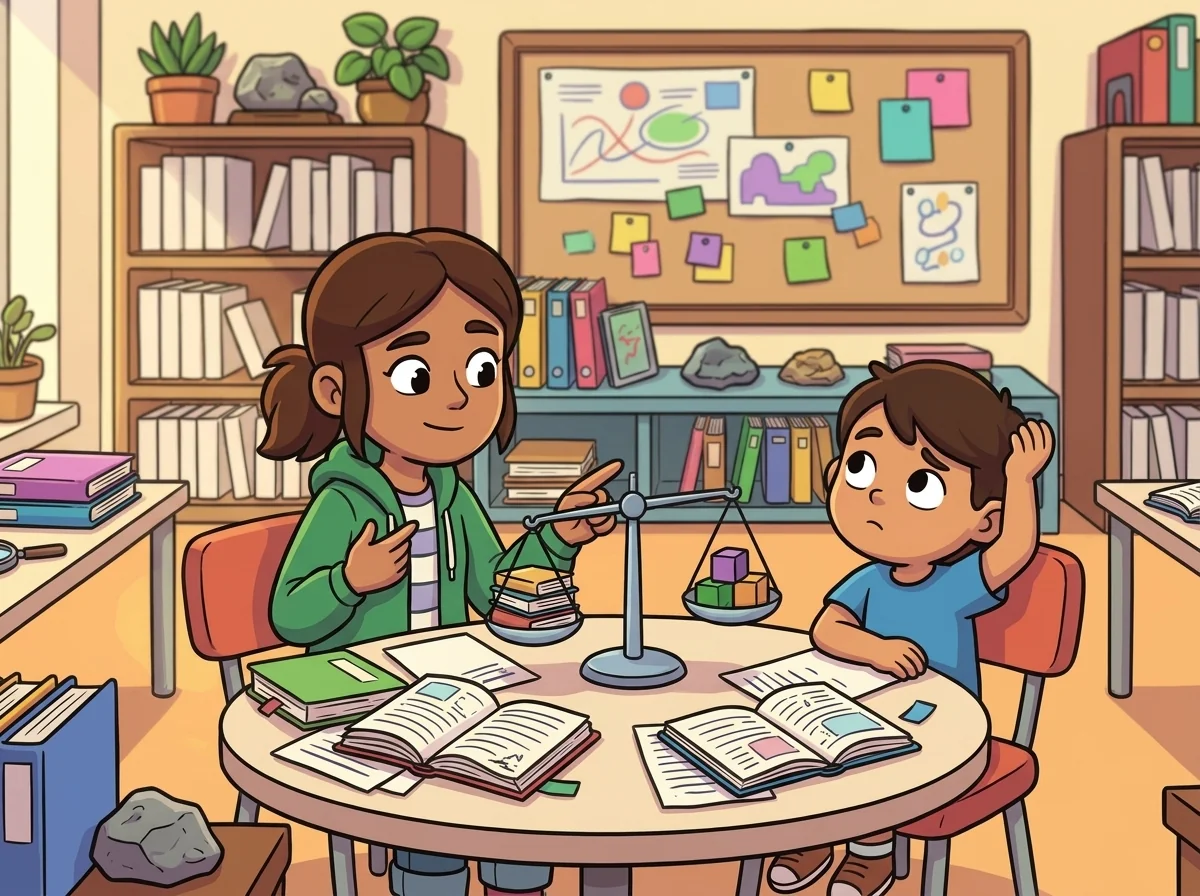
Verdict demonstrated the first: a researcher who just listed everything they found — fact, fact, fact — and stopped, never saying what it meant. "That's a report, not research. Where's the thinking?" Then the second: a researcher so afraid of being wrong they refused to conclude anything at all. "Frozen. No stand, no thesis, no end." Then she showed the brave version: weigh the evidence, then say it plainly — "Based on what I found, I think this, because of these three things." A real conclusion, owned out loud.
A young researcher looked nervous. "But what if I take a stand and I'm wrong?"
"Then you change your mind — and that's research too," Verdict said warmly. "A thesis isn't a promise that you're right forever. It's the honest answer the evidence points to right now. A thesis you can update later is braver than never deciding at all. Saying 'I think, because' is where a reporter becomes a researcher."
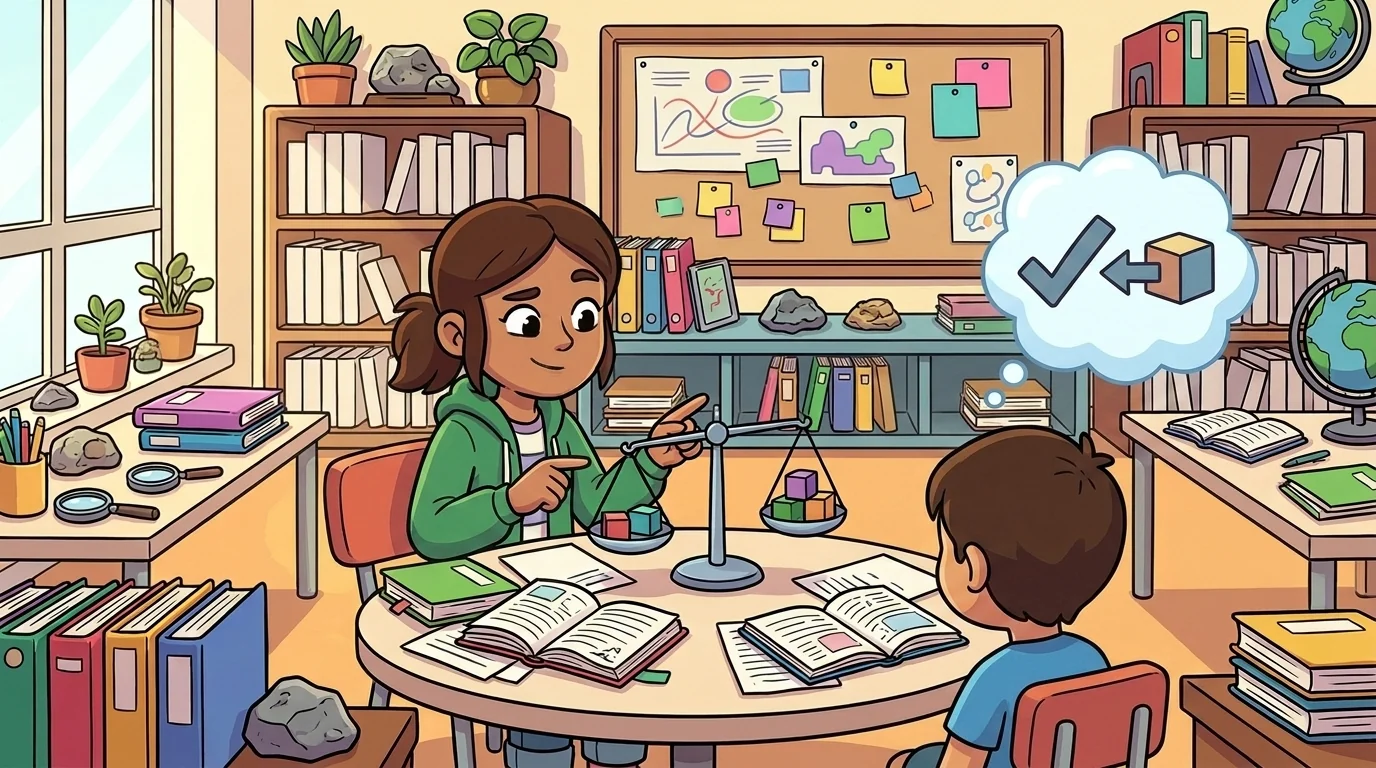
Scholar asked Verdict to teach the club before their final write-ups. "Synth can weave all the sources together beautifully," Scholar said, "but then the kids stop — they're afraid to say what it adds up to. Will you teach them to take a stand?"
Verdict was glad to. When she teaches, she gives one rule: "When you've gathered and weighed your evidence, ask yourself the brave question: so what do I actually think? Write it as one clear sentence — your answer plus your strongest reason. That's your thesis. Everything else in your project is there to support it. Lead with what you think, then show your why."
Synth, who could combine sources but kept ending with "and so people have many views," tried it. She weighed her woven evidence and committed: "I think city gardens matter most for bringing neighbors together — more than for the food they grow — because almost every source described people, not just plants." "I finally said something," Synth breathed, half-scared, half-thrilled. "Not just 'here's what everyone thinks.' Here's what I think."
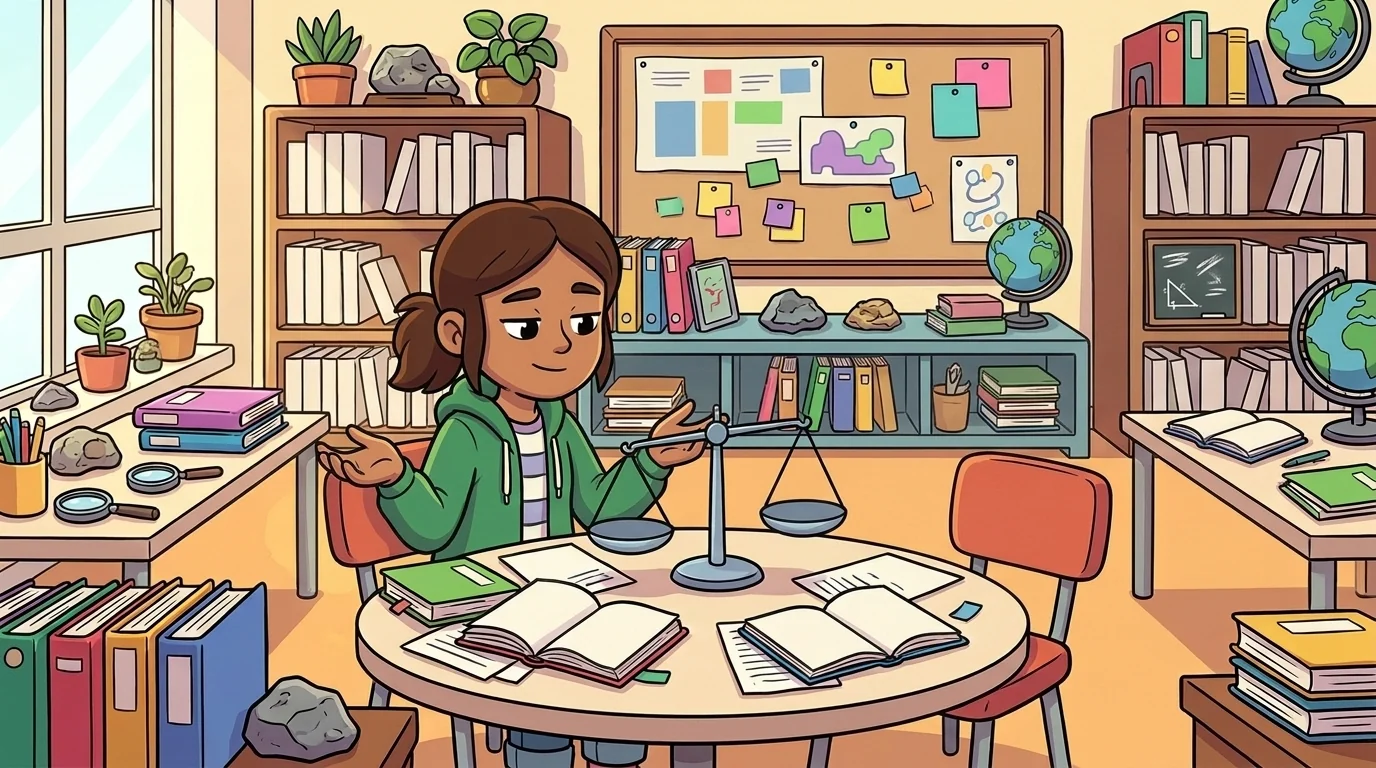
After the session, Verdict sat quietly, holding her hands like a balance and letting them tip gently one way, the way she did when she was deciding something.
For a long time, Verdict had carried the heaviest worry of all. To take a stand, she had to risk being wrong — out loud, with her name on it. The others could hide a little: Survey just explored, Trawl just searched, Crosscut just checked. But a thesis was a kid sticking her neck out and saying "I think." She'd wondered, in anxious moments, whether being the one who commits made her the one most likely to be embarrassed.
But sitting there letting her hands find their balance, remembering Synth's half-scared, half-thrilled "here's what I think," Verdict felt the worry settle into a quiet, sturdy courage. Taking a stand wasn't the most embarrassing job — it was the bravest and the realest. Anyone can list facts; it takes courage to weigh them and say what you believe, knowing you might revise it tomorrow. That courage was the whole point of research, and it was hers to model. A warm, steady resolve filled her chest, and she let her hands come level, content, ready to help the next kid say the bravest two words: I think.
The ResearchQuest ensemble
Verdict is part of ResearchQuest's distributed-narrative cast. Each character embodies a different curricular primitive; together they teach the full subject.
-

Wonder
Question-formulation — narrowing vague interest into focused, answerable research questions
-

Vet
Source-evaluation — CRAAP test (Currency, Relevance, Authority, Accuracy, Purpose)
-

Quote
Note-taking — quoting + paraphrasing + summarizing; keeping voices separate
-

Synth
Synthesis — combining evidence across multiple sources; finding agreement, disagreement, gaps
-

Tether
Citation — attribution + bibliography; gratitude + map back to sources
-

Survey
Background reading — read around a topic to learn the lay of the land before narrowing (W.7)
-
Trawl
Search strategy — cast a wide net of keywords, then pull it tight; refine when it comes back wrong (W.8)
-

Crosscut
Lateral reading / corroboration — don't trust one page; cross-check a claim across independent sources
-

Wellspring
Primary vs secondary sources — trace a claim upstream to its original, firsthand source