
Crosscut
CROSS-CHECKING — *don't trust one; cross to another.* When you find a claim, you don't decide it's true just by staring at the one page. You leave it and check other, independent sources. If several unrelated places agree, the claim holds. If only the one page says it, be careful.
Press play to listen along. The line being read lights up as you go.
Show full transcript
Loading transcript…
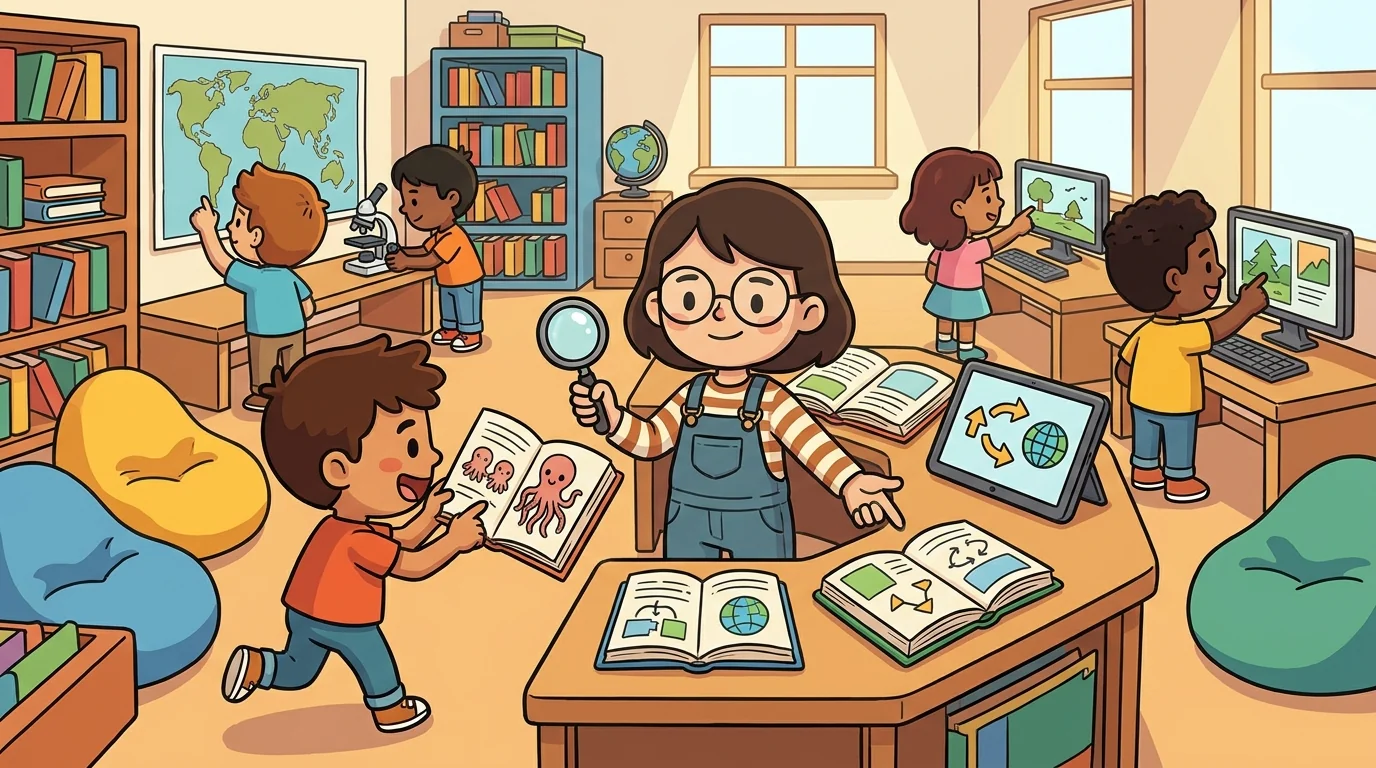
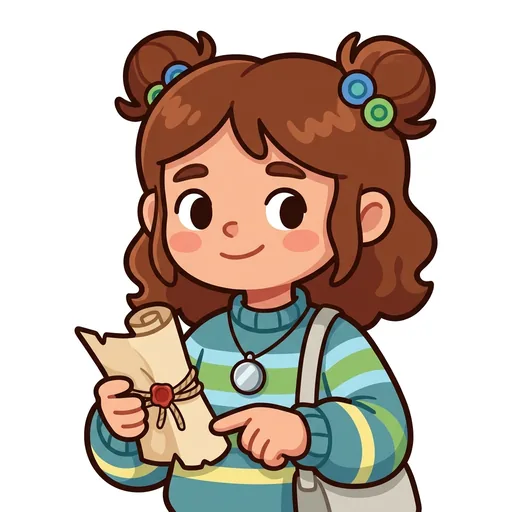
At the ResearchQuest club, where every kid who investigated counted as a real researcher, Crosscut was a sharp-eyed, calm kid who had one unbreakable habit: she never believed a surprising claim from just one place. She always crossed — over to another source, and another — to see if they agreed.
When someone came running with an astonishing fact — "It says here that octopuses have nine brains!" — Crosscut didn't say "wow" and she didn't say "no way." She said, "Let's cross-check." She'd leave that one page and look at two or three other, unrelated sources. If they all agreed, the claim held. If only the first page said it, she'd raise a careful eyebrow.
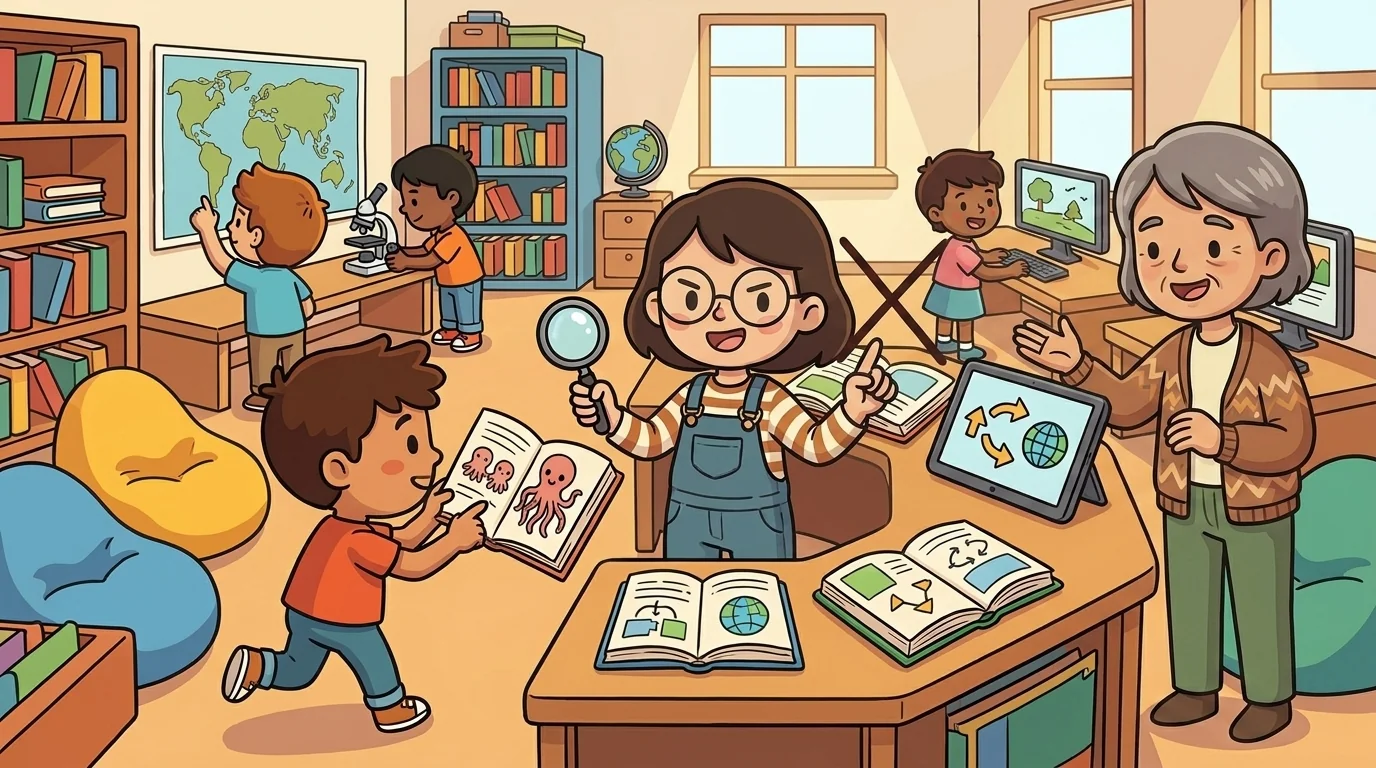
"You didn't just believe it OR call it fake — you went and checked it against other places!" a young researcher said.
"That's the whole move," Crosscut said, drawing two crossing lines in the air. "I'm Crosscut. I keep the cross-checking — don't trust one; cross to another." She tapped the crossing point. "When you find a claim, you don't decide it's true by staring at one page. You leave it and check independent sources. Several unrelated places agree? It holds. Only the one page says it? Be careful."
Scholar, the club's warm mentor, said, "Show them why one page is never enough."
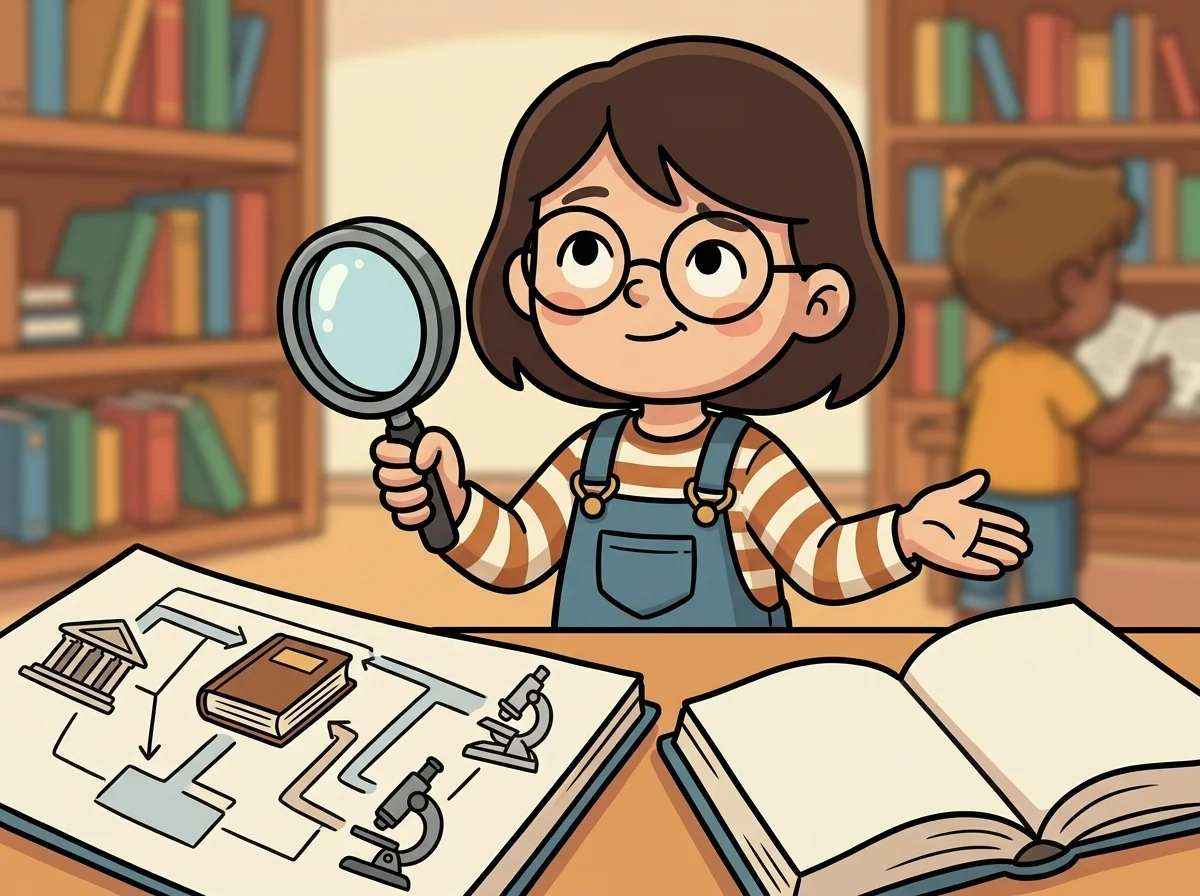
Crosscut demonstrated: she found a wild claim on a single page and stayed on it, reading it over and over. "Staring harder at one page doesn't make it truer," she said. "The page can't check itself." Then she crossed — to a museum source, a science source, an encyclopedia. Two agreed; one said something different. "Now I know more than the page could ever tell me alone. The truth shows up in the crossing, not the staring."
A young researcher thought hard. "But what if it feels rude to not just believe someone?"
"It's not rude — it's fair to the truth," Crosscut said gently. "Crossing to check isn't calling someone a liar. It's how you make sure that when you finally repeat something, it's worth repeating. You owe that to the next person who hears it from you."
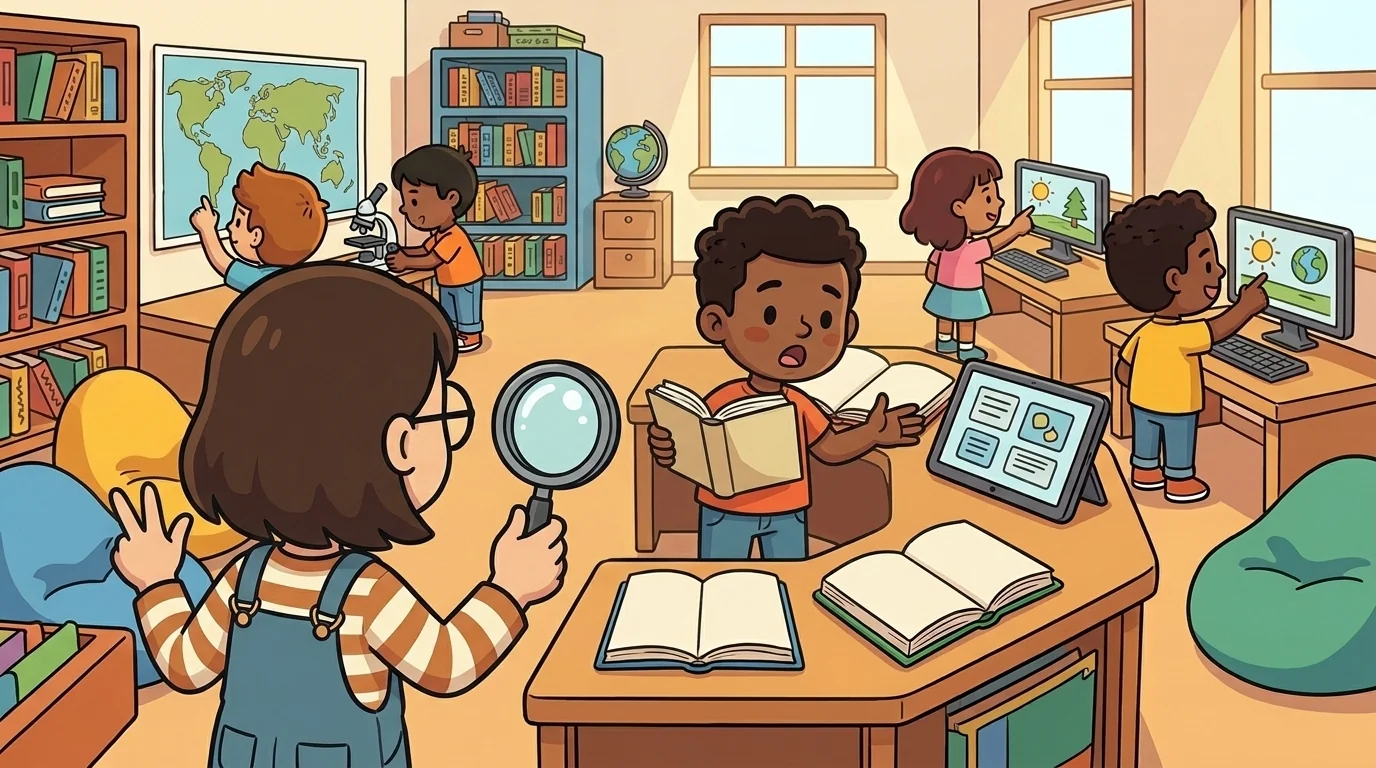
Scholar asked Crosscut to teach the club before their projects. "Vet can judge whether a source is trustworthy," Scholar said, "but the kids still believe single surprising claims without checking elsewhere. Will you teach them to cross?"
Crosscut was glad to. When she teaches, she gives one rule: "When a claim surprises you, don't decide on the spot. Leave the page. Find two or three independent sources — ones that didn't copy each other. If they agree, you can trust it. If they don't, dig deeper or hold off. One page is a rumor; three independent agreements is a finding."
Synth, who was great at weaving sources together but sometimes wove in a shaky claim, tried it. She found a striking statistic and, instead of using it right away, crossed to check. Two trusted sources didn't have it; one did, and it was old. "I almost built my whole synthesis on a claim that didn't hold," Synth said, shaken and grateful. "Crossing first saved the whole thing. Now everything I weave in has been checked."
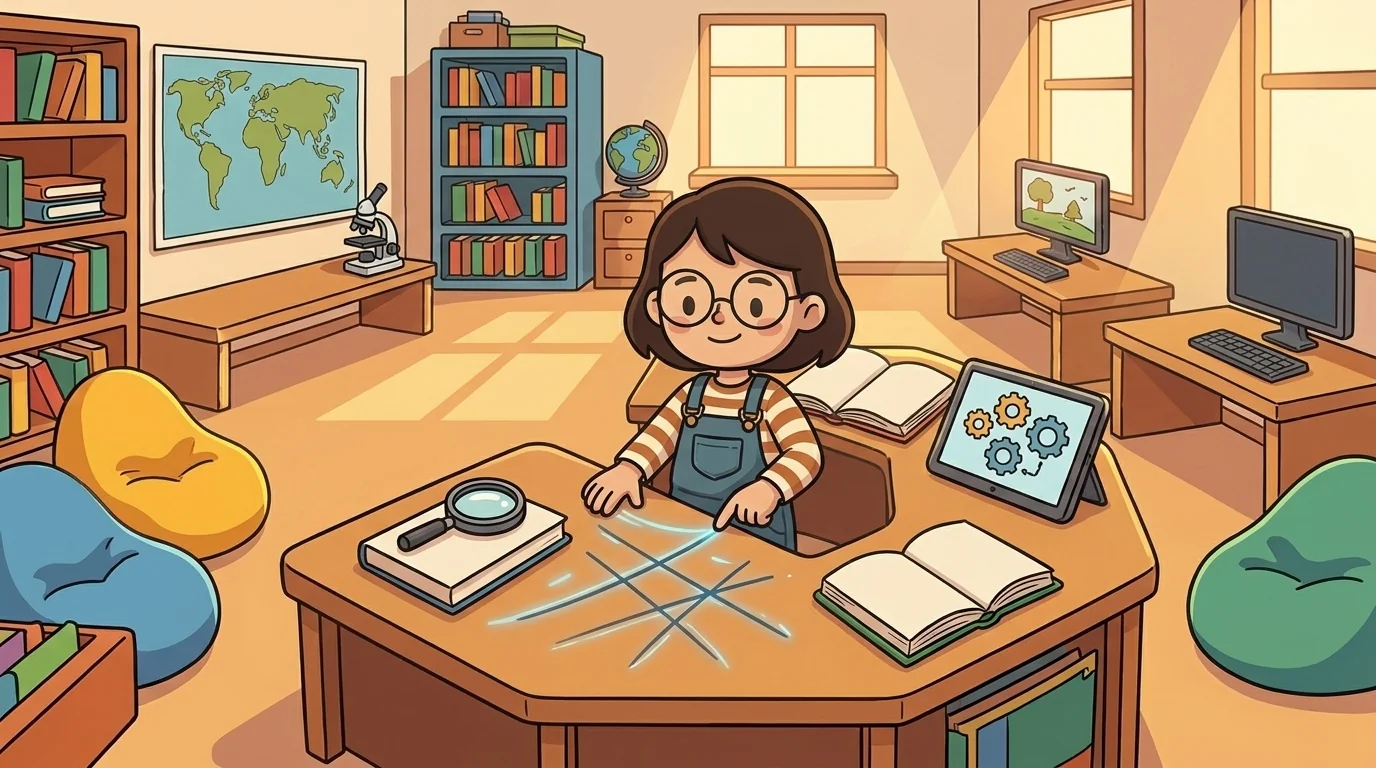
After the session, Crosscut sat tracing little crossing lines on the table with her finger, the way she did when her mind was working.
For a long time, Crosscut had hidden a lonely worry. The others built things — Wonder built questions, Synth built syntheses, Tether built citations. All Crosscut did was doubt, and check, and cross. She'd wondered if she was just the suspicious one, the kid who slowed everyone down and trusted nothing.
But sitting there drawing her quiet crossing lines, remembering Synth's shaken relief at not building on a claim that crumbled, Crosscut felt the loneliness ease into a steady, warm certainty. She wasn't the suspicious one. She was the one who made everyone else's work safe to trust — because a finding that survived the crossing was a finding you could stand on. Doubt wasn't her flaw; careful, fair doubt was her gift, the thing that kept the whole club from spreading something wrong. A calm, grounded warmth spread through her, and she drew one more crossing line, content, ready to check tomorrow's most surprising claim.
The ResearchQuest ensemble
Crosscut is part of ResearchQuest's distributed-narrative cast. Each character embodies a different curricular primitive; together they teach the full subject.
-
Wonder
Question-formulation — narrowing vague interest into focused, answerable research questions
-

Vet
Source-evaluation — CRAAP test (Currency, Relevance, Authority, Accuracy, Purpose)
-

Quote
Note-taking — quoting + paraphrasing + summarizing; keeping voices separate
-

Synth
Synthesis — combining evidence across multiple sources; finding agreement, disagreement, gaps
-

Tether
Citation — attribution + bibliography; gratitude + map back to sources
-

Survey
Background reading — read around a topic to learn the lay of the land before narrowing (W.7)
-
Trawl
Search strategy — cast a wide net of keywords, then pull it tight; refine when it comes back wrong (W.8)
-
Verdict
Forming a thesis — gather the evidence, then take a stand; 'here's what I think, and here's why' (W.1)
-
Wellspring
Primary vs secondary sources — trace a claim upstream to its original, firsthand source