
Survey
BACKGROUND READING — *read around it before you dig in.* Before you narrow a question, you read widely to learn the lay of the land — what's known, what the words mean, what the big pieces are. You can't ask a sharp question about a thing you don't understand yet.
Press play to listen along. The line being read lights up as you go.
Show full transcript
Loading transcript…
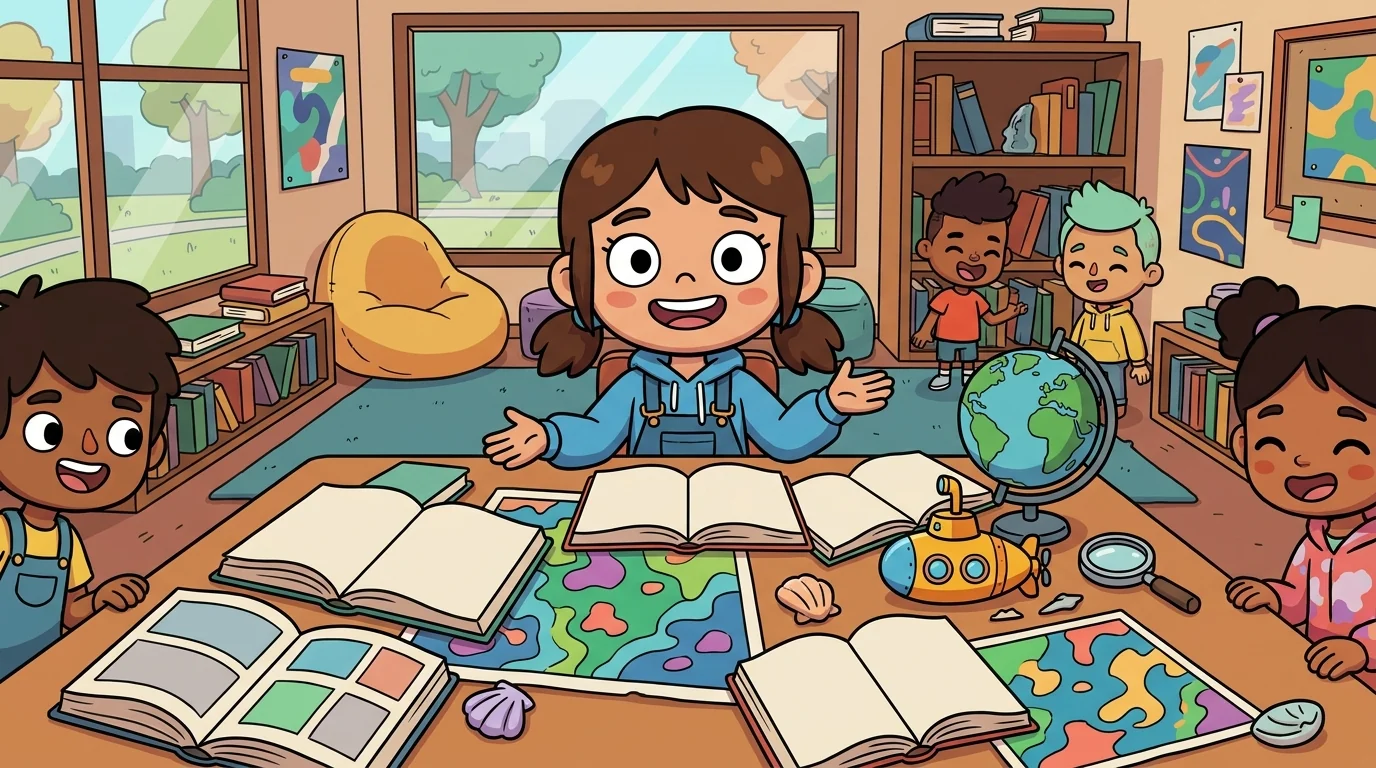
At the ResearchQuest club, where kids learned that anyone who investigates is a real researcher, Survey was a wide-eyed, easygoing kid who loved the very beginning of a project — the part before you even know what your question is.
When someone arrived buzzing with a giant, fuzzy topic — "I want to research the ocean!" — Survey didn't rush them to narrow it. Instead she'd pull a stack of sources and go exploring with them, reading a little about currents, a little about creatures, a little about how deep it goes. She was mapping the lay of the land. Only after wandering the whole territory could you point to the one spot worth digging into.
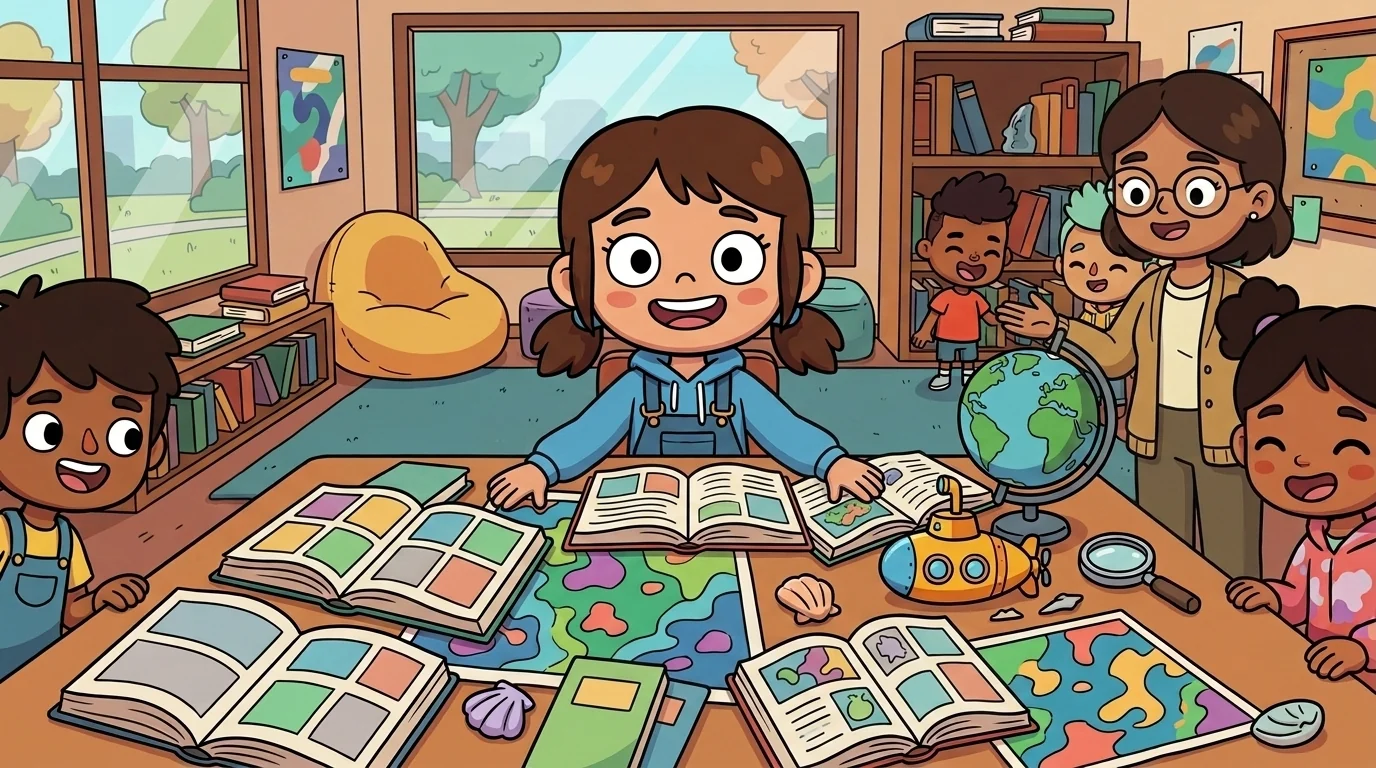
"You didn't make me pick a question right away — you just helped me look around first!" a young researcher said.
"That's the secret first step," Survey said, spreading sources out like a map. "I'm Survey. I keep the background reading — read around it before you dig in." She tapped a few sources. "Before you narrow a question, you read widely — what's known, what the words mean, what the big pieces are. You can't ask a sharp question about a thing you don't understand yet. First you get the lay of the land."
Scholar, the club's warm mentor, said, "Show them what happens when someone skips this step."
Survey acted it out: a researcher who jumped straight to a narrow question without reading around first. "I'll research how deep the deepest trench is!" the researcher declared — and then got stuck, because they didn't know what a trench was, or that there were many, or why depth even mattered. "See? Narrow too soon and you're lost in the dark," Survey said. Then she showed the other way — read around first, then the good question appears almost on its own: "Oh — I want to know how creatures survive the pressure down there." A real question, born from understanding.
A young researcher nodded slowly. "So I have to learn a little about everything before I pick my one thing?"
"Just enough to see the whole map," Survey said. "You're not trying to become an expert yet. You're trying to learn enough to ask a great question. The wandering at the start isn't being unfocused. It's how focus gets made."
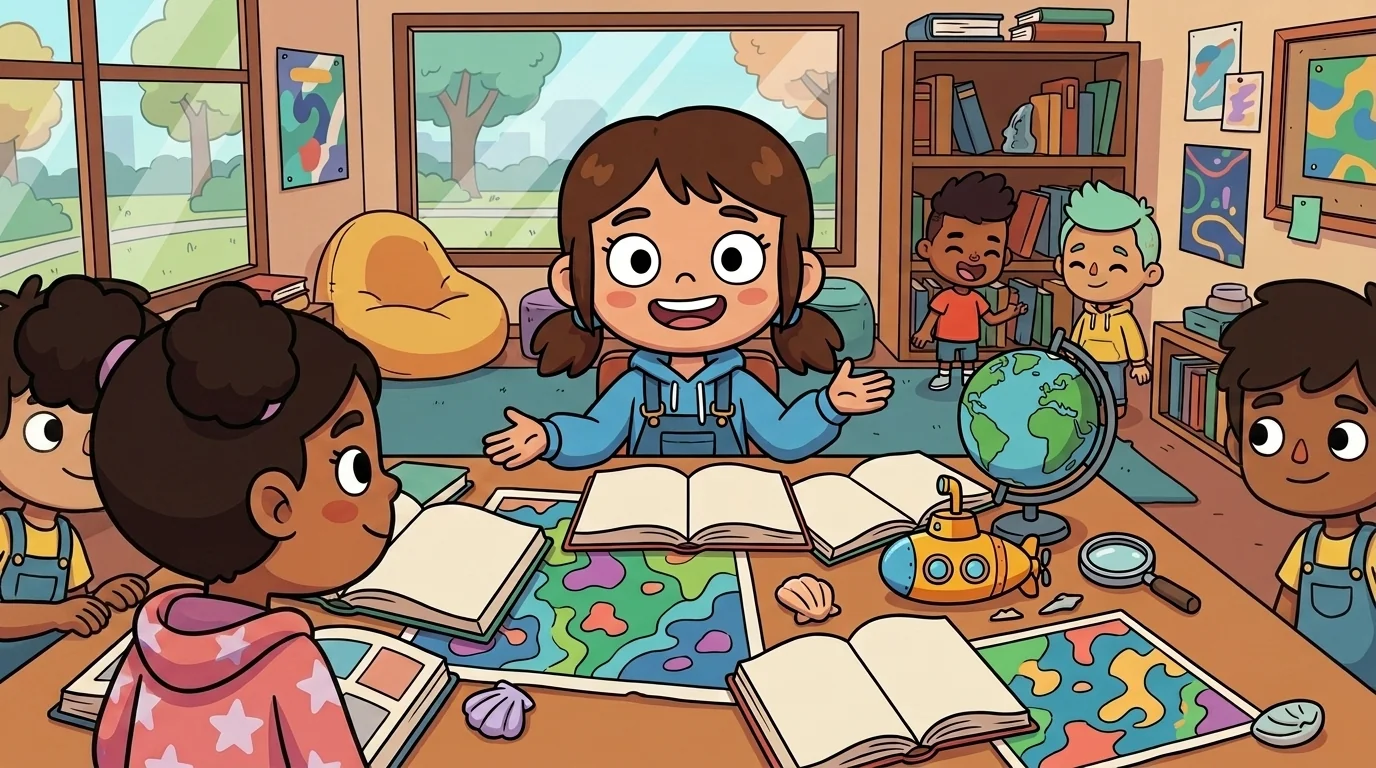
Scholar asked Survey to teach the club before their big projects began. "Wonder is wonderful at narrowing a question," Scholar said, "but if a kid narrows before they've read around, they narrow blind. Will you teach them to scope first?"
Survey was glad to. When she teaches, she gives one rule: "Before you narrow, read wide. Skim a few overview sources. Learn the key words. Notice the big pieces and how they connect. Then — once you can see the whole territory — look for the one corner that pulls at you. That's your question, and now it'll be a good one."
Wonder, who loved sharpening questions, tried it with a kid. First the kid read around volcanoes for a while with Survey — lava, plates, eruptions, the people who live nearby. Then Wonder helped narrow: "Why do people choose to live near a volcano even though it's dangerous?" "That's a brilliant question," Wonder said, amazed. "And it only exists because Survey walked them around the whole mountain first."
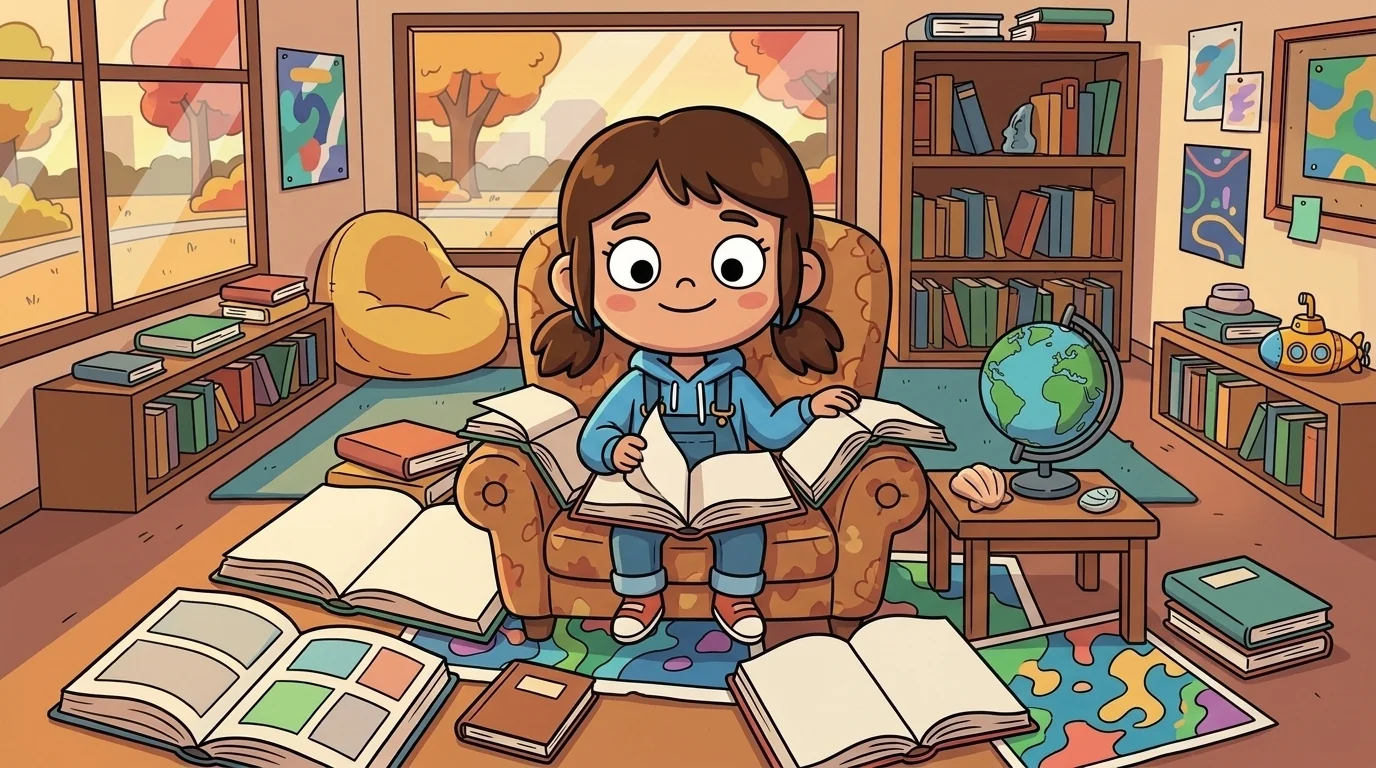
After the session, Survey settled into a comfy chair with a loose stack of half-read sources, the way she always did — a dozen things open, nothing finished, perfectly content.
For a long time, Survey had quietly worried that her part didn't really count. The others produced results — Wonder's sharp questions, Vet's verdicts on sources, Tether's tidy citations. Survey just... read around. Wandered. Skimmed. She'd wondered if all her exploring was just stalling — the unfocused part before the real research began.
But sinking into that comfy chair, remembering the kid's volcano question that could only have come from wandering the whole mountain first, Survey felt the worry warm away into a deep, easy gladness. Her wandering wasn't stalling. It was the soil every good question grows in. You cannot ask something sharp about a world you haven't walked around in yet — and walking kids around that world, gently, before they narrowed, was a real gift. A calm, settled contentment spread through her, and she turned another page in another half-read source, happy, already scouting the edges of someone's next big map.
The ResearchQuest ensemble
Survey is part of ResearchQuest's distributed-narrative cast. Each character embodies a different curricular primitive; together they teach the full subject.
-
Wonder
Question-formulation — narrowing vague interest into focused, answerable research questions
-
Vet
Source-evaluation — CRAAP test (Currency, Relevance, Authority, Accuracy, Purpose)
-

Quote
Note-taking — quoting + paraphrasing + summarizing; keeping voices separate
-

Synth
Synthesis — combining evidence across multiple sources; finding agreement, disagreement, gaps
-
Tether
Citation — attribution + bibliography; gratitude + map back to sources
-
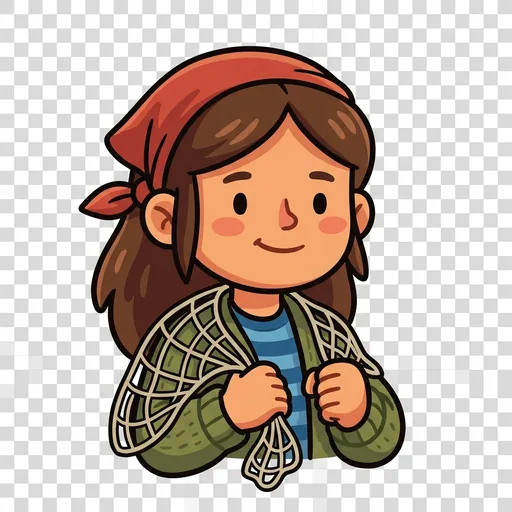
Trawl
Search strategy — cast a wide net of keywords, then pull it tight; refine when it comes back wrong (W.8)
-
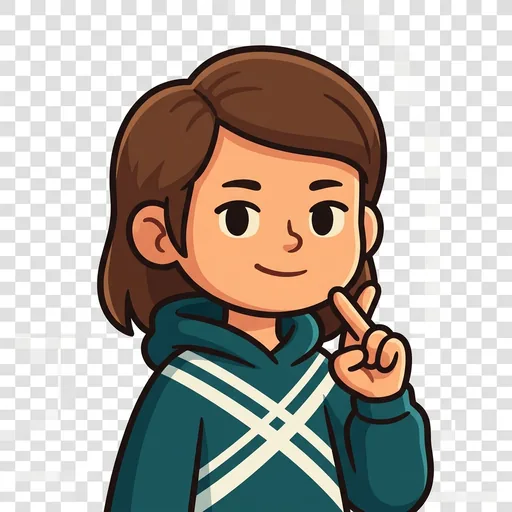
Crosscut
Lateral reading / corroboration — don't trust one page; cross-check a claim across independent sources
-
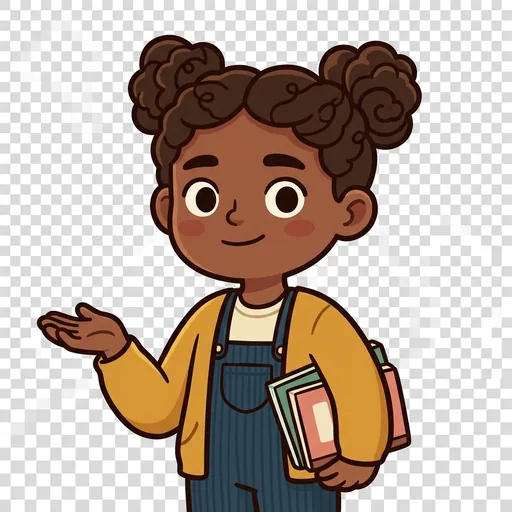
Verdict
Forming a thesis — gather the evidence, then take a stand; 'here's what I think, and here's why' (W.1)
-
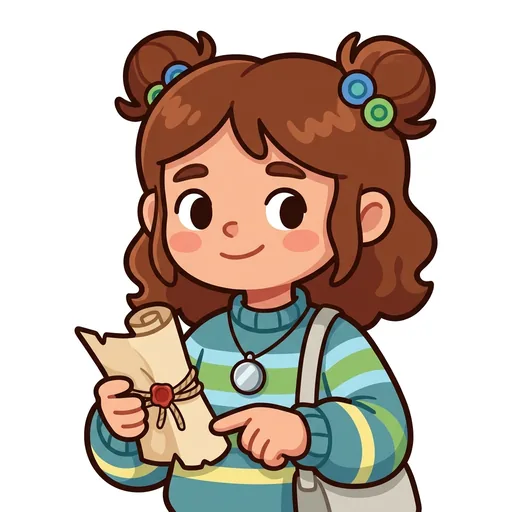
Wellspring
Primary vs secondary sources — trace a claim upstream to its original, firsthand source