
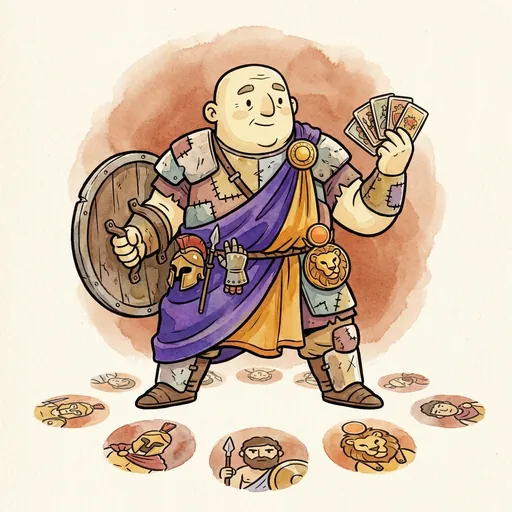
Warrior
WARRIOR — *the conflict-pattern-bearer. craft of standing in difficulty.*
Listen along — Warrior
Loading audio…
Press play to listen along. The line being read lights up as you go.
Show full transcript
Loading transcript…
Chapter 11 — Warrior and the Difficult Stand
Warrior wasn’t a person you could easily forget. They were adult-sized and solid, like a tree with roots that went deep. Their skin was the color of warm cream, and their armor, though mended in places, gleamed softly. Warrior had a way of standing, a quiet strength that made you feel safe, but also like you should probably pay attention. They often said, “The conflict-pattern-bearer. The craft of standing in difficulty.”
Their workshop was a place of quiet focus. Sunlight streamed through a high window, illuminating dust motes dancing in the air. Along one wall, Warrior had arranged a display of cards, each one showing a different figure. These weren’t just pretty pictures. They were what Warrior called “archetype cards,” and they showed the conflict-pattern across many traditions. There was Ares from Greek myths, a god of war, fierce and sometimes brutal. Next to him stood Tyr, the Norse god, holding his sword with just one hand. Then Sekhmet, the Egyptian lioness-headed goddess, protective but also terrifying in her fury.
“Look closely,” Warrior said, their voice calm and deep. “These figures, they are all warriors. But what does that really mean?” They gestured to the cards. “It’s not just about fighting. It’s about facing fear. It’s about making hard choices. It’s about protecting your community, even when it costs you something important.”
Warrior picked up the card for Tyr. “Tyr bound the great wolf Fenrir,” they explained. “He saved his people from chaos. But the wolf bit off his hand. That was the price. Courage requires sacrifice, true sacrifice.” They paused, letting the image sink in. “Many stories about warriors, from ancient times, tell us about both the glory and the cost. The Iliad, for example, celebrates the hero Achilles. But it also mourns the terrible grief and loss of war.”
They moved to Sekhmet. “Sekhmet is fierce, yes. She protects. But her fury could also destroy everything. She had to be calmed. The craft of standing in difficulty means understanding that power needs balance. It means honoring the courage, but always, always naming the cost.”
The primitive Warrior taught was the conflict-pattern-bearer. It wasn’t about glorifying combat. It was about recognizing that conflict, in many forms, is a part of life. And how you stand in that difficulty, that’s the real work.
“Sometimes,” Warrior continued, “standing in difficulty means speaking truth to power. It means standing up for someone who can’t stand up for themselves. It means facing a fear inside you, a fear that holds you back. It’s not always a battle with swords. Sometimes it’s a battle with your own doubts.”
They pointed to a section of the display that showed images of people weeping, of broken shields, of empty fields. “Across cultures, there are traditions of lamentation. Hindu epics speak of tears. The Norse sagas often held a sense of fatalism, of inevitable loss. These stories remind us that courage and cost always go together. You cannot have one without the other.”
Warrior’s gaze was steady. “Some modern stories, especially in games or movies, make violence look cool. They forget the cost. They forget the grief. That’s not the true warrior archetype. That’s a misuse of it.” They picked up a small, smooth stone from a nearby table, turning it over in their fingers. “The archetype teaches us to stand firm. To be brave. But it also teaches us to understand the weight of our actions. To know that strength isn’t just about hitting hard. It’s about standing strong, even when it hurts, and understanding what that strength truly means for everyone involved.”
“The conflict-pattern-bearer,” Warrior repeated, their voice soft but firm. “The craft of standing in difficulty. It’s harder than just fighting. But it’s the real work.”
The MythForge ensemble
Warrior is part of MythForge's distributed-narrative cast. Each character embodies a different curricular primitive; together they teach the full subject.
-
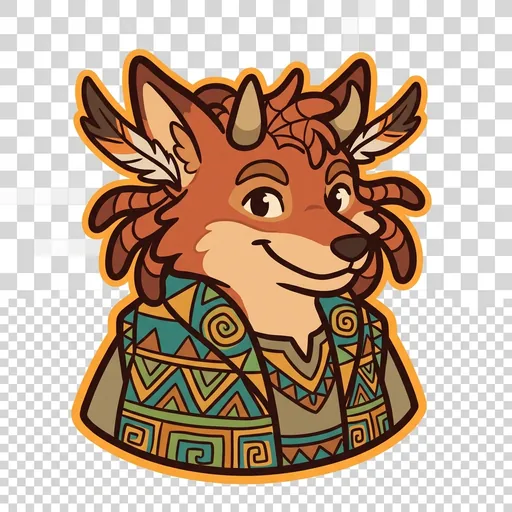
Trickster
The boundary-crosser who teaches through inversion. Recurs across nearly all traditions (Anansi, Coyote, Loki, Hermes, Maui, Ijapa).
-

Hero-King
The reluctant ruler called to a journey (Campbell's central figure: Gilgamesh, Odysseus, Arjuna, Beowulf, Cuchulain).
-
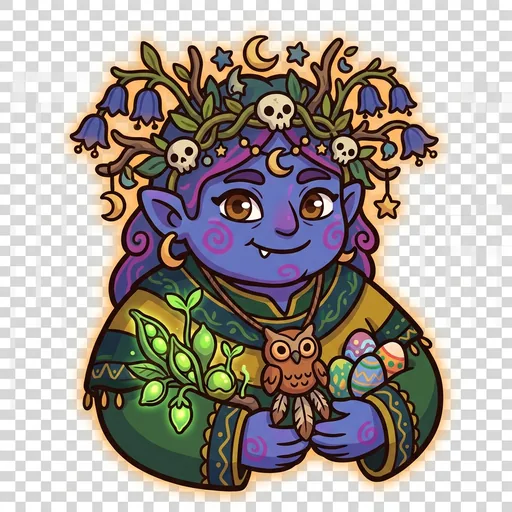
Devouring-Mother
The dark-creator / death-and-renewal force (post-Jungian; surfaces as Kali-aspect / Hel / Coatlicue / Hecate). **High trauma load.**
-
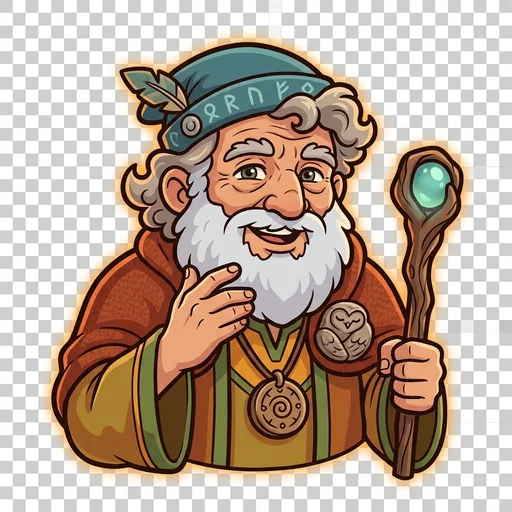
Wise-Elder
The mentor-figure who knows the path but cannot walk it for the hero (Athena, Odin-as-wanderer, Krishna-as-advisor).
-
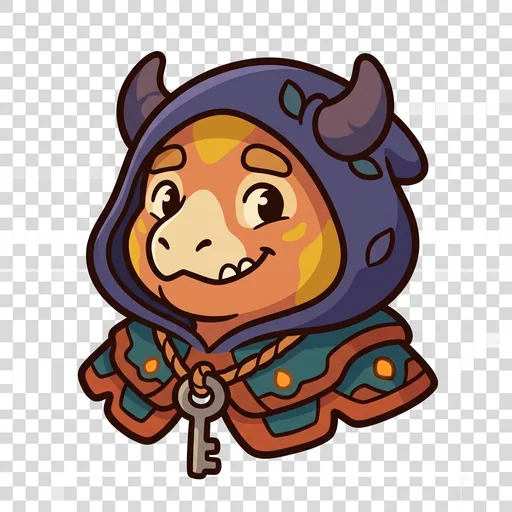
Threshold-Guardian
The figure that tests whether the hero is ready to cross (Sphinx, Cerberus, the dragon at the gate, the riddling stranger).
-
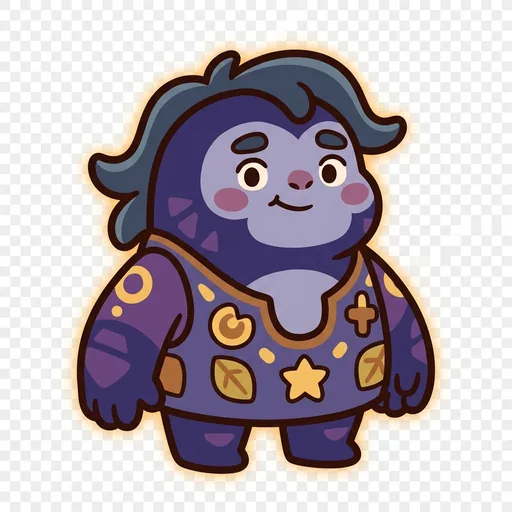
Shadow
The repressed-self / dark-mirror (Jungian core archetype; surfaces as the hero's nemesis-who-is-also-them: Loki/Baldr, Set/Osiris, Cain/Abel framings).
-

Anima/Animus (paired)
The complementary-other-self (Jungian); represented as a pair-character that always appears together, embodying the inner-other-gendered-self pattern that surfaces across many t...
-
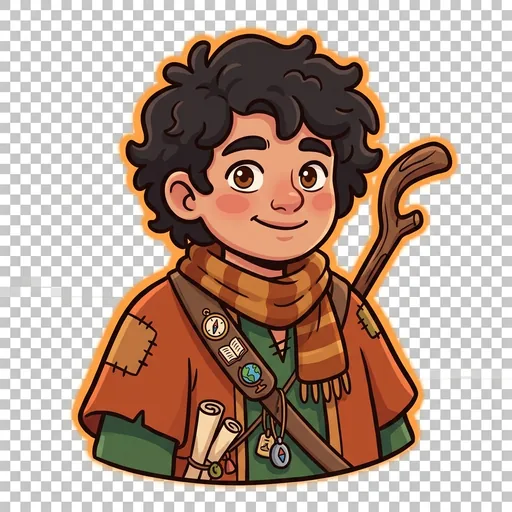
Wanderer
The journeyer-without-fixed-home who carries stories between cultures (Odysseus-after-Ithaca, the wandering Jew, the diaspora-keeper figure).
-
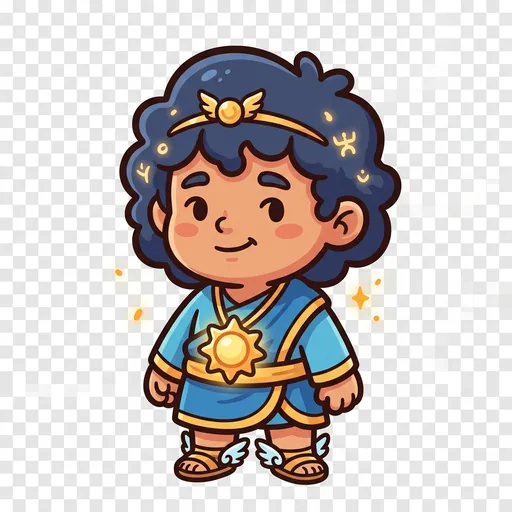
Child-Divinity
The newborn-with-power archetype (infant Krishna, baby Hermes, child Horus, divine-child motif).
-
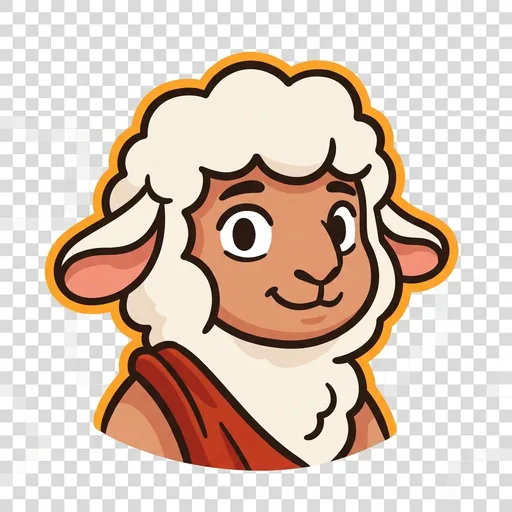
Sacrificial-Lamb
The figure whose loss enables renewal (cross-traditional: dying-and-rising deities, scapegoat figures, voluntary-sacrifice motif).
-
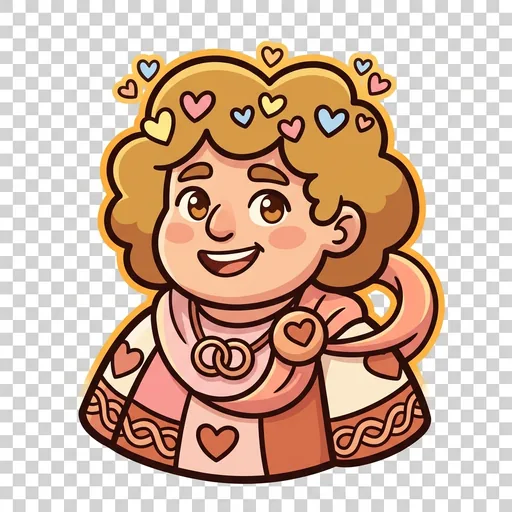
Lover
The relational-bond-bearer (Aphrodite-aspect, the romantic-mythic pair, the bond-that-shapes-the-world archetype).
-
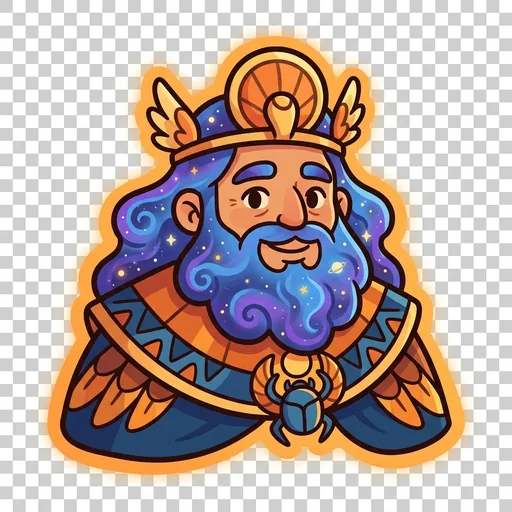
Sovereign
The cosmic-order-keeper archetype (Zeus-aspect, Odin-as-ruler, Ra-as-cosmic-king, Quetzalcoatl-aspect).
-
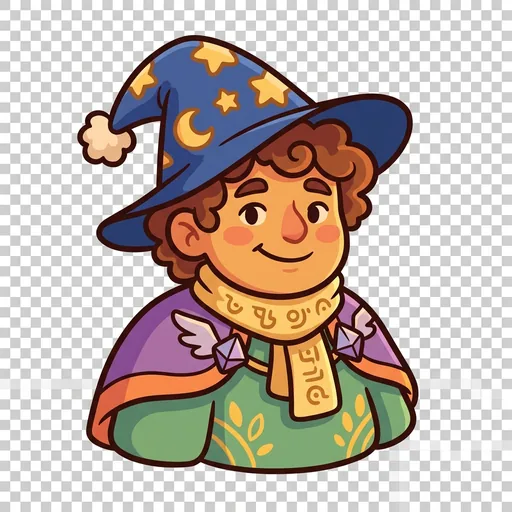
Magician
The transformation-bearer (Hermes-Trismegistus, Tezcatlipoca-aspect, Merlin, the alchemist-figure, the shape-shifter pattern).