
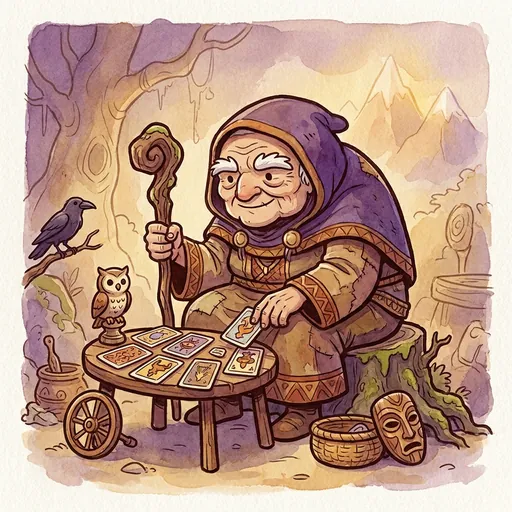
Wise-Elder
WISE-ELDER — *the mentor-figure who knows the path but cannot walk it for the hero.*
Listen along — Wise-Elder
Loading audio…
Press play to listen along. The line being read lights up as you go.
Show full transcript
Loading transcript…
Chapter 4 — Wise-Elder and the Counsel That Cannot Walk the Path
Wise-Elder wasn’t just one person. They were a pattern. A way of being. Think of a wise old tree, maybe. Or a comfy, worn-out armchair. Wise-Elder was old and warm. Their face was like a map of good stories. They always said, “The mentor knows the path, but cannot walk it for the hero.”
Alex had heard about Wise-Elder. Everyone whispered about the old one. They lived in a tiny, crooked house. It sat at the edge of the Whispering Woods. Alex needed help. Big help. The kind only a truly wise person could give.
Alex pushed open the creaky door. A bell jingled softly. The room inside was a jumble. Books piled high. Strange gadgets hummed. A smell of old paper and warm tea filled the air. In the middle sat Wise-Elder. They looked like a chunky cartoon. Their staff was made of twisted wood. It looked like it had seen a thousand journeys.
Wise-Elder smiled. Their eyes twinkled. “Come in, young one,” they said. Their voice was like rustling leaves. “I expected you.”
Alex shuffled inside. “You did?”
“Of course,” Wise-Elder chuckled. “Many come when their path gets tangled.” They gestured to a small stool. Alex sat down. “What trouble brings you here?”
Alex leaned forward. “It’s the Sparkle Stone,” they blurted out. “It’s gone! I need it for the quest. I know you know everything. Can you just tell me where it is? Or maybe… just get it for me?”
Wise-Elder stroked their long, white beard. They stared at the floor for a long time. Then they looked at Alex. “Ah, the Sparkle Stone. A very important item.” They nodded slowly. “And the quest is yours, isn’t it?”
Alex nodded eagerly. “Yes! So, where is it?”
Wise-Elder shook their head. “I know of the path. I know about the stone. But I cannot walk the path for you.” They tapped their staff gently on the floor. “That is the first rule of bounded mentorship.”
Alex frowned. “Bounded what now?”
“It means my help has limits,” Wise-Elder explained. They pointed to a wall. It was covered in small, colorful cards. Each card had a picture. “See these?”
Alex looked closer. One card showed a woman in a helmet. Another showed a man on a chariot. A third had a small, green creature.
“This is Athena,” Wise-Elder said. They pointed to the helmeted woman. “She gave Odysseus good advice. She told him what to do. But she didn’t sail his ship. He had to do that himself.”
They moved to the next card. “This is Krishna. He was a charioteer and counselor. He guided Arjuna in battle. But he didn’t fight his battles for him. Arjuna had to swing his own sword.”
“And this little green fellow?” Alex asked.
“That’s Yoda,” Wise-Elder said with a wink. “He taught Luke Skywalker. He showed him the way of the Force. But Luke had to face his own fears. He had to fight his own battles.”
“So, they just told them stuff?” Alex asked. “They didn’t actually do anything?”
“They did the most important thing,” Wise-Elder corrected gently. “They offered counsel. They shared their wisdom. They were knowledge-keepers. They prepared the hero. But the hero had to take the action.”
Wise-Elder picked up a blank card from a stack. “My job is to help you see the path. To give you tools. To share what I know. But the doing? That is all you.” They handed Alex the blank card. “This is your path. You must fill it in.”
Alex looked at the empty card. It felt heavy. “So, you’re not going to tell me where the Sparkle Stone is?”
“I will not just give you the answer,” Wise-Elder said. “That would weaken your quest. It would weaken you. A mentor’s role is to help you grow. Not to replace your effort.”
“But what if I mess up?” Alex worried.
“Then you learn,” Wise-Elder said simply. “That’s part of the journey. Many people make a mistake. They think a mentor should just do the work for them. Or they mix up the stories. Athena belongs to Greek tales. Krishna to Hindu ones. Each is special. But the pattern of a mentor? That is everywhere.”
Wise-Elder stood up. They walked to a dusty shelf. They pulled down a small, leather-bound book. It had no title. “This book has riddles,” they said. “Riddles about forgotten places. One of them might point you towards your Sparkle Stone.”
They handed the book to Alex. “I won’t tell you which riddle. I won’t tell you the answer. But I will tell you this: read carefully. Think hard. And trust your own steps.”
Alex held the book. It wasn’t the easy answer they wanted. But it was something. It was a start. Wise-Elder hadn’t done the work. But they had given Alex a way to begin.
“Don’t expect the mentor to do the work for you,” Wise-Elder said again. Their voice was soft. “That’s not what mentors are for. Listen. Ask. Then walk the path yourself.”
Alex looked at the book, then at Wise-Elder. The old one knew the path. But Alex had to walk it. And even though the book felt heavy in their hands, something inside them lifted — a small, warm flicker of hope and courage, the quiet excitement of realizing the next brave step was theirs to take.
The MythForge ensemble
Wise-Elder is part of MythForge's distributed-narrative cast. Each character embodies a different curricular primitive; together they teach the full subject.
-

Trickster
The boundary-crosser who teaches through inversion. Recurs across nearly all traditions (Anansi, Coyote, Loki, Hermes, Maui, Ijapa).
-

Hero-King
The reluctant ruler called to a journey (Campbell's central figure: Gilgamesh, Odysseus, Arjuna, Beowulf, Cuchulain).
-
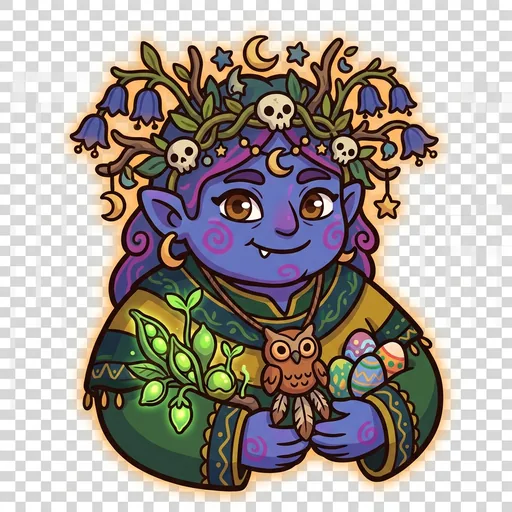
Devouring-Mother
The dark-creator / death-and-renewal force (post-Jungian; surfaces as Kali-aspect / Hel / Coatlicue / Hecate). **High trauma load.**
-

Threshold-Guardian
The figure that tests whether the hero is ready to cross (Sphinx, Cerberus, the dragon at the gate, the riddling stranger).
-

Shadow
The repressed-self / dark-mirror (Jungian core archetype; surfaces as the hero's nemesis-who-is-also-them: Loki/Baldr, Set/Osiris, Cain/Abel framings).
-

Anima/Animus (paired)
The complementary-other-self (Jungian); represented as a pair-character that always appears together, embodying the inner-other-gendered-self pattern that surfaces across many t...
-

Wanderer
The journeyer-without-fixed-home who carries stories between cultures (Odysseus-after-Ithaca, the wandering Jew, the diaspora-keeper figure).
-
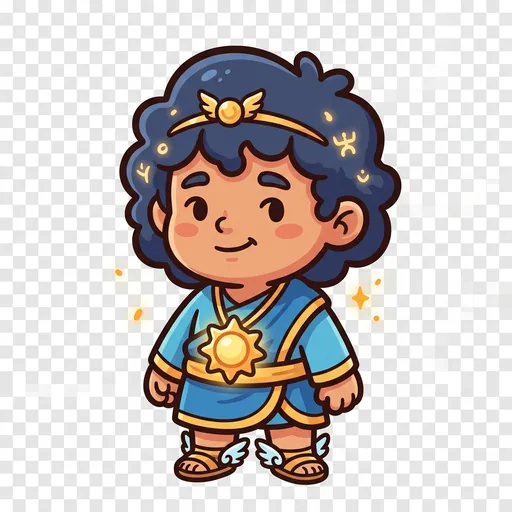
Child-Divinity
The newborn-with-power archetype (infant Krishna, baby Hermes, child Horus, divine-child motif).
-
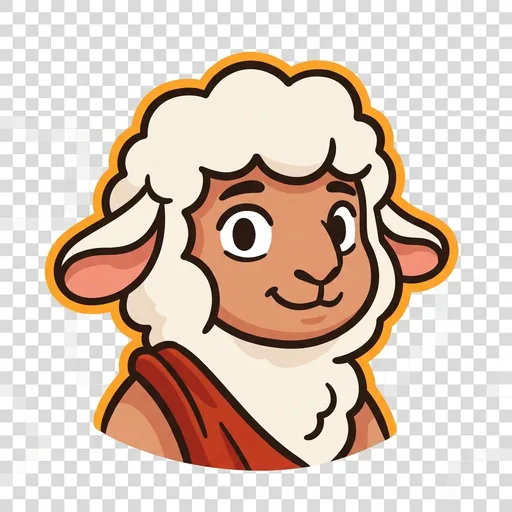
Sacrificial-Lamb
The figure whose loss enables renewal (cross-traditional: dying-and-rising deities, scapegoat figures, voluntary-sacrifice motif).
-
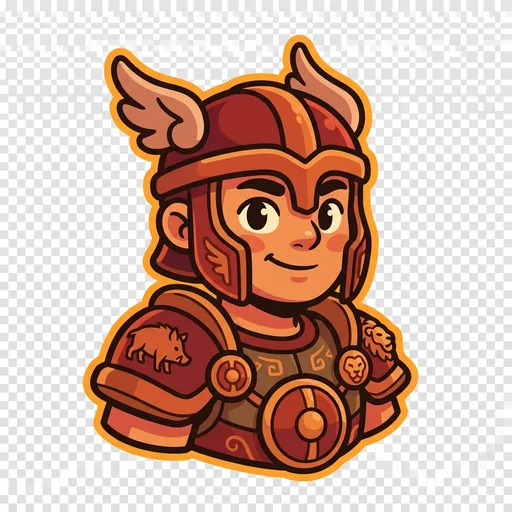
Warrior
The conflict-pattern-bearer (Ares, Tyr, Sekhmet-aspect, the warrior-figure across many traditions).
-

Lover
The relational-bond-bearer (Aphrodite-aspect, the romantic-mythic pair, the bond-that-shapes-the-world archetype).
-

Sovereign
The cosmic-order-keeper archetype (Zeus-aspect, Odin-as-ruler, Ra-as-cosmic-king, Quetzalcoatl-aspect).
-

Magician
The transformation-bearer (Hermes-Trismegistus, Tezcatlipoca-aspect, Merlin, the alchemist-figure, the shape-shifter pattern).