
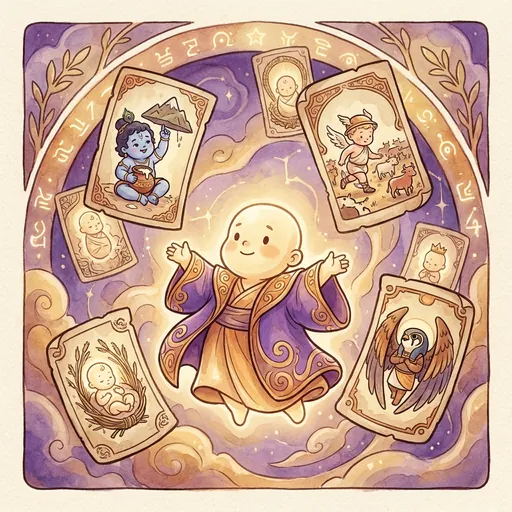
Child-Divinity
CHILD-DIVINITY — the newborn with power. divine-child motif.
Listen along — Child-Divinity
Loading audio…
Press play to listen along. The line being read lights up as you go.
Show full transcript
Loading transcript…
Chapter 9 — Child-Divinity and the Power Born Already Knowing
In the smallest room of Mythforge, cradled in a wide woven basket, a baby laughed — and the whole basket rose gently off the floor.
It hung there in the air, wobbling, while the tiny child inside clapped both hands and watched the world tilt below. A tall keeper rushed over, arms out, ready to catch — and stopped. The baby wasn’t falling. The baby was floating, easy as breathing, doing something no grown person in the whole academy could do.
“You’re not supposed to be able to do that yet,” the keeper whispered.
The baby only gurgled and reached for a passing dust-mote, and the basket drifted a little higher, chasing it.
This was Child-Divinity — though nobody was quite sure whether that was one child or the same wonder wearing a hundred small faces. Every time a newborn arrived at Mythforge who could already do the impossible — lift what they shouldn’t lift, know what they hadn’t learned, glow softly in the dark without a lamp — the keepers would smile and say, ah, there it is again. The power that shows up already finished, tucked inside something that still needs its diaper changed.
The keeper stood on tiptoe and eased the floating basket back down to the floor, one hand steady underneath the whole time. Not grabbing. Just there.
The baby yawned, entirely unbothered, and the glow around it dimmed to a nightlight softness. It had lifted itself into the air the way another baby might grab a toe — no effort, no showing off, just a thing it happened to be able to do. The astonishing part wasn’t the floating. The astonishing part was how ordinary the floating felt to the one doing it.
Child-Divinity remembered the first time someone had been afraid of it instead of for it.
It had been very small then — small enough that the memory came in feelings more than pictures. A cold night. A crowd of grown-ups murmuring, pointing, some backing away. Too much power in something too little, they said. It isn’t safe. Send it away. And the child had felt the strangest, loneliest thing: it could bend the light and warm the whole room and it still could not make anyone hold it.
Then one keeper had pushed through the crowd. Not the biggest. Not the loudest. Just the one who knelt down to the child’s own height and looked at it plainly, without flinching and without fussing.
“You’re not too much,” the keeper had said. “You’re just early. Everything you’ll grow into, you already carry. That’s a lot to hold when you’re this small.” And then, softer: “So I’ll hold the rest until you’re ready.”
The child hadn’t understood the words. But it understood the arms. It understood that being powerful and being tiny were not opposites — that you could be both at once, and the both-at-once was exactly the thing worth protecting.
That was the night the fear turned into wonder. Not because the child changed. Because someone chose to stand between it and the cold, and stay.
Child-Divinity came to Mythforge in a basket carried by that same keeper, who set it down at the great doors and refused to leave.
The old mentor of the mythology workshops met them at the gate. She looked at the basket, at the soft light leaking out of it, at the keeper who would not step back.
“What is a divine child?” she asked. Not the keeper. The baby.
And the baby — who could not yet speak — pulled itself up on the basket’s rim, wobbled, and lifted the mentor’s heavy iron gate-key clean out of her hand and into the air, where it spun slowly like a little moon. Then it set the key gently back into her palm, sat down hard, and giggled.
The mentor turned the warm key over in her hand for a long moment.
“Power that arrives before the growing-up does,” she said quietly. “And a protector who stands guard over the space in between.” She looked at the keeper, then back at the child. “You belong here. Both of you. One of you to show them the wonder — and one of you to show them that wonder needs guarding.”
Child-Divinity’s workshop filled up with the newest, smallest students — and, always, the ones who watched over them.
A worried girl came in one afternoon, minding her baby brother, who kept doing things he was far too little to do. He had stacked blocks into a tower taller than himself. He had named a shape she hadn’t taught him. “It scares me,” she admitted. “He’s a baby. How can he already be so much? Am I supposed to just… let him?”
Child-Divinity, sitting in its basket, reached up and touched a soft glowing card that hung in the air — and the card lit with a picture: a tiny figure, radiant, and beside it always a taller figure, arms curved protectively around the space.
“Look,” the mentor said, translating the wonder into words the way she always did. “In story after story, the smallest one shows up already carrying something enormous. That’s the pattern — the newborn who can do what shouldn’t be possible yet. But look what’s always standing next to it.”
“The big one,” the girl said.
“The guardian. The pattern isn’t just small-thing-with-huge-power. It’s small-thing-with-huge-power, and someone who keeps it safe until it grows into itself. The wonder and the protecting are the same story.” The mentor nodded at the baby brother, happily rebuilding his fallen tower. “You’re not supposed to shrink him down. You’re supposed to be the arms around the in-between. That’s not holding him back. That’s the whole point of the pattern.”
The girl looked at her brother. She stopped bracing to stop him. She just moved a little closer, so she’d be there if he wobbled.
Child-Divinity clapped, and its whole basket glowed like a small warm sunrise.
Later, when the workshop had emptied, the girl came back with her brother asleep against her shoulder.
“When he’s this little,” she said, “and already so much — how am I supposed to feel about it? It’s so big.”
Child-Divinity couldn’t answer in words. But the mentor was still there, and she’d seen the question a thousand times.
“You feel two things at once,” she said gently. “Amazed, and soft. That squeezy, protective, oh-you-tiny-enormous-thing feeling in your chest — that’s the right feeling. It isn’t fear and it isn’t nothing. It’s wonder wearing a heartbeat.” She reached over and tucked the sleeping boy’s arm back inside the girl’s coat. “The pattern doesn’t ask you to be bigger than the power. It just asks you to stay close, and be warm, and let the small ones grow.”
The girl held her brother a little tighter, and felt it — that full, glowing, tender ache of loving something that was already becoming so much.
She wasn’t afraid anymore. She was just holding him, and it felt like the safest thing in the world.
The MythForge ensemble
Child-Divinity is part of MythForge's distributed-narrative cast. Each character embodies a different curricular primitive; together they teach the full subject.
-

Trickster
The boundary-crosser who teaches through inversion. Recurs across nearly all traditions (Anansi, Coyote, Loki, Hermes, Maui, Ijapa).
-

Hero-King
The reluctant ruler called to a journey (Campbell's central figure: Gilgamesh, Odysseus, Arjuna, Beowulf, Cuchulain).
-
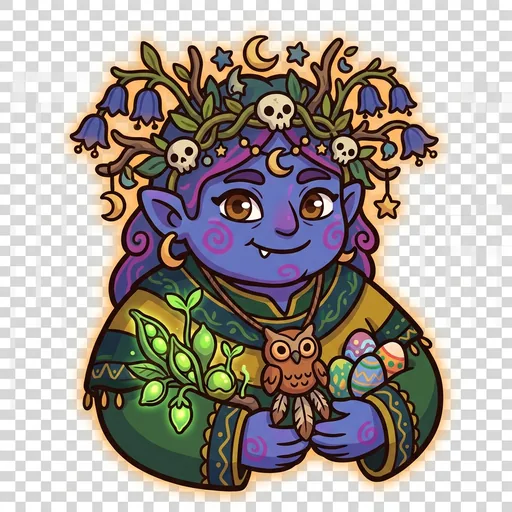
Devouring-Mother
The dark-creator / death-and-renewal force (post-Jungian; surfaces as Kali-aspect / Hel / Coatlicue / Hecate). **High trauma load.**
-

Wise-Elder
The mentor-figure who knows the path but cannot walk it for the hero (Athena, Odin-as-wanderer, Krishna-as-advisor).
-
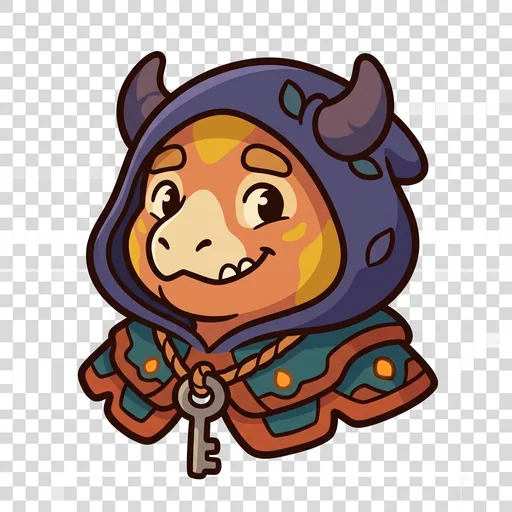
Threshold-Guardian
The figure that tests whether the hero is ready to cross (Sphinx, Cerberus, the dragon at the gate, the riddling stranger).
-

Shadow
The repressed-self / dark-mirror (Jungian core archetype; surfaces as the hero's nemesis-who-is-also-them: Loki/Baldr, Set/Osiris, Cain/Abel framings).
-

Anima/Animus (paired)
The complementary-other-self (Jungian); represented as a pair-character that always appears together, embodying the inner-other-gendered-self pattern that surfaces across many t...
-

Wanderer
The journeyer-without-fixed-home who carries stories between cultures (Odysseus-after-Ithaca, the wandering Jew, the diaspora-keeper figure).
-
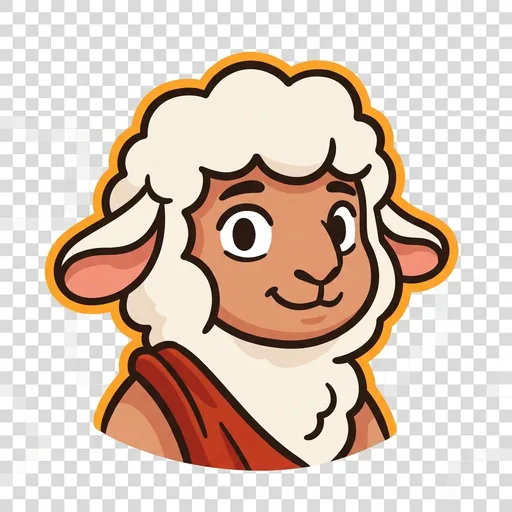
Sacrificial-Lamb
The figure whose loss enables renewal (cross-traditional: dying-and-rising deities, scapegoat figures, voluntary-sacrifice motif).
-
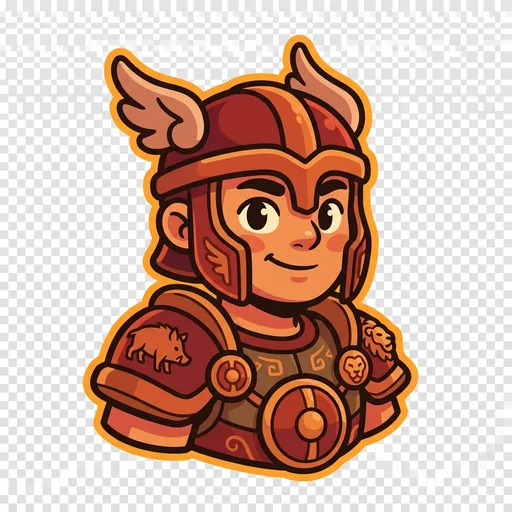
Warrior
The conflict-pattern-bearer (Ares, Tyr, Sekhmet-aspect, the warrior-figure across many traditions).
-

Lover
The relational-bond-bearer (Aphrodite-aspect, the romantic-mythic pair, the bond-that-shapes-the-world archetype).
-

Sovereign
The cosmic-order-keeper archetype (Zeus-aspect, Odin-as-ruler, Ra-as-cosmic-king, Quetzalcoatl-aspect).
-

Magician
The transformation-bearer (Hermes-Trismegistus, Tezcatlipoca-aspect, Merlin, the alchemist-figure, the shape-shifter pattern).