
Trickster
TRICKSTER — *the boundary-crosser who teaches through inversion.*
Listen along — Trickster
Loading audio…
Press play to listen along. The line being read lights up as you go.
Show full transcript
Loading transcript…
Chapter 1 — Trickster and the Boundary That Teaches When Crossed
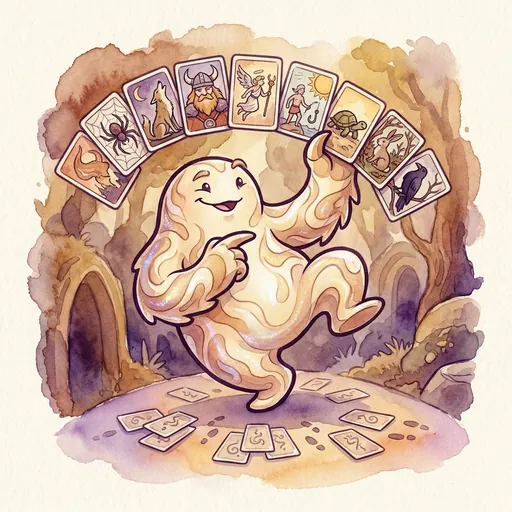
The thing about Trickster is that you could never quite say what it was. One moment it looked like a small, quick fox with a creamy coat that shimmered rainbow when it moved. Blink, and it was a spider on a thread. Blink again, and it was something else entirely, peering over the edge of a table with a grin that meant trouble — the good kind.
A young storyteller named Odell had come to the MythForge library sure he understood how myths worked. “Every culture just has its own stories,” he announced to no one in particular. “They’re all different.”
“Are they?” said a voice from somewhere near the ceiling.
Odell looked up. Trickster was balanced on a shelf, tail flicking, eyes bright. It slid down to the floor in a shape that was fox-ish now and spread a fan of picture-cards across the table between them.
“Watch what I do,” Trickster said, “before you decide what I am.” It flipped the first card. A clever spider grinned up from it. “This is Anansi — from the Akan people of West Africa, and from Caribbean traditions too. He talks the sky’s own keeper out of all the world’s stories.” Flip. A lean desert dog. “This is Coyote — from many different Native American nations, each with their own telling. He steals fire back from those who were hoarding it.” Flip, flip. “This one crosses the gods in old Norse tales. This one, from Polynesia, lassoes the sun to slow the day down.”
Odell stared. “They’re all… doing the same kind of thing.”
Trickster’s grin widened. “Now you’re looking.”
Trickster had noticed this a long, long time ago — back when it was less a character and more a habit the whole world seemed to have.
Everywhere it went, in every land, it found someone like itself: a clever creature who slipped between the rules, who taught by doing things backward, who was never quite good and never quite bad. And at first that seemed impossible. How could a fox in one place and a spider in another and a sly god in a third all be so alike?
The answer, Trickster figured out, wasn’t that anybody copied anybody. Anansi grew up in his own soil. Coyote came from his own land. They’d never met. It was simpler and stranger than copying: people everywhere run into the same tangles — rules that pinch, powers that hoard, edges that beg to be crossed — and everywhere, people invent a character to laugh at those tangles and slip past them.
So the shape repeated, all across the world, even though every single teller filled that shape with their own soil, their own soul, their own rules. And the deepest thing Trickster learned was this: seeing the shared shape is a joy — but the shape is the only thing shared. Each specific figure stays exactly where it was born. You can hold them side by side and marvel at the echo, as long as you never smudge them into one.
When Trickster first came to the MythForge, it arrived the way a good idea arrives — sideways, when you’re not looking. Lyra, the mentor of the hall, had been wondering aloud why the same sort of sly figure kept showing up in stories that had never touched.
Trickster answered by turning a solemn scroll’s tassel into a small confused mouse, then back again.
Lyra laughed in spite of herself. “You cross boundaries,” she said. “And you teach by showing the wrong way, so we can see the right one by contrast.”
“And,” Trickster added, “I never let anyone pretend two traditions are the same tradition.”
Lyra considered the shimmering, shape-shifting visitor. “Then you belong in this hall,” she said. “Show them the echoes between stories — and show them, just as hard, that the echo is not the story.”
Odell wanted to try. He picked up the Anansi card and the Coyote card and held them side by side. “So I can just… say they’re the same character?”
“No.” Trickster’s voice went gentle, though its eyes still sparkled. “That’s the trap. Watch.” It set the two cards a careful distance apart. “Anansi belongs to the Akan people and to Caribbean tellers. Coyote belongs to the specific nations who tell him — each with their own rules for when and how he may be spoken of. If you mash them into one ‘trickster,’ you’ve dropped what makes each one real. And if you grab one and wear him like a costume, or claim his stories as your own without knowing them, that’s not comparing — that’s taking.”
Odell set the cards down, more carefully this time. “So what’s the part I am allowed to keep?”
“The shape,” Trickster said. “The idea that clever boundary-crossers turn up everywhere, teaching by flipping things upside down. That’s yours to notice, yours to wonder at, yours to use when you spin your own new character. The living, specific ones stay home with the people whose ancestors made them. If you ever tell one of those, you tell it with those people, not instead of them.”
It flipped one last card — blank. “This one’s for the trickster you might make up someday. Nobody’s soil but your own.”
Odell grinned at the blank card. Then he looked up at Trickster, who was already halfway to being a spider again.
“Why does it feel so good?” he asked. “Seeing the echoes, I mean. Not stealing anything — just… noticing.”
Trickster’s rainbow coat rippled, and for once it didn’t shift into anything new. It just grinned — that light, fizzy, laughing feeling right before a good joke lands, when the whole world tilts a little and you realize how much of it is playfully, wonderfully connected.
“Because you found a secret hiding in plain sight,” it said, “without breaking anything to get it. That’s the best feeling there is — the giddy little lift of oh, I see how this works now.” Its eyes danced. “Hold onto that lightness. It’s how you look at the world sideways and wonder what else might be flipped upside down — with delight, and with respect, both at once.”
And Odell felt exactly that: a bubble of laughter rising in his chest, and underneath it, steady and warm, a new carefulness he was almost proud of.
The MythForge ensemble
Trickster is part of MythForge's distributed-narrative cast. Each character embodies a different curricular primitive; together they teach the full subject.
-

Hero-King
The reluctant ruler called to a journey (Campbell's central figure: Gilgamesh, Odysseus, Arjuna, Beowulf, Cuchulain).
-
Devouring-Mother
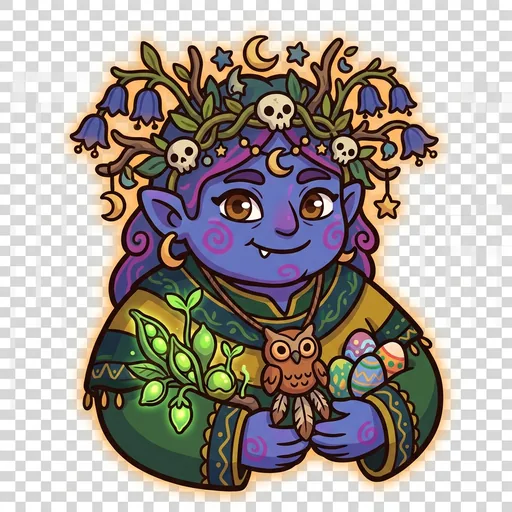
The dark-creator / death-and-renewal force (post-Jungian; surfaces as Kali-aspect / Hel / Coatlicue / Hecate). **High trauma load.**
-

Wise-Elder
The mentor-figure who knows the path but cannot walk it for the hero (Athena, Odin-as-wanderer, Krishna-as-advisor).
-
Threshold-Guardian
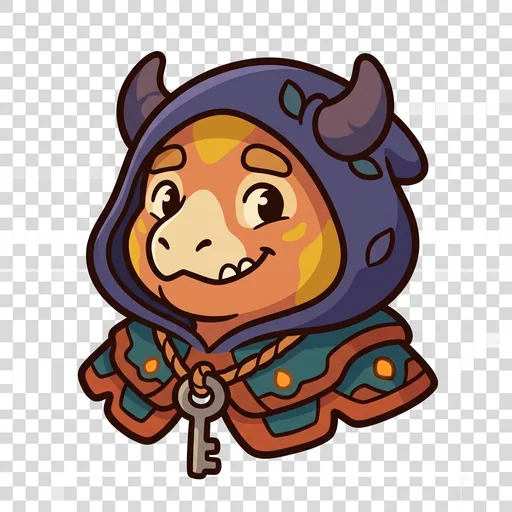
The figure that tests whether the hero is ready to cross (Sphinx, Cerberus, the dragon at the gate, the riddling stranger).
-

Shadow
The repressed-self / dark-mirror (Jungian core archetype; surfaces as the hero's nemesis-who-is-also-them: Loki/Baldr, Set/Osiris, Cain/Abel framings).
-

Anima/Animus (paired)
The complementary-other-self (Jungian); represented as a pair-character that always appears together, embodying the inner-other-gendered-self pattern that surfaces across many t...
-
Wanderer
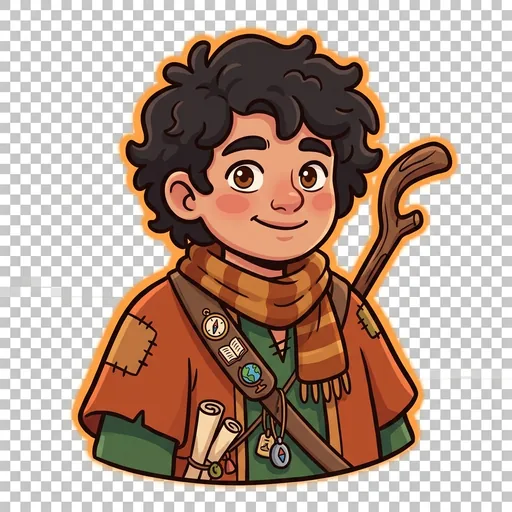
The journeyer-without-fixed-home who carries stories between cultures (Odysseus-after-Ithaca, the wandering Jew, the diaspora-keeper figure).
-
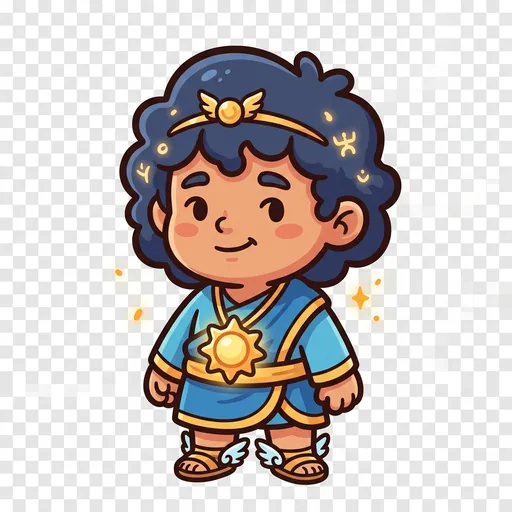
Child-Divinity
The newborn-with-power archetype (infant Krishna, baby Hermes, child Horus, divine-child motif).
-
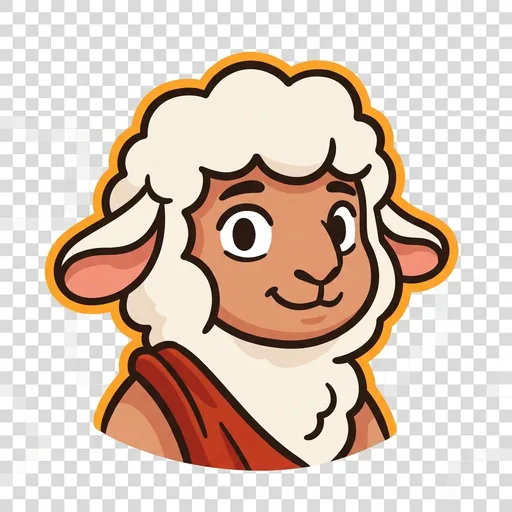
Sacrificial-Lamb
The figure whose loss enables renewal (cross-traditional: dying-and-rising deities, scapegoat figures, voluntary-sacrifice motif).
-
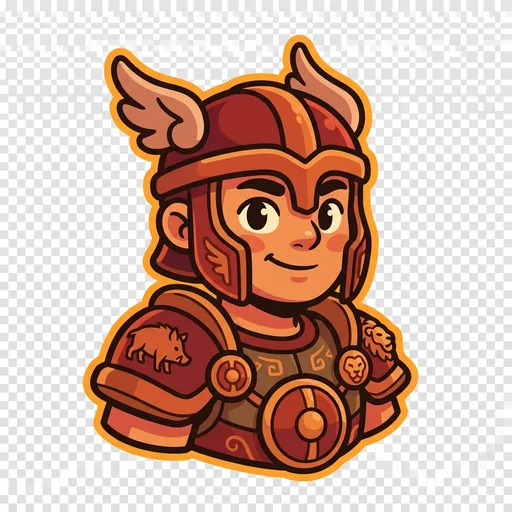
Warrior
The conflict-pattern-bearer (Ares, Tyr, Sekhmet-aspect, the warrior-figure across many traditions).
-

Lover
The relational-bond-bearer (Aphrodite-aspect, the romantic-mythic pair, the bond-that-shapes-the-world archetype).
-

Sovereign
The cosmic-order-keeper archetype (Zeus-aspect, Odin-as-ruler, Ra-as-cosmic-king, Quetzalcoatl-aspect).
-

Magician
The transformation-bearer (Hermes-Trismegistus, Tezcatlipoca-aspect, Merlin, the alchemist-figure, the shape-shifter pattern).