
Weft
WORD ORDER — languages arrange their words in different orders. English usually puts the subject, then verb, then object. Many languages put the verb last; some put it first. No order is "backwards" or "more logical" — each is a complete, consistent system.
Press play to listen along. The line being read lights up as you go.
Show full transcript
Loading transcript…
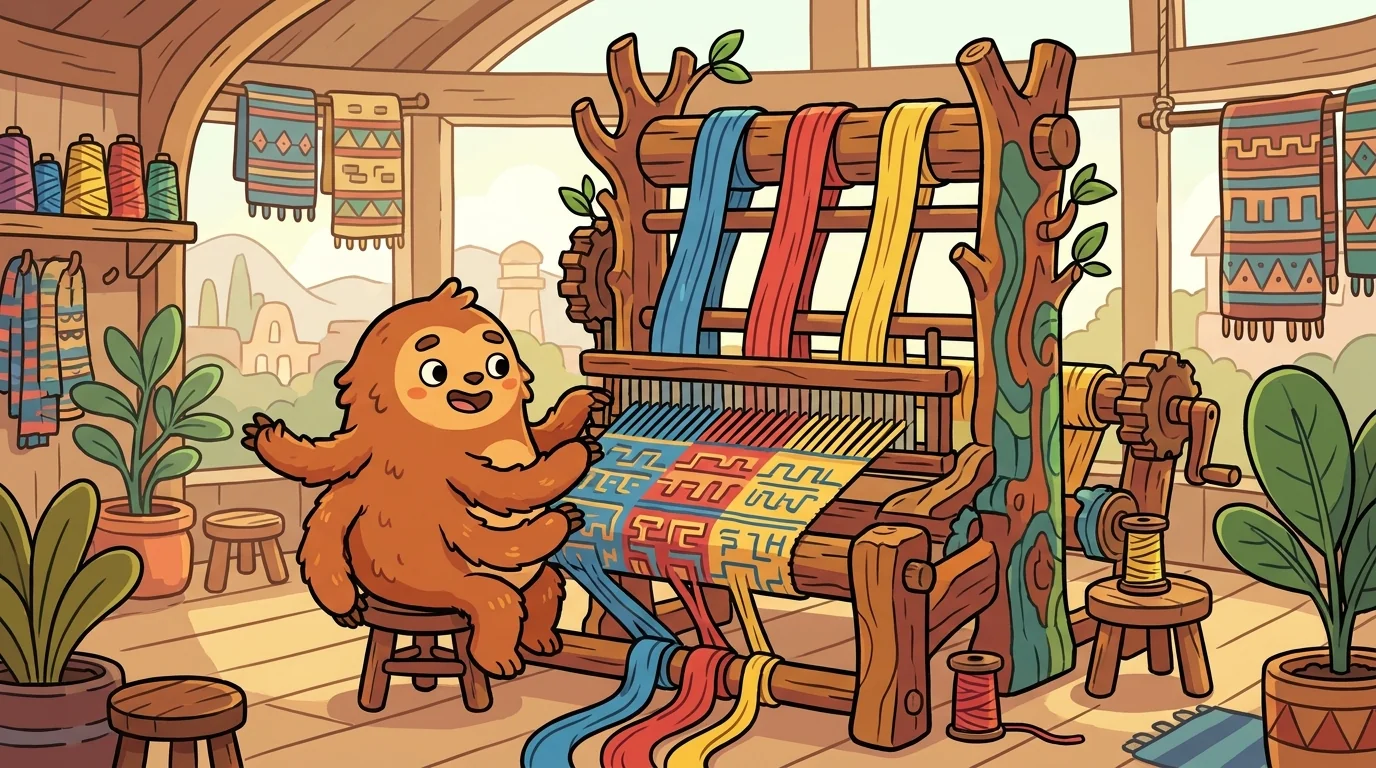
Weft worked at a great loom in the LinguaQuest world, and she was always weaving — but what she wove was sentences.
She was a many-handed, nimble creature, and on her loom she'd lay out three colored threads — one for who (the subject), one for does (the verb), one for what (the object) — and weave them into a sentence. The marvel was that she could weave the same three threads in different orders, and each weave was a complete, correct sentence in some language somewhere. Who-does-what. Who-what-does. Does-who-what. Each one whole. Each one sensible.
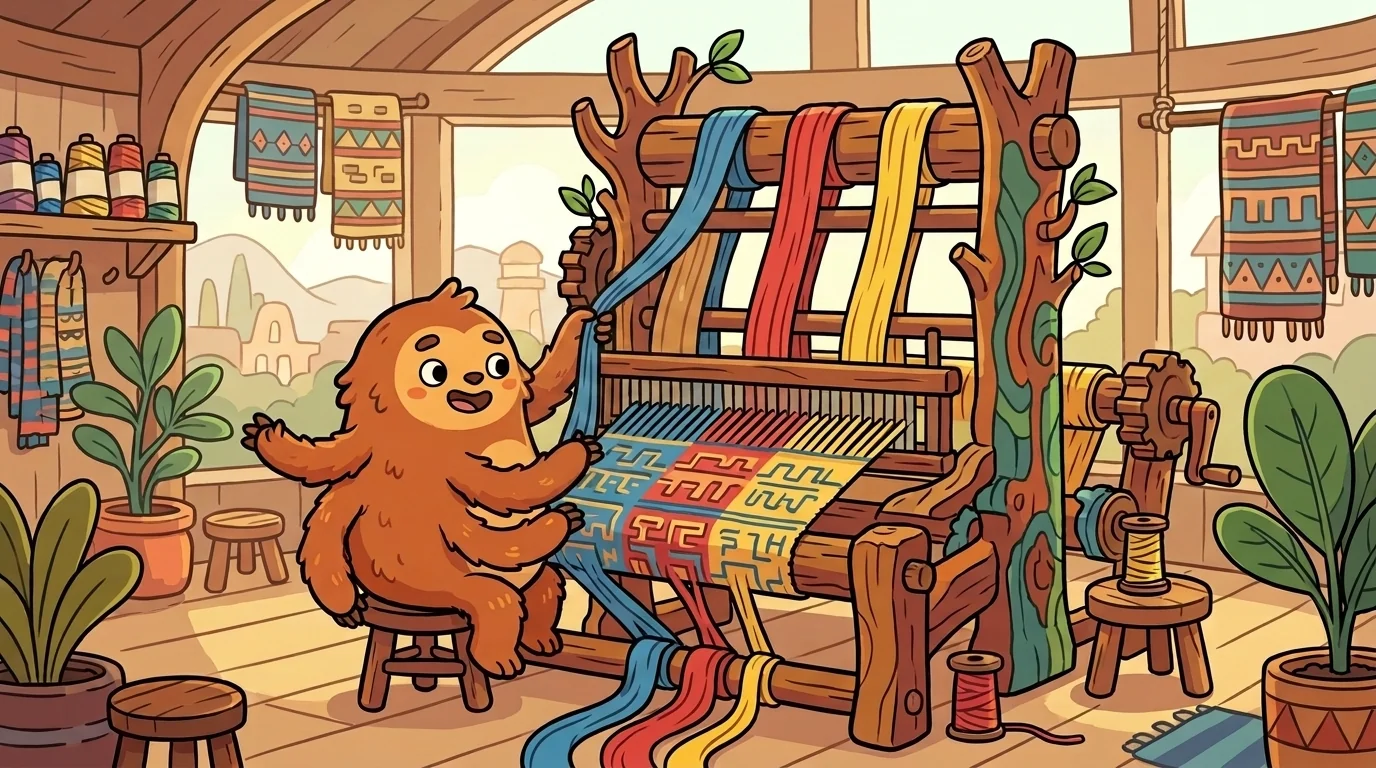
"You wove the same three threads three different ways," a young traveler said.
"And every one is a real, working sentence," Weft said, hands flying. "My name is Weft. I keep word order — how languages arrange their words." She held up her threads. "English usually weaves who, does, what — 'the cat chased the mouse.' But loads of languages weave who, what, does — putting the verb at the very end. Others put the verb first. None of them is backwards. Each is its own steady weave."
Mira, the mentor, watched as a young traveler said, "But putting the verb last sounds backwards to me."
"It sounds backwards because your weave puts it in the middle," Weft said gently. "But think — to a child who grows up weaving the verb last, English looks like it dumps the verb in too early." She wove a verb-final sentence smoothly, and it held together perfectly. "There's no backwards in weaving. There's only different patterns. The verb-last weave is used by an enormous share of the world's people, and it works flawlessly. It carries jokes and laws and love poems just fine." She smiled. "'Backwards' is just a word we use for 'not the order I happen to be used to.'"
The young traveler considered this. "So my order isn't the normal one. It's just... my one."
"Exactly," Weft said. "Every weave is somebody's normal."
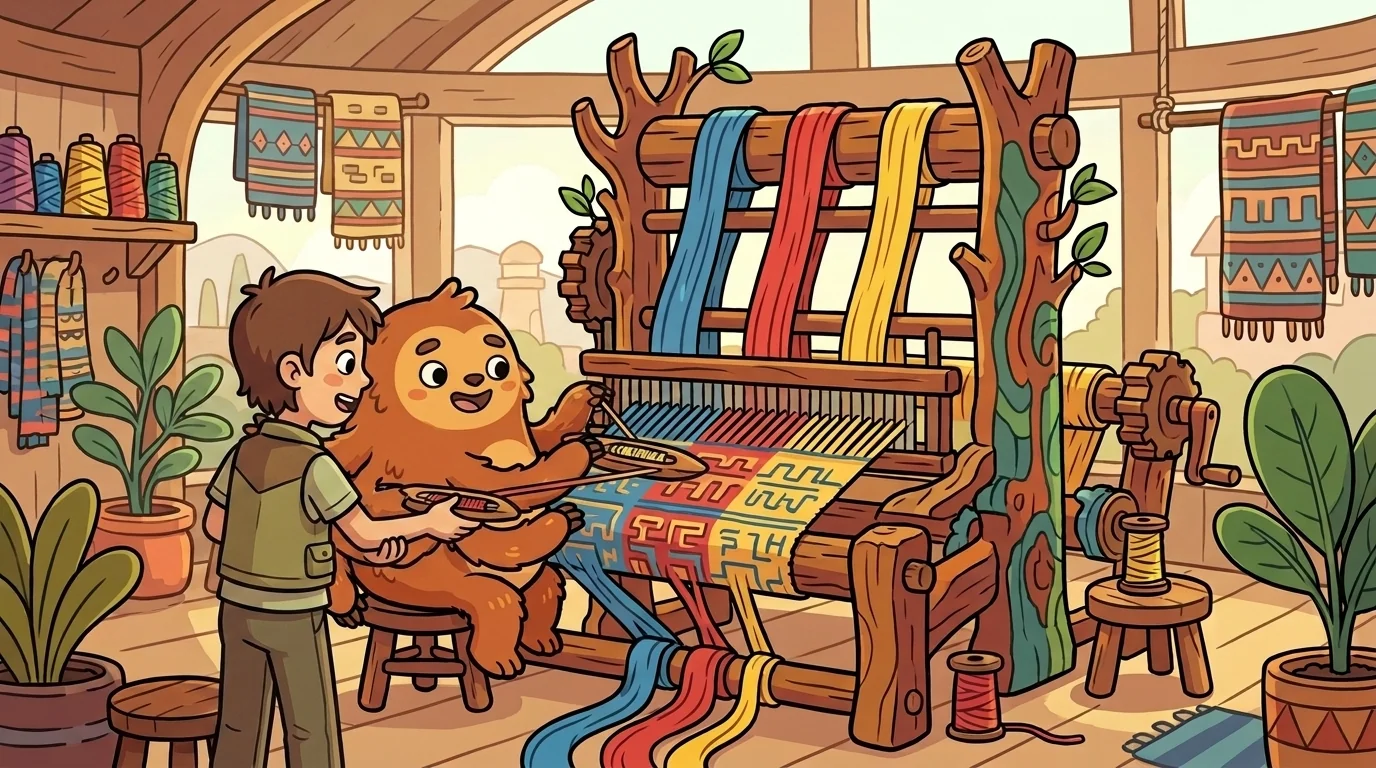
Mira asked Weft to join the academy. "Travelers think their own word order is the logical one and the rest are backwards," she said. "Would you weave them out of that idea?"
Weft agreed, all hands ready. When she teaches, she lets travelers weave the same three threads into different orders themselves, then read each one aloud as if it were perfectly natural — because, somewhere, it is. "Once you've woven the verb last with your own hands," she says, "you stop hearing it as 'wrong.' You start hearing it as just another good pattern."
A young traveler wove a verb-final sentence and, to her surprise, found it felt elegant — tidy, with the action landing last like a satisfying click. "It's actually kind of nice," she admitted. "It is," Weft said. "Every weave has its own beauty, once you stop measuring it against your own."
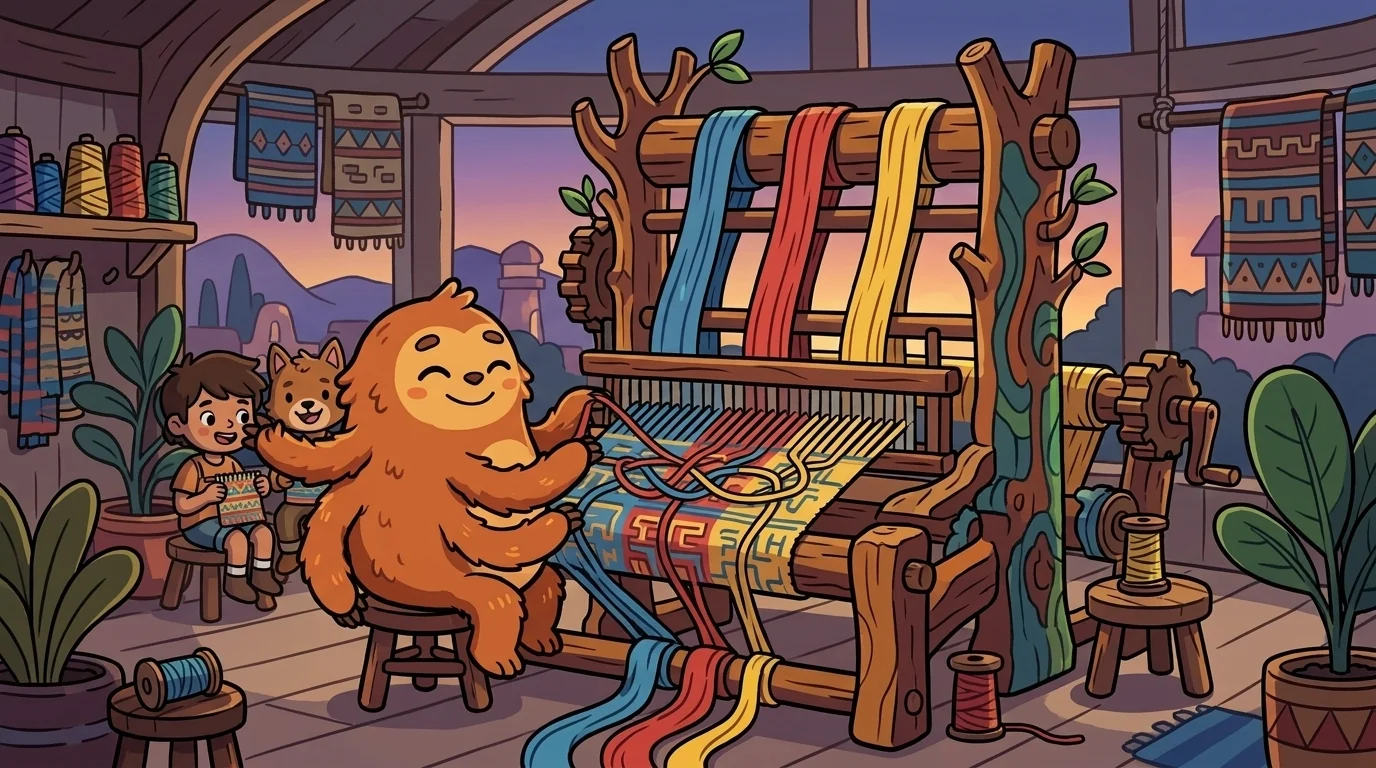
After the lesson, Weft sat at her loom with the young travelers as the light dimmed, idly weaving a small, pretty sentence in some far-off order, just for the calm of it.
For a long time, Weft had grown weary of hearing her many weaves called "backwards," "scrambled," or "confusing" — always measured against one particular order, as if that one were the true shape and all the rest were mistakes. She'd wondered if people would ever see her patterns as patterns rather than errors.
But weaving quietly in the dusk, with travelers beside her who now wove all the orders happily, Weft felt that weariness lift. There had never been a backwards weave. There was only the rich, true fact that human minds had found many good ways to arrange their words — each one whole, each one logical, each one somebody's home. And helping a traveler feel that in their own hands — feel "different" stop meaning "wrong" — was the weave she was proudest of. A warm, many-handed contentment settled over her. No order was the right order. They were all the right order, to someone. And she wove on, content, in the gentle dark.
The LinguaQuest ensemble
Weft is part of LinguaQuest's distributed-narrative cast. Each character embodies a different curricular primitive; together they teach the full subject.
-

Bough
Language families (genetic descent — Indo-European / Sino-Tibetan / Afro-Asiatic / Niger-Congo / Austronesian)
-

Drift
Sound change (phonological evolution — Grimm's Law, vowel shifts, palatalization)
-

Glyph
Writing systems (alphabetic / abjad / abugida / syllabic / logographic — and how each captures speech)
-
Bridge
Cognates and loanwords (shared roots across languages; trade-route borrowings)
-

Cant
Sociolinguistics — dialect, register, code-switching, formal/informal speech
-
Sign
Signed languages — full natural languages spoken with hands, face, and space; each Deaf community's own, never 'just gestures'
-
Swoop
Tone — pitch that changes a word's meaning (tonal languages); precise and sophisticated, never 'sing-song' or 'exotic'
-

Lex
Untranslatable words — words no other language has in one breath; not a gap in your language but a gift another can offer
-

Nook
Endangered languages + revitalization — keeping fading languages safe; decline is from histories of harm, never the speakers' fault; communities lead the revival