
Swoop
TONE — in many languages, the PITCH of a syllable changes its meaning. The same sounds, said with a rising, falling, level, or dipping pitch, become completely different words. Tone is a precise, sophisticated system — not "singing" and not "exotic."
Press play to listen along. The line being read lights up as you go.
Show full transcript
Loading transcript…
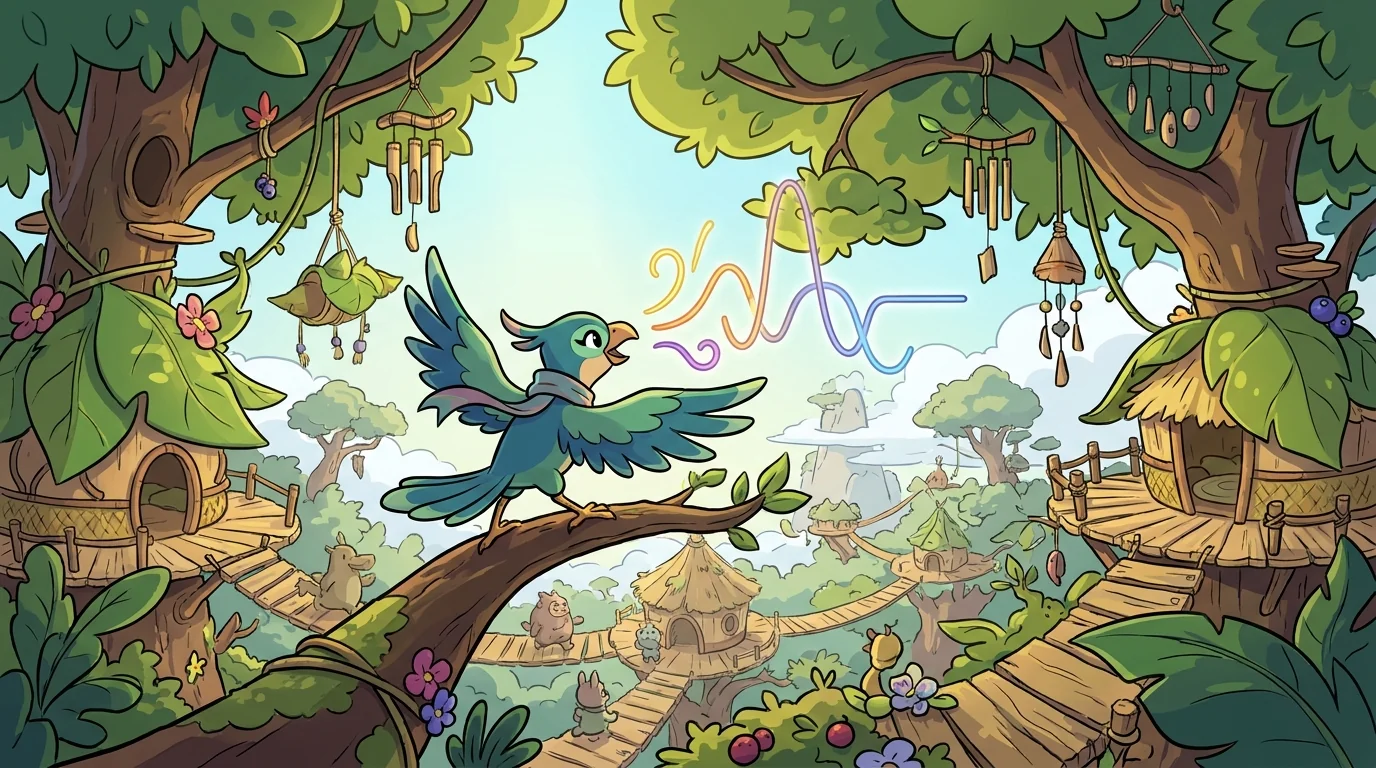
Swoop lived among the high branches of the LinguaQuest world, a swift bird-creature who never said a word at a flat, level pitch if she could help it.
She was a sleek, swooping creature, and her voice glided — up like a question, down like a falling leaf, level like a held note, or dipping low and rising again. And here was the marvel: when she said the very same sound but swooped her pitch differently, it became a different word entirely. One little syllable, said four ways, meant four different things.
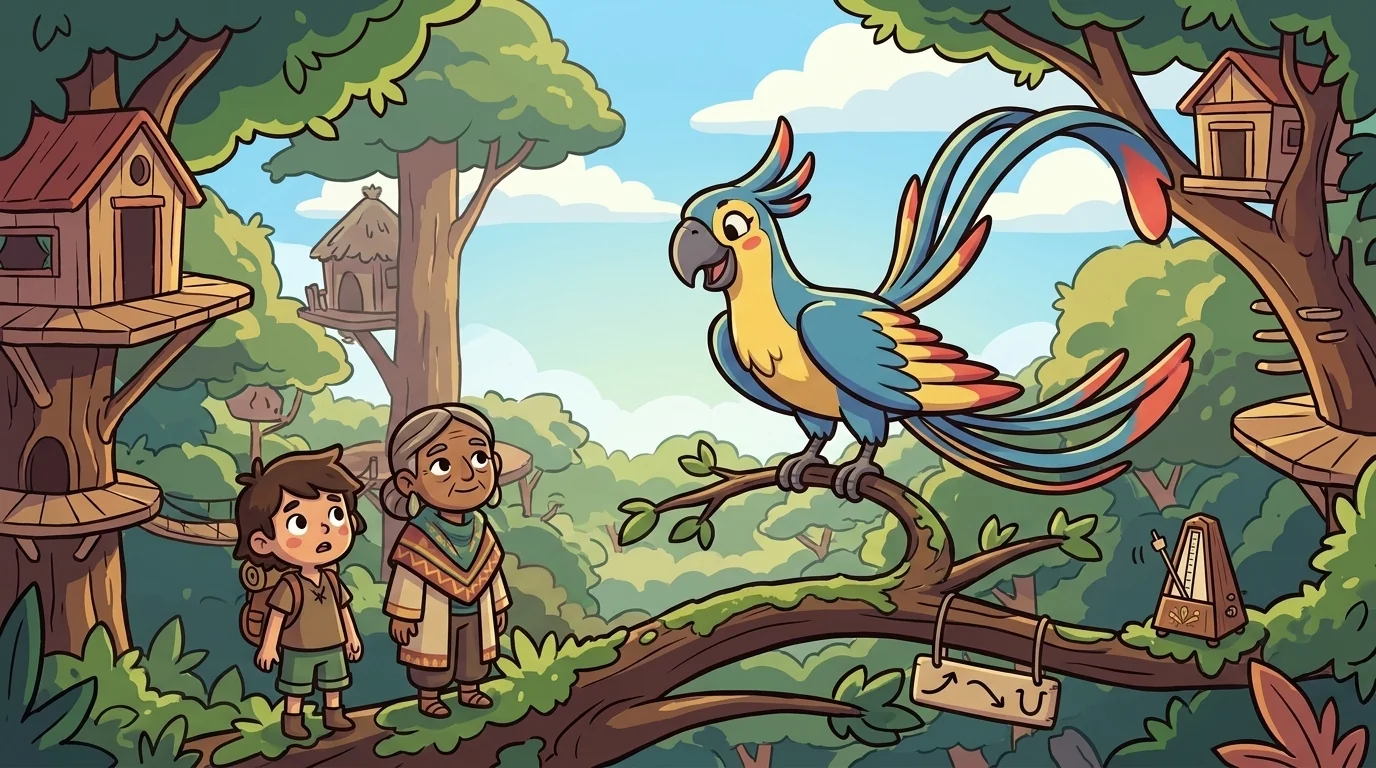
"You changed the meaning just by changing your pitch," a young traveler said, astonished.
Swoop glided down to a branch. "I did," she said, her voice rising and falling. "My name is Swoop. I keep tone — where the pitch of a sound changes what it means." She demonstrated: the same simple syllable, said with a rising swoop, then a falling one, then level, then a dip. "In many of the world's languages — spoken by more people than speak English — pitch isn't just feeling. It's part of the word itself. Get the swoop wrong, and you've said something else completely."
Mira, the mentor, watched as a young traveler frowned. "That sounds really hard," the traveler said.
"It sounds hard to you," Swoop said kindly, "because your first language doesn't use tone that way. But here's the thing — it isn't hard to the millions of children who grow up speaking it. To them, your language is the strange one, wasting all that lovely pitch on mere mood." She swooped a gentle laugh. "Tone isn't 'harder.' It isn't 'sing-song' or 'exotic.' It's just a different, beautifully precise system. Every language asks its speakers to track something carefully — English makes you track fiddly vowel sounds and a spelling system that barely makes sense. Tone languages track pitch. Neither is better. They're just different maps of the same human voice."
The young traveler nodded slowly. "So it only seems hard because it's new to me."
"Exactly," Swoop said. "New isn't the same as hard. And different isn't the same as lesser."
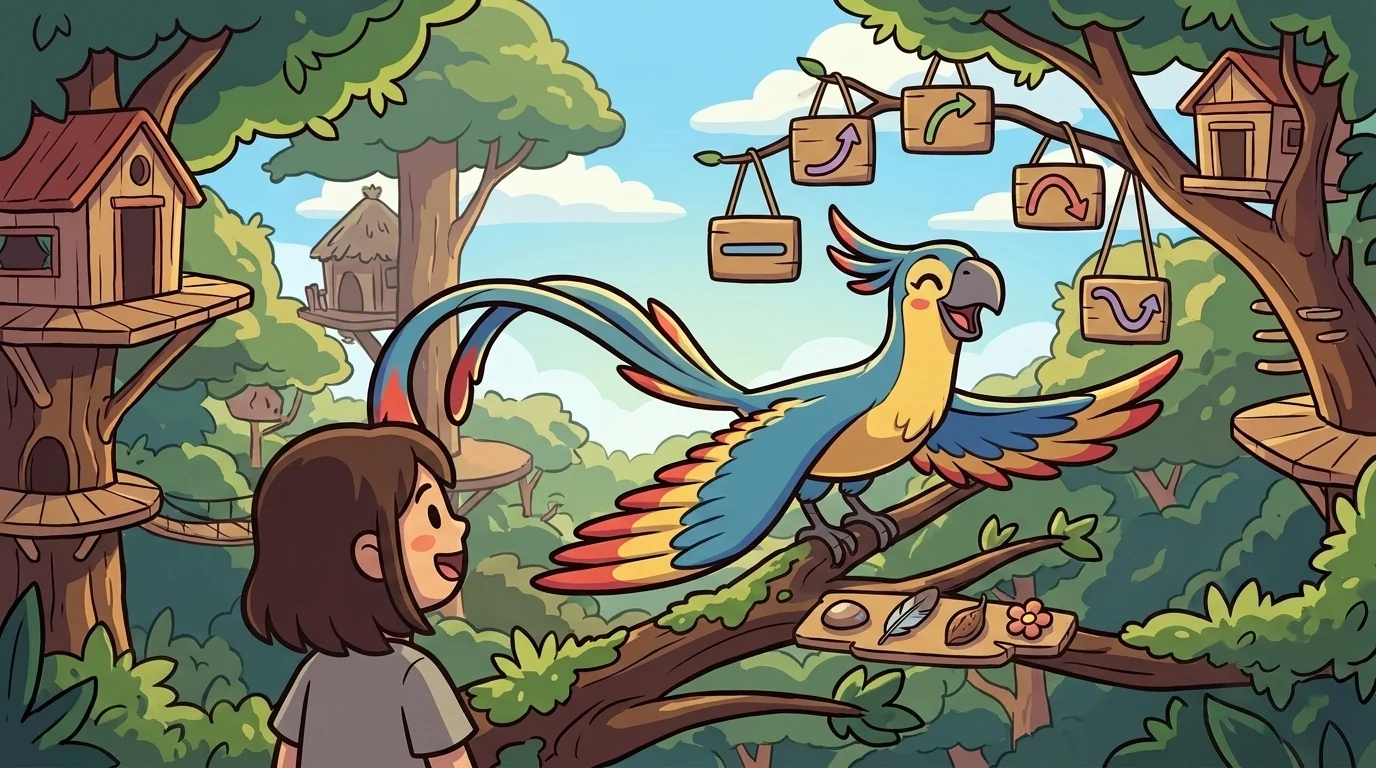
Mira asked Swoop to join the academy. "Travelers arrive thinking tone languages are 'sing-song' or harder than 'normal' languages," she said. "Would you set them right?"
Swoop agreed, voice gliding. When she teaches, she has the travelers try it — say one sound four ways, swooping the pitch, and watch four meanings appear. "Once you feel your own voice do it," she says, "you stop thinking it's strange. You realize your voice was always swooping — you just never had to listen before."
A young traveler practiced a rising-then-falling pitch on a single syllable, and grinned when she finally landed it. "I did it!" "You did," Swoop said. "And now you'll never again call it 'just sing-song.' You'll call it what it is — precise, and elegant, and every bit a language."
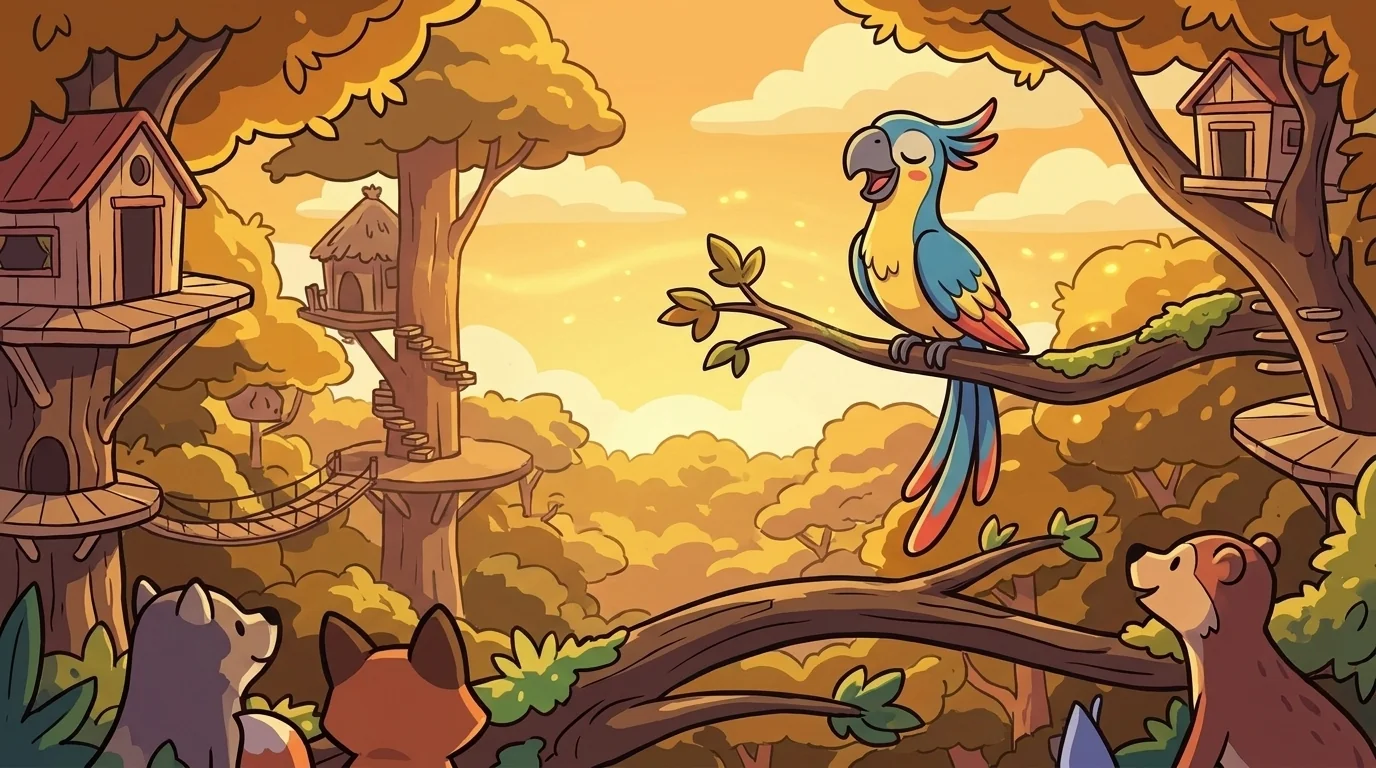
After the lesson, Swoop perched with the young travelers as the sky turned gold, her voice gliding softly through a few easy swoops, just for the pleasure of it.
For a long time, Swoop had bristled at how often people called her languages "musical" or "exotic" or "impossibly hard" — words that sounded like compliments but quietly meant strange, lesser, other. She'd wondered if she'd always be treated as a curiosity instead of a language.
But gliding through the gold evening, watching travelers who now understood, Swoop felt that old sting fade. Tone wasn't exotic. It wasn't a party trick or a song. It was simply how a huge share of the world's people had always spoken — precisely, logically, beautifully. The travelers who once gawked now respected it, and tried it, and found their own voices could swoop too. A warm, gliding contentment lifted through her. Her languages were never strange. They were just hers, and whole, and equal to any. And she let her voice swoop once more, up and over and down, glad, in the golden air.
The LinguaQuest ensemble
Swoop is part of LinguaQuest's distributed-narrative cast. Each character embodies a different curricular primitive; together they teach the full subject.
-

Bough
Language families (genetic descent — Indo-European / Sino-Tibetan / Afro-Asiatic / Niger-Congo / Austronesian)
-

Drift
Sound change (phonological evolution — Grimm's Law, vowel shifts, palatalization)
-

Glyph
Writing systems (alphabetic / abjad / abugida / syllabic / logographic — and how each captures speech)
-
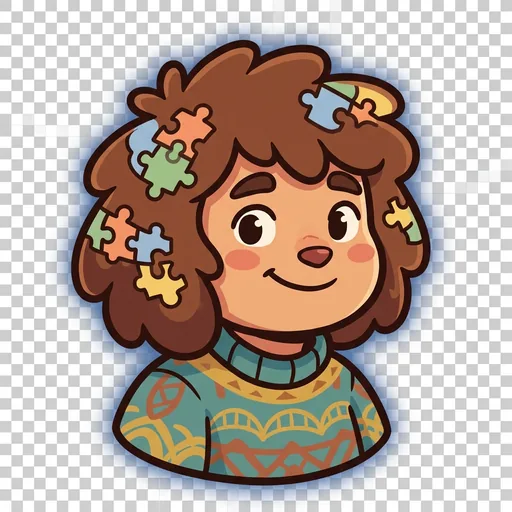
Bridge
Cognates and loanwords (shared roots across languages; trade-route borrowings)
-

Cant
Sociolinguistics — dialect, register, code-switching, formal/informal speech
-
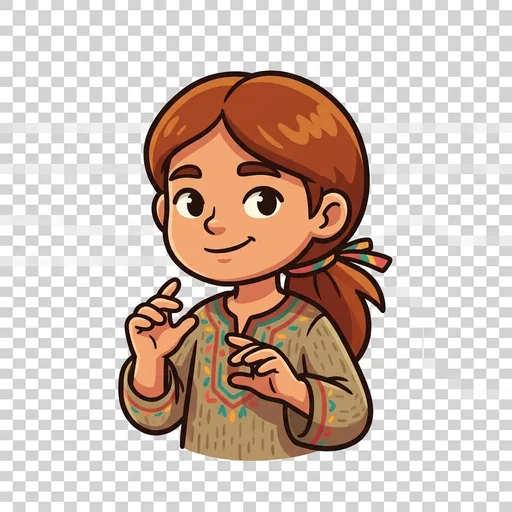
Sign
Signed languages — full natural languages spoken with hands, face, and space; each Deaf community's own, never 'just gestures'
-
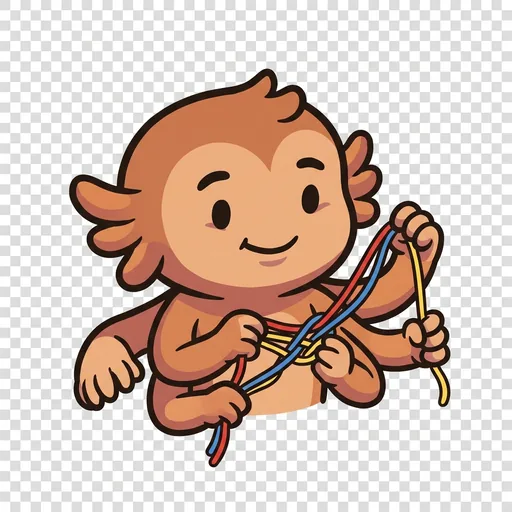
Weft
Word order / syntax — languages arrange words differently (SVO/SOV/verb-first); no order is 'backwards,' each is complete
-

Lex
Untranslatable words — words no other language has in one breath; not a gap in your language but a gift another can offer
-

Nook
Endangered languages + revitalization — keeping fading languages safe; decline is from histories of harm, never the speakers' fault; communities lead the revival