
Sign
SIGNED LANGUAGES — languages spoken with the hands, face, and space instead of sound. They are FULL languages, with their own grammar and poetry — not "gestures" or "spelled-out speech." Deaf communities around the world have their own distinct signed languages.
Press play to listen along. The line being read lights up as you go.
Show full transcript
Loading transcript…
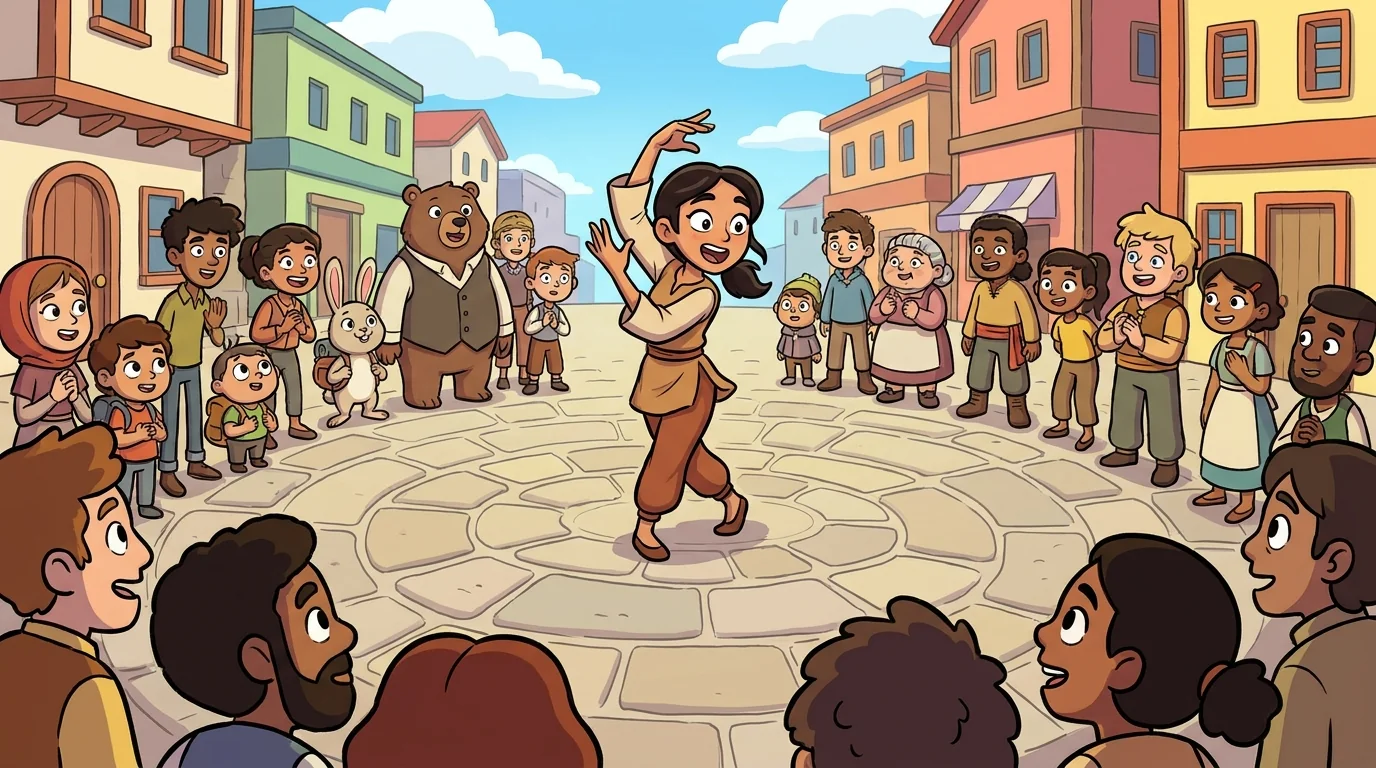
Sign lived in the bright meeting-square of the LinguaQuest world, and the first thing travelers noticed was that she was telling a whole story — and the square had gone completely silent to watch.
Sign was a graceful creature with wonderfully expressive hands and a face that moved like weather. She wasn't making sound. She was shaping the air — her hands carving shapes, her face shifting, her body turning to place people and things in the space around her. And though no sound came, the watching crowd laughed, gasped, and leaned in. They understood every bit of it. She was speaking a full language, with her hands.
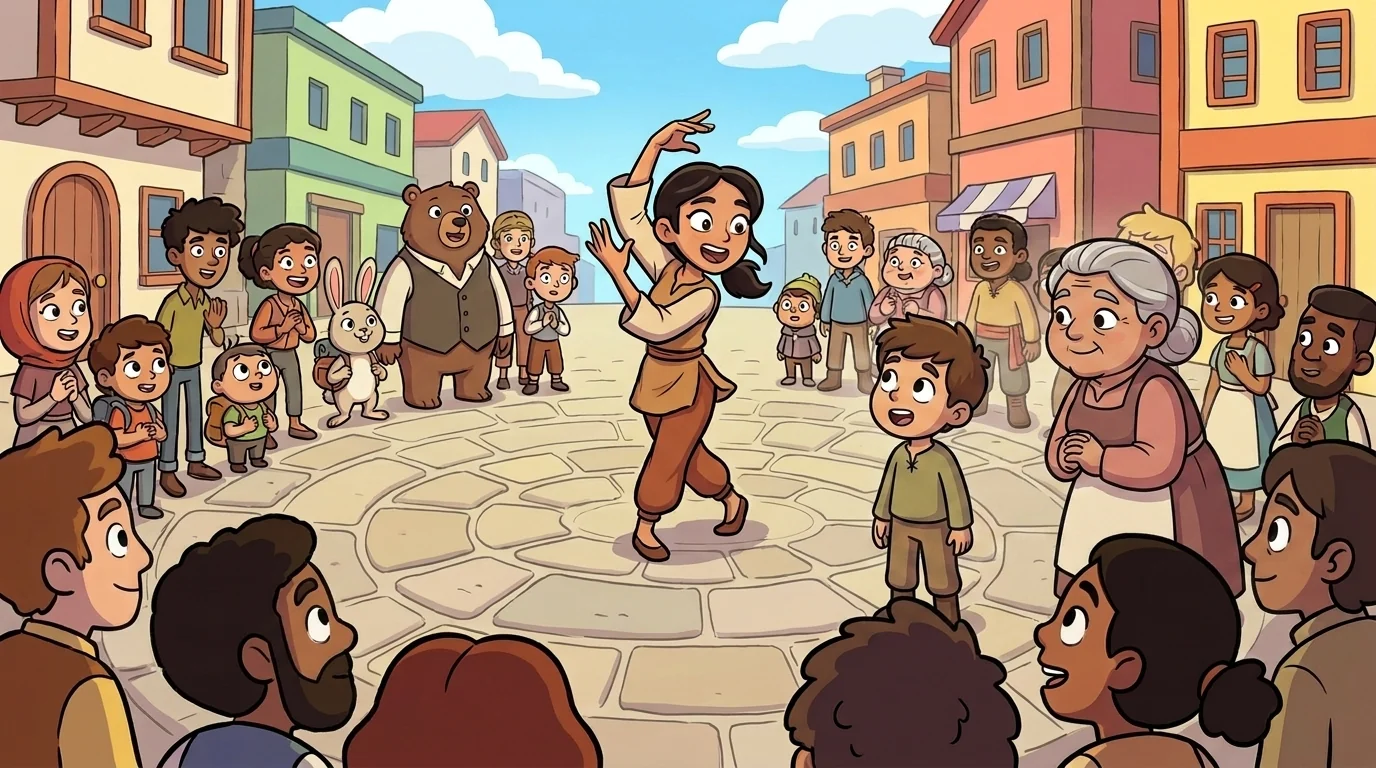
"You told that whole story without a sound," a young traveler said, amazed.
Sign smiled, hands at rest for a moment. "I did," she said. "My name is Sign. I keep the signed languages — languages spoken with hands, face, and space instead of sound." Her hands lifted again, shaping as she spoke. "And let me say the most important thing first: a signed language is a full language. Not gestures. Not 'spelled-out talking.' A complete language, with its own grammar, its own jokes, its own poetry."
Mira, the mentor, watched warmly as a young traveler asked, "But isn't it just... acting out words?"
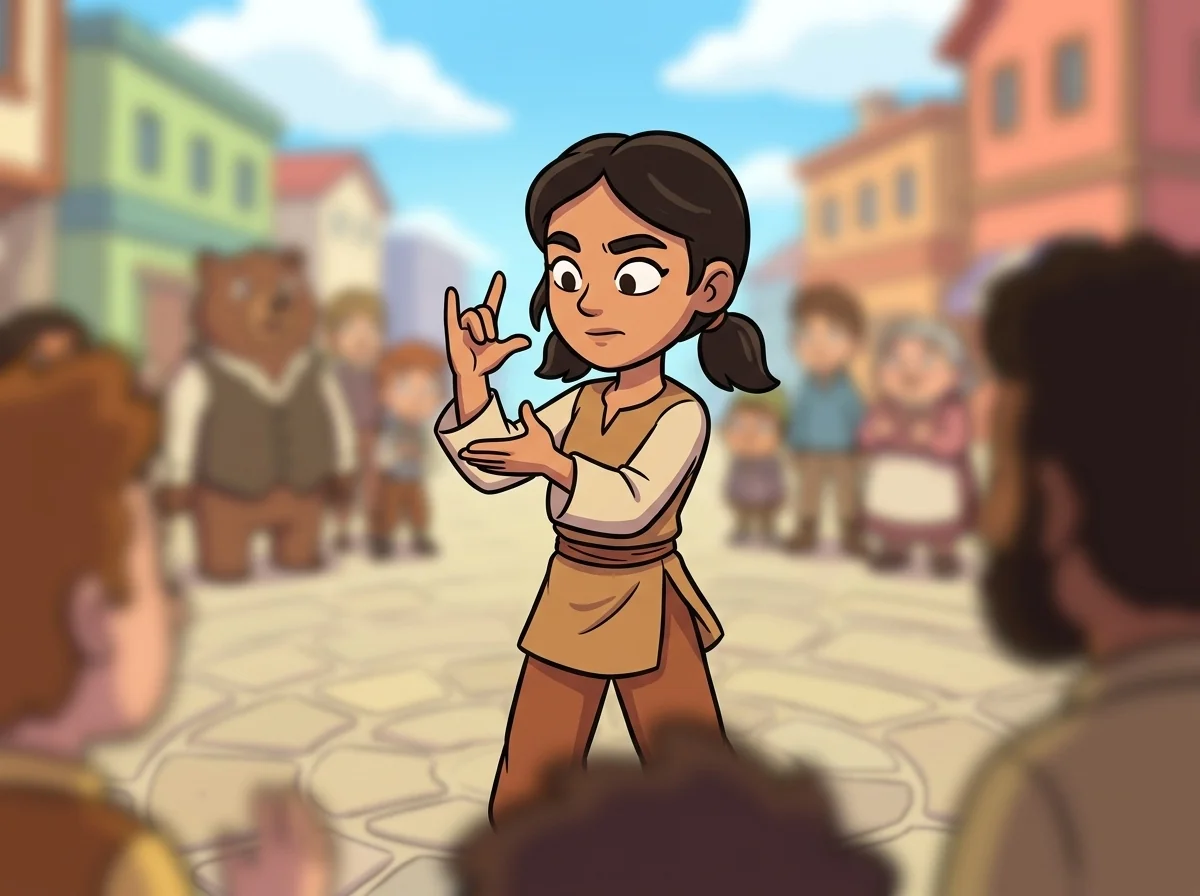
"That's the misunderstanding I most want to undo," Sign said gently. "Watch." She signed a simple idea — but instead of going word-by-word like spoken language, she placed two people in the space to her left and right, showed a path between them with her hands, and let her face carry the feeling, all at once. "Spoken languages put words in a row, one after another. Signed languages can use space and both hands and the face all at the same time. It's not a copy of speech. It's its own way of building meaning — sometimes it can say in one motion what speech needs a whole sentence for."
The young traveler's eyes went wide. "So it's not less than speaking. It's just... different."
"It's a full, rich language," Sign said. "Every bit as deep."
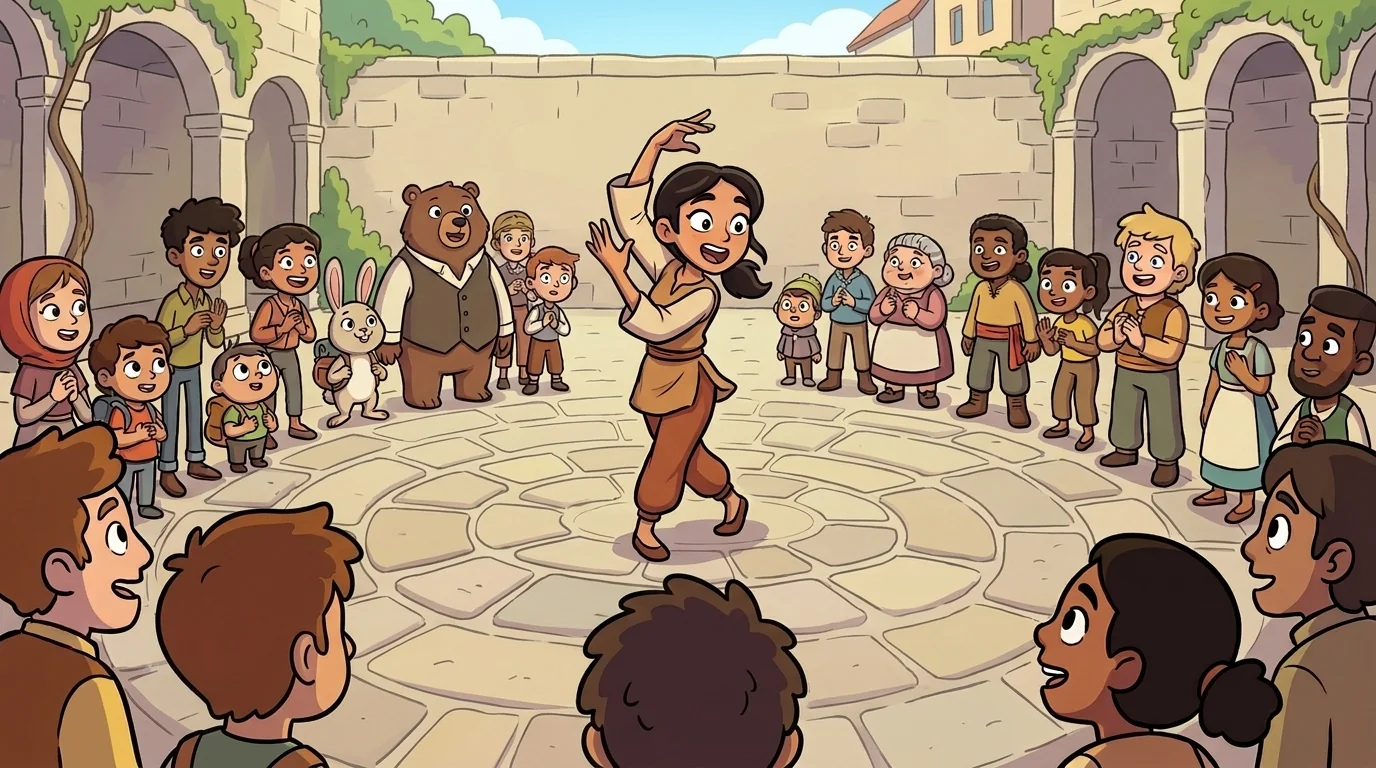
Mira asked Sign to join the academy. "Travelers arrive thinking signed languages are lesser," she said. "Would you teach them the truth?"
Sign agreed, hands glad. When she teaches, she shares what she loves most: "There isn't one sign language — there are many, all over the world, each its own. Deaf communities everywhere built their own languages, with their own histories and their own poetry. They weren't invented by hearing people to 'help.' They grew, the way all languages grow — from communities who needed to talk, and did."
A young traveler asked, "Can you really write poems in it?"
Sign's whole face lit, and her hands moved — rhythmic, balanced, a shape rhyming with a shape, repeating and turning. Even without understanding the words, the traveler could see it was poetry: patterned, beautiful, deliberate. "Signed poetry rhymes with handshapes and movement instead of sounds," Sign said. "It's one of the most beautiful things I know."
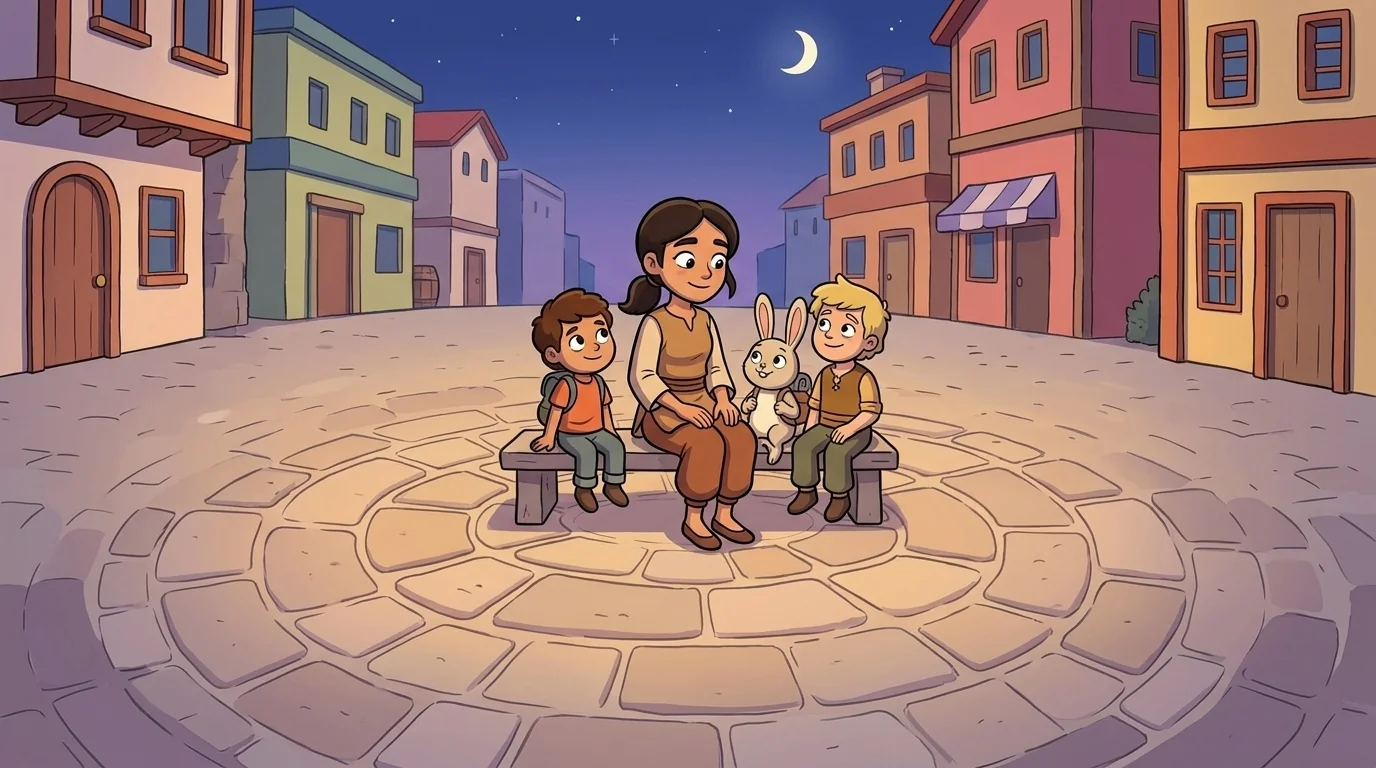
After the lesson, Sign sat with the young travelers in the quiet square, her hands resting, her face soft in the evening light.
For a long time, Sign had carried a quiet hurt: so many people, meeting her, assumed her language was less — a set of helpful gestures, a sad substitute for "real" talking. She'd wondered if she'd always have to prove that her language was a language at all.
But sitting in the warm square, watching the young travelers who now understood, Sign felt that hurt ease. Her language wasn't a substitute for anything. It was whole, and rich, and old, and beautiful — a full way for whole communities to think and joke and love and make poetry. It had never been missing a thing. And teaching others to see that — to drop the word "just" and meet her language as an equal — was the work she was proudest of. A deep, warm steadiness settled into her hands. Her language was complete. It always had been. And she lifted her hands once more, in the silent square, and told the stars a small and perfect poem.
The LinguaQuest ensemble
Sign is part of LinguaQuest's distributed-narrative cast. Each character embodies a different curricular primitive; together they teach the full subject.
-
Bough
Language families (genetic descent — Indo-European / Sino-Tibetan / Afro-Asiatic / Niger-Congo / Austronesian)
-
Drift
Sound change (phonological evolution — Grimm's Law, vowel shifts, palatalization)
-
Glyph
Writing systems (alphabetic / abjad / abugida / syllabic / logographic — and how each captures speech)
-
Bridge
Cognates and loanwords (shared roots across languages; trade-route borrowings)
-
Cant
Sociolinguistics — dialect, register, code-switching, formal/informal speech
-
Swoop
Tone — pitch that changes a word's meaning (tonal languages); precise and sophisticated, never 'sing-song' or 'exotic'
-
Weft
Word order / syntax — languages arrange words differently (SVO/SOV/verb-first); no order is 'backwards,' each is complete
-
Lex
Untranslatable words — words no other language has in one breath; not a gap in your language but a gift another can offer
-

Nook
Endangered languages + revitalization — keeping fading languages safe; decline is from histories of harm, never the speakers' fault; communities lead the revival