
Chip and Stream
fragment-and-phrase pair — Chip carries the fragment (one short, sharp image — a struck thing, no verb, a single breath); Stream carries the phrase (the longer, flowing part that keeps moving). A haiku sets a small fragment beside a flowing phrase, and the meeting of the two is where the poem happens.
Press play to listen along. The line being read lights up as you go.
Show full transcript
Loading transcript…
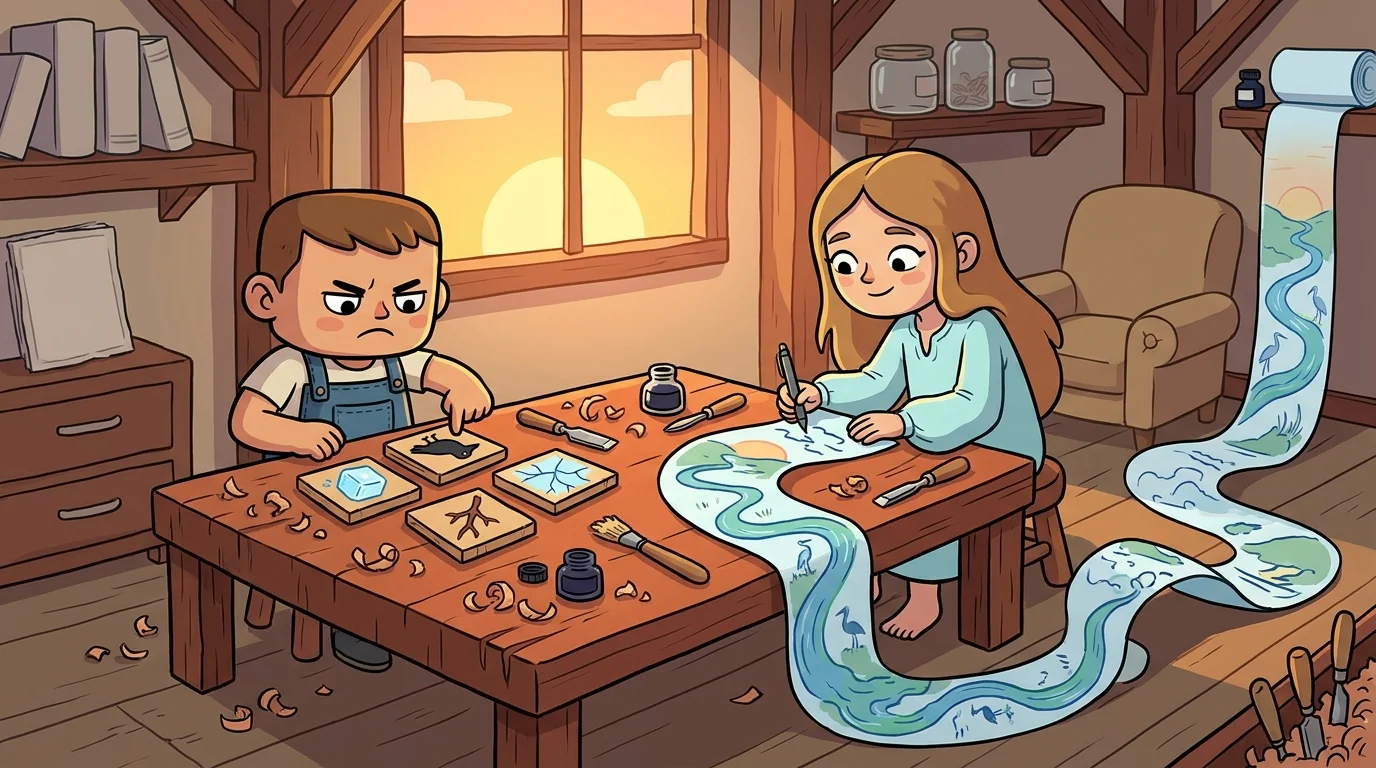
The workshop smelled of wet black ink, shaved cedar, and the sharp, metallic tang of cold iron tools. Sunlight cut through the high, dusty windows, illuminating motes that drifted like tiny, silent satellites over the low workbench. On one side sat Chip, his shoulders squared like a small, stubborn box that refused to open. He carved his words into cedar tiles, using a small, curved knife that hissed softly against the grain. He worked slowly, shaving away the soft wood until each letter stood out, hard and exact. In front of him lay three finished tiles, aligned with mathematical precision: Cold stone, One crow, and Bare branch. He stared at them, his brow furrowed as if he were trying to force mismatched puzzle pieces together.
Across the table, Stream was operating in an entirely different climate, surrounded by her own creative storm. She didn't use wooden tiles; she wrote on long, unspooling ribbons of thin rice paper. They trailed off the edge of the table, pooling around her ankles like pale shavings from a giant pencil. Her bamboo brush moved in quick, silent loops, her fingers permanently stained with dark ink. She paused to grind more ink on her slate stone, adding a single drop of water. Right now, she was in the middle of a line that had no obvious destination.
The river slides past the bend where the herons stand very still and then keeps on going toward the place where the light gets thin...
"We are supposed to make one haiku by sundown, and we have to do it together," Chip said, his voice flat. He pronounced the word together as if it were some terrible chore he had been assigned.
"I am nearly there," Stream said, not looking up as her brush danced across the paper. The tail of her paper ribbon was currently brushing against the far brick wall. "I just haven't found the end of the thought yet," she added, her brush never stopping.
"That is because it does not have one," Chip muttered. He set down a new tile that read Thin ice, two words that felt hard and final. He glanced toward the window, where the shadows of the pine trees were growing longer as time slipped away.
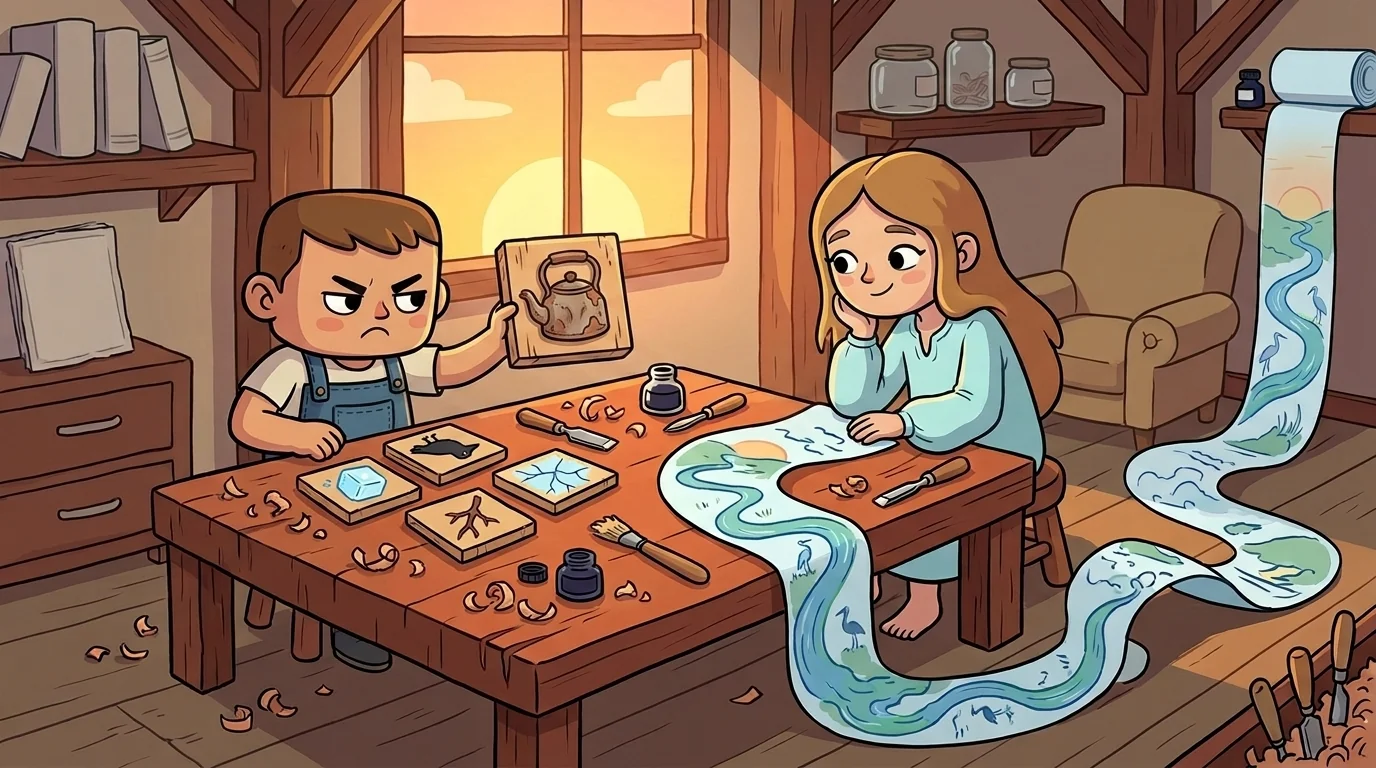
Chip liked things that stopped, and that was the honest truth of him, the rule he lived by. He would spend an entire afternoon walking through the woods, looking for a single, perfect image. He looked for the way frost clung to a reed, or a dropped woolen glove in the snow. When he found it, he captured it in the fewest words possible and then he simply stopped. To Chip, stopping was the entire point of writing, the only way to keep a moment safe.
"Look at this," he said, pushing one of his finished tiles toward the center of the table. Old kettle. "You can see it, right? The dents in the metal, and the little patch of rust near the spout."
"I see it," Stream said, tilting her head to study the carved wood with quiet curiosity. "But then what? It just sits there on the table, like being handed a brass doorknob with no door." She was not trying to be mean, but she genuinely wanted to know where the kettle went next. She wanted to know who owned it, what they were making, and what the light was doing.
Chip felt a familiar, cold pinch under his ribs, a physical ache he could not ignore. It was the worry he never shared with anyone, the constant fear that she was actually right. What if all his perfect tiles were just *fragment*s that never came together? They were chips of stone, sharp and clear, but they were not a whole poem. He lined them up on the table, but they remained small, disconnected things. A quiet voice inside him whispered that he was just like his tiles, disconnected and small. He pushed the worry down, picked up his knife, and began carving another piece of cedar. He blew the sawdust off the wood, watching the pale grains scatter across the table.
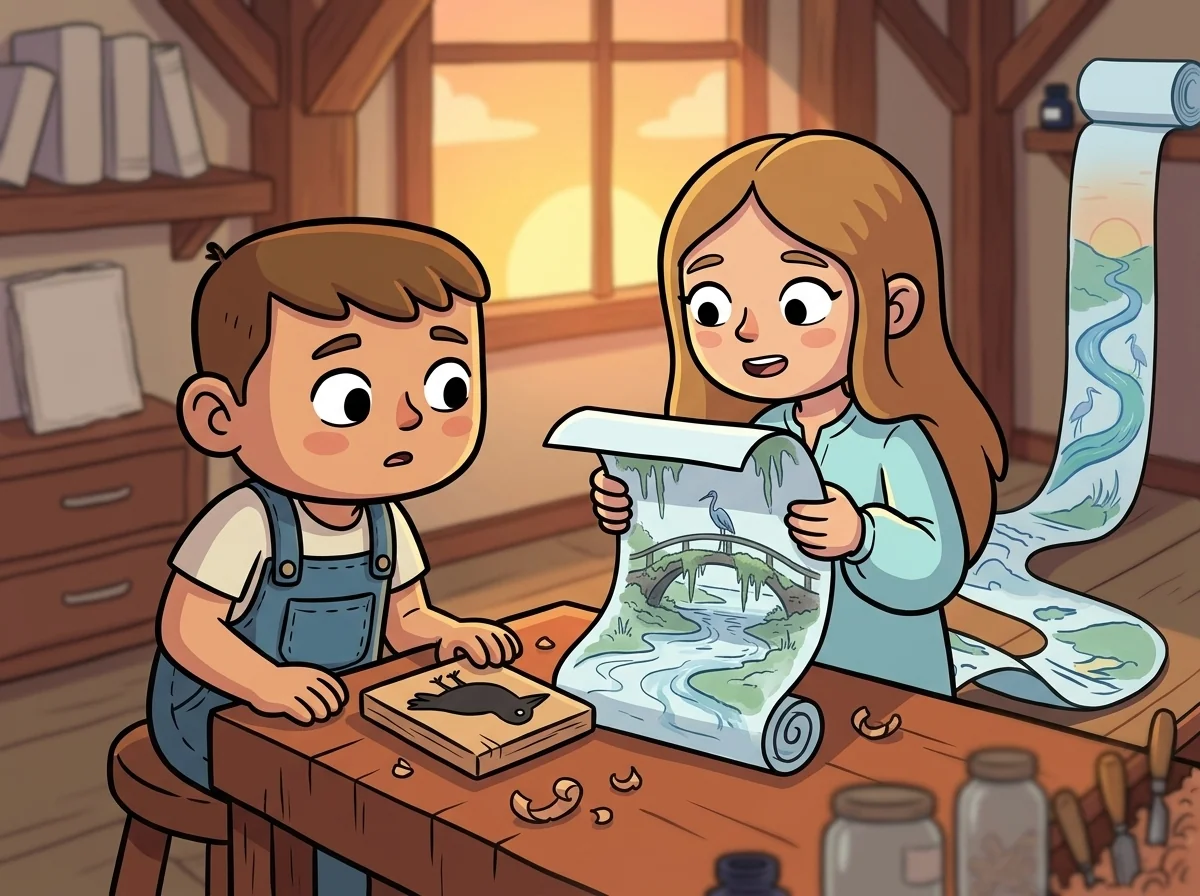
Stream had her own secret worry, though she kept it hidden behind a flurry of motion. She lifted her latest ribbon, blowing gently on the wet ink to dry it before it smudged.
"Listen to this part," she said, reading aloud as she held the paper up to the light. "...and the water goes under the low bridge where the moss hangs down and touches its own reflection..." Her voice had a natural rhythm, rising and falling like water moving over smooth river stones. Chip leaned forward despite himself, his eyes tracking the movement of her hand across the page.
"See?" she said, her eyes bright with excitement. "That is alive because it actually moves."
"But where does it end?" Chip asked, and it was a real question this time. It was not an argument, because he really wanted to understand her way of working.
Stream opened her mouth to answer, but no words came out of her throat. The truth was that her poems never ended, and she did not know how to stop. They ran on and on, beautiful and bright, until they spilled off the edge of the page. By the time she reached the end, she could never remember where she had started. People smiled at her long ribbons, but they never remembered a single word she wrote.
"Beautiful," they would say, but then they set them aside and forgot them entirely. She was like a river with no banks, spreading out until she became nothing at all.
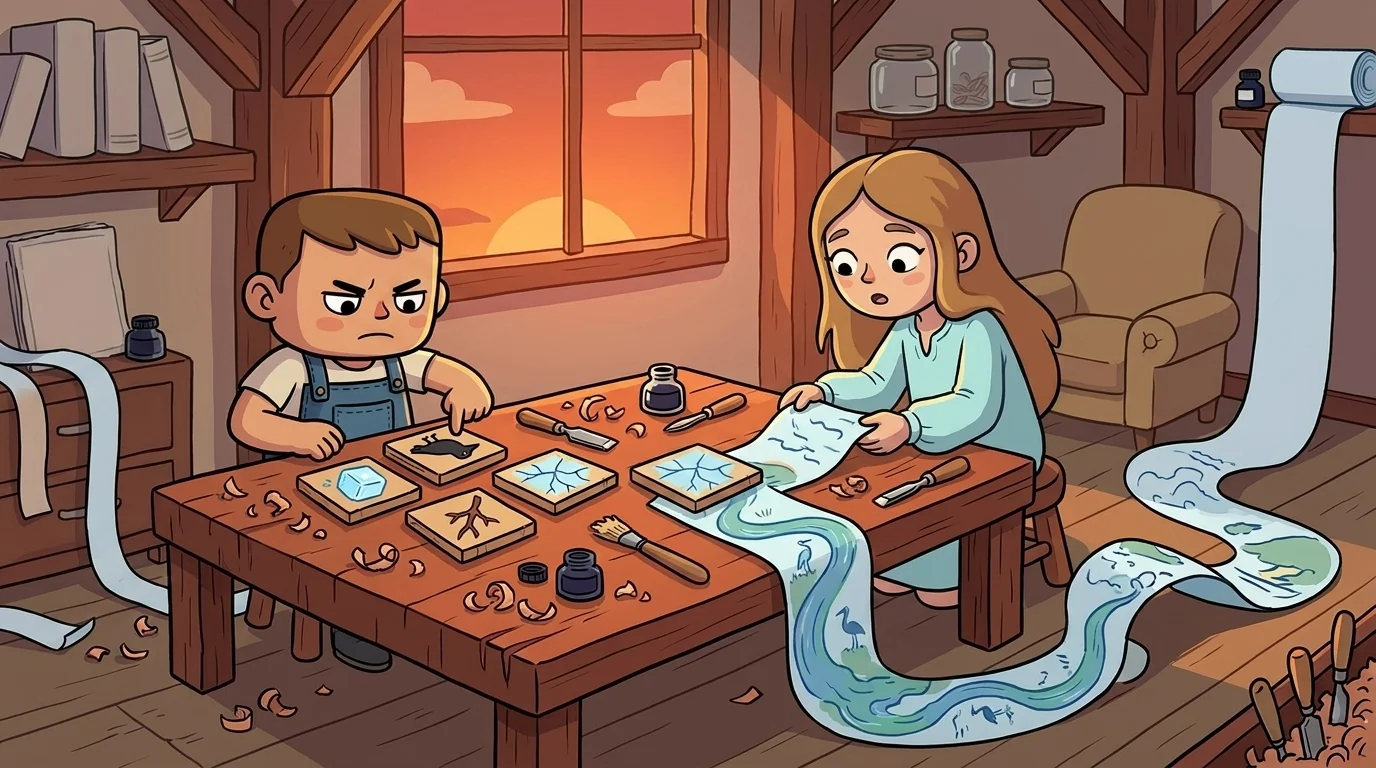
For an hour, they tried to force their different ways of working to fit together. Chip laid down five of his tiles in a rigid, unyielding row on the table.
"There," he said, tapping the wood. "That is a proper poem."
"No," Stream said, shaking her head. "That is just five separate things sitting next to each other with no connection." She unrolled a ribbon of paper that stretched out the door and into the garden. "This is a poem because it flows," she insisted, gesturing to the paper trail.
"That is just a list of things that happened, not a poem," Chip countered.
Frustrated, Stream turned to follow her ribbon into the yard, but her foot caught on the table leg. She tripped, her arms flailing wildly, and knocked one of Chip's cedar tiles to the floor. She scrambled to pick it up, ready to snap at him for leaving things in her way.
She looked down at the wood, and saw the tile read: Thin ice.
She held the cold wood in her palm, looking at the sharp, carved letters he had made. Without meaning to, she felt her endless, flowing *phrase* run right into those two sharp words. And then, for the very first time, her thoughts came to a complete stop. The words were so hard and solid that her ribbon finally had a place to land.
"Read your tile," she said, her voice suddenly quiet, "and then let me read this part."
Chip blinked, looking from her face to the wooden tile in her hand. He cleared his throat and read his words: "Thin ice."
Stream looked down at her paper ribbon and read: "A boy leans out to look at his own face."
They both went very still, listening to the silence that settled over the room. The combination worked, and they both knew it instantly. The sharp, cold image of the ice gave her flowing line a place to rest. Her words gave his cold tile room to breathe, opening up a whole world of meaning behind it. Neither part could do it alone, and they finally understood why. The poem lived in the exact space where the stop met the going.
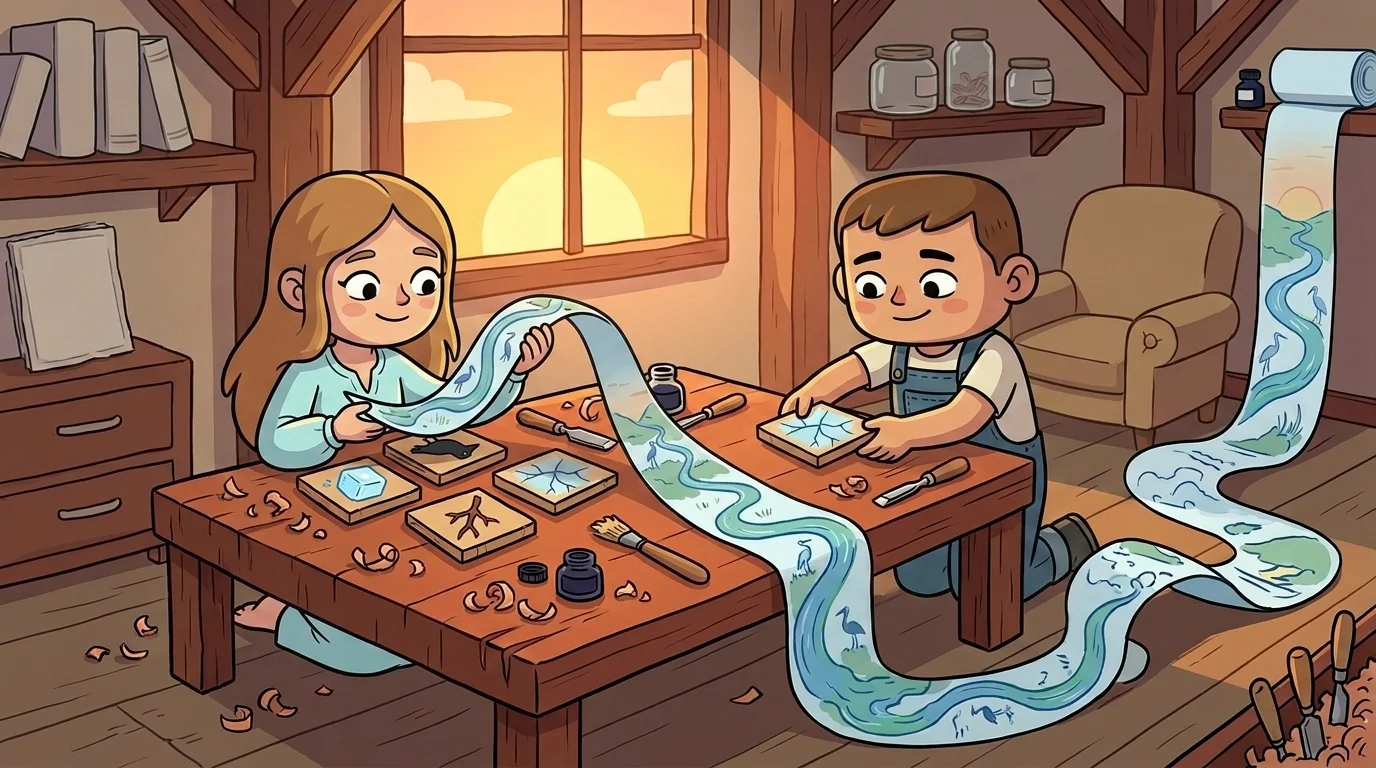
They built it properly then, kneeling on the same side of the table, their shoulders nearly touching as they worked.
"You put down the image that stops," Stream said, her fingers tracing the carved wood.
"And you carry it forward," Chip said, surprised by the warmth in his own voice. He placed a new tile on the table that read: First cold morning.
Stream aligned her paper ribbon with the wood, ready to write. Together, they read: "The kettle's small song fills the empty house."
They read the lines together, their voices blending in the quiet, cedar-scented room. The finished poem felt complete, perfectly balanced between the solid wood and the flowing paper. Chip looked down at the table, and the cold worry under his ribs finally vanished completely. He was not just a collection of useless, broken pieces after all. His sharp images did not need to be bigger, because they just needed to belong somewhere. Stream sat back, her ink-stained fingers resting on her lap as she smiled. Her endless motion had finally found a place to land, and she felt entirely whole. They sat together in the cedar-scented quiet, no longer two separate parts, but one complete thing.
The HaikuQuest ensemble
Chip and Stream is part of HaikuQuest's distributed-narrative cast. Each character embodies a different curricular primitive; together they teach the full subject.
-
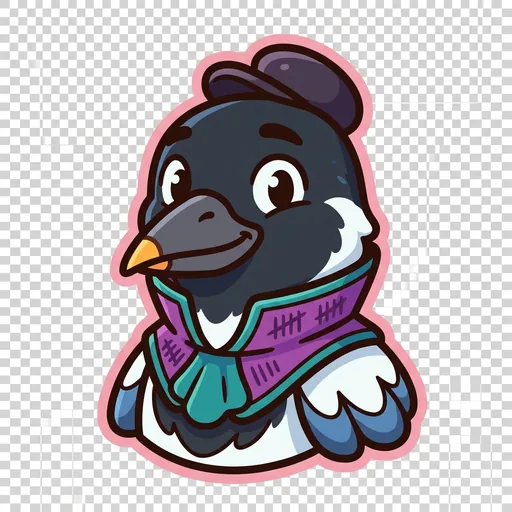
Count
Syllable count / count-discipline — magpie-tween whose beak-tap enacts the rhythmic underpinning of every counted form
-
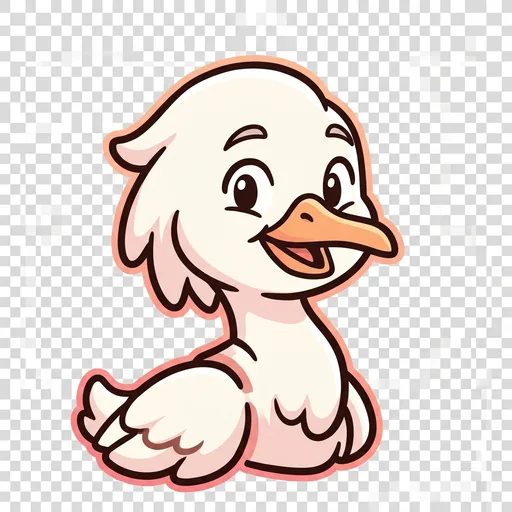
Pause
Kireji / cut / productive break — snowy-egret-tween whose perpetually-mid-step body IS the kireji in physical form
-
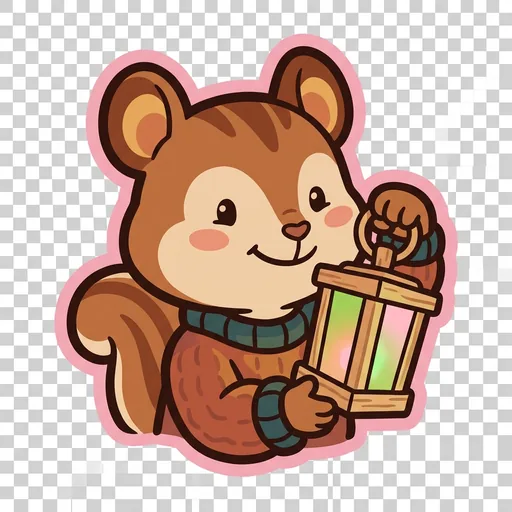
Lantern
Season-word / anchoring image — chipmunk-tween whose wooden lantern visibly shifts color with the season
-

Trim
Brevity / saying-less — red-squirrel-tween with brass scissors who snips redundant words to find the smaller-stronger version
-

Flint
Juxtaposition — flinty badger-creature who strikes two smooth stones to make a spark; two images set side by side make a third meaning leap up in the gap
-

Gallop
Meter / the stressed beat — long-legged pony-creature whose hooves fall da-da-DUM; not how MANY beats (that's Count) but which ones to stomp (esp. the limerick)
-
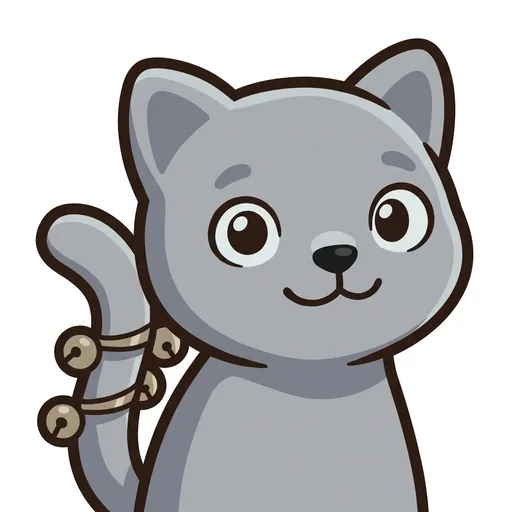
Bell
Rhyme — silver creature with tuned tail-bells that chime the same note when end-sounds match; a forced rhyme jammed in just to chime is worse than none
-
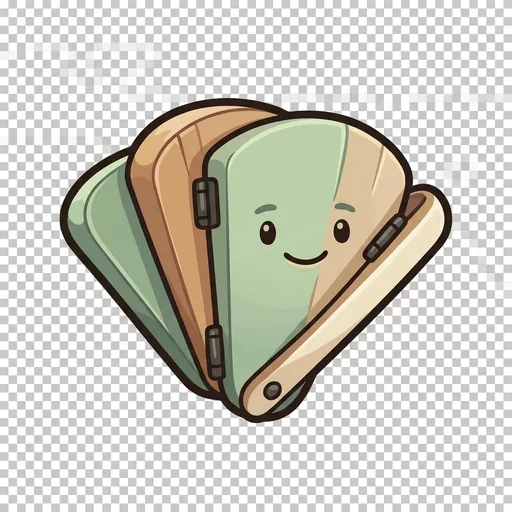
Hinge
The line break — folding-door creature who holds a small pause at the end of each line; the end of a line is a little stage, so end on a word that earns it
-
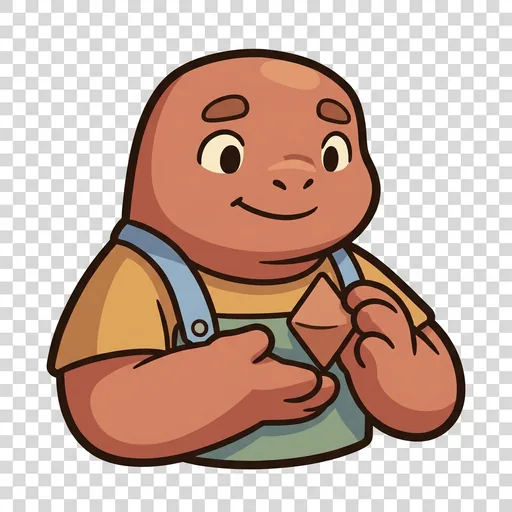
Mold
Shape on the page — clay-colored creature who builds a poem's silhouette (a cinquain's 2-4-6-8-2 diamond); shape is meaning you can see from across the room
-
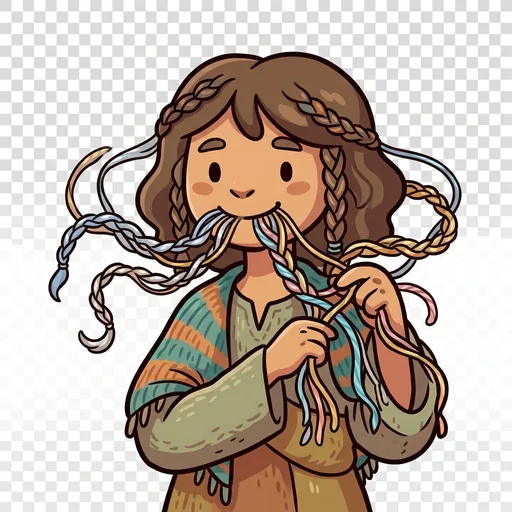
Braid
Sound texture — nimble creature who weaves repeated sounds through a line (alliteration + assonance); enough echo makes music, too much makes a tongue-twister knot