Prime the Indivisible
NUMBER THEORY — *primes, factorization, modular arithmetic.* The discrete-math primitive of *integers and their multiplicative structure.*
A story read by Prime the Indivisible
Press play to listen along. The line being read lights up as you go.
Show full transcript
Loading transcript…
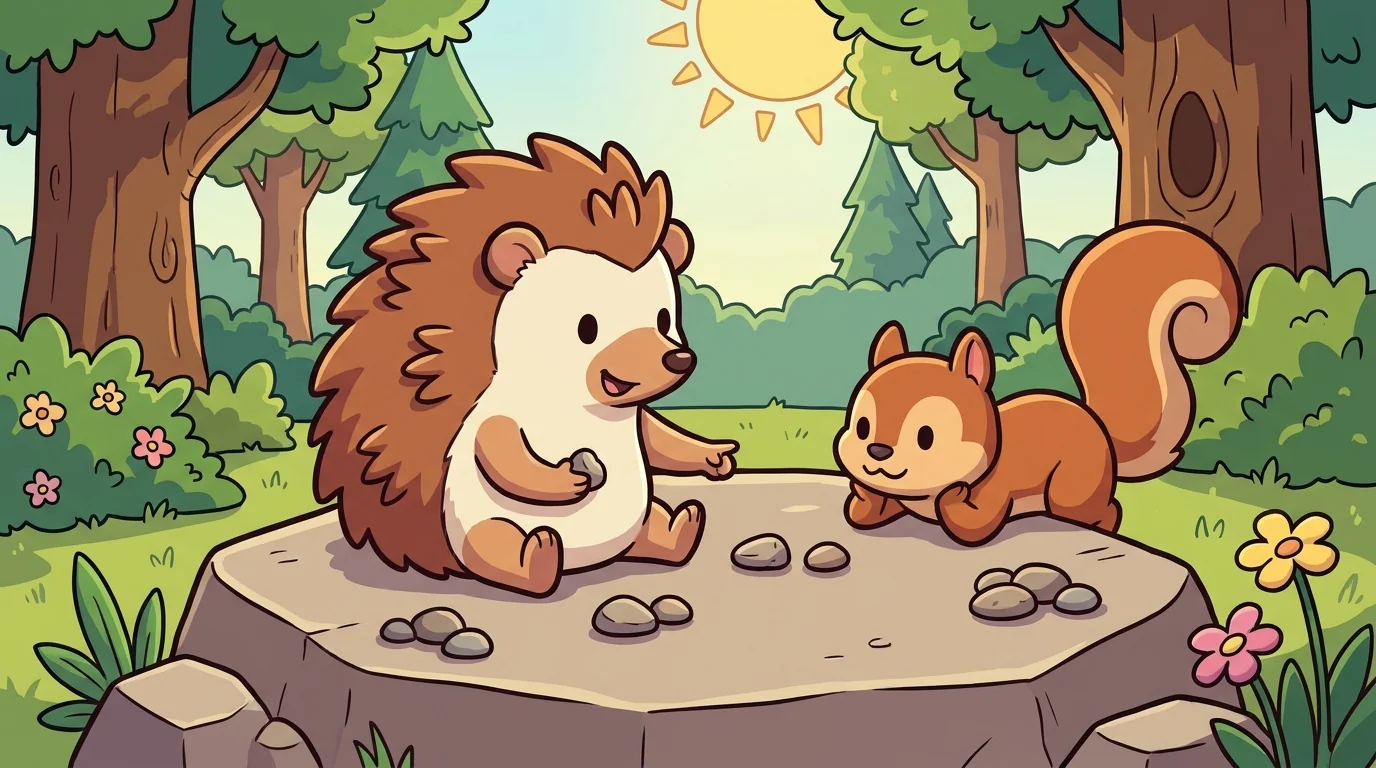
Prime was a small hedgehog with warm brown and creamy-white fur and steady, thoughtful eyes that always seemed to be counting something. Her spines were not like other hedgehogs' spines — they were soft and chunky, like something out of a cartoon, and they never grew just anywhere. They grew in tufts. A tuft of two here. A tuft of three there. A tuft of five, a tuft of seven. Never four. Never six. Never eight.
One quiet afternoon she was sorting pebbles on a flat rock, murmuring under her breath. "Two. Three. Five. Seven."
A curious squirrel named Squeaky flopped down beside her. "Why are your spines all bunched up like that?"
Prime touched a little tuft on the top of her head. "This one's two." She pointed to a bigger bunch. "That one's three. And down my back — five, seven."
"Why not four?" Squeaky asked. "Why not six?"
Prime shook her head and smiled, a small proud smile. "They won't. I've tried. A four always splits — look." She set out two pebbles, then two more beside them, two neat little groups. "Four falls into two-and-two. It won't hold together as one tuft." She swept them back up and set out five in a single ring. "But five? Five won't break into equal groups. Not two, not three, not four. Just one big five, or five lonely ones. So five stays a tuft. My spines only grow the counts that won't split."
Squeaky stared. "So your fur is... doing math?"
"My fur is showing which numbers are stubborn," Prime said. "The ones that won't break down into smaller, equal groups. Those are the ones I'm made of."
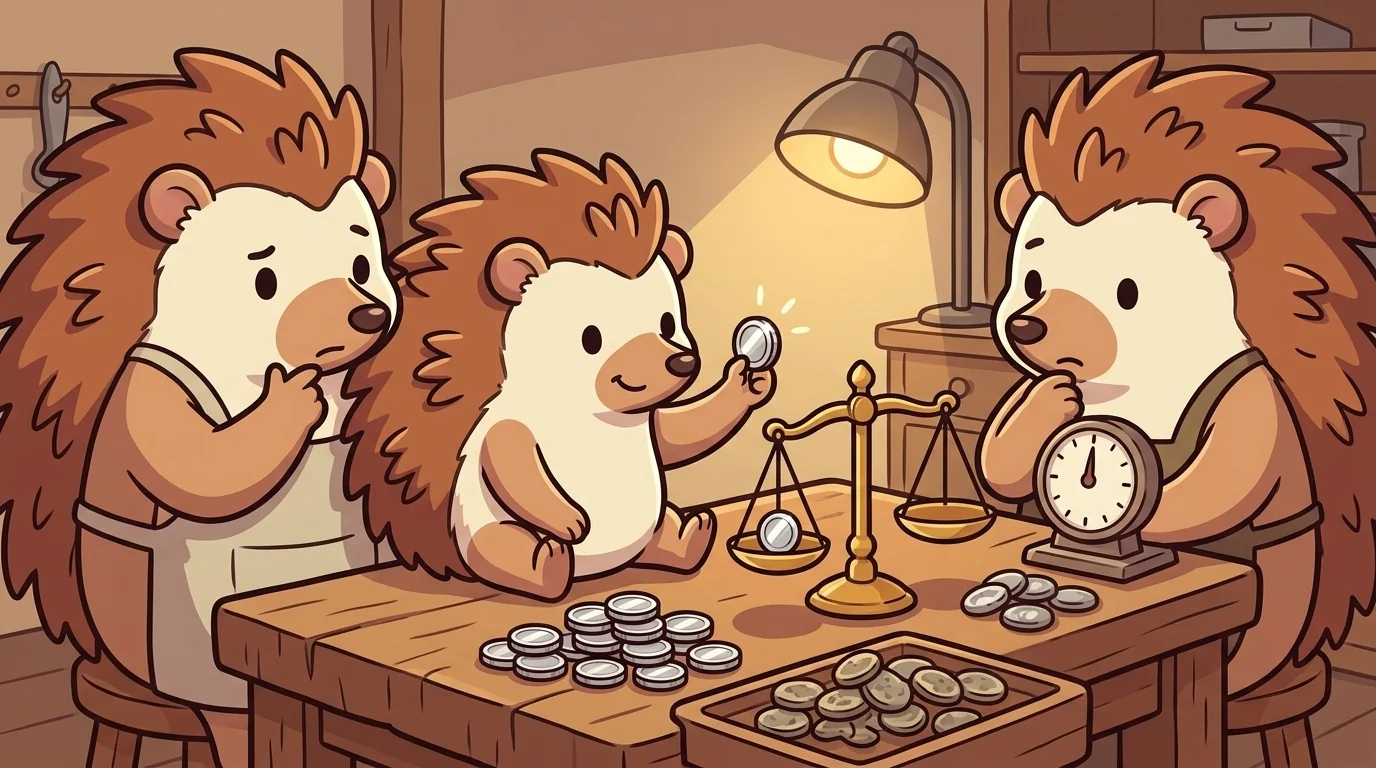
Prime grew up in a small, quiet village where her family were the coin-weighers. Her parents would set each metal coin on a delicate scale and watch the needle. A pure coin sat at exactly the right weight; a coin secretly mixed with cheaper metal sat a hair too light, and out it went.
Prime spent whole afternoons at the scale beside them, sorting coins into piles. She loved the pure ones best. There was something clean about a thing that was only itself — one metal, all the way through, with nothing hidden mixed in. She'd hold a pure coin up to the light and turn it, and feel oddly settled, the way you feel when a thing is exactly what it says it is.
She started to notice her own spines were like that. The tuft of five wouldn't break. The tuft of seven wouldn't break. They were pure, in the same way the good coins were pure — whole, unmixable, only themselves. She didn't have a word for it yet. But she knew the feeling: some things simply do not come apart, and there is a strange comfort in that.
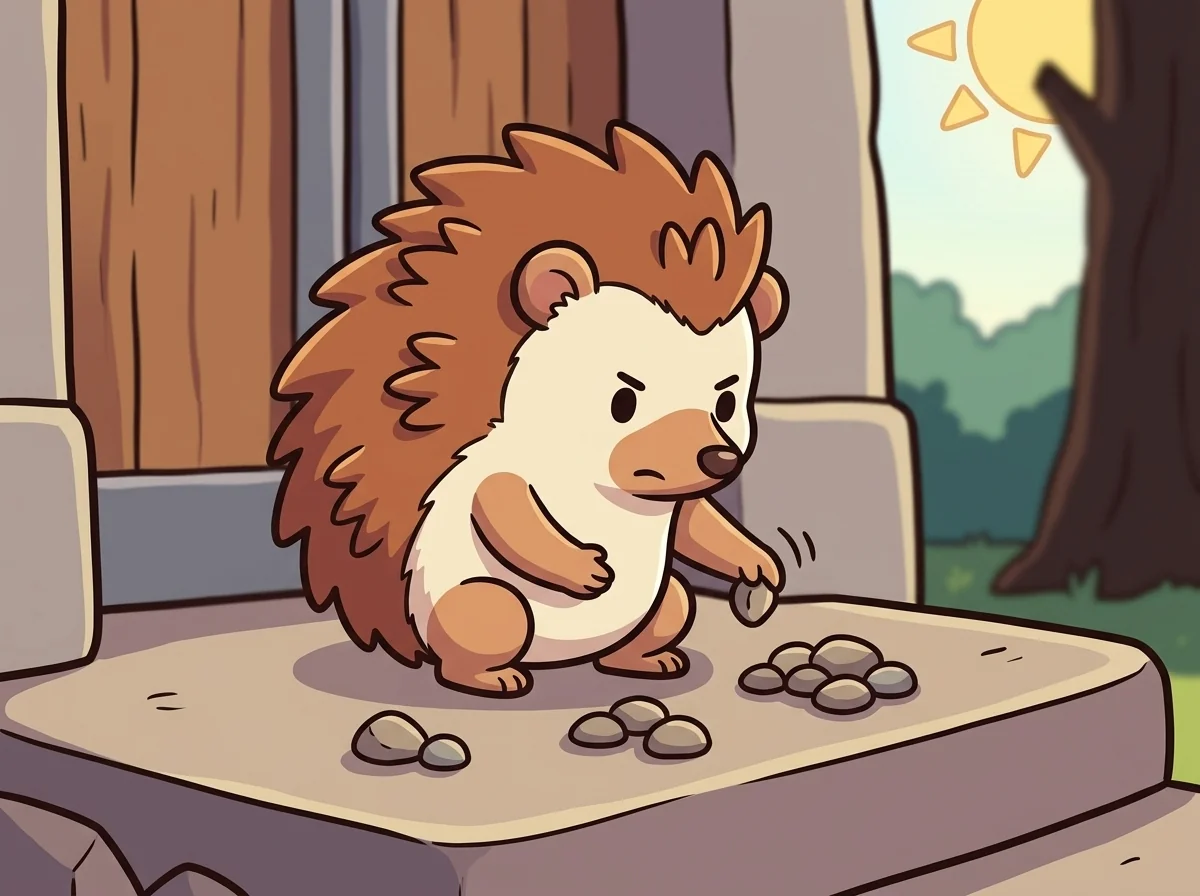
When she was grown, Prime heard about a place called DiscreteQuest, where creatures went to learn the deep secrets hidden inside numbers, and she knew at once she had to go. She walked for many days and arrived, footsore, at the great gates, where an old wise owl blinked down at her.
"Show me what you know," the owl said, his voice deep and unhurried.
Prime didn't recite anything. She simply crouched, gathered a handful of pebbles, and got to work on the stone step. "Watch." She poured out twelve. "Twelve breaks." She split them into two sixes, then split each six into a two and a — no — she frowned and split the six into two threes instead, then again, until she had a scatter of tiny groups: two, two, three. "See? Twelve comes apart until nothing's left but the stubborn ones. Two, two, and three. Those three won't break any further." She looked up. "Every number does that. It comes apart down to the pieces that won't."
The owl leaned closer. Prime poured out thirty and did it again — two, three, five — three stubborn pieces and no more. Then she did fourteen, and eight, and each time she stopped at exactly the tufts that grew on her own back.
The owl was quiet a long moment. Then he dipped his head. "Come in," he said. "There is a workshop here that has been waiting for you."
Prime felt a warm rush go all the way to her spines.
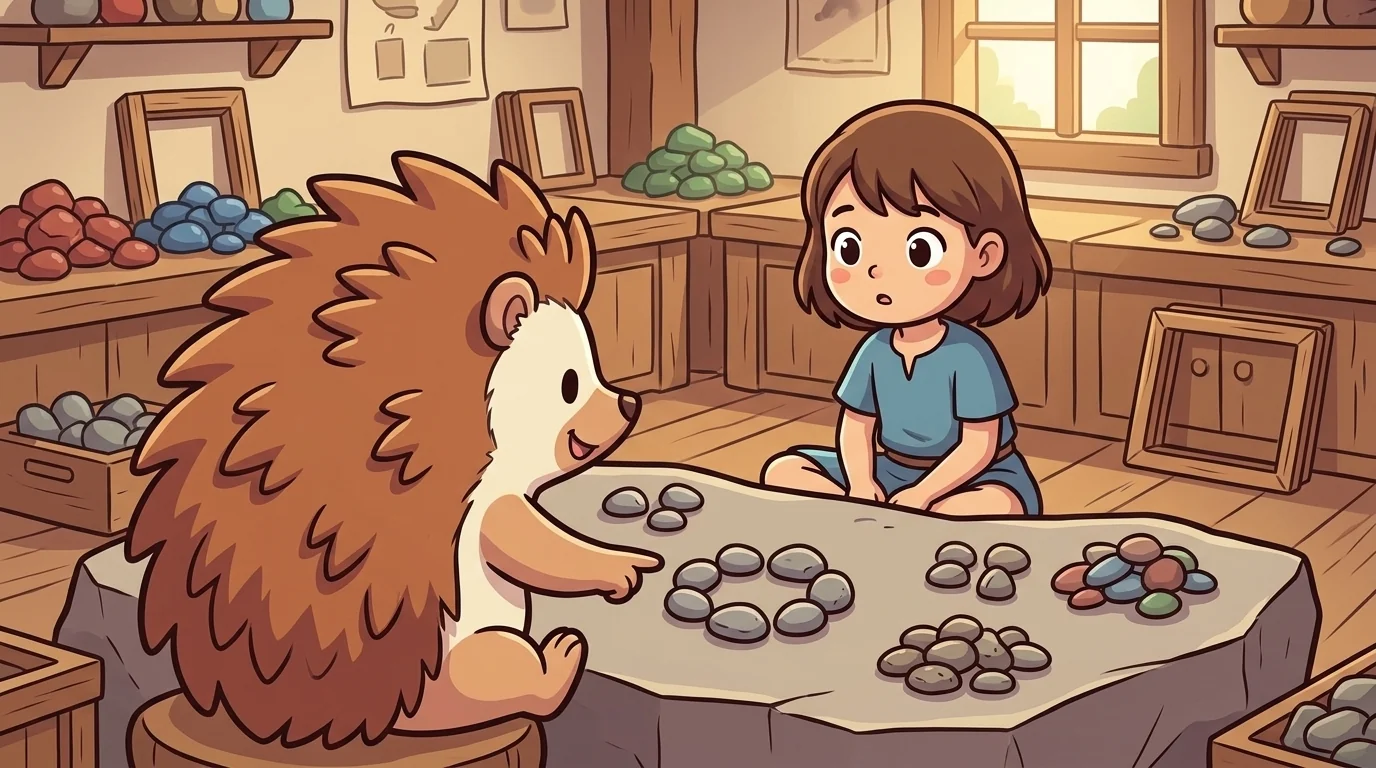
In her workshop, Prime taught the way she thought — with her paws in the pebbles. A young student named Fen sat cross-legged in front of a pile of stones.
"Break thirty for me," Prime said.
Fen pushed the pile into two heaps. "Fifteen and fifteen?"
"Good start. Now keep breaking. Break a fifteen."
"Three and... five?" Fen split it. "Three fives."
"And can you break a three? Or a five?"
Fen pushed at them, tried two groups, tried three, and finally sat back. "No. They just... won't."
"Now you've hit the floor," Prime said, delighted. "Two, three, three, five. Those are the stubborn ones — I call them the pieces a number is built from." She traced it in the dust with a claw: 30 = 2 × 3 × 5. "And here's the part I love. You could break thirty a hundred different ways to start, big heaps, little heaps, any order you like — and you will always, always land on exactly those same stubborn pieces at the bottom. Two, three, five. Every time. It's like thirty has a secret recipe, and there's only one."
Fen tried it fresh, starting from six-and-five instead — and landed on two, three, five all over again. Fen's eyes went wide. "It's the same!"
"It's always the same." Prime pressed a paw to a tuft of her own spines. "That's why I wear them like this. My spines only grow the stubborn counts, because those are the only pieces anything is really made of. Break a number all the way down and this is what you find — mine, right here on my back."
She showed Fen one more trick before the light went low: a big grid scratched in the dirt, and how, if you crossed out every number that broke, the stubborn ones lit up all on their own, scattered down the grid like little lamps. Fen crossed them out one by one, breathless, watching the pattern appear.
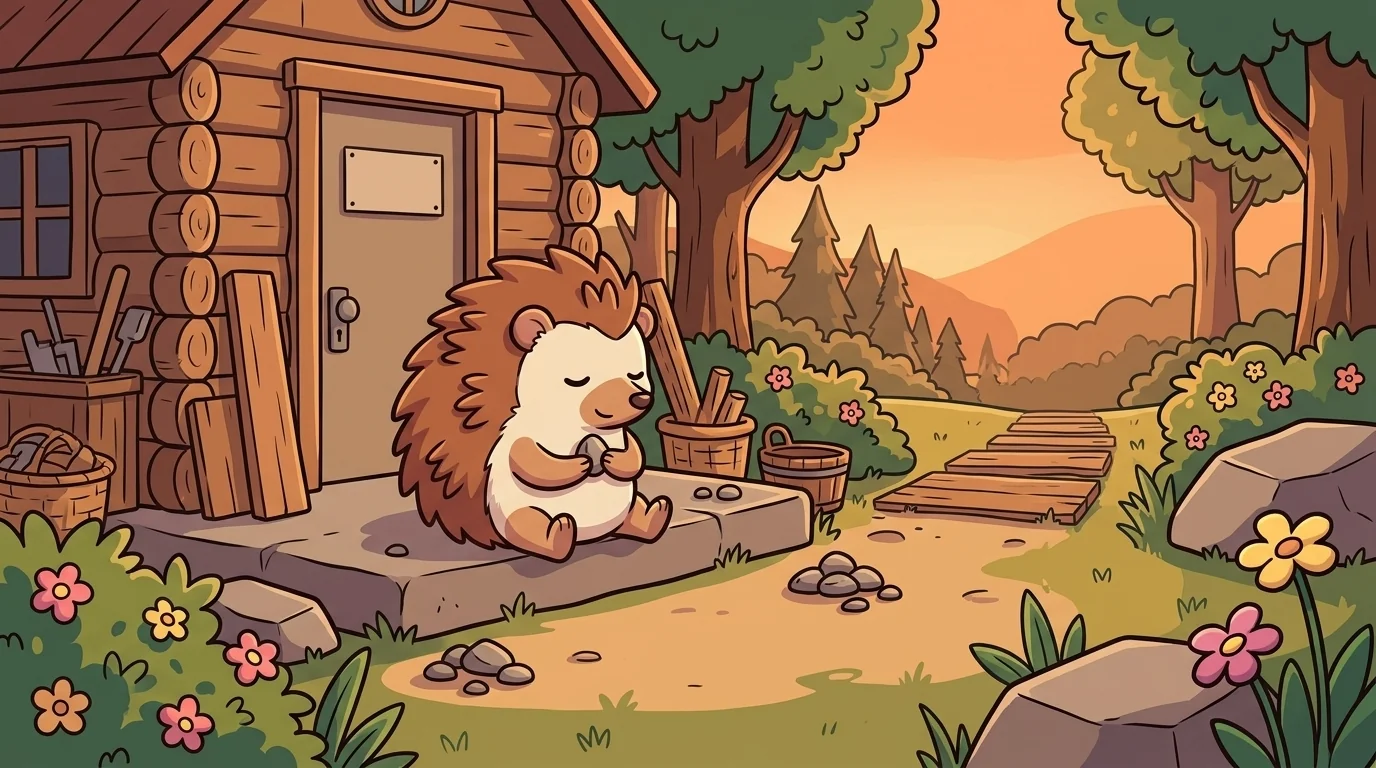
The lesson ended and Fen ran off to find more numbers to break. Prime stayed on the workshop step as the sky went soft and orange.
She sat with a single pebble in her paw — just one, a lonely thing, uncrackable. She turned it over the way her parents used to turn a pure coin up to the light.
For years, back at the scale, she'd worried that being only-yourself, unbreakable, unable to blend in, might be a lonely way to be. But sitting here, spines full of stubborn little tufts, she didn't feel lonely at all. She felt whole. She was made of pieces that could never be split into anything smaller or plainer — and so was every number, and so, she suspected, was every kid who'd ever sat in front of her pile of pebbles. Each one their own strange, unrepeatable recipe.
She closed her paw gently around the pebble and held it against her chest, and she felt, all the way through, deeply and quietly glad to be exactly and only herself.
The DiscreteQuest ensemble
Prime the Indivisible is part of DiscreteQuest's distributed-narrative cast. Each character embodies a different curricular primitive; together they teach the full subject.
-

Sortie the Set-Curator
Sets, subsets, set operations (union, intersection, difference)
-

Tally the Pattern-Counter
Counting principles and combinatorics (multiplication rule, permutations, combinations)
-

Verity the Truth-Tester
Propositional logic, truth tables, AND/OR/NOT operators
-

Wander the Bridge-Walker
Graph theory — Eulerian paths, Hamiltonian paths, connectivity
-

Coil the Self-Reference
Recursion and sequences (Fibonacci, factorials, recursive patterns)
-

Cubby the Cubby-Keeper
The pigeonhole principle — when there are more things than places, at least one place must hold two
-
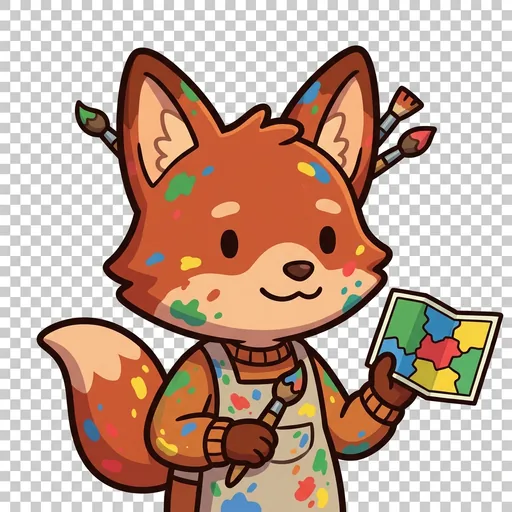
Swatch the Border-Painter
Graph coloring — coloring connected things so no two neighbors match, with the fewest colors
-
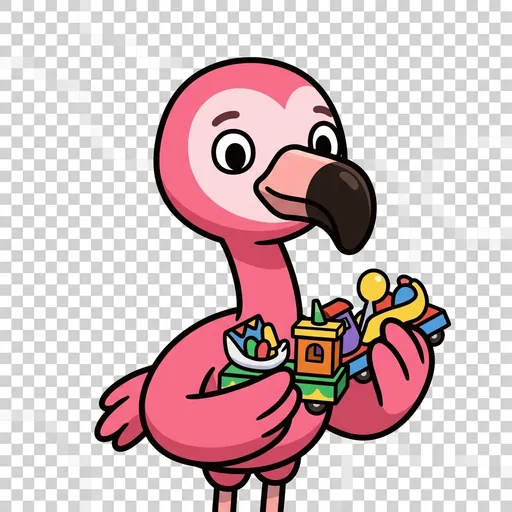
Marshal the Line-Arranger
Permutations — counting arrangements where order matters (factorials, ordered choices)
-

Twoby the Pair-Matcher
Parity and invariant arguments — even/odd pairing that proves what's possible
-

Surge the Growth-Racer
Order of growth — how the work scales as a problem gets bigger