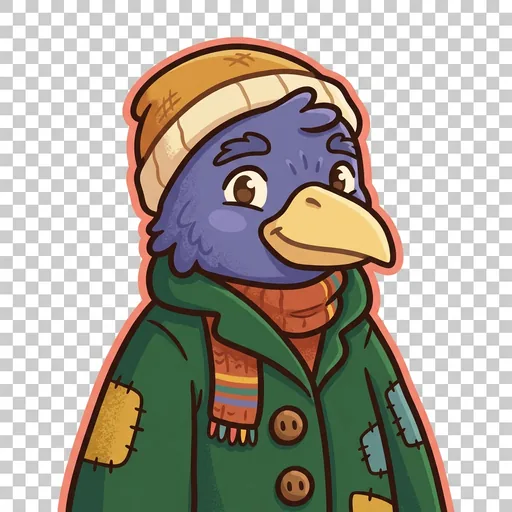
Glint
ALBEDO & FEEDBACK — bright surfaces bounce the sun's warmth away; dark ones soak it up. When bright shrinks and dark grows, the warming speeds itself up. A loop that runs one way can be slowed.
Press play to listen along. The line being read lights up as you go.
Show full transcript
Loading transcript…
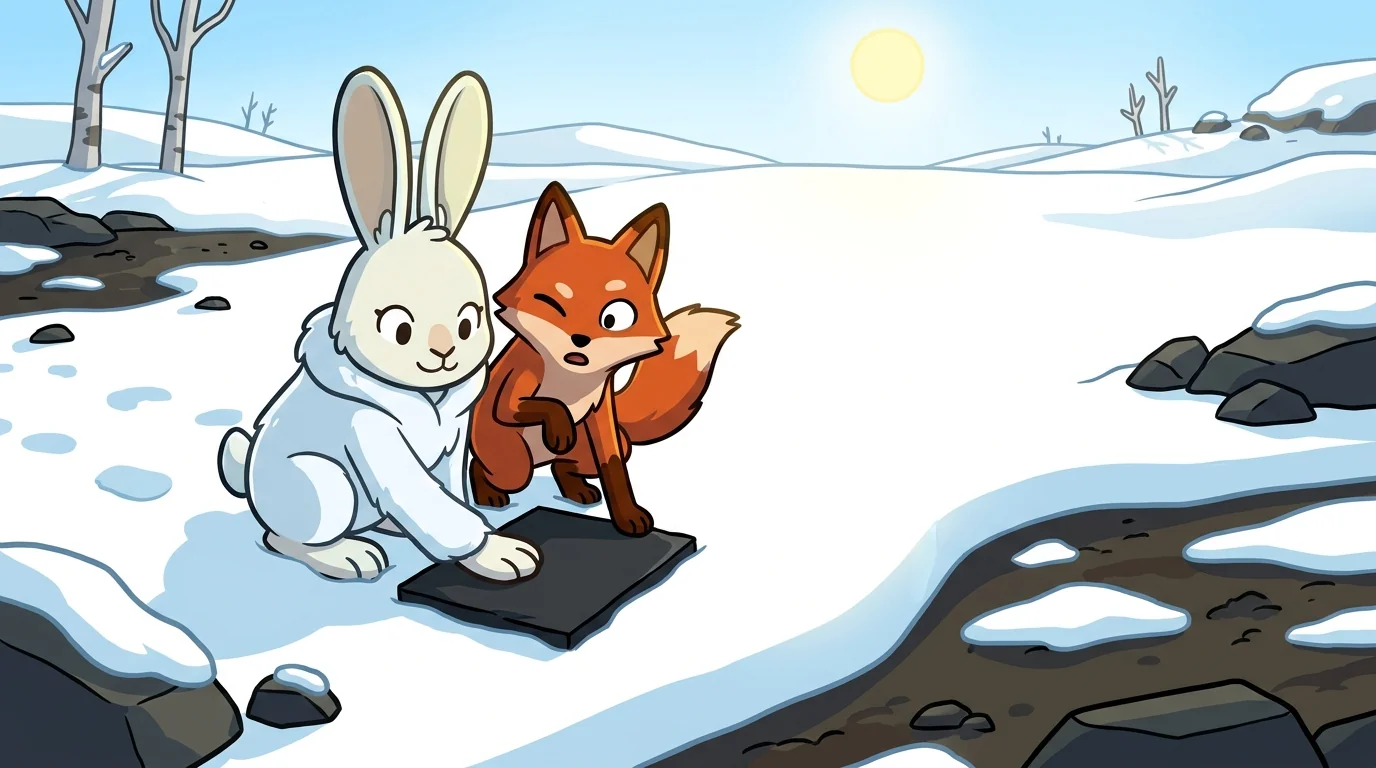
On the bright edge of a snowfield, a snowshoe-hare-tween named Glint was teaching a squinting fox two things at once: how a white coat works, and why she kept a square of coal-black slate in her pocket.
"Watch my paw," Glint said. Her winter coat was the clean white of fresh snow. She held her white paw flat under the noon sun, then laid the black slate beside it. "Touch both. Quick, before you decide anything."
The fox pressed a pad to each. "Your fur's cool," he said, surprised. "The black rock's already hot."
"Same sun on both," Glint said. "The white bounces most of it right back up to the sky — barely keeps any. The black drinks it in and holds it." She wiggled her pale ears. "Bright throws warmth away. Dark soaks it up. That's the whole first idea, and it's just true, everywhere, all the time."
The fox looked out at the dazzling white field, then at the dark stones poking through where the snow had thinned. "So the snow keeps the ground cold by throwing the sun back."
"It does. And here's the part that made me sit down hard the first time I understood it." Glint nudged the black slate half under a scrap of white cloth, then pulled the cloth back an inch. "When the white shrinks, more dark shows. More dark soaks up more warmth. More warmth melts more white. Which shows more dark." She pulled the cloth back, inch by inch, faster. "It pushes on itself. A loop. Once it starts leaning one way, it leans harder."
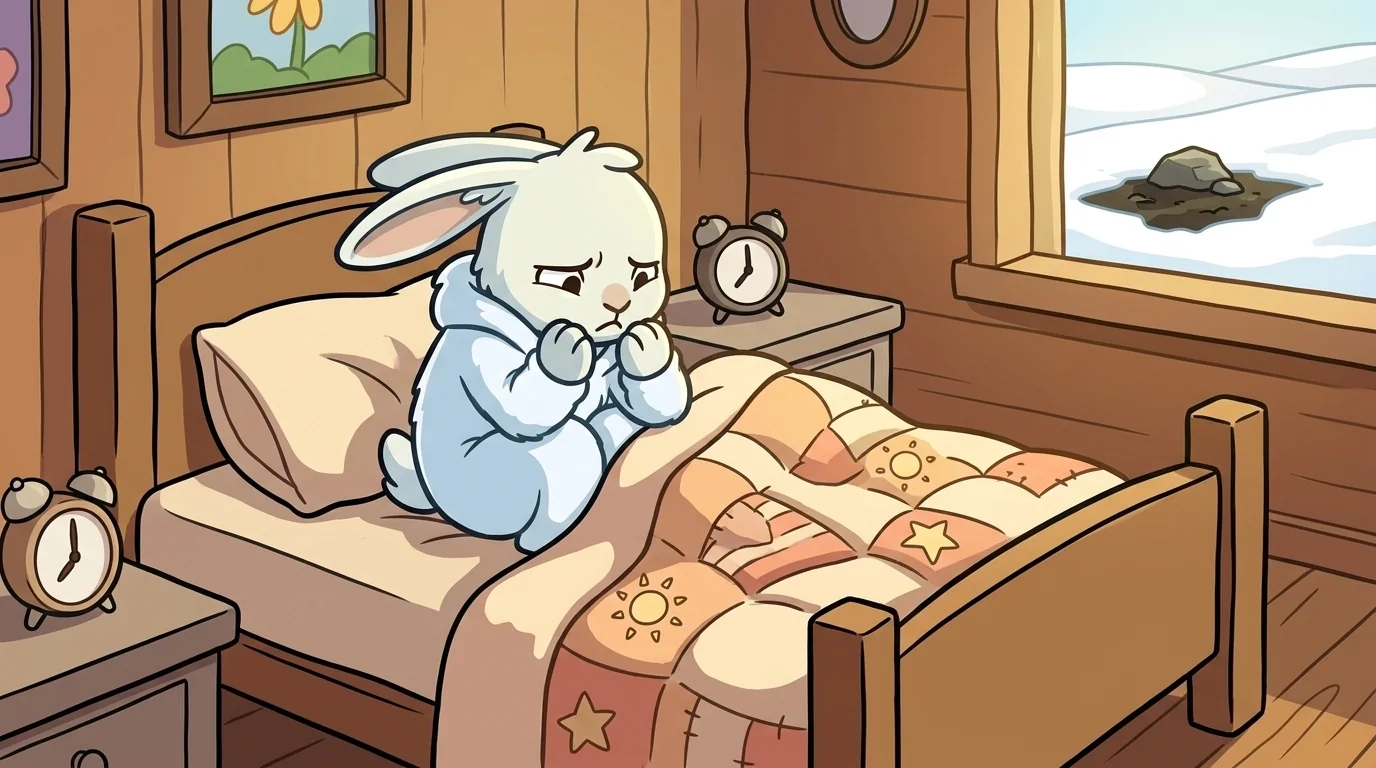
Glint had felt that loop in her own chest, once, long before she understood it in the snow.
She'd been small, and something at school had gone a little wrong — a joke that landed sideways, a look she couldn't read. And instead of letting it go, she'd let the first worry make a second one, and the second make a third, each one darker than the last, each one soaking up more of her until she was lying awake with a whole black field of them and no idea how it had gotten so big from something so small.
Her aunt, who tracked snow-melt in the high passes for a living, had found her curled tight the next morning. She didn't say don't worry. She said something stranger.
"You've got a loop going," her aunt said, sitting on the edge of the bed. "Each worry's feeding the next one. That's not weakness — that's just how loops work. A thing that leans one way leans harder the longer it goes." She tapped Glint's forehead, gently. "But a loop isn't a wall. You don't have to smash it. You just have to find one place to lean it the other way. One. And then it starts helping you instead of chasing you."
Glint had picked one small true thing — the joke was probably just a joke — and held onto it. And she'd felt the black field stop growing. Not vanish. Just stop feeding itself. The relief of it, the way her breath went from short to long, stayed with her for years: a loop that runs one way can be turned. You don't need to be stronger than the whole loop. You just need one nudge, early.
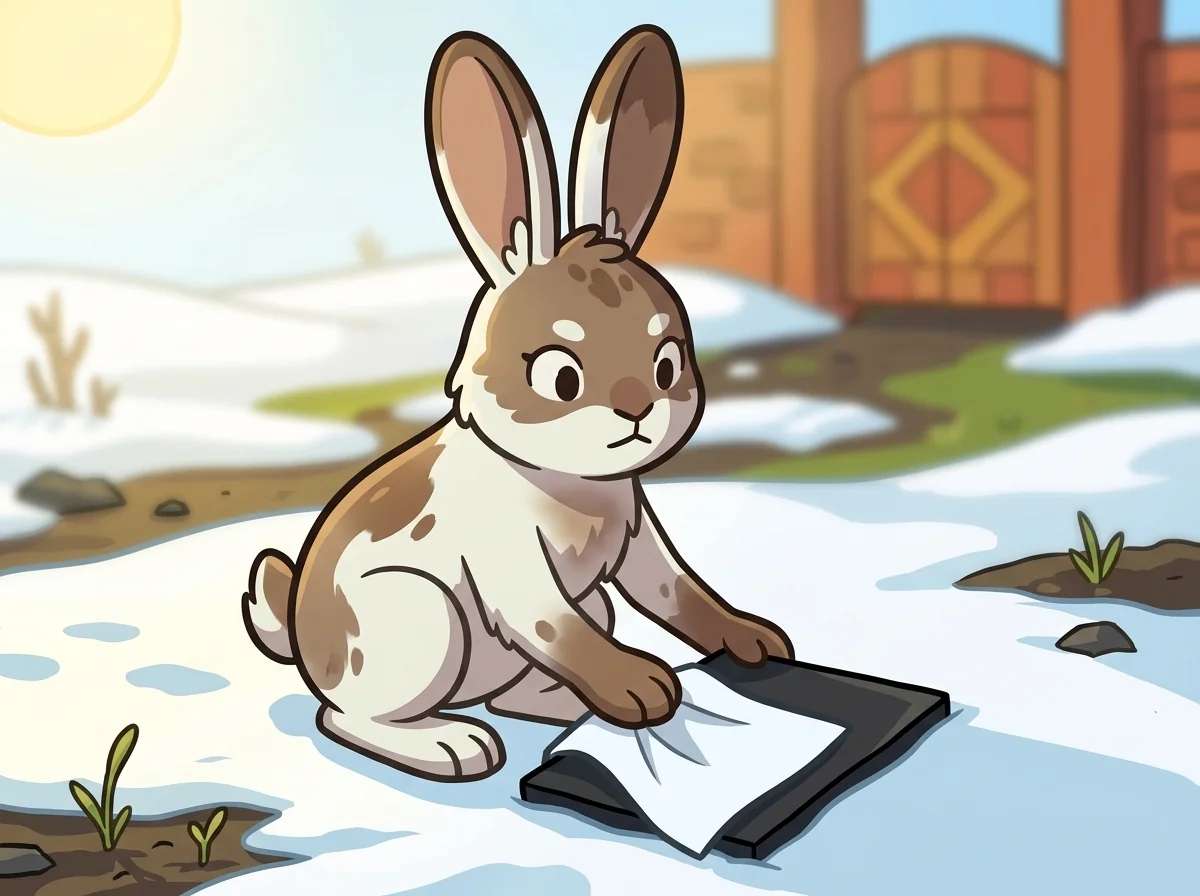
She walked to ClimateQuest the spring her coat first turned — white fading to brown as the snow pulled back — because a place that studied a warming world ought to understand a hare who changed color with it.
Cirrus, the mentor at the gate, didn't test her. She asked, "What is a feedback loop?"
Glint took out her white cloth and her black slate and set them both in the sun. "It's when the result of a change loops back and makes more of the same change," she said. "Up in the far north, bright ice reflects the sun away and keeps things cool. When some ice melts, dark water shows underneath. The dark water soaks up more warmth, which melts more ice, which shows more dark water." She slid the cloth back an inch. "Each step makes the next step easier. That's the ice-albedo loop. It's why the far north warms faster than almost anywhere."
Cirrus watched the small brown-and-white hare with her two squares of proof. "And is that the end of the world?" she asked — the real question, the one under the question.
"No," Glint said, steady. "It's a loop. Loops can be slowed. You catch them early, and you find one place to lean them back." She looked up. "That's the part people forget to say."
"You belong here," Cirrus said.
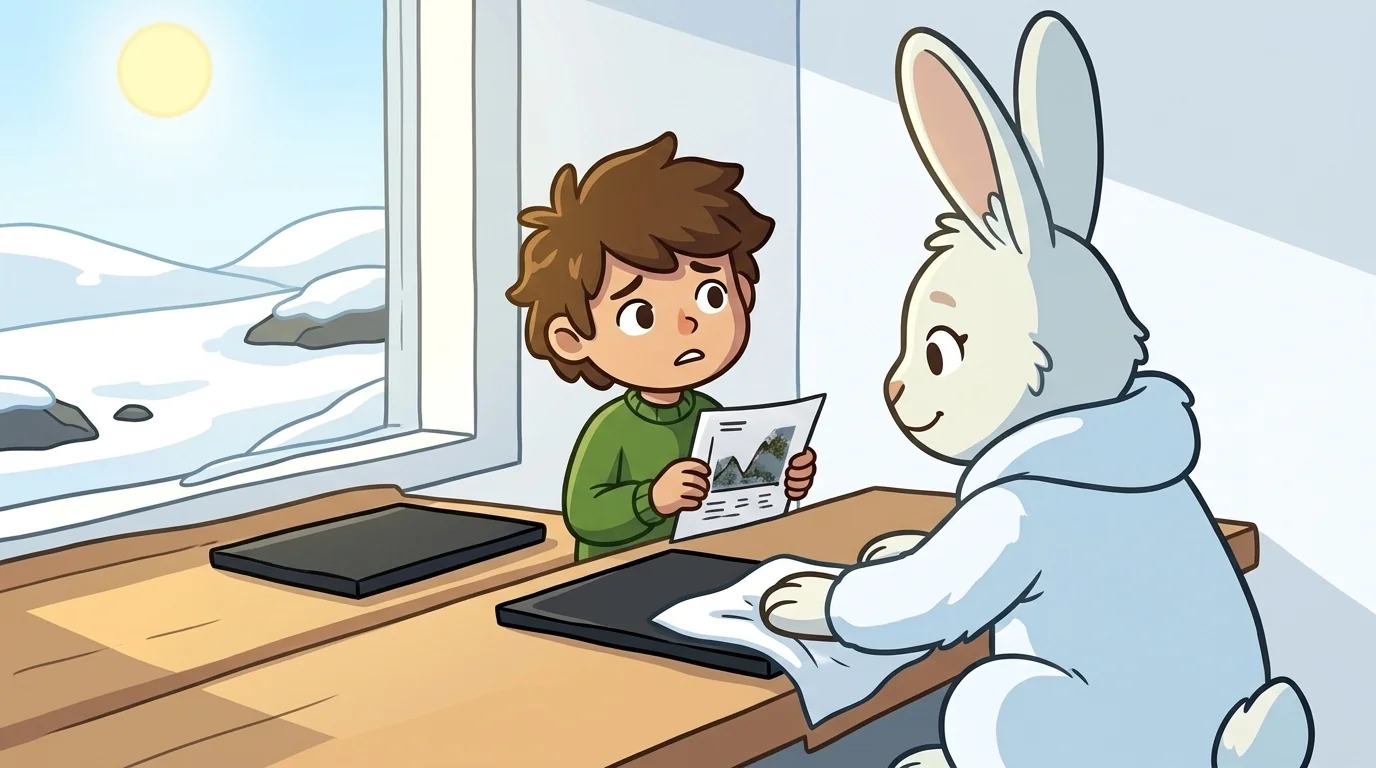
Glint's workshop was cool and bright, its walls painted the flat white that throws light back, and children came to it worried.
A boy arrived one afternoon gripping a printout, his voice going fast. "It says the ice melts and then it melts even faster and then it can't stop — it's a runaway, it feeds itself, we already lost—"
"Breathe," Glint said. "You've read it right. It does feed itself. Now let me show you the other half nobody printed on your page." She put the white cloth and black slate in the window sun. "Watch the loop." She peeled the cloth back; the dark drank the light. "Speeding up, yes. But look what I do." She laid the white cloth back over the slate. Instantly the surface under her paw went cool. "Reflection can be added back. Where people keep the ice, the loop slows. Where they paint roofs and streets pale instead of black, the ground throws warmth away instead of soaking it. Cool-painted cities are doing exactly this, right now. The loop doesn't only run toward hot. It runs toward whichever way we lean it."
The boy stared at the cool white cloth over the once-hot slate. "So it's not a runaway if someone leans on it."
"A loop chasing itself is still just a loop," Glint said. "And the earlier you nudge it, the smaller the nudge it takes. That's not a reason to panic. That's a reason to move while the nudge is still small." She grinned, ears up. "You found the loop. Most people never even see it. Seeing it is how you get in front of it."
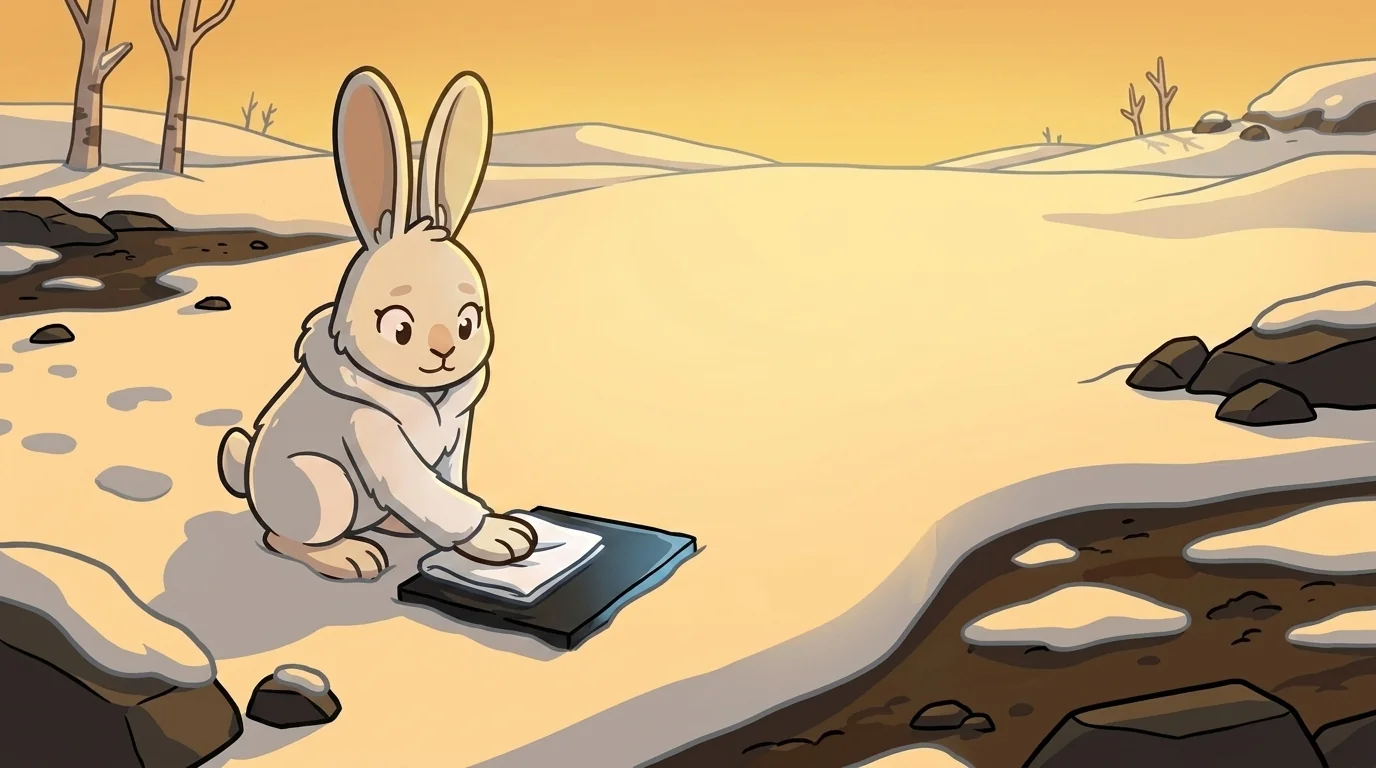
Later, when the light went gold and low, the boy came back and asked the quieter thing.
"When it feels like it's already speeding up too fast to catch," he said, "how do I make it feel catchable again?"
Glint thought of the black field of worries that had grown so large from so little, and her aunt's finger on her forehead, and the one small true thing that had turned it.
"You find the one place to lean," she said. "Not the whole loop — you'll never out-muscle the whole loop, and you don't have to. Just one early nudge the other way. Keep the ice bright where you can. Add reflection back. Pick the one small true thing and hold it." She folded the white cloth over the slate and left it there, cool in the fading sun. "A loop feels like a monster because it feeds itself. But that's also its secret: lean it back even a little, and that starts feeding itself too."
The boy let out a long breath, and Glint watched the fast, chased look go out of his eyes, the way the racing had gone out of her own chest years ago when the black field finally stopped growing.
She didn't say the last part aloud, but she thought it, bright and cool and certain: the things that feed themselves are the scariest and the most hopeful, both at once — because whichever way you lean them early, they carry the lean the rest of the way.
The ClimateQuest ensemble
Glint is part of ClimateQuest's distributed-narrative cast. Each character embodies a different curricular primitive; together they teach the full subject.
-

Haze
Atmosphere (air, gases, the sky as a thin layer)
-
Squall
Weather events (vs. climate — short-term variability)
-

Round
Carbon + water cycles (recurring loops, balance)
-

Blanket
Greenhouse effect (insulating gases)
-

Stitch
Collective action / policy / repair
-
Fathom
Ocean heat + carbon sink (thermal inertia — the sea stores and slows change)
-
Cusp
Tipping points (thresholds where small change flips a system all at once)