Cusp
TIPPING POINTS — some changes are gentle right up to an edge, then flip fast and are hard to undo. Knowing where the edge is means you can stay back from it — the map of the edge is a tool, not a doom.
Press play to listen along. The line being read lights up as you go.
Show full transcript
Loading transcript…
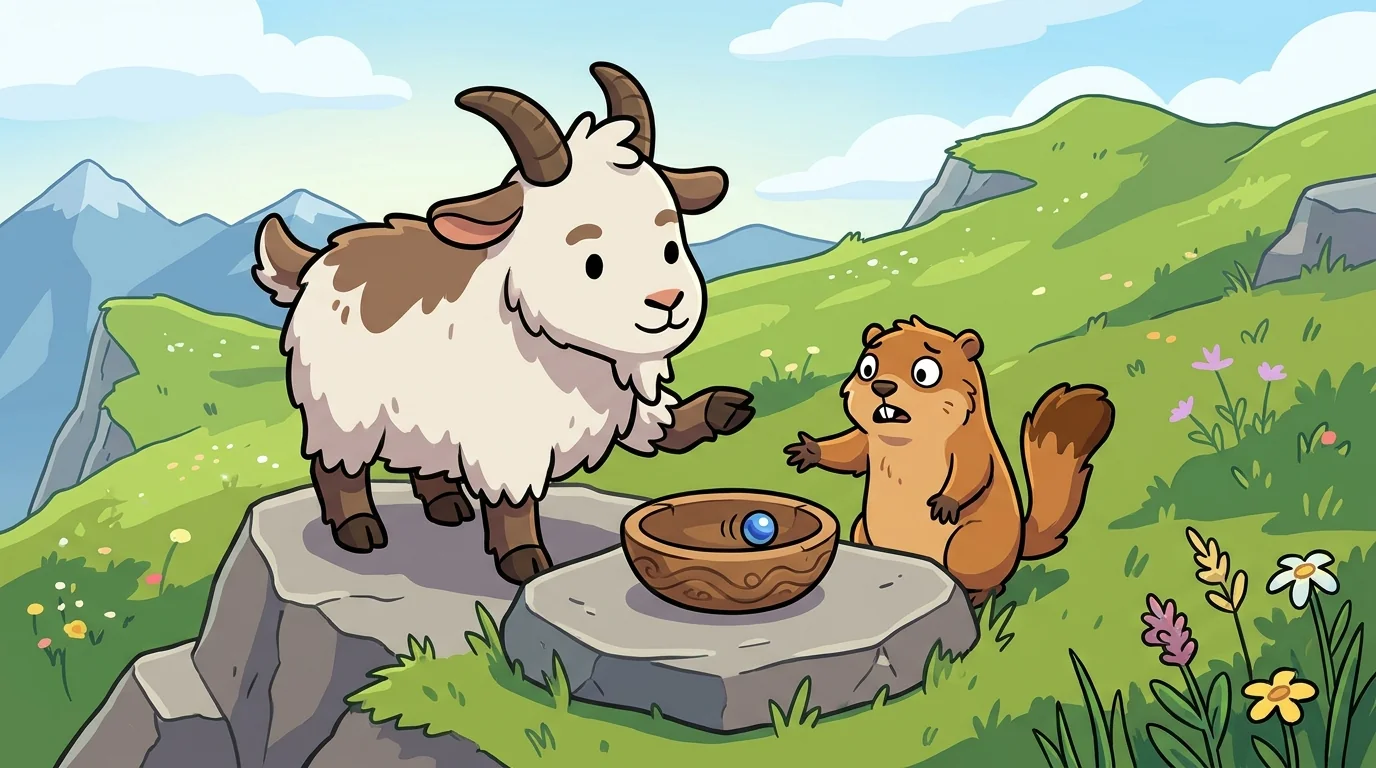
High on a ridge where the meadow ended in open sky, a mountain-goat-tween named Cusp stood with all four hooves planted and one carved wooden bowl balanced on a flat stone, teaching a nervous marmot the difference between near and over.
"Roll the marble," Cusp said.
The marmot flicked the marble into the bowl. It swung up one curved side, slowed, rolled back down, up the other side, back again. "It just... comes back."
"Every time," Cusp said. "Push it a little, it climbs a little, it always rolls home. That's most of the world. You nudge it, it wobbles, it settles. Gentle in, gentle out." She tipped the marble higher up the bowl's wall — near the rim now — and it still rolled back. "Still fine. Still comes home. Near the edge isn't the same as over it. People forget that."
Then, slowly, she rolled the marble right up to the lip of the bowl, past the curve, onto the flat stone beyond — and it kept going, straight off the rock, gone into the grass. It did not come back.
The marmot blinked. "It didn't roll home that time."
"Because it passed the edge," Cusp said. "One tiny bit further than all the other pushes, and it stopped coming back at all. That's a tipping point. Gentle, gentle, gentle — then flip, and now you can't just wait for it to settle, because it won't. Getting the marble back in the bowl is a whole climb down and up. Much harder than the little nudge that sent it over."
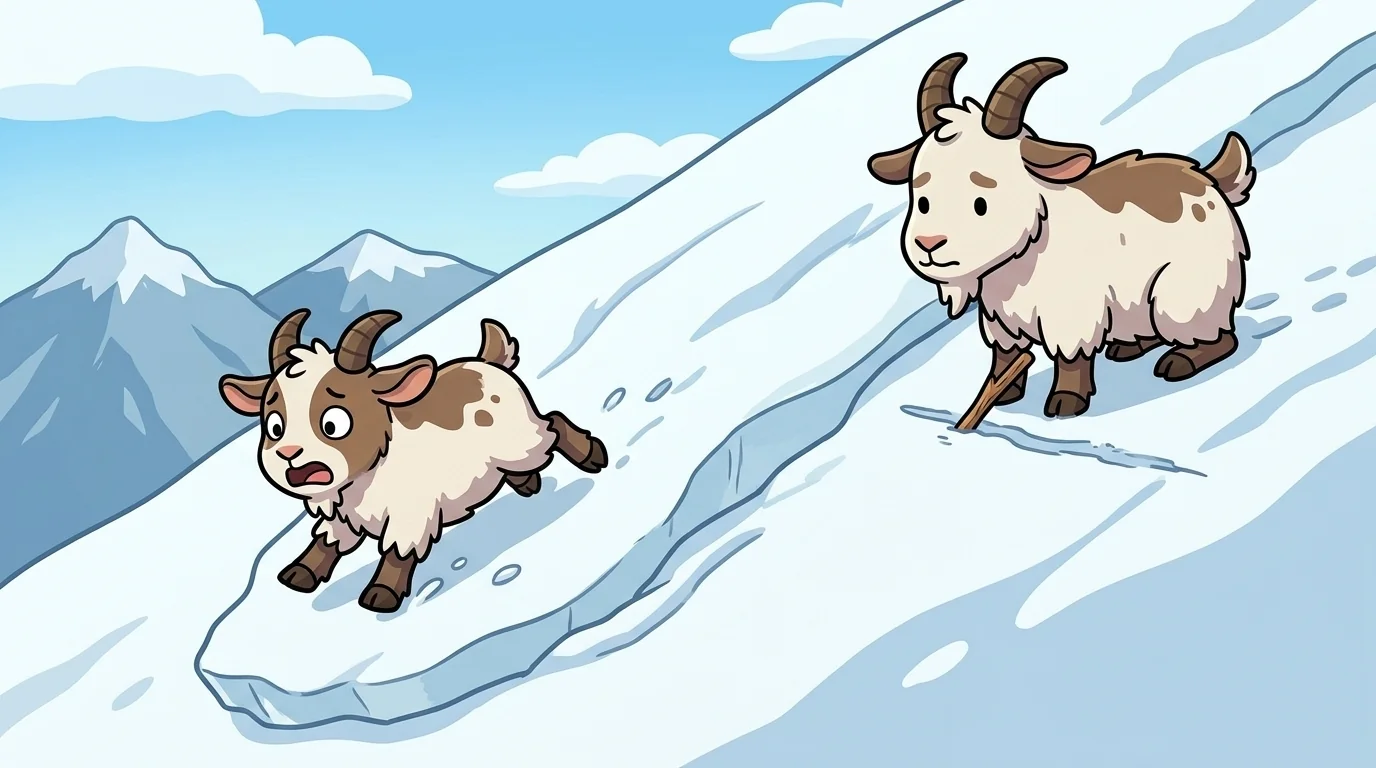
Cusp had learned the edge the hard way, as a kid, on a snow-slope she thought she knew.
She'd crossed it a hundred times. Each step packed the snow a little; each crossing was fine; nothing ever happened. So she stopped watching. And one warm afternoon, on a step that felt exactly like all the others, the whole slab let go beneath her — slow, then horribly fast — and slid her a long, roaring way down before it stopped.
She wasn't badly hurt. But she lay in the settled snow, heart slamming, terrified in a new way: not of the fall, but of how ordinary the last step had felt. Nothing had warned her. It was just one step past the edge, and the edge had looked like everywhere else.
Her mother, who read slopes for the herd, climbed down to her and didn't scold. She crouched and drew a line in the snow with one hoof.
"You're thinking the mountain betrayed you," she said. "It didn't. It has edges, that's all — places where near turns into over. Your job was never to be strong enough to survive the fall. Your job is to learn where the edges are and cross a little higher, on the firm part, where near stays near." She tapped the drawn line. "A goat who knows the edges isn't a scared goat. She's a free one. She can go almost anywhere — because she knows the few steps not to take."
Something turned over in Cusp then, and the fright reshaped itself into something steadier: the edge isn't out to get me. It's just there. And a thing you can see, you can stay back from. She never stopped watching for edges again. But she never again felt trapped by them, either. Knowing where they were was exactly what set her free to roam.
She climbed to ClimateQuest the season the far glaciers first cracked strangely, because a place studying a changing world ought to understand a goat who read edges for a living.
Cirrus met her on the high path. "What is a tipping point?" she asked.
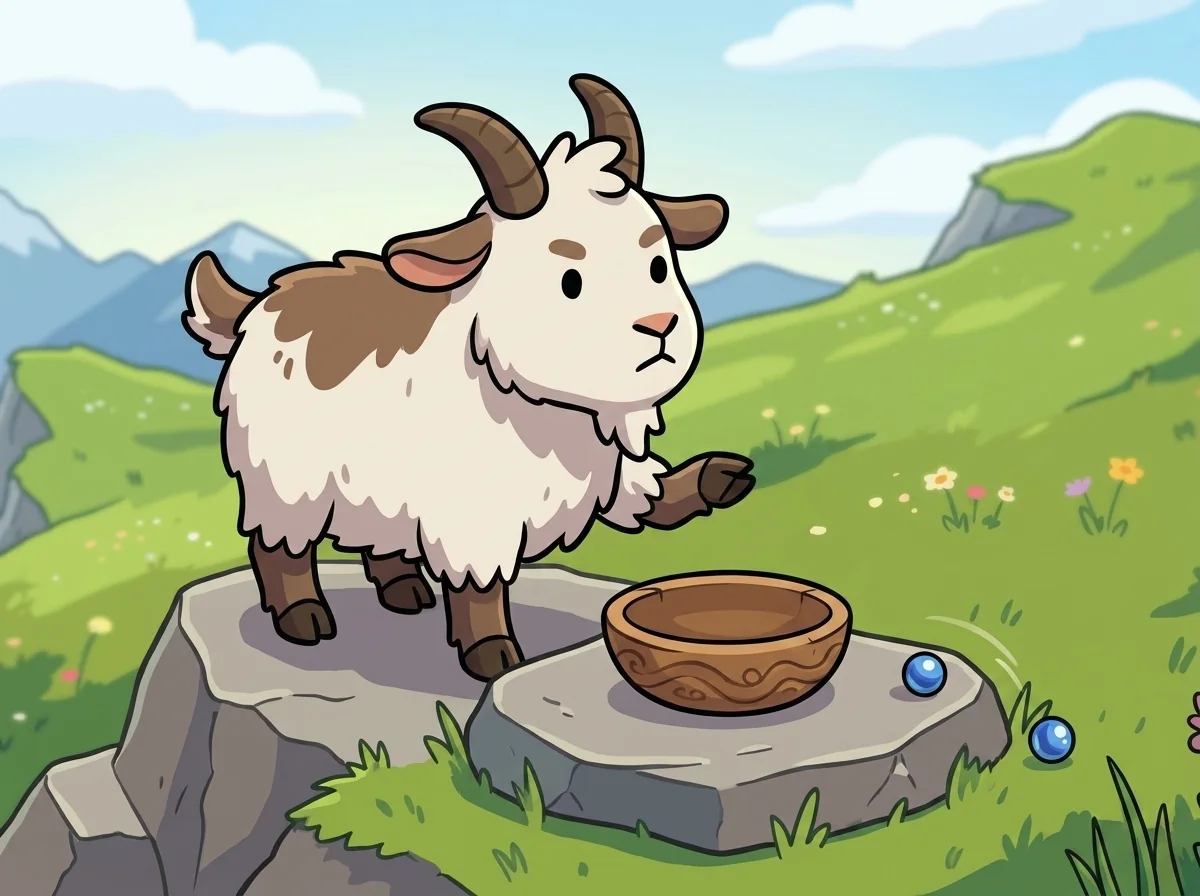
Cusp set down her bowl and rolled the marble — home, home, home — then over the lip, gone. "It's a place in a system where gentle stops working," she said. "For a long time you push and it settles back, push and it settles back. Then past one threshold it flips to a new state and won't settle back on its own — a huge ice sheet that keeps melting once it starts; a forest that dries into grassland and stays grassland. Getting back is far harder than the small step that tipped it." She looked up. "The scary part is how normal the last step feels. The useful part is that scientists can often see roughly where the edges are — before we reach them."
Cirrus studied the sure-footed goat on the ridge. "Most people hear 'tipping point' and freeze."
"Because they only heard half," Cusp said. "Freezing is for when you can't see the edge. We usually can. And an edge you can see is an edge you can stay back from. That's not doom. That's a map." Cirrus smiled. "You belong here."
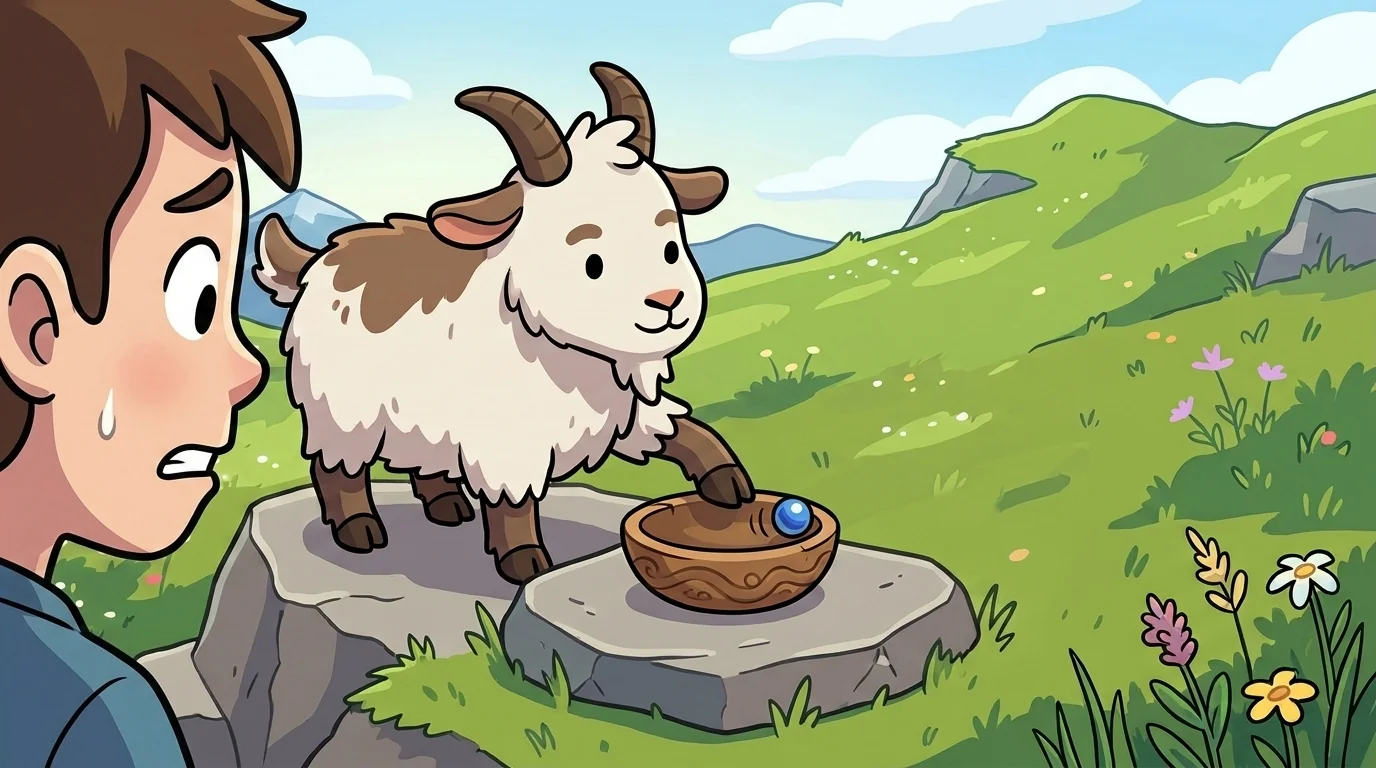
Cusp's workshop opened onto the high ridge, and the children who found their way up were often the ones who'd read a scary headline and couldn't sleep.
A boy arrived pale, the words tumbling out. "There are tipping points and once we hit them it's over, it's irreversible, we're basically already—"
"Roll the marble," Cusp said.
He did. It rolled home. Again. Home. "See," Cusp said, "most pushes settle. We are near some edges, and near is serious — but near is not over. And here's what the scary version skips: we can see roughly where the edges are, and every bit of warming we don't add keeps the marble a little further from the lip." She rolled it right up near the rim, where it still came back. "This is where care matters most — close to an edge, small nudges decide everything. That's not a reason to give up. That's the exact spot where staying back does the most good." She caught the marble before it could reach the lip. "Every fraction of a degree we hold back is one more push the marble survives."
The boy watched the marble roll home again. "So we're not past it. And staying back actually... counts."
"Counts most of all, right here near the edge," Cusp said. "The goat who knows where the edge is doesn't fall off. She just walks a little higher, on the firm part. That's the whole skill. You already did the hard part — you looked at the edge instead of away from it. Now you get to stay back from it on purpose."
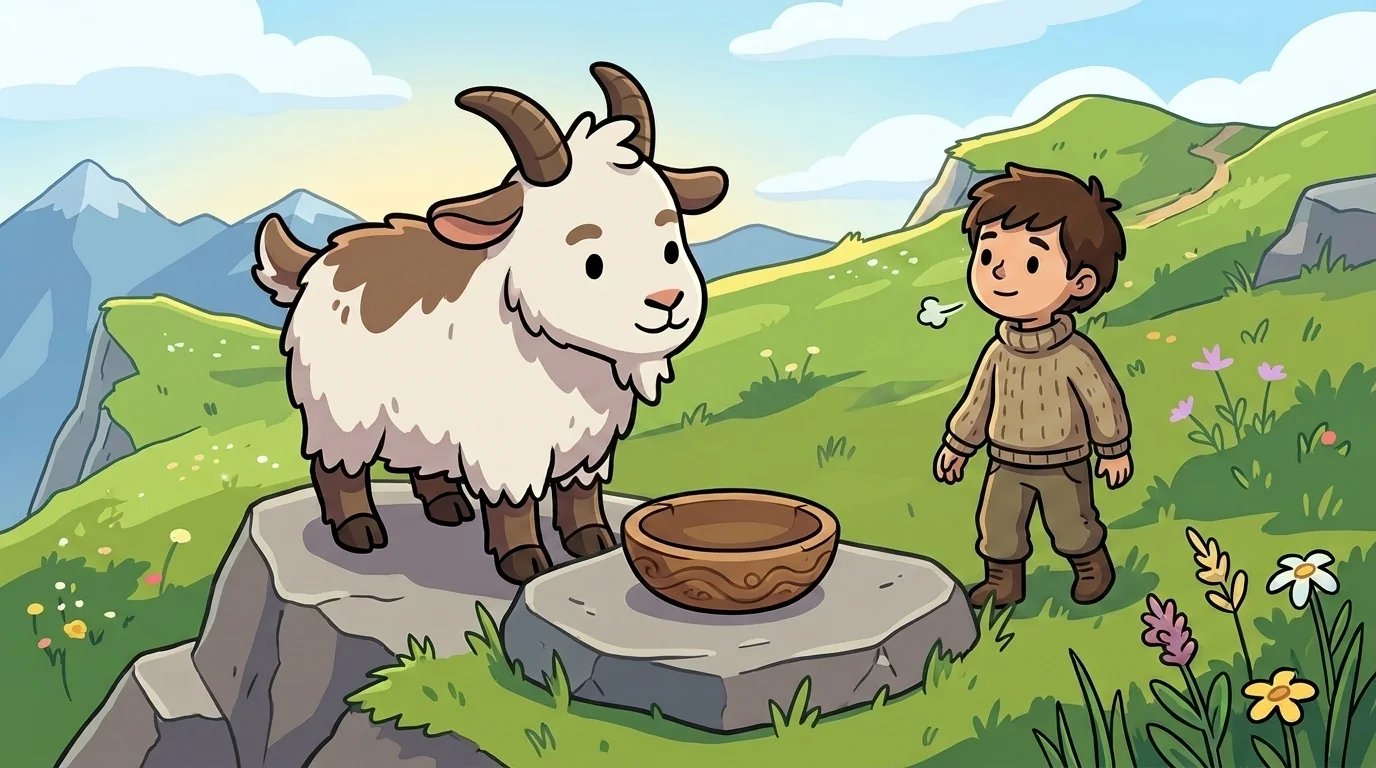
Later, when the light went thin and gold along the ridge, the boy came back and asked the soft thing.
"When it feels like we're right on the edge and one wrong step ends everything," he said, "how do I not be frozen?"
Cusp thought of the slab letting go, and her mother's hoof drawing a line in the snow, and a thing you can see, you can stay back from.
"You look straight at the edge and name where it is," she said. "Frozen is for edges you can't see. This one we can see — that's the gift the scary headline forgot to mention. And you cross higher. Every choice that adds less warmth walks you a step further from the lip. You don't have to leap the whole mountain. You just have to not take the few steps toward the edge." She planted her hooves, calm on the high ridge. "Knowing where the edge is isn't the scary part. It's the part that makes you free to move."
The boy let out the breath he'd been holding, and Cusp watched the frozen look melt out of him, the way her own trapped fright had once turned into something sure-footed and free.
She didn't say the last of it aloud, but she thought it, steady as the ridge under her hooves: an edge in the dark is a terror; an edge in the light is just a place you decide not to step. All the fear was ever really asking was — can you see it? And we can. So we get to choose.
The ClimateQuest ensemble
Cusp is part of ClimateQuest's distributed-narrative cast. Each character embodies a different curricular primitive; together they teach the full subject.
-

Haze
Atmosphere (air, gases, the sky as a thin layer)
-
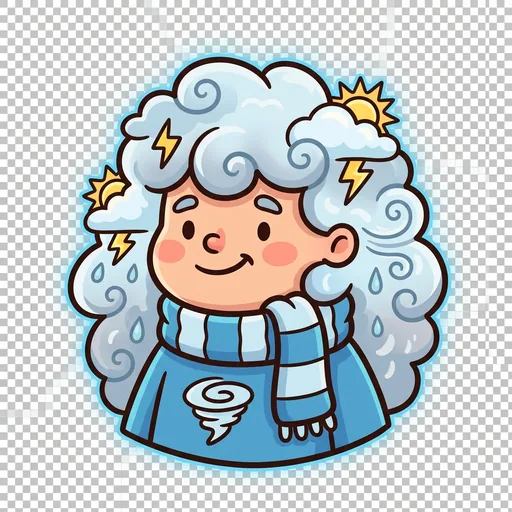
Squall
Weather events (vs. climate — short-term variability)
-

Round
Carbon + water cycles (recurring loops, balance)
-

Blanket
Greenhouse effect (insulating gases)
-

Stitch
Collective action / policy / repair
-
Glint
Ice-albedo feedback (bright ice reflects, dark water absorbs — a warming loop)
-
Fathom
Ocean heat + carbon sink (thermal inertia — the sea stores and slows change)