
Glint
ALBEDO & FEEDBACK — bright surfaces bounce the sun's warmth away; dark ones soak it up. When bright shrinks and dark grows, the warming speeds itself up. A loop that runs one way can be slowed.
Press play to listen along. The line being read lights up as you go.
Show full transcript
Loading transcript…
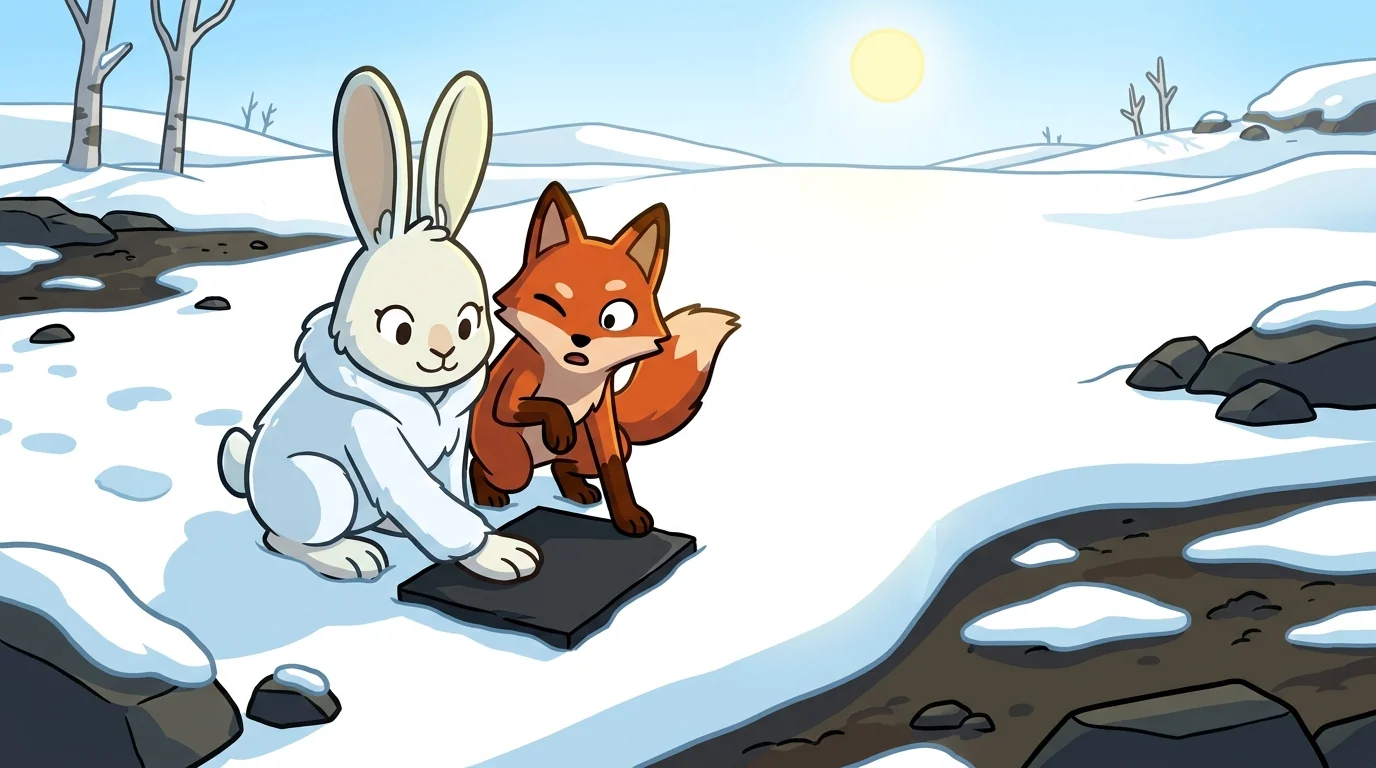
The afternoon sun sat low over the ridge, turning the vast snowfield into a sheet of white fire. Glint, a snowshoe-hare-tween with ears that caught every shift in the wind, stood on the crusty edge. Her winter coat was still a pure, blinding white, making her almost invisible against the drift. Beside her, a young fox squinted against the glare, his red tail twitching with growing impatience.
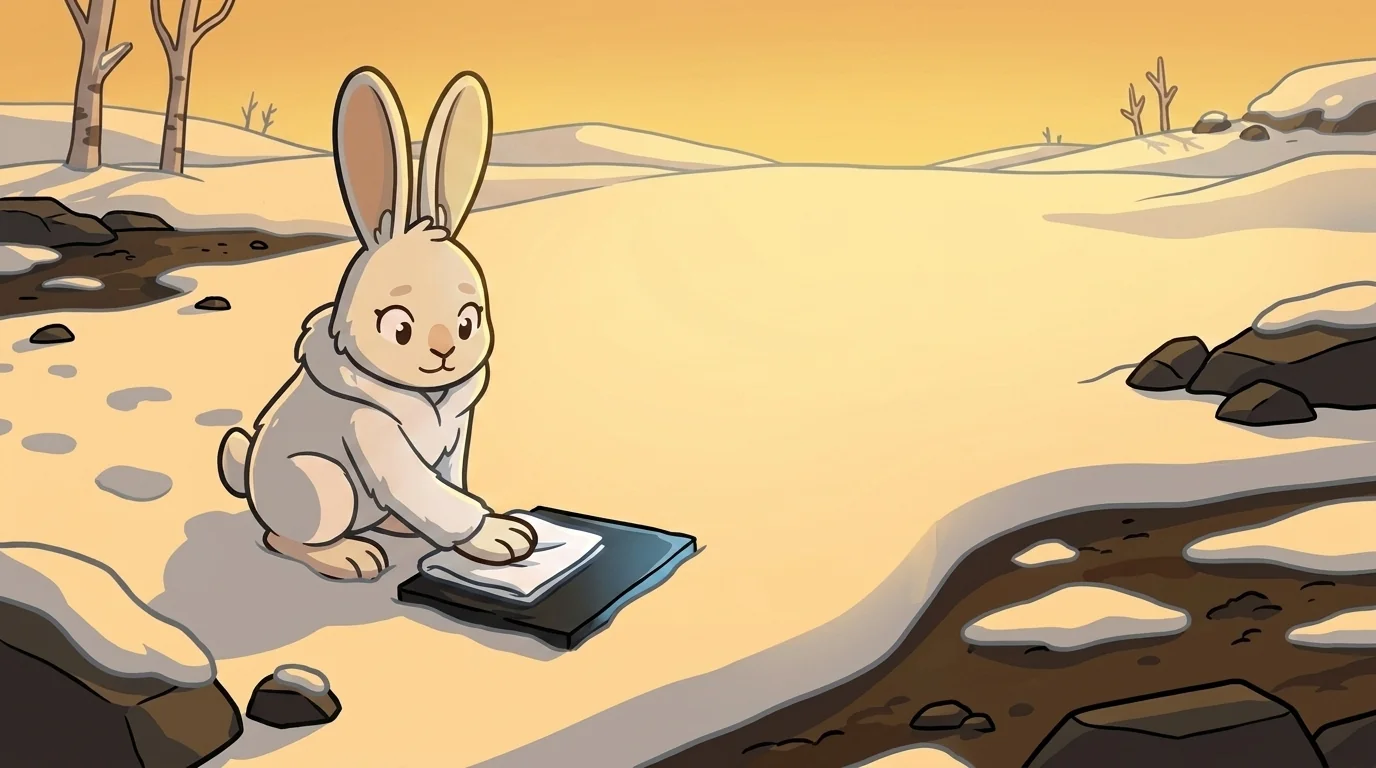
She reached into her deep pocket and pulled out a small, flat square of coal-black slate. She laid it directly on the snow, then held her pale paw under the hot noon sun.
"Touch them both," she told him, her voice quiet but clear. "Quick, before you think about it."
The fox hesitated, sniffing the cold air, then pressed one black-padded toe to her soft fur. Next, he tapped the slate and pulled his paw back, his amber eyes wide with surprise.
"Your fur is cool," he said, "but that black rock is already hot."
"It is the same sun on both," Glint said, wiggling her long, pale ears. "The white fur bounces the light right back to the sky, keeping almost no warmth at all. The black slate drinks the light in, holding the heat tight against the cold ground. Bright throws warmth away, while dark soaks it up."
The fox looked across the dazzling field, where a few dark boulders poked through the thin crust. "So the snow keeps the ground cold by throwing the sun back," the fox said.
"Exactly," Glint said, "but here is the part that makes you sit down hard."
She pulled a scrap of white linen from her pocket and draped it over the black slate. She slid the cloth back just an inch, exposing a sliver of dark stone.
"When the white snow shrinks, more dark ground shows, soaking up more warmth from the sun. That extra warmth melts more white snow, which shows even more dark ground." She slid the cloth back further, her movements quickening as the dark stone appeared. "The change feeds itself, creating a *feedback loop* where each step makes the next one faster. Once it starts leaning one way, it leans harder."
The fox stared at the exposed slate, his tail dropping. "It sounds like a trap."
"Only if you do not know how to lean back," Glint said.
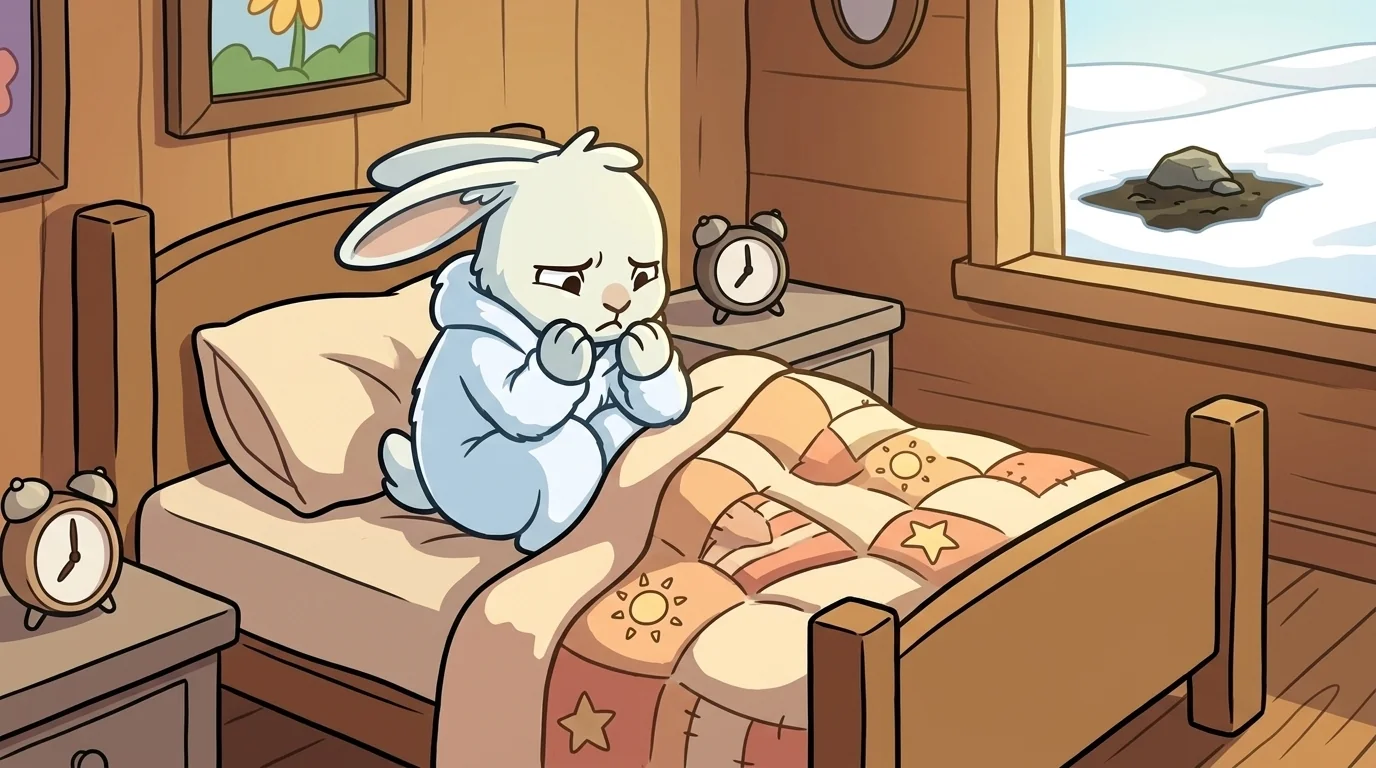
Glint knew about those traps because she had felt that same spinning weight inside her chest.
She had been nine years old, small and easily startled by the noise of the schoolyard. One morning, a silly joke had landed sideways, and a classmate laughed at her oversized ears. Instead of letting the comment go, she let the first worry breed a second one.
Maybe they all think I look ridiculous, she thought, staring down at her wooden desk.
Each worry soaked up more of her attention, like dark stone drinking the hot sun. By midnight, she was lying awake in the dark, her heart racing under the heavy blankets. She had no idea how a single spark had lit such a massive fire.
Her aunt, who tracked the spring snow-melt in the high passes, found her the next morning. Glint was curled into a tight, shivering ball, refusing to look at the bright window. Her aunt did not offer easy comfort or tell her to just stop worrying. Instead, she sat on the edge of the wooden frame, smelling of damp wool.
"You have got a loop going," her aunt said, placing a warm hand on her shoulder. "Each worry is feeding the next one, but that is not a sign of weakness. It is just how loops work, leaning harder the longer they are allowed to run."
She tapped Glint’s forehead with a gentle finger, her touch cool and steady. "But a loop is not a stone wall you have to smash with a hammer. You just have to find one single place to lean it the other way. Then the loop starts working for you instead of chasing you down the mountain."
Glint chose one small, true thing to hold onto amidst the swirling thoughts. My friend Pip laughed too, and Pip always likes to play with me.
She held that thought tight, and slowly, the dark forest in her mind stopped growing. The spinning stopped, bringing a relief so sharp her ribs ached with the breath. She learned then that you do not need to be stronger than the whole storm. You just need one small, early nudge to turn the entire system around.
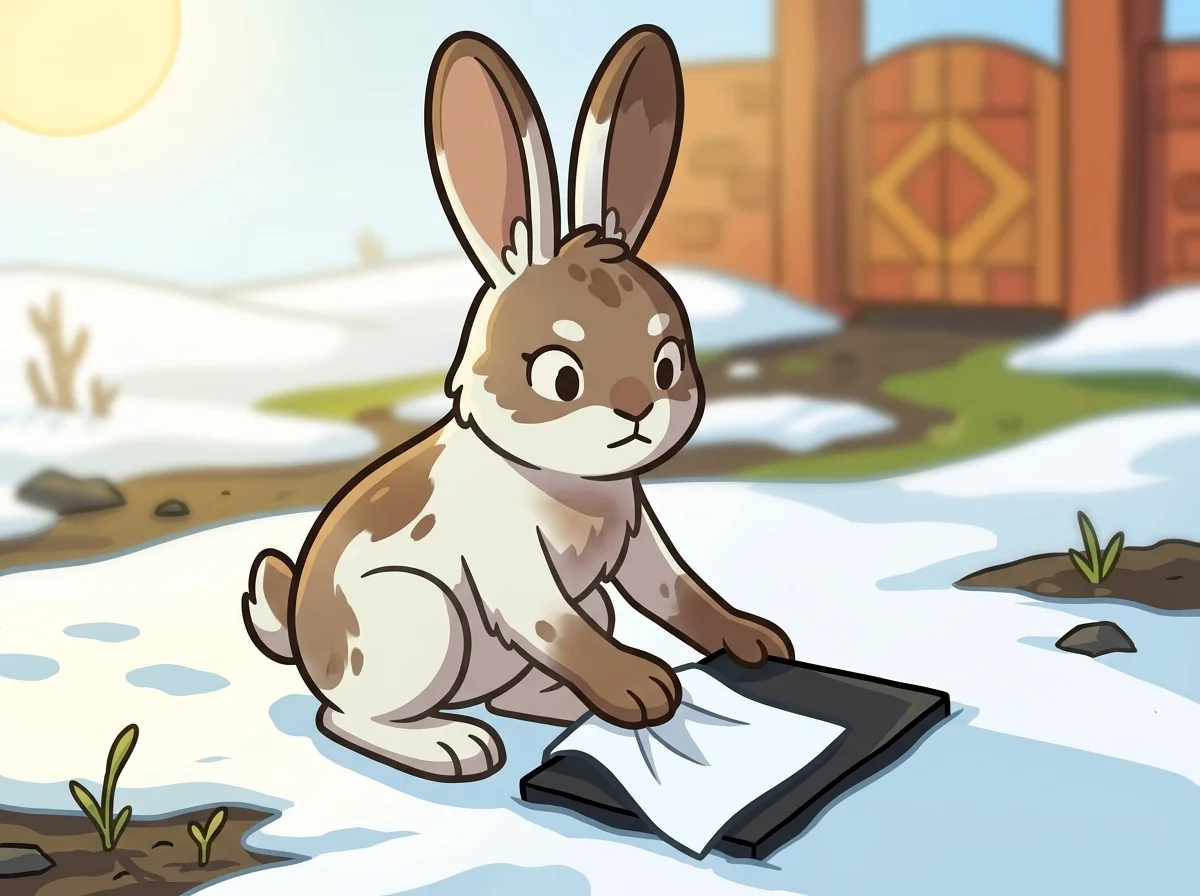
The spring her coat first began to change, Glint walked to the gates of ClimateQuest. Her fur was a patchy map of white and brown, shifting as the snow receded. A place that studied a changing world seemed like the only home that made sense.
Cirrus, the senior mentor, met her at the stone archway under the dripping pines. She did not hand Glint a written test or ask for her school credentials.
"Tell me about the *ice-albedo loop*," Cirrus said, her eyes dark and steady.
Glint did not hesitate, setting her white cloth and black slate on the stone step.
"It is when the result of a change loops back to cause more change," Glint said. "Up in the far north, the bright ice acts like a giant, protective shield. It reflects the sun and keeps the earth cool during the long summer days. But when the temperature rises, some ice melts, exposing the dark ocean water underneath."
She slid the white cloth back to reveal the black slate beneath the sun.
"The dark water absorbs the sun instead of reflecting it, warming the sea. That warmth melts more ice, exposing more dark water in a continuous cycle. Each step makes the next step easier, which is why the Arctic warms so fast."
Cirrus watched the black slate absorb the heat, her expression thoughtful and calm. "And is that the end of the story?" she asked, her voice quiet.
"No," Glint said, "because it is a loop, and loops can be steered. If you catch them early, you can find a place to lean them back."
"You belong here," she said, gesturing toward the open doors of the hall.
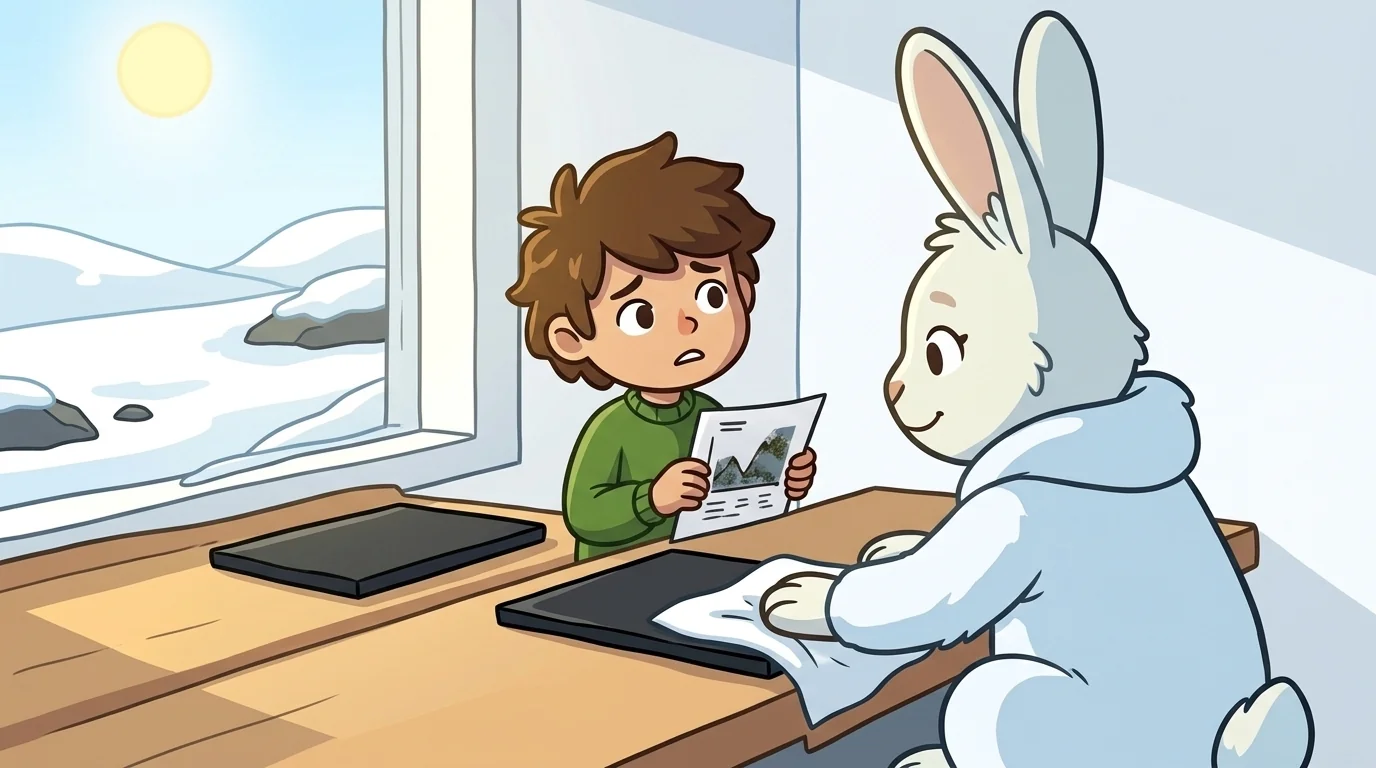
Glint’s workshop at ClimateQuest was high-ceilinged and filled with cool, clean light. The walls were painted a flat, chalky white that bounced the sun into the corners. It was a peaceful room, but the children who came there were often very worried.
One hot Tuesday afternoon, a boy named Leo burst through the heavy wooden door. He was clutching a crumpled article from a magazine, his fingers damp with nervous sweat. The dark ink on the headline was smudged where his thumb had pressed hard.
"It says the ice is melting," Leo said, his voice high and fast. "It says once it starts, it goes faster and we cannot stop it at all. It is a runaway train, and we have already lost the whole fight."
Glint did not look up from her workbench, where she was sorting smooth stones.
"Breathe first," she said, her voice steady and calm. "Take a deep breath, Leo."
She waited until his shoulders dropped, then pointed to the wide, sunny windowsill. Her white cloth and black slate sat there, catching the direct afternoon light.
"You read the words correctly," Glint said, "and the loop does feed itself. But you only read half of the page, leaving out the best part."
She led him to the window and pulled the white cloth off the slate. She let the black stone drink the heat, then laid the cloth back down. She took Leo’s hand and placed his fingers directly on the pale fabric.
"It is cool," Leo muttered, blinking as he felt the sudden change.
"Because reflection can be added back to the system," Glint explained to him. "When we protect the ice we have, the loop slows down its run. When we paint our city roofs white instead of black, the streets throw heat away. The loop does not only run toward hot; it runs whichever way we lean."
Leo stared at the white cloth, his chest rising and falling more slowly. "So it is not a runaway train if we stand up and lean?"
"Only if we stand on the tracks and watch it," Glint said. "The earlier you nudge a loop, the less force it takes to turn it. That is not a reason to panic; it is a reason to move quickly."
"You found the loop, Leo, and seeing it is how you get in front."
Later, when the sun dipped behind the pines, the workshop turned to warm gold. Leo returned to the doorway, watching Glint pack her slate into her pocket.
"What if it already feels too big?" he asked, his voice very quiet. "What if the loop is spinning too fast for us to ever catch?"
Glint stopped, thinking of her childhood bedroom and the heavy weight of her worries. She remembered her aunt’s gentle touch and the scent of the pine-needle tea.
"You do not try to stop the whole mountain from sliding," Glint said. "You just find one single place to lean, protecting one patch of ice. You paint one roof white, or you hold onto one true, solid thing."
She folded the white cloth carefully and set it on top of the slate.
"A loop feels like a monster because it feeds itself," she told him. "But that is its secret, too, because a good loop feeds itself as well. Lean it back even a little, and that small change will start to grow."
Leo let out a long, slow breath, the tight look leaving his eyes. Glint watched him walk out into the cool evening, feeling a quiet certainty. The things that feed themselves are the most hopeful things in the world. You just have to give them that first, small nudge in the right direction.
The ClimateQuest ensemble
Glint is part of ClimateQuest's distributed-narrative cast. Each character embodies a different curricular primitive; together they teach the full subject.
-

Haze
Atmosphere (air, gases, the sky as a thin layer)
-
Squall
Weather events (vs. climate — short-term variability)
-

Round
Carbon + water cycles (recurring loops, balance)
-

Blanket
Greenhouse effect (insulating gases)
-

Stitch
Collective action / policy / repair
-
Fathom
Ocean heat + carbon sink (thermal inertia — the sea stores and slows change)
-
Cusp
Tipping points (thresholds where small change flips a system all at once)