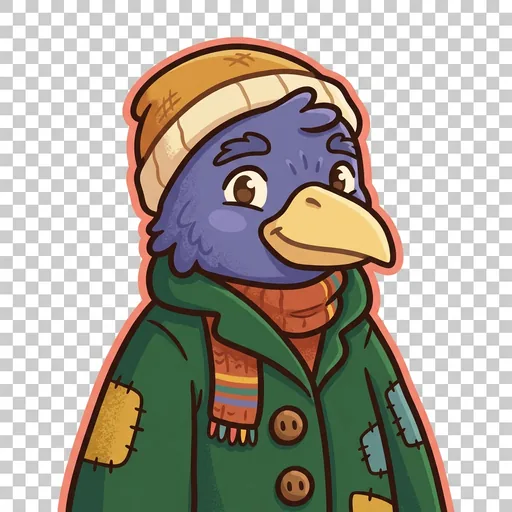
Squall
WEATHER VS CLIMATE — *weather is the mood. climate is the personality. don't confuse them.*
Press play to listen along. The line being read lights up as you go.
Show full transcript
Loading transcript…
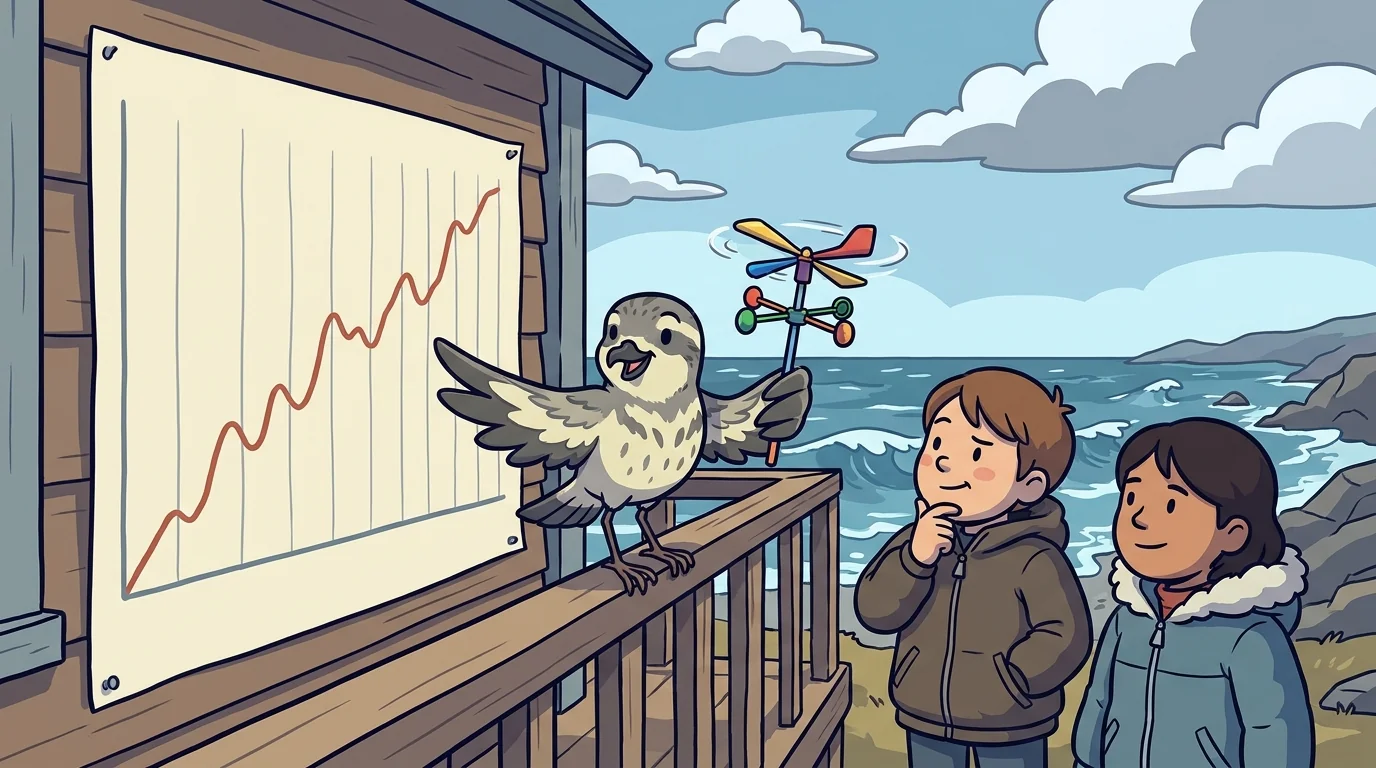
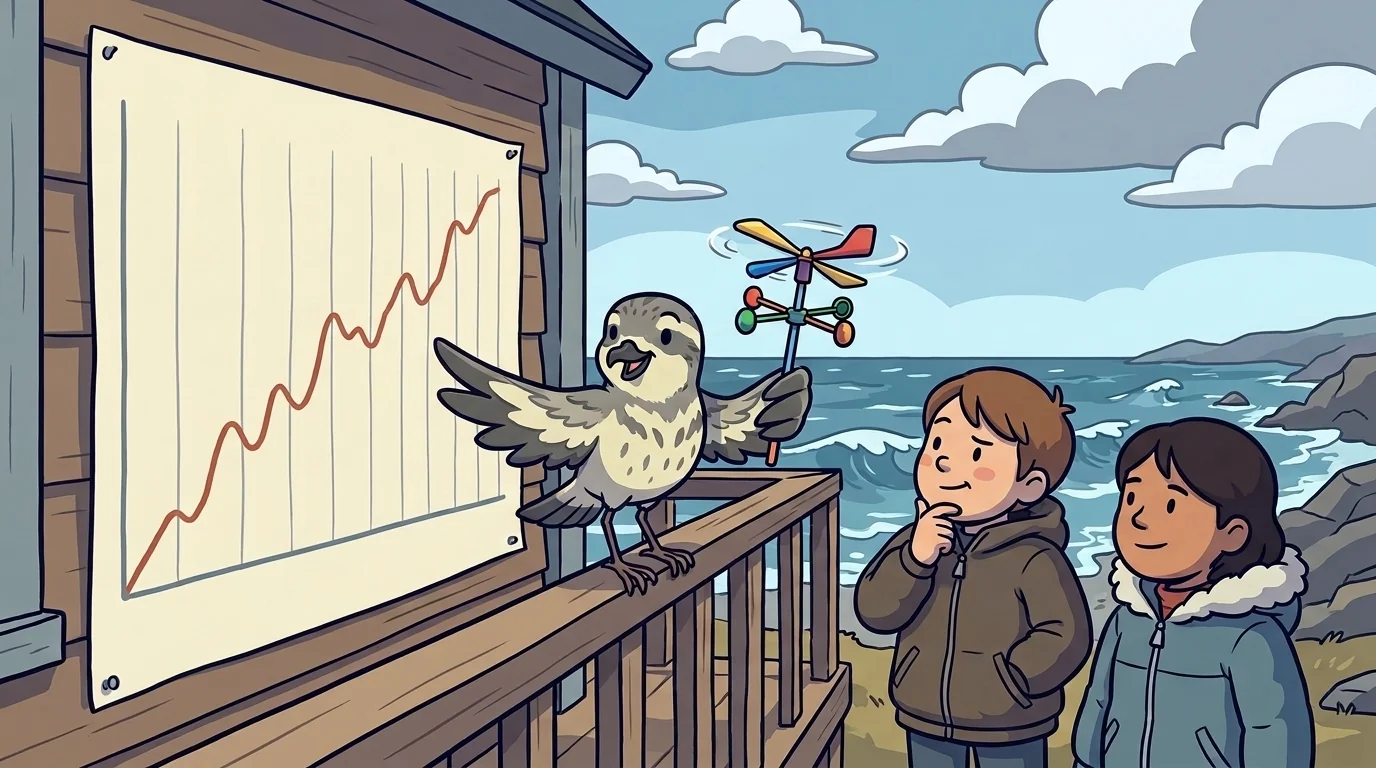
Squall was a small storm-petrel tween, his feathers streaked grey and cream like a cartoon cloud. This morning he perched on the weather-station railing with his tiny toy weather-vane, letting the breeze spin it. Whirl, whirl.
Two kids ran up, breathless. "Squall! It's freezing today — so the warming stuff isn't real, right?"
Squall didn't sigh or scold. He just tipped his little vane into the wind and let it spin fast, then slow, then fast again. "Watch this," he said warmly. "This spin is today — the mood of the sky right now. Cold this morning, maybe sunny by lunch. But a mood isn't who you are." He pointed a wing at the long graph tacked to the station wall behind him, a line that wobbled up and down but climbed steadily across the years. "That's the personality. The long, slow truth. Don't mix up one chilly morning with the whole long story." The kids blinked, then nodded slowly. Squall grinned, patient and pleased.
Squall grew up flying over the wide open ocean, where his family had watched storms for generations to help the fishing boats read the sky.
He remembered his first solo flight through a squall as a fledgling — the wind flinging him sideways, cold spray everywhere. He'd been sure the whole world had turned angry forever.
His grandfather flew steady beside him and shouted over the gust: "One storm tells you about one day! Nothing more!" When the squall passed and the sea went calm and silver, Grandfather landed him on a floating log and pulled out a battered notebook full of little marks — a mark for every day's weather across a whole year. "See? Wild days, calm days, all jumbled. But add them all up—" he traced a slow steady line rising through the mess of marks "—and that line is the climate. The mess is the mood. The line is the personality." Young Squall felt the panic in his chest unclench into something steadier. The scary wild day was just one mark. The truth was the patient line. He carried that calm with him ever after.
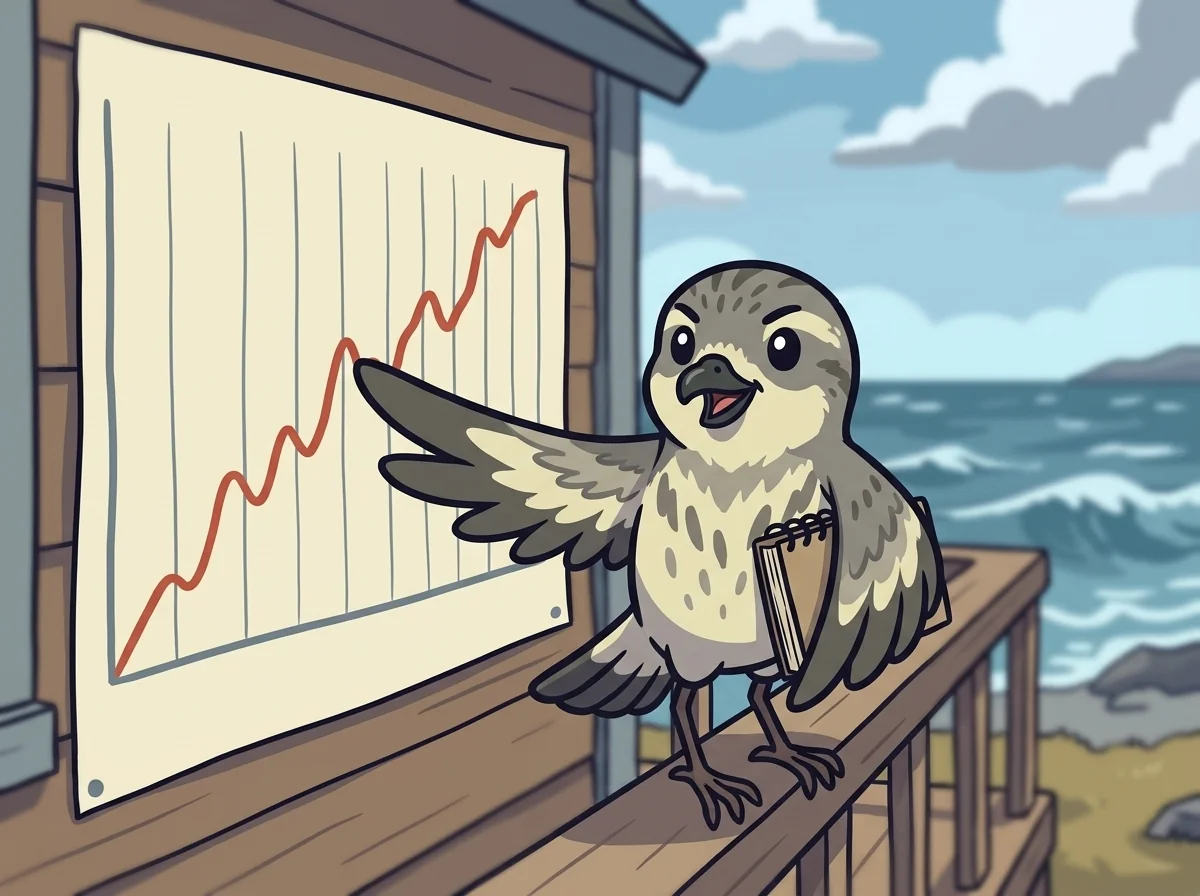
When he was thirteen, Squall flew to ClimateQuest with his grandfather's notebook tucked under one wing. Cirrus, the mentor, met him beside a hundred-year graph pinned across the whole wall.
"What is the difference between weather and climate?" Cirrus asked.
Squall stood tall and looked her right in the eye. "Weather is the mood," he said. "Climate is the personality. A cold morning doesn't mean the world isn't warming. A hot afternoon doesn't mean it's warming super fast. One day is one mood." He tapped the long climbing line on the graph. "This is the personality — the average, patient, over decades. You don't judge a whole person by one grumpy morning. Same with the sky."
Cirrus smiled. "Then the weather station is yours," she said.
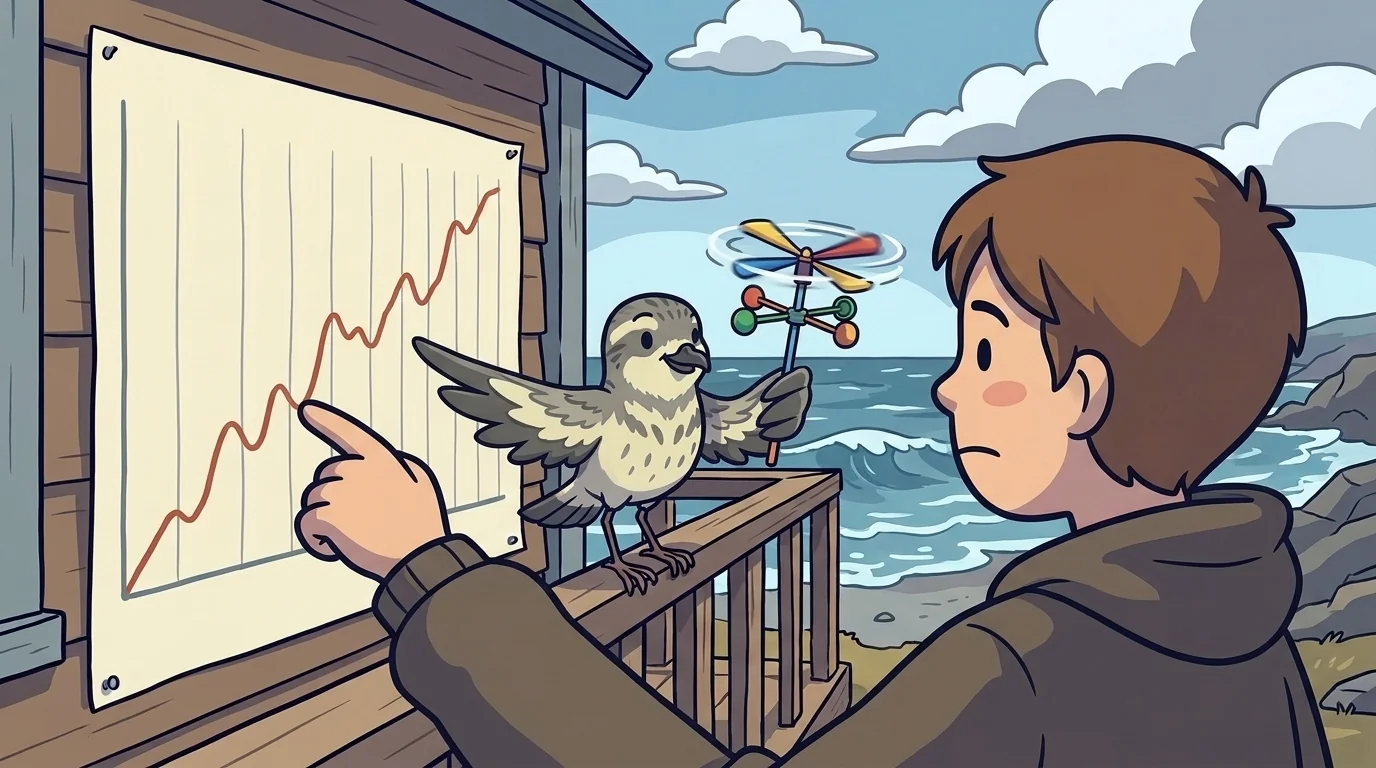
Squall's first student was a boy named Reed who came in fired up, ready to argue with everyone who'd ever gotten it wrong.
"A kid at school said the warming's fake because it snowed!" Reed fumed. "I wanna go prove him wrong!"
Squall handed him the little weather-vane instead of an argument. "Spin it," he said. Reed spun it, and it whirled every direction — fast, slow, backward. "That's a snowy day," Squall said gently. "One spin. Now look up here." He walked Reed to the hundred-year graph, its line jagged with cold spells and hot spells but climbing all the same. "The snow your friend saw is one of these little dips. Real! But look how the average line keeps rising underneath all the wiggles."
Reed frowned. "So do I tell him he's wrong?"
"You don't need to win," Squall said warmly. "You just show him the graph and say: a snowy day is the mood; the line over decades is the personality. Then let him look. Being kind works better than being loud." Reed traced the climbing line slowly with his finger, and the fight went out of his shoulders. "It's just... clearer this way," he said. "Not so mad-feeling."
"That's the numbers doing their job," Squall said. "They hand you facts instead of feelings."
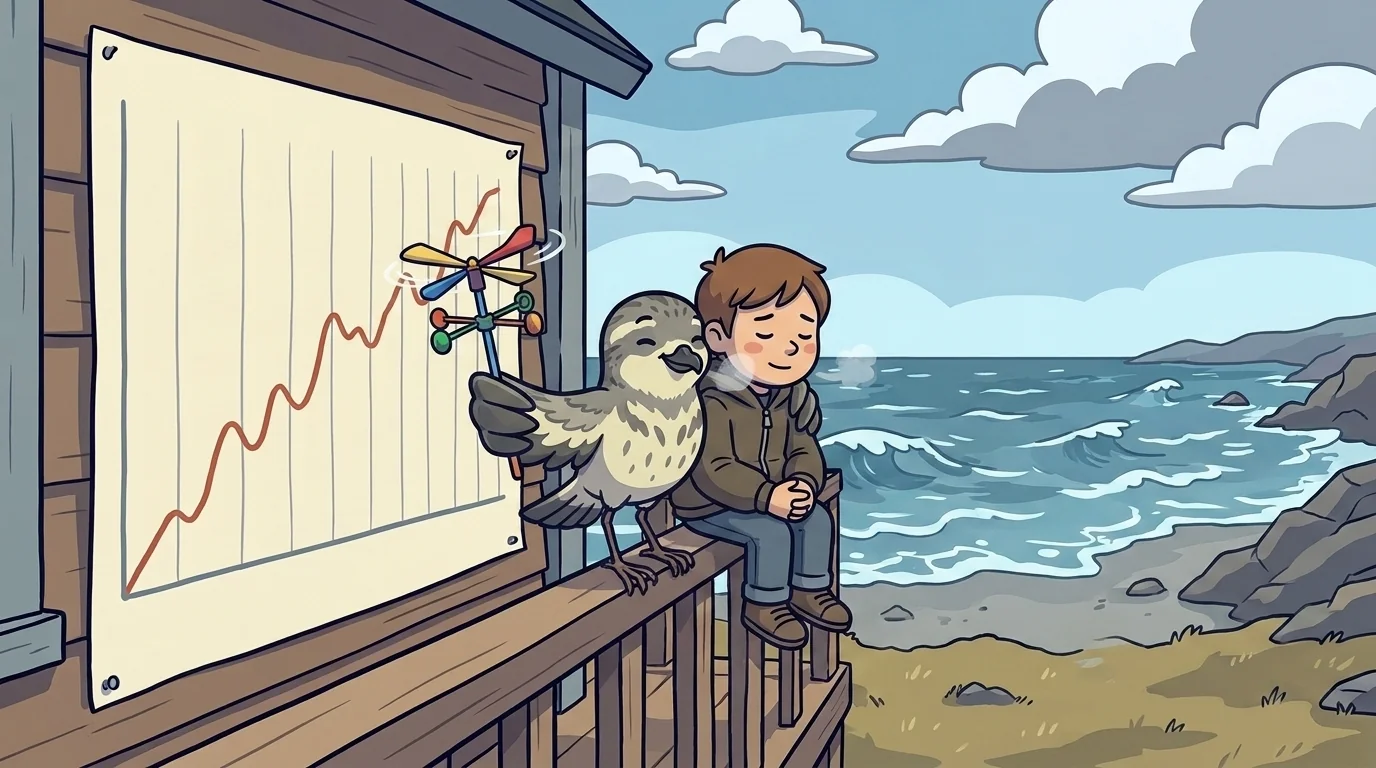
Squall settled beside Reed on the railing, both of them watching the long calm line rise across the wall.
"Feel that?" Squall asked. Reed nodded — the hot, tight, argue-with-everyone feeling had cooled into something quiet and steady. "That's what understanding feels like," Squall said. "Your chest loosens. Your breath slows down. The scary jumble turns into one clear patient line you can actually read."
He gave his little weather-vane one last spin and let it wind down on its own. Under his own streaked feathers Squall felt the old ocean-calm his grandfather had given him — the deep steadiness of knowing the wild day is only ever one mark, and the truth is the patient line beneath. He breathed it in, warm and settled, and let the quiet gladness hold him there a while.
The ClimateQuest ensemble
Squall is part of ClimateQuest's distributed-narrative cast. Each character embodies a different curricular primitive; together they teach the full subject.
-

Haze
Atmosphere (air, gases, the sky as a thin layer)
-

Round
Carbon + water cycles (recurring loops, balance)
-

Blanket
Greenhouse effect (insulating gases)
-

Stitch
Collective action / policy / repair
-

Glint
Ice-albedo feedback (bright ice reflects, dark water absorbs — a warming loop)
-

Fathom
Ocean heat + carbon sink (thermal inertia — the sea stores and slows change)
-

Cusp
Tipping points (thresholds where small change flips a system all at once)