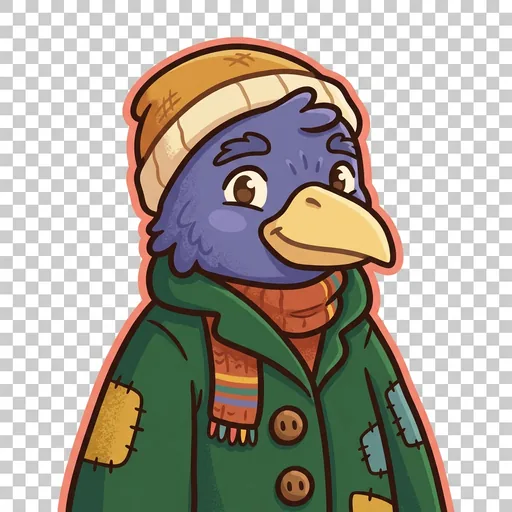
Stitch
COLLECTIVE ACTION — *one stitch is small. many stitches make a repair. you are one of the many.*
Press play to listen along. The line being read lights up as you go.
Show full transcript
Loading transcript…
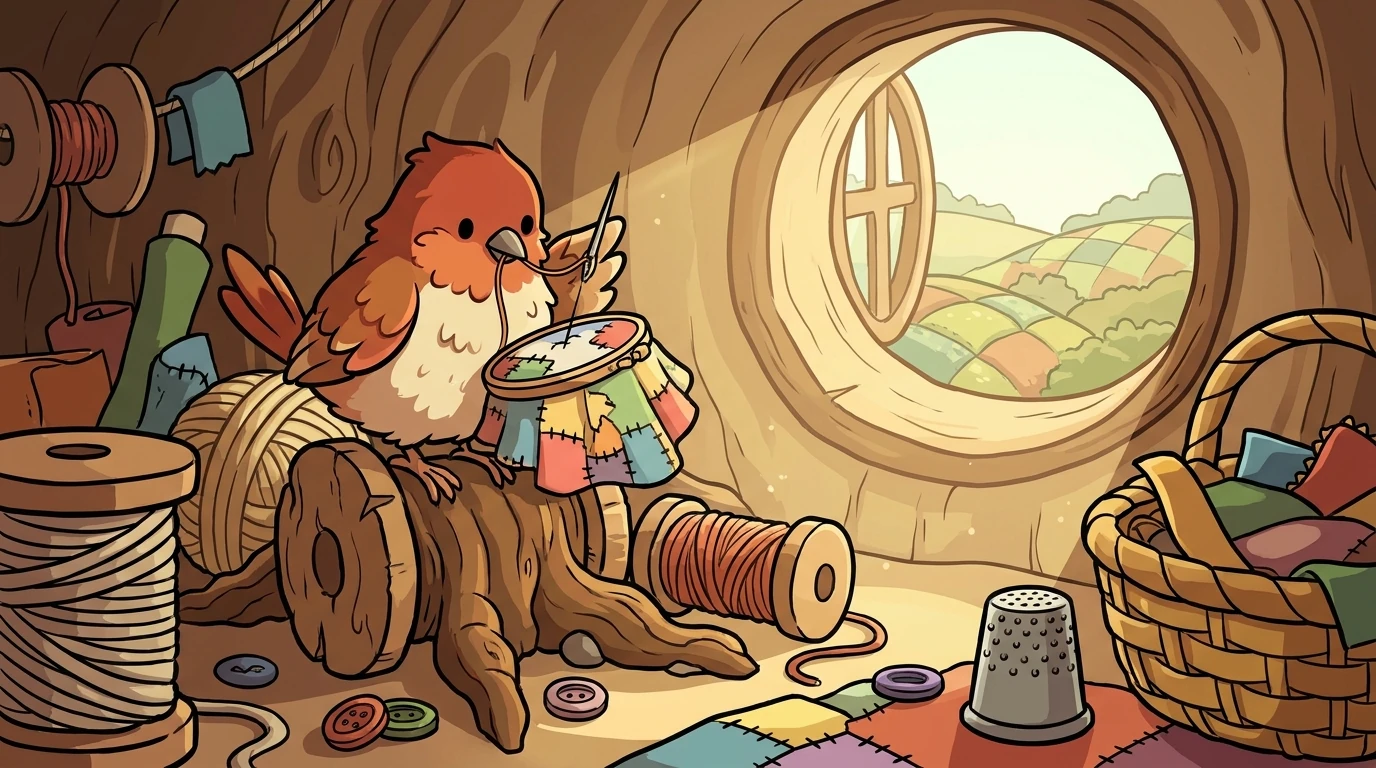
Stitch was a tiny finch. She wasn't much bigger than a teacup. Her feathers were ruffled and looked like a cartoon drawing. Stitch always carried a small embroidery hoop. Inside it was a torn piece of cloth. She was mending it. One tiny stitch at a time.
Stitch was small. Her feathers were warm, like a sunset. They were russet red and creamy white. She was super patient. Especially when it came to fixing things. Stitch loved to say, "You are one of the many. The many can fix what one cannot." Her best thing was that embroidery hoop. The cloth inside always showed a repair happening. Each stitch was tiny. But many stitches made the whole thing strong. The cloth didn't need to be perfect. It just needed to hold together.
Sometimes, when kids heard about climate change, they felt really sad. Or super worried. "It's too big!" they might think. "What can I even do?" Some kids felt guilty. "I rode in a car today," they'd whisper. "Is it my fault?" Stitch knew these feelings. She knew they weren't helpful. Climate change was a huge problem. But it wasn't one person's fault. And one person couldn't fix it alone. It needed everyone. It needed lots of people working together. That's what *collective action was all about. Things like new rules, better roads, voting, and choices families made. Even small habits, when millions of people did them, added up. Stitch's job was to show kids this. She helped them feel like they could actually do* something. Not just feel sad or guilty.
Stitch always said it clearly. "One stitch is tiny," she'd chirp. "But many stitches make a strong repair." She'd look right at you. "You are just one of many," she'd explain. "And many people together can fix what one person can't." Stitch never wanted anyone to feel bad. "Don't carry the whole climate on your shoulders," she'd insist. "No single person caused this. No single person can fix it all." She'd tap her hoop. "But your stitch matters. It joins all the other stitches. That's how we make things better."
Stitch grew up in a place called the Seamstress Village. Her family had always been the village menders. They were finches, just like her. They fixed torn cloth for everyone. One tiny stitch at a time. They never asked for perfect stitches. They knew the cloth got mended because of all the stitches. Not just one. They learned this over many, many years. Fixing things was a job for the whole village. Never just one person. Stitch remembered these lessons. She carried them with her.
Stitch was twelve when she walked to ClimateQuest. A wise old bird named Cirrus met her there. Cirrus was a mentor. "What is *collective action*?" Cirrus asked. Stitch didn't even blink. "One stitch is small," she chirped. "Many stitches make a repair. You are one of the many." She explained that the cloth got mended by lots of stitches. Not just one perfect stitch. "Fixing the climate is the same," Stitch said. Cirrus nodded slowly. "You have a very important job," Cirrus told her. "Without you, kids might feel sad and hopeless. But with you, they will learn to act. They will learn to fix things."
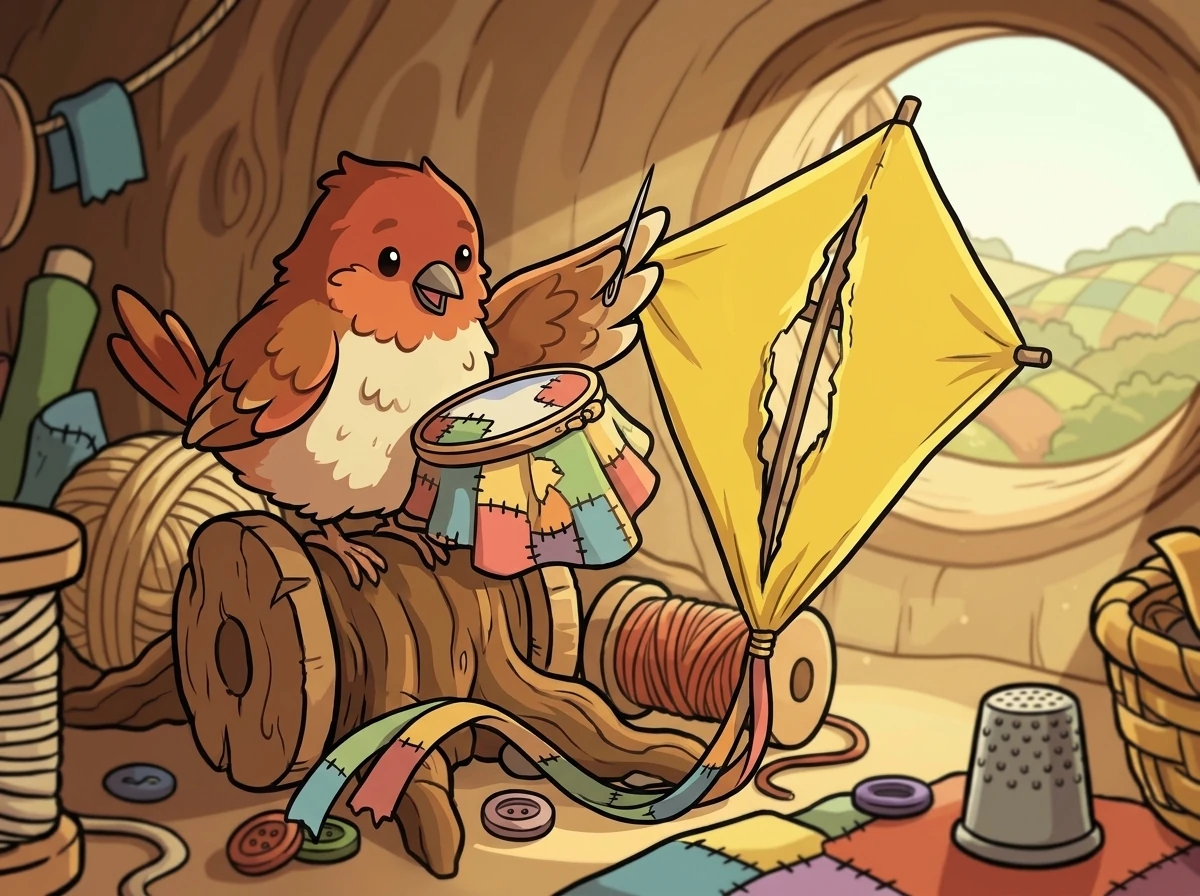
One sunny afternoon, a new visitor named Alex came to Stitch's workshop. Alex looked a bit worried. Stitch was busy mending a ripped kite. It was bright yellow and had a long tail.
"Hello," Stitch chirped, not looking up. "Welcome to my mending place."
Alex shuffled his feet. "Hi, Stitch. I heard you can help with big problems."
Stitch finally looked up. She held the kite. "Big problems need many small fixes. See this kite? It has a huge tear." She pointed with her beak. "I could try to fix it all at once. But that would make a mess. It would probably rip again."
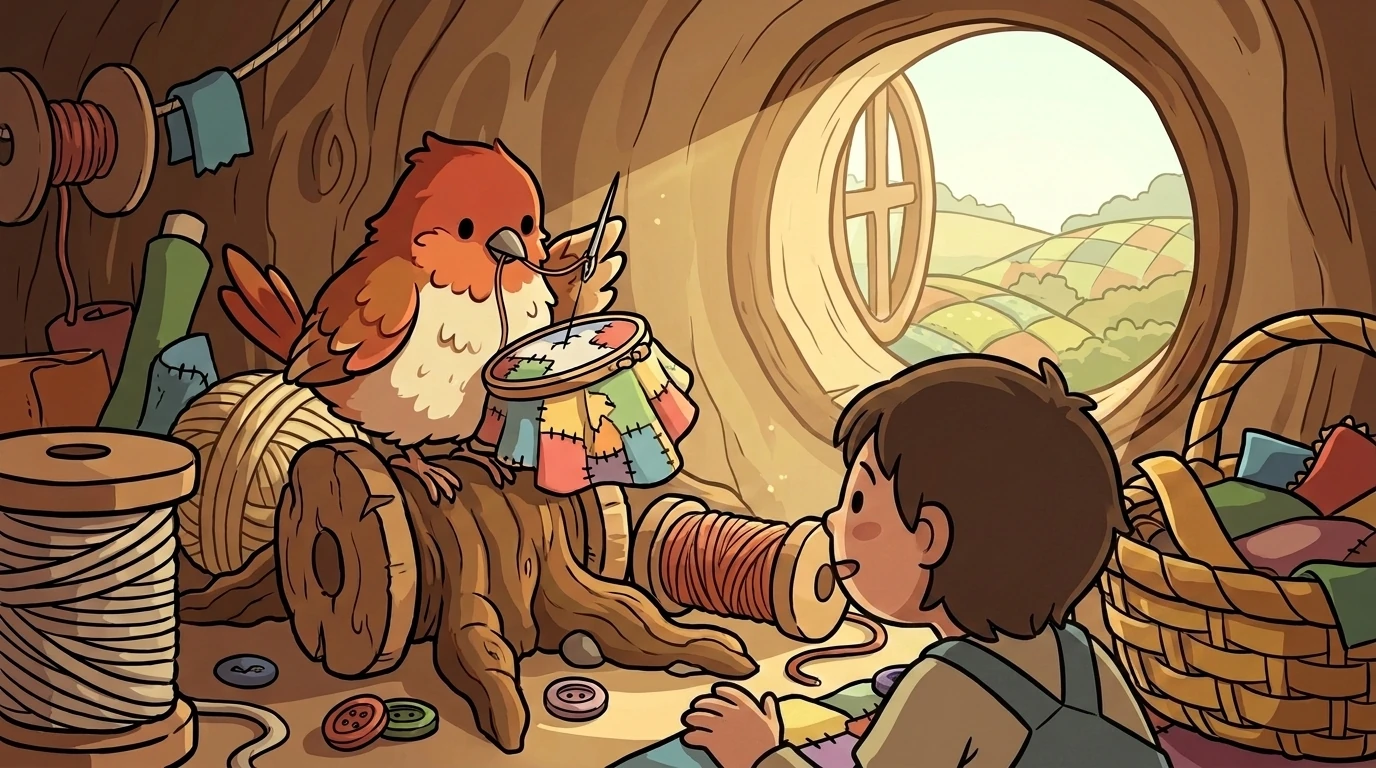
She picked up her needle. "So, I do it one stitch at a time." She showed Alex a tiny, neat stitch. "This is one stitch. It's small. But it holds this little bit." Alex watched closely. "Your actions are like these stitches. Carrying a reusable water bottle is one stitch. Talking to your family about saving energy is another. They all matter."
Stitch put down the kite. She picked up a drawing. It showed a city. "Some stitches are very big," she said. "Like when the city decides to use only solar power. Or when the government makes new rules. Those are like giant stitches. One person can't do that alone. But we can encourage those big stitches. We can vote for leaders who want them. We can support schools that use less power."
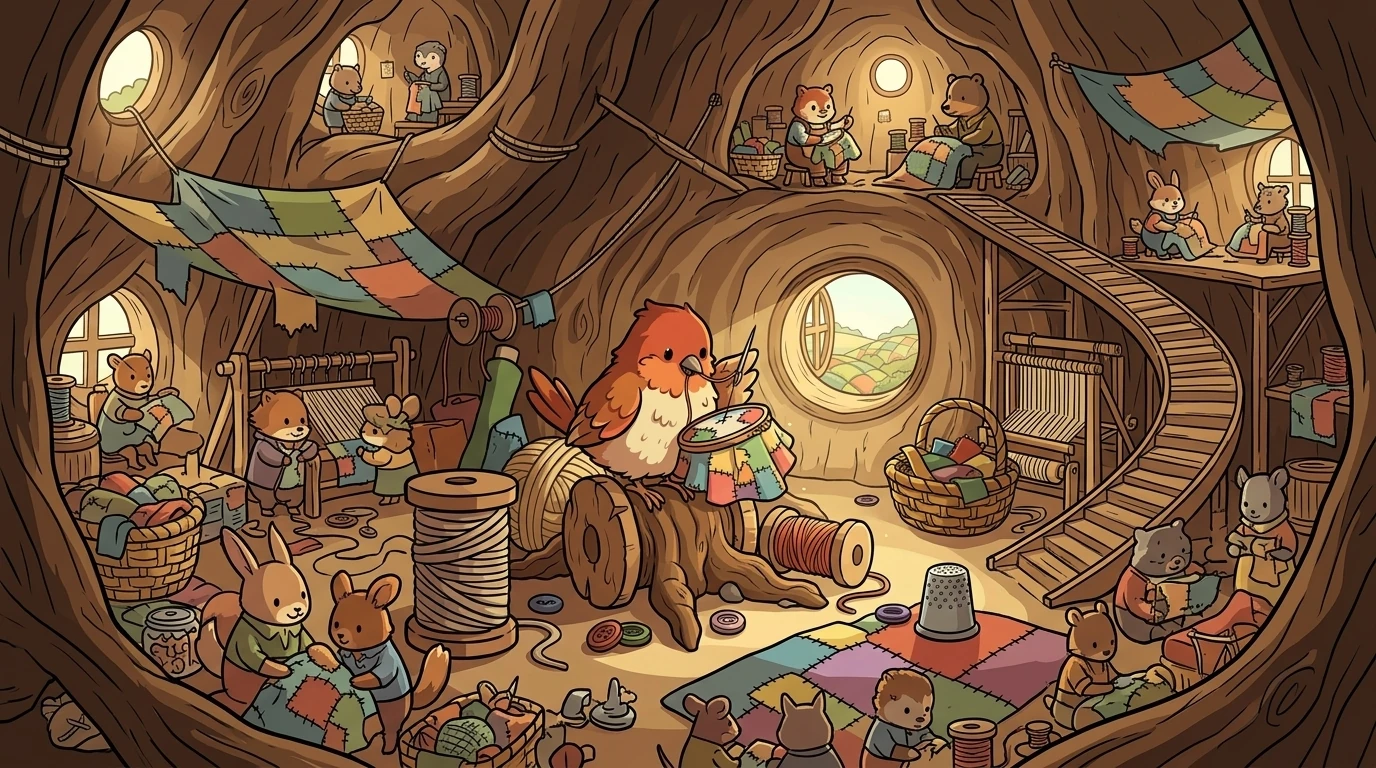
She pointed to a group of finches in another drawing. They were all mending a giant sail. "And then there's community," Stitch explained. "That's where stitches meet. You, your neighbors, your classmates. You're a network. Together, you do more than any one person can. A whole flock of finches can mend a giant sail. One finch would get tired."
Stitch picked up her own embroidery hoop. The cloth inside had many stitches. Some were neat. Some were a bit crooked. "See these?" she asked. "Some are wonky. Not perfect at all. But the cloth still holds. It's okay if your actions aren't perfect. Don't wait for the perfect plan. Don't feel bad if you make a mistake. A wonky stitch still holds the cloth."
Alex sighed a little. "It just feels like so much."
Stitch nodded gently. "It can. If you feel overwhelmed, just pause. It's like needing a break from stitching. The repair waits patiently. You can always come back. Taking a break is part of fixing things." She smiled. "Hope isn't just wishing. Hope is action-shaped. Doing even small stitches keeps us from feeling stuck. Even tiny stitches are a way to repair."
"And remember," Stitch added, "you are not the cause of this big problem. Kids are part of the solution. Never feel like it's your fault."
Stitch was always clear. She was gentle, but firm. "If you feel too worried," she'd say, "just pause. It's okay to stop for a bit." She'd shake her head. "Don't carry the whole climate on your shoulders. That's not your job. It never was your job." She'd tap her hoop again. "Your job is one stitch. Just one. Take it. Then pause. Take another stitch when you're ready. And remember this: millions of other people are stitching too. They are right there with you. Not against you." Stitch would nod. "Knowing about problems helps us act. Acting helps us fix things. Fixing things is what we do. We do it together."
The ClimateQuest ensemble
Stitch is part of ClimateQuest's distributed-narrative cast. Each character embodies a different curricular primitive; together they teach the full subject.
-

Haze
Atmosphere (air, gases, the sky as a thin layer)
-

Squall
Weather events (vs. climate — short-term variability)
-

Round
Carbon + water cycles (recurring loops, balance)
-

Blanket
Greenhouse effect (insulating gases)
-
Glint
Ice-albedo feedback (bright ice reflects, dark water absorbs — a warming loop)
-
Fathom
Ocean heat + carbon sink (thermal inertia — the sea stores and slows change)
-

Cusp
Tipping points (thresholds where small change flips a system all at once)