Fathom
OCEAN SINK & INERTIA — the sea quietly soaks up most of the extra heat and much of the carbon, and it changes slowly. Slow to warm means slow to cool — there is a delay, and the delay cuts both ways.
Press play to listen along. The line being read lights up as you go.
Show full transcript
Loading transcript…
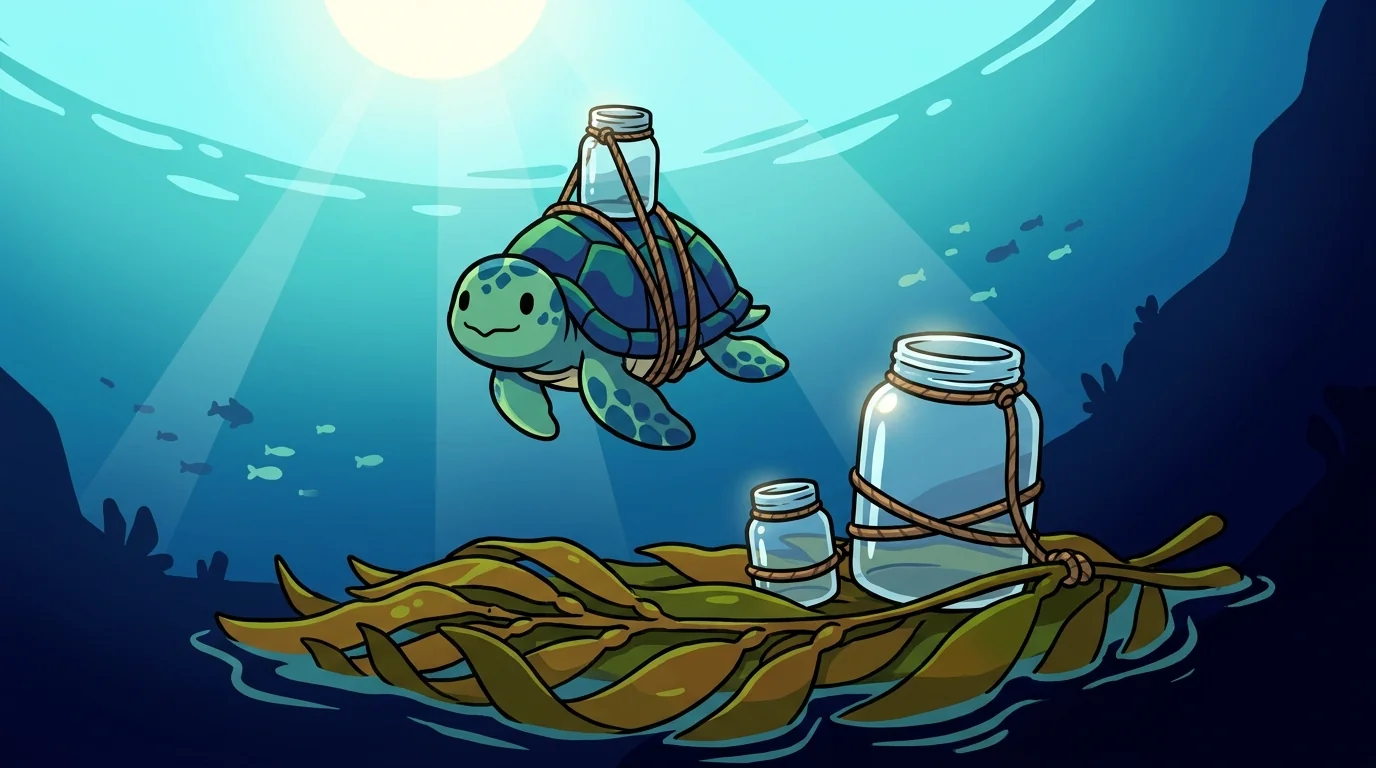
Far out where the water went from blue to dark-blue to nearly black, a sea-turtle-tween named Fathom floated with two glass jars roped to her shell — one thimble-small, one enormous — and waited for the otter to stop being impatient.
"You said you'd show me something," the otter said, paddling circles. "I've been floating here for ages."
"You've been floating here for a few minutes," Fathom said, unhurried, "which for you is ages, and that's exactly the lesson." She unhooked both jars and set them side by side on a floating raft of kelp, in the sun. "Both full of water. Both in the same warm light. Come back when the sun's high and touch them."
By midday the otter was bursting. He dipped a paw in the little jar — "Warm!" — and then the big one. He frowned. "The big one's barely changed."
"Same sun. Same warmth pouring in," Fathom said. "The little jar heats up fast because there's so little of it. The big one takes in the same heat but spreads it through so much water that it warms slowly." She patted the deep dark below her. "The ocean is the biggest jar there is. When the sky gets warmer, the sea takes most of that extra heat and tucks it away — quietly, deep down. It's been cushioning the whole world, soaking up warmth the air never had to feel."
The otter looked at the enormous jar, barely warmer than the sea. "So the ocean's been... catching it for us."
"Most of it," Fathom said. "For a long time. Without a word."
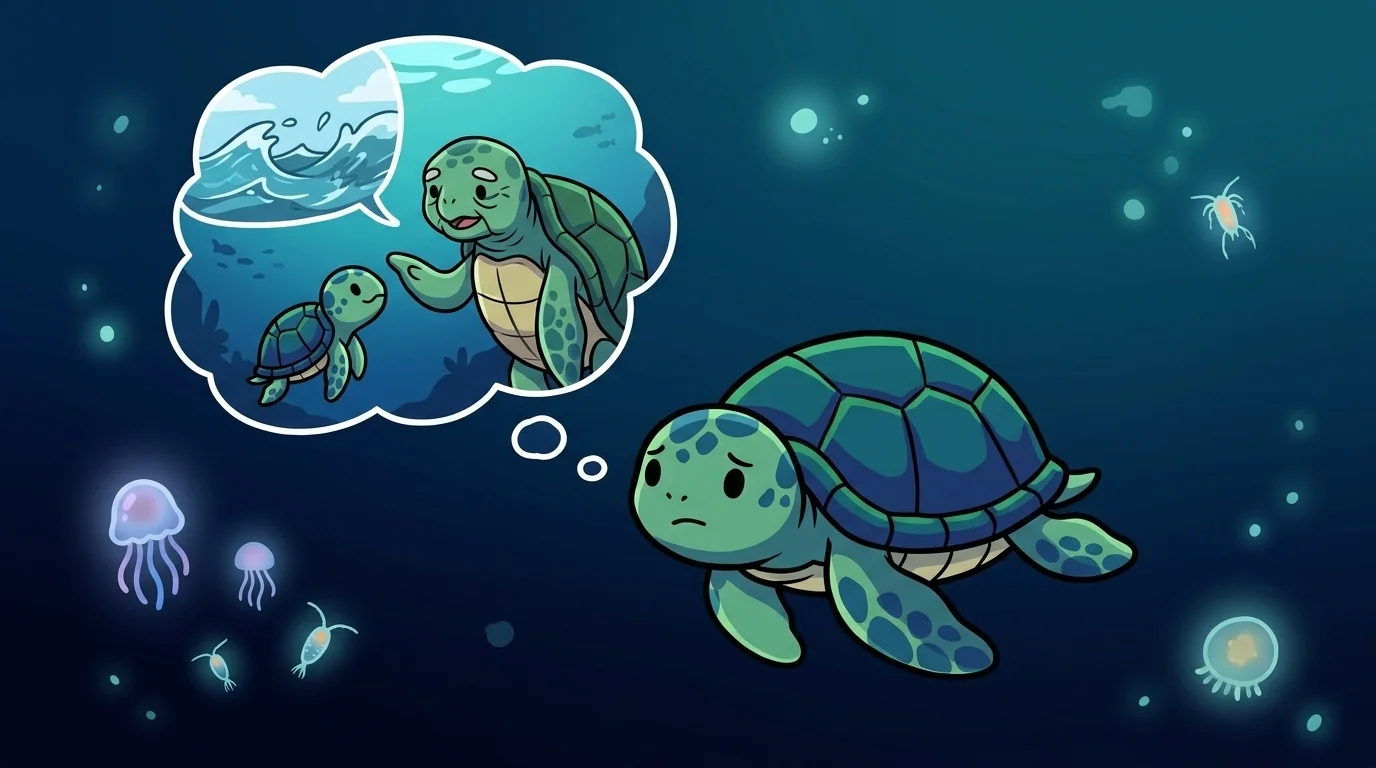
Fathom had learned about slow-holding from her grandfather, who ferried messages between the far islands.
When she was small she'd loved how fast things could be — quick tides, quick minnows, quick weather. She thought slow meant dull. Then one storm season the reef went strange: hot spells above, but the deep water stayed steady and cool, and the fish that fled the shallows came down to her grandfather's depths and made it through.
"Feel how the deep barely moved?" he'd said, in the calm dark below the churning surface. "Up top, everything swings — hot, cold, hot again. Down here we change slow. That slowness isn't dull, little one. It's a keel. It's what keeps the whole thing from tipping every time the sky has a mood."
Fathom had drifted in that steady cool, feeling her own racing heart slow to match it, and something settled in her that never quite left: the one who changes slowly is the one everyone else can lean on. Slow isn't nothing happening. Slow is holding. She'd stopped being ashamed of being unhurried after that. She'd started being proud of it.
But her grandfather told her the other half, too, that same night. "Mind — slow to warm is also slow to cool. Whatever heat we take in, we give back late. If the sky ever pushed too much warmth down on us, we'd hold it long after the pushing stopped. The deep keeps its promises slowly. Both kinds."
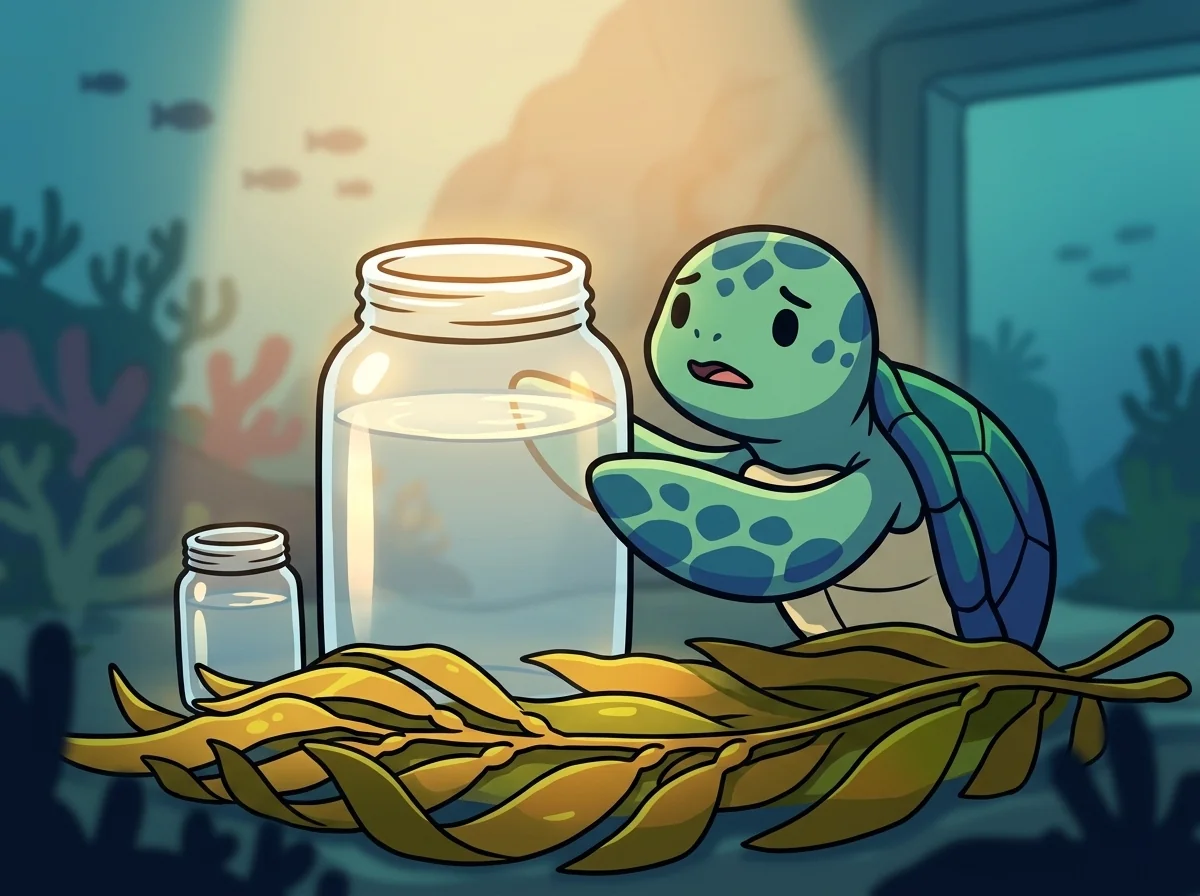
She swam to ClimateQuest the year the shallow reefs first bleached pale, because a place studying a warming world ought to understand the slow deep that was carrying so much of the warming out of sight.
Cirrus met her at the water-gate. "What does the ocean do in all this?" she asked.
Fathom set her two jars in the light. "It's the world's biggest sponge for heat and for carbon," she said. "More than nine parts in ten of the extra warmth from a thicker sky — the sea has taken it. A big share of the extra carbon, too; it dissolves right in. The air would be far warmer already if the ocean weren't quietly holding so much." She rested a flipper on the great jar. "But it holds slowly, and it lets go slowly. So the warmth we feel now is partly from carbon added years ago — the sea is only now passing it up. And the good we do now won't show for years either. The deep answers late. Always late. Both directions."
Cirrus considered the patient turtle and her two jars. "That could sound like a trap — warmth already promised, arriving late."
"It could," Fathom agreed. "Or it could sound like time. The sea bought us years by holding what it held. The delay isn't a trick. It's a cushion — if we understand it, and don't mistake slow to show for not working." She looked up from the dark. "You belong here," Cirrus said, "and stay near the gate a while. The fast ones need someone who holds slow."
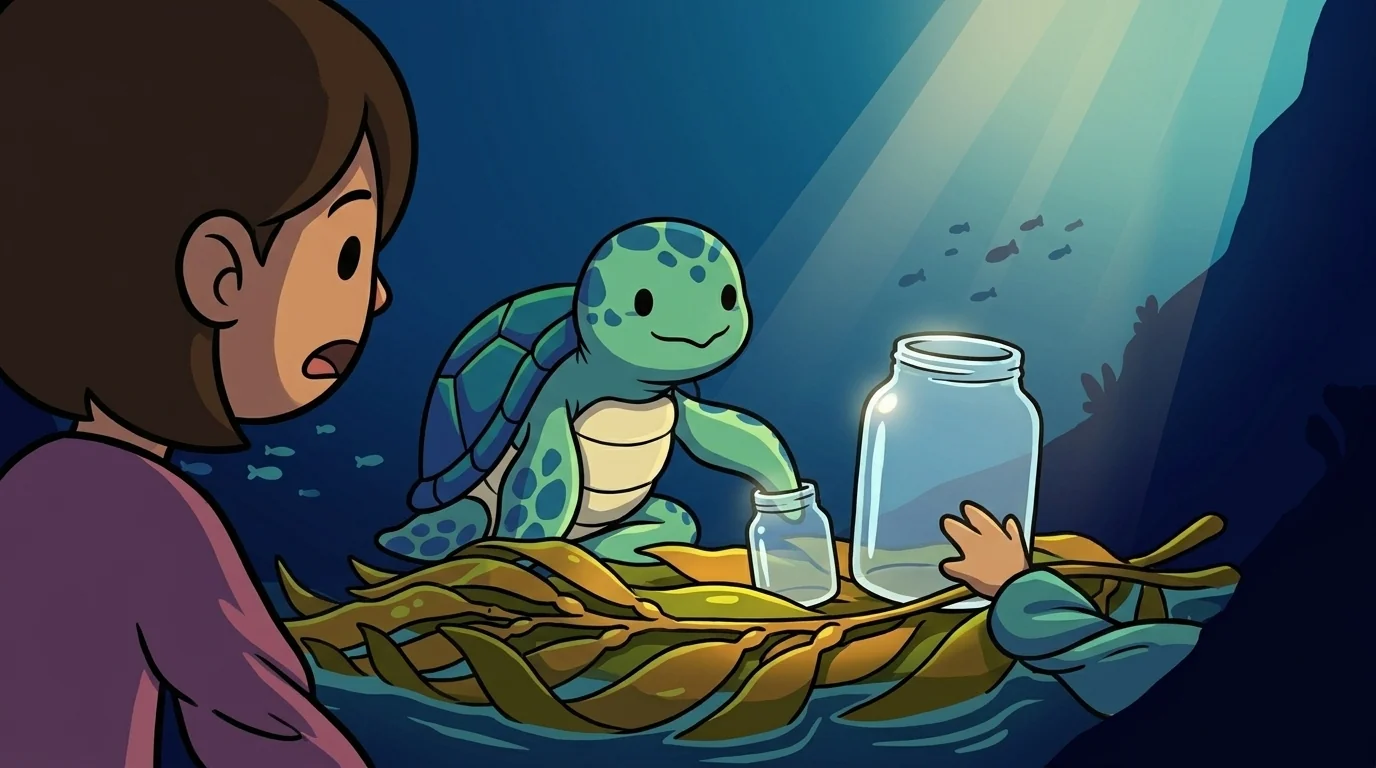
Fathom's workshop was a tide pool, deep and calm, and the children who came to it were often the frightened-fast kind.
A girl arrived talking quickly, twisting her sleeve. "We stopped so much already — my family, my town, we changed everything — and it's still getting warmer, so it didn't work, nothing works, why even—"
"Sit by the deep jar," Fathom said gently. "Paw in. Now the little one." The girl did; the little jar was hot, the big one mild. "Same sun on both, remember. The big one just answers slow. You didn't fail. You're standing in the delay." She tapped the great jar. "The warmth you feel today was mostly promised years back, by carbon already up there before you lifted a finger. And the good your town is doing now? The sea and sky will hand that back years from now, to someone your age who isn't born yet. Slow to show is not the same as not working. It never was."
The girl stared at the mild, enormous jar. "So it is working. I just can't feel it yet."
"That's the hardest kind of true," Fathom said. "The deep keeps its promises late — the worrying ones and the hopeful ones. If you quit the moment you can't feel the change, you quit right before the change you already earned comes up from below." She smiled slow. "You found the patience part. Most people never make it past 'but nothing's different yet.'"
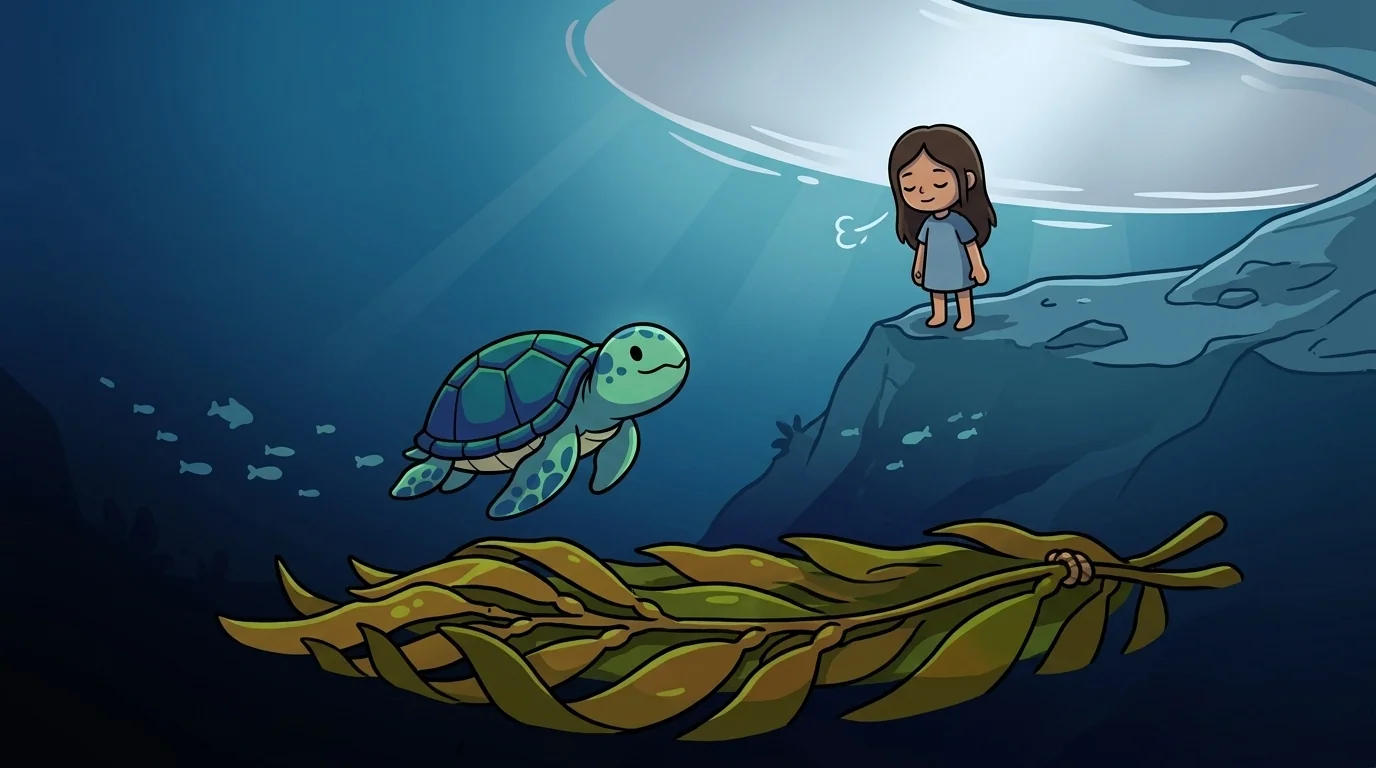
Later, when the tide pool went still and silver, the girl came back and asked the quiet thing.
"When it feels like all my effort just sinks and disappears," she said, "how do I keep going?"
Fathom thought of her grandfather in the calm dark, and the fish that survived because the deep held steady, and slow is holding, and the deep answers late, both directions.
"You remember that sinking isn't the same as vanishing," she said. "The sea takes what you give it and holds it and passes it up its own slow way, on its own slow clock. You won't always feel the good land. That's not a sign it didn't. That's just the deep, keeping time the way it always has." She settled deeper into the cool. "Do the good thing on the slow clock. Then let the deep carry it. That part was never yours to hurry."
The girl breathed out, long and slow like the deep itself, and Fathom watched the frantic edge leave her, the way her own racing heart had once slowed to match the calm below the storm.
She didn't say the rest aloud, but she thought it, deep and steady and sure: the slow ones look like nothing is happening. But the slow ones are the keel. They are holding the whole thing steady while the surface has its moods — and everything good you hand them, they give back, late and certain, long after you stopped watching for it.
The ClimateQuest ensemble
Fathom is part of ClimateQuest's distributed-narrative cast. Each character embodies a different curricular primitive; together they teach the full subject.
-

Haze
Atmosphere (air, gases, the sky as a thin layer)
-

Squall
Weather events (vs. climate — short-term variability)
-

Round
Carbon + water cycles (recurring loops, balance)
-

Blanket
Greenhouse effect (insulating gases)
-

Stitch
Collective action / policy / repair
-

Glint
Ice-albedo feedback (bright ice reflects, dark water absorbs — a warming loop)
-

Cusp
Tipping points (thresholds where small change flips a system all at once)