
Cusp
TIPPING POINTS — some changes are gentle right up to an edge, then flip fast and are hard to undo. Knowing where the edge is means you can stay back from it — the map of the edge is a tool, not a doom.
Press play to listen along. The line being read lights up as you go.
Show full transcript
Loading transcript…
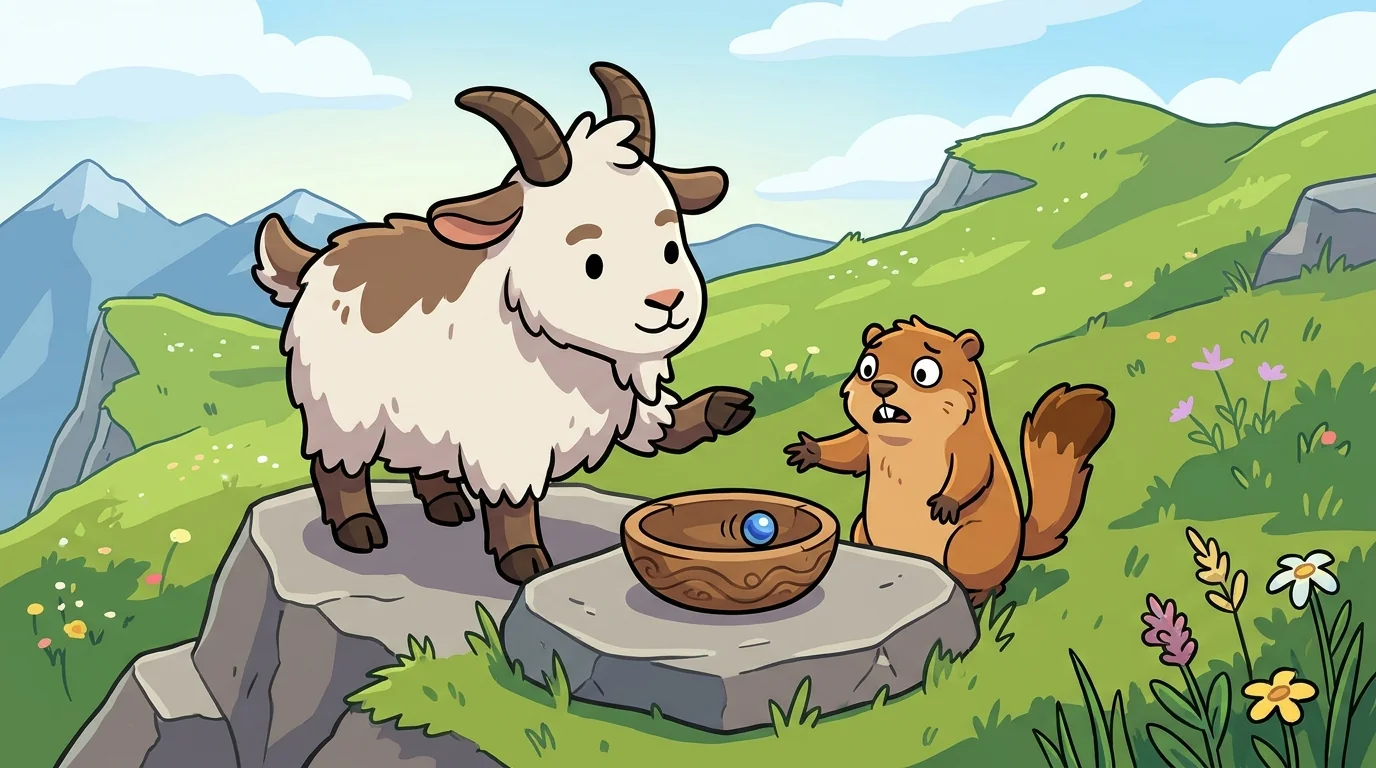
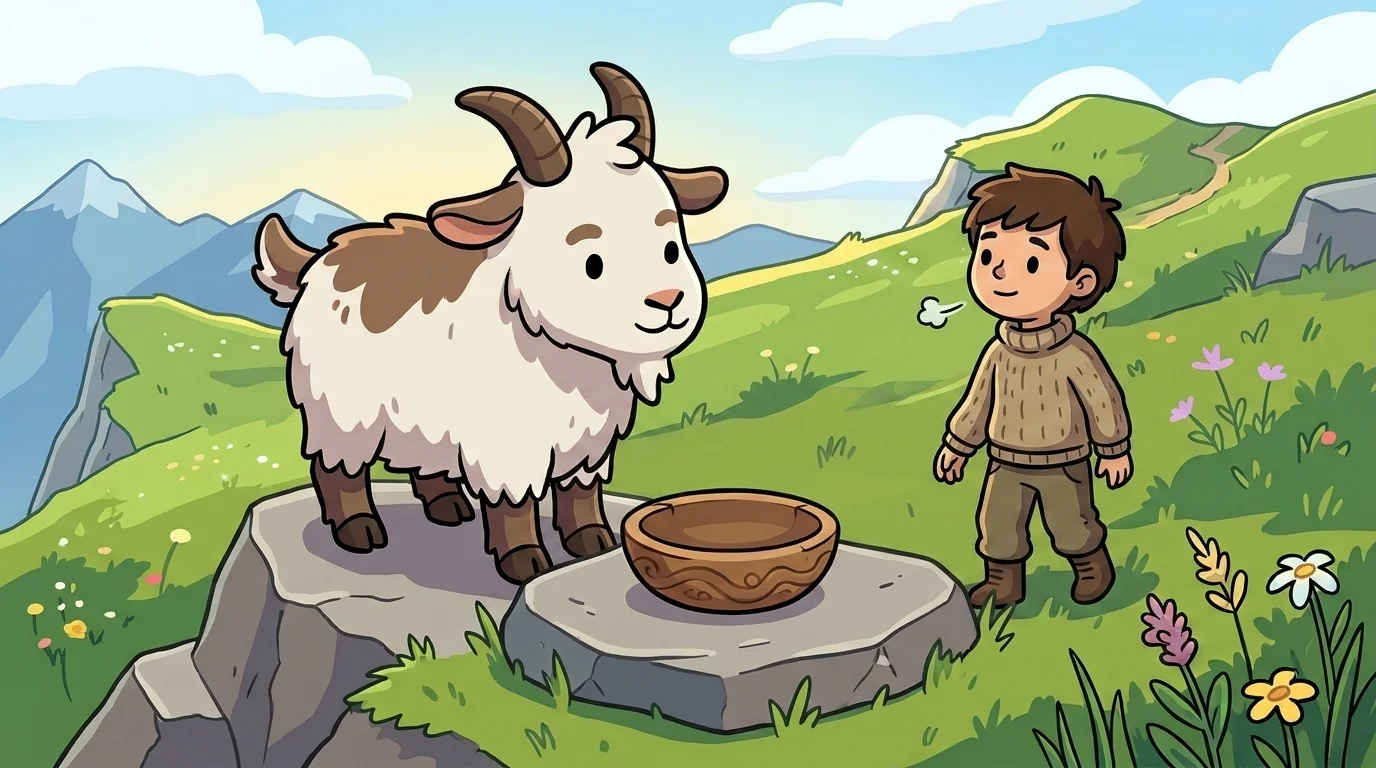
High on a jagged ridge where the alpine meadow ended in open sky, a mountain-goat-tween named Cusp stood with all four hooves planted on the granite. She carefully balanced a carved cedar bowl on a flat stone, her horns catching the bright morning sun. Beside her, a nervous marmot named Pip twitched his whiskers and stared down at the sheer drop-off. Cusp was teaching him the difference between near and over, using a single blue marble.
"Roll the marble," Cusp said, her voice steady and calm.
Pip flicked the glass marble with one sharp claw, watching it swing up the curved cedar wall, slow near the rim, and roll back down. It climbed the opposite side, paused for a second, and settled back where it started.
"It just comes back," Pip muttered, his tail twitching against the dry grass.
"It comes back every single time because gravity always pulls it home," Cusp said, nodding her horns. "Now push it a little harder and see what happens."
The nervous marmot nudged the glass sphere with a bit more force. The marble climbed much higher, almost reaching the outer rim, before gravity dragged it home again.
"That is how most of our world works," Cusp explained, watching the glass spin. "You nudge a system, it wobbles, and then it settles back to normal. It is always a matter of gentle in, gentle out."
She tipped the marble herself, pushing it right to a painted red line near the rim.
"Still fine," she said, catching it before it could wobble over. "It still comes home because near the edge is not the same as over it. People often forget that important part when they look at a changing world."
Then, with one slow tap of her hoof, she nudged the marble past the red line. It cleared the lip of the bowl and rolled across the flat stone. It hit the dirt, bounced twice, and vanished into the deep grass of the canyon. This time, the blue marble did not roll back at all.
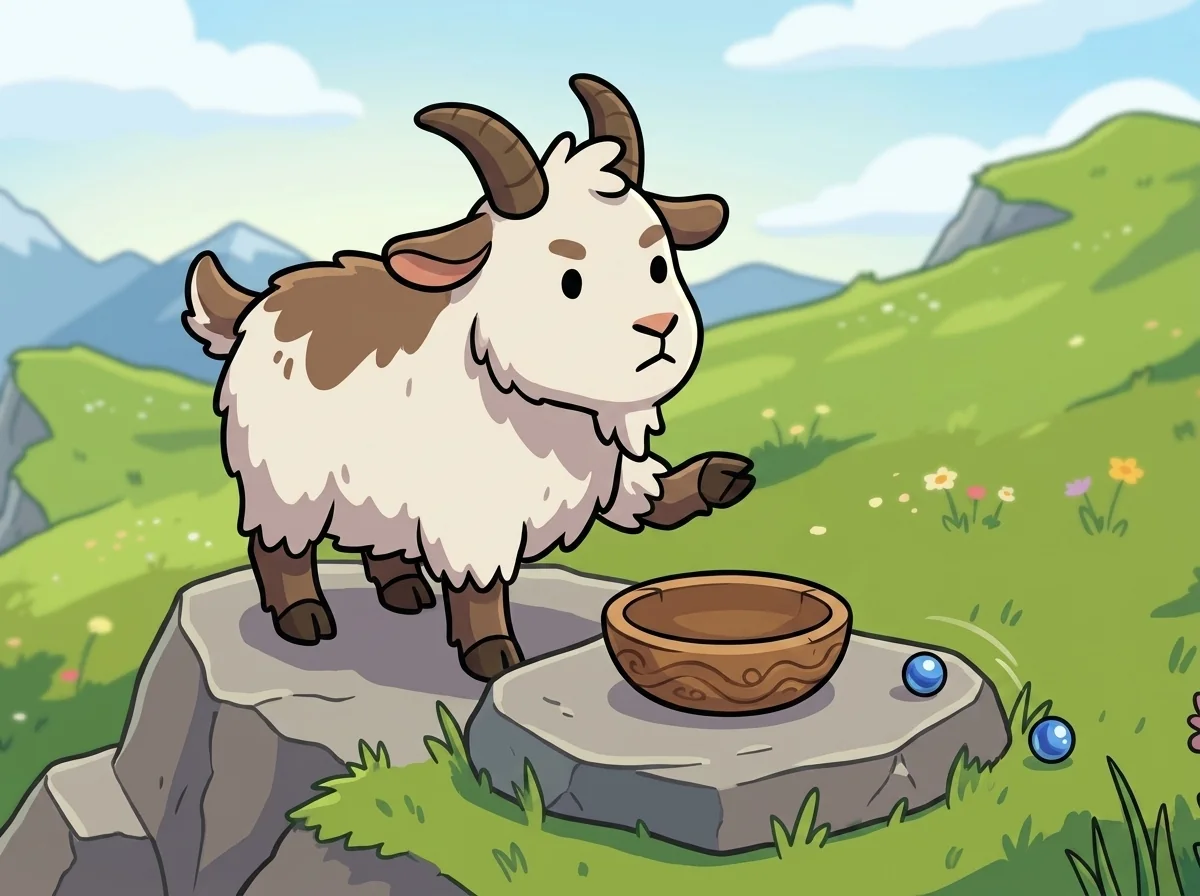
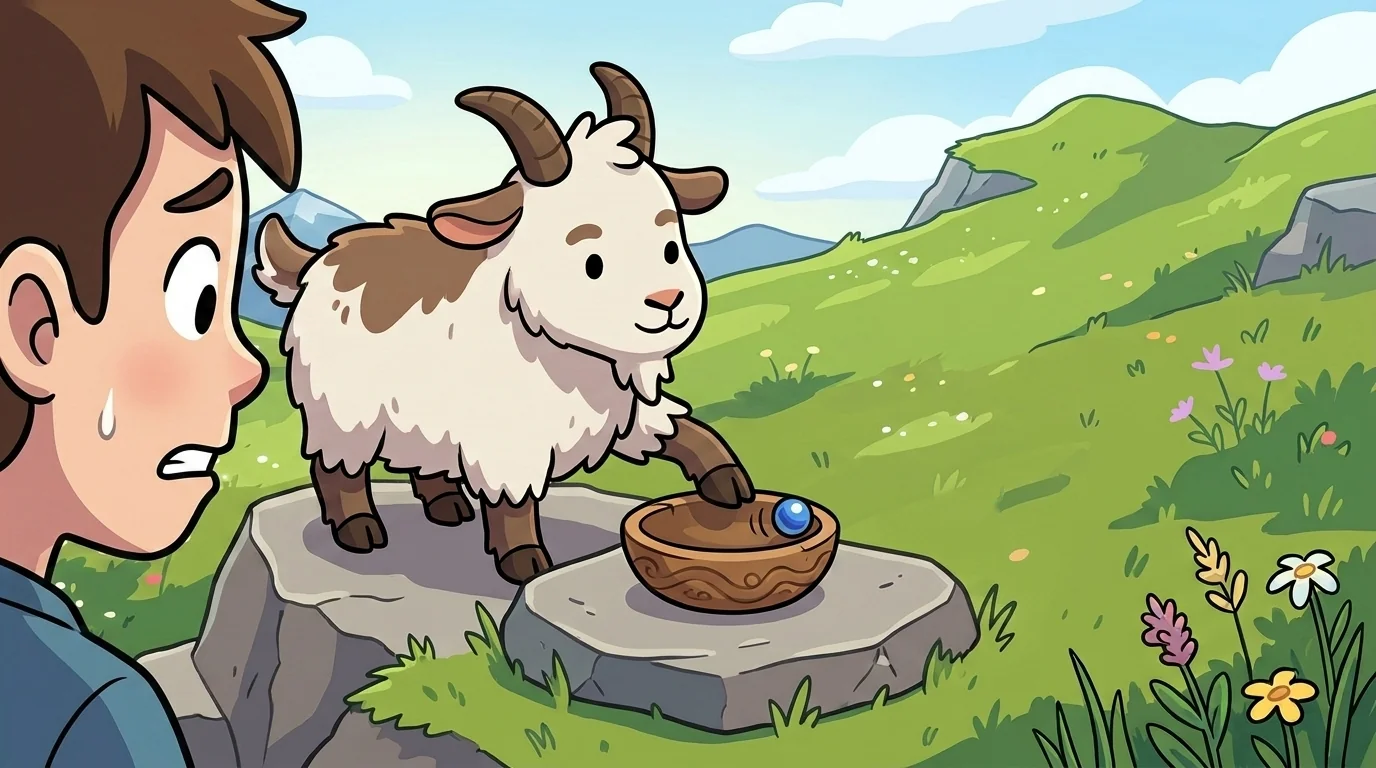
Pip blinked his dark eyes and stared at the empty stone where the marble had been. "It didn't come home that time," he whispered, looking up at her.
"Because it passed the *tipping point," Cusp said, her voice quiet. "One tiny push past the threshold*, and it stopped coming back at all. That is what we call the edge, and before you cross it, the shape of the bowl does the work for you. But once you cross that line, you are suddenly in a completely new state. Getting the marble back now means a long, difficult climb down the mountain. It is much harder than the little nudge that sent it over."
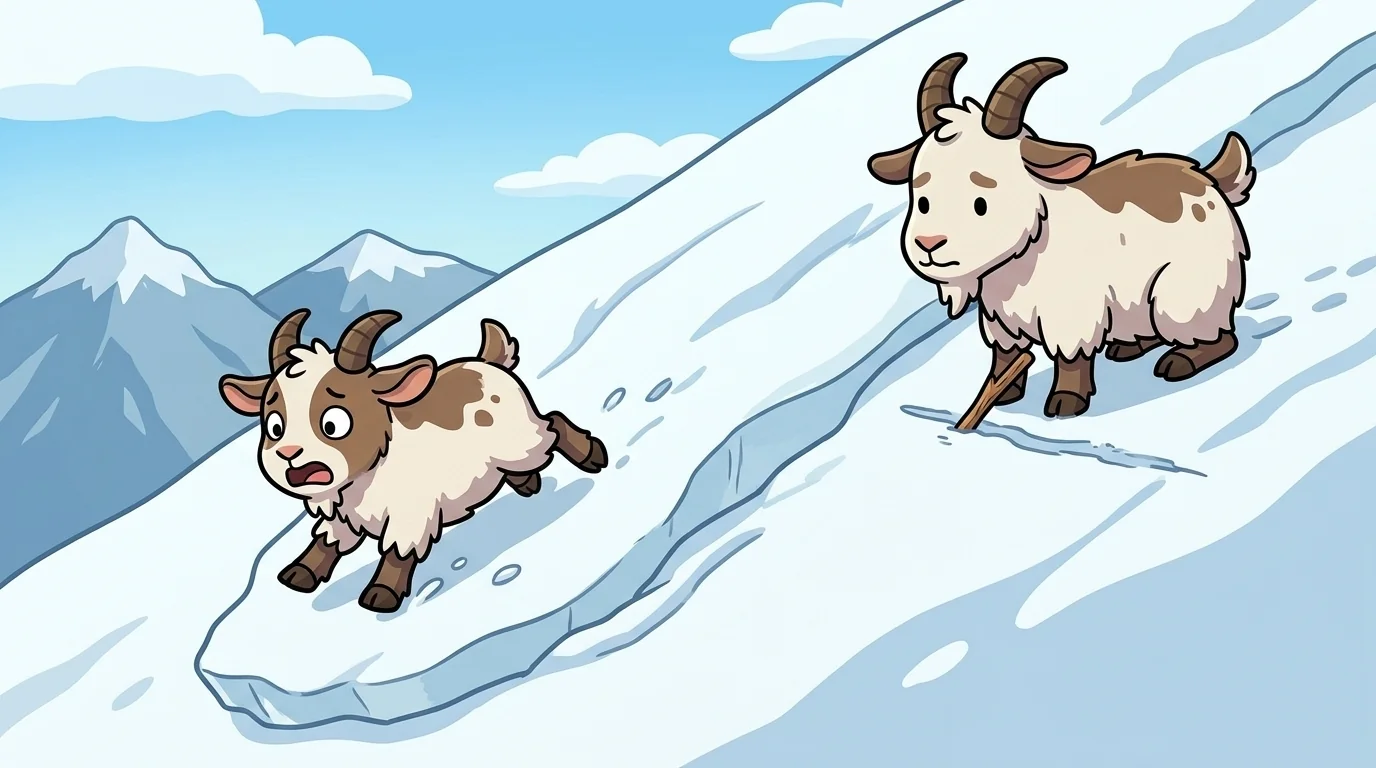
Cusp had learned about the edge the hard way when she was just a kid on a steep snow-slope. She had crossed the slope a hundred times before, packing the snow down until she stopped paying attention. Then, on a warm afternoon, the whole slab let go with a dull, heavy sound that shook her bones.
The world became a blinding blur of white as the slide carried her down the mountain in a roar. When it finally stopped, Cusp was buried up to her chest in cold debris, her heart slamming against her ribs. The scary part was how ordinary that final step had felt right before the slope collapsed.
Her mother, who read the winter slopes for the herd, climbed down to find her. She did not scold Cusp, but instead drew a line in the snow with her hoof.
"You think the mountain betrayed you," her mother said, her voice calm and steady. "It did not betray you, because the mountain does not care about your steps. The mountain just has edges, which are the places where near turns into over. Your job was never to be strong enough to survive a terrible fall. Your job is to learn where the edges are and cross a little higher."
She tapped the line she had drawn in the snow with her sharp hoof.
"A goat who knows the edges is not a scared goat," her mother said. "She is a free goat who can go anywhere because she knows which steps to avoid."
Something shifted inside Cusp's chest as she listened to her mother's wise words. Her panic cooled into something much more useful, like a map in her mind. The edge was not an enemy out to get her, but just a boundary. Knowing where the edges were was the exact thing that set her free to roam.
She climbed up to ClimateQuest several seasons later, when the high glaciers first began to crack. A place that studied a changing world needed someone who could read edges for a living. Cirrus met her on the windy path near the summit, her misty form swirling.
"What exactly is a tipping point?" Cirrus asked, her voice sounding like the wind.
Cusp set her wooden bowl on a flat rock and rolled the blue marble to show her. The marble went up, down, and settled back in the center of the cedar wood. Then she pushed the marble over the lip, letting it drop down into the deep grass.
"It is a place in a system where gentle stops working," Cusp explained. "For a long time, you can push a system and it will bounce back to normal. But if you push past the *threshold*, the entire system flips into a new state. A dry forest becomes a grassland, and a melting ice sheet keeps melting on its own. Getting back is much harder than the small step that tipped it over the edge."
"Most people hear about those edges and freeze with fear," Cirrus said quietly.
"They freeze because they only heard the scary half of the story," Cusp replied. "Freezing is only for when you are walking in the dark and cannot see the path. But we have good science, which means we can see exactly where the edges are. An edge you can see is an edge you can stay back from. That is not a story of doom, but rather a very useful map for our journey."
Cirrus smiled, her misty shoulders relaxing as she looked at the steady goat. "You definitely belong here at ClimateQuest, where we need your steady
The ClimateQuest ensemble
Cusp is part of ClimateQuest's distributed-narrative cast. Each character embodies a different curricular primitive; together they teach the full subject.
-

Haze
Atmosphere (air, gases, the sky as a thin layer)
-
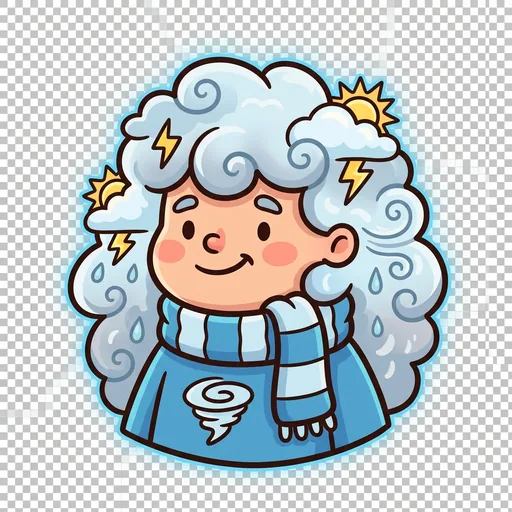
Squall
Weather events (vs. climate — short-term variability)
-

Round
Carbon + water cycles (recurring loops, balance)
-

Blanket
Greenhouse effect (insulating gases)
-

Stitch
Collective action / policy / repair
-

Glint
Ice-albedo feedback (bright ice reflects, dark water absorbs — a warming loop)
-
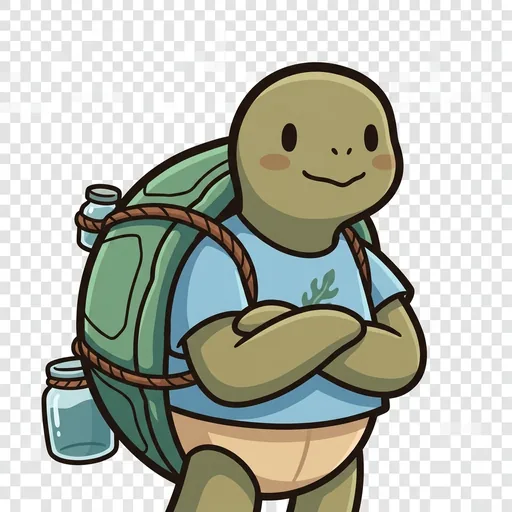
Fathom
Ocean heat + carbon sink (thermal inertia — the sea stores and slows change)