
Bluffer and Reader
information-asymmetry pair — Bluffer holds private information and chooses what to reveal. Reader observes signals to infer what the other holds. Together they teach the game-thinking primitive of strategic information sharing.
A story read by Bluffer and Reader
Press play to listen along. The line being read lights up as you go.
Show full transcript
Loading transcript…
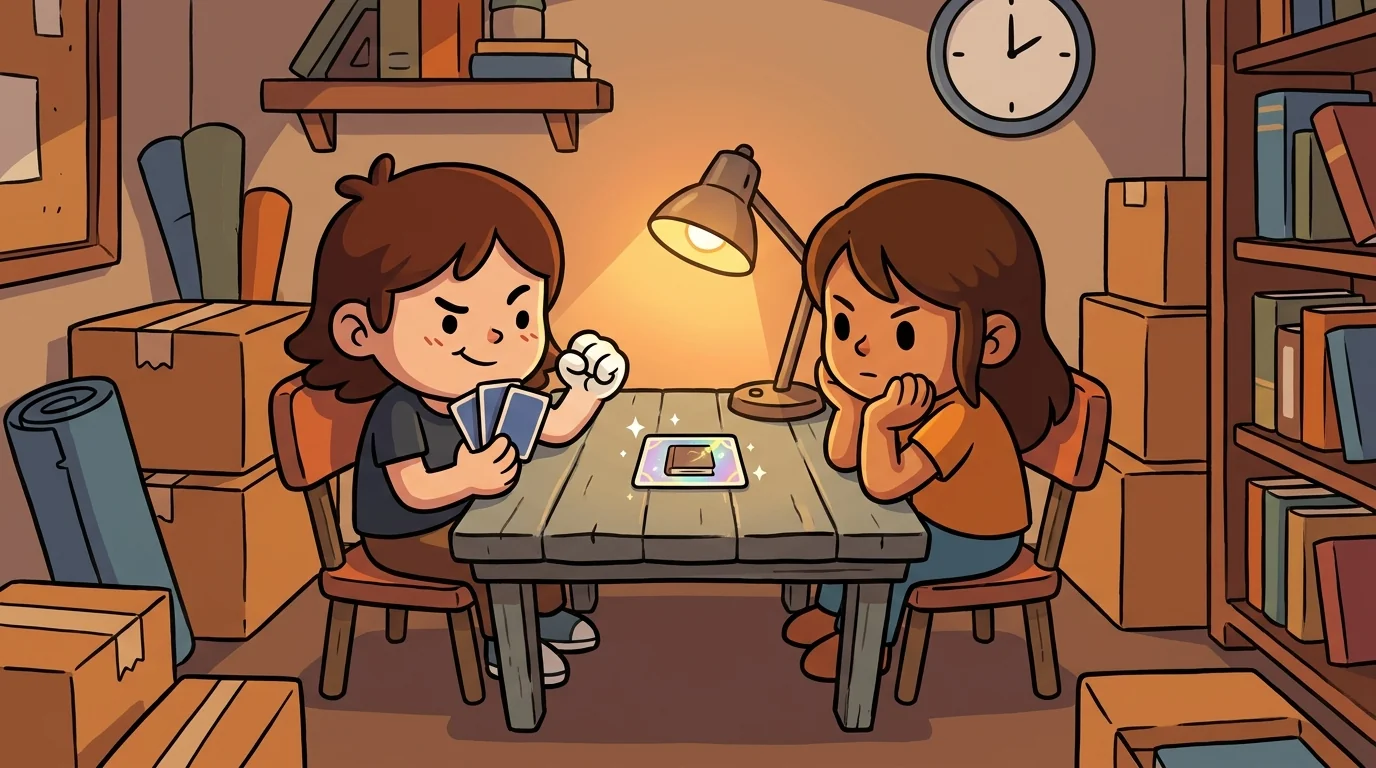
The Cardforge Club room smelled faintly of cardboard and cinnamon. In the center of a small wooden table, a single card lay face-up. It was the ‘Glimmering Grimoire,’ its painted cover shimmering under the warm lamp light. On one side of the table sat Bluffer, holding a fan of three cards so close to their chest that the edges almost touched their nose. A tiny, unreadable smile played on their lips.
Across from them sat Reader. Reader wasn’t looking at the Grimoire. They weren’t even looking at the cards in Bluffer’s hand. They were looking at Bluffer’s knuckles, which were a little too white from gripping the cards so tightly. Reader leaned forward, chin resting on a cupped hand. The air was thick with silence, a silence that asked a single, important question: what was in that hand?
“Any day now,” Reader said, their voice a low, thoughtful hum. “The Grimoire isn’t going to open itself.”
Bluffer’s smile widened just a little. “Patience, my friend,” Bluffer said, their eyes twinkling. “A good forger knows when to wait for the metal to heat up. And a good player knows when to let their opponent think.” The unspoken challenge hung between them: Go on. Guess what I’m thinking.
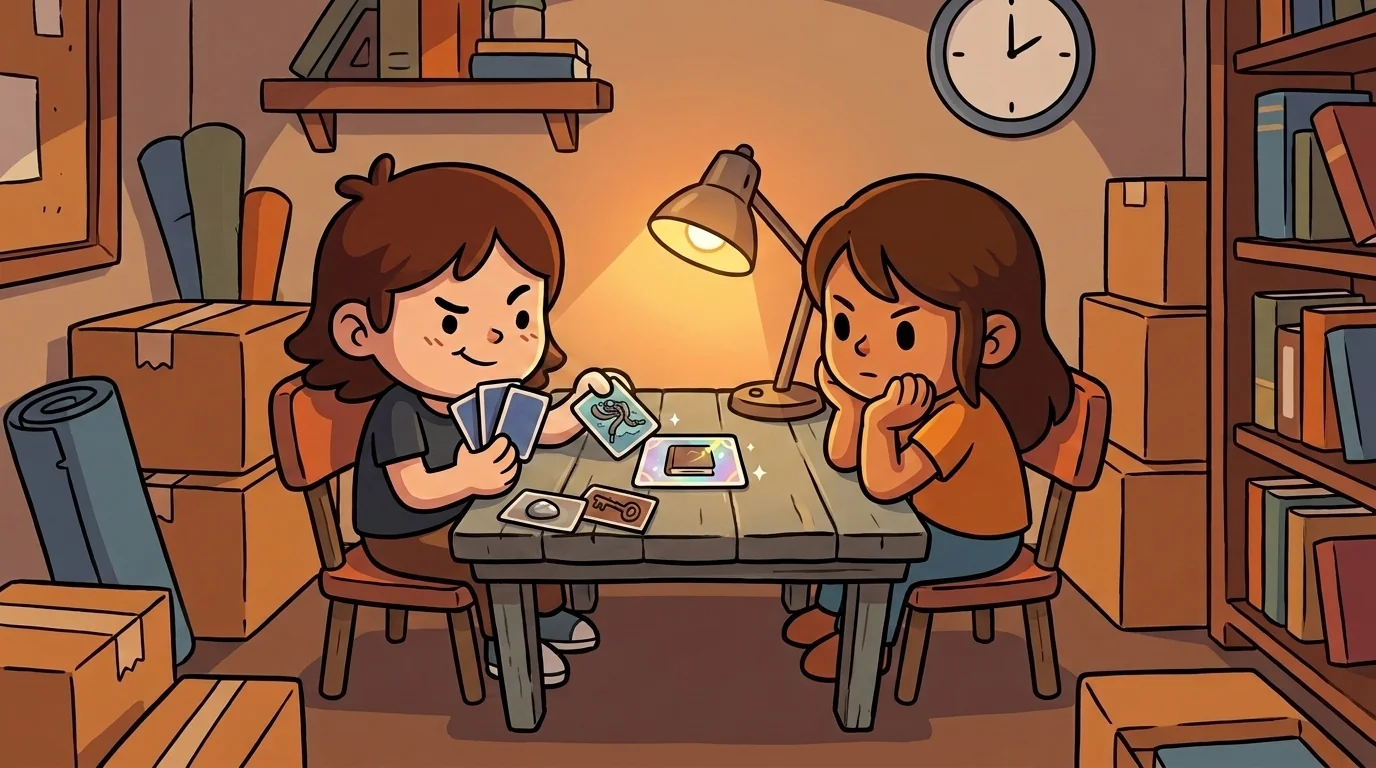
Bluffer’s mind was a whirl of possibilities. In their hand, they held three cards: the ‘Soggy Shoelace,’ the ‘Polished Pebble,’ and the one that truly mattered—the ‘Rusted Key.’ The Key was the only card in this teaching deck that could unlock the Glimmering Grimoire and win the hand. The other two were completely useless. The whole point of the game was for Reader to figure out if Bluffer held the Key.
If I play the Pebble, Bluffer thought, it’s a safe, boring move. It doesn’t say anything. Reader might think I’m just waiting, that I don’t have the Key at all. That’s not bad.
But if I play the Shoelace… Bluffer’s eyes flicked up to meet Reader’s calm gaze. The Soggy Shoelace is so useless, so silly, it’s a LOUD move. It shouts, ‘Look at me! I’m playing a terrible card!’ It’s a distraction. A bit of razzle-dazzle. It might make Reader think I’m trying to trick them into believing I have nothing, which in turn might make them suspect I have everything.
It was a delicious puzzle. The best move wasn’t about the card itself, but about the story the card would tell. Bluffer decided on the story of misdirection. With a dramatic flourish, they plucked the Soggy Shoelace from their hand and slid it onto the table. “There,” Bluffer declared, leaning back with an air of immense satisfaction. “Your move.”
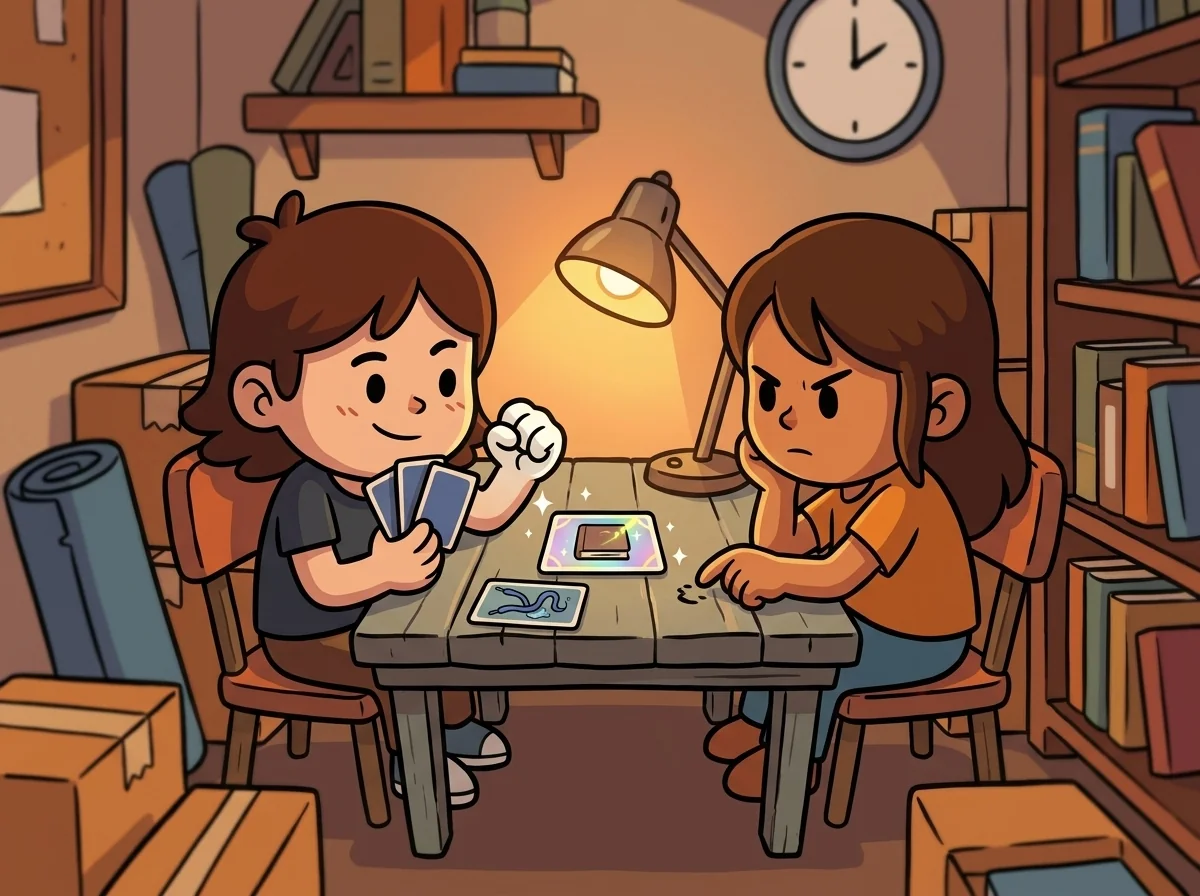
Reader’s eyes narrowed, not at the card, but at the performance. The flourish. The confident lean-back. It was all part of the signal. The card itself, the Soggy Shoelace, was meaningless. It had no power, no special ability. It was game-clutter. So why play it?
“Hmm, a shoelace,” Reader murmured, tapping a finger on the table. “And a soggy one at that. Not very useful for opening a magical book.”
Reader considered the facts. Bluffer could have played the Pebble, a quiet and neutral move. Instead, Bluffer chose the loudest, silliest card in their hand. It was like a magician waving a bright red scarf with their left hand to keep you from seeing the coin hidden in their right. The Shoelace was the red scarf. It was meant to draw all of Reader’s attention.
Bluffer wants me to think about the Shoelace, Reader reasoned. They want me to ask, ‘Why would they play such a bad card?’ They want me to get confused. But the simplest answer is often the right one. Reader concluded, The Shoelace is a smokescreen. It’s a big, floppy distraction to hide the small, important thing they’re actually holding. The answer became suddenly, perfectly clear.
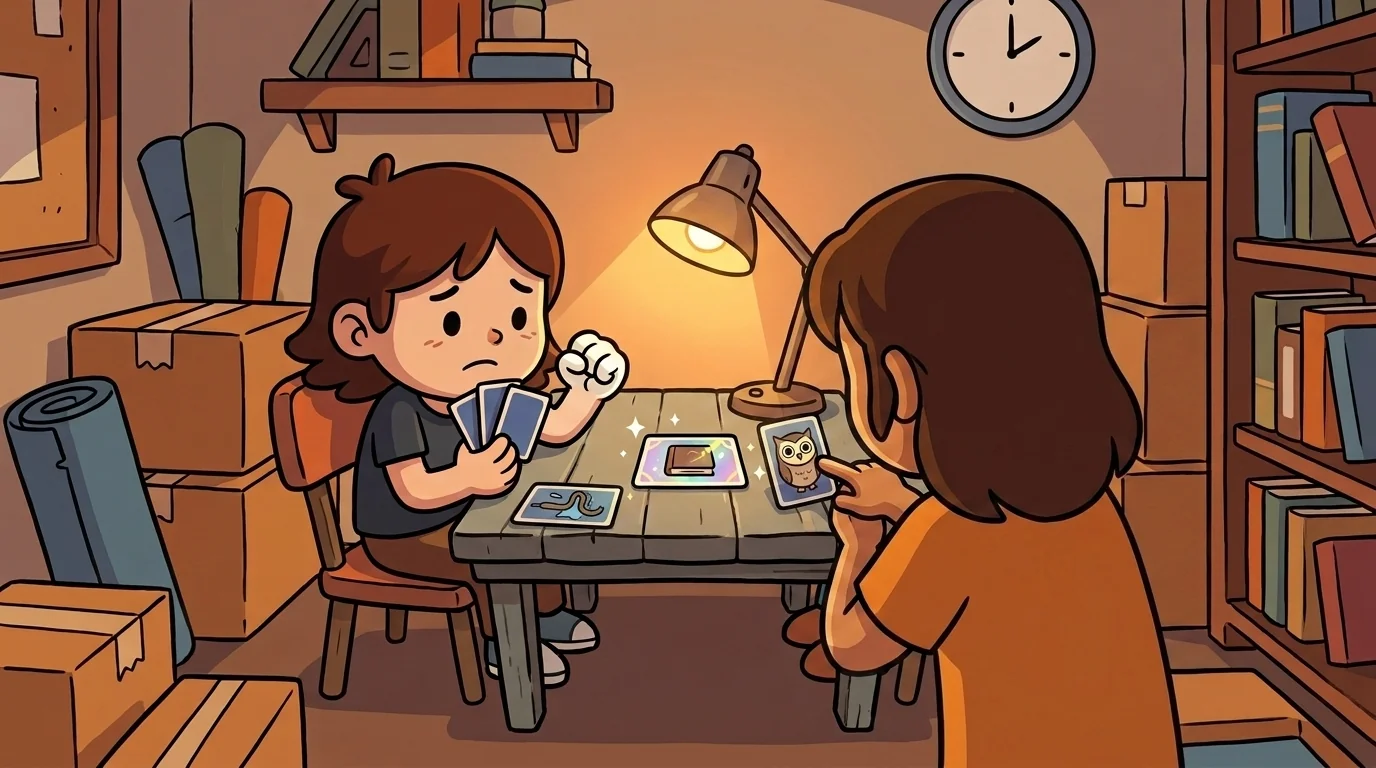
“A very bold move,” Reader said, their voice betraying no emotion. They didn’t play a card to counter the Shoelace. They didn’t need to. Instead, Reader reached for one of their own cards, one they had placed on the table earlier. It was the ‘Watchful Owl.’ Reader gently tapped the Owl card.
“My Owl will keep an eye on the Grimoire,” Reader announced softly. This action did nothing to the Soggy Shoelace, but it sent a clear message back to Bluffer: I’m not looking at your distraction. I’m looking at the real prize. And I know you want it.
Bluffer’s confident smile faltered for just a heartbeat. Theatrics hadn’t worked. The big, flashy signal had been ignored. Reader hadn’t taken the bait. Now the pressure was back on Bluffer. If they used the Rusted Key now, Reader’s Watchful Owl would trigger a special rule, giving Reader an extra turn. Bluffer’s clever plan had been seen, understood, and neatly countered, all without a single direct challenge. The game was no longer about what was hidden, but about what they both now knew.
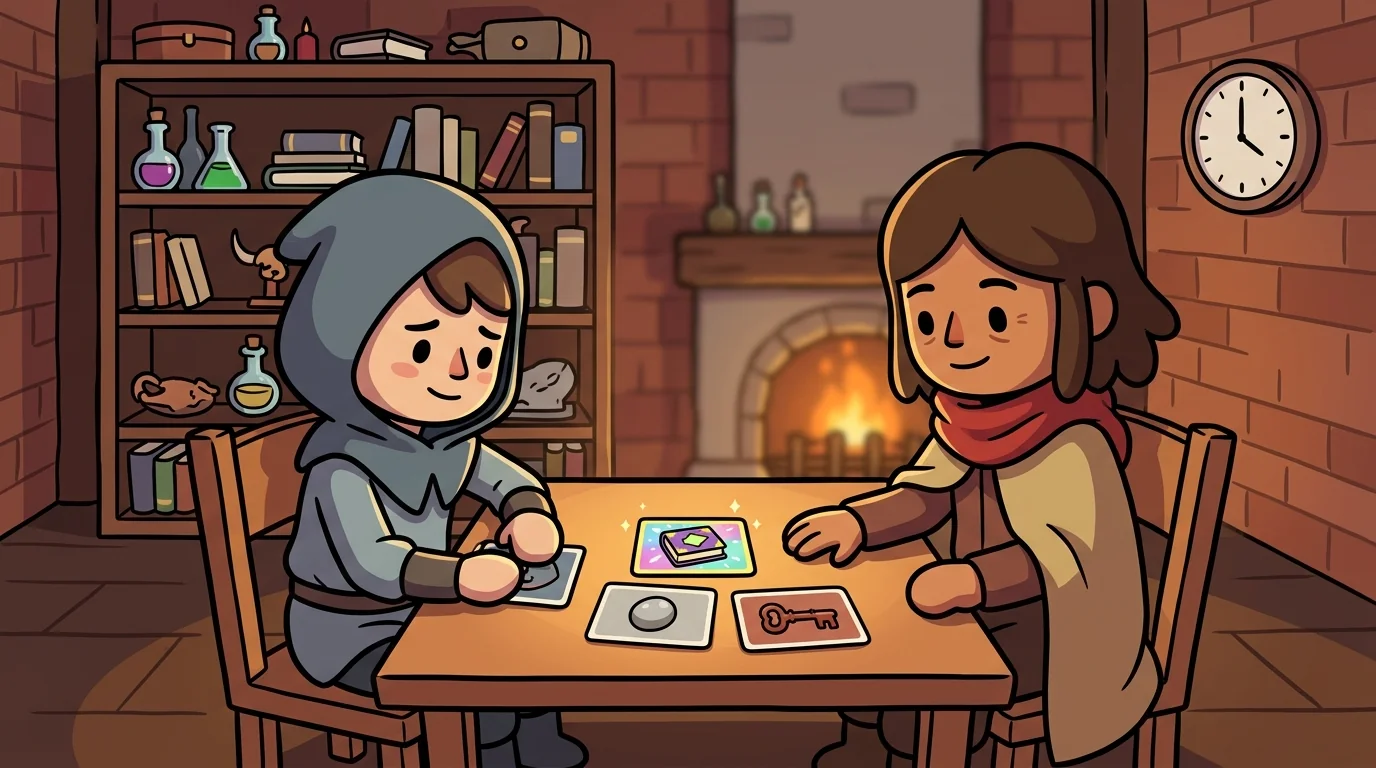
Bluffer let out a long, slow sigh and tipped their cards over for Reader to see. There it was: the Polished Pebble and the Rusted Key.
“The red scarf,” Reader said with a gentle smile. “The Soggy Shoelace was too much. It made me look for what you were hiding.”
“I thought the spectacle might dazzle you,” Bluffer admitted, shuffling the cards back into the deck. “I sent too strong a signal. If I had played the quiet Pebble, you might have been left wondering.”
“Exactly,” Reader agreed. “Sometimes, what you don’t say is more important. Your loud play told me everything I needed to know. It told me you definitely had the Key.” They gathered the cards and began to set up the example again.
“So the lesson is,” Bluffer said, picking up their new hand, “every action sends a message, even the silly ones.”
“Especially the silly ones,” Reader corrected warmly. They both looked across the table, ready for the next puzzle. The Grimoire gleamed between them, waiting for a new story to be told.
The CardForge ensemble
Bluffer and Reader is part of CardForge's distributed-narrative cast. Each character embodies a different curricular primitive; together they teach the full subject.
-

The Finesseur
Finesse (force an opponent's high card via positional play; bridge / hearts / spades)
-

The Squeezer
Squeeze (force a discard that gives up a winner; advanced bridge + hearts)
-

The Endplayer
Endplay (throw opponent in to force a losing lead; bridge / hearts / whist)
-

The Counter
Card-counting / pip-tracking (track played cards to deduce remaining hands; gin / bridge / blackjack-style)
-

The Long-Suit
Suit establishment (set up a long suit to run for tricks late in the hand; bridge / whist / spades)
-

The Bluffer
Deception under uncertainty (poker betting; representing a hand you don't have)
-

The Discarder
Strategic discard (hearts: avoid points; spades / gin / rummy: shed dead wood)
-

The Trumpkeeper
Trump management (when to ruff, when to hold; whist / spades / euchre / pinochle)
-

The Forcer
Magic forcing (the spectator "freely chooses" the card you intended)
-

The Shuffler
False-shuffle / stack management (control card order while appearing to randomize; mathematical card magic)