The Endplayer
ENDPLAY — give them a trick they don't want — they must lead into your strength. The card-craft primitive of GIVING-THEM-A-TRICK-TO-WIN-TWO.
A story read by The Endplayer
Press play to listen along. The line being read lights up as you go.
Show full transcript
Loading transcript…
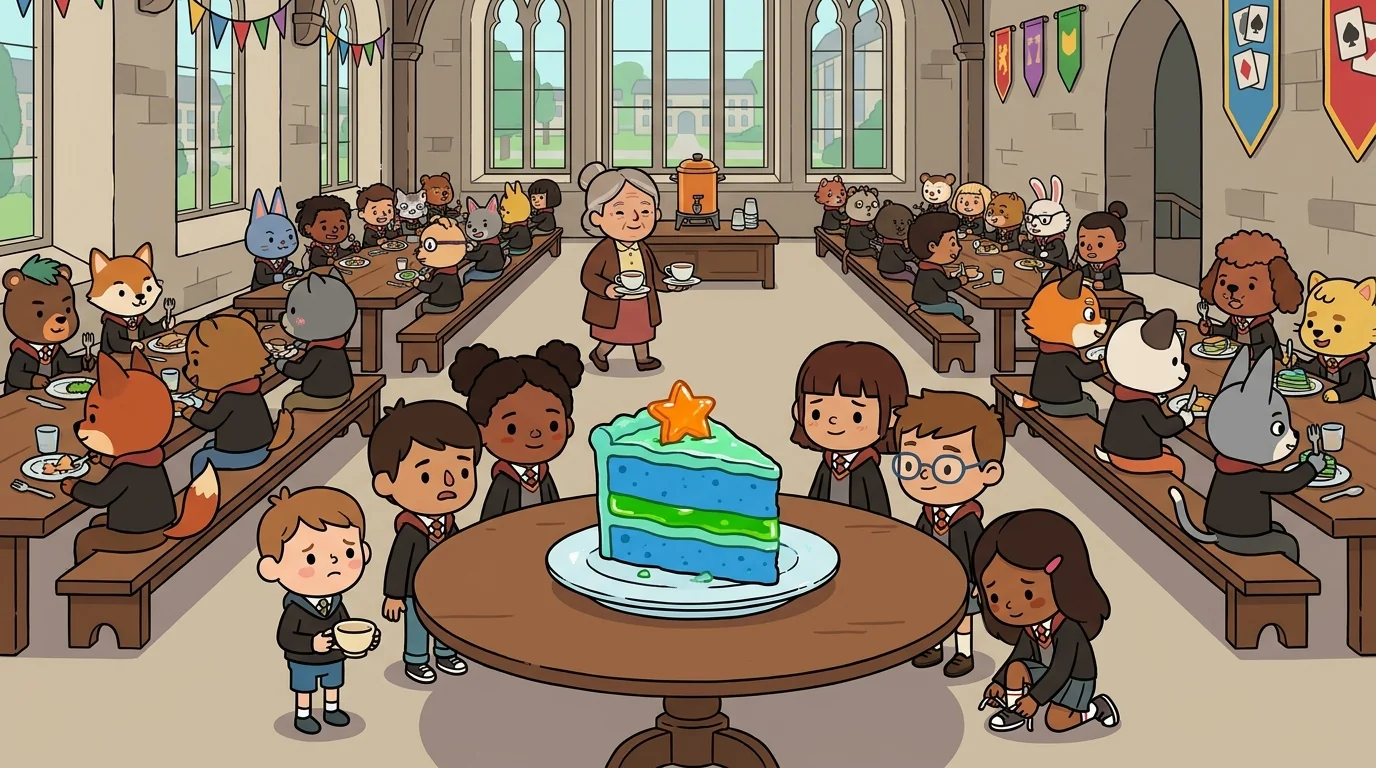
The Great Hall of the Cardforge Academy buzzed with the clatter of forks and the murmur of a hundred conversations. But around one small table, there was a circle of perfect silence. In the center of the table sat a single, abandoned plate. On that plate sat the last slice of Chef Fumble's Galactic Gâteau. It was a tower of blue sponge cake, held together by a questionable green jelly, and topped with a single, wobbling candied star.
No one wanted the last slice. Taking it meant you had to carry the big, sticky plate back to the kitchens. It was a chore disguised as a treat.
From her quiet corner, The Endplayer watched with a gentle smile. Maya edged toward the table, then pretended to tie her shoe. Finn boldly marched up to it, only to lose his nerve and grab a napkin instead. The cake was a trick no one wanted to win. The Endplayer picked up her empty teacup and stood. She needed a fresh cup of ginger tea from the dispenser, which was, of course, right behind the cake table.
She walked calmly toward the standoff. As she passed Finn, she murmured, "Oh, Finn, excellent timing. Could you hold my cup a moment?" Finn took the cup automatically. Now his hands were full. The Endplayer turned to Maya, who was still fussing with her shoelace. "Maya," she said warmly, "that is a magnificent star. It would be a shame to let it go to waste."
Maya looked up, flustered. Finn stood nearby, unable to act with his hands full of teacup. All eyes were on Maya. Pinned by politeness, Maya sighed, picked up the plate with the wobbly cake, and took the final slice. As she began her slow, sticky march to the kitchens, The Endplayer retrieved her teacup from a grateful Finn. The path to the tea dispenser was now perfectly clear. She had given Maya the trick, and in doing so, had won her own.
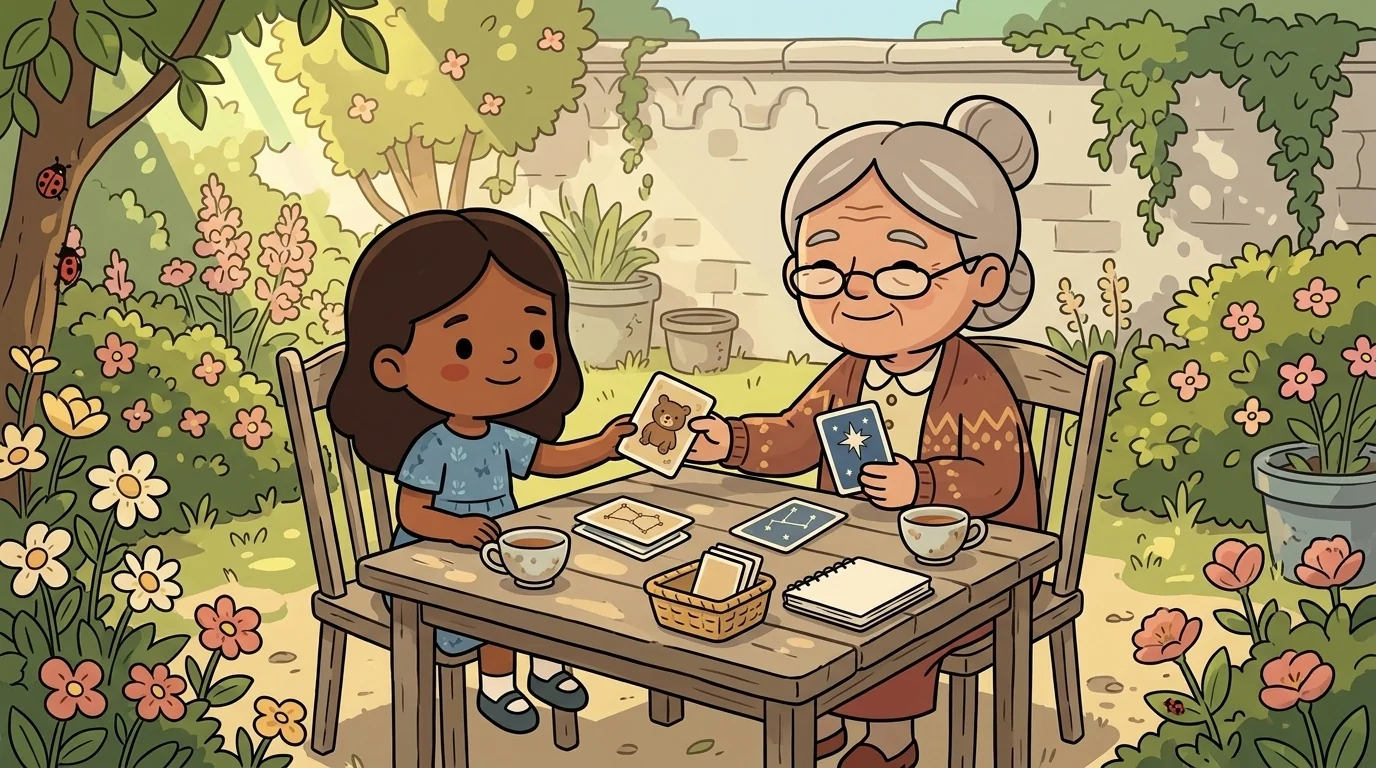
The Endplayer hadn't always understood this path. When she was small, she played a game called Star Gazer with her grandmother at a small, sun-bleached table in the garden. The cards were old and soft, the pictures of constellations faded from a thousand shuffles. One afternoon, she was losing badly. She had one card left, the “Little Bear,” which she knew her grandmother needed to complete her set and win the game. But her grandmother held the “North Star,” the very card the young Endplayer needed to win herself.
"I'm stuck, Nana," she had said, laying her cards down in frustration. "If I ask for the North Star, you'll know I have all the other stars in that family. But you need my Little Bear to win right now."
Her grandmother had simply smiled, her eyes crinkling like old paper. "What happens if you just... give it to her?" she’d asked.
"Give it to you? But you'll win this hand!"
"I will," her grandmother agreed, tapping the deck. "But then it will be my turn to lead. I will have to play a new card, from a new family. I will have to show you my plan. Are you sure that giving me one small win is the same as letting me win the whole game?"
Frowning, the young girl thought about it. It felt wrong. It felt like losing. But she trusted her grandmother. On her next turn, she didn't ask for a card. Instead, she laid down the Little Bear and passed her turn. Her grandmother’s eyes twinkled. She took the card, completed her set with a flourish, and laid it down. She had won the hand, just as the girl had feared. But now, as promised, she had to lead — and she played a card from a family the girl hadn't even started collecting. The girl now had perfect information. She won the next three hands in a row, and with them, the game. Her grandmother just smiled and poured them both a glass of lemonade.
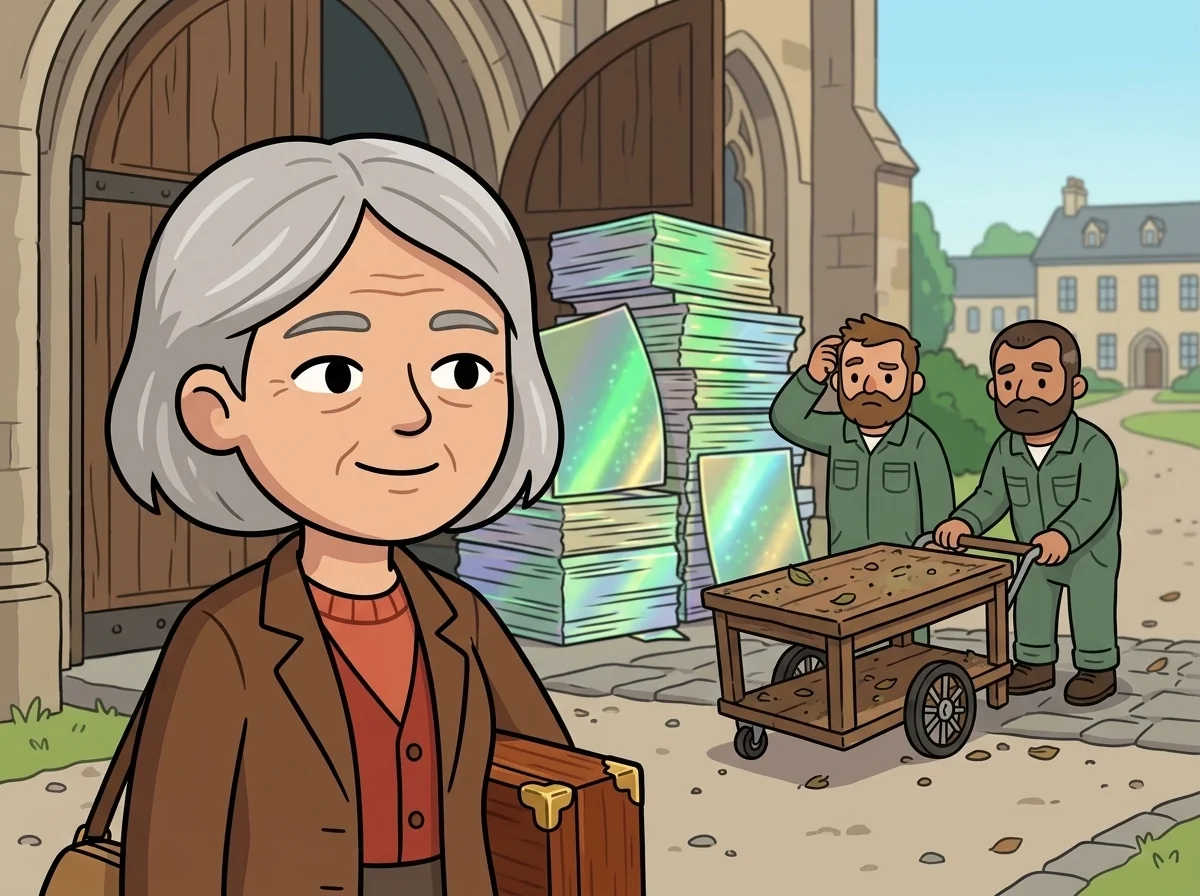
Her arrival at the Cardforge Academy was just as quiet. She carried a single bag and a small, polished wooden box. Dean Finesse, a woman whose hair was somehow both perfectly coiffed and exploding in ten directions at once, met her at the main entrance. The Dean was in a state of low-grade panic. A delivery of rare, shimmering card stock had been placed directly in front of the main auditorium, blocking the entrance for the annual student orientation. Two groundskeepers, burly men named Gus and Stan, were arguing about how to move it.
"If we push it left," Gus grumbled, "it'll block the library."
"And right blocks the dorms," Stan countered. "We're stuck."
The Endplayer set down her bag and walked to a forgotten service trolley parked by a nearby hedge — one wobbly wheel, covered in leaves. "Excuse me," she said to Gus, her voice calm and clear. "Would you mind helping me with this? I think if we push it over here, it might be useful."
Gus, confused but glad for a different problem to solve, helped her wheel the rickety trolley to the right of the large delivery, directly in the path to the dorms. "There," The Endplayer said with a nod. "Perfect."
Stan stared. "But... you've just blocked the path to the dorms yourself!"
"Have I?" she asked. Now there was only one clear path to move the big delivery: left, toward the library. With no other choice, Gus and Stan shoved the heavy card stock to the left. It was hard work, but it was a decision. The entrance to the auditorium was now clear. Dean Finesse watched, her chaotic hair seeming to settle for the first time all day. The Endplayer hadn't solved their problem. She'd given them a new, worse one — which made the original solution the only one possible. She'd made them lead right where she wanted.
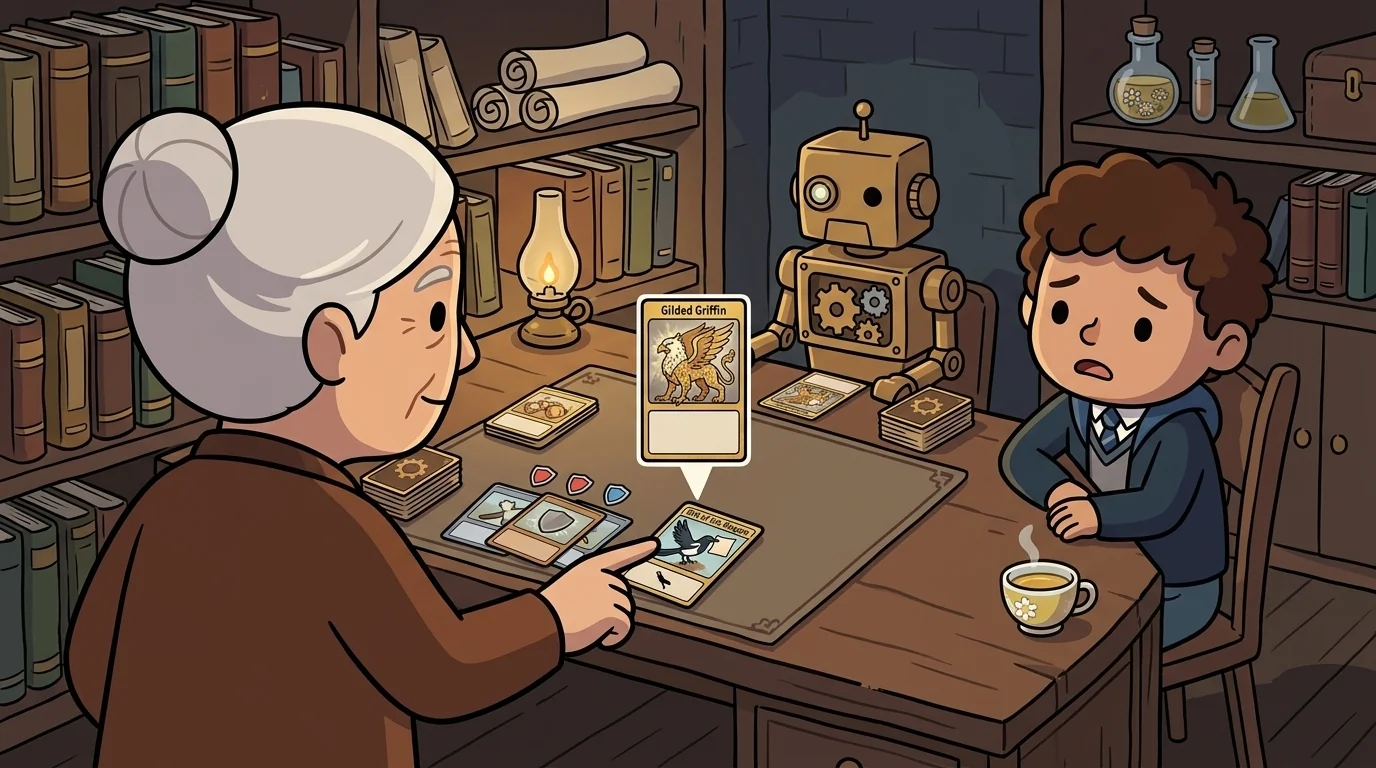
In her workshop, which smelled of old books and chamomile tea, a student named Leo slumped in his chair. He was playing a practice duel against a training automaton, and his side of the board was a disaster. The automaton had a huge creature, the Gilded Griffin, ready to attack. Leo had nothing but a few weak cards. "It's over," he sighed, reaching to scoop up his cards.
"Is it?" a soft voice asked. The Endplayer stood behind him, observing the board. She pointed a long, elegant finger at one of Leo's cards. It was a simple utility card called "Gift of the Magpie." All it did was let his opponent draw an extra card. It was useless. Worse than useless.
"You want me to play that?" Leo asked, bewildered. "That just helps it! The Griffin will attack, I'll lose my last shield, and then it gets another card? I'll lose twice!"
"The Griffin will attack," The Endplayer agreed calmly. "And you will lose your shield. But then what must the automaton do? After it draws its new card?"
Leo stared at the board. The automaton's programming was simple — after an attack, it had to play whatever it just drew. And Leo knew the top card of its deck. A "Moment of Reflection": a card that forced the player to skip their next attack.
His eyes went wide. He played the Gift of the Magpie.
Just as he predicted, the Gilded Griffin attacked. Leo's last shield shattered. The automaton drew its card, the Moment of Reflection, and was forced to play it immediately. The massive Griffin stood down. The automaton had been forced to lead — straight into Leo's only hope. Leo had a chance. He looked back at The Endplayer, who simply gave a small, knowing nod.
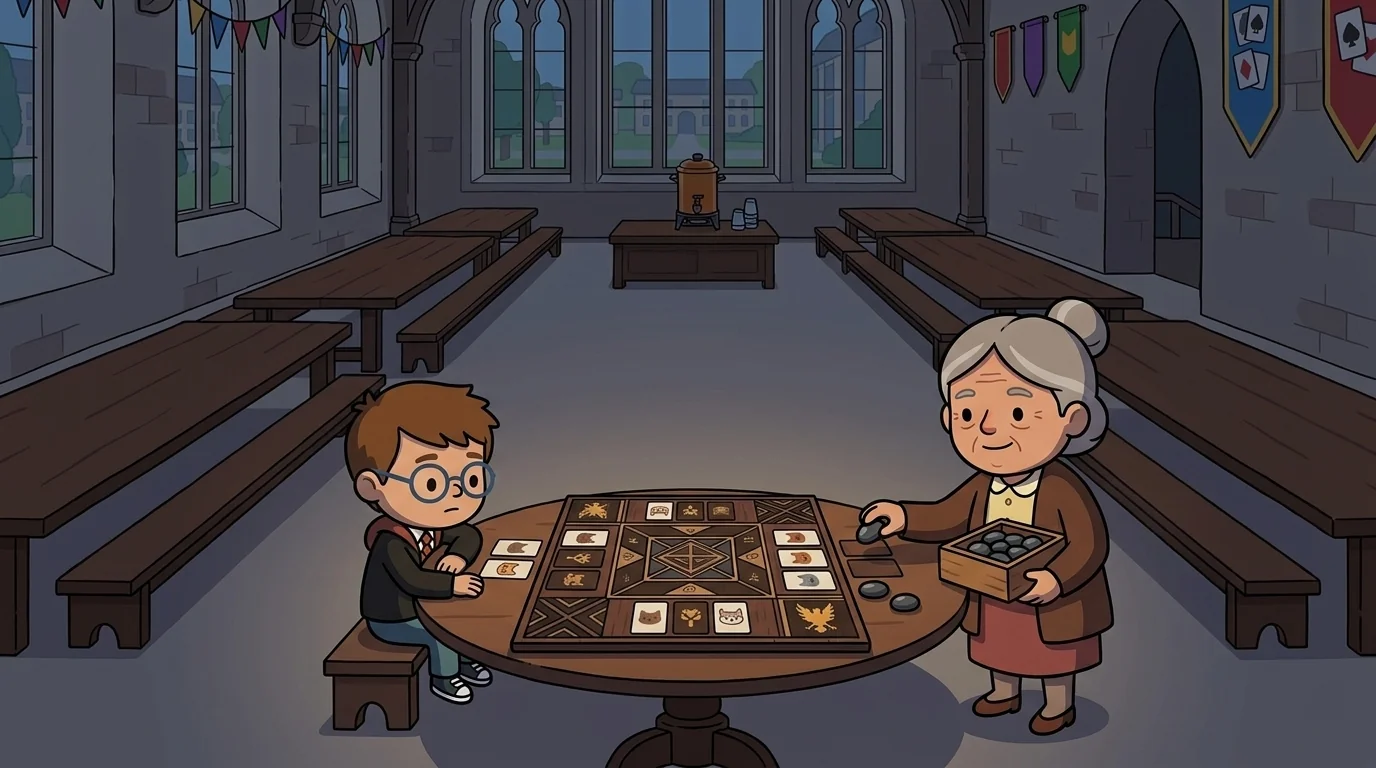
The other students had left, but Leo remained, staring at the game board. The Gilded Griffin and his own small, clever cards were frozen in their final positions. He had won, but it still felt strange, like he had seen a magic trick.
"So the point is to... lose on purpose?" he asked quietly.
The Endplayer was stacking a set of game pieces made of smooth, dark river stones. They made a soft, clicking sound as she placed them in their wooden box. She paused and looked at him, her expression warm and patient.
"Not quite," she said. "You didn't lose. You simply gave your opponent a choice. A choice that felt like a victory, but which ultimately served your own plan." She held up one of the dark, cool stones, turning it over in her palm. It was perfectly smooth.
She placed it gently into his hand. "You aren't losing," she murmured. "You're inviting them to lead. Sometimes, the strongest move is to step aside and let them walk right where you need them to be."
--- ---
The CardForge ensemble
The Endplayer is part of CardForge's distributed-narrative cast. Each character embodies a different curricular primitive; together they teach the full subject.
-

The Finesseur
Finesse (force an opponent's high card via positional play; bridge / hearts / spades)
-

The Squeezer
Squeeze (force a discard that gives up a winner; advanced bridge + hearts)
-

The Counter
Card-counting / pip-tracking (track played cards to deduce remaining hands; gin / bridge / blackjack-style)
-

The Long-Suit
Suit establishment (set up a long suit to run for tricks late in the hand; bridge / whist / spades)
-

The Bluffer
Deception under uncertainty (poker betting; representing a hand you don't have)
-

The Discarder
Strategic discard (hearts: avoid points; spades / gin / rummy: shed dead wood)
-

The Trumpkeeper
Trump management (when to ruff, when to hold; whist / spades / euchre / pinochle)
-

The Forcer
Magic forcing (the spectator "freely chooses" the card you intended)
-

The Shuffler
False-shuffle / stack management (control card order while appearing to randomize; mathematical card magic)