
Mimic
CHARACTER VOICES — when you tell a story with more than one character, giving each one a slightly different voice makes the listener always know who is talking, without you having to say "she said" every time.
Press play to listen along. The line being read lights up as you go.
Show full transcript
Loading transcript…
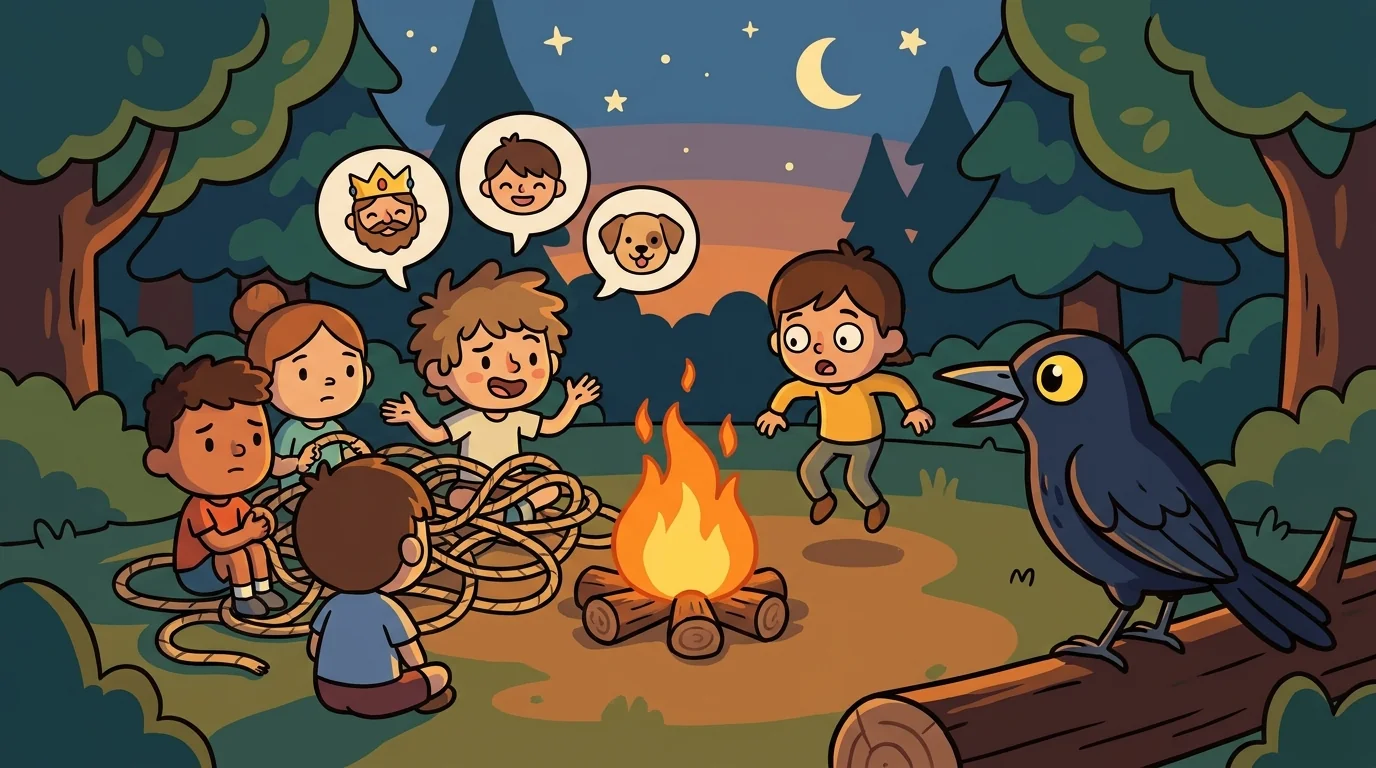
Bramble met Mimic on a calm evening, in the middle of a confusing story.
A young creature was telling a tale with three characters in it — a king, a child, and a dog. But every character sounded exactly the same. "The king said come here and the child said why and the king said because and the dog said woof and the child said no." The listeners got tangled up. Who was talking now? Was that the king or the child? The story was good, but nobody could follow who was who.
Near the fire perched a sleek, clever bird with a bright eye — a little starling. "All one voice," the starling said. And then, in a completely different voice — deep and grand — she added, "And so nobody knows who is speaking." Bramble jumped. It was as if a second creature had spoken.
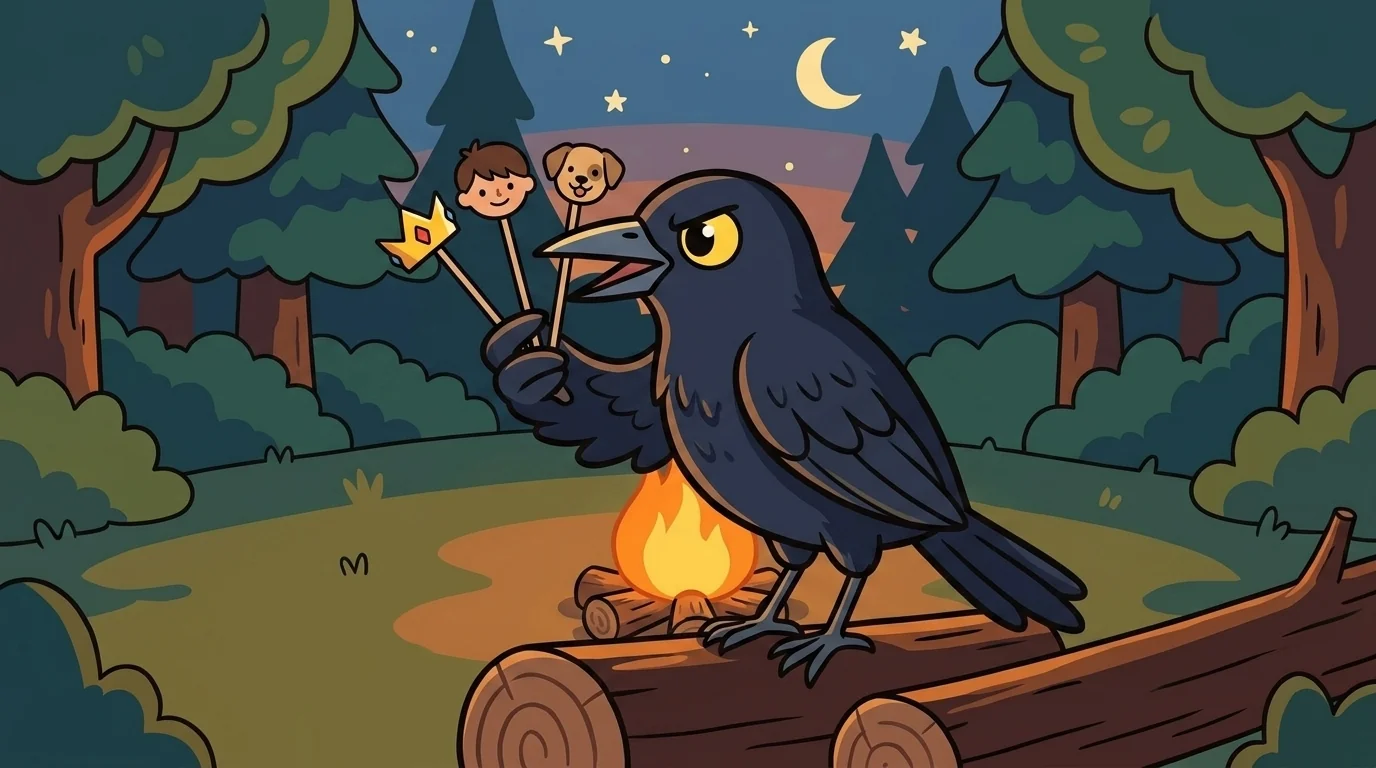
"How did you do that?" Bramble asked.
The starling tilted her head, and when she spoke, her voice was small and high, like a little child's: "Do what?" Then, deep and grand again: "This?" Then, in a low friendly grumble: "Or this?" Three voices, all from one small bird.
"My name is Mimic," she said, in her own ordinary voice. "When I tell a story, I give each character their own sound. The king is deep and slow. The child is quick and high. The dog is a low happy grumble." She fluffed her feathers. "Then the listener always knows who is talking — even if I never say a single name."
To prove it, she told the tangled story again. But this time the king boomed low, the child piped high, and the dog grumbled warm and happy. And suddenly the whole circle could follow every line. They laughed at the dog. They felt the king's grandness. The story had come alive, just from the voices.
"Mimic," Bramble said, "I run a listening-circle, and the kids' stories get all tangled up when there's more than one character. Everyone sounds the same. Would you join us? Teach them to give each character a voice?"
Mimic hopped with delight. "Oh, yes," she said — and then, in a tiny squeaky voice, "yes yes yes" — and then in a grand deep one, "I would be honored." Bramble laughed. She was a whole cast of characters in one little bird.
So Mimic joined the listening-circle, and the tales there are full of voices now.
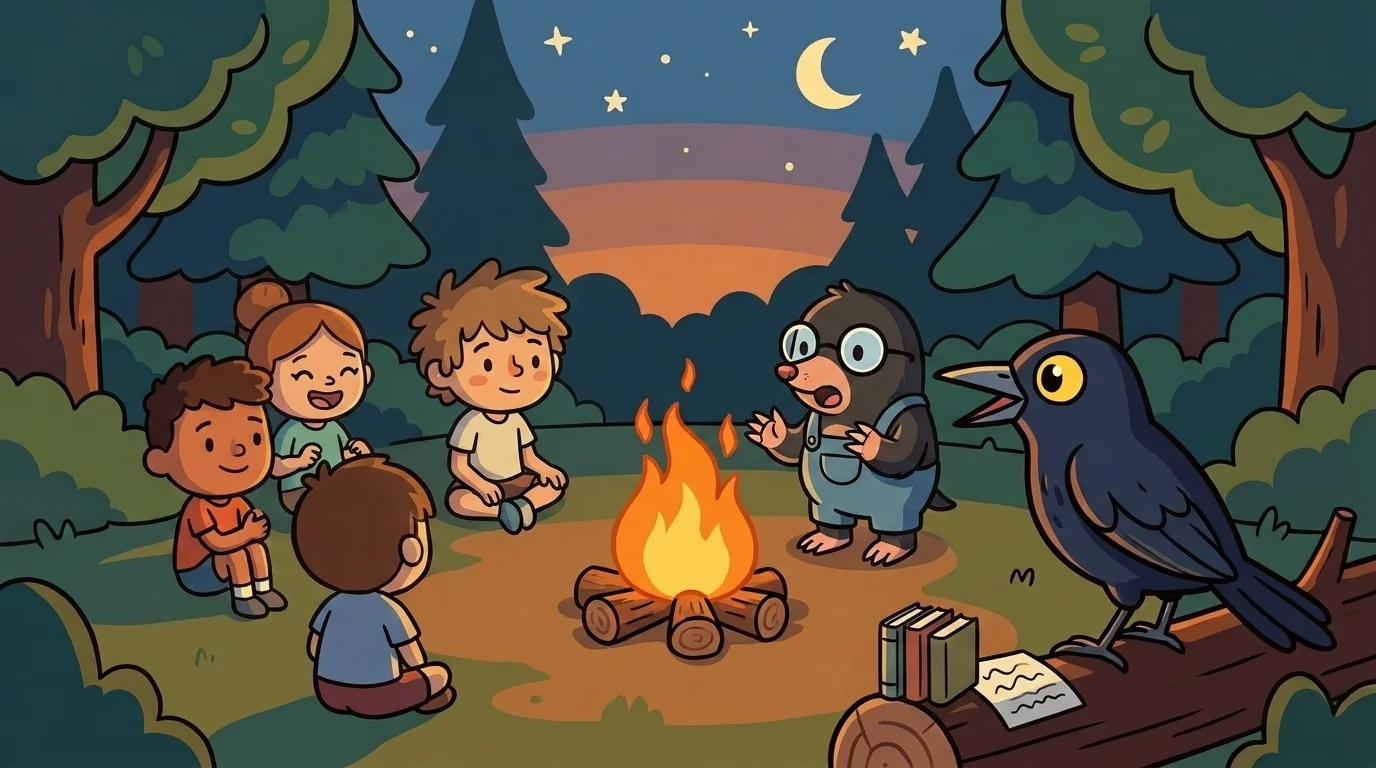
When Bramble teaches about character voices, Mimic leads the way. "You don't have to be a perfect actor," she tells the kids. "You just need ONE small difference for each character. The wolf talks slow. The bird talks fast. The grandma is warm and low. Pick one little thing and keep it the same every time that character speaks."
A young mole tried. He told a story with a giant and a fairy. He made the giant's voice slow and rumbly, and the fairy's voice quick and bright. He kept mixing them up at first — but when he slowed down and held each voice steady, the circle followed along easily, grinning.
"See?" Mimic said. "You didn't say 'the giant said' or 'the fairy said' even once. The voices did it for you." She fixed the circle with her bright eye. "The trick isn't being a great actor. It's being consistent. Same voice, same character, every time. That's all the listener needs."
A young creature asked, shyly, "What if my voices aren't very good?"
"They don't have to be good," Mimic said warmly. "They just have to be different. A tiny bit slower, a tiny bit higher, a tiny bit growlier. The listener's mind does the rest. Trust them."
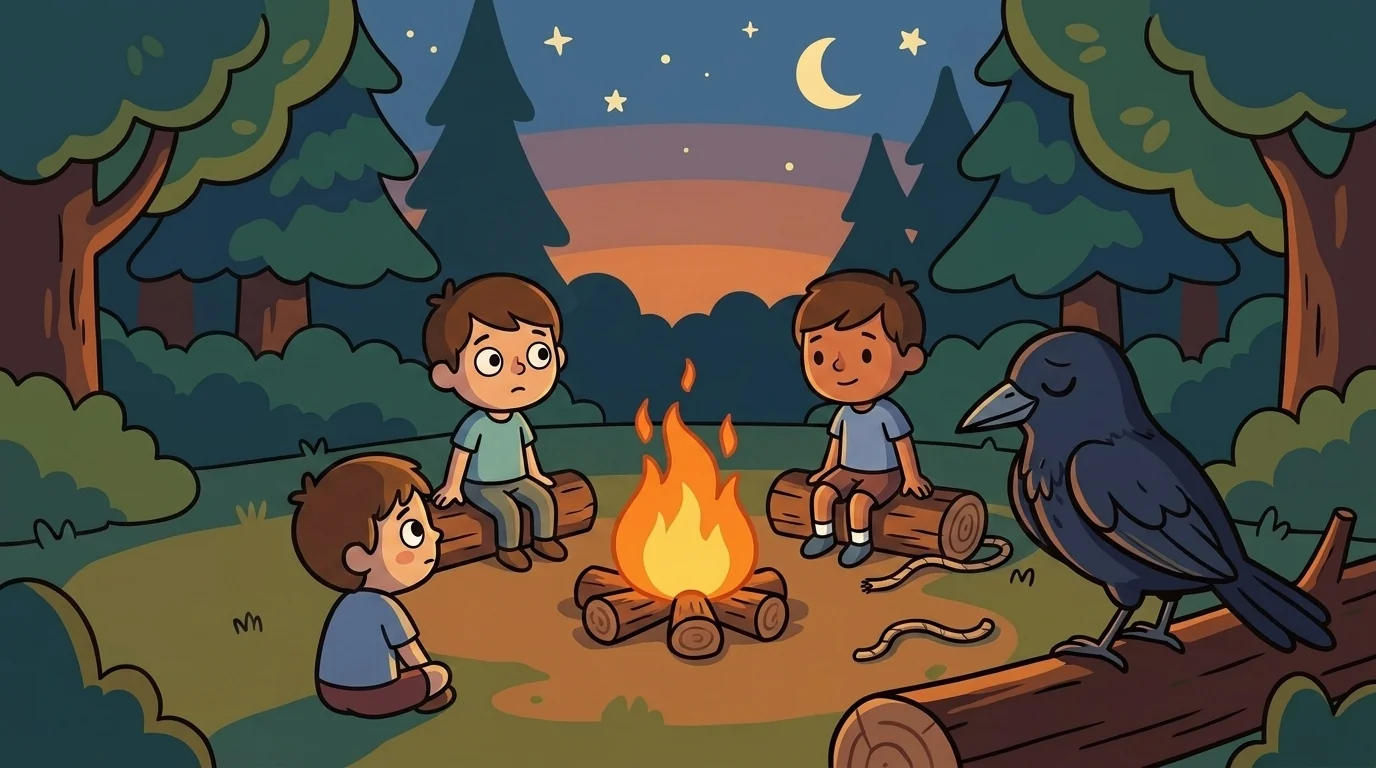
After the circle, Mimic sat quietly with Bramble — in her own plain voice now, the one she didn't use for stories.
"It must be wonderful," Bramble said, "carrying all those voices around inside you."
Mimic was quiet for a moment, thoughtful. "Do you know what I love most about it?" she said softly. "It isn't the funny voices, or making the circle laugh. It's that for one second, when I do the king's voice, I get to be the king. I get to feel grand. And when I do the little child, I get to feel small and curious again." Her bright eye went gentle. "Every voice I borrow lets me feel what it's like to be someone else, just for a heartbeat. And that — stepping into another creature, feeling their feelings — that's the warmest, most surprising gift of all." She nestled her feathers, content. "I don't just tell their stories. For a moment, I get to be them. And I love every one."
The VoiceTale ensemble
Mimic is part of VoiceTale's distributed-narrative cast. Each character embodies a different curricular primitive; together they teach the full subject.
-

Lean
Hook / leanability — badger-tween whose upper body visibly tips forward at second 5; if hook is weak she rocks back to neutral
-

Slow
Pacing across the 5-beat arc — tortoise-elder with wooden hourglass; her tempo-trail stretches (slow) or bunches (fast) on purpose
-

Pivot
The turn at beat 4 — barn-owl-tween whose head rotates 180° at the exact moment story / teller / listener turn together
-

Refrain
Callback / refrain — mockingbird-tween with carved-wood phrase-token who repeats one phrase identically at the closing (same words, same shape, said again, said better)
-
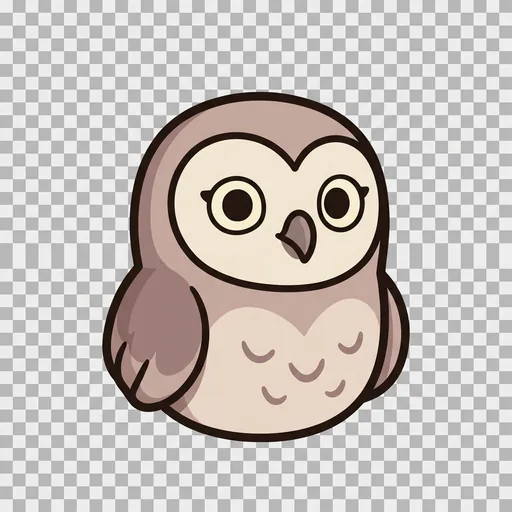
Hush
The pause / strategic silence — soft round owl who holds a held beat of quiet right before the important word, pulling the whole circle forward
-

Boom
Volume + emphasis — wide-mouthed frog whose voice swells from the tiniest whisper to a big round roll; the soft pulls listeners close, the loud lands the surprise
-

Flourish
Gesture — tall crane whose wings paint the story in the air (wide for huge, close for tiny); the body shows what the words say
-

Gaze
Eye contact / reading the listeners — soft-eyed deer-fawn who tells to the faces of the circle and reads their faces back to know when to slow or hurry
-

Recover
Recovering when you lose your place — easygoing otter who treats a stumble as a tiny ripple: stay calm, build a bridge, carry on