
See-It, Sorry and Offer
AFTER THE HURT — when you've hurt someone, mending has a shape: first truly notice the harm instead of looking away (See-It), then own it with a real sorry that doesn't make excuses (Sorry), then ask what would actually help make it right (Offer)
A story read by See-It, Sorry and Offer
Loading audio…
Press play to listen along. The line being read lights up as you go.
Show full transcript
Loading transcript…
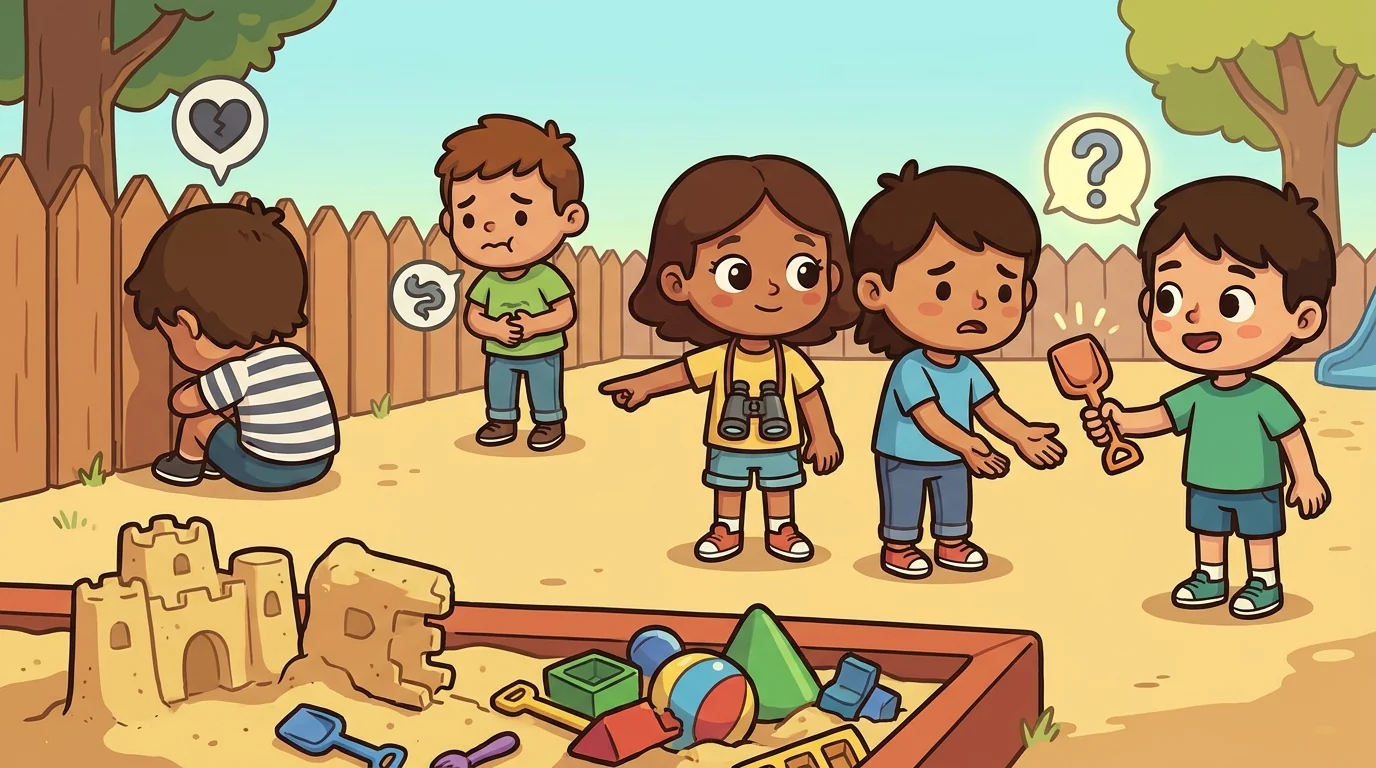
There had been a small disaster on the playground. Nothing huge — a knocked-over sandcastle, a shove that came out harder than meant, a friend now sitting alone by the fence with her back turned. But small hurts, left alone, don't stay small. They harden.
The one who'd done it stood a little way off, stomach twisting, wanting badly to just... walk away and pretend it hadn't happened.
Three quiet helpers came and stood beside him — not to scold, never to scold, but to show him the shape of what came next.
See-It came first, and looked steadily at the friend by the fence.
Sorry came second, with no excuses in her hands.
And Offer came last, holding a single open question.
"You don't have to fix it all at once," said See-It, gently. "You just have to start by not looking away."
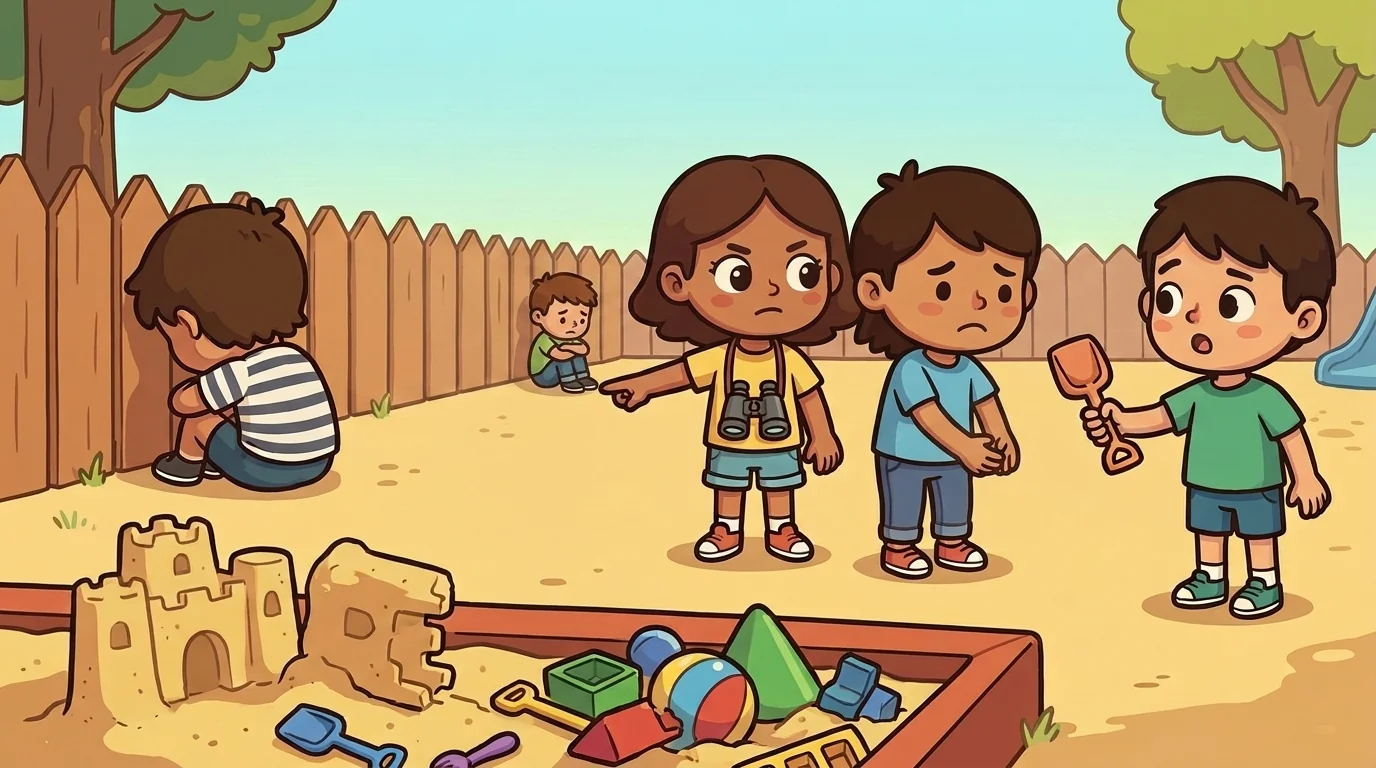
See-It went first, because a repair cannot begin until you truly notice the harm — and noticing is harder than it sounds.
"Look," said See-It, softly, nodding toward the fence. "She's sitting alone. Her back's turned. That happened, and part of it was because of what you did." And the boy felt the strong, familiar pull — the pull to look away, to say it wasn't that bad, to make himself not see it, because seeing it felt so uncomfortable in his chest.
"I know it squirms," said See-It. "Seeing that you've hurt someone is one of the most uncomfortable feelings there is. Everything in you wants to look away, or explain it off, or decide she's overreacting. But look — just look — and let it be true: she's hurt, and I'm part of why." See-It's voice stayed warm. "That's not you being a bad person. That's you being a brave one. You can't mend a thing you won't let yourself see. So first, we just see it. Honestly. All the way."
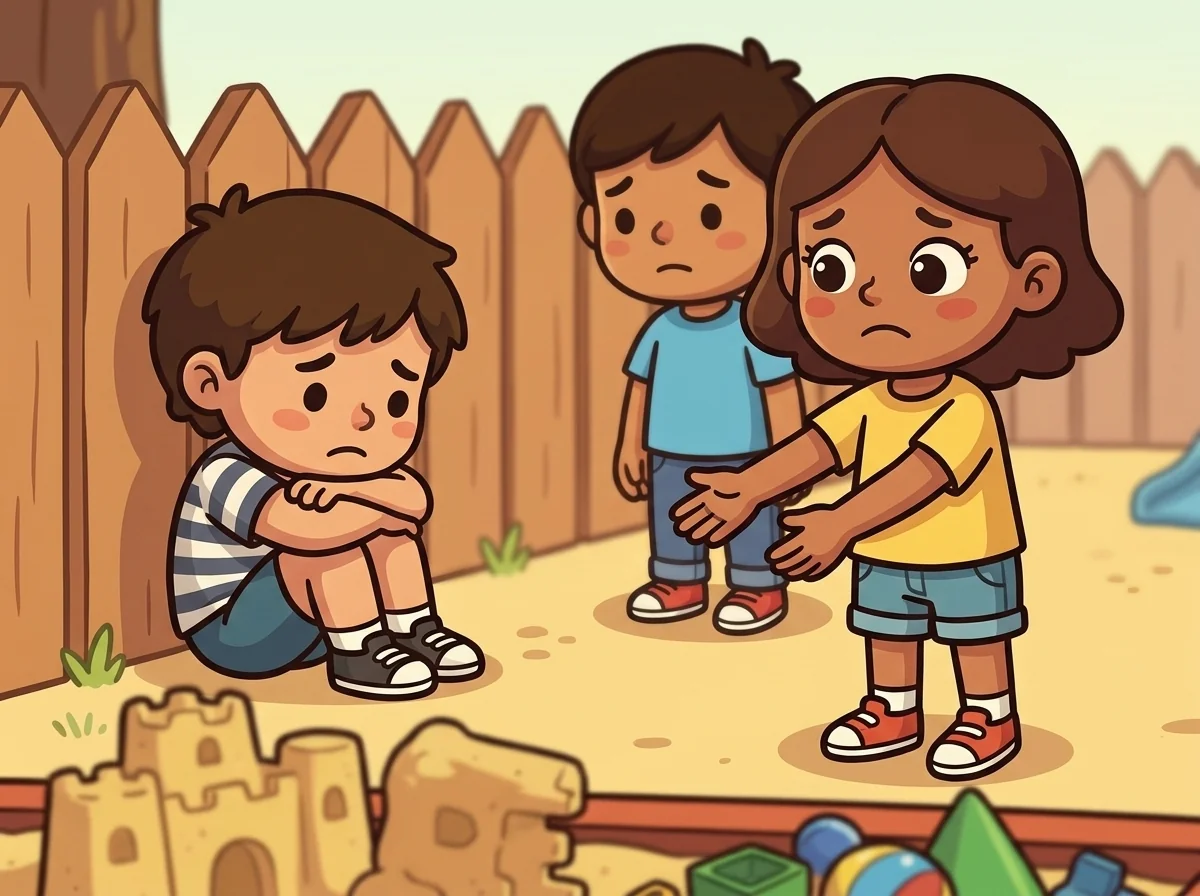
Then Sorry stepped up — and Sorry had left every excuse behind, because excuses are what turn a real sorry into a fake one.
"Now you say it," said Sorry. "But how you say it is everything." And Sorry showed him the difference, gently. "There's the sorry that isn't really one — 'sorry, but you were in my way' — 'sorry if you got upset' — those aren't apologies, those are excuses wearing an apology's coat. They hand the hurt back to her." Sorry set her empty hands out. "And then there's the real one. It owns the thing plainly, with nothing hiding behind a but. 'I knocked over your castle, and I shoved you, and I'm sorry. That was mine to own.'"
"That's harder," said the boy, quietly.
"It's much harder," Sorry agreed. "Because it means standing in the uncomfortable thing without any cushion. But it's the only kind that actually reaches her — because it doesn't ask her to carry any of it. A real sorry takes the whole weight, and sets none of it back on the person you hurt."
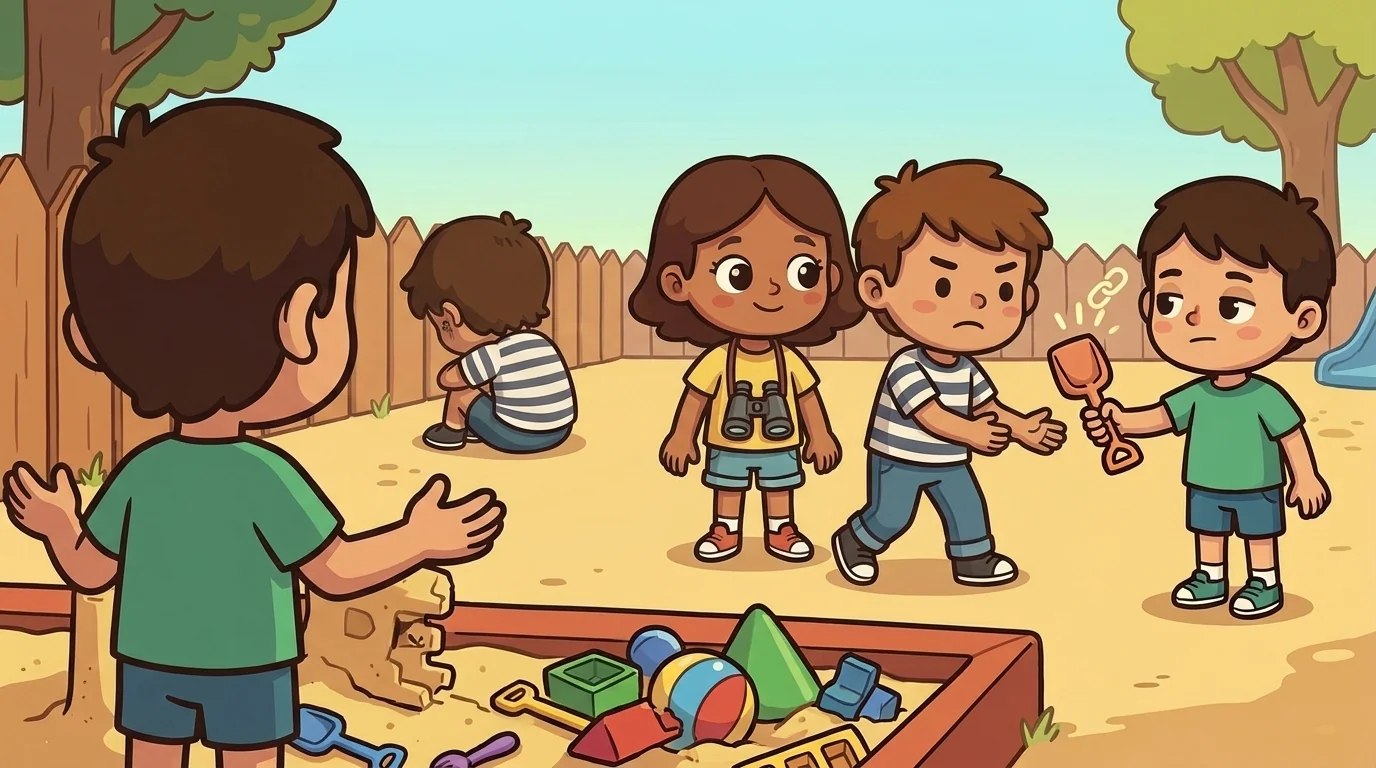
And then Offer did the last, most-forgotten part — because "sorry" alone can leave the other person still standing in the mess.
"Here's what people skip," said Offer. "They say sorry and then just... stop, and hope it's enough. But often the person's still left holding the broken thing. So you offer." Offer held up the single open question. "Not deciding how to fix it — asking. 'Can I help rebuild it?' 'What would make this better?' 'Is there something I can do?' You ask, because she's the one who knows what would actually help — maybe it's rebuilding the castle, maybe it's just some space, maybe it's just knowing you meant the sorry."
The boy walked over — slowly, stomach still twisting, but walking — and he saw it, and he owned it plainly, and then he asked: "Can I help you build it back?" And after a long quiet moment, his friend turned around, and — a little wary, a little tired — nodded.
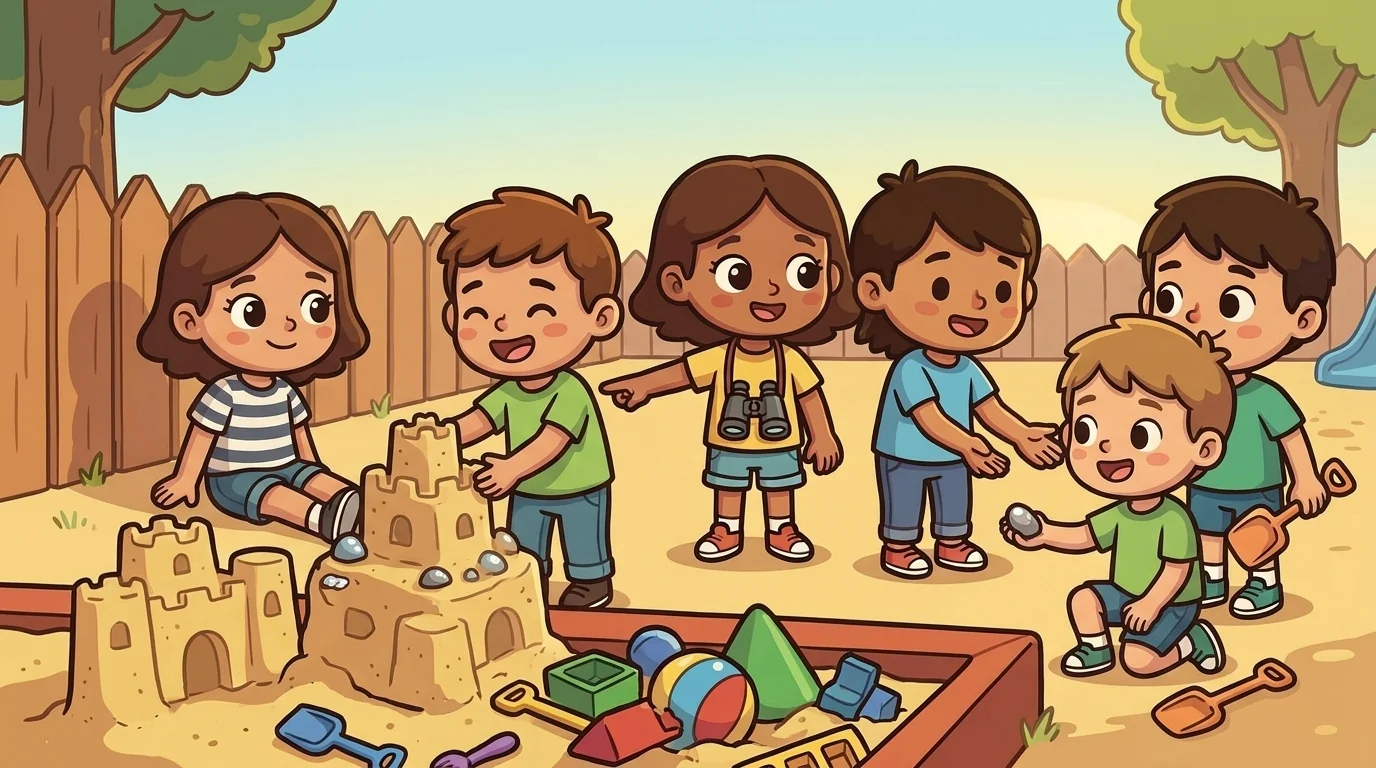
They rebuilt the castle together, mostly in silence, and it came out a bit lopsided and, somehow, better than before.
"Good seeing," said Sorry.
"Good owning," said Offer.
"Good offer," said See-It.
There is a deep and surprising truth tucked into repair: that mending a hurt doesn't erase it — you can't un-knock the castle, un-say the words — but tending to it, honestly and bravely, lets something grow back at the mend, and sometimes what grows back is even stronger than what was there before. Two friends who have hurt each other and repaired it well often trust each other more, not less, because now they know something precious: that when it breaks, they know how to fix it. And carrying that shape — see it, own it, offer to mend it — means you never have to fear a rupture quite so much again, because you know the way back.
The RuptureRepair ensemble
See-It, Sorry and Offer is part of RuptureRepair's distributed-narrative cast. Each character embodies a different curricular primitive; together they teach the full subject.
-

See-It
Notice harm — soft warm-russet deer-tween in chunky moss-green vest; ears literally perked + eyes wide + one hoof raised mid-step; doesn't pretend not to see what just happened
-

Sorry
Acknowledge — soft cream-and-amber otter-tween in chunky soft-blue scarf; palms-up open-hands level bow-pose (NOT cringe); treats acknowledgment as skill, never proof of badness
-

Felt
Name-impact — round soft-grey-and-cream badger-tween with tiny notebook + soft-charcoal pencil; mid-listening with head tilted; never assumes — always asks-then-listens
-

Offer
Offer-repair — warm-amber raccoon-tween with chunky-paw extended palm-up holding small soft hand-folded paper-crane (universal not specific cultural symbol); never grasping
-
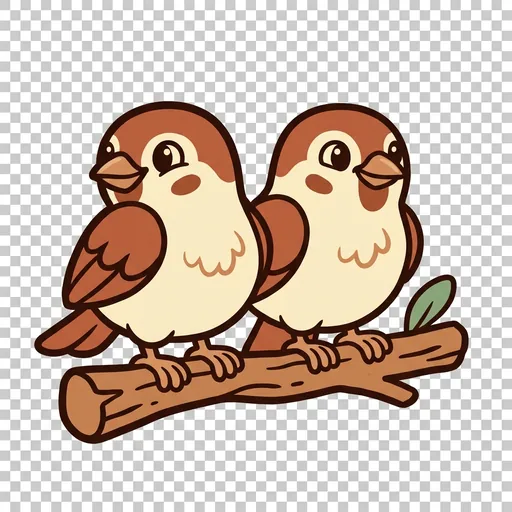
Together
Re-engage — two warm-cream-and-russet sparrow-twins on a single chunky branch, perched comfortable-distance-apart; both looking outward in same direction; `we're still here` energy
-

Eddy
Helps you steady yourself first, because you cannot mend anything while a big feeling is still rushing through you.
-

Lee
Shows that you can receive an apology from a safe place, at your own pace, without rushing to say it is okay.
-

Ease
Once you have made a real mend, helps you let the other person come back in their own time, with no pushing.
-
Grace
Reminds you that you can be truly sorry and still be worthy, so shame never stops you from repairing.
-

Levee
Shows that you can forgive someone and still keep a kind, clear limit that makes it safe to stay close.

