
Feint
TRICK QUESTIONS — riddles where the misdirection hides in how the question is ASKED. The question quietly slips in a false detail or a rushed assumption, and the trap is answering too fast. The fix: slow down and read every word. (Fair-trick framing — the clue is always right there.)
Press play to listen along. The line being read lights up as you go.
Show full transcript
Loading transcript…
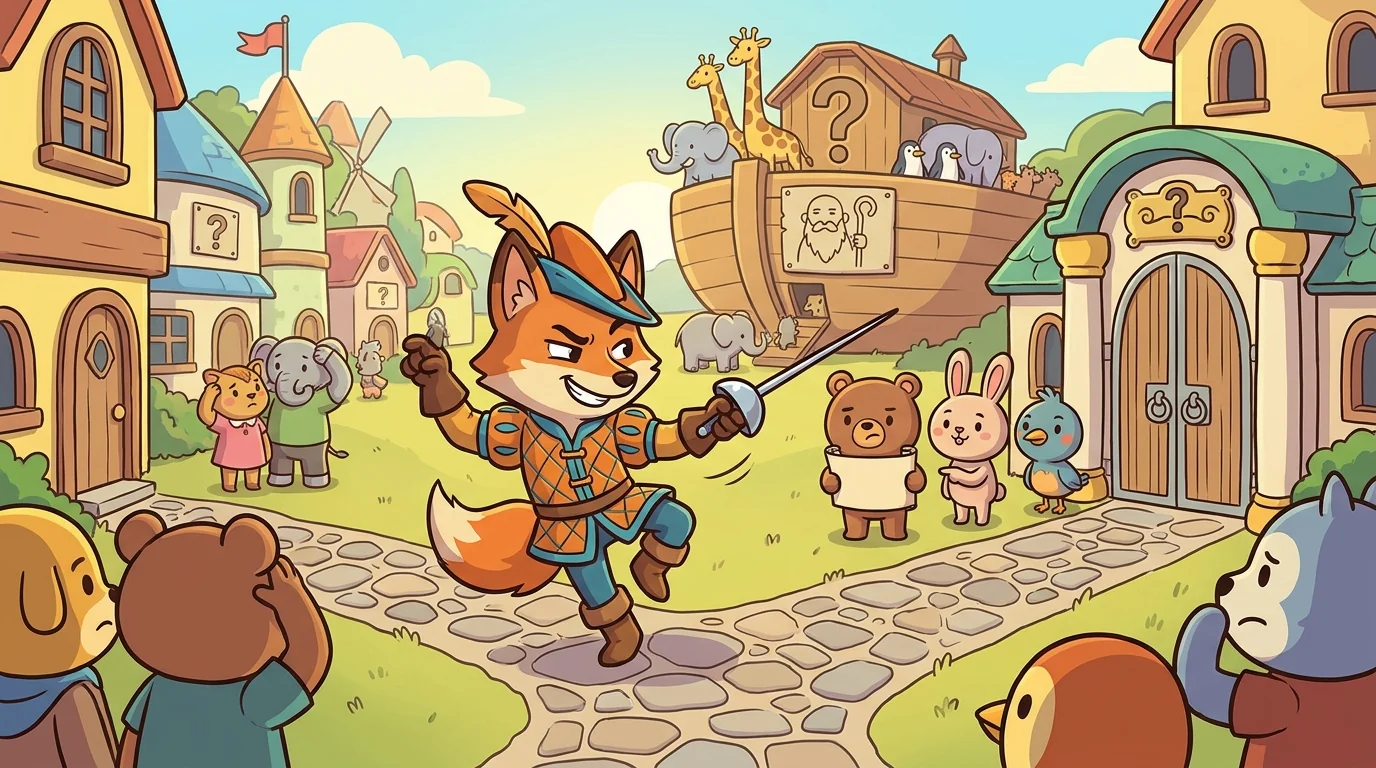
Feint was a light-footed creature who moved like a friendly fencer, always with a playful little fake-out in his step — a feint one way before he went the other.
He loved questions that sounded simple but hid a tiny slip in the wording — a question built to trip you only if you rushed. He'd ask, all innocence: "How many of each animal did Moses take on the ark?" and watch a quick solver blurt "two!" before catching it — it was Noah, not Moses. The trick wasn't a pun or a hidden answer. It was right there in the question, daring you to read too fast.
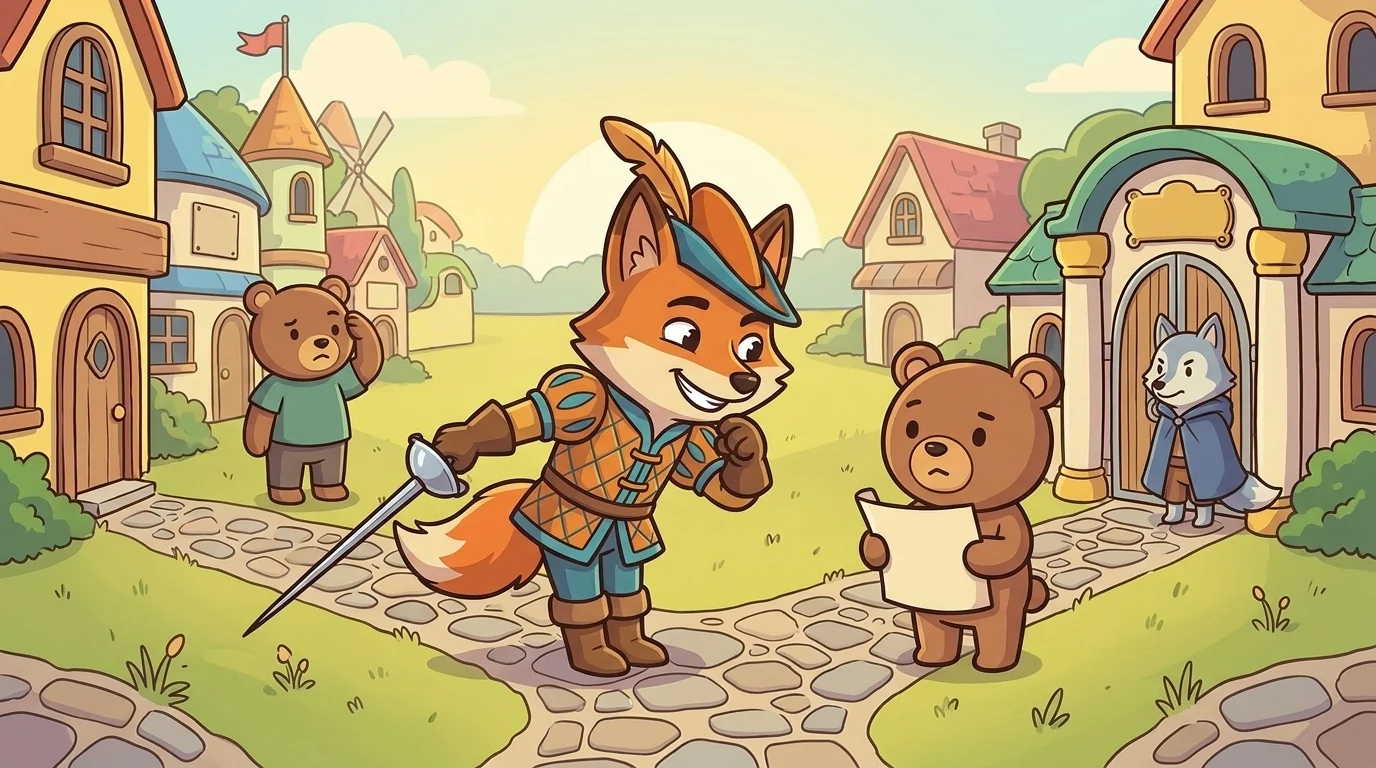
"You tricked me with the question itself!" a young solver laughed.
"The oldest fencer's move — the feint," he said, with a playful bow. "My name is Feint. I keep the trick questions — where the misdirection hides in how the question is asked." He grinned. "A farmer has seventeen sheep. All but nine run away. How many are left? Quick — don't rush." The solver started to subtract, then stopped, and read again. All but nine ran away... so nine are left. "There it is," Feint said. "The trap was the rushing. The answer was sitting in plain words the whole time."
Cryptic, the mentor, watched as a young solver groaned, "I always fall for those! I must not be paying attention."

"Let me reframe that for you," Feint said kindly, lowering his playful guard. "Falling for a trick question doesn't mean you're not smart. It means you're quick — and quick is usually good! Your brain raced ahead to be helpful and grabbed the obvious answer. The trick question just uses that speed against you, fair and square." He smiled. "The cure isn't 'be smarter.' It's 'slow down and read every word.' That's it. The slowest reader in the realm beats the fastest at these — not because they're cleverer, but because they refuse to rush."
The young solver brightened. "So I just need to slow down — not magically become a genius."
"Exactly," Feint said. "Read it twice. Watch for the word that's doing something sneaky. The clue is always right there in the open — trick questions never lie, they just bet you'll skim."
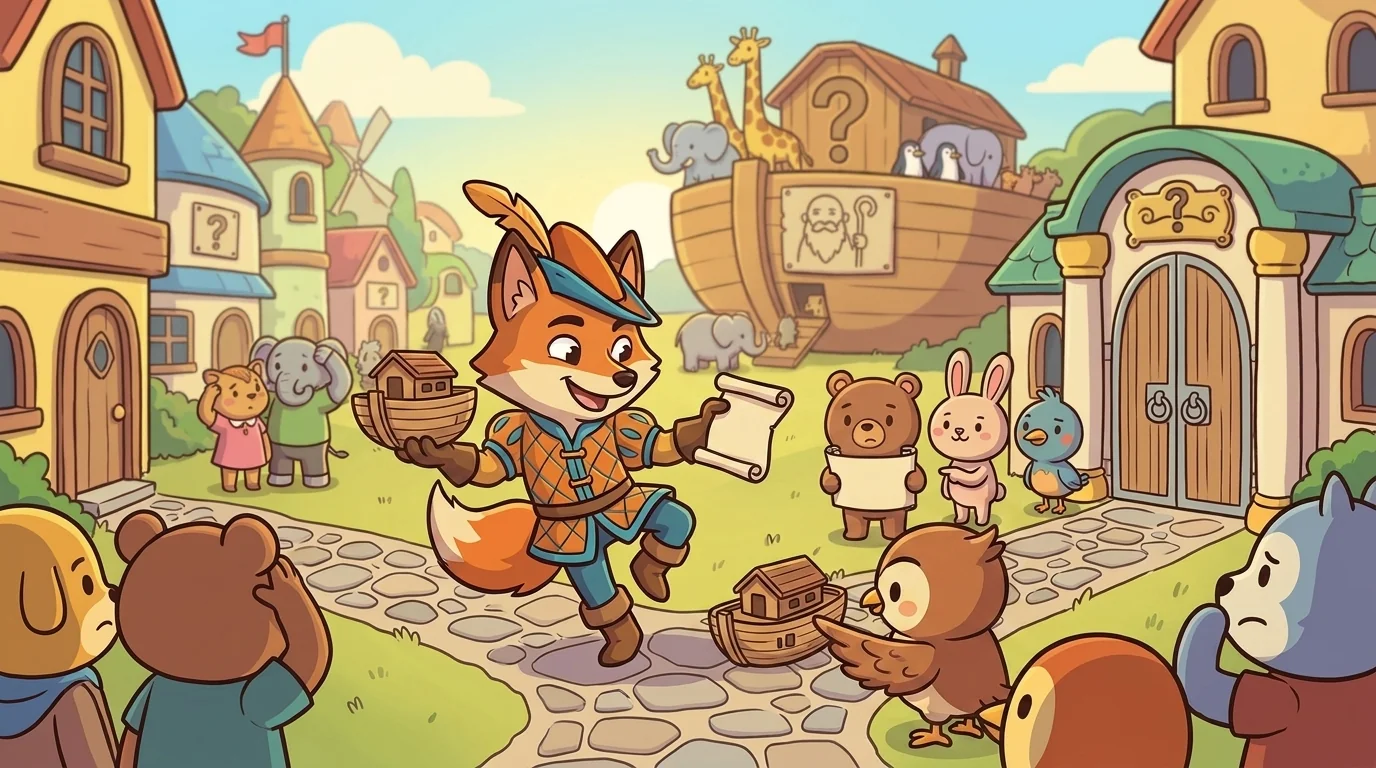
Cryptic asked Feint to join the realm. "Solvers feel foolish for falling for trick questions," he said. "Would you show them it's about speed, not smarts?"
Feint agreed, with a flourishing feint. When he teaches, he gives one slow rule: "When a question seems too easy, slow down — that's exactly when the feint is hiding. Read every word. Find the one that's quietly doing something tricky: a name swapped, a number that's a red herring, a 'not' you skimmed past." And he keeps it fair: "A real trick question never needs outside facts or lies. Everything you need is in the words. The only trick is whether you read them carefully."
A young solver caught one — "Which is heavier, a pound of feathers or a pound of bricks?" — by slowing down. "They're the same! A pound is a pound!" "You slowed down and read it," Feint said. "That's the whole skill. Not genius — just care."

After the lesson, Feint rested from his playful footwork, sitting with the young solvers in the easy evening light.
For a long time, Feint had worried that his trick questions were a bit mean — that making quick, eager solvers blurt wrong answers and feel silly was a cruel sort of game. He'd wondered if he was just a show-off who liked catching people out.
But sitting still in the warm light, watching solvers who now slowed down and grinned instead of cringing, Feint understood his game's real gift. He never caught anyone being dumb — he caught them being quick and eager, which is a lovely thing to be. And in catching them, he taught the most useful habit in the world: slow down and read carefully. That habit would save them from a thousand real-life mistakes, far beyond any riddle. A warm, settled contentment eased his light feet. He wasn't a show-off catching people out. He was a fencer teaching them to slow their guard — kindly, fairly, with a wink. And he gave one last gentle feint, just for fun, and let it go.
The RiddleRealm ensemble
Feint is part of RiddleRealm's distributed-narrative cast. Each character embodies a different curricular primitive; together they teach the full subject.
-

Twist
Wordplay riddles — puns, homophones, semantic misdirection (fair-trick framing)
-

Aha
Logic riddles — patient frame-finding; 'I don't get it yet' = productive cognitive state
-

Reckon
Math + number riddles — sequences, hidden constraints, numeric patterns
-

Pan
Visual + spatial riddles — picture puzzles, perspective rotation
-

Yarn
Mystery + detective + synthesis riddles — multi-step narrative with fair-planted clues
-

Veil
'What am I?' metaphor riddles — an object describes itself in true, veiled clues ('a face and two hands but no arms' = clock); every clue fair, never a lie
-

Jumble
Letter riddles — anagrams, palindromes, hidden words (LISTEN→SILENT); every letter is in plain sight, so a slow solver isn't missing anything
-

Slant
Lateral thinking — cracking a puzzle by questioning a hidden assumption; being stuck means your clever, assuming brain is working, not failing
-

Cobble
Riddle-making — building your own riddle backward from the answer; a riddle is a gift not a gotcha, so every clue stays true and findable