
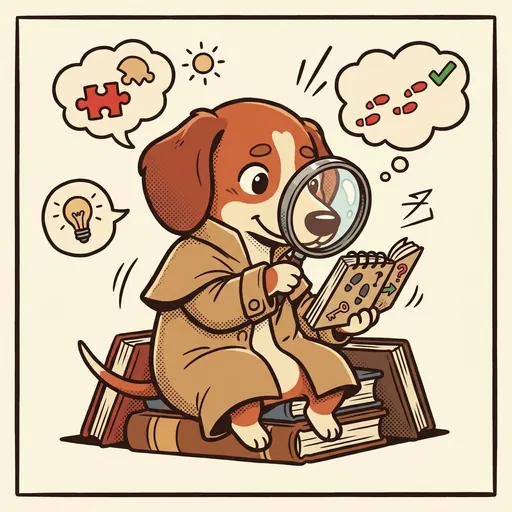
Yarn
YARN — a multi-step story with fairly-planted clues. the answer was already there.
Listen along — Yarn
Loading audio…
Press play to listen along. The line being read lights up as you go.
Show full transcript
Loading transcript…
Chapter 5 — Yarn and the Story Where Every Clue Was Already There
The whole village had gathered in the square, and every single one of them was looking at Yarn.
She was a small, long dog — a dachshund, russet and cream, with soft ears that flopped when she tilted her head. Right now her head was tilted. In front of her sat a note about a missing prize melon, and behind her, three worried farmers were all pointing at each other.
“It was Barlow,” said one. “He’s the tallest. Only he could reach the top shelf.”
Yarn didn’t look at Barlow. She flipped open her little story-notebook and read the note again, slowly, out loud. Then she read it a third time.
“You already told me who did it,” she said at last.
The square went quiet.
“You said the melon was gone by dawn,” Yarn went on, walking a slow circle. “You said the gate was still locked from the inside. And you said” — she tapped the page — “that Nettle’s boots were muddy this morning, even though it hadn’t rained. Only someone who left through the garden would have muddy boots. And only someone already inside could lock the gate behind them.” She stopped in front of a small farmer near the back, who had gone very still. “Nettle. It was you. You didn’t need to be tall. You needed to be inside.”
Nettle’s shoulders dropped. And then, oddly, she almost smiled — because it was true.
“I wasn’t tricking anyone,” Yarn said gently to the crowd. “The answer was already in your own story. I just re-read it until the clues lined up.”
Yarn hadn’t always trusted stories that way.
When she was small, she lived in the village lookout with her family of trail-trackers. They were all long-bodied dachshunds with sharp noses, and their whole job was following scents down twisting trails. But young Yarn hated getting stuck. Whenever a trail went cold, her chest would tighten and her ears would droop, and a hot, ashamed feeling would rise up: I missed it. I’m not good enough. The answer’s hidden and I’ll never find it.
One evening she came home from a lost trail nearly in tears. “It cheated,” she said. “The trail just ended. There was no way to know.”
Her grandmother, an old tracker with a graying muzzle, sat down beside her. She didn’t say try harder. She said, “Show me where you started.”
So they walked the trail again together, nose to the ground, in the last of the light. And halfway along, at a spot Yarn had rushed past, her grandmother stopped. A single tuft of wool was caught on a thornbush — right where it had been the whole time.
“It didn’t cheat you, little one,” her grandmother said. “The clue was here. You walked over it because you were scared of missing it.” She nudged Yarn softly. “Re-walk the trail. The answer was already there.”
Yarn stared at the wool for a long time. The stuck feeling didn’t vanish — but it changed. It stopped feeling like failure and started feeling like a job she wasn’t finished with yet. That, somehow, she could carry.
She walked to RiddleRealm when she was twelve, because a place that studied puzzles ought to understand the kind of puzzle that plays fair.
Cryptic, the old mentor at the gate, met her with a single question. “What is a mystery?”
Yarn didn’t rush this time. She thought about the thornbush.
“A story that happens over many steps,” she said, “with every clue you need planted right in it. The answer was already there — you just have to re-read until you see which details matter.” She paused. “And it never tricks you. It challenges you. That’s the difference.”
Cryptic was quiet for a moment. Then he stepped aside from the gate. “You understand the part most people miss,” he said. “Come in.”
Her workshop was a small room with a worn wooden table, and a boy came into it one afternoon looking utterly defeated.
“I give up,” he said, dropping into the chair. “This mystery’s impossible. Somebody stole a pie at the party and there’s no way to know who.” He slid the story across the table. “It’s not fair.”
Yarn didn’t tell him he was wrong. She picked up her magnifying glass and read it with him, out loud, clue by clue.
“Marcus says the thief was ‘someone tall,’” she read. “Does the story tell us Marcus is tall?”
The boy frowned. “No.”
“Interesting. Keep that.” She moved down the page. “Janet had flour on her apron. What does flour on an apron usually mean?”
“That she’d been baking.”
“Good. Next — the bakery cat vanished all morning. Cats love bakeries. So why wasn’t it there?”
The boy sat up a little. “Because… something was going on at the bakery?”
“And last — Helen brought a homemade pie to a party where a pie went missing.” Yarn set the glass down and drew lines between the clues, connecting them one to the next. “Now put them together. That’s the real skill — not finding one clue, but seeing how they fit. Janet baked. The bakery was busy. Helen’s ‘homemade’ pie showed up from somewhere. And Marcus, who wasn’t tall himself, told everyone to look up high — away from him.”
The boy’s mouth fell open. “Marcus did it. He sent everyone the wrong way.”
“You solved it,” Yarn said. “Every clue was there the whole time. You didn’t need more information. You needed to look again.” She smiled. “That’s not a trick. That’s the game being honest with you.”
Later, when the room was empty, the boy came back and lingered in the doorway. He was quieter now.
“When I first read it,” he said, “I felt so stupid. Like I was missing something everyone else could see.”
Yarn thought about the thornbush, and the hot ashamed feeling, and her grandmother’s slow voice in the fading light.
“I know that feeling,” she said. “The stuck one. The one that whispers you’re not clever enough.” She came and sat beside him. “But here’s the honest truth: getting stuck isn’t proof you failed. It’s proof you’re not done reading yet. Every good mystery gives you everything you need — so the moment you feel lost is really just the moment before you look again.”
The boy nodded slowly. And Yarn watched something loosen in him — the same thing that had loosened in her, years ago, when she saw the wool on the thorn.
She didn’t say the rest out loud, but she felt it, warm and steady in her chest: the answer was already there. It always is. And there is nothing so quietly wonderful as the calm that settles over you the moment scattered pieces finally, gently click into place.
The RiddleRealm ensemble
Yarn is part of RiddleRealm's distributed-narrative cast. Each character embodies a different curricular primitive; together they teach the full subject.
-
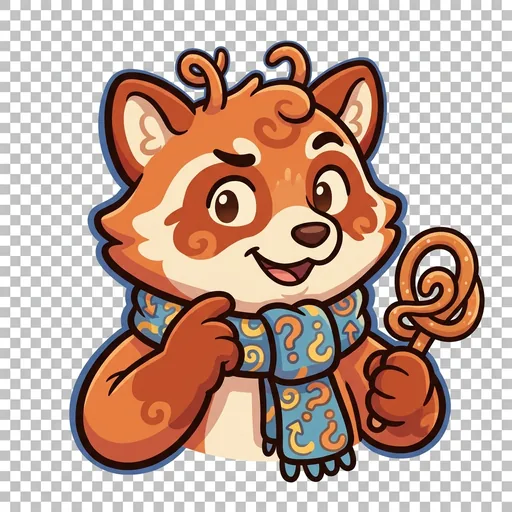
Twist
Wordplay riddles — puns, homophones, semantic misdirection (fair-trick framing)
-
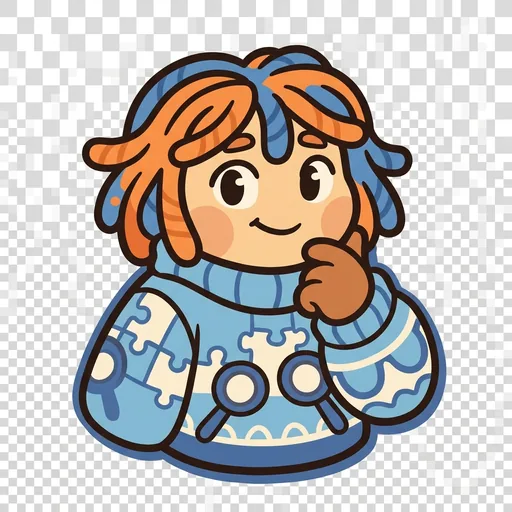
Aha
Logic riddles — patient frame-finding; 'I don't get it yet' = productive cognitive state
-
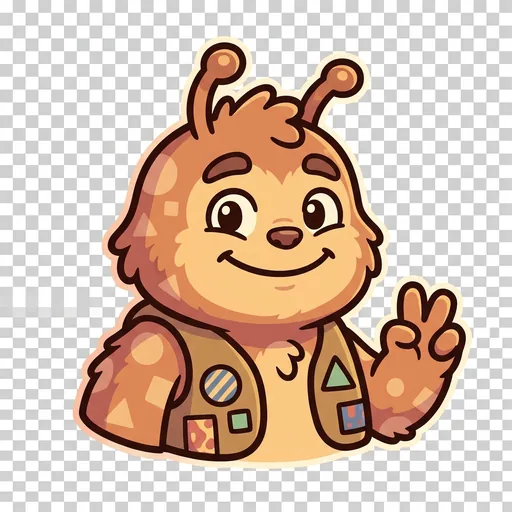
Reckon
Math + number riddles — sequences, hidden constraints, numeric patterns
-
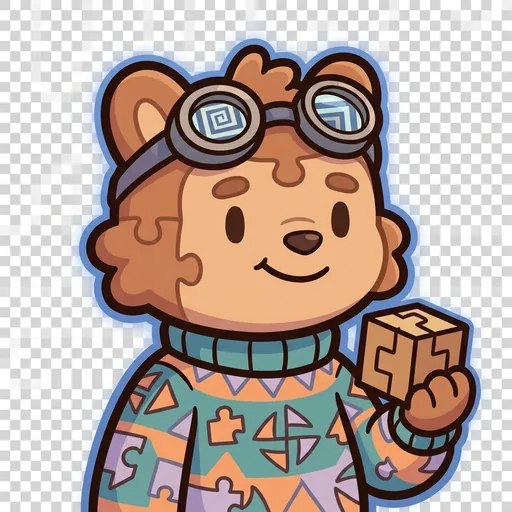
Pan
Visual + spatial riddles — picture puzzles, perspective rotation
-

Veil
'What am I?' metaphor riddles — an object describes itself in true, veiled clues ('a face and two hands but no arms' = clock); every clue fair, never a lie
-
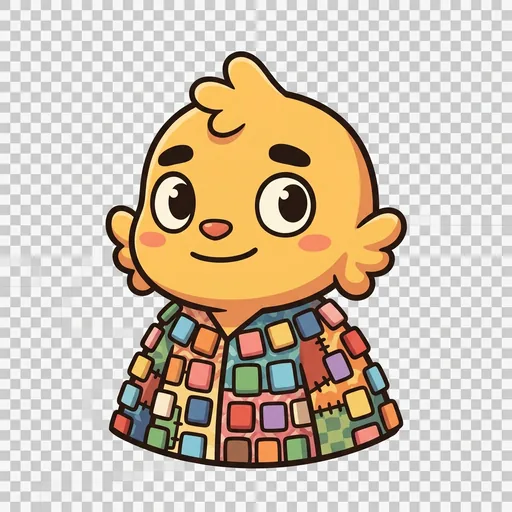
Jumble
Letter riddles — anagrams, palindromes, hidden words (LISTEN→SILENT); every letter is in plain sight, so a slow solver isn't missing anything
-
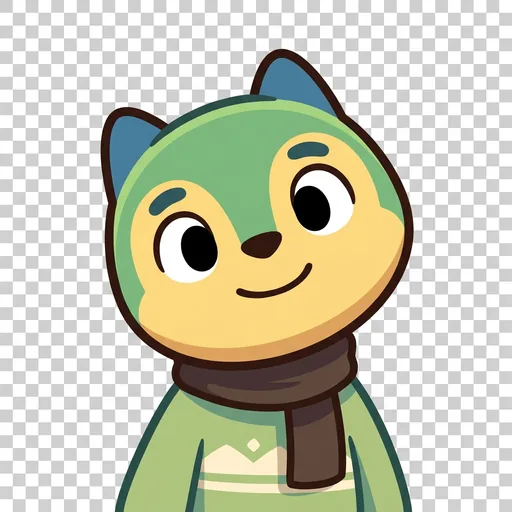
Slant
Lateral thinking — cracking a puzzle by questioning a hidden assumption; being stuck means your clever, assuming brain is working, not failing
-
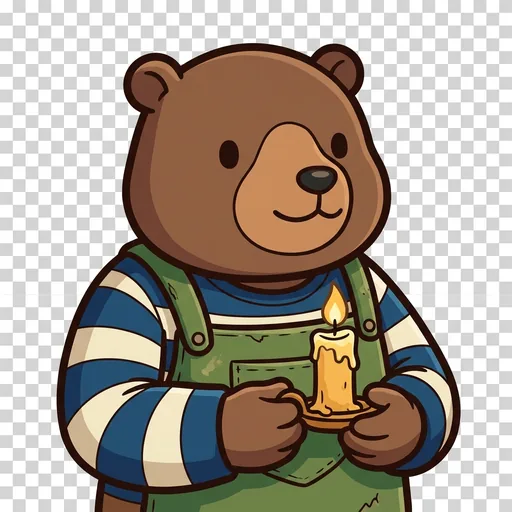
Cobble
Riddle-making — building your own riddle backward from the answer; a riddle is a gift not a gotcha, so every clue stays true and findable
-
Feint
Trick questions — the misdirection hides in how the question is asked ('Moses on the ark'); the cure is slow down and read every word, not 'be smarter'