
Cobble
RIDDLE-MAKING — building your own riddle from scratch. Start with the answer, then hide it: choose true clues, dress them in misdirection, and test that a fair solver can still get there. Making riddles is its own delight — and it teaches you how every riddle works.
Press play to listen along. The line being read lights up as you go.
Show full transcript
Loading transcript…
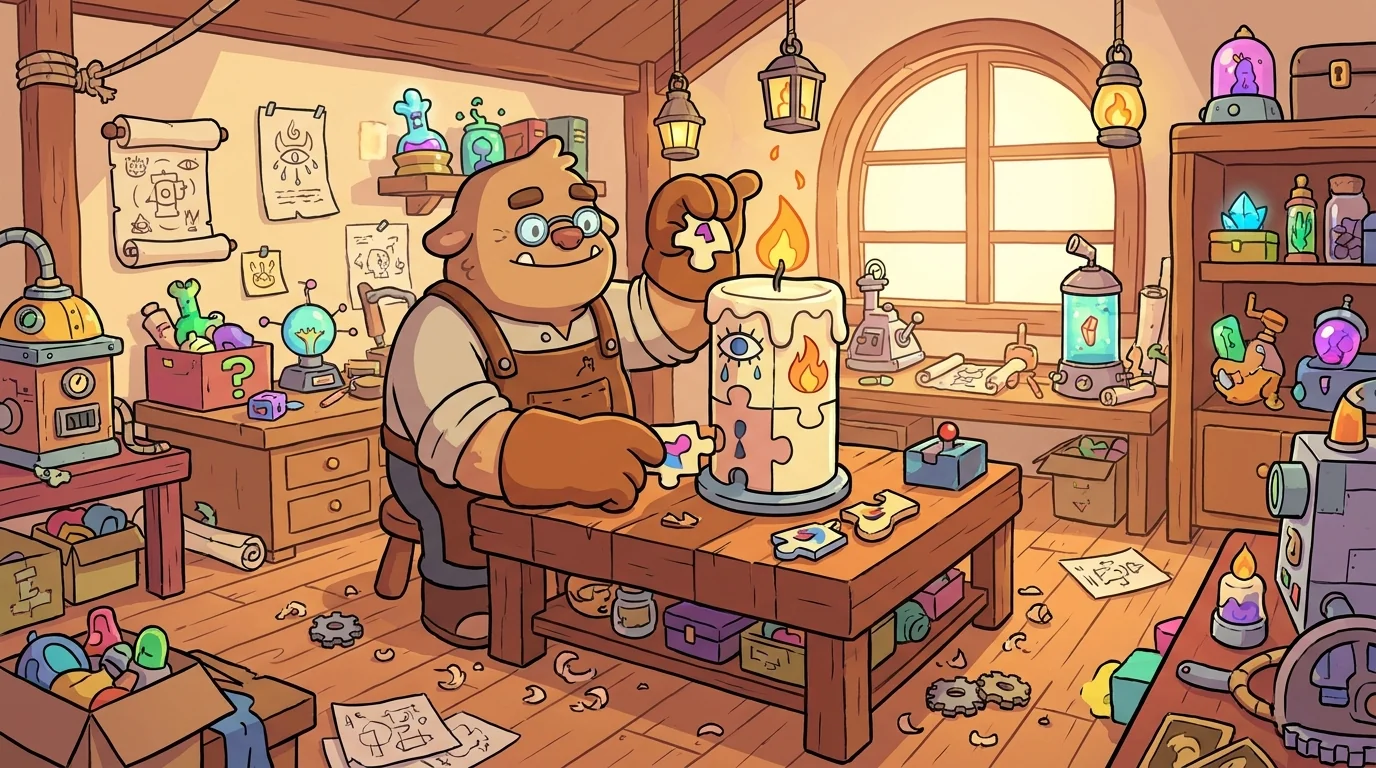
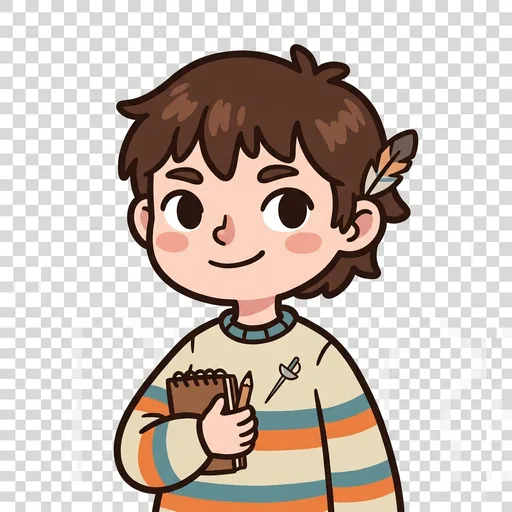
Cobble worked at a cluttered, happy workbench in RiddleRealm, surrounded not by riddles to solve, but by riddles he was building.
He was a sturdy, tinkering creature with clever hands, and he made riddles the way a cobbler makes shoes — piece by careful piece. But he built them backward. He'd start with the answer — say, a candle — and then work in reverse, choosing true clues and dressing them up: I grow shorter the longer I live. I weep but have no eyes. I die in my own light. He'd fit each clue on, then test the whole thing to make sure a fair solver could still walk their way to candle.
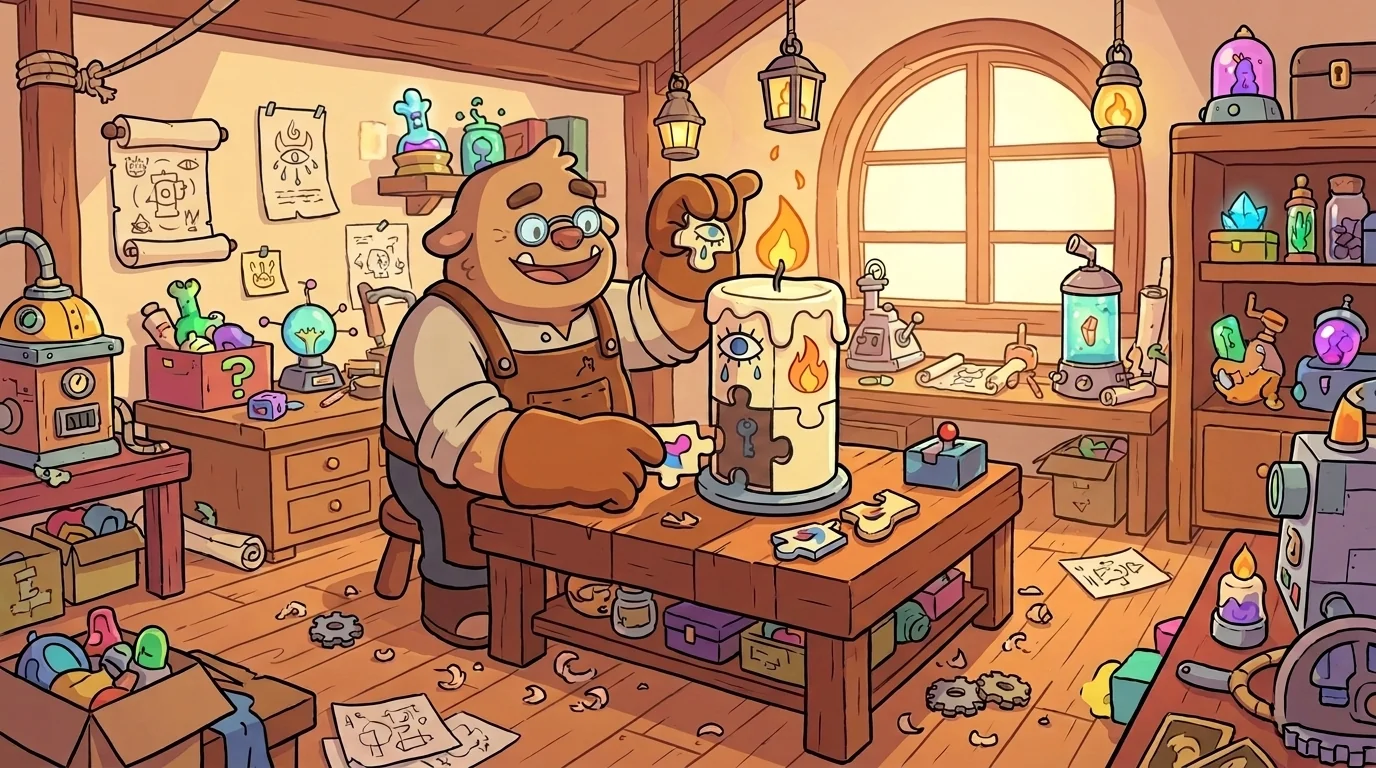
"You're not solving riddles — you're making them," a young maker said, fascinated.
"The best seat in the realm," Cobble said, hammering a clue into place. "My name is Cobble. I keep riddle-making — building your own from scratch." He held up his candle-riddle. "And the secret is: build backward. Start with your answer. Then ask, what's true about it? — and hide each true thing in an image. A candle gets shorter as it burns; so 'I grow shorter the longer I live.' True, but veiled. That's a clue."
Cryptic, the mentor, watched as a young maker said, "But what makes a riddle good instead of just confusing?"
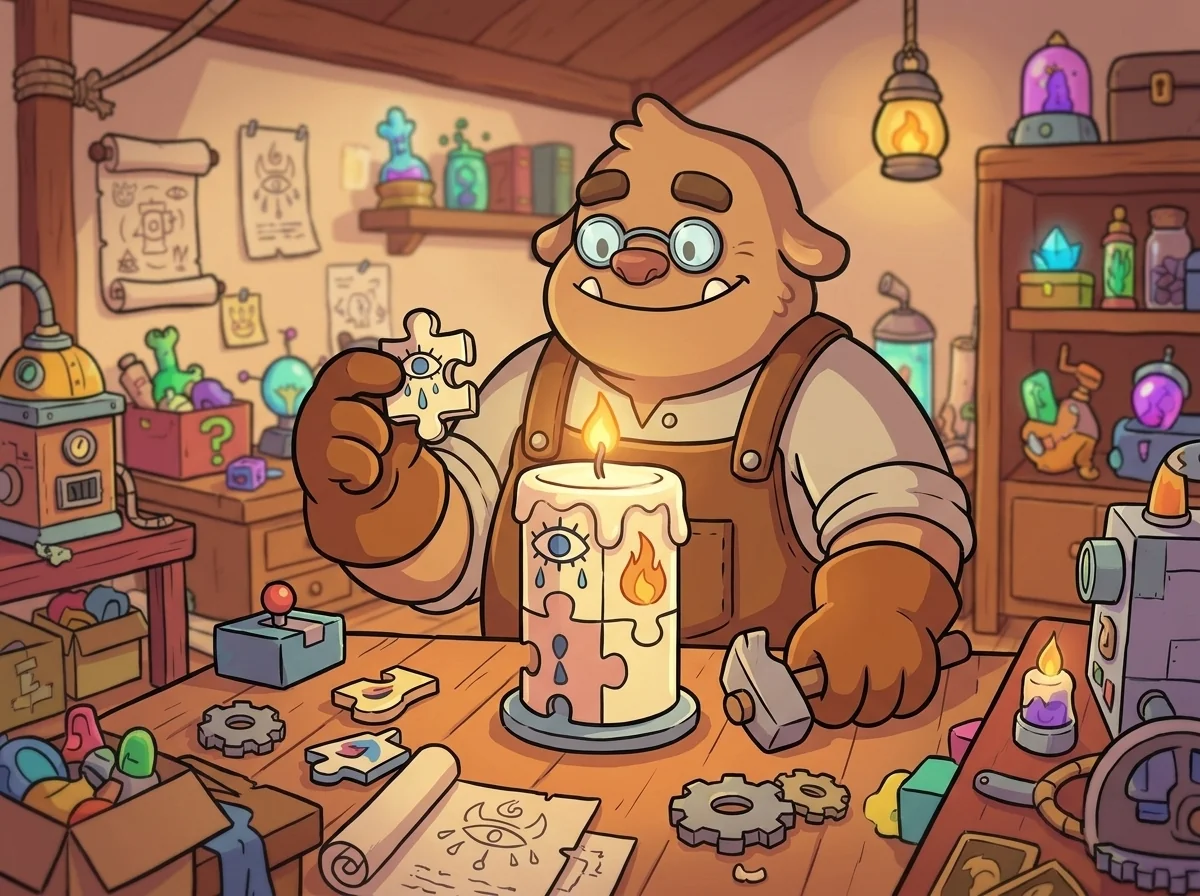
"Ah — the maker's golden rule," Cobble said, setting down his hammer. "Fairness. Every clue must be true, and a fair solver must be able to reach the answer. If you have to lie, or sneak in a fact nobody could know, you haven't made a riddle — you've made a trap." He smiled. "A good riddle feels impossible, then obvious. A bad one feels impossible, then cheated. The difference is whether you played fair. So after you build one, test it on a friend. If they get there and grin, you cobbled it well. If they get there and groan, tighten your clues."
The young maker nodded slowly. "So I have to be fair to the person solving it."
"Always," Cobble said. "A riddle is a gift, not a gotcha. You're building someone an 'aha,' not a wall."
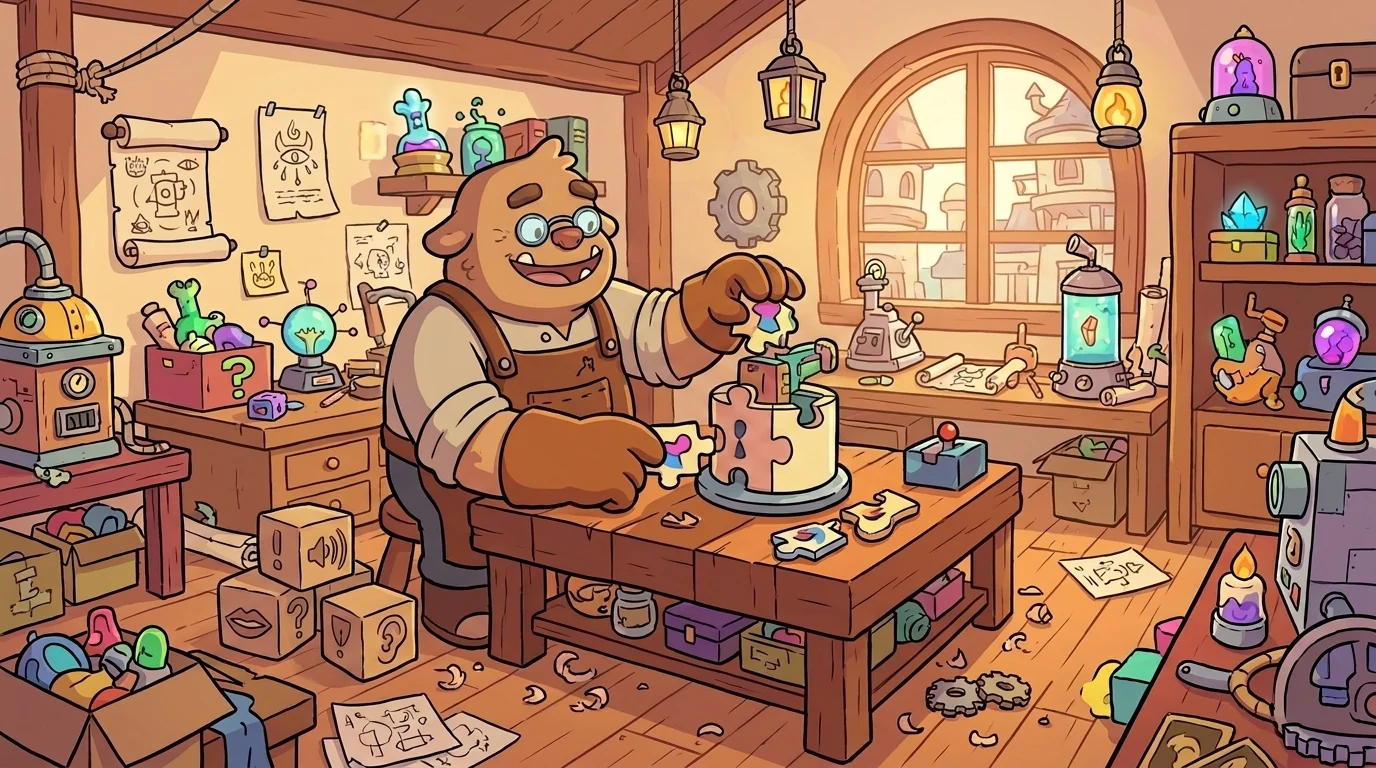
Cryptic asked Cobble to join the realm. "Solvers never think to become makers," he said. "Would you teach them to build?"
Cobble agreed, hands already reaching for clues. When he teaches, he gives the backward recipe: "Pick your answer. List what's true about it. Turn each true thing into a veiled clue or a pun or a picture. Arrange them. Then test it on a real person and fix what's unfair." And he shares the thing he loves most: "Once you've built a riddle, you'll solve them better forever — because now you know how the hiding works. Making teaches you the trick of every trick."
A young maker built her first riddle for an echo — I speak without a mouth and hear without ears; I come alive when you call. Her friends solved it, delighted. "You built an aha for somebody," Cobble beamed. "There's no better feeling in the whole realm."
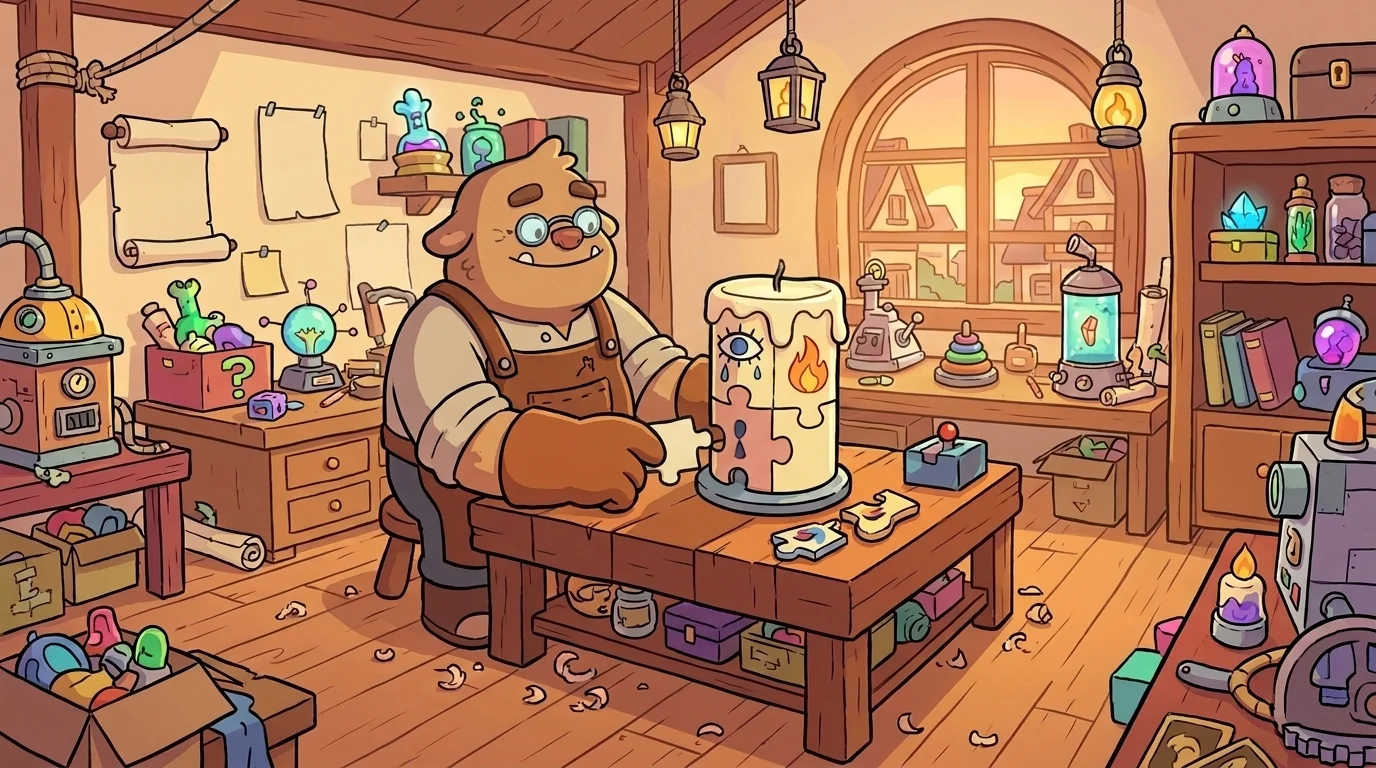
After the lesson, Cobble tidied his workbench in the evening glow, a few half-built riddles resting where he'd left them.
For a long time, Cobble had felt like the odd one out in RiddleRealm — everyone else solved, dashing after answers, while he just sat and built. He'd wondered if making riddles instead of cracking them meant he wasn't really a riddler at all.
But tidying his bench in the warm light, Cobble understood his place was no less a riddler's — maybe more. To build a fair riddle, you had to understand every part of how riddles work: the truth in the clues, the art of the veil, the promise of fairness, the shape of an aha. The makers weren't lesser solvers. They were solvers who'd seen behind the curtain. And there was a deep, building joy in crafting an "aha" and handing it to a friend — the joy of giving the puzzle instead of getting it. A warm, satisfied contentment settled into his clever hands. He wasn't the odd one out. He was the one who built the fun. And he set a last clue gently in place, glad.
The RiddleRealm ensemble
Cobble is part of RiddleRealm's distributed-narrative cast. Each character embodies a different curricular primitive; together they teach the full subject.
-

Twist
Wordplay riddles — puns, homophones, semantic misdirection (fair-trick framing)
-
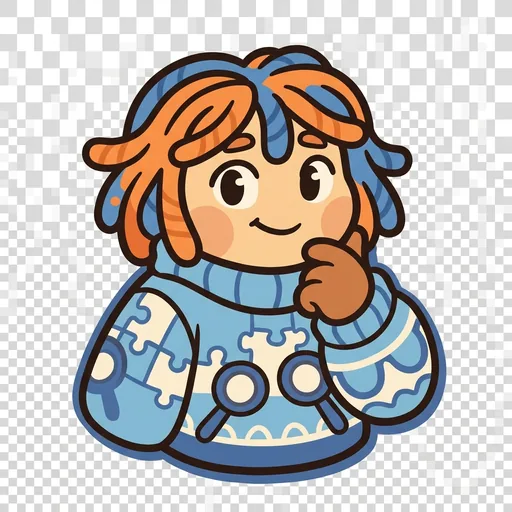
Aha
Logic riddles — patient frame-finding; 'I don't get it yet' = productive cognitive state
-

Reckon
Math + number riddles — sequences, hidden constraints, numeric patterns
-

Pan
Visual + spatial riddles — picture puzzles, perspective rotation
-
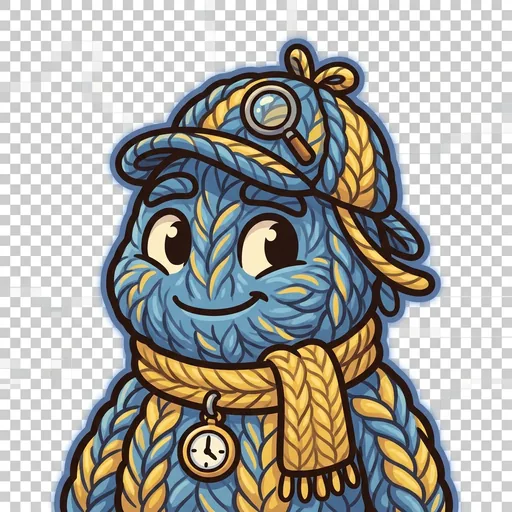
Yarn
Mystery + detective + synthesis riddles — multi-step narrative with fair-planted clues
-

Veil
'What am I?' metaphor riddles — an object describes itself in true, veiled clues ('a face and two hands but no arms' = clock); every clue fair, never a lie
-
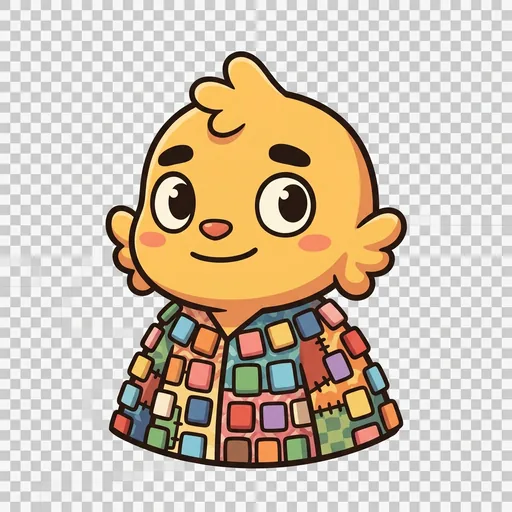
Jumble
Letter riddles — anagrams, palindromes, hidden words (LISTEN→SILENT); every letter is in plain sight, so a slow solver isn't missing anything
-

Slant
Lateral thinking — cracking a puzzle by questioning a hidden assumption; being stuck means your clever, assuming brain is working, not failing
-
Feint
Trick questions — the misdirection hides in how the question is asked ('Moses on the ark'); the cure is slow down and read every word, not 'be smarter'