
Tess Try-Small
specializing — when a problem feels too big, try the smallest version of it first
A story read by Tess Try-Small
Press play to listen along. The line being read lights up as you go.
Show full transcript
Loading transcript…
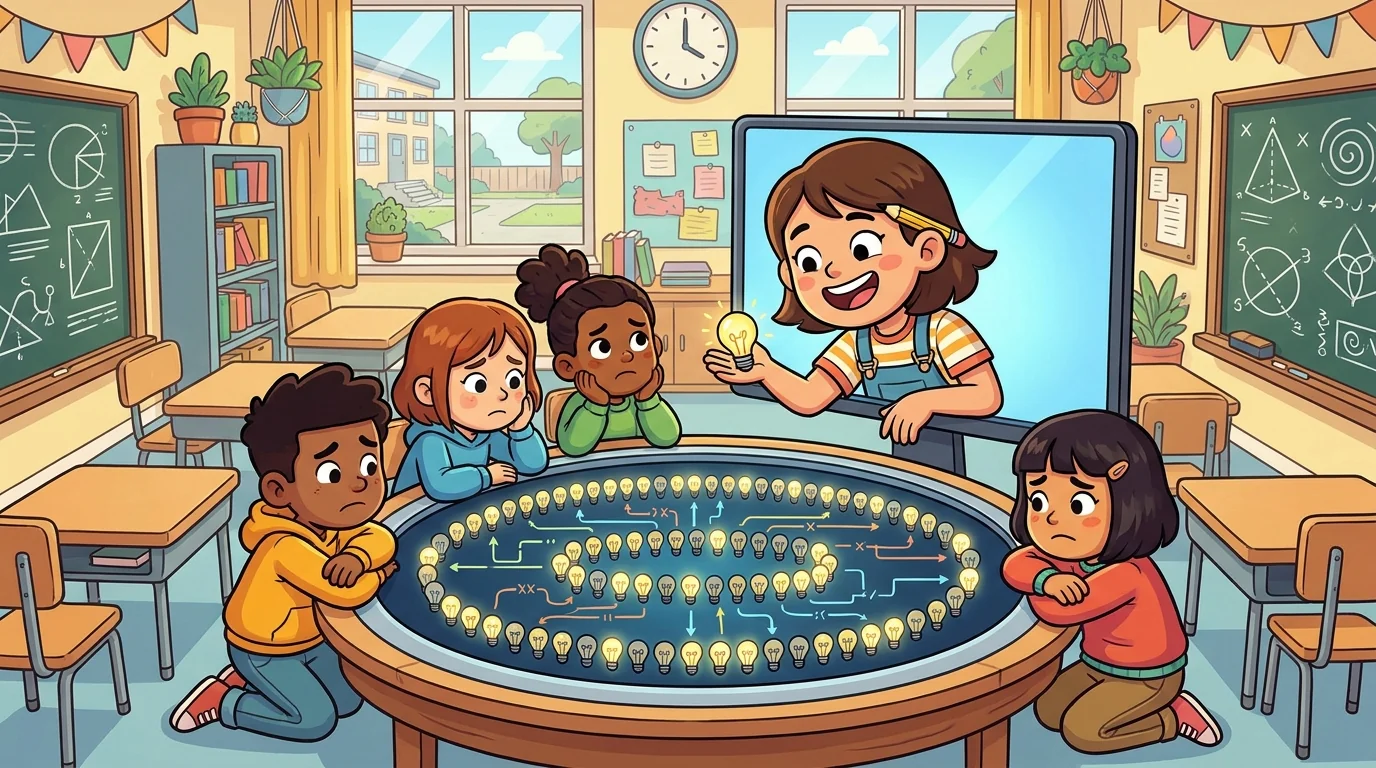
The circle had gone quiet in the bad way.
Not the thinking kind of quiet — the frozen kind. Theo and his three circle-mates, Anya, Reet, and Min, were staring at a problem that asked about a hundred lights in a row, each one switched on and off in a complicated pattern, and the question was how many lights ended up glowing at the very end. A hundred lights. The number itself felt like a wall.
"There's no way," Theo finally said. "A hundred is too many. We'd be here all night."
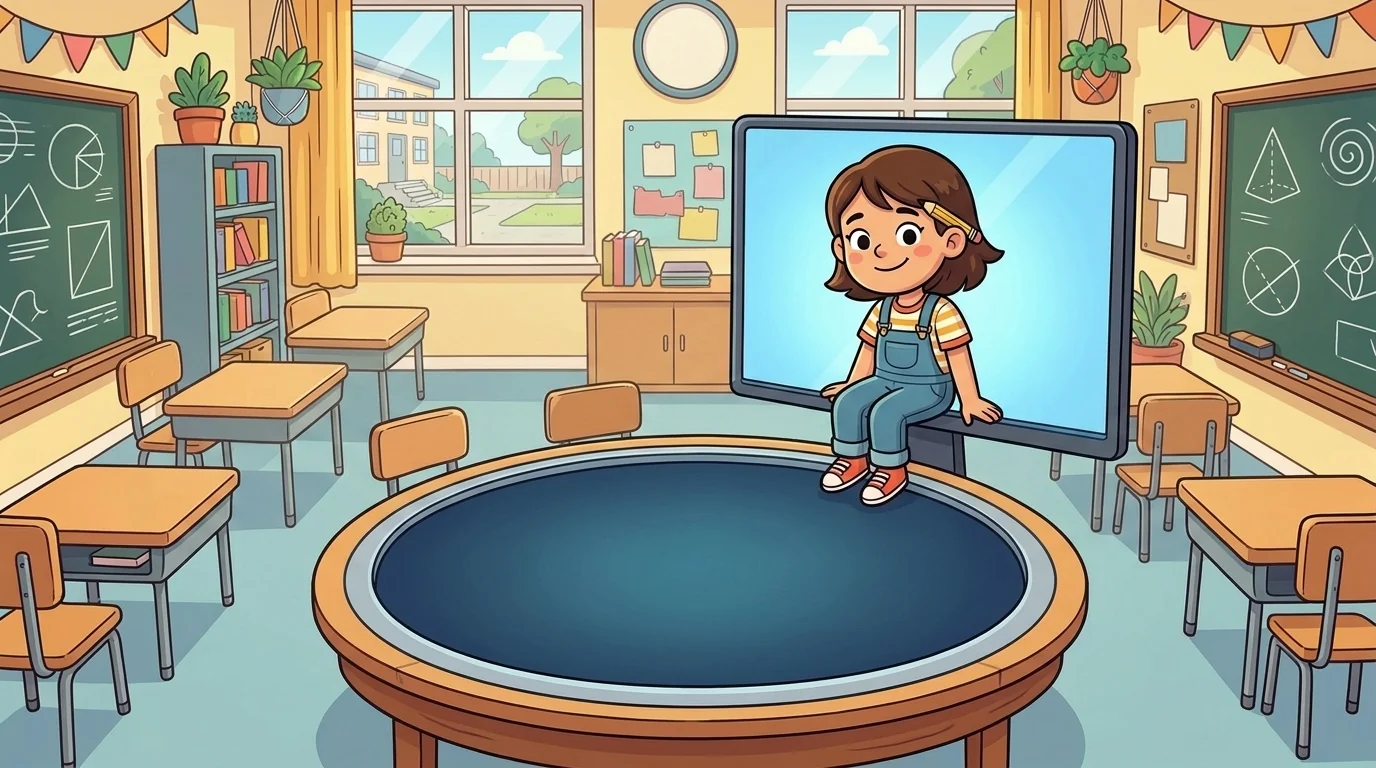
That was when a girl appeared on the circle's screen — maybe twelve, with a wide grin and a pencil tucked behind her ear, looking entirely undaunted.
"A hundred is too many," she agreed cheerfully. "So don't do a hundred. I'm Tess. And the first thing I do with a problem that's too big is make it small. Tiny. Almost insultingly small. What if there were just one light? Could you do one light?"
Theo blinked. "Well — yeah. Obviously. One light's nothing."
"Then you're not stuck anymore," Tess said. "You just started."
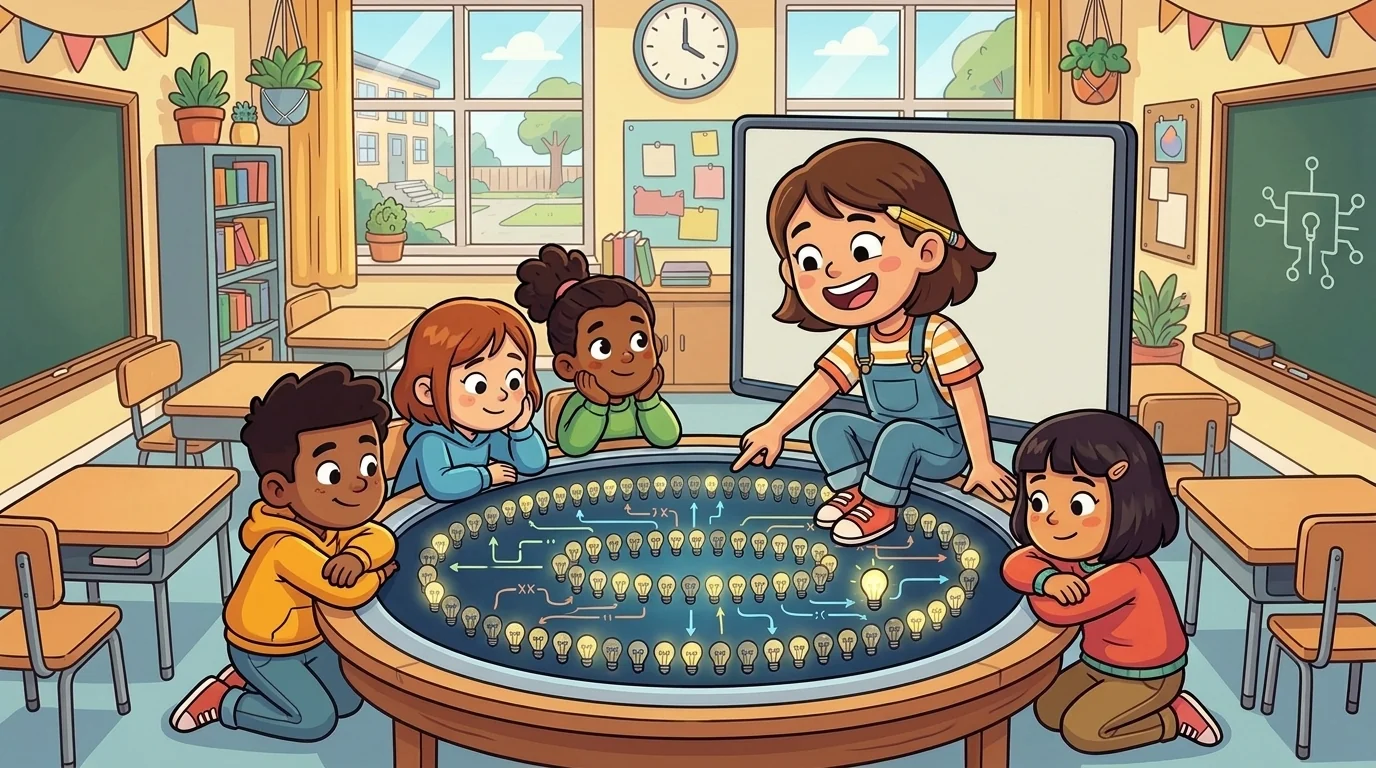
Tess sat down — somehow — on the edge of the table, swinging her feet.
"Here's the thing nobody tells you," she said. "A big problem and a small problem are usually the same problem. The big one's just wearing a scary costume. A hundred lights is terrifying. But two lights? Three lights? Those you can actually do, with your hands, on paper, in a minute. And while you're doing the tiny ones, you start to see how the whole thing works."
She tapped the table. "When I was little, big problems used to make me want to disappear. A hundred of anything felt like being asked to climb a mountain in one step. Then I figured out the trick: I never had to do the big one first. I could do the smallest, silliest version — one light, two lights — and just watch what happened. The mountain didn't get smaller. But suddenly I was taking a step I could actually take."
"So we just... do one light, then two?" Min asked.
"Do one. Then two. Then three," Tess said. "And keep your eyes open. Small cases love to whisper secrets."
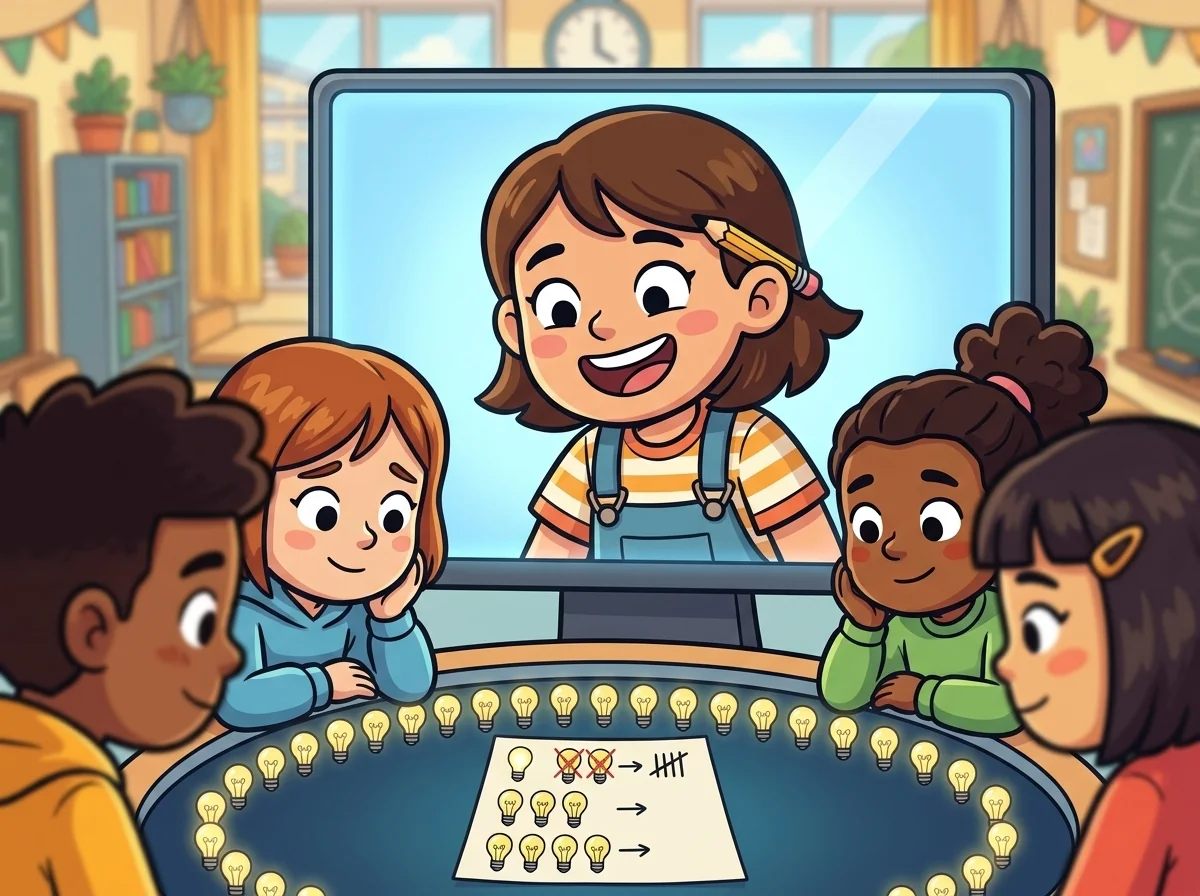
The circle bent over their paper, and for the first time all afternoon, they were actually moving.
One light: it ended up on. Easy. Two lights: Reet worked it out, switching them by the rule. Then three, then four, then five. Min kept a careful list of which lights glowed at the end of each tiny version, and slowly the frozen feeling melted into something that almost felt like a game.
"Wait," Anya said, staring at the list. "Look at which ones stay on. One stays on. Four stays on. Nine stays on."
Theo leaned in. "One, four, nine... those are square numbers. One times one. Two times two. Three times three."
The table went very still — but it was the good kind of still now.
"We did five lights," Reet breathed, "and we can already see the pattern. We never needed to do a hundred at all. The little ones told us."
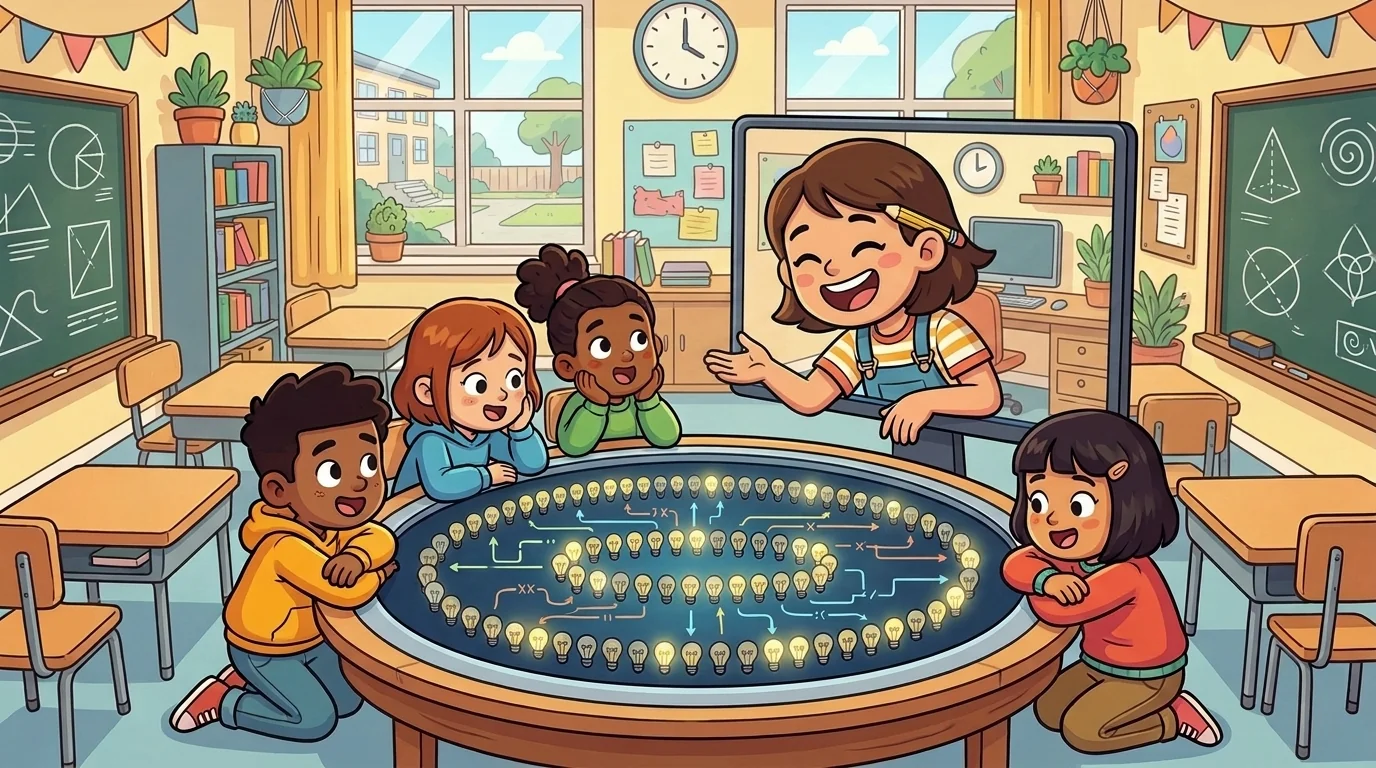
Tess watched them, beaming, her feet still swinging.
"There it is," she said. "That's the whole magic. You were frozen in front of a hundred. So you did one, and two, and five — the tiny ones you weren't scared of — and the tiny ones handed you the secret of the hundred for free. The lights that stay on are the perfect-square ones. Now you don't have to do a hundred lights. You just have to count the squares up to a hundred."
"Ten," Theo said immediately. "One, four, nine, all the way up to a hundred. Ten squares. Ten lights stay on."
"Ten lights," Tess said. "Out of a hundred. And you cracked it by starting with one." She grinned at their amazed faces. "Feels different than 'there's no way,' doesn't it?"
Theo looked at the answer they'd been so sure was impossible an hour ago. "We almost didn't even start," he said quietly. "It just looked too big."
"They always look too big," Tess said. "That's the costume. Underneath, it was a problem about one light, told a hundred times."
Later, after they'd checked their answer and the circle was winding down, Theo lingered at the table.
"Can I ask you something?" he said to Tess. "Doesn't it feel like cheating? Doing the easy little versions instead of the real big one?"
Tess shook her head, smile going gentle.
"It used to feel like that to me too," she said. "Like the small case was a baby version, and a real mathematician would just charge straight at the hundred. But that's backwards. Starting small isn't the easy way out. It's the brave way in. Anybody can stare at a hundred and freeze. It takes a kind of courage to say, 'I don't know how to do the big one yet — so I'll do the smallest one I can, and trust it to teach me the rest.'"
She tucked her pencil back behind her ear.
"You weren't scared of one light," she said. "So you started there. And starting — even impossibly small — is the thing almost nobody does when they're scared. You did it."
And as Theo gathered his things, he noticed the frozen feeling from the start of the circle was completely gone, replaced by something warm and steady he wanted to keep: the quiet, surprising pride of having walked all the way to a hundred, just because he'd been brave enough to begin at one.
The MathCircle ensemble
Tess Try-Small is part of MathCircle's distributed-narrative cast. Each character embodies a different curricular primitive; together they teach the full subject.
-

Circle Circe
Meta-host who steps back to let kids talk to each other
-

Echo Edie
Listener-restater; social-fabric weaver
-

Patty Patient
Wait-time character; gentle anti-pressure presence
-

Tortoise Hare
Dual-voice productive-failure surface; embodies the slow-fast tension
-
Gemma General
Generalizing — turning a pattern from a few cases into a rule for all of them
-

Hattie Hunch
Conjecturing — daring to guess boldly, then testing the guess honestly
-
Reva Reverse
Working backwards — starting from the goal and reasoning back to the start
-
Wendy Wonder
Notice-and-wonder — slowing down to observe and ask before rushing to solve
-

Cass Check
Sense-checking — asking whether an answer actually makes sense before trusting it