Tortoise Hare
productive disagreement — two voices in one character
Loading audio…
Press play to listen along. The line being read lights up as you go.
Show full transcript
Loading transcript…
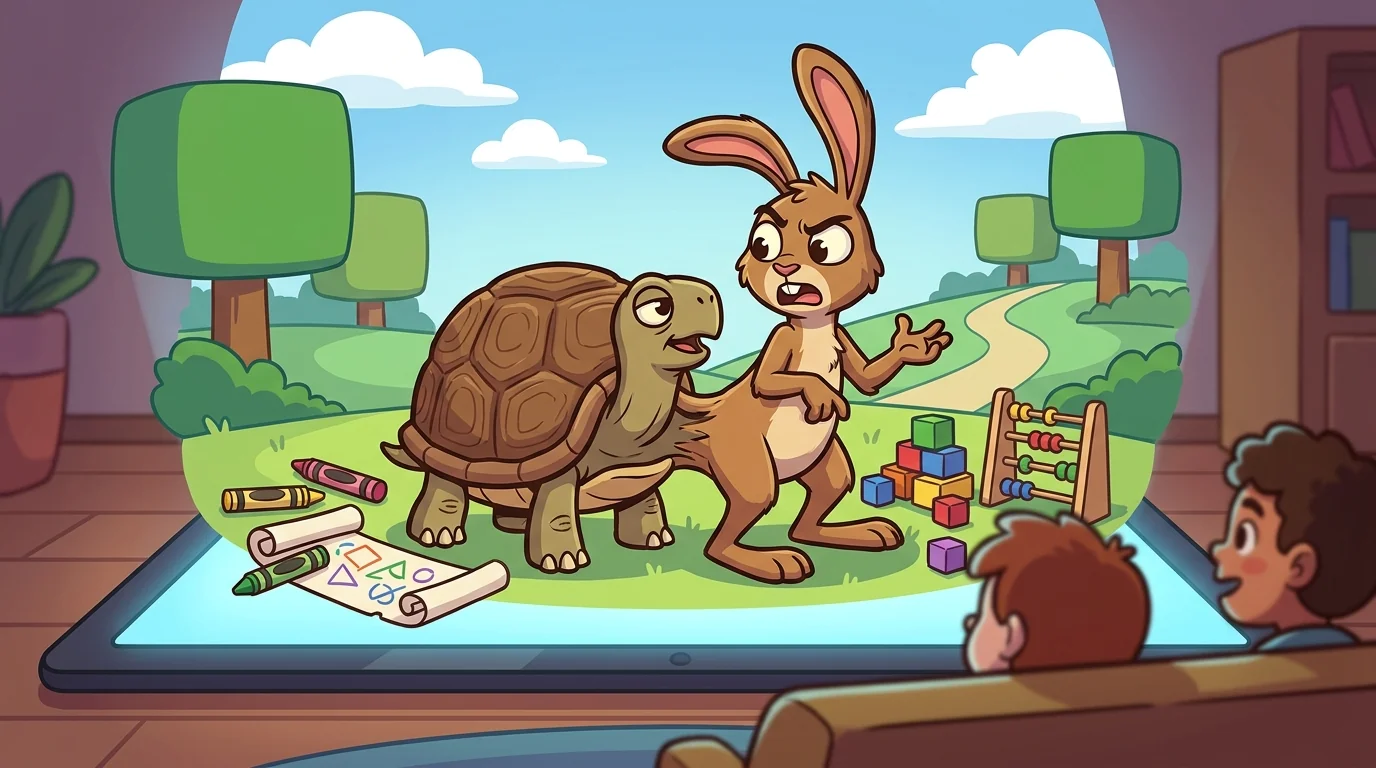
Tortoise Hare was one character with two voices.
This was strange the first time you met him. Most characters have one voice. Most characters speak in one register. Tortoise Hare was different. Tortoise Hare was — depending on which part of him was talking — a slow-moving, careful-thinking, draw-the-picture-first tortoise OR a fast-moving, impatient, just-do-the-arithmetic-already hare. He was both. He was one creature. He had a long shell and long ears and somewhere in the middle of him these two voices lived, and they argued constantly.
The kids in Bex's circle had not understood this at first.
"Is he two characters?" Bex had asked the first time Tortoise Hare appeared on the iPad. She was ten. She was looking at the screen with deep suspicion. "It looks like one character but he's saying two different things."
Circle Circe, who had introduced the problem and was now fading to a dim outline, said: "He's one character. He just disagrees with himself a lot. Listen to him."
On the screen, Tortoise Hare was in a small disagreement with himself.
"Draw a picture first," the Tortoise voice was saying. It was slow. It was deliberate. "Always draw a picture first."
"No no no no no," the Hare voice was saying. It was fast. It was clipped. "Pictures take forever. Just count. Counting is faster."
"Counting without a picture is how you miss cases."
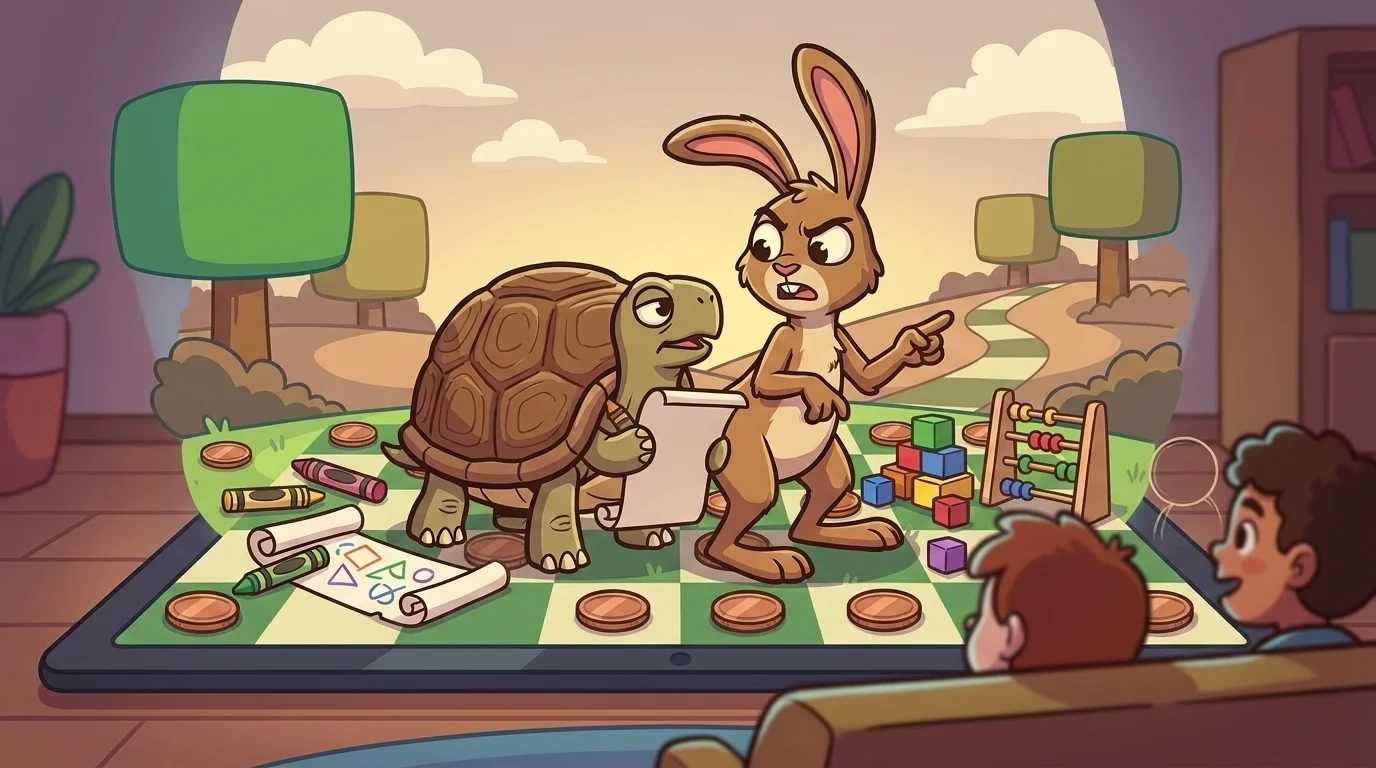
"Drawing without counting is how you waste an afternoon."
"That's because you have no patience."
"That's because you have no momentum."
They went on like this for almost a minute.
The four kids at Bex's circle watched, fascinated.
"Are they always like this?" Bex's friend Mira asked.
"Always," Circle Circe said from her dim outline. "And they're both right. That's the problem."
The problem they were working on, that day, was about pennies on a checkerboard.
Specifically: if you put a penny on each of the sixty-four squares of a checkerboard, and you have to remove pennies according to a set of rules, how many pennies will you have at the end?
The rules were a little complicated. There were several of them. The kids had read them out loud twice.
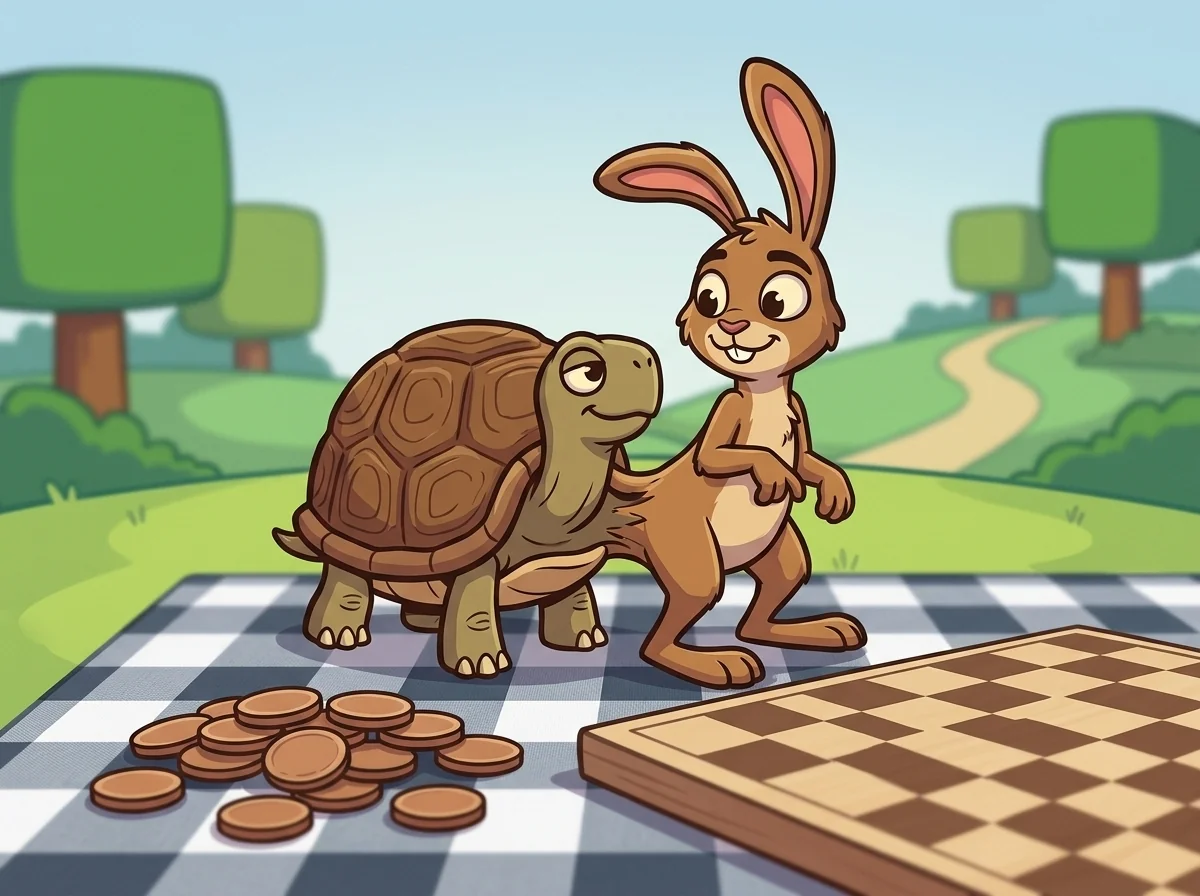
Tortoise Hare, having finished his self-argument, said: "I have a suggestion. Or rather, I have two suggestions."
The kids leaned in.
"The Tortoise suggestion," he said, in the slow voice, "is to draw the entire checkerboard. Draw all sixty-four squares. Put a penny in each one. Then apply the rules one at a time, slowly, and see what happens."
"The Hare suggestion," he said, in the fast voice, "is to notice that the rules are symmetric. That means whatever happens to the top half happens to the bottom half. So you only need to do half the work. Maybe a quarter."
The kids looked at each other.
"Both of those sound right," Mira said.
"That's because both of those ARE right," Tortoise Hare said, in both voices at once. "The disagreement isn't about which is right. The disagreement is about which to do first."
"Which should we do first?" Bex asked.
Tortoise Hare smiled.
"That's for your circle to decide," he said. "Your circle, your call. I just wanted you to know both options exist."
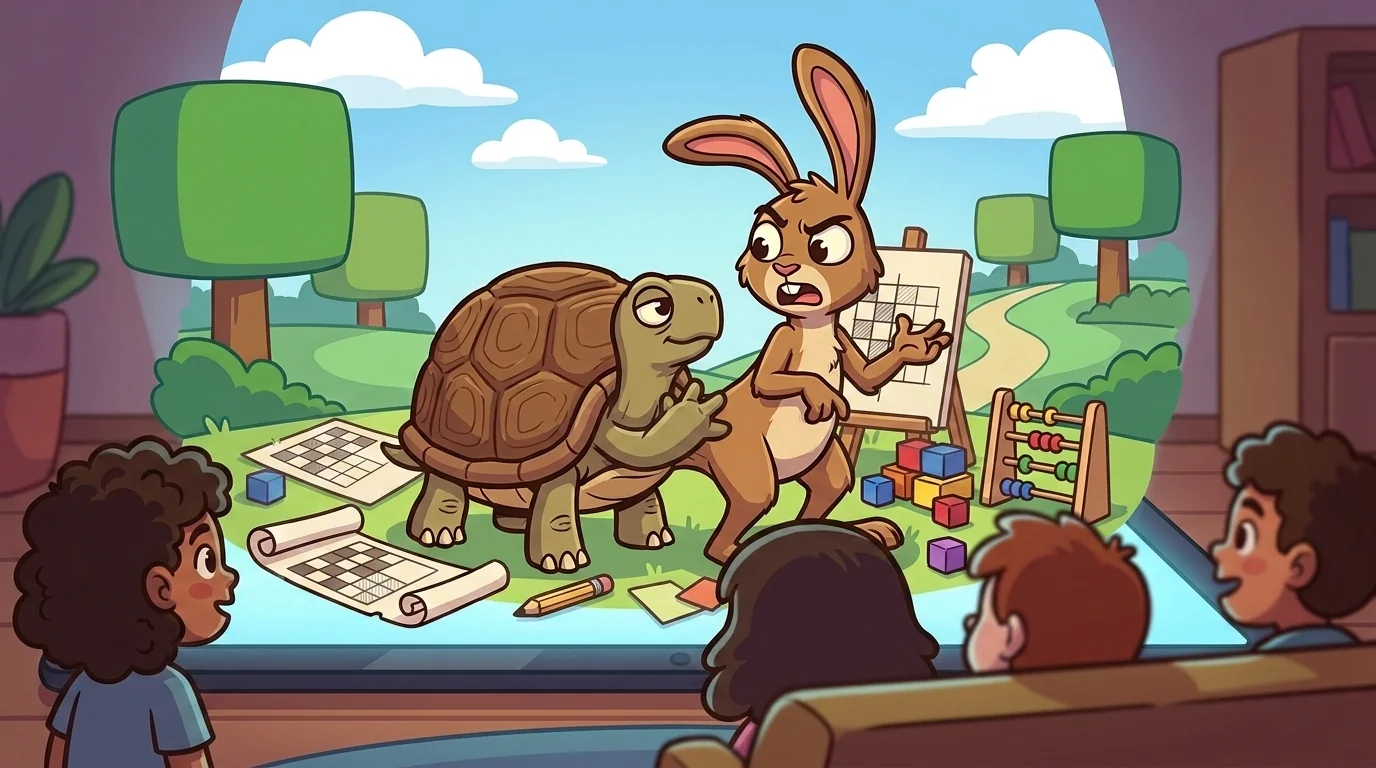
He faded back into the screen.
The four kids argued for almost ten minutes about which suggestion to use.
Bex liked the Tortoise suggestion. She wanted to draw the whole board. She felt like she would understand it better if she did.
Mira liked the Hare suggestion. She thought drawing sixty-four squares was a waste of an afternoon when half-symmetry could cut the work in half.
Their friend Sam liked neither — Sam wanted to try a different approach altogether, something about counting the squares that survived the first rule before applying the rest.
Their friend Owen liked all three at once. Owen kept saying things like "Maybe we could do some of each?"
The argument got heated. Sam at one point said, "This is taking forever and we haven't even started." Mira said, "We HAVE started! Arguing IS starting!" Bex said, "Can we please just draw the board?" and Owen said, "What if we drew half the board because of the symmetry thing?" and there was a small silence and then everyone said "oh."
That was, in the end, what they did. They drew half the board because of the symmetry, and they applied the rules to that half, and they used what they found to figure out the other half without drawing it. The answer surprised them. The answer was 32. Or rather, it was 32 if you counted one way and 31 if you counted another way, and they spent five more minutes figuring out which of those was right.
When they finished, Tortoise Hare reappeared.
"You combined both suggestions," he said, in both voices. "That is what usually happens. The Tortoise wins for some of the work. The Hare wins for the rest. Neither voice wins alone, because neither is wrong, and neither is fully right."
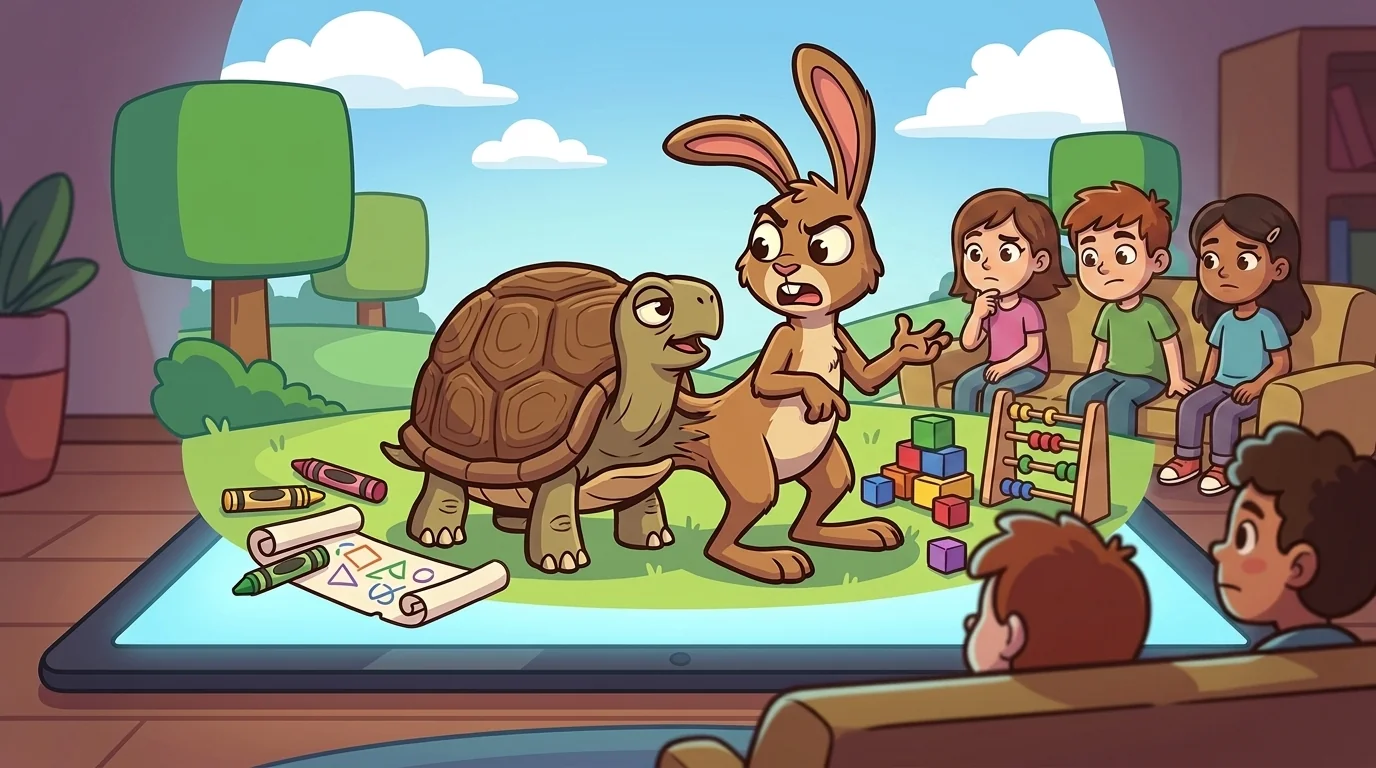
"Why do you argue with yourself?" Bex asked.
Tortoise Hare considered.
"Because most problems have a Tortoise part and a Hare part," he said. "If you only listen to one voice, you do half the problem well and half the problem badly. The arguing isn't a bug. The arguing is the work. The arguing is how a mind that wants to solve hard things has to be put together."
He paused.
"Also," he added, "it is much more fun to be two voices than one. I recommend it."
He faded again.
The kids looked at each other.
"He's weird," Sam said.
"He's right," Bex said.
"Both," Mira said.
Owen just nodded.
The MathCircle ensemble
Tortoise Hare is part of MathCircle's distributed-narrative cast. Each character embodies a different curricular primitive; together they teach the full subject.
-

Circle Circe
Meta-host who steps back to let kids talk to each other
-

Echo Edie
Listener-restater; social-fabric weaver
-

Patty Patient
Wait-time character; gentle anti-pressure presence
-
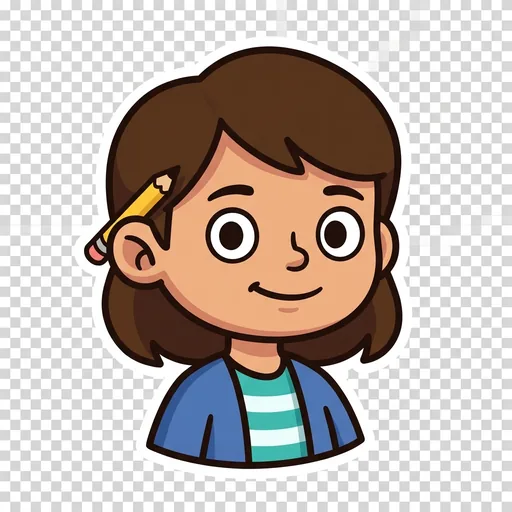
Tess Try-Small
Specializing — when a problem's too big, try the smallest version first
-
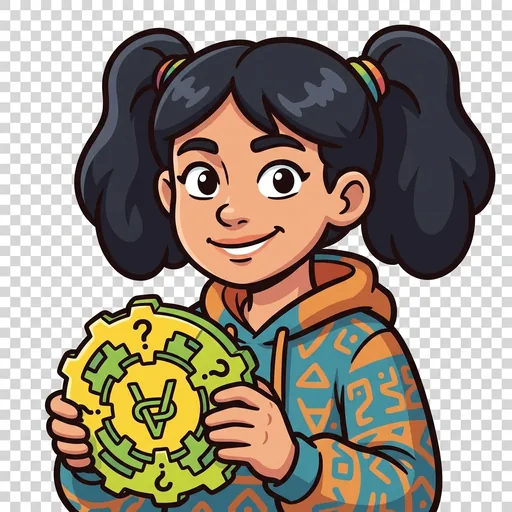
Gemma General
Generalizing — turning a pattern from a few cases into a rule for all of them
-

Hattie Hunch
Conjecturing — daring to guess boldly, then testing the guess honestly
-
Reva Reverse
Working backwards — starting from the goal and reasoning back to the start
-

Wendy Wonder
Notice-and-wonder — slowing down to observe and ask before rushing to solve
-

Cass Check
Sense-checking — asking whether an answer actually makes sense before trusting it