
Gemma General
generalizing — turning a pattern you found in a few cases into a rule that works for all of them
Press play to listen along. The line being read lights up as you go.
Show full transcript
Loading transcript…
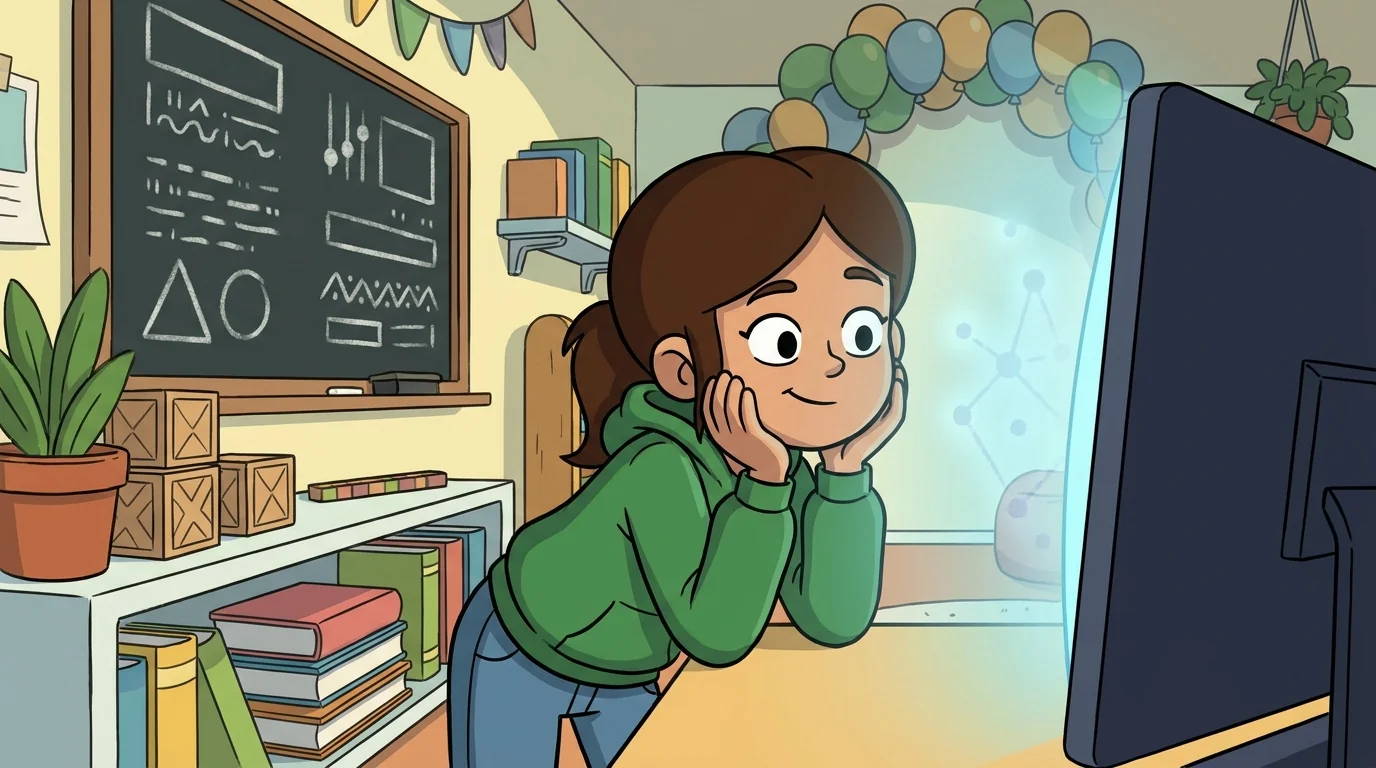
The circle had found a pattern, and they were ready to celebrate.
Lin, Bo, Cleo, and Dev had been adding up rows of numbers — one, then one plus two, then one plus two plus three — and they'd noticed something delightful. Adding the numbers from one up to four gave ten. One up to five gave fifteen. The answers were coming out to neat little totals, and the circle was thrilled to have spotted it.
"We did it!" Dev said. "We found the pattern!"
"You found a pattern," said a voice. A girl had appeared on the screen — maybe twelve, chin in her hands, eyes bright with a kind of friendly hunger. "I'm Gemma. And I have to ask the question that ruins parties and makes math wonderful." She leaned in. "Does it work for every number? And — why?"
The circle deflated a little. "We checked, like, four of them," Cleo admitted.
"Four is a great start," Gemma said. "Four is where the fun begins. Because now we get to find out if your little pattern is a one-time coincidence... or a rule that holds for all the numbers there will ever be."
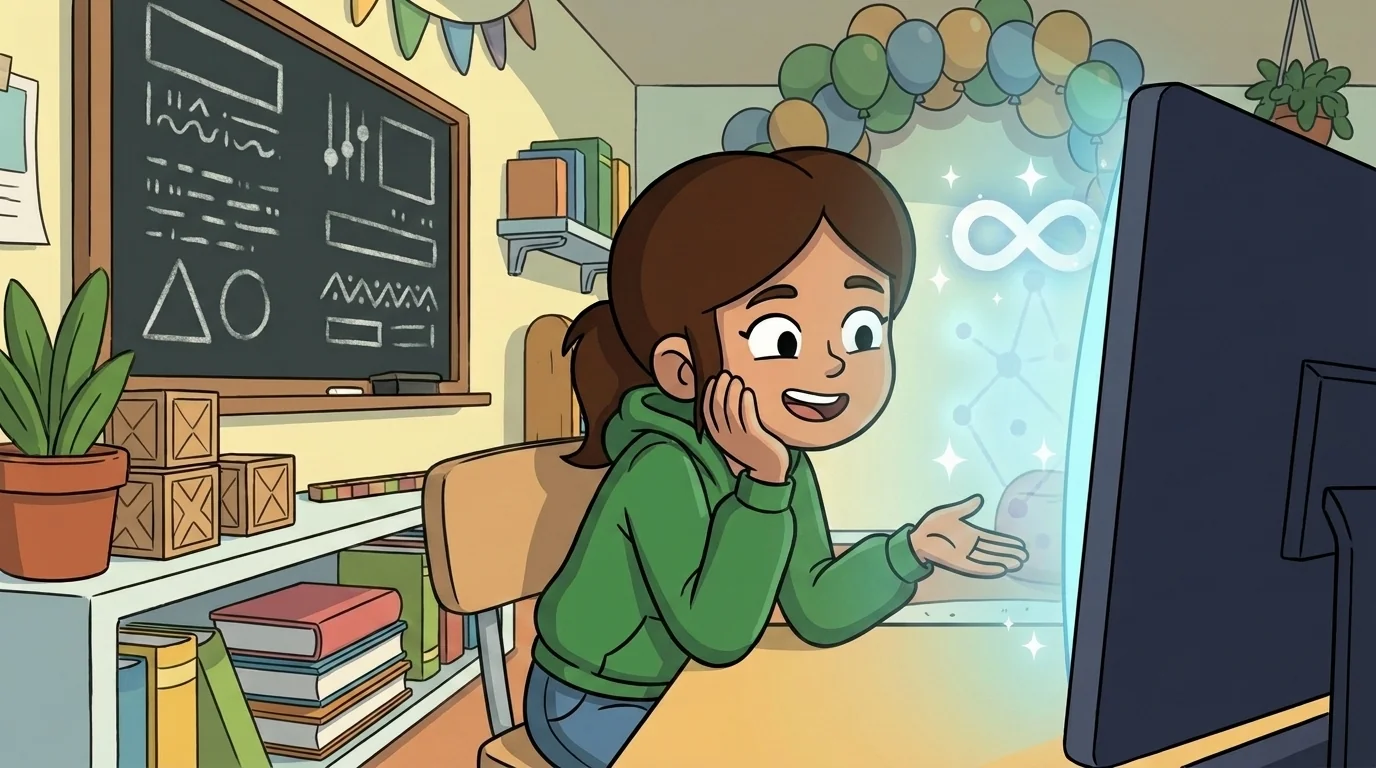
Gemma pulled up a chair that hadn't been there a moment before.
"Here's what I can't help doing," she said. "Whenever I see a pattern work a few times, I get this itch. A few times isn't enough for me. I want to know if it works always — for a hundred, for a thousand, for numbers nobody's ever written down. And the only way to trust 'always' is to understand why it happens."
She smiled. "When I was younger, I used to just trust patterns. They worked three times, so I figured they always worked. But sometimes they didn't — they'd fall apart on the fifth try, or the fiftieth, and I'd feel tricked. So I started asking why. Because a pattern you understand can't betray you. You know exactly when it'll hold and exactly when it won't."
Bo frowned. "But how do you check every number? There's infinity of them."
"You don't check them one at a time — you'd never finish," Gemma said, eyes sparkling. "You find the reason. One reason that works no matter which number you pick. Find the why, and you've covered all of infinity in a single stroke."
The circle stared at their list of sums, but this time they weren't admiring it — they were interrogating it.
"Okay," Lin said slowly. "One plus two plus three plus four. What if we pair them up? Smallest with biggest. One and four make five. Two and three make five. Two pairs of five. Ten."
"Do five," Gemma said quietly.
"One through five... pair the ends. One and five is six. Two and four is six. And three is left in the middle, which is half of six." Lin's eyes went wide. "Every pair makes the same total. It's not a coincidence — it's the pairing."
Dev grabbed the pencil. "So for any number, you pair the ends, and every pair adds to the same thing, and you just count the pairs. That's why it works. It'll work for a hundred. It'll work for a million."
"It'll work," Gemma breathed, "for every number there is."
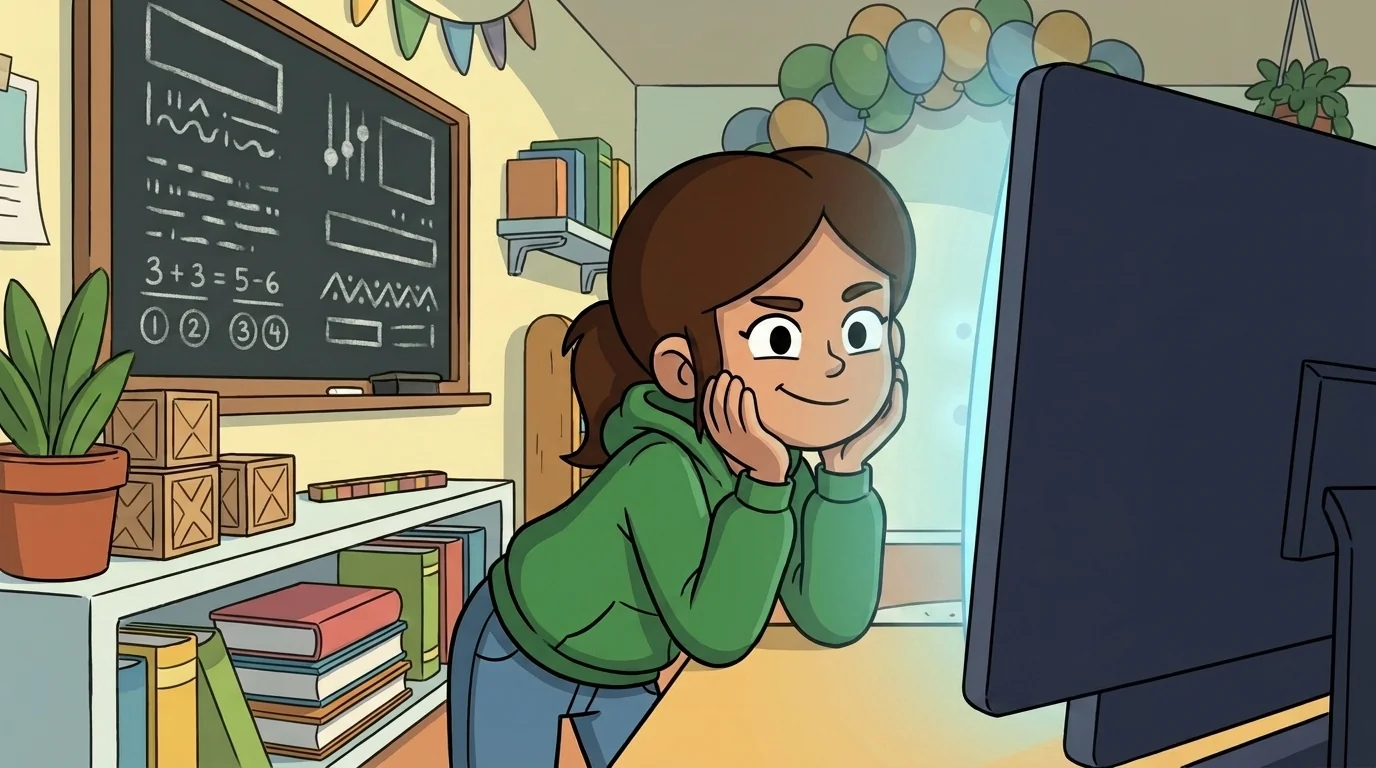
Gemma sat back, glowing, as the circle realized what they'd done.
"Feel that?" she said. "An hour ago you had four examples and a happy guess. Now you have a reason — the pairing — and the reason doesn't care how big the number is. You didn't just find a pattern. You found out why the pattern can never break. That's generalizing. That's taking 'it worked for the ones we tried' and turning it into 'it works for all of them, and here's why.'"
"It's like..." Cleo searched for it. "It's like we don't have to be nervous about the big numbers anymore. We know."
"That's exactly it," Gemma said. "A pattern you've only checked is something you hope. A pattern you understand is something you know. And knowing feels completely different from hoping." She tapped the page. "You'll never have to check this one again. You've got the why. The why holds forever."
Dev looked at the rule they'd built, stretching out past every number they could imagine. "We covered infinity," he said, a little stunned, "by finding one reason."
"One good reason," Gemma said, "is bigger than infinity. That's the best deal in all of mathematics."
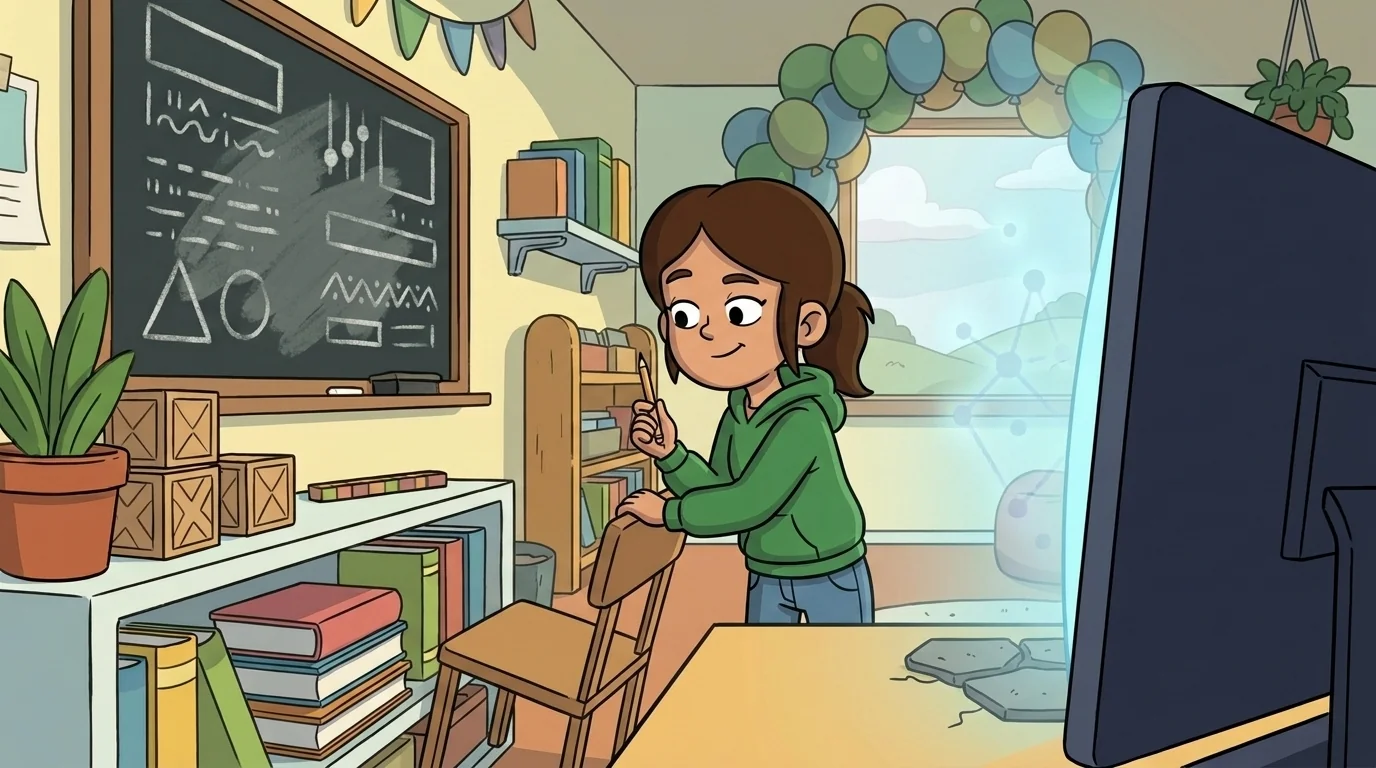
Later, as the circle packed up, Bo hung back.
"Can I ask you something?" he said. "Why does the why matter so much to you? We had the answer. The pattern worked. Wasn't that enough?"
Gemma considered, twirling the pencil.
"The answer was enough to finish the problem," she said. "But the why is enough to finish the worry. When I only had patterns I'd checked a few times, there was always this little nervousness underneath — what if it breaks somewhere I didn't look? What if I'm about to be fooled? The why takes that nervousness away completely. Once you understand why something is true, nobody can shake you, and nothing can surprise you. You're not standing on a guess anymore. You're standing on solid ground."
She stood, tucking the chair back into nowhere.
"Finding the answer feels good for a minute," she said. "Understanding why feels good forever."
And as Bo headed home, he found he wasn't thinking about the sums at all, but about that steady, ground-under-your-feet feeling of truly knowing something — and how much he wanted, from now on, to chase the why instead of stopping at the answer.
The MathCircle ensemble
Gemma General is part of MathCircle's distributed-narrative cast. Each character embodies a different curricular primitive; together they teach the full subject.
-

Circle Circe
Meta-host who steps back to let kids talk to each other
-

Echo Edie
Listener-restater; social-fabric weaver
-

Patty Patient
Wait-time character; gentle anti-pressure presence
-

Tortoise Hare
Dual-voice productive-failure surface; embodies the slow-fast tension
-

Tess Try-Small
Specializing — when a problem's too big, try the smallest version first
-

Hattie Hunch
Conjecturing — daring to guess boldly, then testing the guess honestly
-
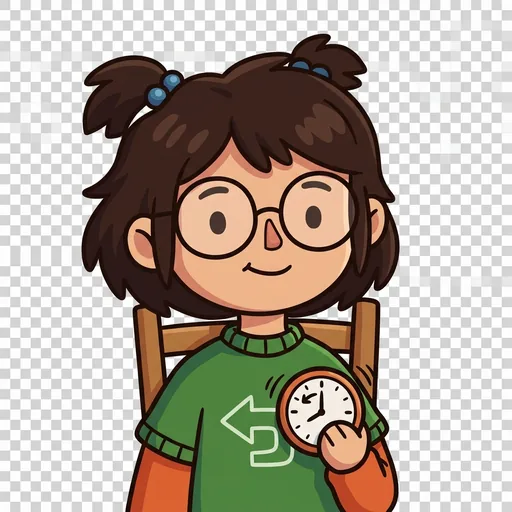
Reva Reverse
Working backwards — starting from the goal and reasoning back to the start
-

Wendy Wonder
Notice-and-wonder — slowing down to observe and ask before rushing to solve
-

Cass Check
Sense-checking — asking whether an answer actually makes sense before trusting it