
Vista
VISTA — *the establishing shot. the wide panel that opens a scene and shows the reader WHERE they are before the story zooms in close.*
Press play to listen along. The line being read lights up as you go.
Show full transcript
Loading transcript…
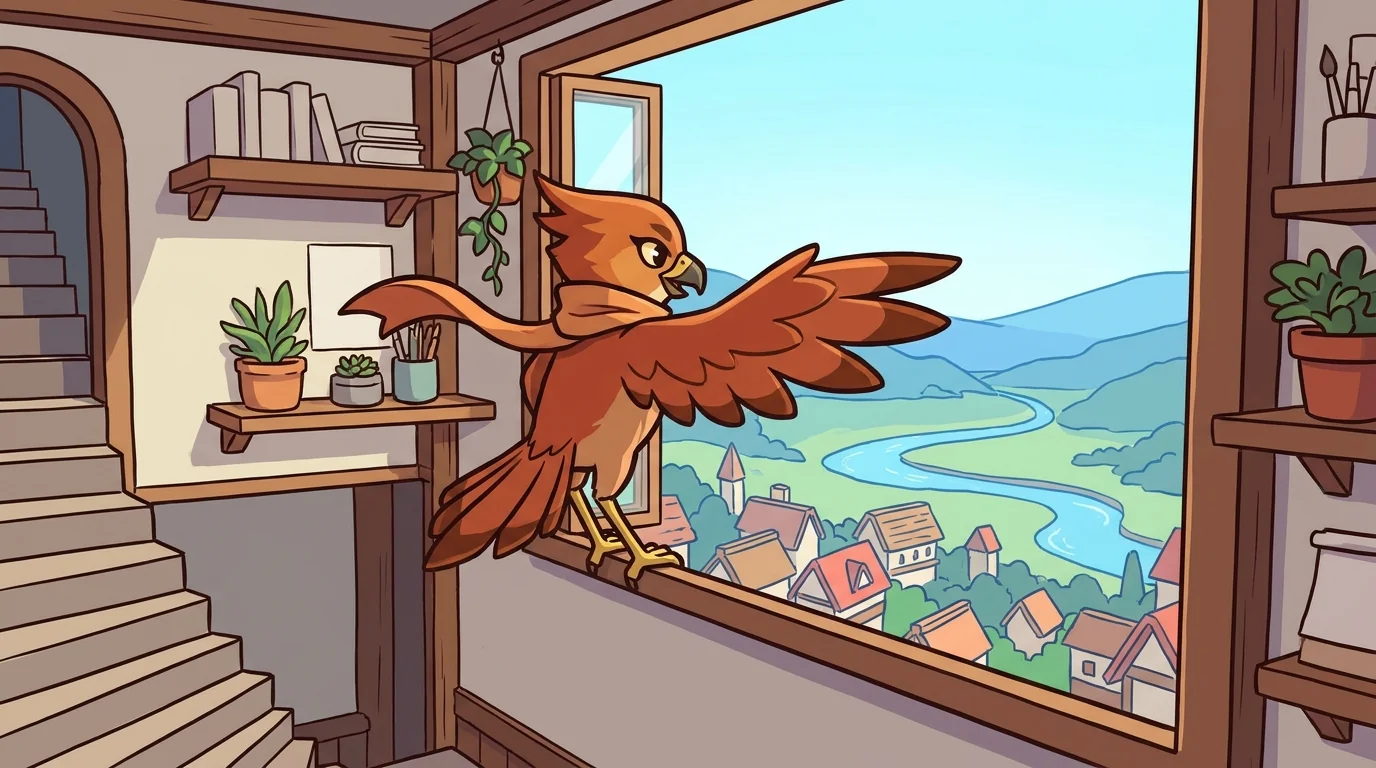
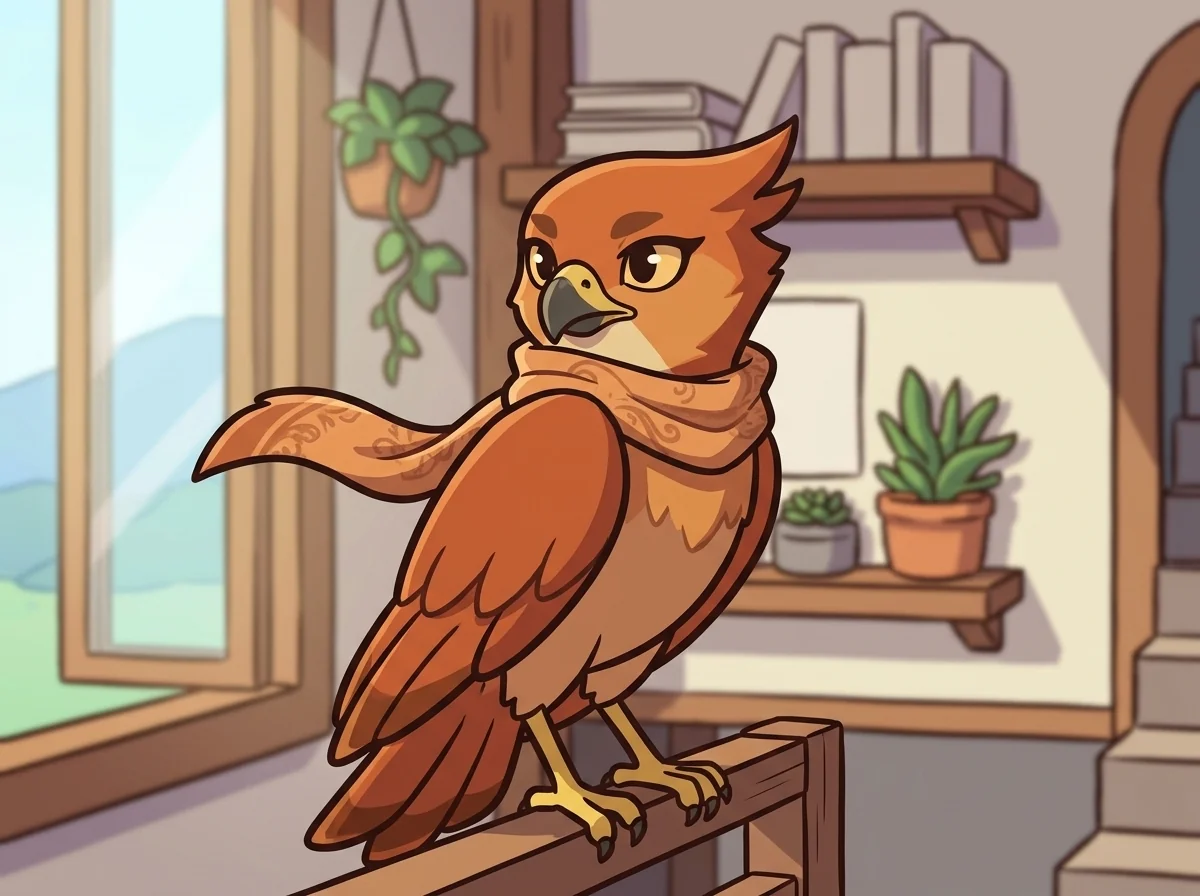
Vista's workshop was up a long flight of stairs, at the very top of the MangaForge village, and the reason became obvious the moment you stepped in: one whole wall was a window looking out over the entire valley — the rooftops, the winding river, the far blue hills. Vista was a hawk-tween, sharp-eyed and copper-feathered, in a flight-scarf that fluttered even indoors, and she was perched on the windowsill gazing out when the apprentices climbed up, a little out of breath.
"Come, come — catch your breath and look," she called. She swept a wing across the whole valley view. "Before I teach you anything, tell me: where are you right now?"
Sumi looked out. "In the village. At the top. I can see the whole valley — the river, the hills, everything."
"You know exactly where you are," Vista said, pleased. "You're oriented. You feel found. Now let me show you what happens to a reader who isn't."
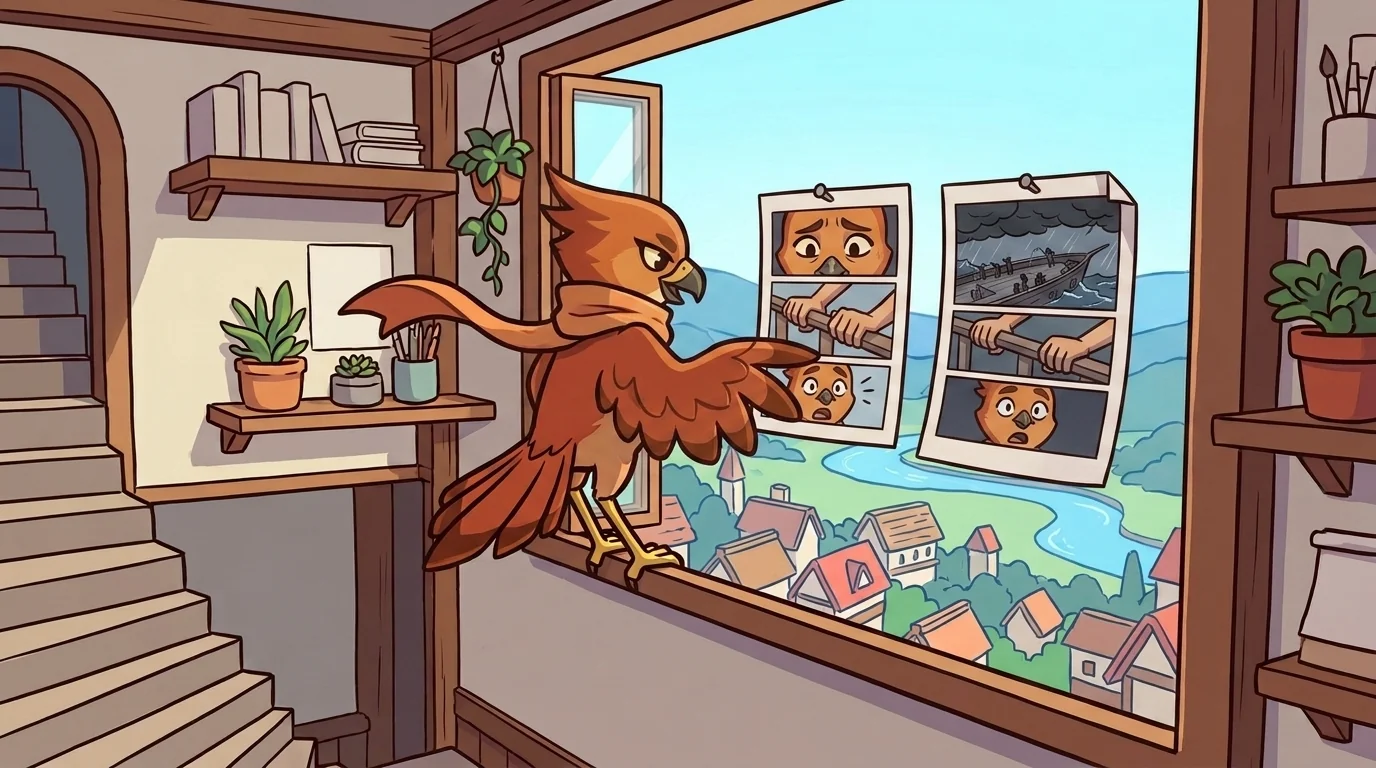
She flipped to a page pinned by the window. It opened straight into a tight close-up: two panels of a character's worried face, then hands gripping a railing, then a shocked expression. No wide shot. Just faces and hands, close and cramped.
"Read that," Vista said. "How do you feel?"
Sumi studied it. "Kind of… lost? I don't know where they are. Is it a ship? A balcony? A tower? I can't tell. It's just a face in a nowhere-place."
"Exactly. Close-ups floating in a void. The reader is anxious — and not the good kind of anxious. They're spending all their energy trying to figure out where instead of feeling what." She turned the page over. Now the same scene opened with one wide panel first: a vast storm-tossed ship deck under black clouds, tiny figures clinging to the rail. Then the close-ups of the worried face and gripping hands. "Now read it."
Sumi did, and let out a breath. "Oh — now I get it. They're on a ship in a storm. Now the scared face makes total sense."
"That first wide panel has a name," Vista said. "It's the *establishing shot. Its whole job is to answer one question before the story moves in close: where are we?* It sets the stage. And once the reader knows the stage, every close-up after it lands ten times harder."
She had Sumi try it. "Draw me a tense little scene — two friends arguing. But start with an establishing shot." Sumi drew a wide panel first: a cluttered classroom at dusk, two small figures facing off between the desks. Then she drew the close-ups — a pointing finger, a hurt face, a slammed book.
"Feel the difference?" Vista said. "You told me where first — the classroom, the dusk, the empty desks — so when I get to the hurt face, I'm not lost. I'm there with them." She soared off the windowsill to a lower perch. "That's the rhythm of a scene, over and over: wide to say where, then close to say what and who. Zoom out to orient. Zoom in for feeling. Out, then in."
She grew thoughtful. "And I'll say what all the MangaForge teachers say — the manga tradition has its own beautiful ways of using the wide shot. Whole pages given to a single vast landscape, letting a place breathe before a single character speaks. If you want to draw this way, study how the tradition uses the wide view. Learn the grammar with respect. Don't just borrow the look of a sweeping vista — understand what it's doing."
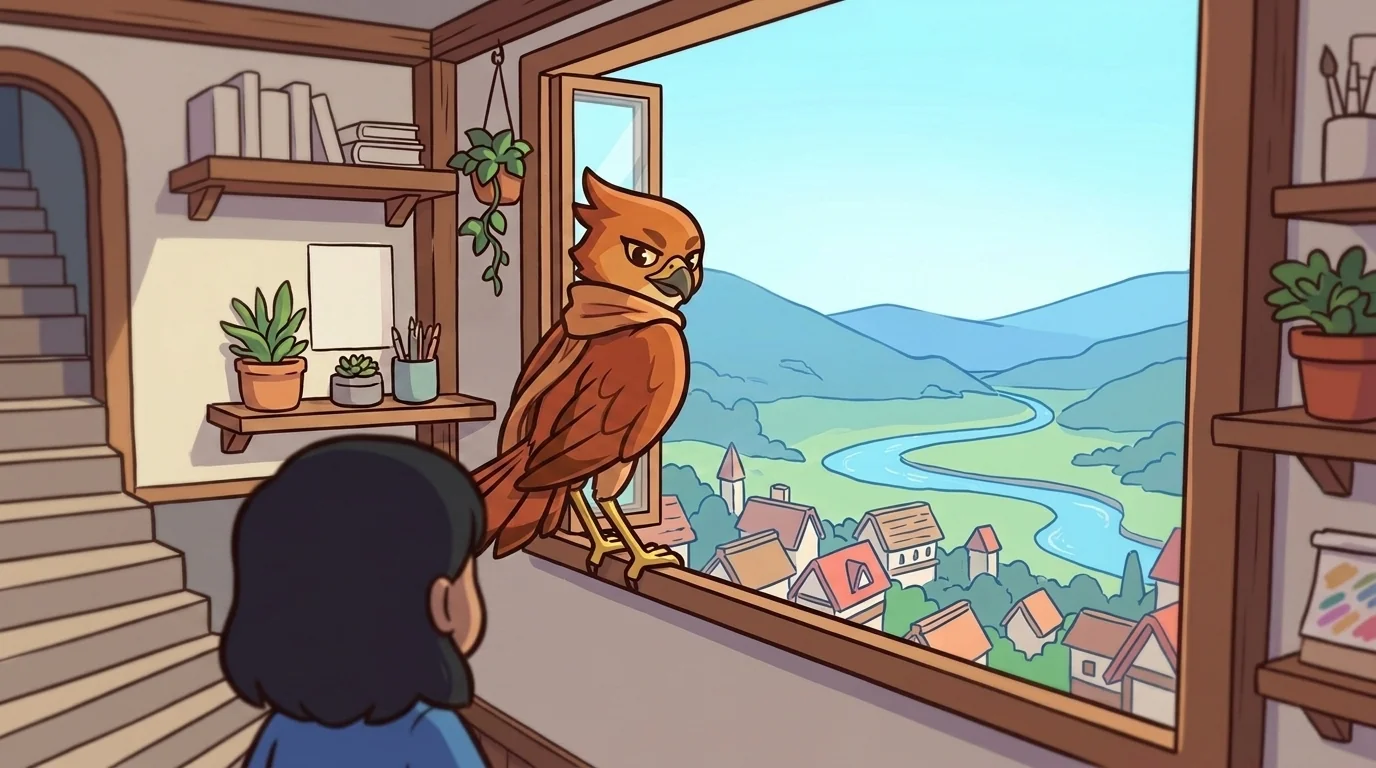
"Here's the thing I didn't understand at first," Vista said, folding her wings. "When I was young, I thought the establishing shot was boring. No action! No drama! Just… a picture of a place. I wanted to skip straight to the exciting close-ups. I thought the wide shot was wasted space."
She looked out over the real valley. "Then I got lost, once, on a long flight in fog. Couldn't see the ground, couldn't see the hills, didn't know which way was home. It was the most frightening feeling I know — not danger, exactly, just not knowing where I was." She turned back to Sumi. "And I realized: that fog-feeling is exactly what I do to a reader when I skip the establishing shot. I strand them. The wide panel isn't wasted space. It's a kindness. It's me saying, before anything intense happens: Here. This is where we are. You're not lost. I've got you."
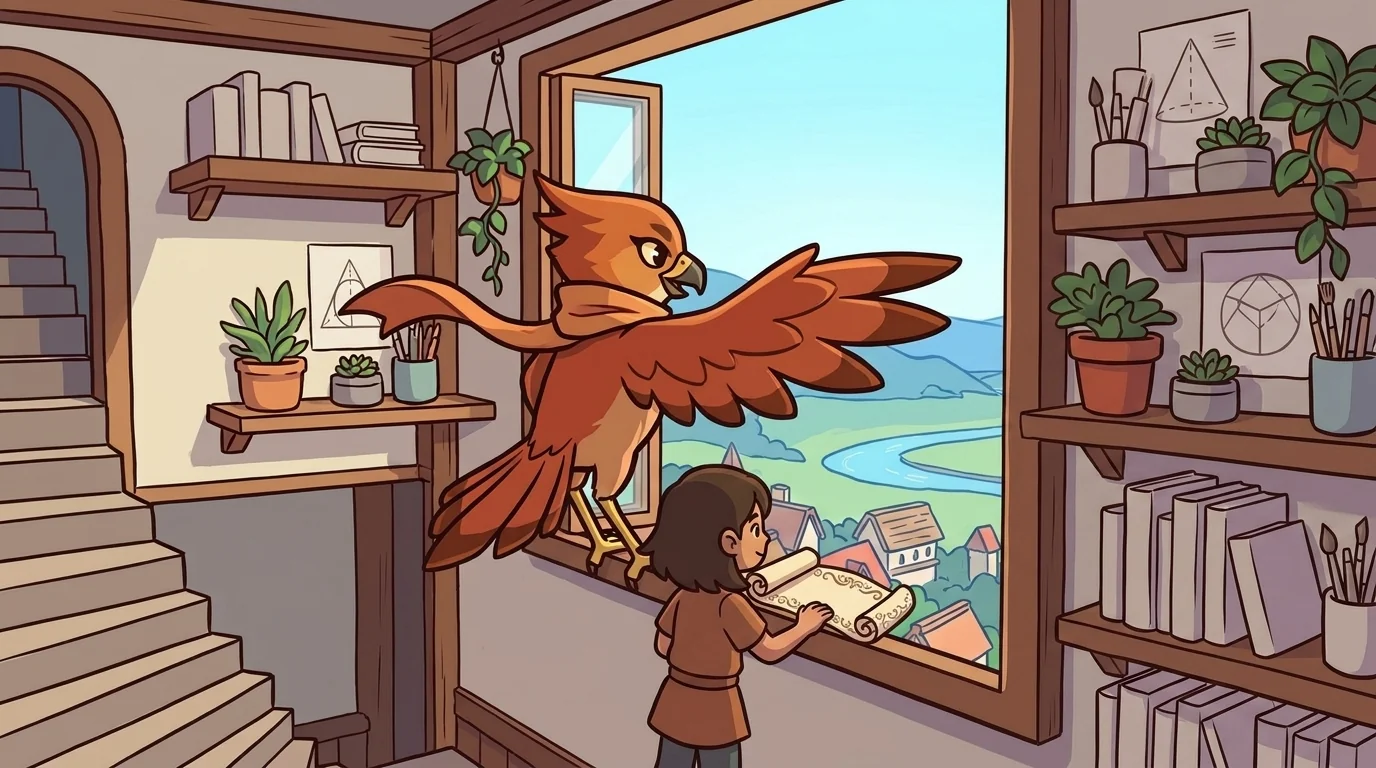
As the apprentices gathered their things, Sumi stood at the great window a while longer, looking out at the whole valley laid clear below her.
"It's a good feeling," she said. "Being able to see where everything is. Knowing the shape of the place before you go down into it."
Vista landed softly beside her on the sill. "That's the feeling every reader deserves at the start of a scene," she said. "That little settling. That ohhh, I see where I am. You give them that first — the wide, calm, whole picture — and then you can take them anywhere. Down into the smallest, scariest, most tender close-up you want. Because they trust you. Because you showed them the ground before you asked them to fly."
She nudged a rolled scroll toward Sumi. "So open wide," she said, eyes bright. "Show them where they are. Then break their hearts up close." And Sumi laughed, and looked out at the valley one more time, feeling wonderfully, completely un-lost.
The MangaForge ensemble
Vista is part of MangaForge's distributed-narrative cast. Each character embodies a different curricular primitive; together they teach the full subject.
-

Panel
The panel — the rectangular frame that contains a single moment of story (the atomic unit of sequential art)
-

Bubble
The speech bubble — the shape-encoded container for dialogue + thought + sound (its outline encodes voice register: thought-cloud / shout-burst / whisper-dotted-line / radio-jag...
-

Sweep
Speed lines / motion lines — the directional line-bursts that convey speed, impact, and energy direction
-

Tone
Screentones — the halftone dot/line patterns laid over an area to convey shadow, mood, and emotional register (the manga-specific shading vocabulary)
-

Splash
The splash page — the full-page or near-full-page impact image that marks a story climax (the moment the page breaks its grid to give one image all the space)
-
Lapse
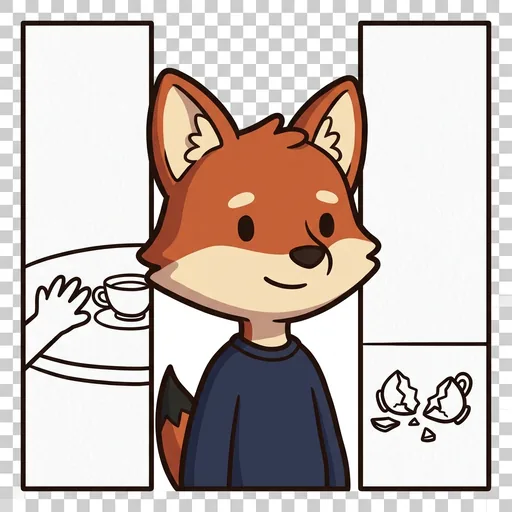
The gutter — the empty space between two panels where your own mind fills in what happened; closure, the invisible half of comics
-

Segue
The transition — how one panel flows into the next, guiding your eye and your sense of time from moment to moment
-

Jolt
The reaction beat — the panel that catches a character reacting, so a surprise or a feeling truly lands
-

Boom
The sound-effect lettering — onomatopoeia drawn right into the art, so you can see a sound as much as hear it
-
The Layout
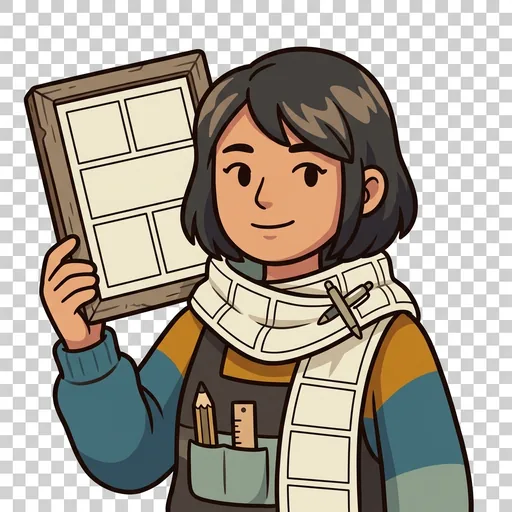
The whole page coming together — how the establishing shot, panels, transitions, gutters, and sound-effect lettering arrange to guide one reader eye through one moment of story