Panel
THE PANEL — *the rectangular frame containing one moment of story. atomic unit of sequential art.*
Loading audio…
Press play to listen along. The line being read lights up as you go.
Show full transcript
Loading transcript…
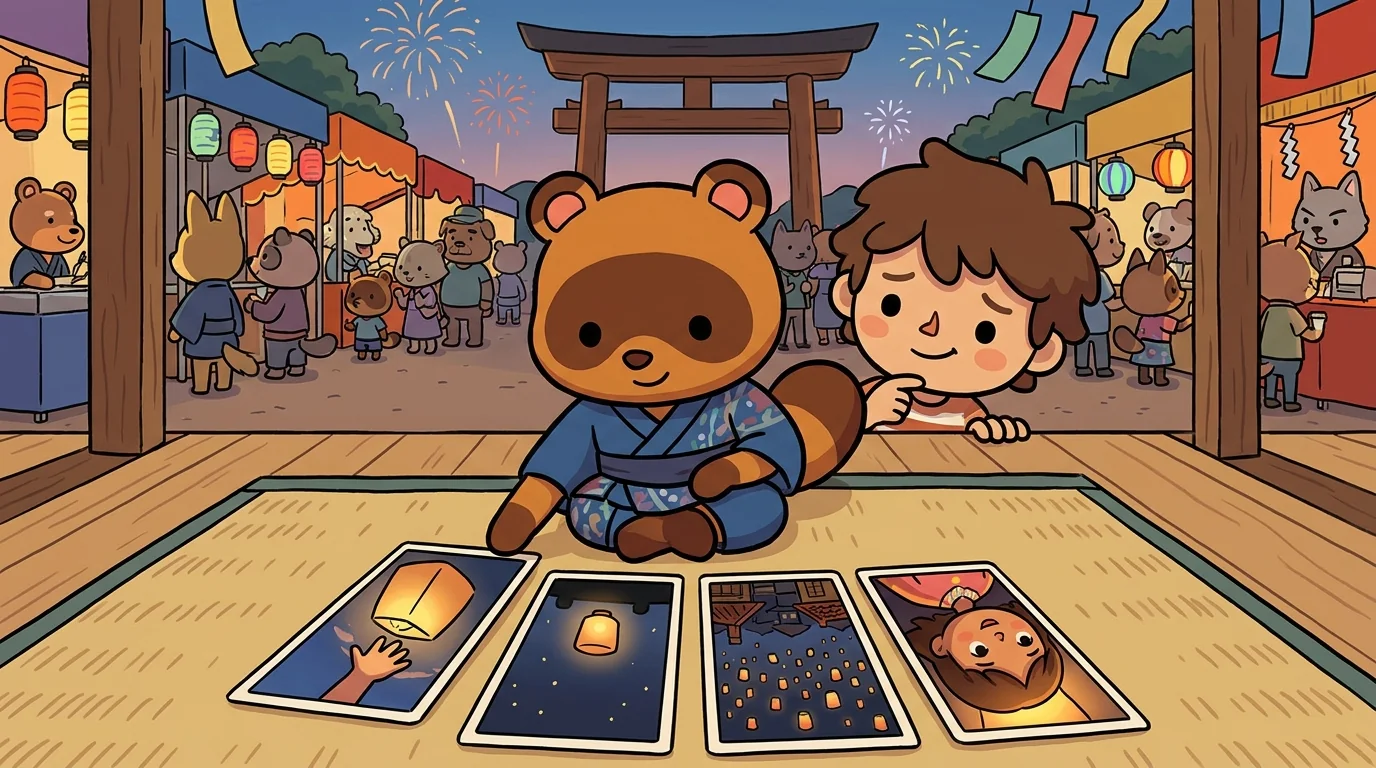
The morning MangaForge held its village festival, everyone else was drawing the whole thing at once — the lanterns, the crowd, the dancers, the fireworks — and getting hopelessly tangled. Panel, a small round-cheeked tanuki-tween in a work-yukata, sat cross-legged on a mat with a stack of blank cards and drew almost nothing.
She laid one card down. On it: a single hand, lifting a paper lantern toward a dark sky. That was all.
"That's not the festival," said a boy peering over her shoulder. "The festival is huge. Where's the crowd? The music? The fireworks?"
"They're coming," Panel said. "One at a time." She laid a second card beside the first. On it: the lantern, now glowing, small against the night. A third card: a wide low shape — rooftops, and hundreds of tiny lanterns rising together. A fourth, tall and narrow: one girl's upturned face, lit gold from below, watching them go.
The boy went quiet. His eyes moved from card to card — hand, glow, sky full of light, the watching face — and somewhere in that little row of rectangles the whole festival happened, bigger in his head than any single crowded drawing could have been.
"See," Panel said gently. "You didn't need all of it shoved into one picture. You needed one moment per frame. The rectangle holds the story. Your eye does the rest — it walks from frame to frame, and the walking is the festival."
She squared the cards into a neat stack and tapped them. "Everybody wants to draw the whole roar at once. But a moment can only be held if you put a frame around it. One rectangle. One heartbeat of story. Then the next."
Panel had learned that with her own two paws, back when she was small and could not sit still.
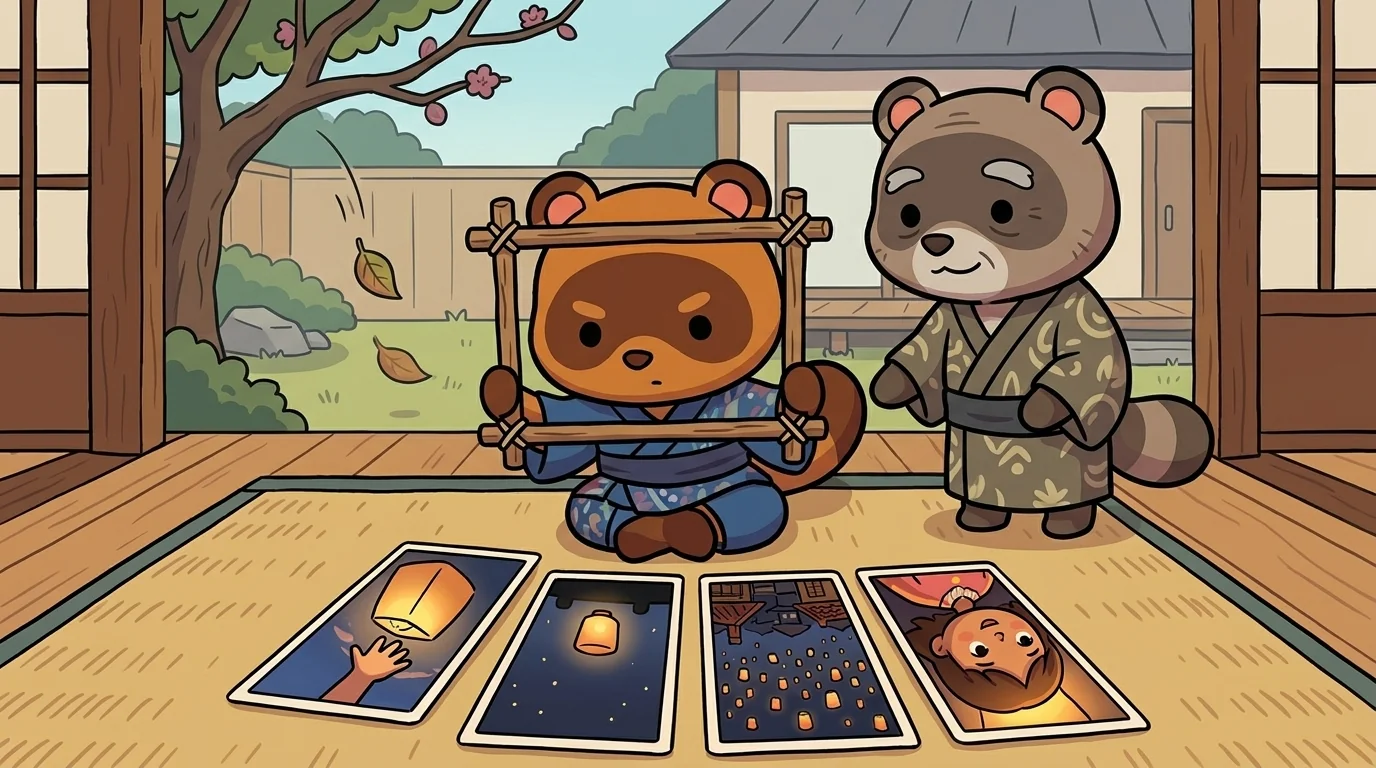
Her family were frame-keepers — a long line of tanuki who, the elders said, had been mischievous and scattered until generations of careful storytelling settled them. Young Panel was the scattered kind. When her grandfather asked her to tell about her day, it came out as one enormous breathless run-on: and-then-and-then-and-then, everything mashed together, nothing landing.
"Slow down, little raccoon-dog," her grandfather said, and put an empty wooden frame in her paws — just four sticks lashed into a rectangle. "Hold it up. Look at only what fits inside."
She raised the frame and squinted through it at the yard. Suddenly she couldn't see everything. She could see one thing — a single leaf, spinning down from the plum tree.
"Now the story is just that leaf," her grandfather said. "One moment. When you're ready — move the frame."
She moved it. The leaf touching the ground. Moved it again. Her own foot, about to step on it. And for the first time her scattered, too-much-at-once feeling went still and clear, like a pond after the wind stops. The world hadn't gotten smaller. It had gotten holdable.
She walked to MangaForge at twelve, because a place that studied the drawn story ought to understand the frame that held it.
Sensei Sora, the mentor who ran the studio, met her at the gate and asked only one thing. "What is a panel?"
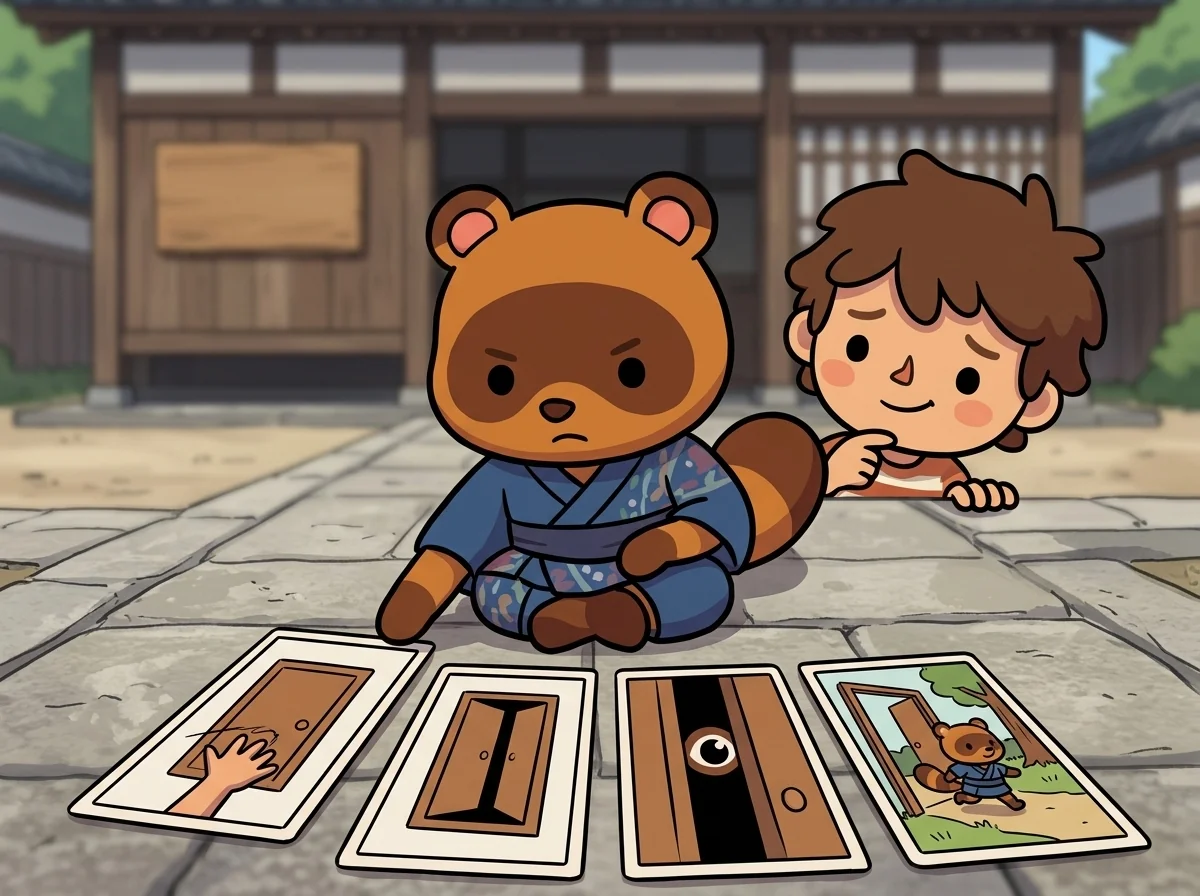
Panel didn't answer with a speech. She knelt, took four blank cards, and laid them in a row on the stone. On the first she sketched a closed door. On the second, the door open a crack. On the third, an eye in the gap, looking out. On the fourth, the door flung wide and a small figure running through.
"It's one moment," she said, resting a paw on each card in turn. "Held in a rectangle. And the space my eye jumps across to reach the next one — that's where the door actually opens. I only drew four moments. But you saw the whole opening happen."
Sensei Sora looked at the little row of cards for a long moment, then at Panel. "You read your own drawings the way a stranger would," she said. "Most beginners can't. You belong here."
Panel's workshop was the quietest in the village, because it was mostly about knowing what not to cram in.
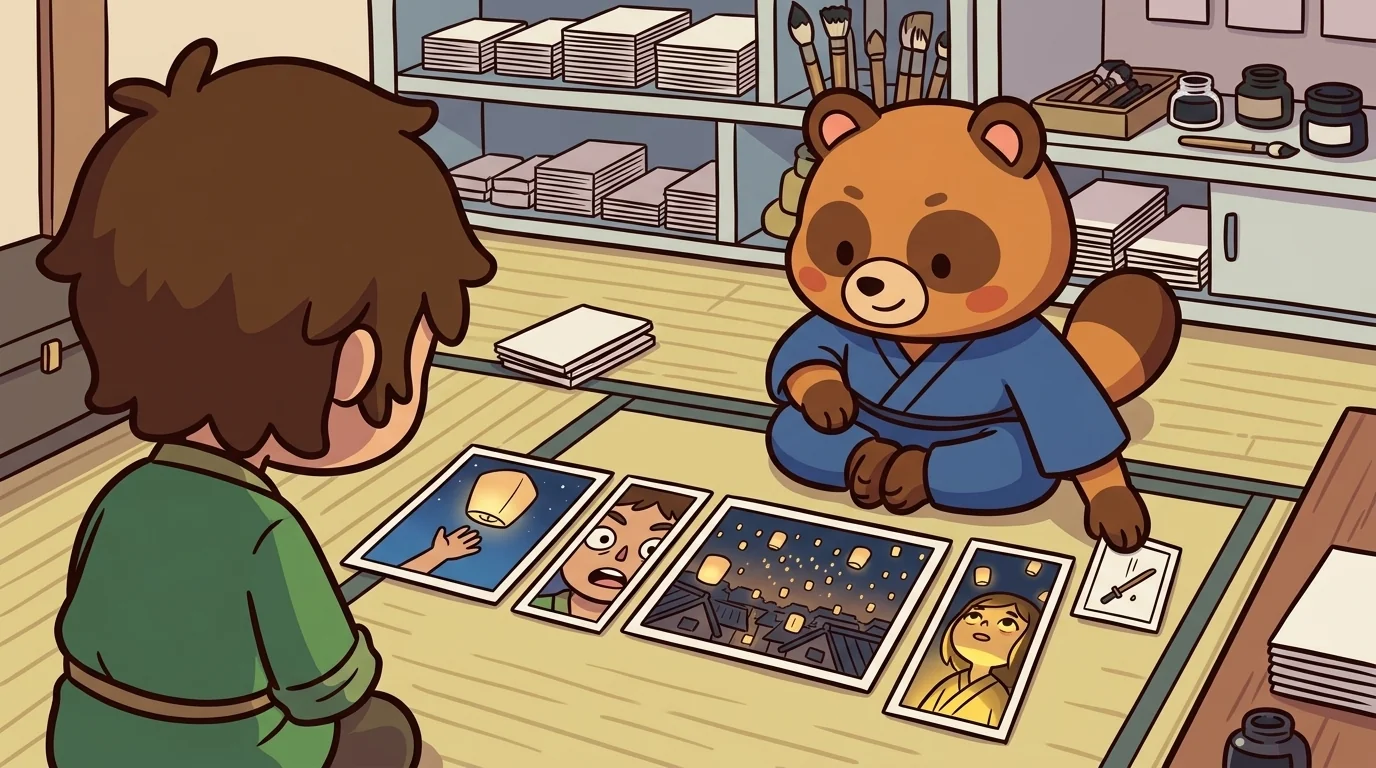
An apprentice named Toma slumped in one afternoon with a page so crowded it made your eyes hurt — a fight scene where he'd tried to draw every punch, kick, dodge, and shout in one giant frame. "It's supposed to be exciting," he said miserably, "and it just looks like a mess. I did so much work."
"You did," Panel agreed. "You did the work of six panels in one." She slid him a blank grid — six empty rectangles. "So let's give the work somewhere to live. Watch." She started at the top corner. "In Japanese manga we read this way — right to left, top to bottom. So the eye starts here. First frame: a fist, pulled back. Small panel — quick. Second frame, tall and narrow: the other fighter, seeing it come. Now a wide one across the middle — the punch landing. Wide means big, slow, important; the eye lingers." She drew fast, rough, sure. "Then a tiny frame: a dropped weapon. Then a bigger one, tilted on an angle — tilt means impact, danger, everything off-balance. Then last, down here, large and still: the winner standing over the loser, breathing."
Toma stared. His messy roar had become a row of clear moments, and reading them — quick, quick, slow, tiny, tilt, still — the fight had rhythm, like a drum.
"The panel shapes carry the feeling," Panel said. "A wide frame breathes. A tall one holds a face. A tilted one falls. Small ones snap past; big ones make you stop." She tapped the little gaps between his frames. "And here, the empty channels — your reader fills those with the parts you didn't draw. You don't have to show everything. You have to show the right moments, one to a rectangle, and trust the eye to walk between them."
Toma picked up his pen. "So I was drawing too much."
"You were being generous," Panel said, smiling. "Now be generous with your reader instead. Leave them room to walk in."

Later, when the studio had gone dim and everyone else had packed up, Toma came back with one last question, quieter now.
"When it's just four little boxes on a page," he said, "and most of it is white space and gaps — how does it end up feeling like more than a huge crowded drawing? It's less. But it feels like more."
Panel thought about the wooden frame in her grandfather's yard, and the leaf, and the too-much-at-once feeling going finally still.
"Because a moment can't be felt while it's rushing past," she said. "It has to be held. That's all a frame does — it stops one heartbeat of the story and says, stay here a second. Look. And when your eye moves to the next held moment, and the next, you're not watching a blur anymore. You're breathing with it." She squared her cards into their neat stack and set them down softly. "The whole festival, the whole fight, the whole climb up a tree — it all fits, one moment at a time, in something as small as a rectangle. Not because the rectangle is big. Because it makes you slow down enough to feel what's inside it."
Toma nodded, and Panel watched the tight, overwhelmed look leave his shoulders — the same quiet way, years ago, hers had left when the world first became holdable.
She didn't say the last part out loud, but she thought it, warm and certain: the loudest, most tangled moments are usually just the ones nobody's put a frame around yet. Hold one. Then the next. It all fits.
The MangaForge ensemble
Panel is part of MangaForge's distributed-narrative cast. Each character embodies a different curricular primitive; together they teach the full subject.
-

Bubble
The speech bubble — the shape-encoded container for dialogue + thought + sound (its outline encodes voice register: thought-cloud / shout-burst / whisper-dotted-line / radio-jag...
-

Sweep
Speed lines / motion lines — the directional line-bursts that convey speed, impact, and energy direction
-

Tone
Screentones — the halftone dot/line patterns laid over an area to convey shadow, mood, and emotional register (the manga-specific shading vocabulary)
-

Splash
The splash page — the full-page or near-full-page impact image that marks a story climax (the moment the page breaks its grid to give one image all the space)
-
Lapse
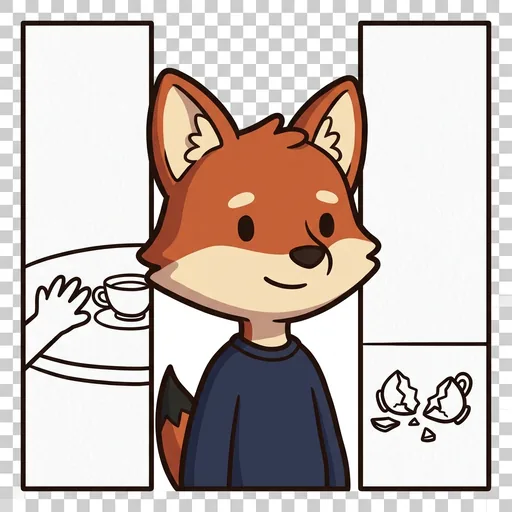
The gutter — the empty space between two panels where your own mind fills in what happened; closure, the invisible half of comics
-

Segue
The transition — how one panel flows into the next, guiding your eye and your sense of time from moment to moment
-

Vista
The establishing shot — the wide opening panel that shows you where you are before the story zooms in close
-

Jolt
The reaction beat — the panel that catches a character reacting, so a surprise or a feeling truly lands
-

Boom
The sound-effect lettering — onomatopoeia drawn right into the art, so you can see a sound as much as hear it
-
The Layout
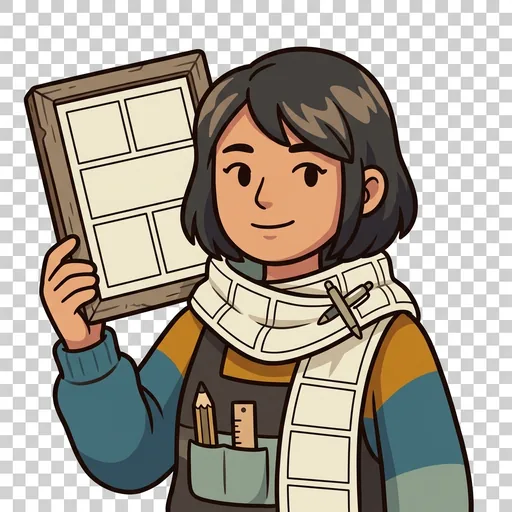
The whole page coming together — how the establishing shot, panels, transitions, gutters, and sound-effect lettering arrange to guide one reader eye through one moment of story