Splash
SPLASH PAGE — *the full-page impact image. the moment the page breaks its grid.*
Loading audio…
Press play to listen along. The line being read lights up as you go.
Show full transcript
Loading transcript…
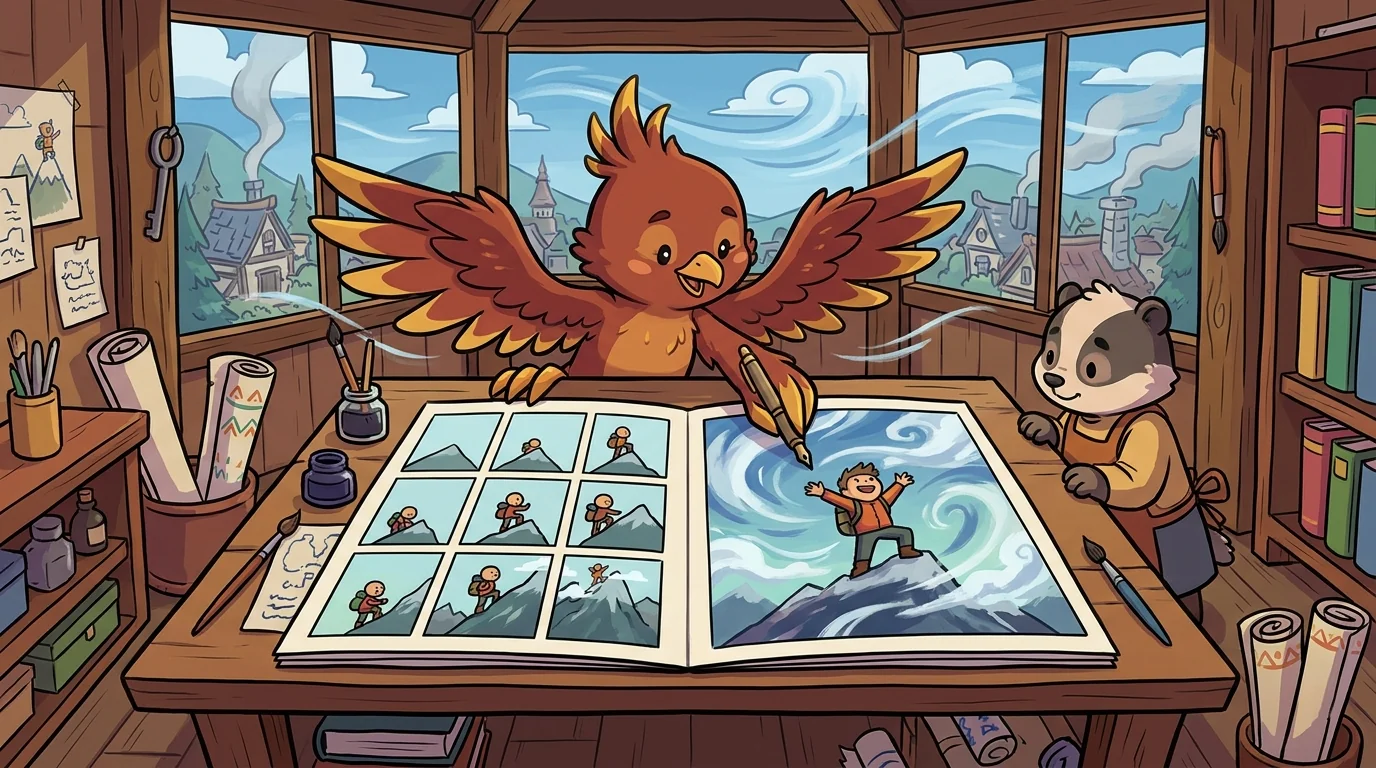
In the tall fire-tower at the edge of the MangaForge village, a small russet phoenix-tween named Splash was ruining a perfectly good page on purpose.
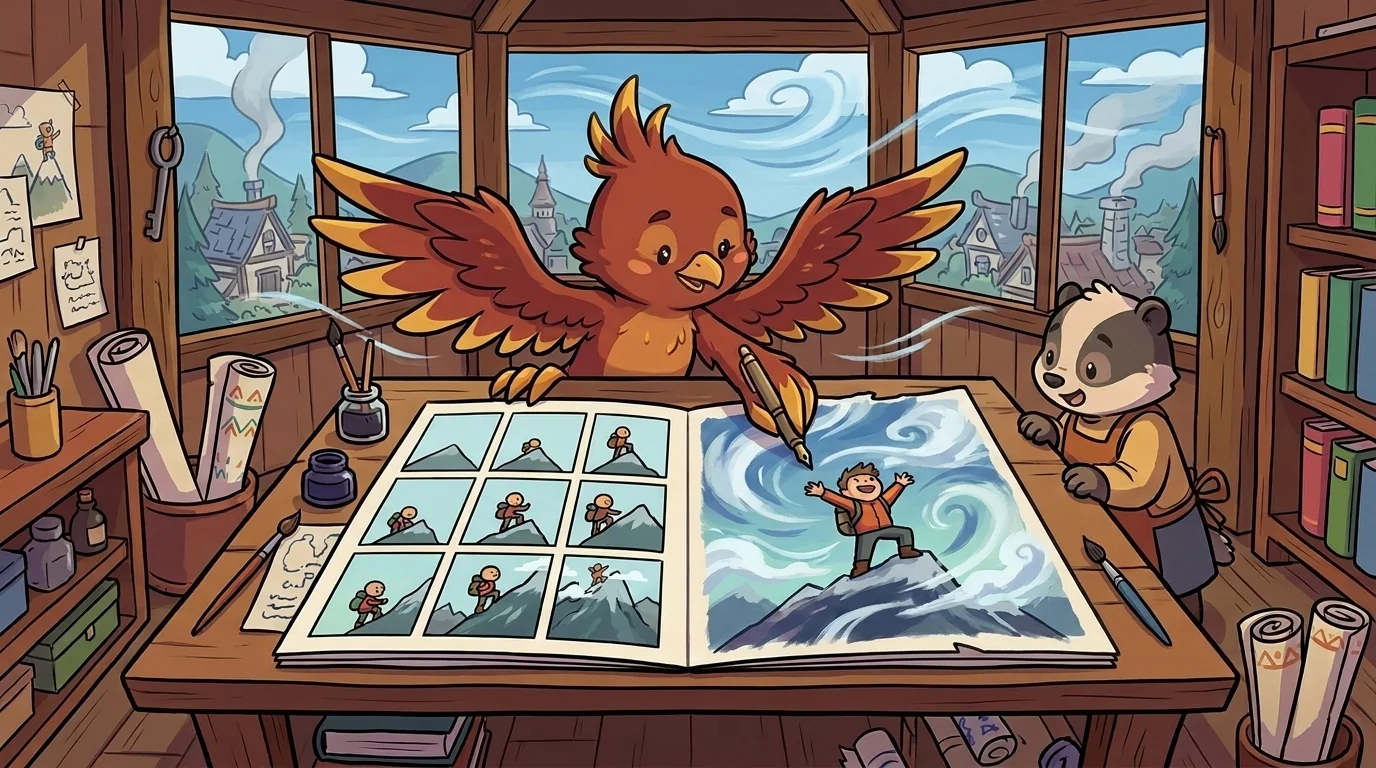
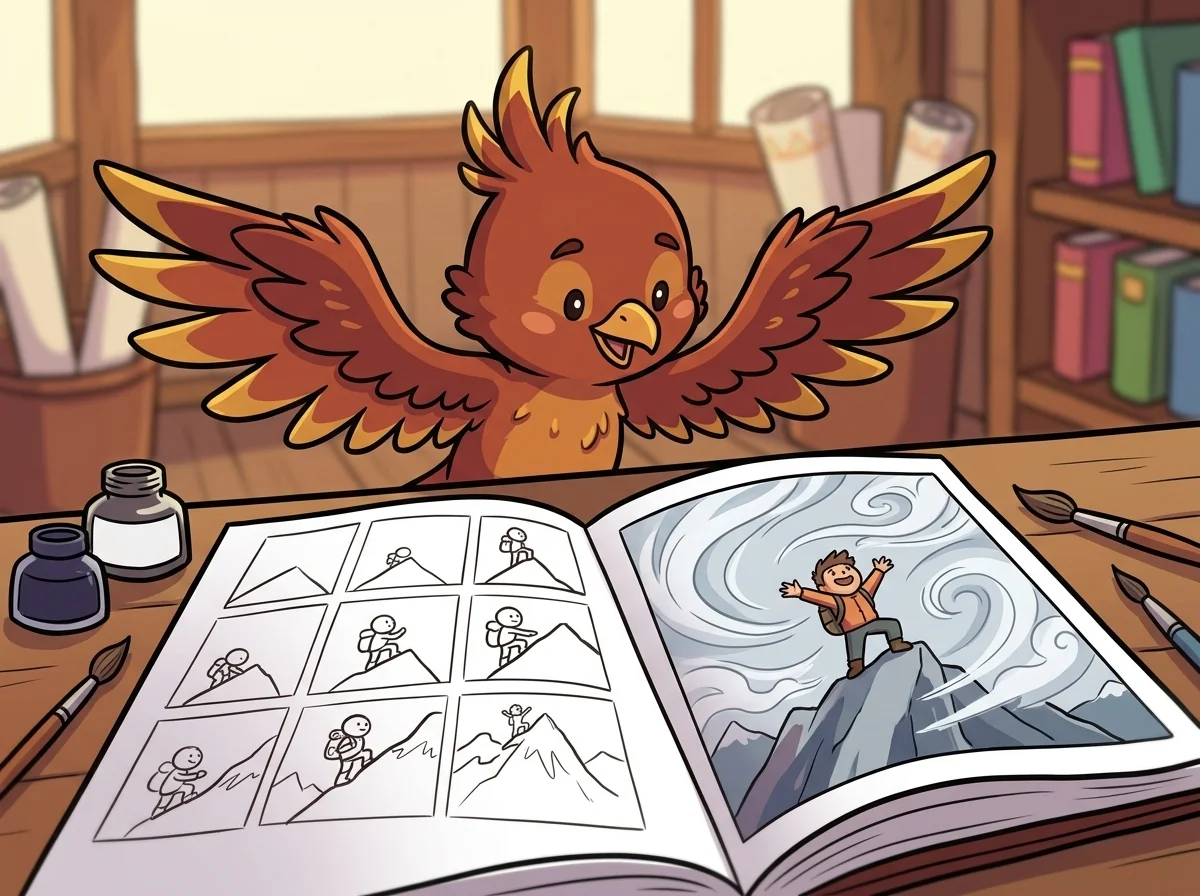
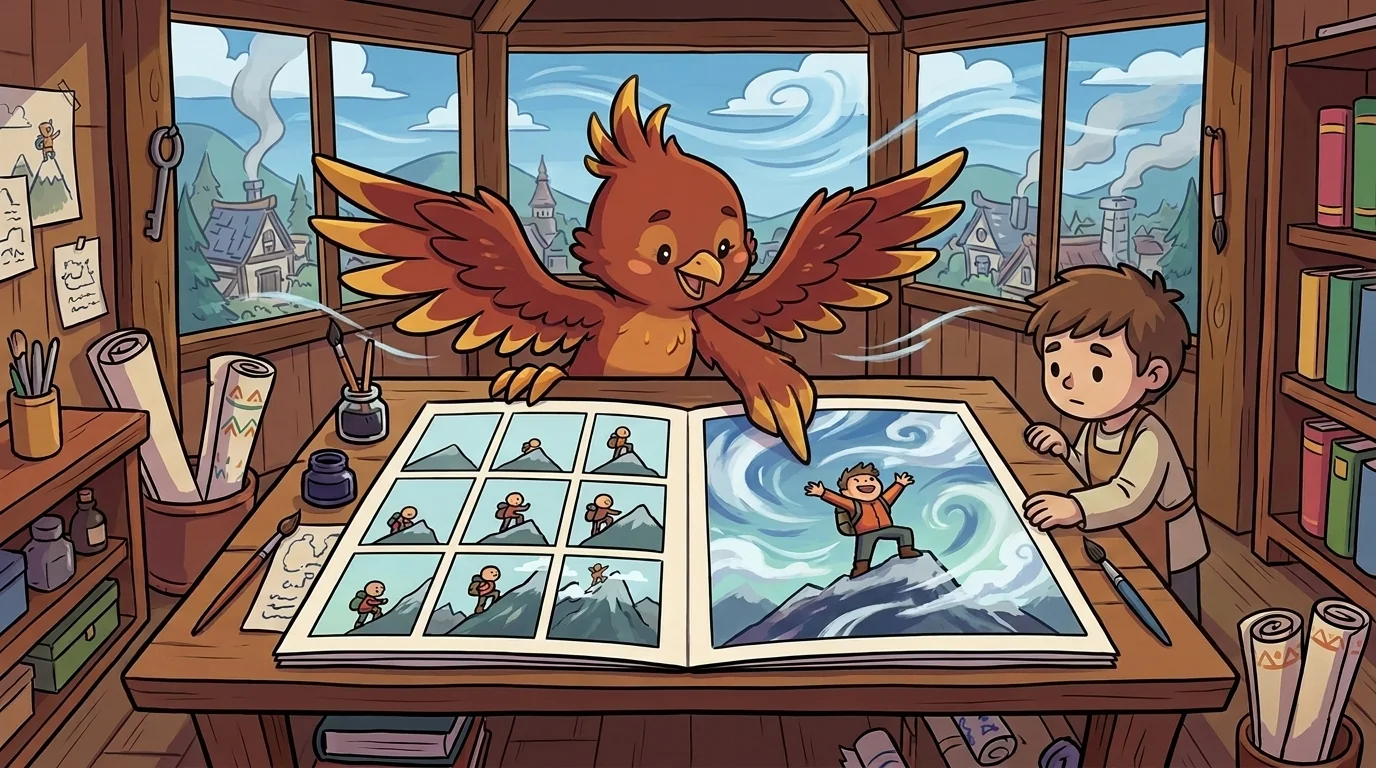
She had inked six neat panels, tidy as floor tiles — a hero climbing a mountain, panel by panel, step by step. Then she'd torn a fresh sheet, and instead of six panels she drew one. One enormous image that swallowed the whole page: the hero at the summit, arms flung wide against a sky full of wind, the wind catching the gold tips of her own feathers as she leaned over the drawing.
An apprentice peered over her shoulder. "You forgot the panels."
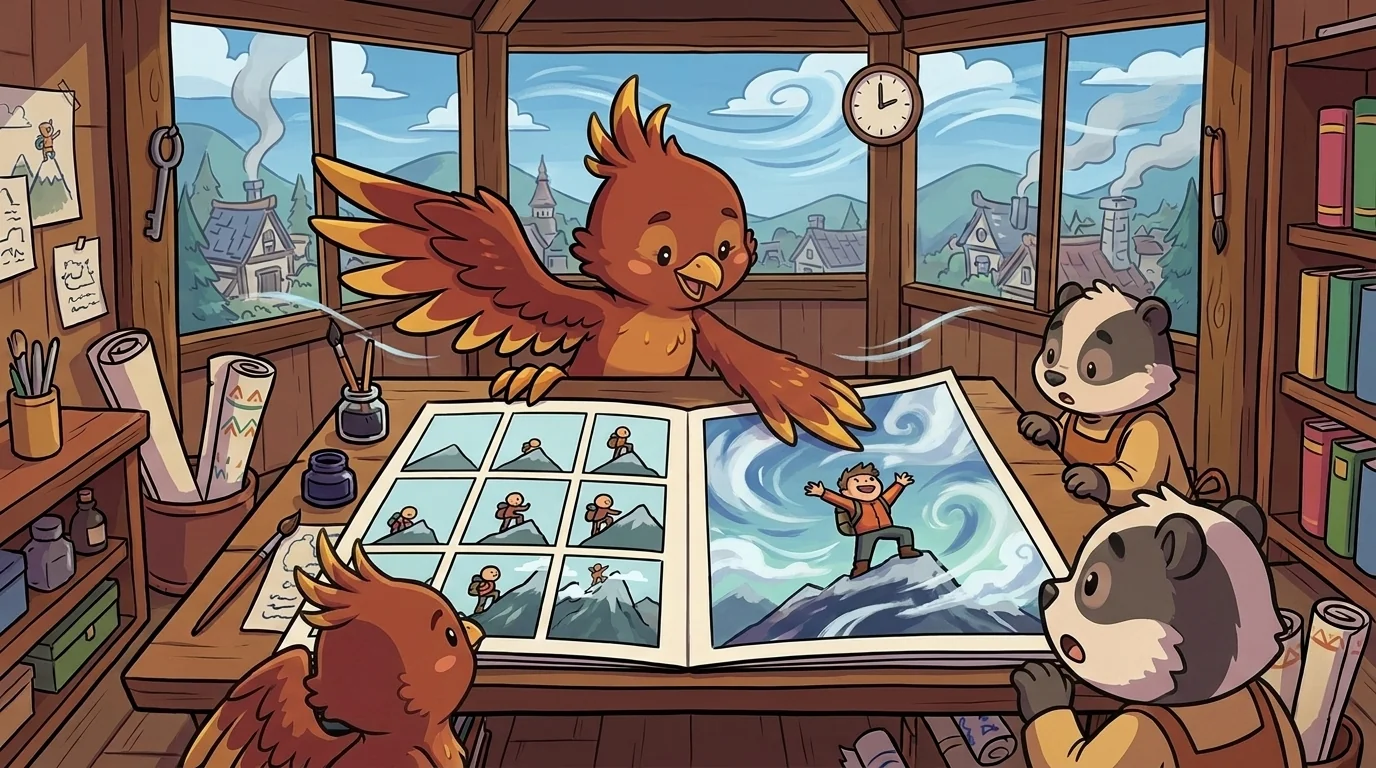
"I didn't forget them," Splash said. "I kicked them out." She smoothed the giant image flat. "Watch what happens when you read it." She laid the two pages side by side — the tidy six-panel climb, then the single huge summit. The apprentice's eyes skated fast across the little panels, then hit the big one and simply stopped.
"See that?" Splash said, delighted. "Your eyes were running. And then the page had nowhere to run to. One image, all the room in the world, and suddenly you have to slow down and actually stand there with the hero." She tapped the giant drawing. "That's a splash page. When a moment matters more than all the moments around it, you don't chop it into little squares. You give it the whole page. You let it break the grid."
Splash had grown up learning that some things are only powerful because they're rare.
Her family were the village signal-bearers — phoenixes who lit the great tower-flame. But they only lit it for the biggest things: a festival, a warning, a homecoming. Little Splash hadn't understood. "Why not light it every night?" she'd asked. "It's so pretty. Everyone would love it."
Her grandfather, an old phoenix with soot-dark feathers, had let her light the flame one ordinary evening, just to see. She'd loved it — for about a week. By the second week nobody in the village even looked up anymore. The great flame had become a streetlamp. Splash remembered the exact moment she noticed no one turning to watch: a small, sinking oh in her chest, the feeling of having spent something she couldn't get back.
"You didn't do a bad thing," her grandfather said gently, when she came to him low and quiet about it. "You just learned the oldest rule the tower knows. What we mark, we make important — but only if we mark it rarely. Burn the flame every night and it stops meaning festival. It just means night." He'd nudged her with a wing. "Save it. The saved-up thing is the strong thing."
Splash never forgot the sinking oh. It taught her the other side of it: the held-back thing, the saved thing, ready and waiting — that was where the power lived.
She walked to MangaForge at thirteen, because a place that studied storytelling ought to understand the moments worth stopping for.
Sensei Sora met her at the studio door and didn't ask her to prove she could draw. She asked one thing. "What is a splash page?"
Splash didn't answer in words. She took a long chapter off the wall — pages and pages of small, busy panels — and flipped through it fast, letting the sensei's eyes chase the little squares. Then she stopped on a single full-page image near the end: a lone figure at the edge of a cliff, tiny against an enormous sky.
"There," Splash said quietly. "Everything before this was going somewhere. This is the somewhere. The whole chapter climbed up to this one image, and now the image gets the whole page to itself, so the reader has to stop climbing and just look." She closed the book. "The trick isn't drawing it big. The trick is earning it, and then not doing it again for a long, long time."
Sensei Sora looked at the closed book for a moment. "You belong here," she said.
Splash's workshop was mostly quiet pages with a great deal of empty air.
A boy came in one afternoon frustrated, a fat stack of drawings under his arm. "My fight scene isn't exciting," he said, dropping them on the bench. Every page was crammed edge to edge with small action panels — punch, block, punch, block — a wall of tiny squares. "I drew so much action. Why does it feel like nothing?"
Splash flipped through it. Her eyes, she noticed, glazed after a few pages — punch, block, punch, all the same size, all shouting at once. "Here's the thing about a wall of loud," she said. "When everything shouts, nothing does. Which punch is the important one?"
The boy pointed. "That one. Where she finally lands the hit that ends it."
"Then that one gets the whole page." Splash slid a blank sheet over. "Draw only that punch. Fill the page with it. No little squares crowding in — just the hit, the impact, the room around it." He drew it, hesitating, making it huge. Then Splash tucked it back into the stack, right after the small busy panels. "Now read it in order."
He flipped: small, small, small, fast fast fast — and hit the giant panel like a wall. He actually leaned back. "Whoa."
"The little panels ran your eyes," Splash said. "The big one stopped them dead — right on the moment that matters. You didn't add more action. You made room for the one that counts." She grinned. "One splash a chapter. Maybe two. Never more. The moment you make everything big, big stops meaning anything — and you're right back to a wall of shouting."
Later, when the workshop had gone still, the boy came back with the giant page in his hands, quieter now. "How do you know," he said, "which moment gets to be the big one?"
Splash thought about the tower flame, and the sinking oh, and her grandfather's wing against hers.
"You feel it," she said. "There's a moment in a story where everything you built is finally about to happen — and something in you goes still and leans in, like standing at the very top of a dive before you tip. That stopped, breathe-in feeling? That's the one. That's the page that deserves the whole page." She looked at his drawing, the huge quiet impact of it. "You'll want to give it to lots of moments, because it feels so good. Don't. Save it. The one you save up is the one that lands."
The boy nodded slowly, holding the page a little more carefully, and Splash watched him understand it the way she once had — not with his head, but with the quiet in his chest.
The MangaForge ensemble
Splash is part of MangaForge's distributed-narrative cast. Each character embodies a different curricular primitive; together they teach the full subject.
-

Panel
The panel — the rectangular frame that contains a single moment of story (the atomic unit of sequential art)
-

Bubble
The speech bubble — the shape-encoded container for dialogue + thought + sound (its outline encodes voice register: thought-cloud / shout-burst / whisper-dotted-line / radio-jag...
-

Sweep
Speed lines / motion lines — the directional line-bursts that convey speed, impact, and energy direction
-

Tone
Screentones — the halftone dot/line patterns laid over an area to convey shadow, mood, and emotional register (the manga-specific shading vocabulary)
-
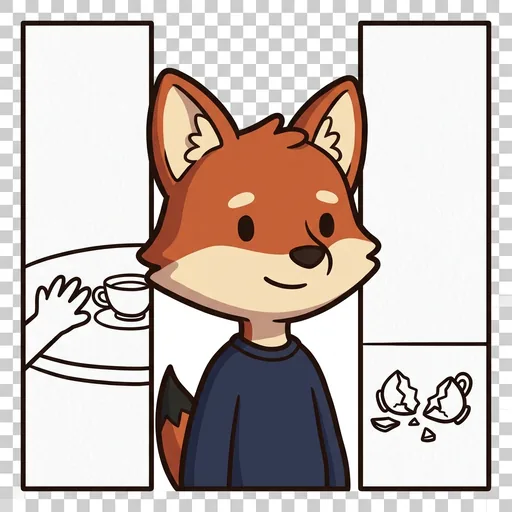
Lapse
The gutter — the empty space between two panels where your own mind fills in what happened; closure, the invisible half of comics
-

Segue
The transition — how one panel flows into the next, guiding your eye and your sense of time from moment to moment
-

Vista
The establishing shot — the wide opening panel that shows you where you are before the story zooms in close
-

Jolt
The reaction beat — the panel that catches a character reacting, so a surprise or a feeling truly lands
-

Boom
The sound-effect lettering — onomatopoeia drawn right into the art, so you can see a sound as much as hear it
-
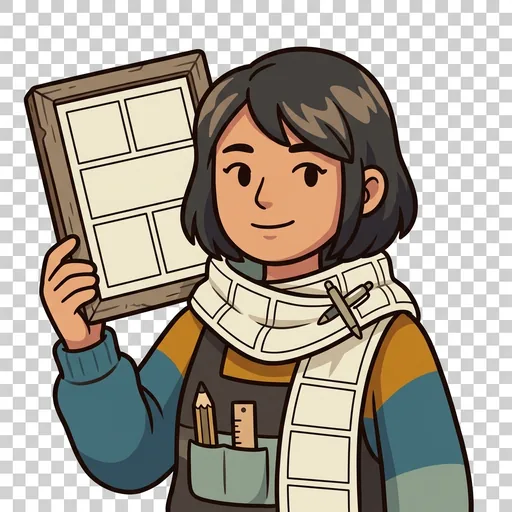
The Layout
The whole page coming together — how the establishing shot, panels, transitions, gutters, and sound-effect lettering arrange to guide one reader eye through one moment of story