
Kernel and Reprise
the callback (plant and payoff) — a line planted lightly early in a story returns later, transformed by what has happened between, and lands with far more weight than it could have the first time. The plant must be quiet enough to seem ordinary; the payoff works because the reader remembers the plant.
Press play to listen along. The line being read lights up as you go.
Show full transcript
Loading transcript…
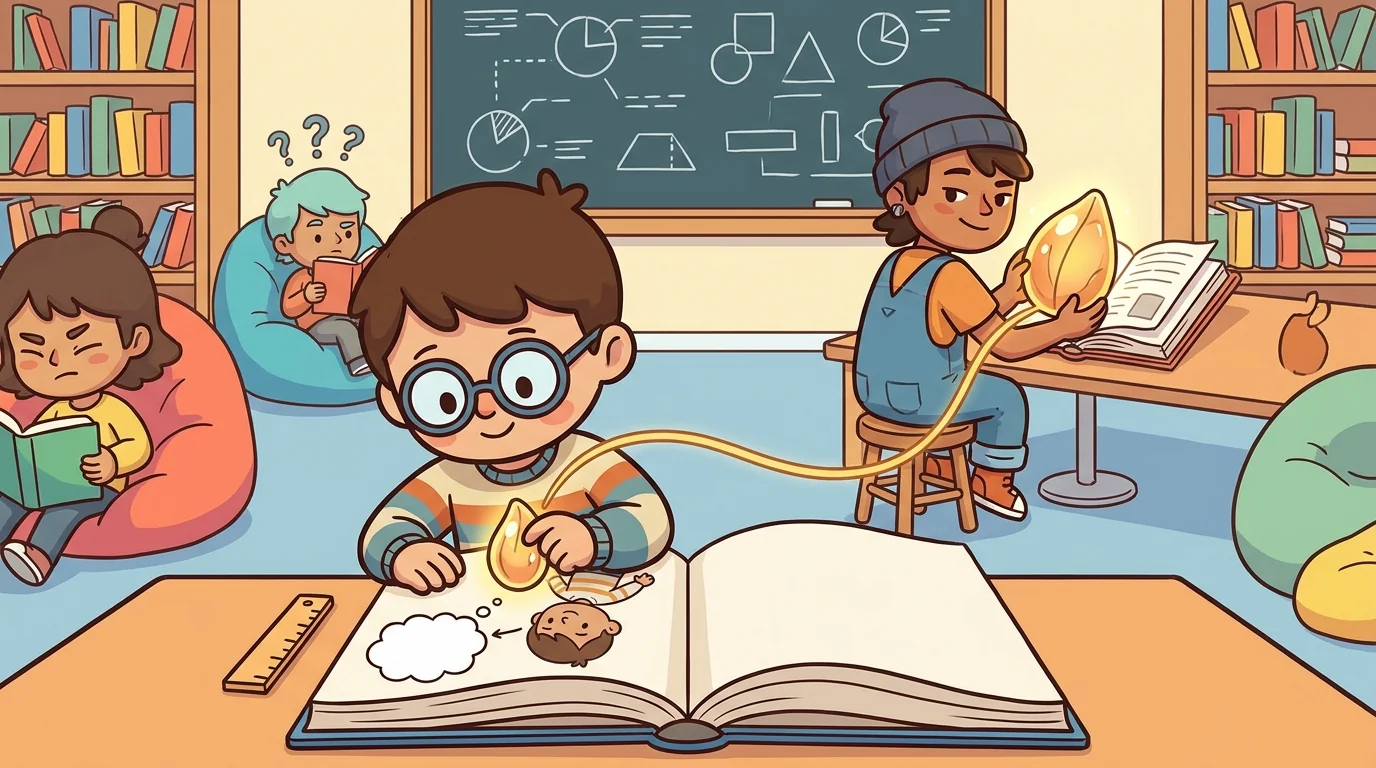
In the dialogue workshop, Kernel worked at the front of a scene, tucking little lines into corners where nobody would look twice.
"Watch this one," Kernel whispered, sliding a plain sentence into a character's mouth on page two. "My dad always said, measure twice." "See? Ordinary. Sounds like nothing. A reader's eye slides right past it."
The apprentice squinted. "Then why write it at all?"
"Because I'm not writing it for page two," said Kernel. "I'm writing it for page forty."
At the back of the room, Reprise was reading ahead — all the way to page forty — waiting. "That's where I come in," Reprise said. "Kernel plants the seed and walks away. I'm the one who brings it back, at the exact right moment, after everything's changed. Same words. Whole new weight."
"Same words?" said the apprentice.
"Almost always the same words," said Reprise. "That's the trick. The reader hears the line again and thinks — oh. I've heard that before. And all at once, page two and page forty snap together."
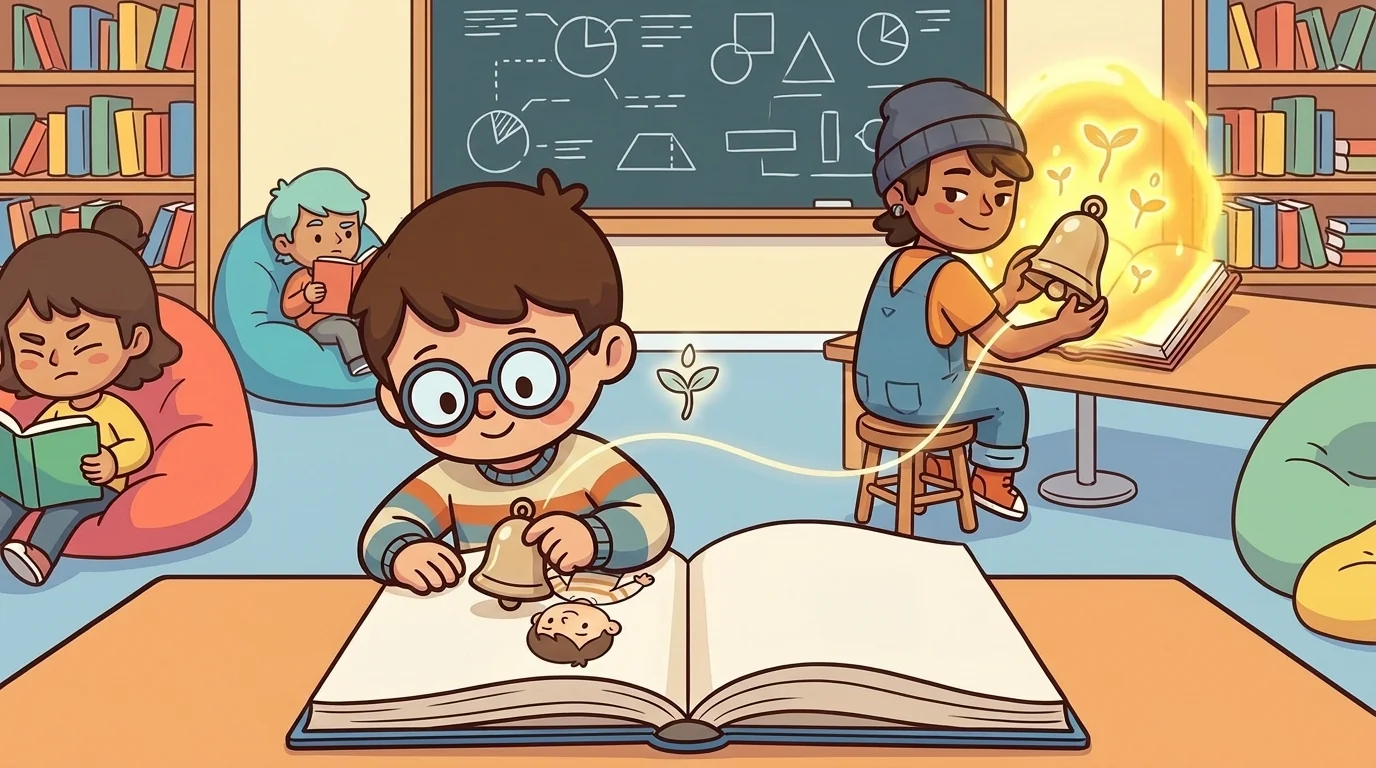
Reprise liked to say that they and Kernel were really one move split across a lot of pages.
"A callback," Reprise explained, "is two halves. There's the plant — that's Kernel, dropping the line early, quietly, so it feels like scenery. And there's the payoff — that's me, bringing it back later so it lands like a punch, or a hug, or a heartbreak."
The apprentice frowned. "Couldn't you just... write the good line once, at the end?"
"You could," said Kernel. "And it would be fine. But it wouldn't ring." They picked up a small bell and tapped it once — a thin, plain sound. "That's the line, alone, at the end." Then they tapped it, waited, and tapped it again — and the second ring hummed against the memory of the first. "That's the callback. The second one only sounds like that because you heard the first."
"So the first line is a little boring on purpose," the apprentice said slowly.
"Boring on purpose," Kernel agreed, delighted. "The plant has to hide. If it announces itself — remember this, it'll be important! — the reader braces, and the payoff can't surprise them. My whole job is to be forgettable."
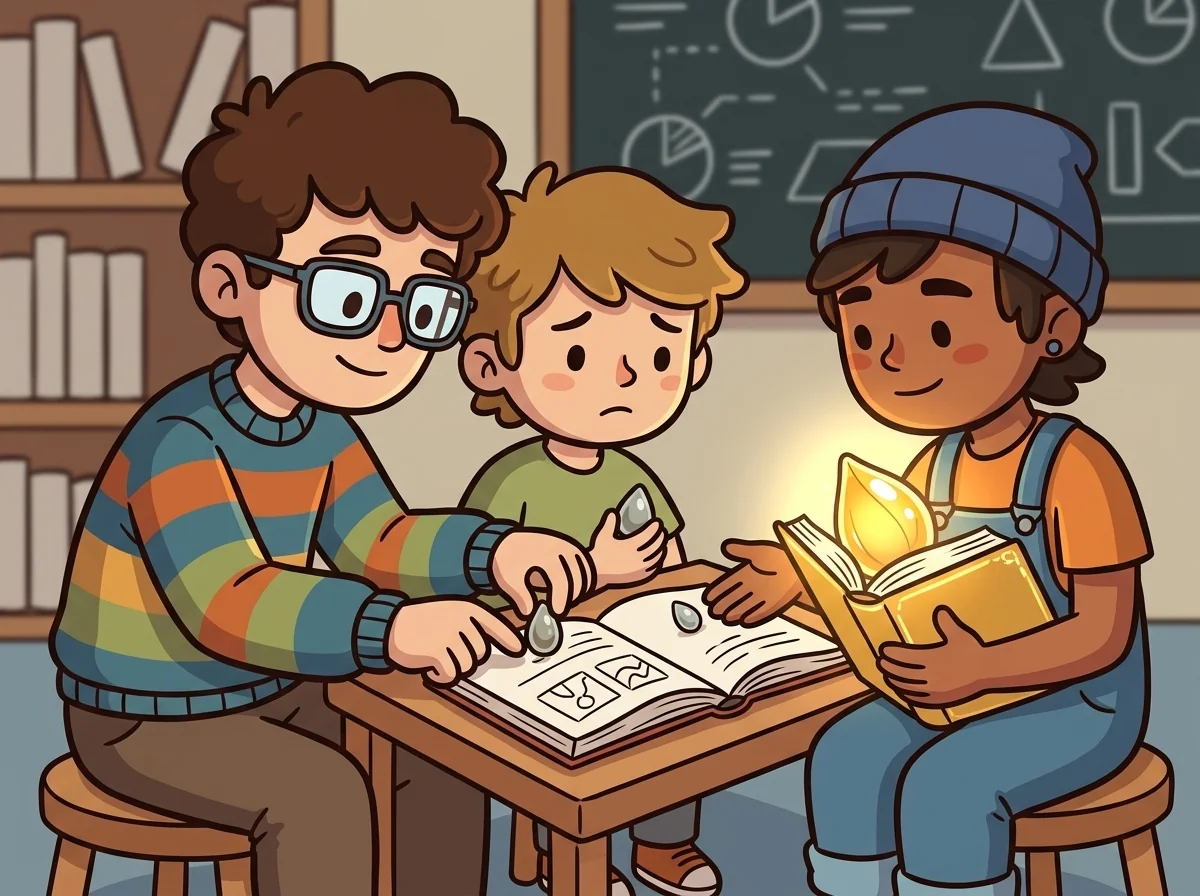
A worried young writer came with a page. "I tried a callback and it didn't work. I planted a line, brought it back, and my reader said 'huh?' They didn't remember it at all."
Kernel and Reprise read the page together.
"Ah," said Kernel gently. "Your plant was too quiet. Look — you buried it in the middle of a huge speech, in a boring moment. Even forgettable lines need to be heard once. Put it somewhere the reader is actually paying attention — end of a scene, a beat of quiet — so it lands softly instead of vanishing."
"And," said Reprise, "your payoff came back word-for-word, but nothing had changed in between. A callback lands because the line means something new now. The first time, measure twice was a dad's fussy advice. The fortieth time — after the character rushed and ruined everything — those same three words break your heart, because now they're regret."
The young writer's eyes widened. "So the words stay the same, but the reader changed. The story happened to them in between."
"That's the whole thing," said Reprise. "I don't change the line. I change everything around it, and then I hand the same line back."
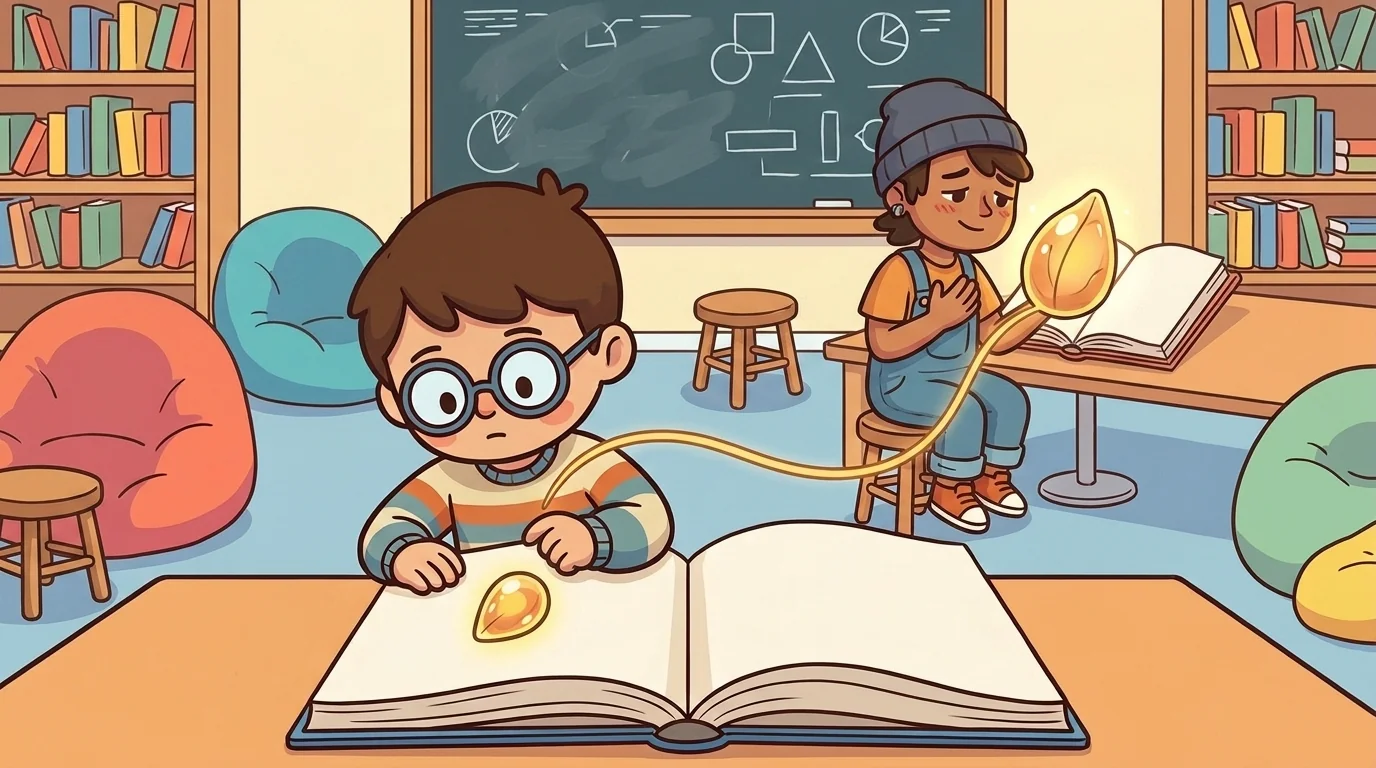
The young writer tried again, right there. They wrote a girl saying, early and lightly, "I'll race you to the gate." Then, forty pages later — after the two friends had fought, and drifted, and almost lost each other — one of them says it again, quiet, at the hospital door: "I'll race you to the gate."
Kernel read it and went still. Reprise read it and pressed a hand to their chest.
"That," said Reprise softly, "is it. Same six words. But now they mean I still love you, I never stopped, let's go back to who we were. You didn't write that meaning down anywhere. You planted it and let the reader grow it."
"I barely wrote anything," the young writer said, amazed. "The first line was so small."
"The first line is always small," said Kernel. "That's me. I go first, and I go quiet, and I trust that somebody's coming back for what I left."
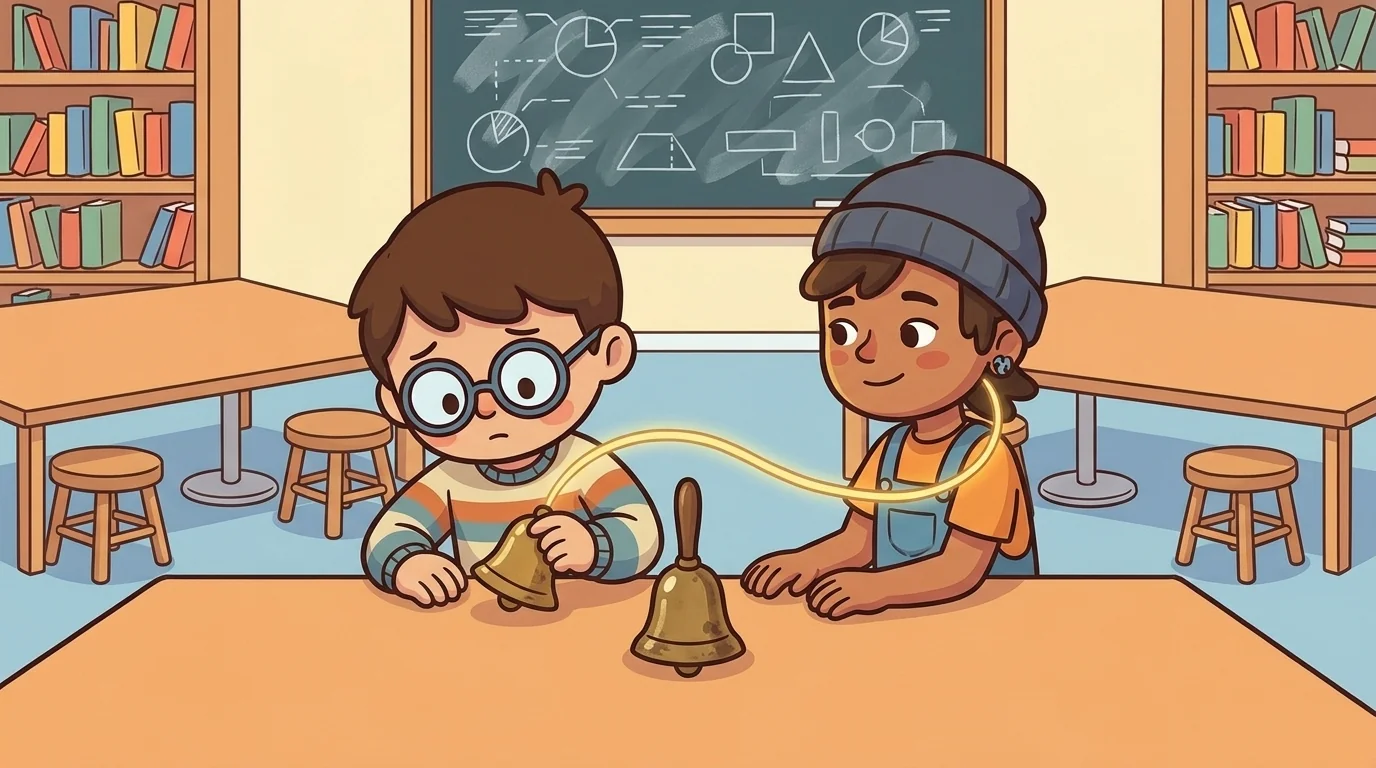
When the workshop had emptied, Kernel and Reprise sat with the little bell between them.
"I spent a long time feeling invisible," Kernel admitted. "I drop lines nobody claps for. On page two, my work looks like nothing — filler, throat-clearing, a dad being fussy. Nobody ever thanks the plant." They turned the bell over in their hands. "For a while I wondered if I even mattered."
"You're the reason I land at all," said Reprise. "I get the gasp. I get the tears at page forty. But every single one of those — every gasp — is yours, from thirty-eight pages back, waiting. I'm just the echo. You're the sound that makes the echo possible."
Kernel was quiet, holding the little bell, thinking about all the plain lines they'd tucked into corners and left behind — and how not one of them had really been lost, only waiting for Reprise to come back and ring them a second time. And the old invisible feeling, the small ache of going first and unthanked, eased at last into something warm and steady: the quiet gladness of knowing that the quietest thing they ever planted was the very thing that would, one day, land the hardest.
"I go first," Kernel said softly.
"And I bring you home," said Reprise, and tapped the bell — once, and then, after a breath, once more.
The DialogueQuest ensemble
Kernel and Reprise is part of DialogueQuest's distributed-narrative cast. Each character embodies a different curricular primitive; together they teach the full subject.
-
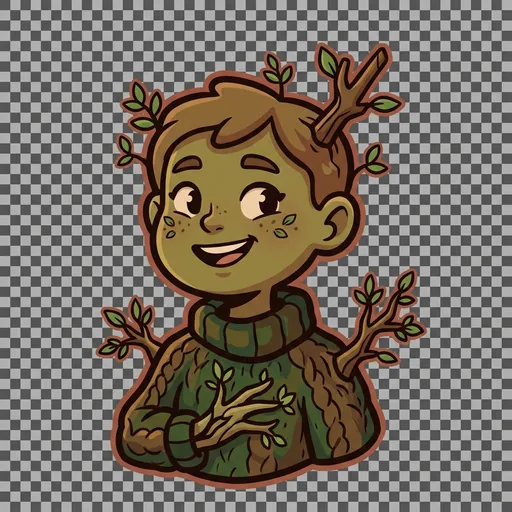
Sprig
Branch meaningfulness — sapling-tween whose visible branching skeleton shifts physically when she picks between dialogue options (the choice re-routes her body)
-

Glance
Subtext — arctic-fox-tween in a thick scarf; speech-bubble visibly half-empty with dotted-line ghost-text floating beside it
-

Weigh
Tag balance — pangolin-tween with a brass balance-scale on her shoulder; scales tilt visibly as dialogue happens around her
-

Brogue
Voice consistency — border-collie-elder in a worn flat-cap who uses exactly 4-5 signature words across every appearance (deliberately non-specific old-country accent)
-
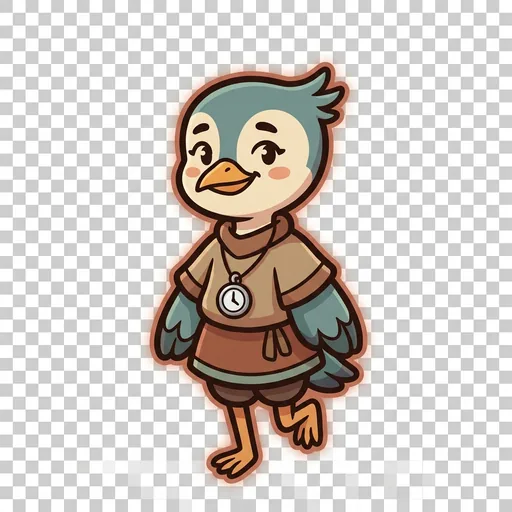
Rest
Rhythm + silence — heron-tween with a small silver pocket-watch around her neck; one foot perpetually raised mid-step; treats the pause as a line of dialogue itself
-

Prop
Action beats — red-squirrel-tween whose paws are always busy with a small acorn; the little actions between lines show feeling and set the rhythm of a talk
-

Spar
Conflict / friction — pine-marten-tween whose speech bubbles push against the other speaker's; two characters wanting different things is the engine (the push stays kind)
-
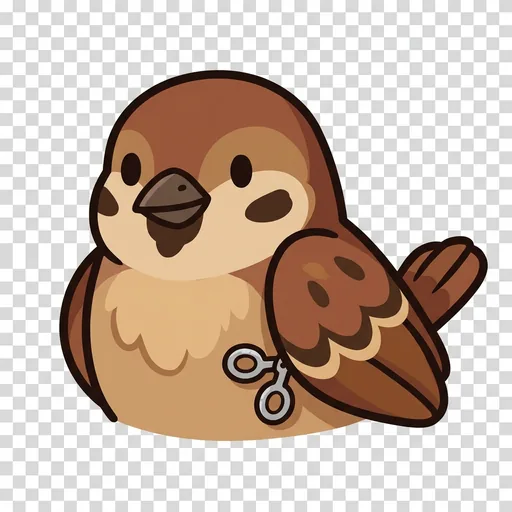
Clip
Economy — sparrow-tween with tiny silver scissors who trims the filler ('hello, how are you, fine') and starts scenes late, right where they get interesting
-

Dash
Interruption / overlap — chipmunk-tween who crashes into the ends of others' lines with a dash when feeling runs too high to wait (used on purpose, sparingly)
-

Aim
Line purpose — kestrel-tween with arrow-shaped speech bubbles that point at what each line is really trying to DO (ask, dodge, persuade), not just say