
Trail
TRAIL — *the floor-pattern shapes you draw moving through space.*
Listen along — Trail
Loading audio…
Press play to listen along. The line being read lights up as you go.
Show full transcript
Loading transcript…
Chapter 2 — Trail and the Invisible Patterns Dancers Draw on the Floor
The rehearsal room was empty and enormous, and Trail was busy making it smaller.
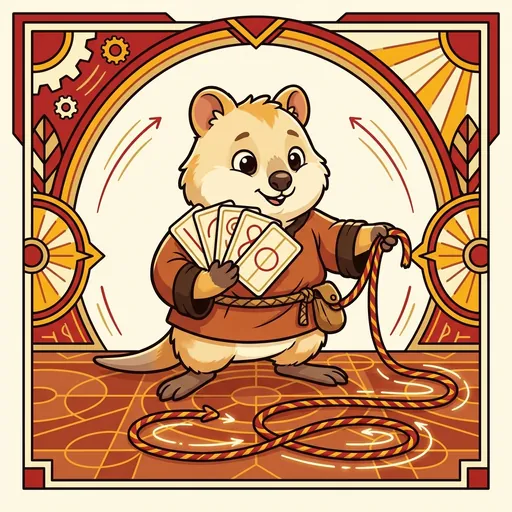
He walked from the far corner in a long, easy curve, his cream-and-honey fur catching the afternoon light, his soft tunic swishing at every turn. He did not walk in a straight line. He never did. He swept a wide arc across the floor, gathered himself in the middle, then spiraled slowly inward until he came to rest dead center, one paw raised, holding still.
A group of dancers filed in and stopped short. “You just… walked to the middle,” one of them said. “Why’d it look like a whole dance?”
“Because it was a whole dance,” Trail said, still holding his pose. “Watch the floor, not me.”
He uncoiled the long string he always kept at his side and laid it down exactly along the path he’d just traveled — a wide sweep, a gather, a spiral. There it was, drawn plain on the boards. The dancers leaned in.
“Every time your feet move, you draw,” Trail said. “You can’t see the line while you’re dancing, but the audience feels it. A straight walk from corner to corner draws a bold diagonal. A circle around the middle draws roundness. A curl inward, like a snail tucking in, draws a spiral.” He tapped the string. “You already knew that in your body. I just made it something you can look at.”
He picked the string back up and coiled it. The room felt different now — not empty, but full of invisible lines waiting to be walked.
“The floor is a page,” Trail said softly. “You are the pencil. Nobody sees the drawing except in their bones. But it’s there.”
Trail grew up along the underbrush-trails, where his family had spent generations tracing careful paths through the thick bush so the whole village could travel safely.
When he was small, he thought the trails were the boring part. The exciting part was the destination — the berry patch, the sunning-rock, the creek. The path was just the in-between.
Then one grey morning he got turned around. He’d wandered off the family trails, chasing a beetle, and the bush closed in around him, all tangled and same-looking. His chest went tight. His feet didn’t know which way to point. He stood very still, and for the first time in his life the ground under him told him nothing.
His grandmother found him an hour later. She didn’t scold. She crouched beside him in the leaf-litter and said, “Feel that? The lost feeling — heavy in the belly, isn’t it? That’s what it’s like when there’s no path.”
Trail nodded, miserable.
“A path isn’t the in-between, little one. A path is a promise. It says someone came this way on purpose, and here’s how.” She traced a line in the dirt with one claw. “We don’t make trails to get somewhere fast. We make them so nobody has to feel what you just felt. A made path is a kindness. It’s a story you leave for the next body that moves through.”
That day the tight, lost feeling in his belly loosened into something else — a warm certainty that a path meant something. He started noticing the shape of every trail he walked. And he never once thought of a path as boring again.
He walked to DanceQuest when he was twelve, because a place that studied movement ought to understand that where you move is as much of the story as how.
Rhythm, the mentor who ran the studios, met him at the door. She didn’t ask him to show off a leap or a spin. She asked one thing. “What is space, in dance?”
Trail didn’t answer with words. He asked to borrow the floor.
He walked from the doorway in a slow, deliberate arc to the center of the room, then stopped and looked back at the invisible line he knew he’d left. “There,” he said. “That’s the story I just told. If I’d stomped straight across, it would’ve been a different one. Same room. Same body. Different meaning — because the path was different.”
Rhythm was quiet a moment. Then she nodded. “You see the floor the way most dancers only ever see themselves,” she said. “You belong here.”
Trail’s studio was full of string and chalk and quiet room to move.
A dancer named Pip came in one afternoon, shoulders slumped. “I keep messing up,” she said. “I move, but it just looks like I’m wandering around. Like I don’t mean anything.”
Trail knew that slump. He’d felt it once, lost in the bush.
He laid his string down in a wide arc across the floor. “That’s a path,” he said. “Just walk it, slow, like you’re thinking hard.”
Pip walked the curve, careful and even. “It feels like a slow wave,” she said, surprised. “Like something important.”
“Good. Now run the same path. Same shape — just faster.”
Pip took off along the string, feet quick, and burst into a laugh. “Whoosh — it feels like taking off!”
“Same line,” Trail said, delighted. “Your legs felt something totally different, didn’t they? Now — walk it one more time, but let yourself turn as you go. Slow. Like a vine curling up toward the light.”
Pip tried it, twirling gently along the arc, a little dizzy, a little unfurling. When she reached the end she was grinning.
“Three walks, one path, three feelings,” Trail said. “You weren’t wandering, Pip. You never were. Your body already knew the shape. You just didn’t know you were allowed to plan it.” He picked up the string and pressed it gently into her paws. “Wandering feels like being lost. But a path you chose on purpose? That feels like you mean every step. Same feet. Same floor. All the difference in the world.”
Pip held the string like it was something precious. “So the shape is mine to draw,” she said slowly.
“Always was,” said Trail.
Later, when the studio had emptied and the light had gone gold, Pip came back with one more question. She was quieter now.
“When I’m dancing,” she said, “and I can’t see the line I’m drawing… how do I know it’s really there?”
Trail thought about the bush. About the tight belly and the ground that told him nothing, and his grandmother’s claw drawing a line in the dirt.
“You feel it,” he said. “That’s the honest answer. When you move on purpose, there’s this steady, sure feeling that runs right down through your feet into the floor — like the ground is holding your side of a promise. That feeling isn’t in your eyes. It’s lower down, in your legs and your belly, warm and certain.” He looked out at the empty room, full of invisible lines. “You don’t have to see the path to trust it’s there. You just have to feel your feet mean it.”
Pip nodded slowly, and Trail watched the slump lift off her shoulders — the same warm, planted, sure-footed feeling settling into her that had settled into him, long ago, in the leaf-litter.
The DanceQuest ensemble
Trail is part of DanceQuest's distributed-narrative cast. Each character embodies a different curricular primitive; together they teach the full subject.
-
Pose
Body-awareness + position — listening to your own shape
-

Phrase
Time + tempo — how movement is organized in musical counts
-
Lift
Energy + effort + dynamics — quality of movement, not aesthetic judgment
-

Glide
Locomotion — the craft of going from here to there with whole attention
-

Flock
Formation — how a group of dancers arranges itself in space (lines, circles, clusters, wedges) and how that shape flows and changes; the group as one moving picture
-

Storey
Level — dancing in the vertical space: low on the floor, mid at standing, high in reaches and jumps; every height belongs to dance, no height better than another
-
Beckon
Call-and-response — one dancer or group makes a movement and another answers it; a movement conversation built on truly listening before you reply
-
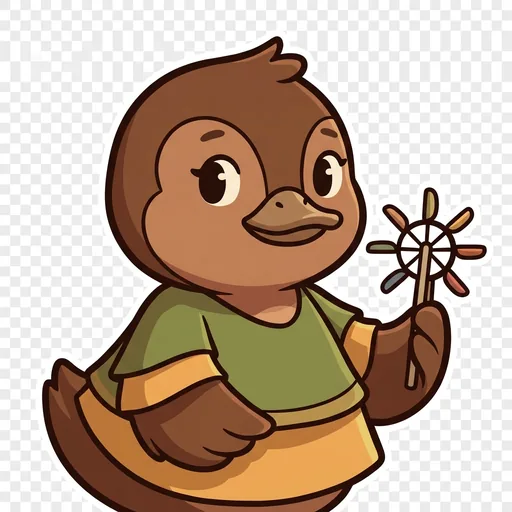
Canon
Unison and canon — unison is everyone moving together as one; canon is the same move staggered one after another, rolling across the group like a wave
-
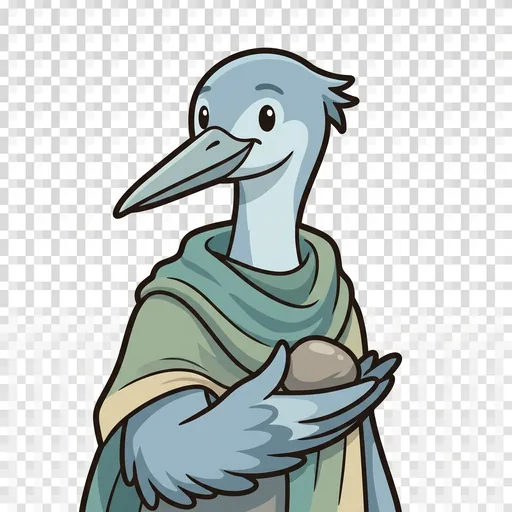
Bide
Stillness and the hold — the held, alive, motionless moment inside a dance; negative space made of time; a strong chosen pause, not tiredness or absence
-
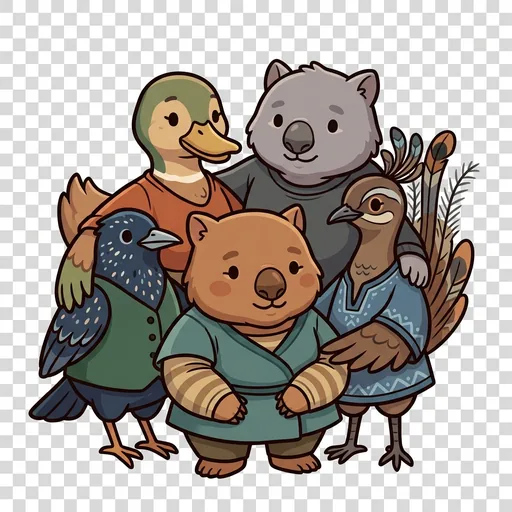
The Company
The whole group dancing as one — how formation, level, call-and-response, unison and canon, and stillness weave together so a group of dancers moves as a single living thing