
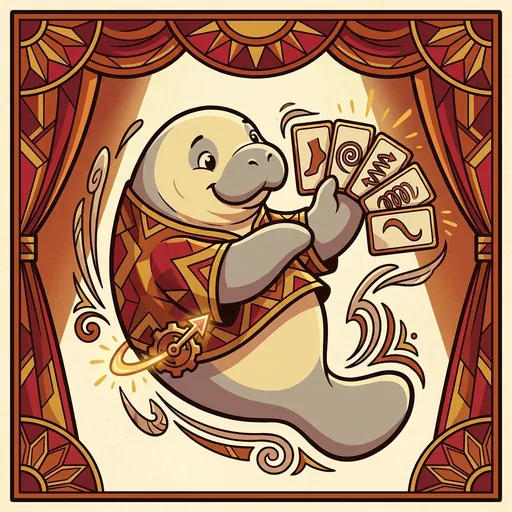
Glide
GLIDE — the craft of going from here to there with whole attention.
Listen along — Glide
Loading audio…
Press play to listen along. The line being read lights up as you go.
Show full transcript
Loading transcript…
Chapter 5 — Glide and the Craft of Going Somewhere With Your Whole Attention
The studio was empty except for Glide, and Glide was crossing it as slowly as a river.
He was a round, soft-strong manatee-tween in a loose grey tunic, and he was walking one diagonal of the wooden floor — just walking — but a knot of students had stopped stretching to watch him do it. Each step landed like he meant it. His weight rolled from heel to toe. His eyes went out to the far wall as if the wall mattered. Nobody was playing music. Nobody had asked him to. And still the whole room felt like it was holding its breath.
He reached the corner, turned, and looked at them, a little surprised to have an audience.
“Was that a routine?” a girl asked. “That looked like a routine.”
“That was a walk,” Glide said.
“It didn’t look like a walk.”
“It looked like a walk I was paying attention to.” He crossed back the other way, and this time he did it their way — shuffling, eyes down, hurrying like someone late for lunch. It looked like nothing. It looked like a hallway on a Monday. “That’s a walk too,” he said. “Same feet. Same floor. Same distance.” He tipped his head. “The only thing I changed was where my attention went.”
He walked it once more, slow and whole, and the room went quiet again.
“Going from here to there,” Glide said, “is the oldest dance there is. Every tradition on the planet starts with it. Most people spend their whole lives doing it asleep.” He smiled. “I’d rather do it awake.”
Glide grew up along the wide, slow river-channels, in a family that traveled for a living.
They were long-glide migrators — the ones who carried the village’s messages and mended nets downstream and knew every bend of the water. And when he was small, Glide hated it. The going took forever. His cousins zipped ahead; he lagged, sulking, watching the far shore never seem to get closer.
“We’re so slow,” he’d complained one evening, dragging himself onto a mudbank. “By the time we get anywhere the day’s over.”
His grandmother floated up beside him. She was the slowest glider of them all, and somehow always arrived rested. She didn’t tell him to hurry.
“You keep looking at where we’re not yet,” she said. “That’s why the going feels empty.” She rolled onto her back and let the current turn her a little. “Watch how the reeds bend as we pass. Feel the cold seam of water where the fast channel meets the slow one. Notice your own tail — how it pushes, waits, pushes. The far shore isn’t the trip, little one. This is the trip.”
Glide didn’t answer. But he stopped staring at the shore. He started feeling the water move against him, step by watery step, and something loosened in his chest — a fidgety, get-there-already feeling he hadn’t known he was clenching, finally letting go.
By the time they reached the village he was, for the first time, not tired. The going had stopped being a wait to survive. It had become a thing he was doing. His grandmother watched him climb out easy and light, and she said the sentence he would carry the rest of his life: “The journey is the dance. Pay full attention to the going, and you’ve already arrived.”
He walked to DanceQuest at twelve, because a place that studied movement ought to understand the kind of movement everybody overlooks.
Rhythm, the mentor who ran the studios, met him at the door and asked one question. “What is locomotion?”
Glide didn’t recite anything. He asked to borrow the room. Then he walked its length — the sleepwalking way first, scuffing, hunched, gone before he arrived. “That’s how most people get from here to there,” he said. He walked it again, whole: every footfall chosen, weight felt, gaze reaching the far wall like it was a friend. The air in the studio seemed to change temperature.
“Same walk,” Glide said. “Same body. The second one is dance. The only difference is that I was all the way here for it.”
Rhythm was quiet a moment. Then: “You belong here.”
Glide’s workshop was full of students who thought they had nothing to learn, because they already knew how to walk.
A tall, unsure boy hung near the back one afternoon. He wanted to leap — to do the big flying moves — and he was frustrated, because when he tried he only ever thumped back down. “I want to do the real dancing,” he said. “Not this walking stuff. And anyway—” he glanced down at himself, embarrassed, “—I don’t think I’ve got the body for leaping.”
“Show me the body a leap needs,” Glide said, cheerful. “I’ll wait.”
The boy blinked. “You know. A dancer’s body.”
“I’m a manatee,” Glide said. “I am round and soft and strong and I have never once had a dancer’s body, whatever that is.” He crouched, unbothered, and sprang — not high, but clean, arriving soft and sure. “There’s a leap. Every body leaps in its own shape. Yours will not look like mine, and mine does not look like anyone’s, and every single one of them is a leap.” He straightened. “But you’re skipping the part that makes the leap land. Walk with me first.”
He set them side by side and they walked one slow diagonal, whole-attention. “Feel your heel take the weight. Feel it roll to your toe. Feel the exact moment you decide to send it to the next foot.” The boy walked, scowling at first, then slower, then really walking — deliberate, awake.
“Now skip it.” The walk lifted into a skip. “Now let the skip grow.” And the skip, because his feet already knew where his weight was, opened by itself into a leap — small, but his, and he stayed up half a beat longer than he ever had.
He landed grinning. “It came from the walking.”
“Everything comes from the walking,” Glide said. “Walk fast, walk slow, skip it, slide it, roll it, send it across a curved path or a straight one — it’s all the same first choice. Be all the way here for the going. The mode is just which door you leave through.”
Later the boy came back, quieter, and sat on the floor near Glide.
“When I was walking the whole-attention way,” he said slowly, “I felt kind of… big. Not big like size. Big like — like I took up my whole self. Is that weird?”
Glide sat down beside him with a soft grunt. He thought about the river, and his grandmother, and the fidgety feeling in his chest that had finally unclenched on that mudbank years ago.
“That’s not weird,” he said. “That’s the whole thing. When you go somewhere half-asleep, you leave most of yourself behind — you’re already at the finish, worrying. When you go with your whole attention, all of you comes along for the trip. Your feet. Your breath. The part of you that notices the far wall.” He nudged the boy gently. “You didn’t get bigger. You just stopped leaving pieces in the hallway.”
The boy nodded, and Glide watched the hunch go out of his shoulders, the same easy way his own had loosened on the riverbank long ago.
Outside, the light was turning gold, and Glide felt the old settled fullness rise in his chest — the feeling of being entirely, warmly, unhurriedly here, with nowhere he had to rush to become.
The DanceQuest ensemble
Glide is part of DanceQuest's distributed-narrative cast. Each character embodies a different curricular primitive; together they teach the full subject.
-
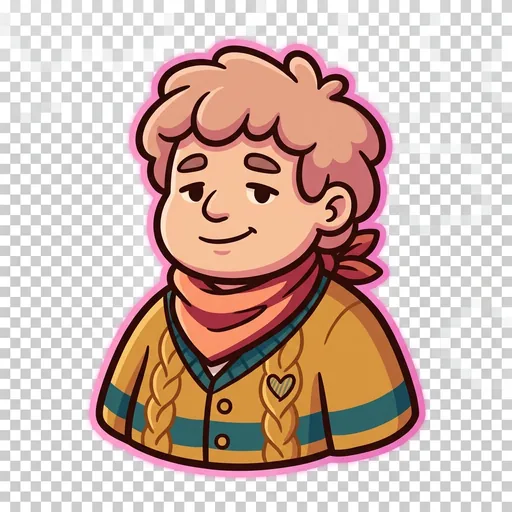
Pose
Body-awareness + position — listening to your own shape
-

Trail
Space + pathways — the floor-pattern shapes you draw moving through space
-

Phrase
Time + tempo — how movement is organized in musical counts
-

Lift
Energy + effort + dynamics — quality of movement, not aesthetic judgment
-
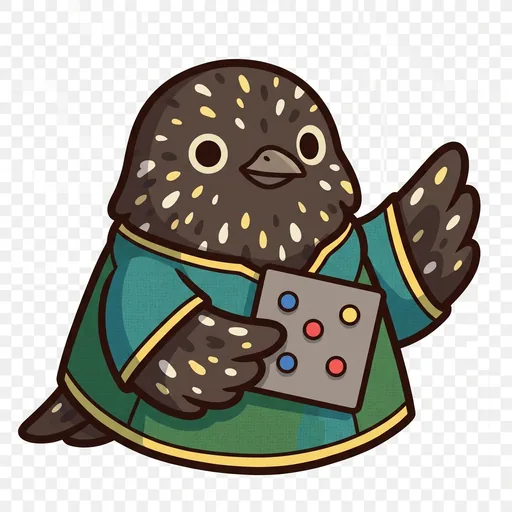
Flock
Formation — how a group of dancers arranges itself in space (lines, circles, clusters, wedges) and how that shape flows and changes; the group as one moving picture
-

Storey
Level — dancing in the vertical space: low on the floor, mid at standing, high in reaches and jumps; every height belongs to dance, no height better than another
-
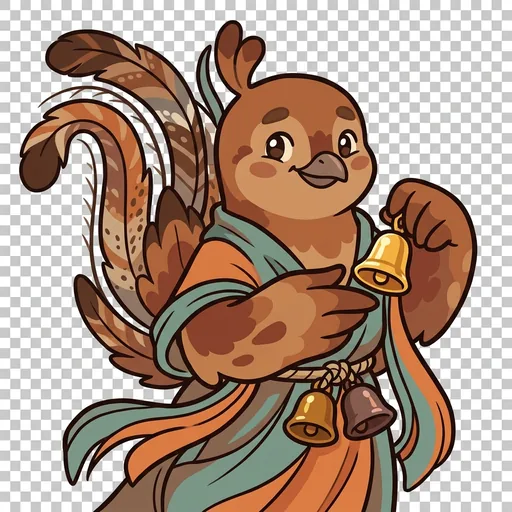
Beckon
Call-and-response — one dancer or group makes a movement and another answers it; a movement conversation built on truly listening before you reply
-
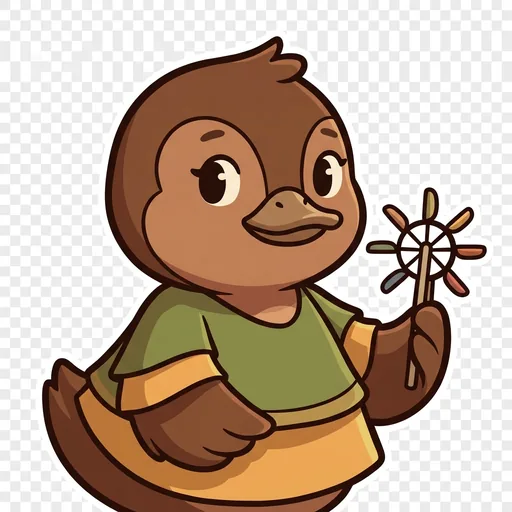
Canon
Unison and canon — unison is everyone moving together as one; canon is the same move staggered one after another, rolling across the group like a wave
-
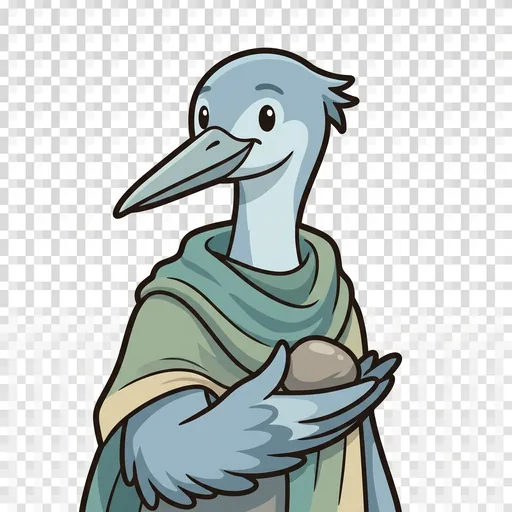
Bide
Stillness and the hold — the held, alive, motionless moment inside a dance; negative space made of time; a strong chosen pause, not tiredness or absence
-
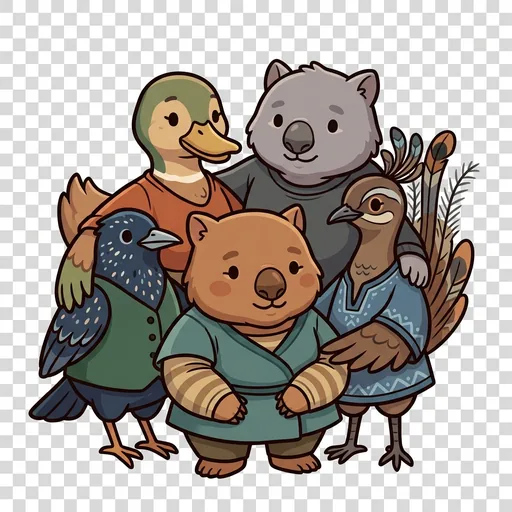
The Company
The whole group dancing as one — how formation, level, call-and-response, unison and canon, and stillness weave together so a group of dancers moves as a single living thing