Curb and Shore
CLIMATE RESPONSE = MITIGATION + ADAPTATION — Curb slows the cause (cut what we add); Shore prepares for what's already coming. Two hands, not one; each covers what the other can't.
Press play to listen along. The line being read lights up as you go.
Show full transcript
Loading transcript…
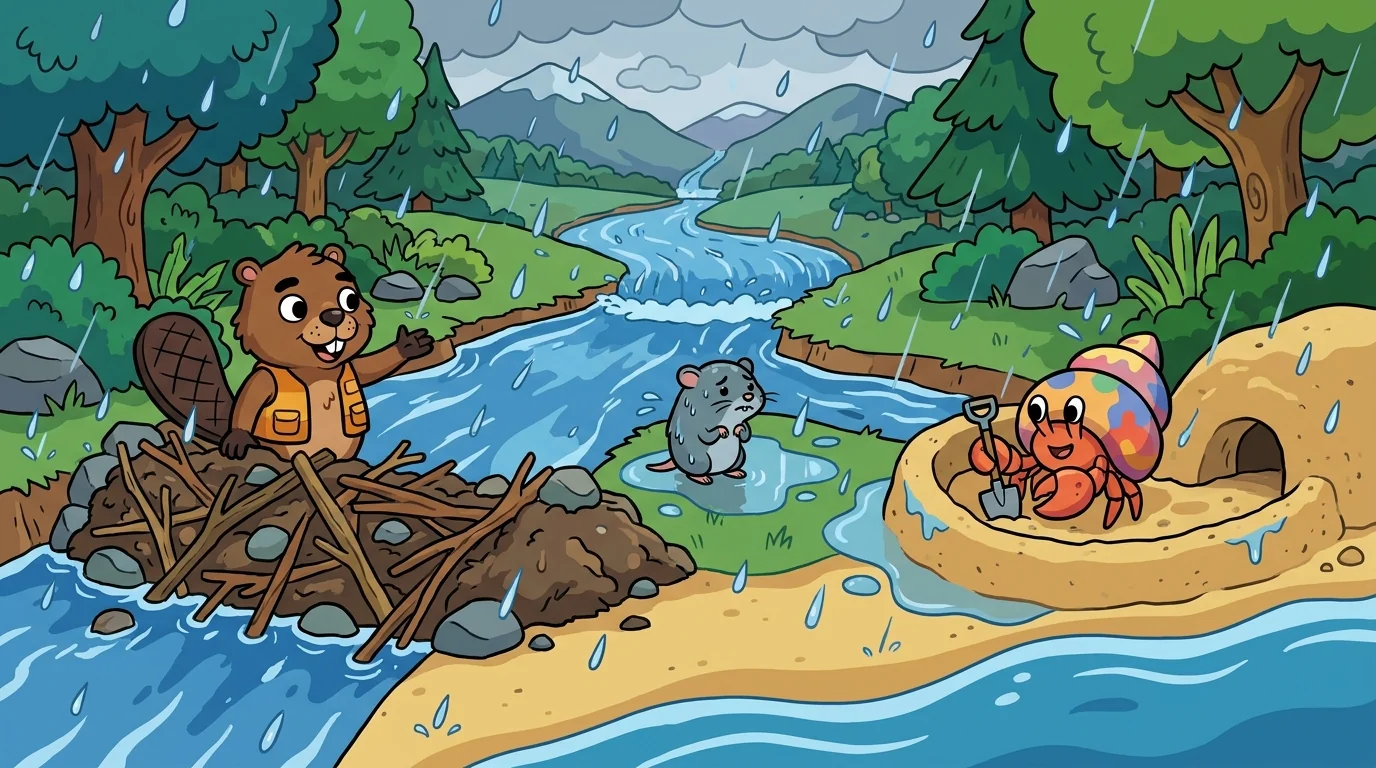
Where the mountain stream ran down into the sea, a beaver-tween named Curb and a hermit-crab-tween named Shore stood on opposite banks of the same rising water, teaching a soggy, overwhelmed vole that there was not one job here but two.
"The rain's too much," the vole wailed, "and the water keeps coming, and I don't know whether to build a wall or run upstream or—"
"Both of us are going to answer that," Curb said, "and we're going to answer it differently, and that's the whole point." He nodded upstream, where he'd been packing sticks and mud. "My job is up there — slow down how much water comes rushing in. Less flood arriving means less flood to deal with. That's my hand."
"And my job is down here," said Shore, tamping wet sand into a curved little wall around the vole's burrow, "getting ready for the water that's already on its way and can't be stopped now. Some of it's coming no matter what Curb does upstream. So I shore up for that part." She patted the wall. "That's my hand."
The vole looked from the beaver upstream to the crab at his door. "So it's not one or the other."
"It's never one or the other," Curb and Shore said, almost together, and then grinned at each other across the water because they always ended up saying it at the same time.
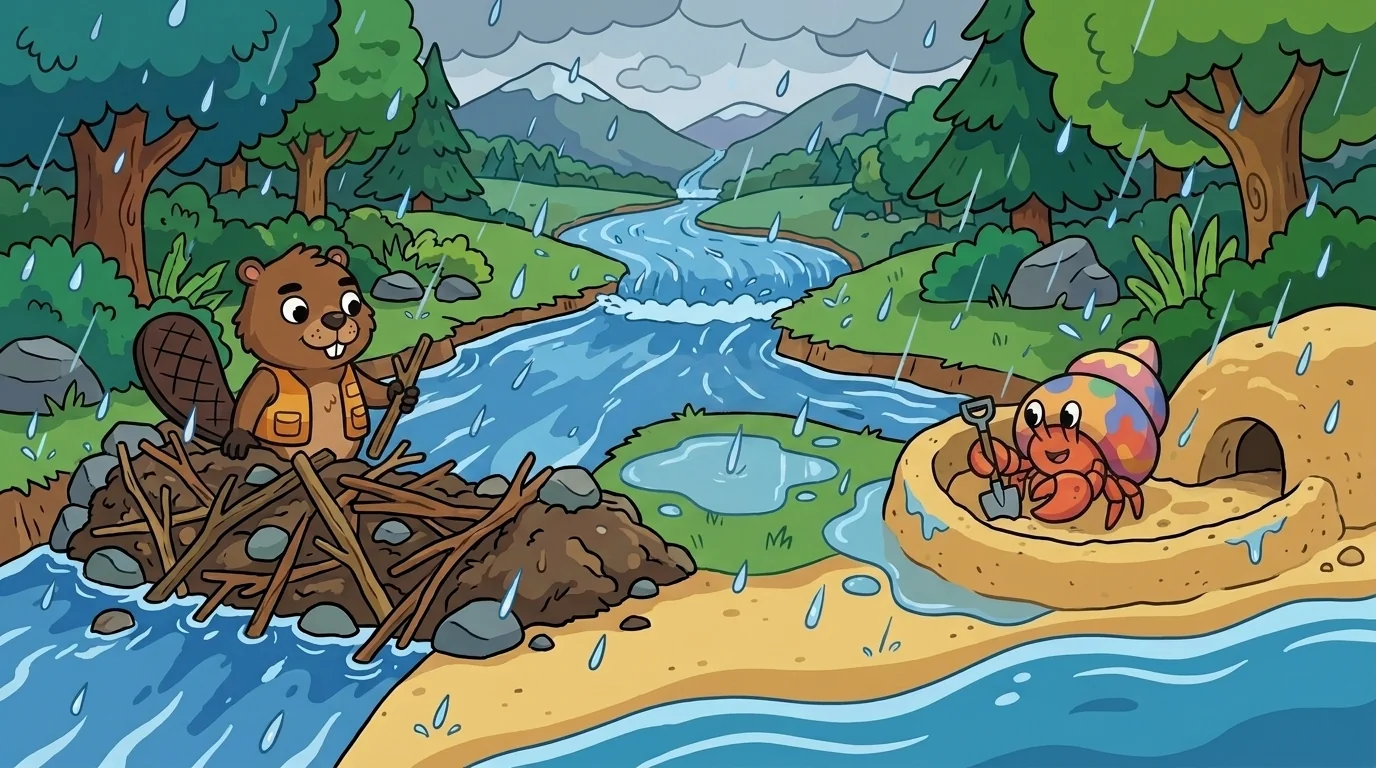
Curb had learned his hand at the source, from an old beaver who read floods for the valley.
Young Curb used to wait until the water was already at the village and then fling himself into fixing it — exhausted, always too late, always downstream of the trouble. One spring he'd worn himself ragged bailing out flooded burrows, and he'd sat down in the mud and cried that no matter how hard he worked, the water just kept coming.
The old beaver had sat beside him. "You keep meeting the flood where it ends," she said. "That's the hardest place to fight it. Come up to where it starts." She walked him upstream, to a narrow place, and showed him how a few well-set sticks slowed the whole rush to a trickle. "You can't un-rain the rain. But you can slow how fast it charges down. Cut the cause, and every burrow below you has less to survive. This is the quiet hand — nobody downstream sees you doing it. They just notice the flood was smaller this year."
Curb had felt the exhaustion in him turn into something clear and steady: the best place to stop a flood is before it gets big. Slow the cause, and you help everyone downstream at once, without them ever knowing it was you. He'd been a source-worker ever since — patient, upstream, cutting the trouble down before it grew.
Shore had learned her hand at the water's edge, from a tide that never once asked permission.
She'd grown up believing that if she just prevented hard enough, nothing bad would ever reach her. Then the king tide came — higher than any wall of no could stop — and washed straight through her tidy denial and flooded everything she'd refused to prepare for.
Her uncle, who'd weathered forty seasons on that beach, found her wringing out her ruined things. He didn't say you should have stopped it. He said, "Some water was always going to reach you. That's not failure. That's tide." He showed her how to build a burrow that let water in and drained it out, how to raise what mattered above the line, how to bend instead of break. "Stopping the cause is one hand — a good one. But some of it's already on its way, kiddo. Pretending it isn't just means it catches you flat. The brave move isn't only prevent. It's also get ready."
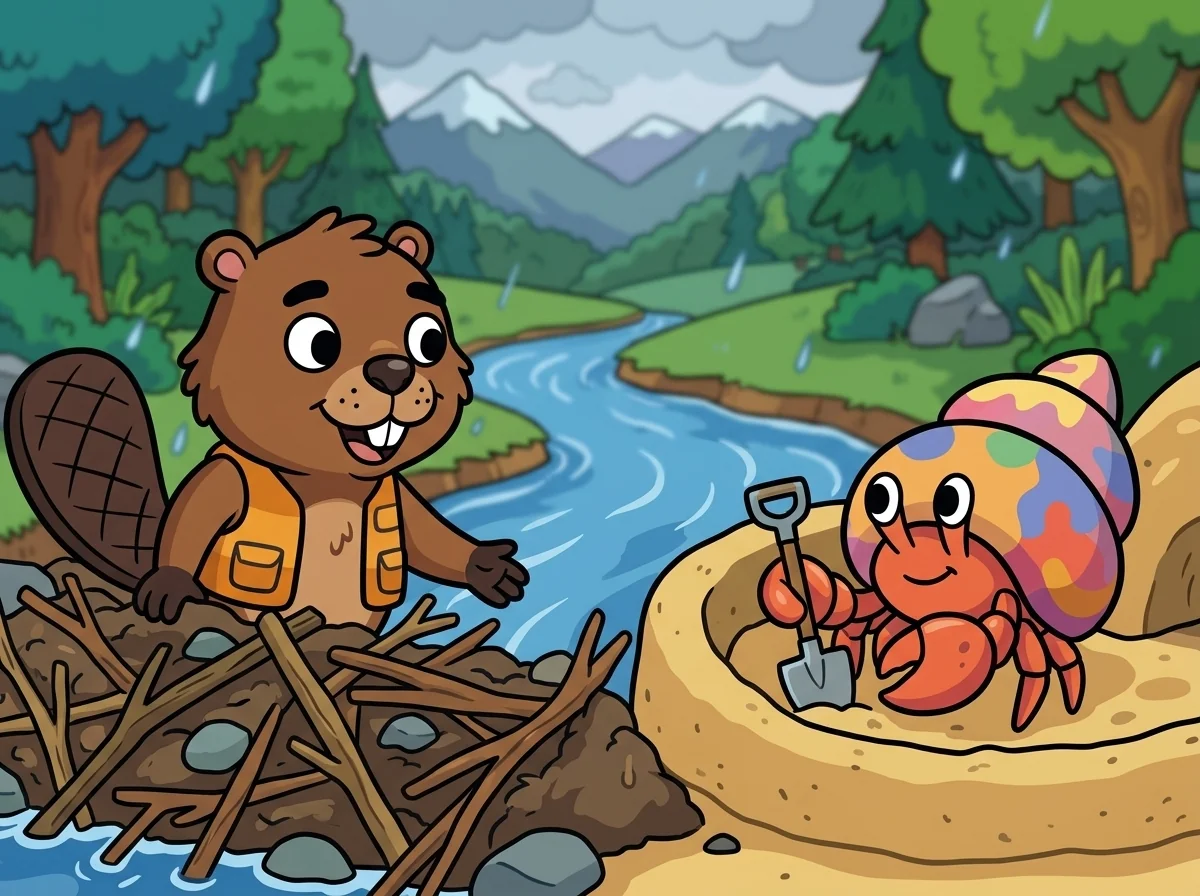
Something unclenched in Shore then: getting ready for what's already coming isn't giving up on stopping it. It's the second hand. And two hands hold what one hand drops. She stopped being ashamed of preparing. She started seeing it for what it was — courage that looked ahead.
They came to ClimateQuest the same season, from opposite ends of the same stream, and Cirrus met them together at the water-gate.
"What does it mean to respond to a warming world?" she asked.
Curb answered from upstream-habit: "You slow the cause. Add less of the heat-trapping gas — cleaner power, less waste, forests kept standing. Every bit we don't add is less warming to deal with later. That's mitigation. That's my hand."
Shore answered from the water's edge: "And you get ready for the warming that's already promised and can't be un-done now — cooler shelter for heat waves, room for higher water, crops that handle a drier year. That's adaptation. That's my hand."
"Most people," Curb said, "grab one hand and drop the other. The ones who only prepare stop slowing the cause — so it keeps getting worse. The ones who only slow the cause refuse to prepare — so the part that's already coming knocks them flat."
"You need both," Shore finished. "Curb makes the flood smaller. I get us ready for the flood that still comes. Neither of us alone is enough. Together we're a whole answer."
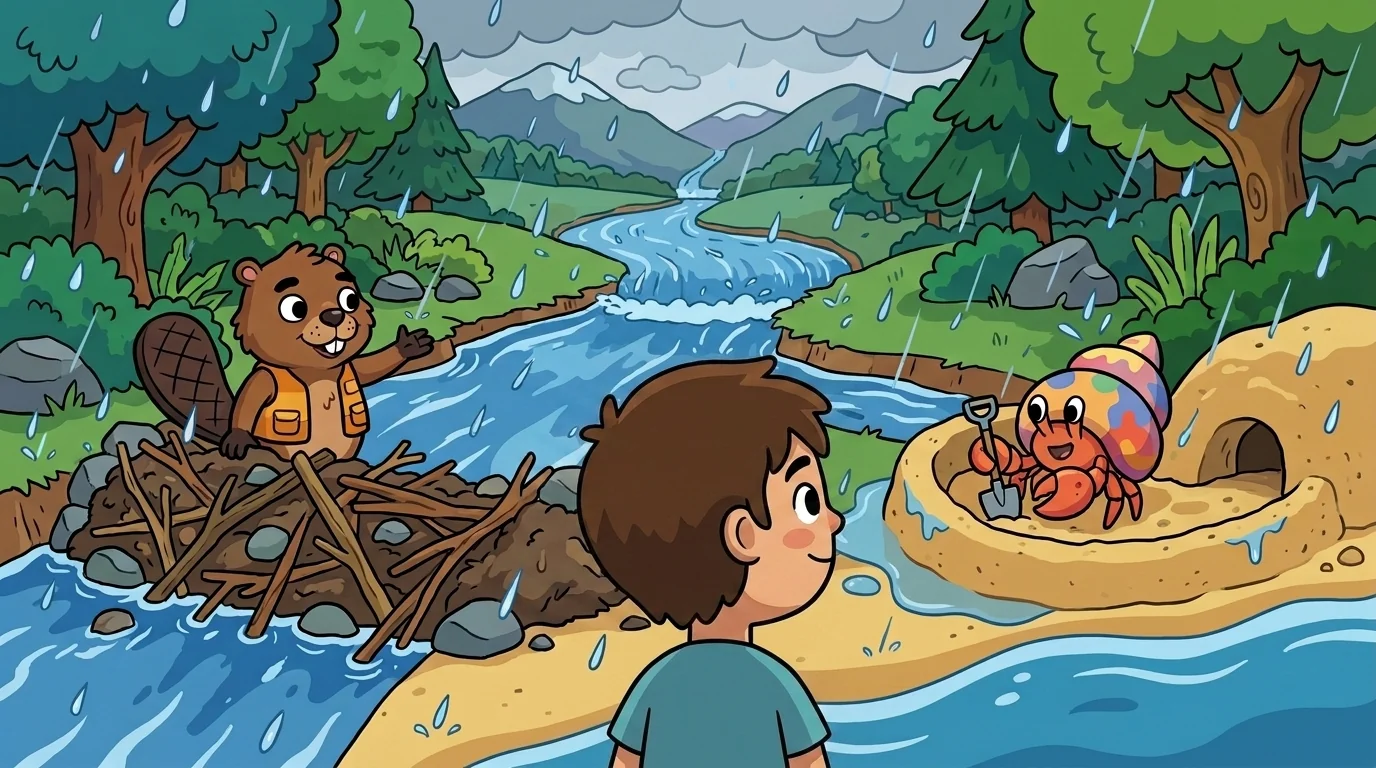
Cirrus looked at the beaver and the crab, upstream hand and water's-edge hand, and said, "You two belong here. Set your workshops on the same stream."
So they did — Curb's upstream, Shore's at the shore — and a boy came down the path one afternoon carrying the flat, heavy look of someone who'd decided nothing could be done.
"It's already too warm to fully stop," he said dully, "so slowing it is pointless. But we also can't just give up and let it wreck everything. So there's... nothing. There's nothing to do."
"There's two things to do," Curb said, "which is the opposite of nothing." He showed the boy the upstream sticks. "Every bit of warming we slow makes what's coming smaller. Not pointless — that's the size of the whole rest of the story." Then Shore walked the boy to her sea-wall. "And everything we ready ourselves for means the part that does arrive hurts less. Not giving up — getting ready." She tapped the wall. "You thought the choice was win-completely or lose-completely. It was never that. It's: make it smaller, and get ready for the rest. Two hands. Always two."
The boy looked upstream, then down at the wall, and something came back into his face. "So I'm not stuck. I've got two jobs, not zero."
"Two jobs, not zero," they said together, and grinned across the water again.
Later, when the tide turned and the stream ran quiet and silver, the boy came back and asked the soft thing.
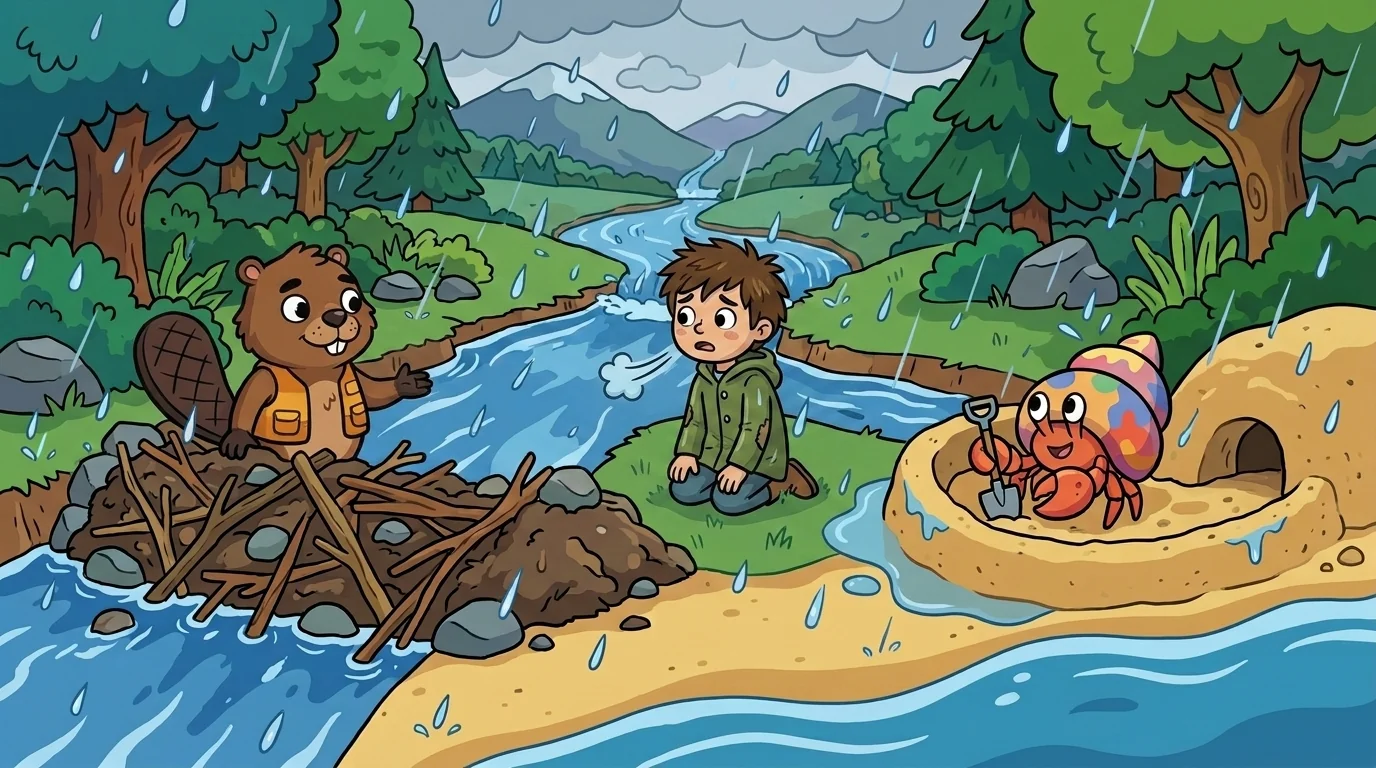
"When it feels like it's hopeless because we can't stop all of it," he said, "how do I stop feeling helpless?"
Curb thought of meeting the flood upstream instead of too late; Shore thought of the tide that taught her to get ready instead of pretend. And they answered the way they answered everything — one hand each.
"You slow what you can," Curb said. "Every bit counts, and it's never all-or-nothing."
"And you get ready for what's already coming," Shore said. "That's not surrender. That's the second hand."
"Helpless is what you feel when you think there's only one move and it's failing," Curb said. "But there were always two." Shore nodded. "Do both. Neither has to be perfect. Together they hold what neither could alone."
The boy let out a long breath, and the flat, stuck look lifted off him, and Curb and Shore watched his shoulders come down — the way their own had, years apart, on a stream and a shore, when do-something stopped being one impossible thing and became two possible ones.
They didn't say the last part aloud, but they thought it together, the way they thought most things: despair is a one-handed feeling. It comes from believing there's a single move and it isn't enough. But there were always two hands. Slow the cause. Ready for the rest. Nobody who has both ever has nothing to do.
The ClimateQuest ensemble
Curb and Shore is part of ClimateQuest's distributed-narrative cast. Each character embodies a different curricular primitive; together they teach the full subject.
-

Haze
Atmosphere (air, gases, the sky as a thin layer)
-

Squall
Weather events (vs. climate — short-term variability)
-

Round
Carbon + water cycles (recurring loops, balance)
-

Blanket
Greenhouse effect (insulating gases)
-

Stitch
Collective action / policy / repair
-

Glint
Ice-albedo feedback (bright ice reflects, dark water absorbs — a warming loop)
-

Fathom
Ocean heat + carbon sink (thermal inertia — the sea stores and slows change)
-

Cusp
Tipping points (thresholds where small change flips a system all at once)