Rafter and Block
HEARD AND SEEN — a performance only works if it reaches the audience two ways: Rafter is projection, filling the whole theater with a supported voice without shouting, and Block is blocking, arranging where actors stand and move so the story stays clear and readable from every seat in the house
A story read by Rafter and Block
Loading audio…
Press play to listen along. The line being read lights up as you go.
Show full transcript
Loading transcript…
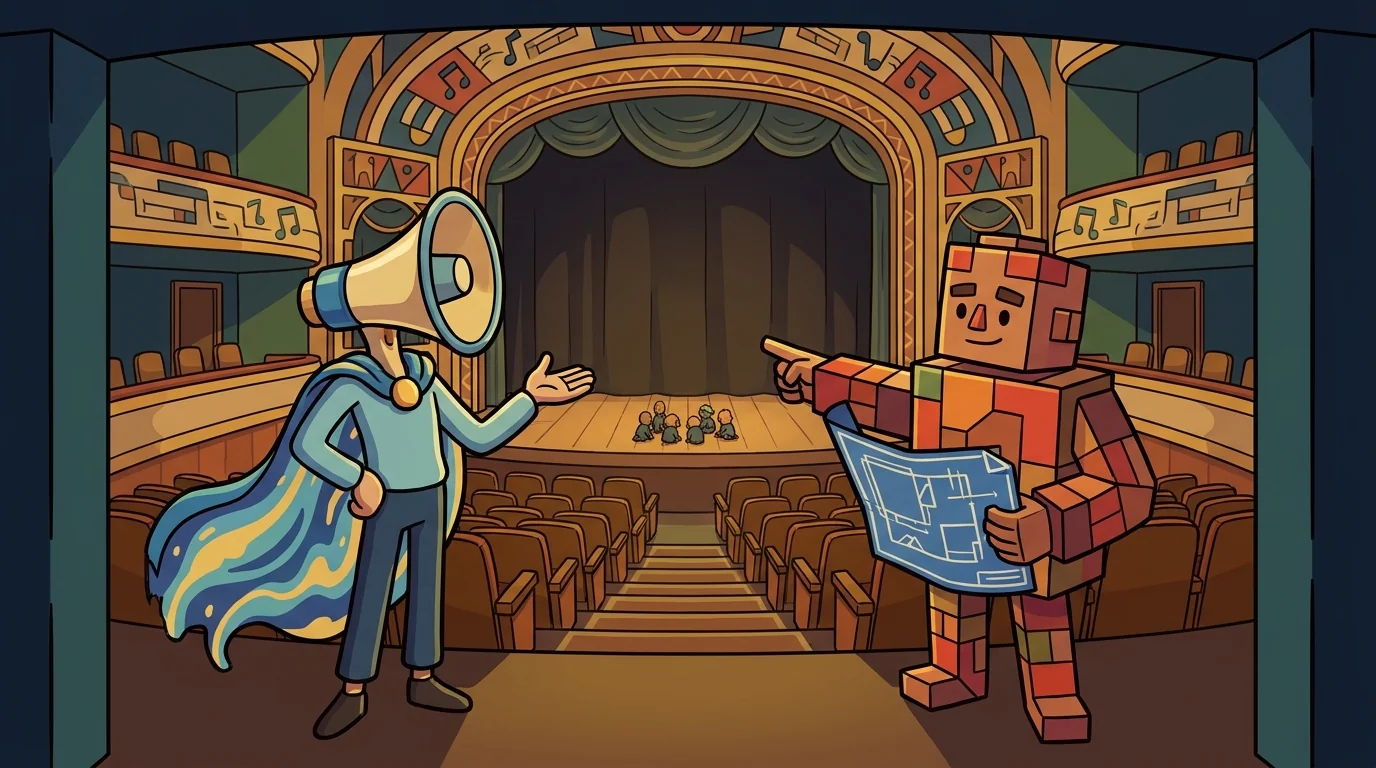
The young actors had built a beautiful scene — full of want and subtext, alive and true — and then they'd performed it in a whisper, huddled in a clump at the very back of the stage, and the people in the back rows of the theater had seen and heard nothing. All that good work, lost in the last twenty rows.
Two friends stepped in, because a performance that doesn't reach the audience isn't finished, no matter how good it is up close.
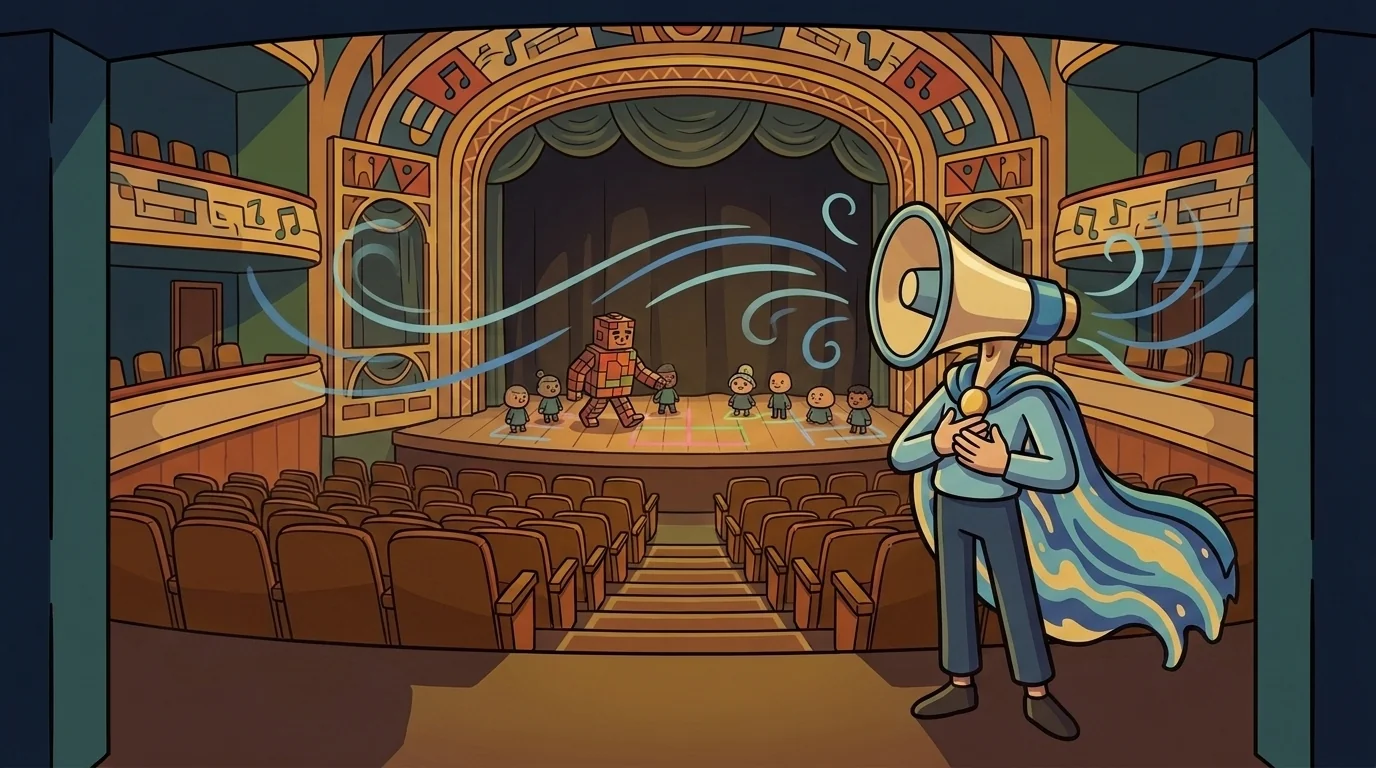
Rafter breathed from deep down and let a supported sound fill the whole hall.
Block walked the stage, arranging where everyone stood so the story could be seen from every seat.
"Gorgeous scene," said Rafter. "And the back half of the house missed all of it. Let's fix that — first, so they can hear you."
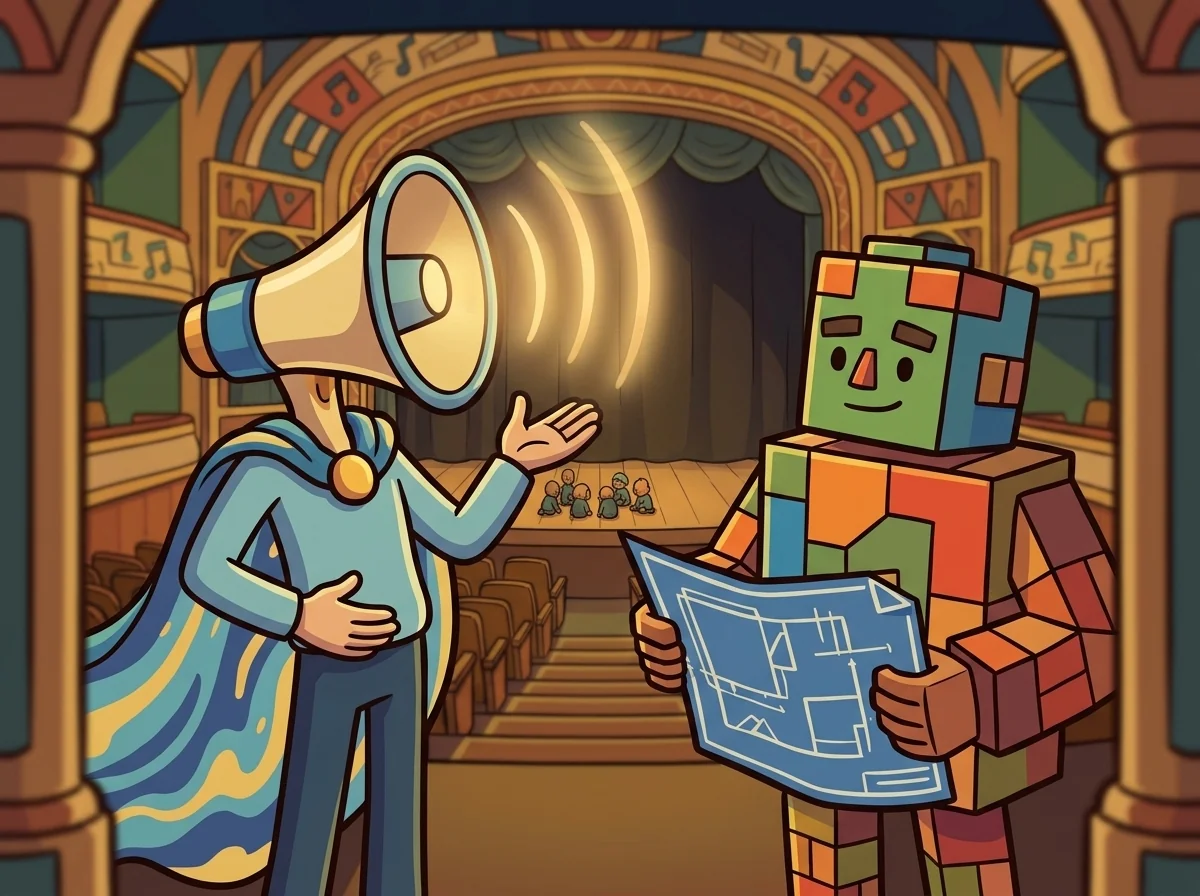
Rafter went first, filling the theater with sound — because a voice that doesn't reach the back row leaves half the audience out, and shouting isn't the answer.
"You were whispering," said Rafter, "and the back rows got nothing. So the instinct is to shout — but shouting is ugly, it strains your throat, and it flattens all the feeling out of the line." Rafter placed a hand low on the belly. "The answer is projection — supporting the voice from down here, from the breath, and letting it open up and fill the room. Not louder — fuller. Rounder. Carried on a deep breath instead of squeezed from the throat." Rafter spoke, and a warm supported sound reached easily to the very back wall without ever sounding like a yell. "Feel where it comes from — not the throat, the center, the breath pushing up steady from deep down. That's how an actor speaks a tender, quiet line and still reaches the last row: the feeling stays gentle, but the sound is fully supported and open. You're not shouting at the back row. You're including them — sending your voice all the way to them so no one in the whole house is left out of the moment."
Then Block walked the stage, arranging the actors — because a story has to be seen, and a clump of actors with their backs turned tells the audience nothing.
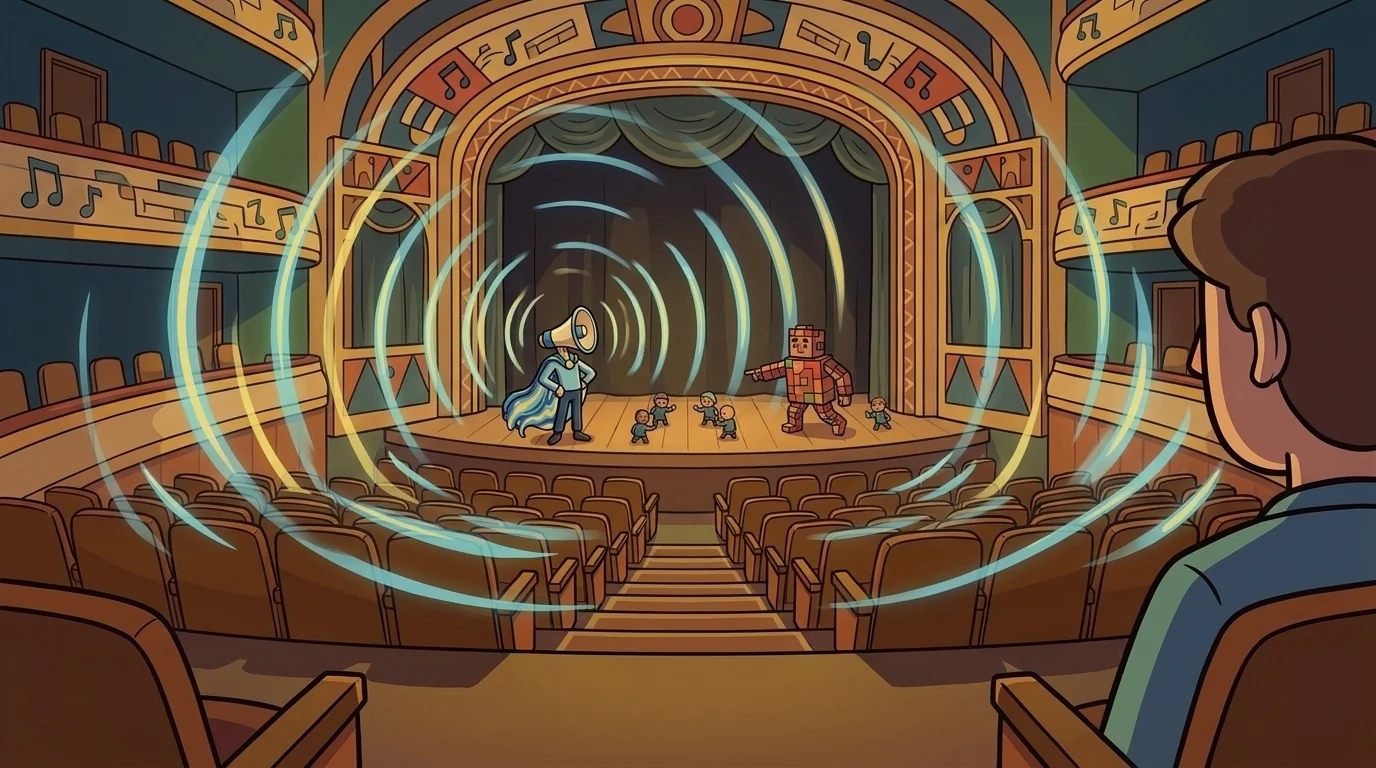
"Now the other half," said Block. "You were all bunched at the back, half of you facing away. Even if they could hear you, the audience couldn't read the scene — who's angry at whom, who's turning away, who reaches for whom." Block began moving the actors, spacing them out, opening them toward the house. "This is blocking — deciding where everyone stands and moves so the story is clear from every seat. The one with the power stands a little forward. The one being left out drifts to the edge. When two characters clash, I turn them to face each other where the audience can see both faces. The movement itself tells the story — someone stepping closer, someone backing away — even before a word is heard." Block set the stage picture. "And I keep it open — actors angled a little toward the audience, not hidden behind each other, so the picture reads clean from the front row and the back corner. A scene isn't just words. It's a moving picture, and my job is to compose that picture so everyone, everywhere in the house, can see the story happening."
And they ran the scene again — voices supported and filling the hall, actors spaced and angled so the whole story read clean — and this time it reached everyone: the front row and the very back corner, all of them held in the same living moment. The beautiful scene wasn't wasted anymore. It landed, on every single person in the house.
"You need my picture," said Block, "or they can't see what they're hearing."
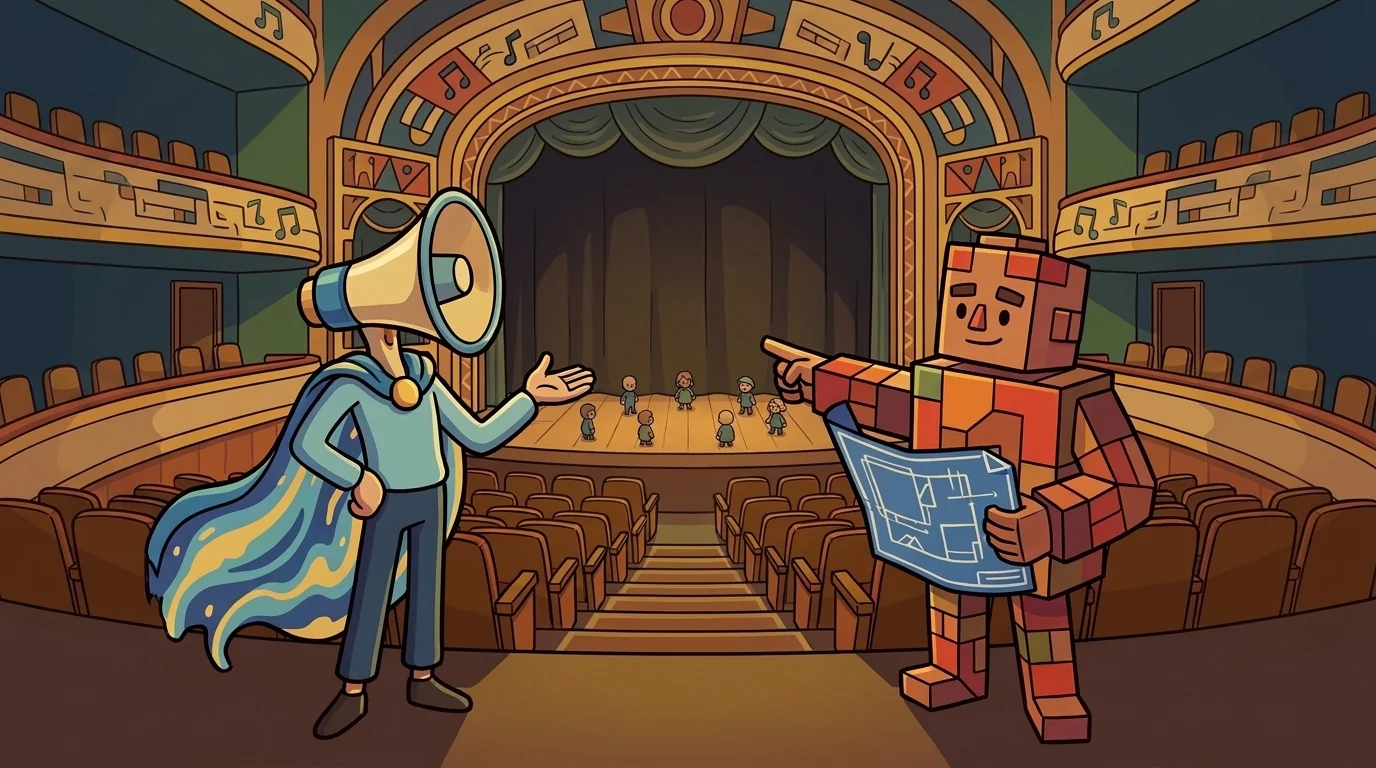
"And you need my voice," said Rafter, "or they can't hear what they're seeing."
"Good projection," said Block.
"Good staging," said Rafter.
There is a warm, generous feeling at the heart of these two crafts — because both are really about including everyone. Not just the front row, not just the people close enough to catch a whisper — but the kid in the very back corner too, making sure they can hear every gentle word and see every turned shoulder. A performance, it turns out, isn't finished when it's good. It's finished when it reaches — all the way to the last seat in the house. And there's something quietly kind in that: the care an actor takes to send their voice and shape their movement so that no one is left out of the story. To be reached like that, wherever you're sitting — and to do the reaching — is one of the oldest warmths the theater offers.
The StageForge ensemble
Rafter and Block is part of StageForge's distributed-narrative cast. Each character embodies a different curricular primitive; together they teach the full subject.
-

Face
Acting — character work through voice, body, and emotional life
-

Pen
Playwriting — turning ideas into scripts with character, conflict, structure
-

Block
Blocking — directing actors through stage geography
-

Rig
Stagecraft — the technical-theater craft that makes the visible-stage possible
-

Riff
Improvisation — the live-performance craft of Yes, and...
-

Rafter
Projection — making your voice reach the back row without shouting, by supporting it with breath so even a quiet line lands in the last seat
-

Yearn
The objective — what a character wants in a scene, badly enough to drive every line and move; the engine under a performance
-

Undertow
Subtext — the real meaning running under the spoken line; what a character truly means beneath the words they actually say
-

Freeze
Tableau — a frozen stage picture the whole cast holds so the audience can read the moment like a painting
-

Hitch
Pacing and timing — the rhythm of a scene and the deliberate pause that makes a line land, the held beat before the joke or the truth
-

Opening Night
The whole company on stage together — how acting, objective, subtext, tableau, and timing combine so one live scene truly comes alive