
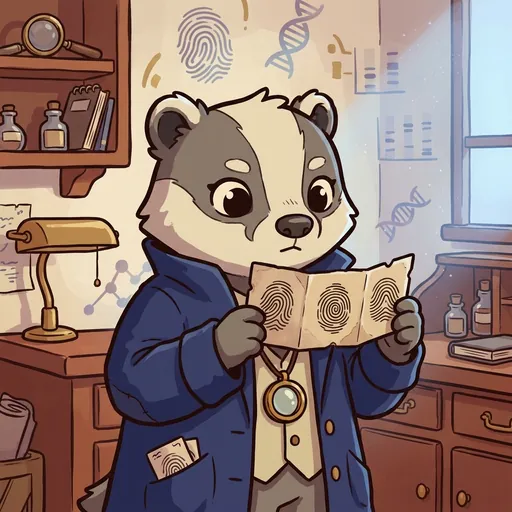
Loop
IMPRESSION EVIDENCE — *fingerprints, shoeprints, toolmarks; class vs individual evidence.* The forensic-science primitive of *patterns that one surface leaves on another, and the discipline of distinguishing class-level from individual-level identification.*
Listen along — Loop
Loading audio…
Press play to listen along. The line being read lights up as you go.
Show full transcript
Loading transcript…
Chapter 1 — Loop and the Fingerprint-Reference-Card
Loop wasn’t large, not even for a badger-tween. Her fur was a neat stripe of grey, cream, and black. She moved with a quiet, careful grace, her steady eyes missing nothing. Tucked into her vest pocket, always, was a small, folded card. It was her most prized possession. This card, worn smooth from countless touches, showed the three basic fingerprint patterns: loop, whorl, and arch. Her own name, Loop, came from that first, most common pattern. She loved tiny details, and that card was full of them.
Loop taught at SleuthLab Academy. Her specialty was impression evidence. This meant understanding the unique marks one surface left on another. Think of a shoe print in mud, or a tire track on dirt. Even a tiny fingerprint on a smooth surface. All these were impressions. The trick, Loop always said, was knowing what kind of information each impression truly offered. She focused on two main kinds of identification: class-level and individual-level.
“Imagine a muddy shoe print,” Loop might tell her students. She’d draw a quick sketch on the board. “It tells you the shoe was a size nine. It was a sneaker, probably a ‘Zoomer’ brand. That’s class evidence.” She’d tap the drawing. “It narrows things down. A lot of people wear size nine Zoomers. It doesn’t tell you who wore that exact shoe.”
Then she’d pull out her card. “Now, look at a fingerprint.” She’d point to a tiny line on her card. “This isn’t just a loop pattern. It has a specific fork right here, a ridge ending there. See that tiny island of skin?” Her paw would trace the details. “When you find enough of these specific features matching, you’ve got individual evidence. That points to one person. One single source.”
Loop was always careful. She never let anyone jump to conclusions. “Class evidence is for narrowing down suspects,” she’d insist. “It doesn’t tell you who did it. Individual evidence needs many specific matches. Not just one or two. You have to be honest about what the evidence truly shows.”
“Remember,” Loop would often say, “we’re a junior forensics team. We solve puzzles, not crimes.” She’d tick off examples on her fingers. “Who borrowed the library book without checking it out? Who left those muddy footprints in the hall? Whose pen made that doodle on the schedule board?” Her cases were always school and community mysteries. “The rules of evidence are the same,” she’d explain. “But our scale is different. It’s about solving local riddles, not big, scary cases.”
Loop came from a small village. Her family had been the gate-watchers for generations. They were the badgers who kept track of everyone entering and leaving. Not by asking names, but by watching the dirt path. Each villager’s shoes left a unique mark. A certain size, a specific tread pattern, a worn spot on the heel. By the time Loop was six, she could identify most villagers just by their footprints. She learned early that patterns were everywhere, if you just knew how to look.
When Loop arrived at SleuthLab Academy, she was twenty-two. Inspector Vex, the head of the academy, had one question. “What is impression evidence?” Loop didn’t hesitate. “It’s the patterns one surface leaves on another. Class evidence narrows possibilities. Individual evidence identifies, but only with enough specific matches.” She paused, then added, “It’s for junior-forensics-team cases. School puzzles, not crimes. And you must always be honest about what the evidence truly supports.” Inspector Vex simply nodded. “You are appointed,” he said.
In her workshop, the first day of every lesson began the same way. Loop would stand before her new students. She would carefully unfold her small, worn fingerprint card. “I am Loop,” she’d say, her voice calm and clear. “My job is to teach you about impression evidence.” She’d hold up the card. “It’s all about the patterns one surface leaves on another. We learn to tell the difference between class and individual evidence. And we always, always, must be honest about what our evidence actually shows.”
Her lessons covered many things. First, fingerprints. She’d show them the basic patterns: loops, whorls, and arches. She’d point out how each pattern had tiny, unique details, called minutiae. A fork in a ridge, a small dot, a break in a line. “These are the features that make a fingerprint unique,” she’d explain.
They’d practice telling class evidence from individual evidence. A shoe print might be a “size six, hiking boot, Brand X.” That’s class. But a fingerprint with eight specific matching minutiae? That was individual. “The more specific features you match,” Loop would say, “the more confident you can be.”
She warned against being too sure. “Even fingerprints have error rates,” she’d remind them. “Real forensic science admits uncertainty.”
Beyond fingerprints, they studied other impressions. Shoeprints, tire tracks, even toolmarks left on wood. The same rules applied: class versus individual.
They learned how to find hidden fingerprints. Invisible prints, called latent prints, could be dusted with powder. The powder stuck to the oils left behind, making the print visible. Then they would carefully “lift” it with tape.
Always, Loop brought them back to their scale. “Our cases are about missing library books,” she’d say. “Or who left a muddy footprint. Not violent crimes.” She also taught them to check their own biases. “Don’t decide who did it before you look at the evidence,” she’d caution. “Consider every suspect fairly.”
“I’ve helped solve dozens of puzzles,” Loop would tell her students. “Most of them involved class-level evidence. That means we narrowed down the suspects. We didn’t always find one specific person.” She’d look around the room, her steady eyes serious. “Honest evidence work is the most important part. It’s not hard. It’s just knowing the difference between class and individual. And being honest about what the evidence truly supports.”
The small, worn fingerprint card would then be folded carefully. It would return to Loop’s vest pocket, waiting for the next impression, the next puzzle, the next chance to show its secrets.
The SleuthLab ensemble
Loop is part of SleuthLab's distributed-narrative cast. Each character embodies a different curricular primitive; together they teach the full subject.
-
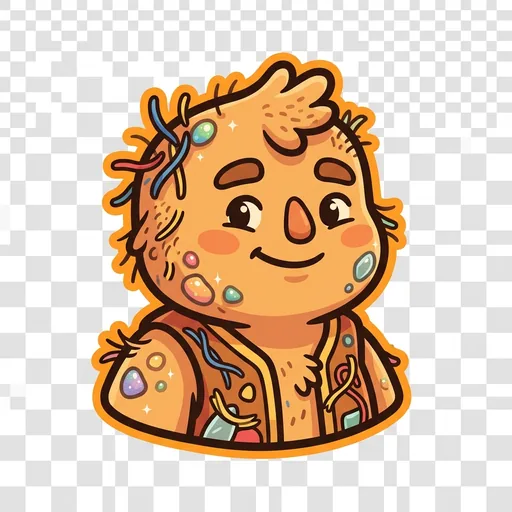
Fiber
Trace evidence — fibers, hairs, paint, glass (Locard's exchange principle)
-

Drop
Chemical evidence — chromatography, pH, spectroscopy (test-don't-guess)
-

Stroke
Document analysis — handwriting, ink, paper (comparison methodology)
-

Witness
Biological + digital evidence — DNA + digital footprints (statistical-match, not certainty)
-

Seal
Chain of custody — bag it, label it, log every hand it passes through; a broken chain can't be trusted; otter with evidence bags + logbook
-
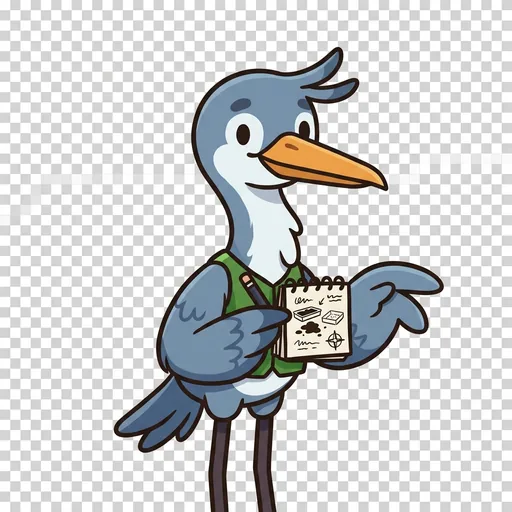
Sketch
Scene documentation — record the scene before anyone touches it; the scene only tells its story once; heron with a measuring notebook
-

Tick
Timeline reconstruction — put every event in order on the clock; the sequence is where the answer hides; mouse with a paper timeline
-

Branch
Alternative explanations — ask 'what else could explain this?' and test each branch before choosing; squirrel with a whiteboard of possibilities
-

Account
Testimony reliability — ask open questions and listen; memory is fragile and a confident witness isn't always correct; rabbit with a gentle notebook