
Account
ACCOUNT — ask open questions and listen; memory is fragile, and a confident witness isn't always a correct one.
Press play to listen along. The line being read lights up as you go.
Show full transcript
Loading transcript…
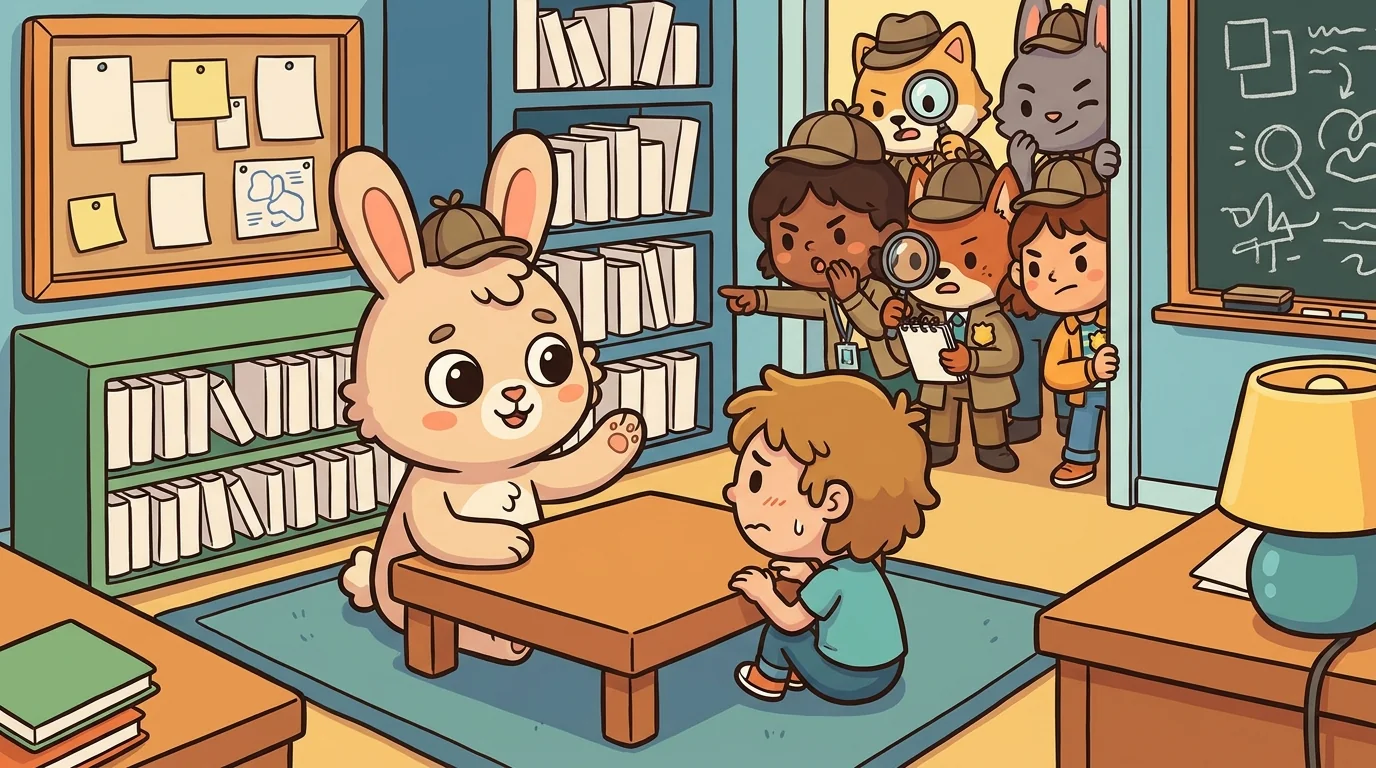
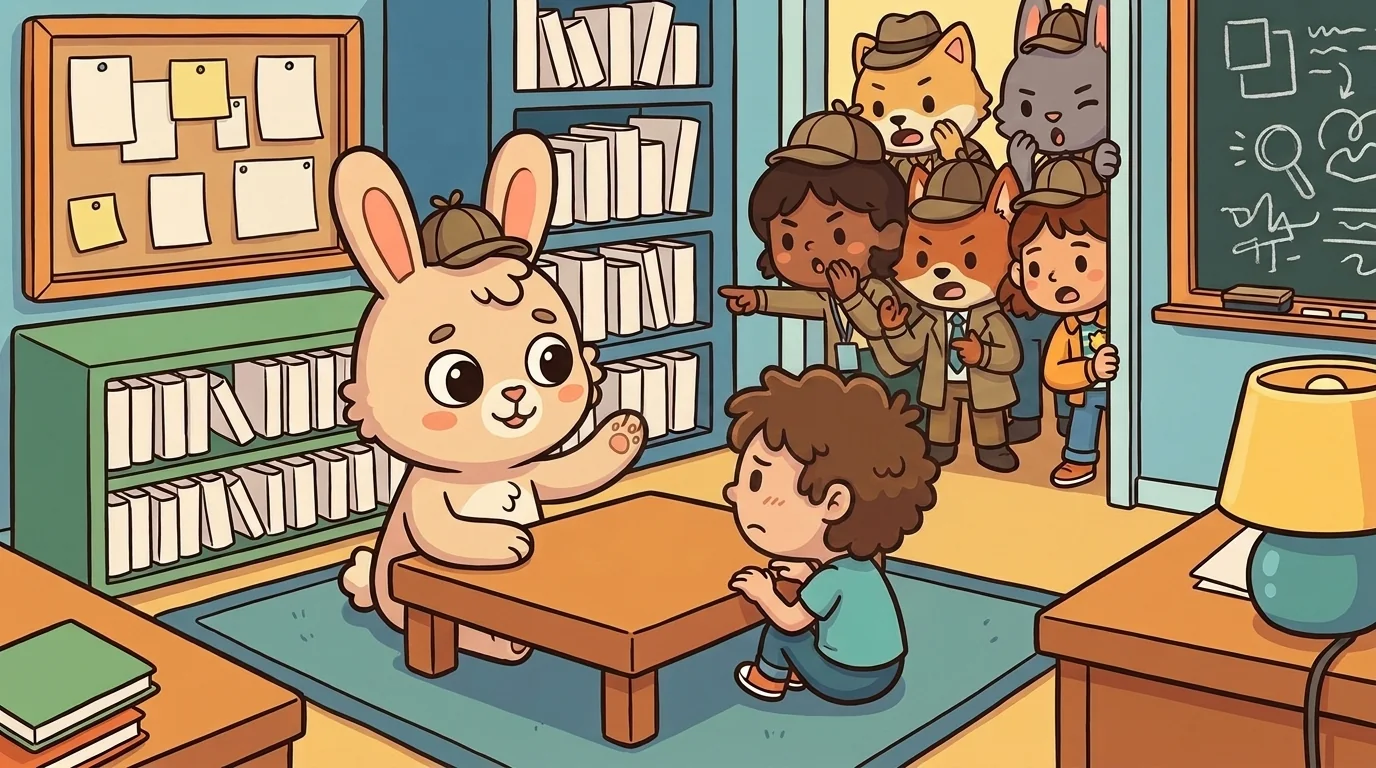
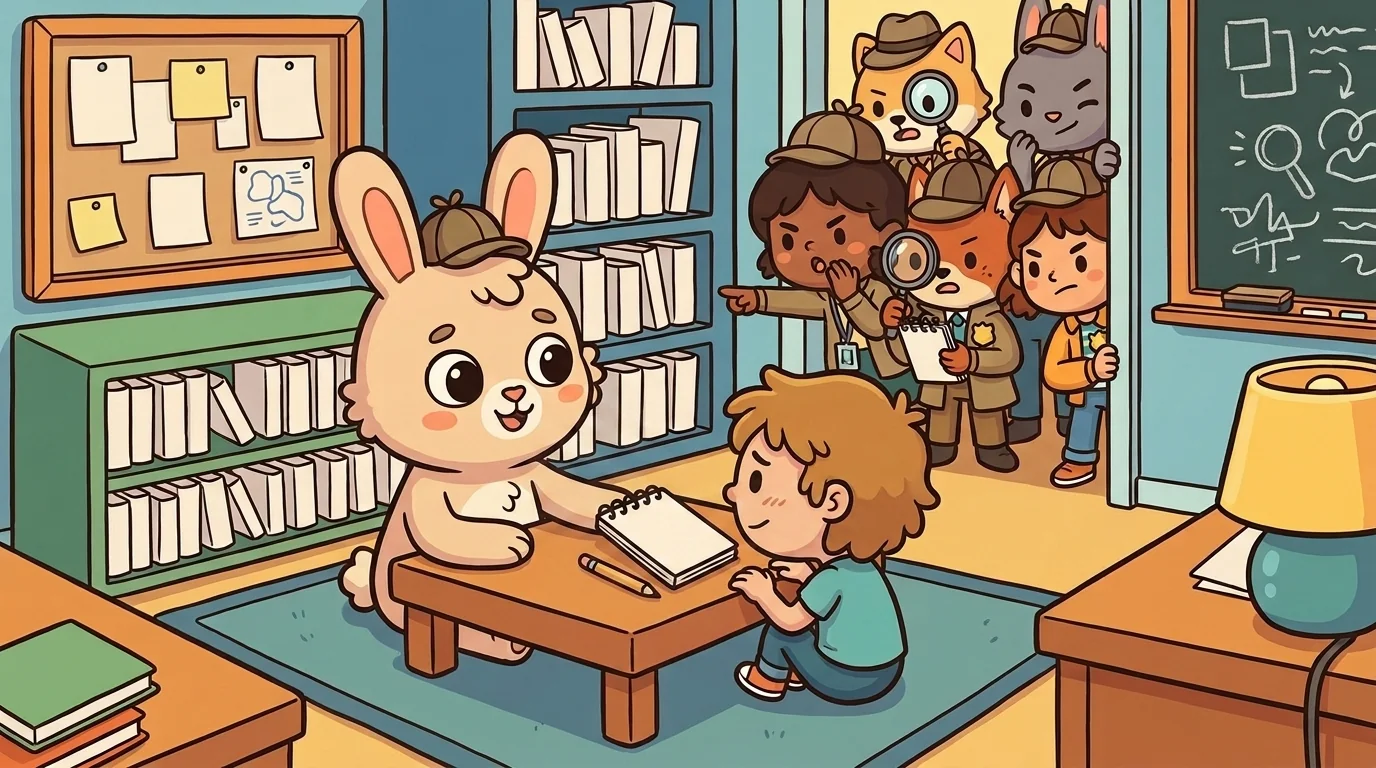
In a quiet corner of the SleuthLab clubroom, a rabbit named Account sat across from a nervous first-grader who'd seen the recycling bins get tipped, and asked, very gently: "Just tell me what you saw. In your own words. Take your time."
The rest of the detective club leaned in, impatient, and one whispered loudly, "Ask them if it was the tall fox! It was the tall fox, right? You saw the tall fox?"
Account raised a soft paw. "No. Don't hand them the answer and ask them to agree. If I say 'did you see the tall fox,' a nervous kid who wants to be helpful might start to see a tall fox in their memory — even if what they really saw was a shape in a hurry. Memory isn't a photograph you look up. It's more like a drawing the mind re-sketches each time, and a leading question adds lines that were never there. So I ask open: what did you see? And then I wait, and I don't fill the silence with my own guess."
Have you ever "remembered" something clearly and then found out it didn't happen that way? What did it feel like to learn your own memory had shifted?
Account had learned to ask carefully after watching a leading question invent a memory whole.
Long ago, the club was sure a certain kid had knocked over the paint shelf, and they'd interviewed a witness by asking, again and again, "you saw them do it, didn't you? The one in the red coat? By the shelf?" And the witness — trying to be helpful, wanting the askers to be happy — slowly, honestly came to remember a red coat by the shelf. Except the accused kid didn't own a red coat, and had been in the library the whole time. The red coat had been sewn into the witness's memory by the questions themselves.
Account, small and listening from the side, had felt something go cold and careful. The witness hadn't lied. That was the frightening part. They'd believed the red coat, felt sure of it, because certainty and truth aren't the same thing, and a memory can feel bright and solid and still be partly built by the person asking. You can lead someone into remembering wrong without either of you meaning to, Account had understood. From then on, Account asked the openest questions it could, and never handed a witness the answer.
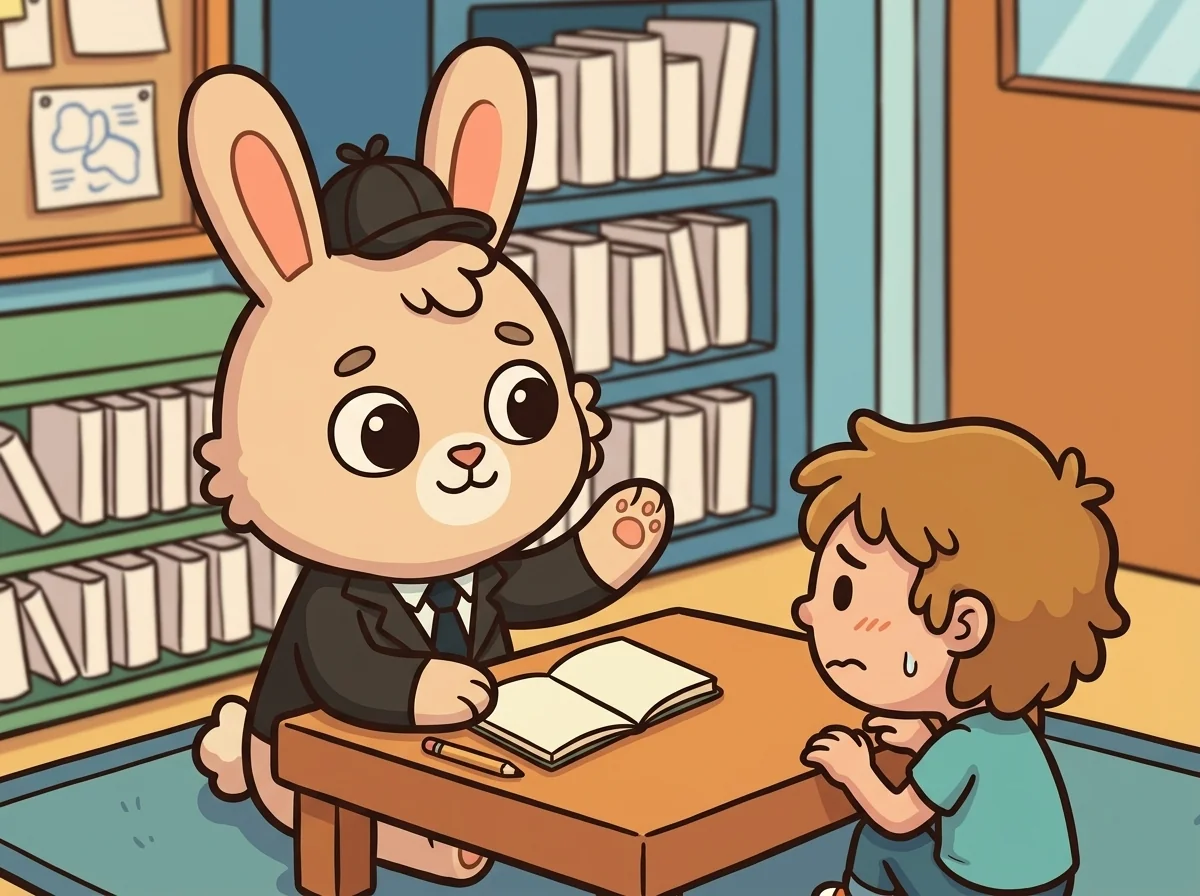
Account hopped to the SleuthLab academy with a notebook of questions that all started with "what" and "tell me."
Inspector Vex met Account and asked the question. "How do you take a witness's story?"
Account answered with a small demonstration: Vex described a scene, then Account asked one club member "was the umbrella blue?" and asked another "what color was the umbrella?" The first, led, said blue. The second, open, wasn't sure — and it turned out there'd been no umbrella at all. The leading question had grown one.
"Open questions let the memory speak for itself," Account said. "Leading questions make it say what I want. I'd rather have an honest 'I'm not sure' than a confident answer I put there myself."
Inspector Vex considered the two very different results and nodded. "You are appointed."
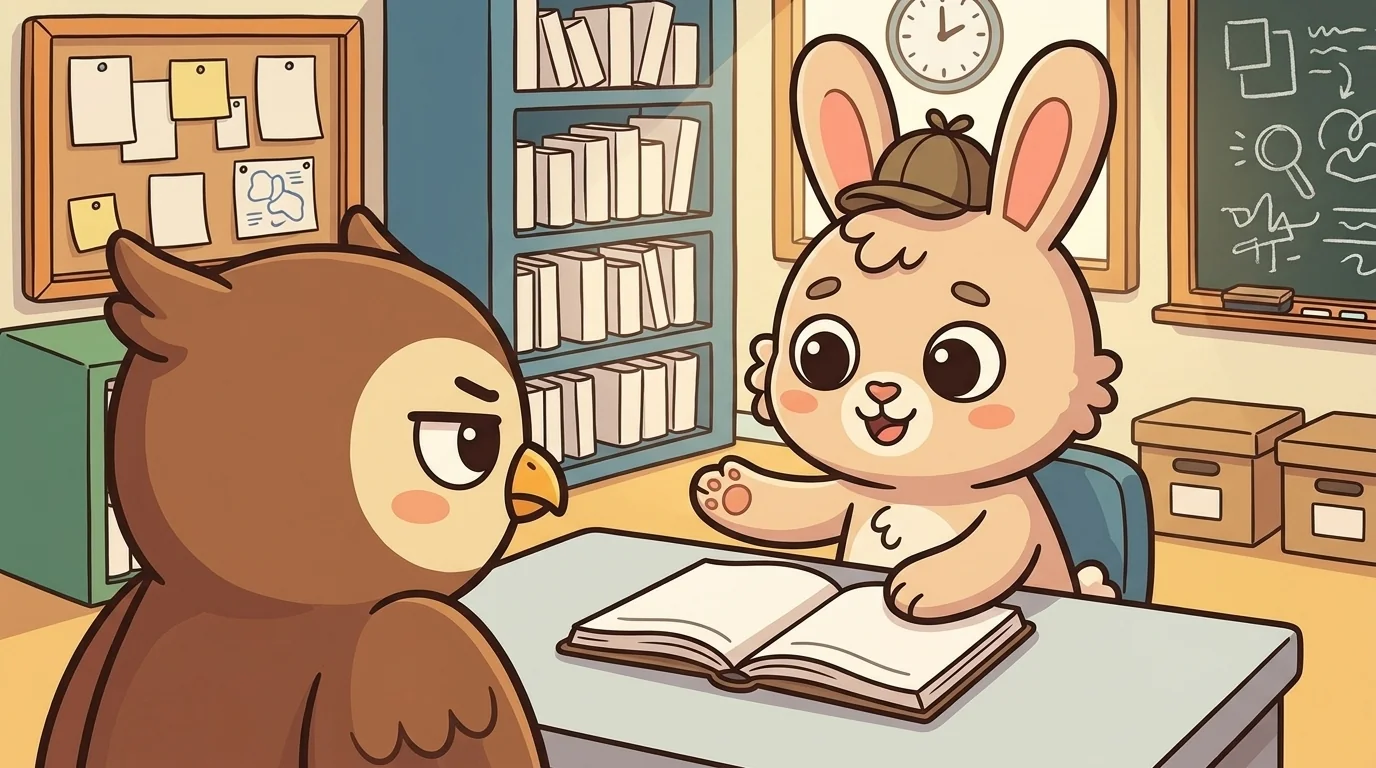
In Account's corner-workshop, a young owl frowned, skeptical.
"Account, if memories are that shaky, and confident people can just be wrong — why interview anyone at all? Can we ever trust what a witness says?"
Account set down the gentle notebook.
"We can — if we're careful how we ask, and if we check what we hear against the other evidence instead of taking it as final. Here's the discipline: ask open, never leading. Let silences sit. Write down their exact words, not your summary. And treat even a very sure witness as one clue among many, not the whole answer — because certainty is a feeling, and feelings can be wrong with total conviction. A witness isn't useless. They're precious. You just have to hold their words gently enough not to reshape them, and honestly enough not to over-trust them." Account tapped the notebook. "The goal isn't to catch people lying. Most witnesses aren't lying. The goal is to keep from accidentally teaching them a memory."
The owl's frown eased. "So it's less like squeezing the truth out, and more like... not spilling it."
"Not spilling it," Account agreed. "Exactly that."
Think of a time someone let you tell your side in your own words, without putting answers in your mouth. What did being heard like that feel like?
The owl thought about it, and something behind the skepticism went quiet and a little tender.
"When the paint thing happened to me," the owl said, "everyone kept asking 'why did you do it,' like it was already decided. Nobody once asked 'what happened.'" The owl's voice dipped. "The first grown-up who just said 'tell me, in your own words' — I almost cried. I finally got to be a person telling a story instead of a suspect nodding along."
"That's the feeling I try to give every witness," Account said, warm and low. "That safe, unhurried feeling of someone is actually listening to me, not steering me. It's a kind of respect — trusting a person to tell their own story without you writing it for them. And the funny thing is, it's also how you get the truest account. People remember better when they feel safe and unled. Kindness and accuracy turn out to be the same skill." Account slid the gentle notebook toward the owl. "Go listen to someone like that. Watch how much more they can tell you once they're not being pushed."
The owl took the notebook, feeling the warmth of having been heard once and getting to pass it on, and went to ask someone, gently, what did you see?
The SleuthLab ensemble
Account is part of SleuthLab's distributed-narrative cast. Each character embodies a different curricular primitive; together they teach the full subject.
-

Loop
Impression evidence — fingerprints, shoeprints, toolmarks (class vs individual evidence)
-
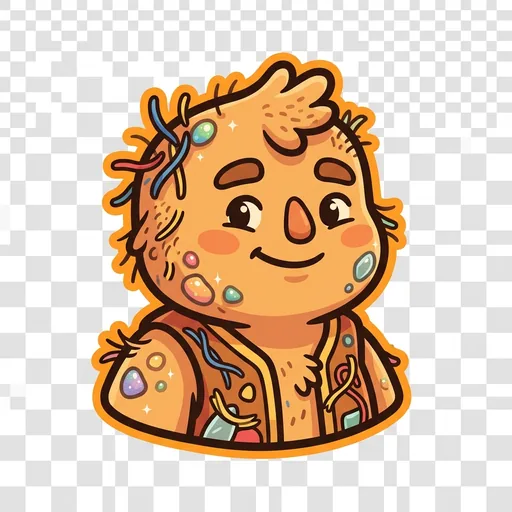
Fiber
Trace evidence — fibers, hairs, paint, glass (Locard's exchange principle)
-

Drop
Chemical evidence — chromatography, pH, spectroscopy (test-don't-guess)
-

Stroke
Document analysis — handwriting, ink, paper (comparison methodology)
-

Witness
Biological + digital evidence — DNA + digital footprints (statistical-match, not certainty)
-

Seal
Chain of custody — bag it, label it, log every hand it passes through; a broken chain can't be trusted; otter with evidence bags + logbook
-
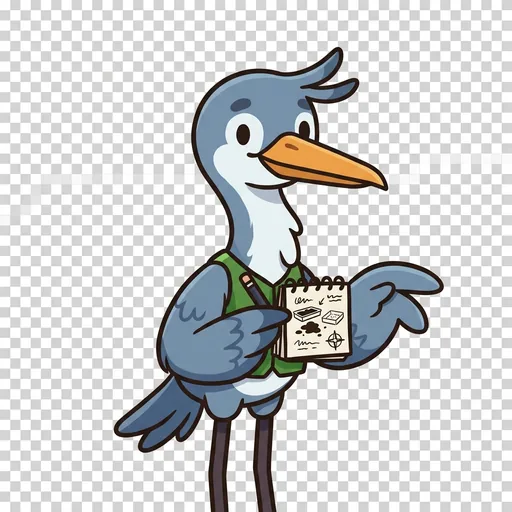
Sketch
Scene documentation — record the scene before anyone touches it; the scene only tells its story once; heron with a measuring notebook
-

Tick
Timeline reconstruction — put every event in order on the clock; the sequence is where the answer hides; mouse with a paper timeline
-

Branch
Alternative explanations — ask 'what else could explain this?' and test each branch before choosing; squirrel with a whiteboard of possibilities