Grace and Levee
BOTH CAN BE TRUE — repair is not self-erasure: Grace holds that you can be genuinely sorry for a hurt AND still know you are a good person, and Levee holds that you can forgive someone AND still keep a boundary that keeps you safe — two true things, held at the same time
A story read by Grace and Levee
Loading audio…
Press play to listen along. The line being read lights up as you go.
Show full transcript
Loading transcript…
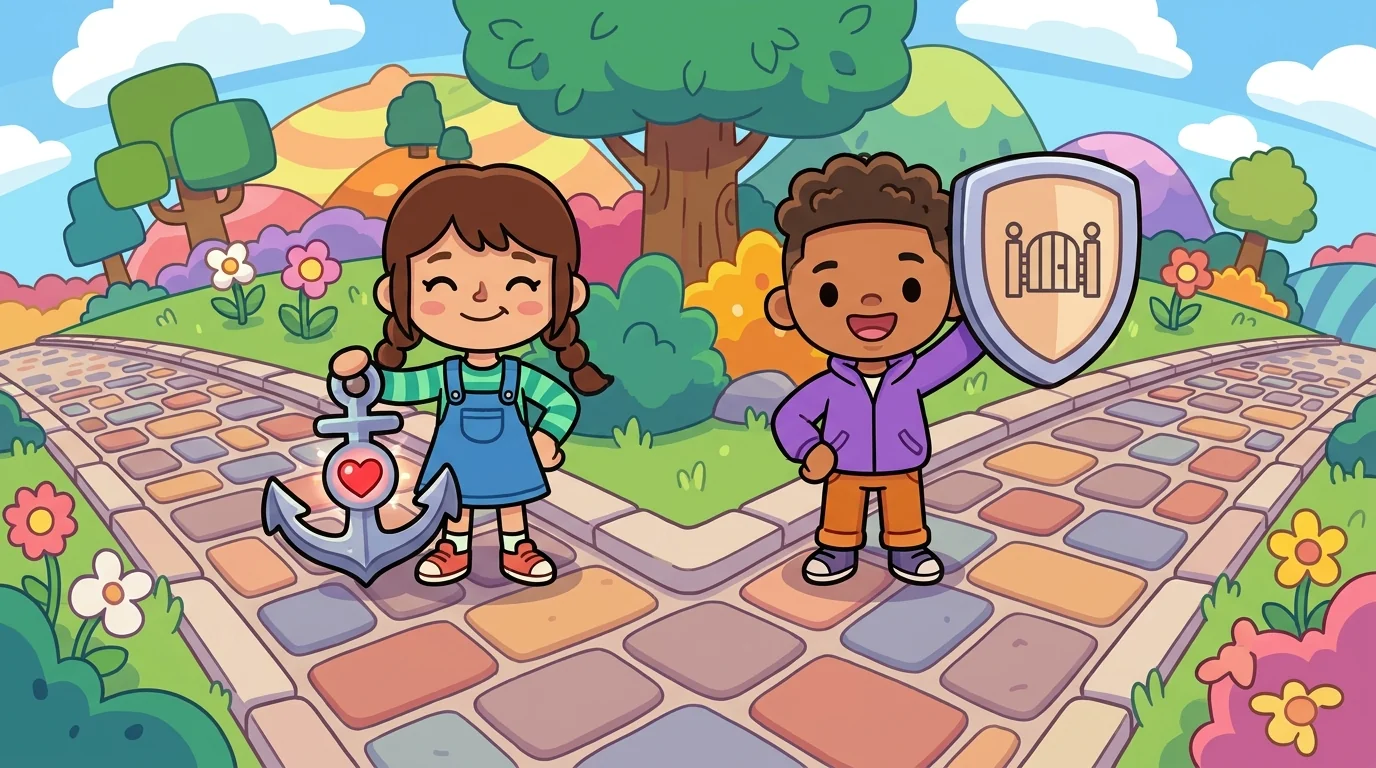
There is a hard corner of repair that trips almost everyone, and it trips them in two opposite directions — and two gentle helpers stood at that corner, one for each way a person could stumble.
Grace stood on one side, for the person who had done the hurt and was now sinking under it.
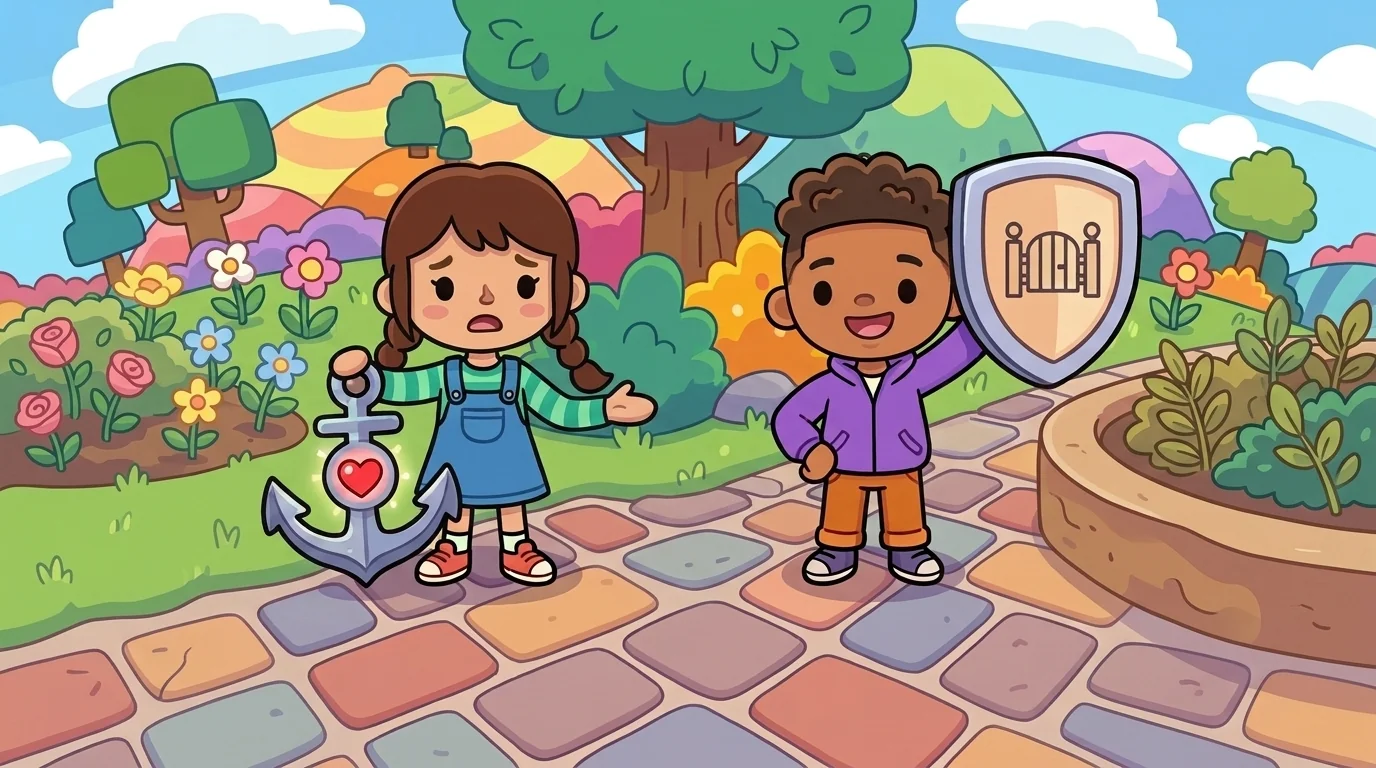
Levee stood on the other, for the person who had been hurt and wasn't sure they were allowed to still need something.
"Two people, two stumbles," said Grace, watching two friends work through a hard week. "But it's the same trap, really. Both of them think they have to pick just one true thing — when really, both are true."
"Both can be true," Levee agreed. "That's the whole lesson. Watch."
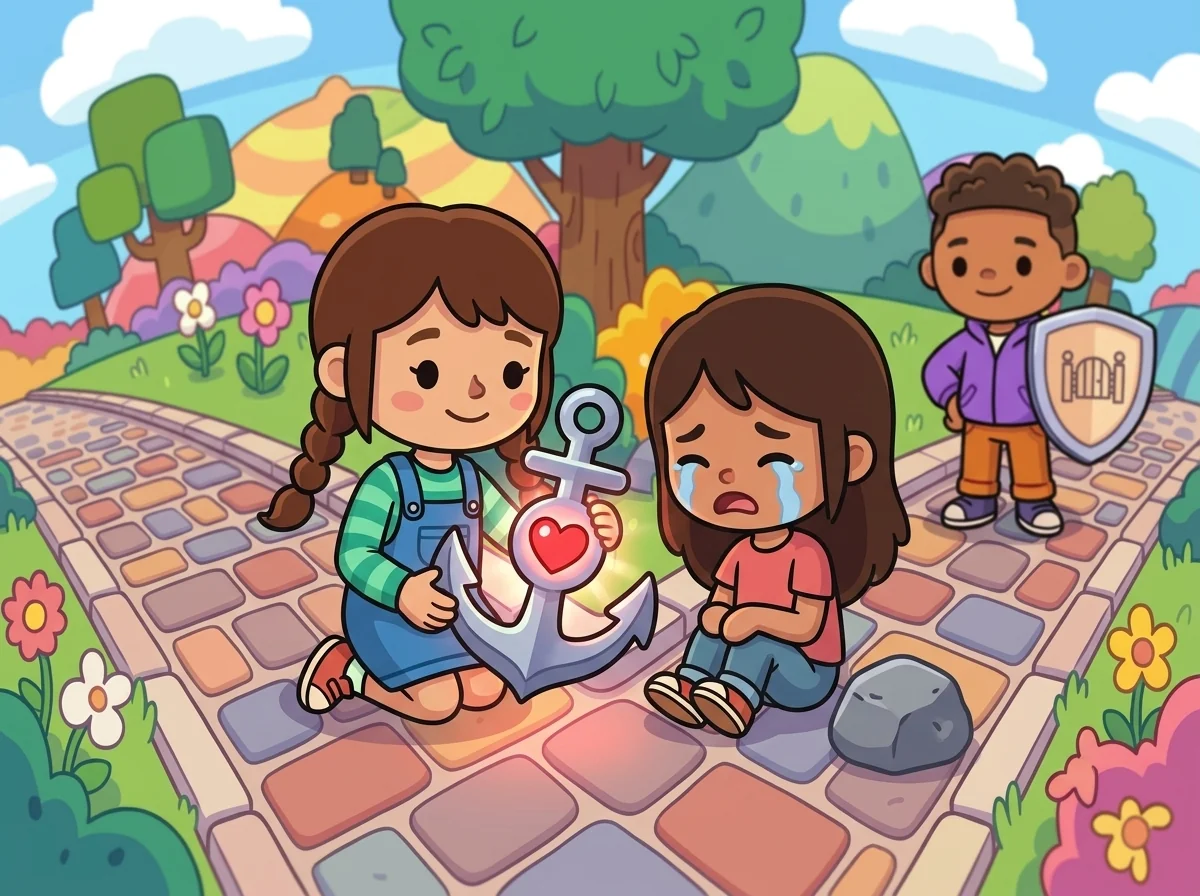
Grace went to the first one — the girl who had said something cruel to her sister three days ago, apologized for it, and had been quietly drowning in it ever since.
Because the girl had fallen into the trap that catches so many good-hearted people: she had decided that because she'd done a bad thing, she must be bad — all the way through, rotten to the center. And that heavy, all-bad feeling sat in her chest like a stone, and it wasn't helping her repair anything. It was just crushing her.
"Come here," said Grace, softly. "Let me show you two things that are both true. One: what you said was genuinely unkind, and being sorry for it is right. And two: you are a good person who did an unkind thing." Grace let that sit. "Both. At the same time. Being sorry doesn't mean you're bad — it means you care, which is the most un-bad thing there is. A bad person wouldn't be drowning like this. Only someone good aches this way over a hurt they caused." Grace's voice was very warm. "You don't have to choose between 'I did something wrong' and 'I'm a good person.' Hold both. That's not an excuse — the sorry stays real. It's just... mercy. The kind you'd give a friend, turned gently back on yourself."
And the stone in the girl's chest didn't vanish — but it got lighter, enough to breathe under.
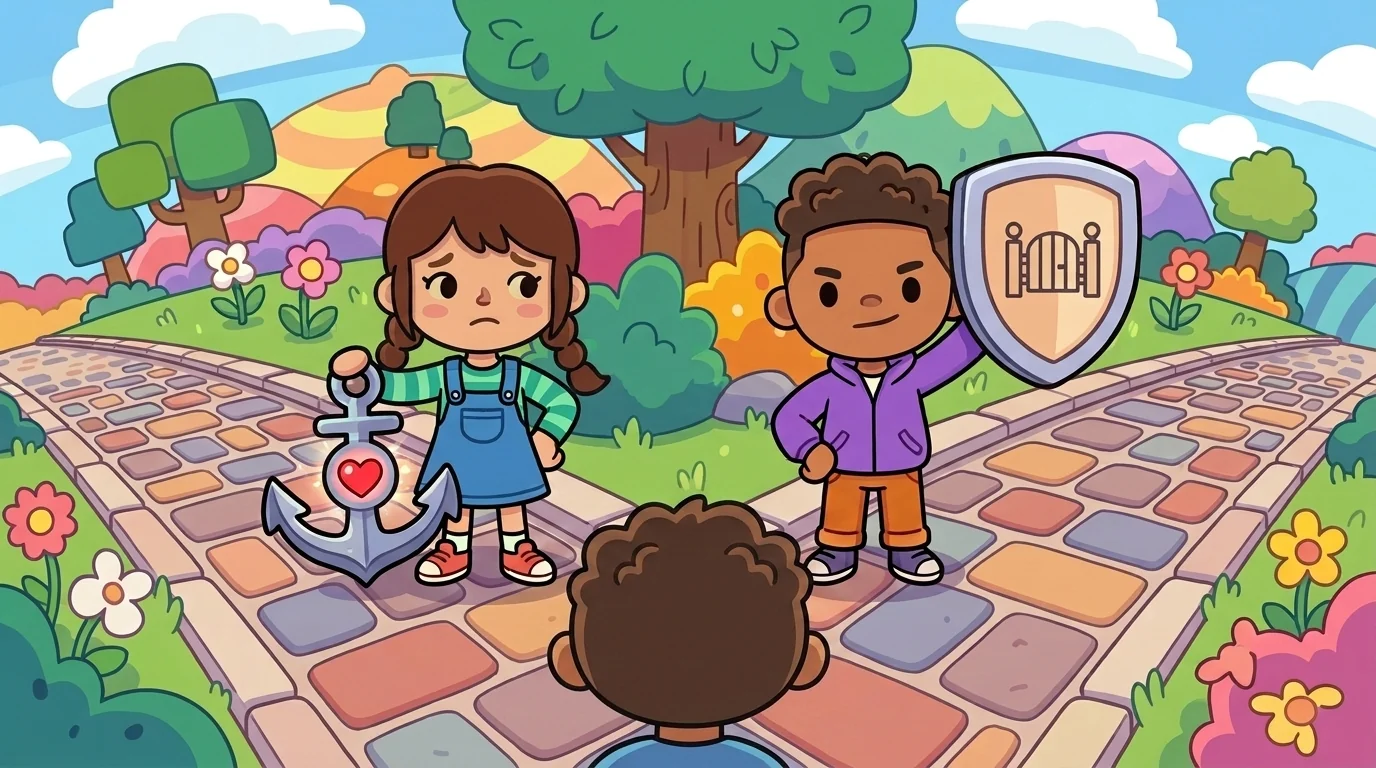
Then Levee went to the second one — the sister, the one who'd been hurt, who had forgiven the cruel words but was now tangled in a trap of her own.
Because the sister thought forgiving meant she had to pretend it never happened — had to fling the door wide open again and act as though there was nothing to be careful of. And something in her resisted that, and then she felt guilty for resisting, as if a real forgiveness would have no limits at all.
"No," said Levee, gently. "Look — two things, both true. One: you've forgiven her, and you mean it. And two: you're allowed to still say, 'that really hurt, and I need you to not do it again.' A boundary." Levee stood calm and steady. "Forgiving someone is not the same as erasing what you need. You can hold warmth in one hand and a limit in the other. 'I forgive you' and 'please don't speak to me that way' are not enemies. They can live in the very same sentence." Levee's voice stayed kind. "Forgiveness that erases every boundary isn't stronger — it just leaves you unprotected. The sturdy kind keeps the warmth and keeps the limit. Both. At the same time."
And the guilt in the sister loosened, because it turned out she wasn't failing at forgiveness — she was doing it the safe, whole way.
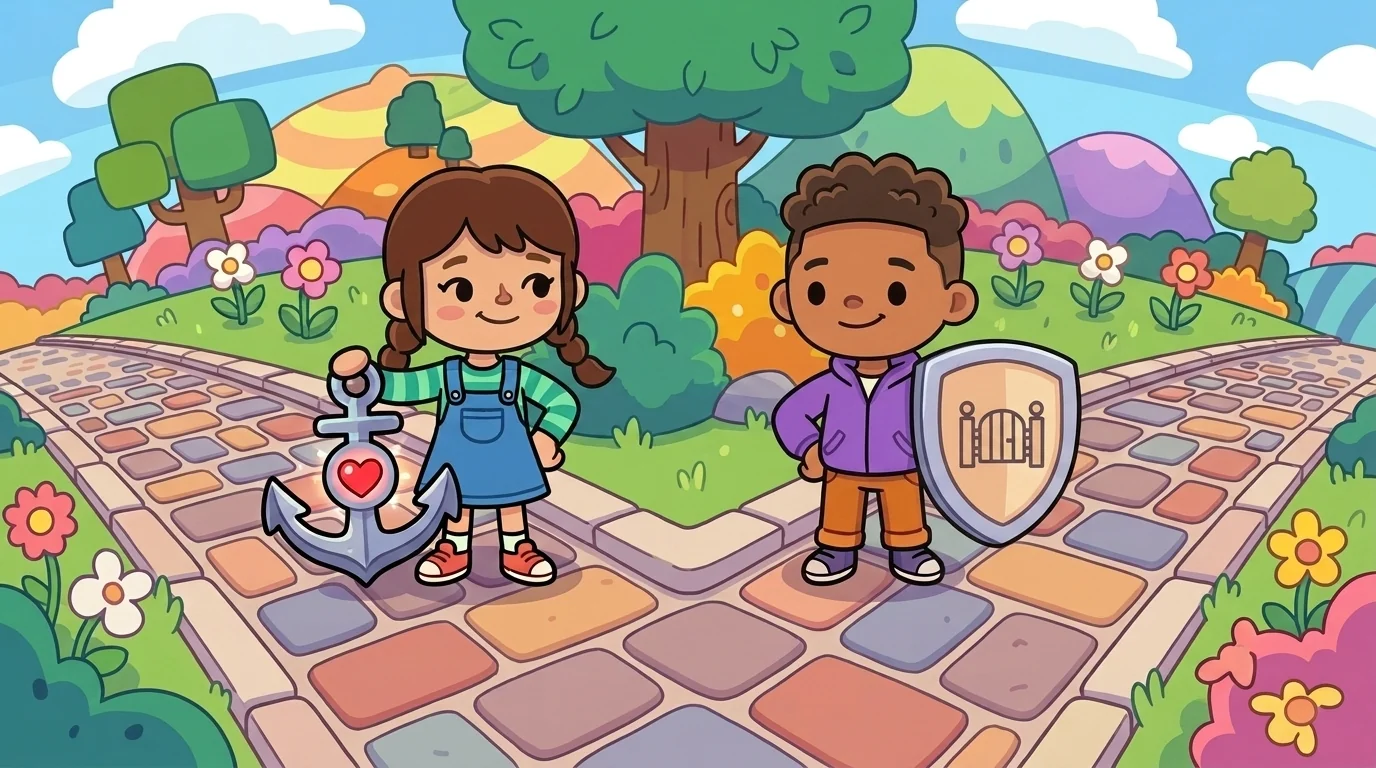
By the end of the week the two sisters were alright — not because one had made herself all-bad and the other had erased every limit, but because each had learned to hold two true things at once.
"Good mercy," said Levee.
"Good boundary," said Grace.
There is a quiet, grown-up relief in discovering that you don't have to collapse yourself to repair a relationship — that being sorry doesn't make you bad, and forgiving doesn't mean going unprotected. Repair asks you to be honest, and brave, and kind. It never asks you to erase yourself. Two things can be true at the same time: I did wrong, and I am good. I forgive you, and I still need this. Learning to hold both — instead of crushing yourself down to just one — is what lets a person mend hard things without breaking their own heart in the process.
The RuptureRepair ensemble
Grace and Levee is part of RuptureRepair's distributed-narrative cast. Each character embodies a different curricular primitive; together they teach the full subject.
-

See-It
Notice harm — soft warm-russet deer-tween in chunky moss-green vest; ears literally perked + eyes wide + one hoof raised mid-step; doesn't pretend not to see what just happened
-

Sorry
Acknowledge — soft cream-and-amber otter-tween in chunky soft-blue scarf; palms-up open-hands level bow-pose (NOT cringe); treats acknowledgment as skill, never proof of badness
-

Felt
Name-impact — round soft-grey-and-cream badger-tween with tiny notebook + soft-charcoal pencil; mid-listening with head tilted; never assumes — always asks-then-listens
-

Offer
Offer-repair — warm-amber raccoon-tween with chunky-paw extended palm-up holding small soft hand-folded paper-crane (universal not specific cultural symbol); never grasping
-
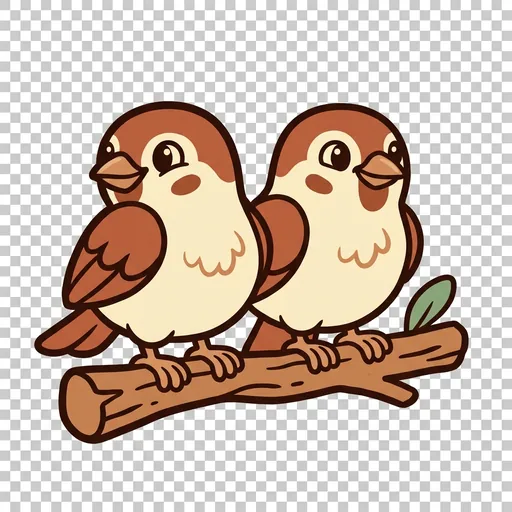
Together
Re-engage — two warm-cream-and-russet sparrow-twins on a single chunky branch, perched comfortable-distance-apart; both looking outward in same direction; `we're still here` energy
-

Eddy
Helps you steady yourself first, because you cannot mend anything while a big feeling is still rushing through you.
-

Lee
Shows that you can receive an apology from a safe place, at your own pace, without rushing to say it is okay.
-

Ease
Once you have made a real mend, helps you let the other person come back in their own time, with no pushing.
-

Grace
Reminds you that you can be truly sorry and still be worthy, so shame never stops you from repairing.
-

Levee
Shows that you can forgive someone and still keep a kind, clear limit that makes it safe to stay close.