Wonder, Synth and Verdict
FROM WONDER TO VERDICT — research isn't just collecting facts: it starts by turning a big vague interest into one focused, answerable question (Wonder), then combines what many sources say into a whole picture (Synth), then weighs the evidence and takes an honest stand (Verdict)
A story read by Wonder, Synth and Verdict
Loading audio…
Press play to listen along. The line being read lights up as you go.
Show full transcript
Loading transcript…
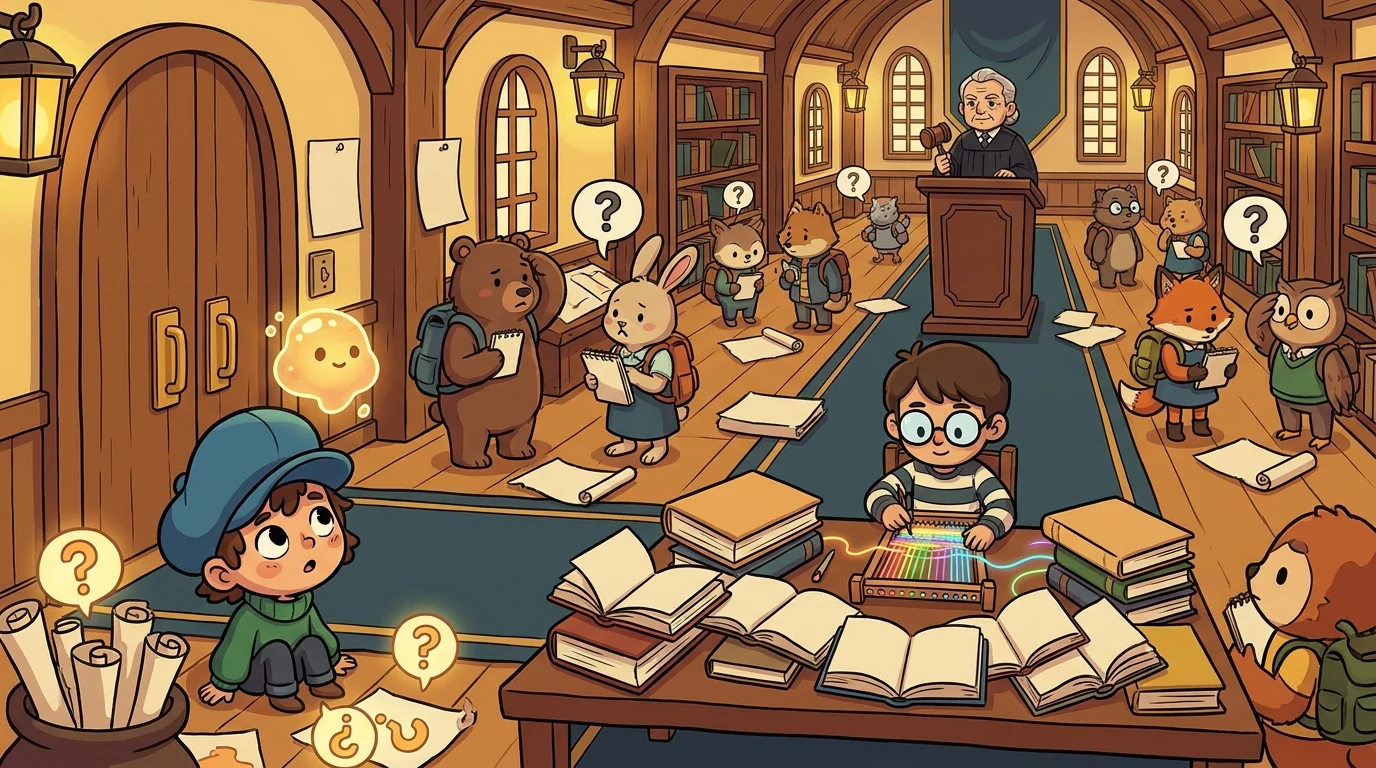
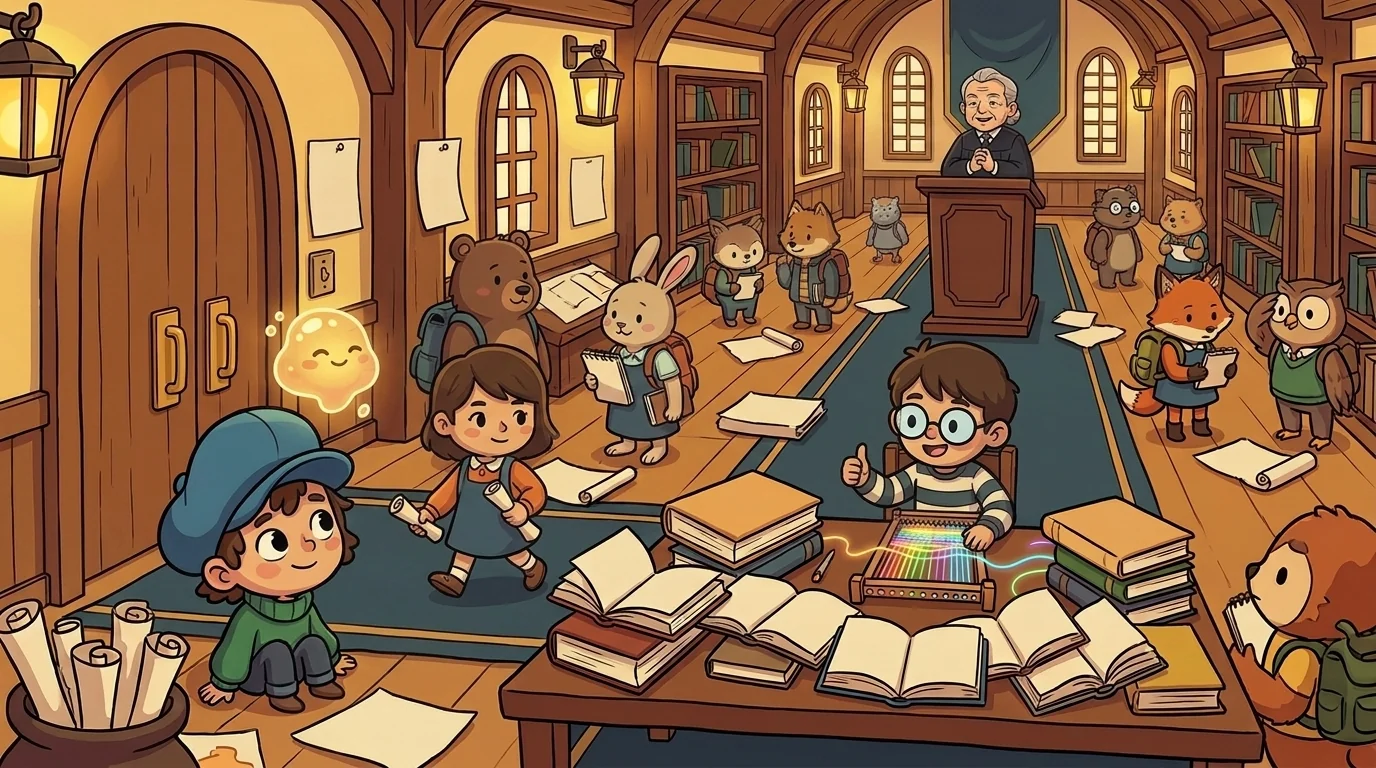
The research hall was full of people who wanted to know things — and stuck, every one of them, because wanting to know a thing and actually finding it out are two very different journeys, and most people never learn the road between.
Three keepers of the hall knew the road by heart.
Wonder sat near the door, where the vague big curiosities first wandered in.
Synth worked at a wide table covered in open books, weaving.
And Verdict stood at the far end by a single tall lectern, waiting for the moment a real stand could be taken.
"Someone's stuck at the door again," said Wonder, looking up. "Huge curiosity. No idea where to start. The usual."
"Send them through when it's ready," said Synth. "I'll have the table clear."
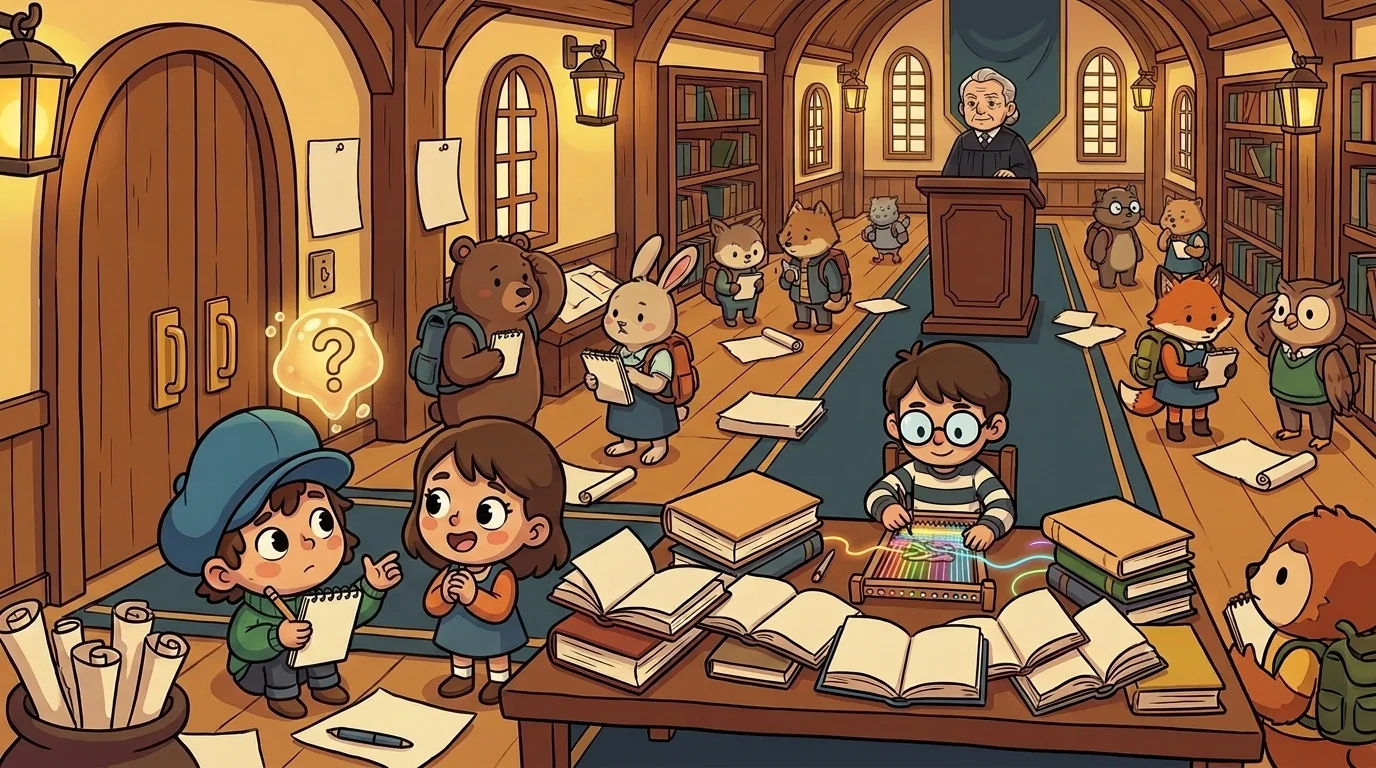
Wonder went first, because nothing can be researched until it's been narrowed to a real question.
A girl had come in, bright-eyed and completely stuck. "I want to know about sharks," she said — and there it hung, enormous and foggy, a curiosity far too big to chase. You cannot research "sharks." Sharks is an ocean. Wonder's whole gift was to take that ocean and find the one clear current inside it.
"Sharks is wonderful," said Wonder, "and much too big. Let's find the question inside it. What about sharks pulls at you?" And Wonder asked, and narrowed, and asked again — all sharks, or one kind? Something about how they live, or something people get wrong about them? — until the fog pulled tight into a single clear point: "Are sharks actually as dangerous to people as movies make them seem?"
"There," said Wonder, and the girl's whole face lit with the click of it. "That's not an ocean anymore. That's a question. It's focused. It's answerable. You can actually chase it. That's the first real step — not finding answers, finding the right question to hang them on."
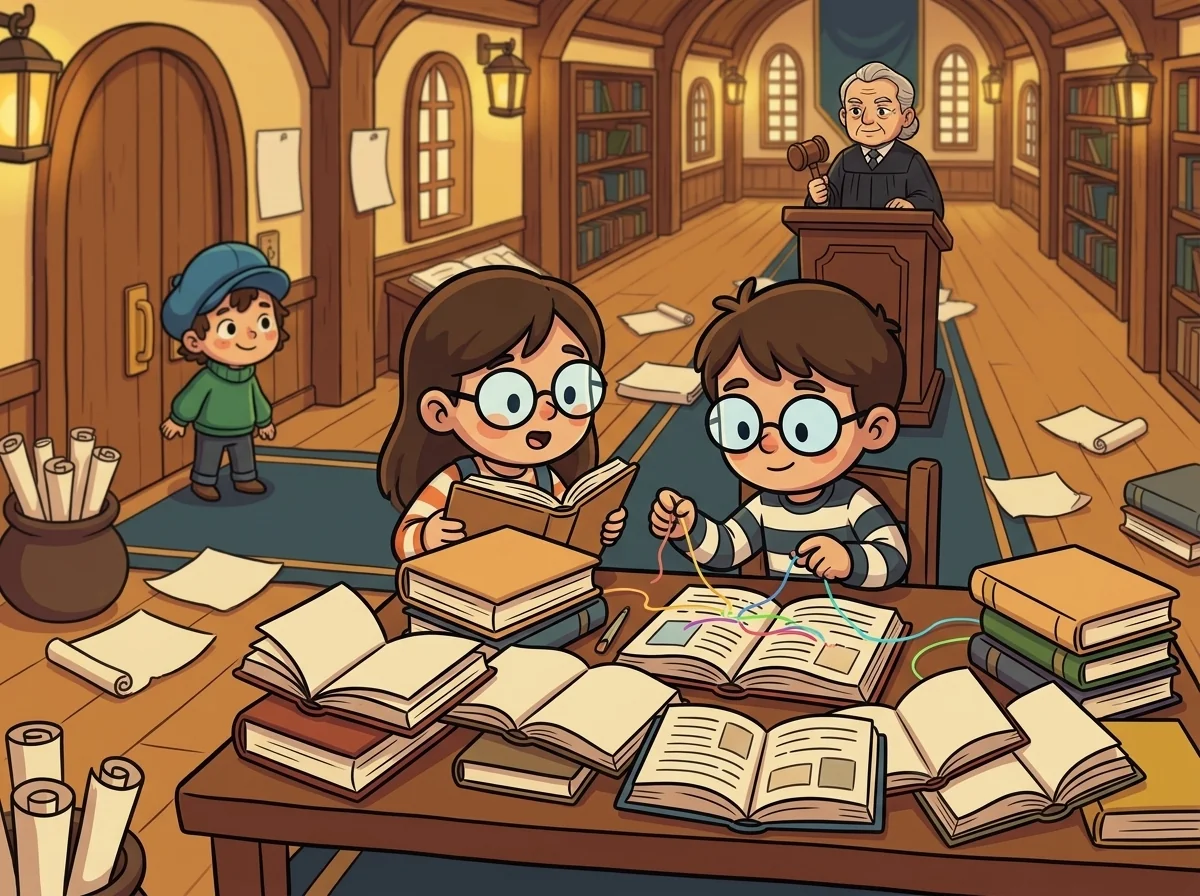
Then the girl carried her question to Synth's wide table — and Synth did the weaving that turns a pile of facts into an actual understanding.
Because the girl came back with lots of sources — a marine-biology site, a book on shark behavior, a page of attack statistics, a naturalist's interview — and a younger researcher would have just stacked them up, or picked the one they liked, or copied whichever spoke loudest. Synth did the harder, better thing: Synth combined them, watching for where they agreed and where they clashed.
"Look," said Synth, weaving the sources together on the table. "Three of them agree — attacks are extremely rare, and most are mistakes, not hunts. But this one disagrees on the numbers, so we hold it lightly and check why. And here — two sources add something the others missed: which sharks, in which places. Put it all together and a real picture forms — not one source's opinion, but the shape they make when you weave them." Synth tightened the weave. "One source is a single thread. Synthesis is the whole cloth — agreements, disagreements, and all."
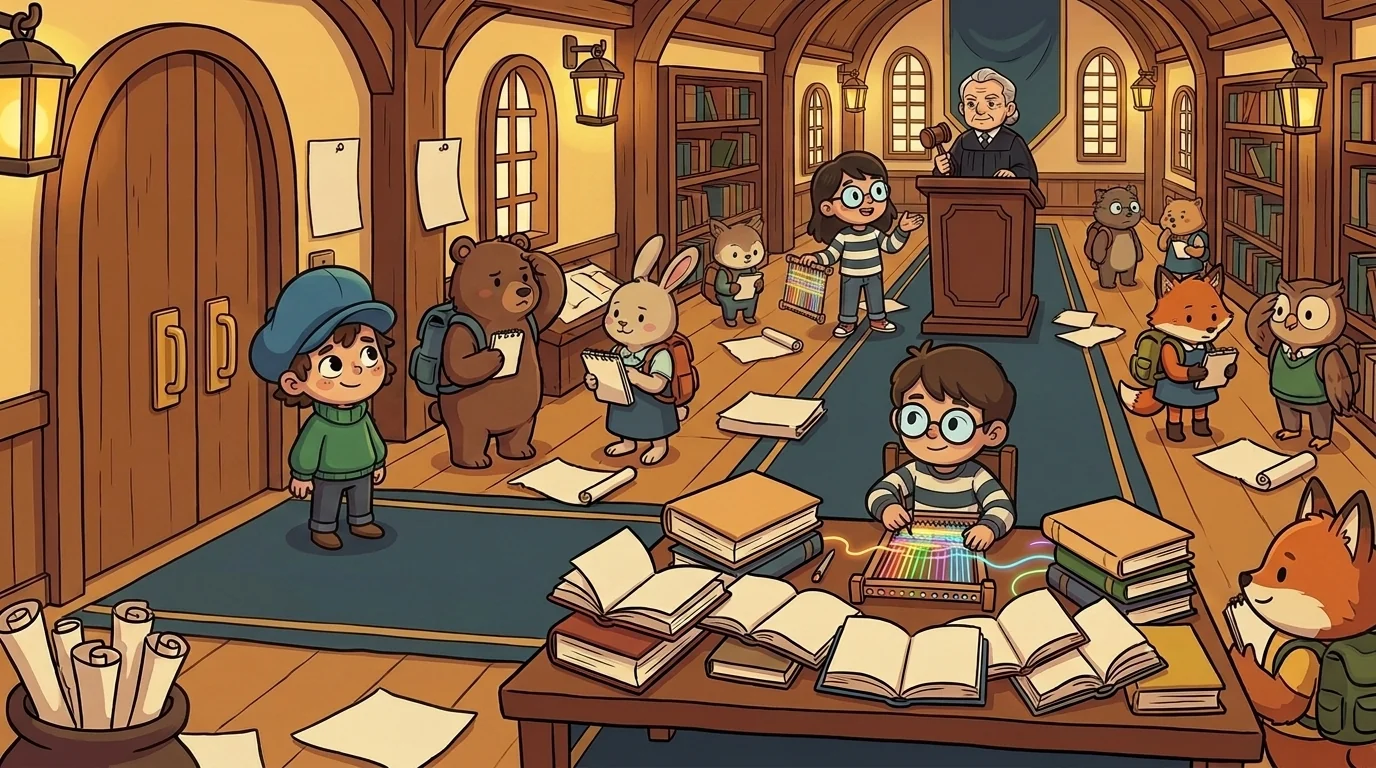
And now, with a focused question answered by a woven web of evidence, the girl walked at last to Verdict's lectern — for the part that made it hers.
"You've got your question," said Verdict, "and you've got your woven evidence. Now comes the part people are scared of: take a stand. Research isn't finished when you've gathered. It's finished when you weigh what you gathered and say, honestly, what you now think — and why."
And the girl, standing at the lectern, weighed it all, and found she could say it plain: "Sharks are far less dangerous to people than movies show — real attacks are rare and usually mistakes — though a few species in a few places do deserve real care." A stand. Not a guess, not a copied line — a claim she had earned, resting on the whole woven web of evidence, with the honest care built right in. "That's a verdict," said Verdict, warmly. "You can defend every word of it, because you didn't decide it first and hunt for backup. You gathered, you wove, and then you took your stand. That's the real thing."
The girl left the hall carrying something she hadn't had when she came in — not just facts about sharks, but a thing she thought, and could say, and could back up all the way down.
"Good question," said Synth.
"Good weaving," said Verdict.
"Good verdict," said Wonder, from the door.
There is a real and earned satisfaction in coming out the far end of that road — in turning a foggy I wonder into a focused question, chasing it into a woven web of real evidence, and finally standing up and saying here is what I think, and here is exactly why. It is a different thing entirely from just having an opinion. It is knowing something you built — and once a person has walked that road even once, they carry the map of it into every curiosity for the rest of their life.
The ResearchQuest ensemble
Wonder, Synth and Verdict is part of ResearchQuest's distributed-narrative cast. Each character embodies a different curricular primitive; together they teach the full subject.
-

Wonder
Question-formulation — narrowing vague interest into focused, answerable research questions
-

Vet
Source-evaluation — CRAAP test (Currency, Relevance, Authority, Accuracy, Purpose)
-

Quote
Note-taking — quoting + paraphrasing + summarizing; keeping voices separate
-

Synth
Synthesis — combining evidence across multiple sources; finding agreement, disagreement, gaps
-

Tether
Citation — attribution + bibliography; gratitude + map back to sources
-

Survey
Background reading — read around a topic to learn the lay of the land before narrowing (W.7)
-

Trawl
Search strategy — cast a wide net of keywords, then pull it tight; refine when it comes back wrong (W.8)
-

Crosscut
Lateral reading / corroboration — don't trust one page; cross-check a claim across independent sources
-

Verdict
Forming a thesis — gather the evidence, then take a stand; 'here's what I think, and here's why' (W.1)
-

Wellspring
Primary vs secondary sources — trace a claim upstream to its original, firsthand source