
Splitter Sasha
decomposition — breaking hard numbers into friendlier pieces
Loading audio…
Press play to listen along. The line being read lights up as you go.
Show full transcript
Loading transcript…

Splitter Sasha had been collecting decomposition tricks for as long as she could remember.
She had started when she was seven. Her older sister, who was twelve at the time and the one who would eventually give her the pompom hat, had been doing homework at the kitchen table. The homework had been about multiplying two-digit numbers. Sasha had been watching. Her sister had been struggling.
"Can I try?" Sasha had said.
Her sister had laughed but had handed her a problem.
The problem had been 24 times 25.
Sasha, who could not have multiplied 24 by 25 the standard way at seven, had stared at the problem for a long time. Then she had said: "It's six hundred."
Her sister had stared at her. "What?"
"It's six hundred. Because 25 is a quarter of 100, and 24 is four times six, so 24 quarters is six wholes, and six wholes of 100 is 600."
Her sister had checked. The answer had been 600.
Her sister had said: "How did you do that?"
Sasha had not been able to explain. She had said something about rearranging. She had said the numbers had felt friendlier when she pictured them as quarters. Her sister had not understood, but her sister had also not made fun of her, which had been important. Her sister had instead handed her another problem.
Sasha had done it.

Then another.
Then another.
By the end of the afternoon, Sasha had done thirty multiplication problems in her head using tricks she could not name and could not explain. Her sister had bought her a small notebook the next day. Her sister had said: "Write down what you do. So you can remember. So you can show other people."
Sasha had started writing.
She had been writing for twenty years now.
The notebook was no longer one notebook. It was thirty-seven notebooks. They lined two shelves in her apartment. Each notebook had a year on the spine. The oldest notebooks were full of childish handwriting and crossed-out experiments. The newer notebooks were more orderly. The ones from the last five years were structured by topic — addition, multiplication, fractions, percents, ratios — and were cross-referenced by little stickers in different colors.
She had categorized, over the years, hundreds of decomposition tricks.
Some of them were standard tricks every teacher knew. Make-10. Round-then-adjust. The doubling-and-halving trick. The friendly-numbers trick.
Some of them were tricks only a few people knew. The Sandwich Trick (multiply by 11 by putting the sum between the digits). The Casting-Out-Nines trick for checking arithmetic. The Quarter-of-100 trick that had been her first.
And some of them, by now, were tricks only Sasha knew, because she had figured them out herself, and they were not in any textbook, and she had been waiting to find a kid clever enough to share them with.
Maya, who was fourteen and had been using the app daily for two years, had begun to be that kid.
Maya had asked her one day: "How do you decide which trick to use on a problem?"
Sasha had thought for a long time.

"I don't decide," she had said. "I look at the problem and the trick shows up. The right trick. It comes from somewhere I can't quite see. But I can teach you how to make tricks show up for you. Most of the work is just... noticing what numbers want to be."
"What numbers want to be."
"Yes. Numbers have shapes. 50 is round and friendly. 47 is angular and annoying. 100 is the friendliest of all. The number 7 is a little prickly. The number 8 is solid. The number 12 is gentle. When you start seeing numbers as shapes, you start seeing how they want to be rearranged. The shapes do the rearranging for you."
Maya had been quiet.
"That's not how my math teacher talks about numbers."
"I know. Your math teacher is teaching arithmetic. Arithmetic is rule-following. What I'm teaching is something different. It's mathematical fluency. It's knowing how numbers behave when you push them around."
"Where did you learn it?"
"My sister gave me the first notebook. My grandmother was a mental-calculation champion in her youth and showed me a few tricks before she died. The rest I figured out myself, or learned from kids on this app, or stole from a book I found in a used bookstore once. The book was about a Russian mathematician who could multiply six-digit numbers in his head in under a minute. He had figured out his own tricks. I'm still working through his book."
"You're still learning new tricks?"
"Every week. I learned one last Tuesday. From a ten-year-old in Wisconsin. She named it the Mirror Trick. It only works for certain squaring problems but when it works it's spectacular. I'll show you tomorrow."
Maya started her own notebook the next day.
It was a small purple one she had picked out at the school store. She wrote her name on the inside cover. She labeled it Year One. She wrote the date.
The first trick she put in the notebook was the Quarter-of-100 trick — the one Sasha had used at age seven, the one that had started everything.
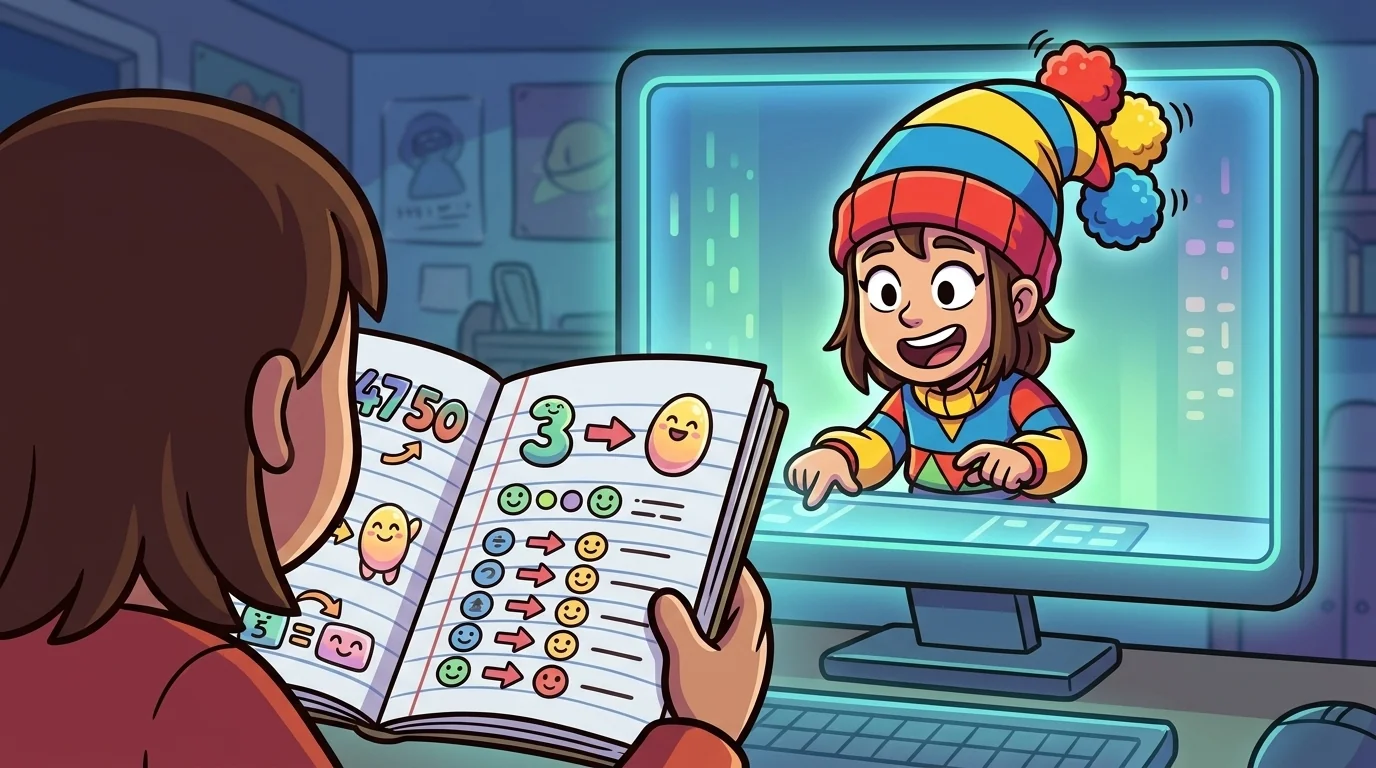
The second trick was the Sandwich Trick.
The third trick was the Mirror Trick, which Sasha had told her about a few days later, and which Maya had spent a whole evening figuring out how it actually worked.
The notebook grew. Maya added tricks she invented herself, with small notes in the margin about when each trick worked and when it didn't. She added tricks she heard from her cousin. She added tricks she figured out on the bus. By the end of the year, the purple notebook was almost full.
She bought a second one. A blue one. She wrote Year Two on the inside cover. She started filling it.
When she showed both notebooks to Sasha — the purple one and the blue one — Sasha had been delighted in a way that was harder to describe than usual. Not the bouncy pompom-wobbling delight. A quieter kind. The kind that came from recognizing something.
"You're going to be very good at this," Sasha had said.
"Thank you."
"Better than me, probably, by the time you're my age."
"Probably not."
"Definitely. I started at seven. You started at twelve. But you have something I didn't have at twelve."
"What?"
"Me. I had to figure it all out alone. You have someone to show you the shape of the work. You'll go further. That's how this works. Each generation goes further. That's the whole point of teaching."
Maya had been quiet.
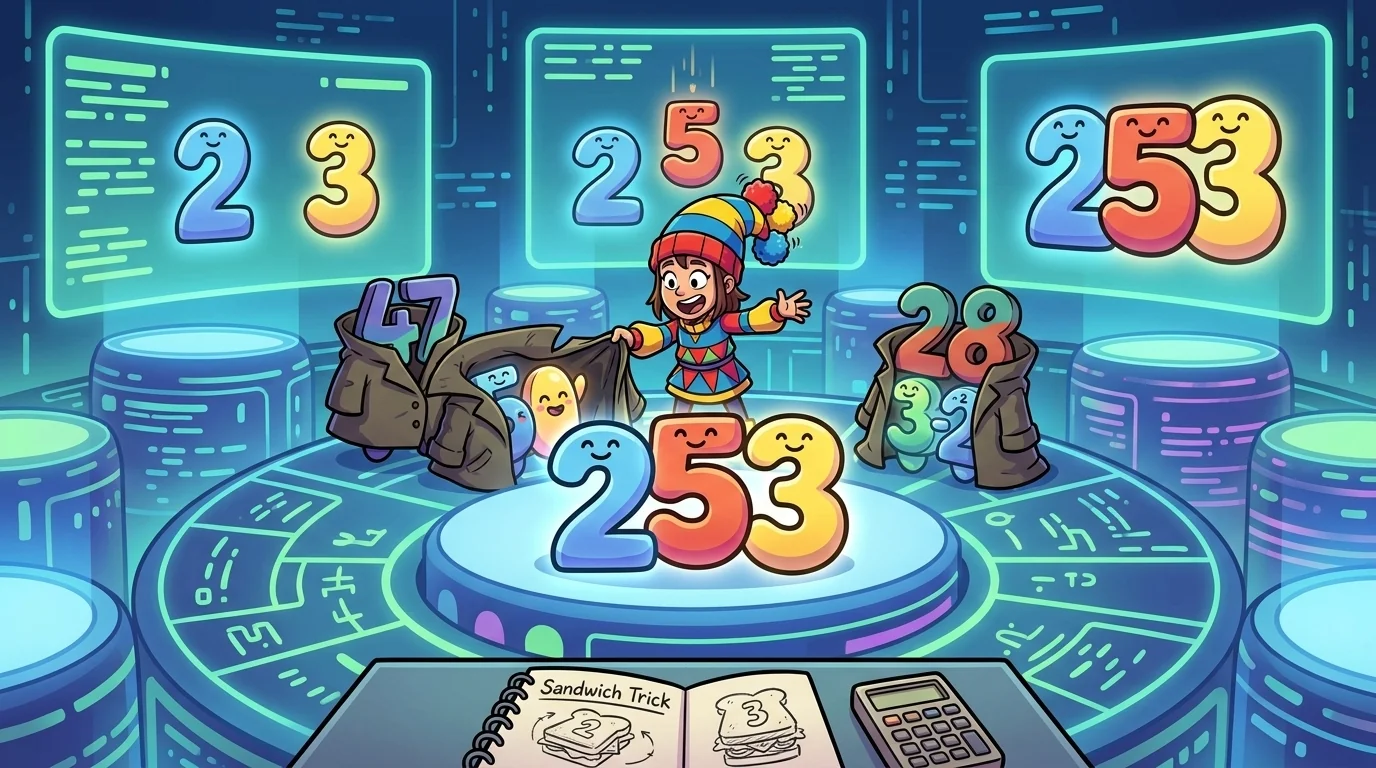
She had thought of her own younger cousin, who was eight, who she had been showing the Sandwich Trick to on weekend visits.
"My cousin," she had said. "He'll go further than me."
"Yes."
"And his kids."
"Yes."
"And so on."
"Yes. The notebook gets larger over generations. Most of the tricks in my notebook were not in my grandmother's notebook. Most of the tricks in yours will not be in mine. We pass it forward. Each generation adds. The notebook is older than any of us."
Maya had looked at the purple notebook.
She had looked at the blue one.
She had looked at Sasha — the pompom hat, the bouncy posture, the cheerful confidence in a thing she had been doing for twenty years.
"I'll keep going," Maya had said.
"I know you will."
The pompoms had wobbled. And Maya, holding her two full notebooks and thinking of the purple one her cousin would someday start, felt a warmth she couldn't quite name — proud and hopeful and a little bit amazed, all at once. She wasn't just learning tricks anymore. She was part of something that had been growing, hand to hand, long before her, and would keep growing long after. That feeling stayed with her, steady and glad, all the way home.
The NumberSense ensemble
Splitter Sasha is part of NumberSense's distributed-narrative cast. Each character embodies a different curricular primitive; together they teach the full subject.
-

Estimator Ernie
Confidently approximate; the first-guess advocate
-

Pivot Pia
Deceptively casual question-flipper; reframes the prompt
-

Ratio Rio
Per-something specialist; rate thinker
-

Nudge Nora
Compensation — nudge a number to a friendly round one, do the easy math, then give back exactly what you borrowed.
-

Doubler Della
Doubling and halving — to multiply, double one number and halve the other; the product stays the same while one side gets friendlier.
-

Landmark Lena
Benchmark numbers — judge any number by how it sits next to friendly landmarks like 0, a half, 10, 50, and 100.
-

Factor Fiona
Factors and multiples — every number is built from smaller numbers multiplied together, and seeing the building blocks makes hard arithmetic come apart.
-

Gap Gus
Constant difference — subtraction is the gap between two numbers; slide both the same amount and the gap stays the same, so you can land on friendly numbers.
-

Bridge Bao
Derived facts — reach a fact you don't know by taking one short step out from a fact you do.