
Tortoise Hare
productive disagreement — two voices in one character
Loading audio…
Press play to listen along. The line being read lights up as you go.
Show full transcript
Loading transcript…
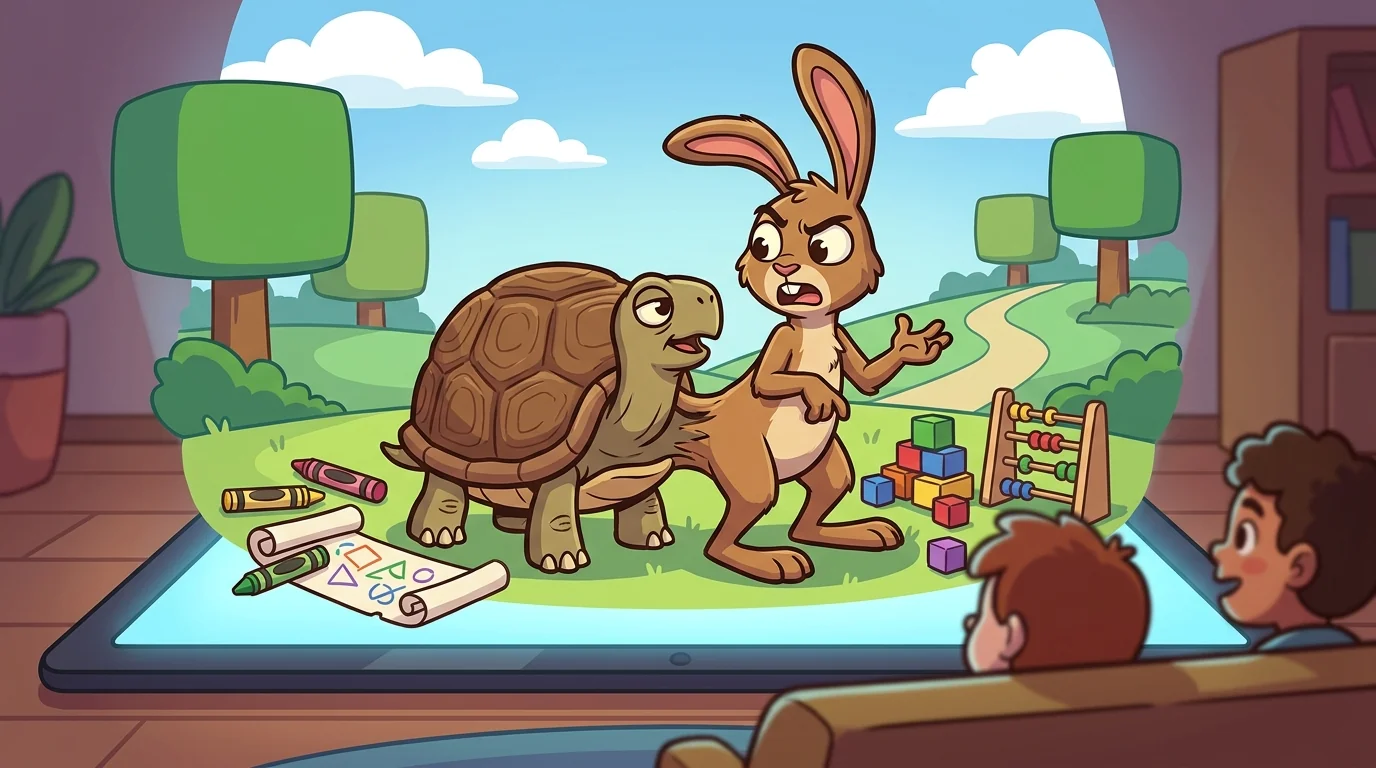
Tortoise Hare had been arguing with himself since he was nine years old.
He had not always been one creature. He had started as two friends — a tortoise named Tort and a hare named Har — who had grown up together in a small town near a river, who had gone to the same school, who had finished the same problems on the same chalkboard in opposite ways, and who had argued, daily, about which way was better.
They had loved each other.
They had also annoyed each other constantly.
In their twenties, after they had each finished a different kind of schooling and ended up working at the same math circle in the same community center — a deeply unlikely coincidence that they took as a sign — they had realized something. Or rather, the woman who ran the circle had pointed it out to them. The woman had said, after watching them disagree for the eighteenth time about how to introduce a particular problem about counting paths on a grid: "You two should be one character. Your arguing is the lesson. Stop pretending you're two separate teachers."
Tort and Har had looked at each other.
They had thought about it.
They had argued about it — Tort wanting to think it over slowly, Har wanting to commit immediately — and then they had joined.
The joining had not been physical. They were still two animals. They lived in the same body now, somehow, the way some creatures who love each other learn to share a single shape. They had a long shell and long ears and an unusual way of looking at you with one eye that was thinking slowly and one eye that was thinking fast.
That had been twenty-five years ago.
They had been Tortoise Hare ever since.
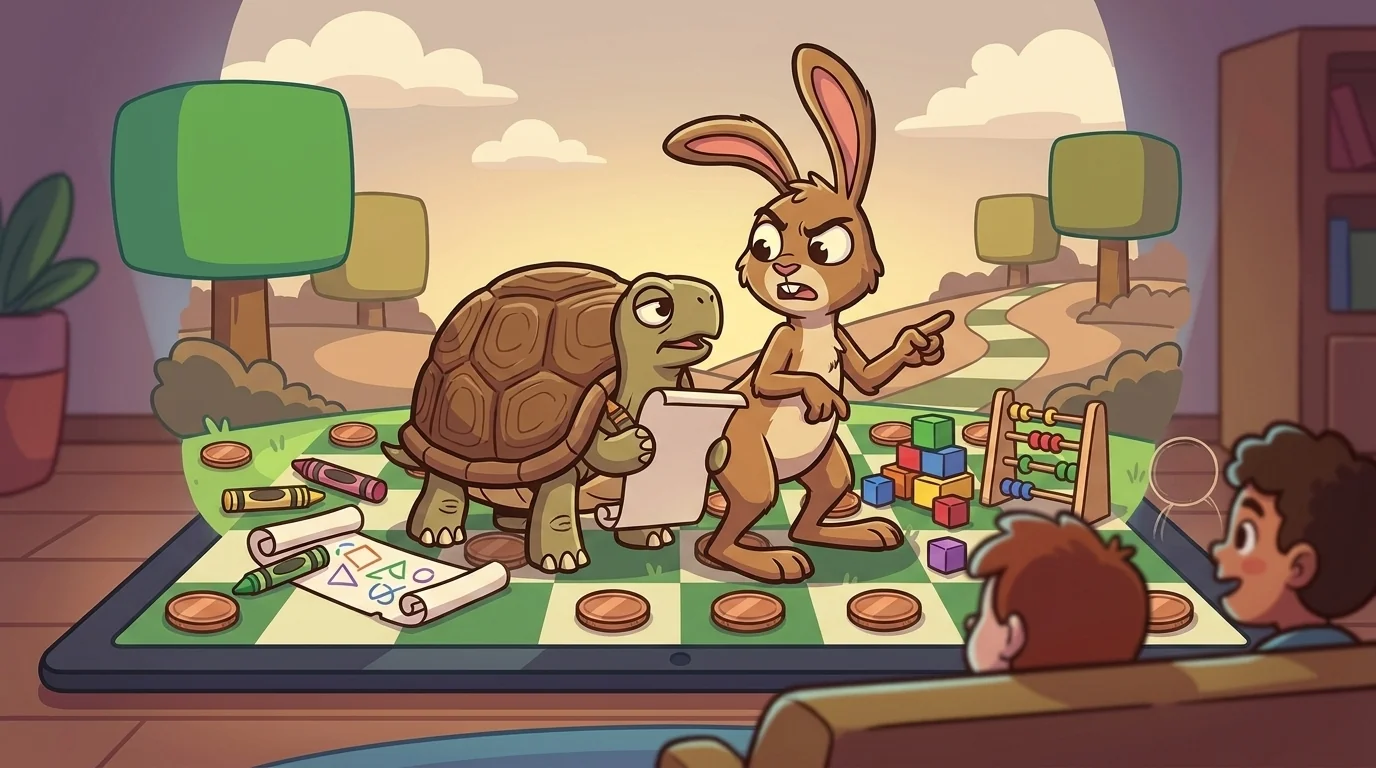
Mira had asked Tortoise Hare once, when she was thirteen and had been running circles at her own kitchen table for a year, whether the arguing ever got tiring.
He had considered the question for a long time. Both voices had considered it.
The Tortoise voice had said: "Sometimes. When we're tired, the arguing feels like a chore. When we're tired, Har wants to just take over and finish the problem alone, and I want to just lie down and let her. We resist both impulses. The resistance is the work."
The Hare voice had said: "Always. The arguing is exhausting. I want to be done with it. I want to just go fast. But Tort holds me back, and that's why we're still useful. Without him I would have burned out in my twenties. Without me he would have fallen asleep in his."
"Do you ever wish you were one voice?"
The Tortoise voice had paused.
The Hare voice had said: "Yes."
The Tortoise voice had said: "No."
They had laughed at each other.
"It depends on the day," they had said together, in both voices at once. "Most days we are glad to be both. Some days we wish we were one. We never wish to be the OTHER one specifically. We just wish, occasionally, for less arguing."
Mira had thought about that for a long time.
She had thought about it on the days when she and her friend Joon had argued through a whole circle about whether to draw a diagram or just count, and she had thought about it on the days when she had argued with herself about the same thing. She had begun, after a few weeks of thinking, to notice when her own internal argument was happening. She had begun to give the two voices in her own head different names. Not Tortoise and Hare — those names were taken. She used her own.
She used Slow-Mira and Fast-Mira.
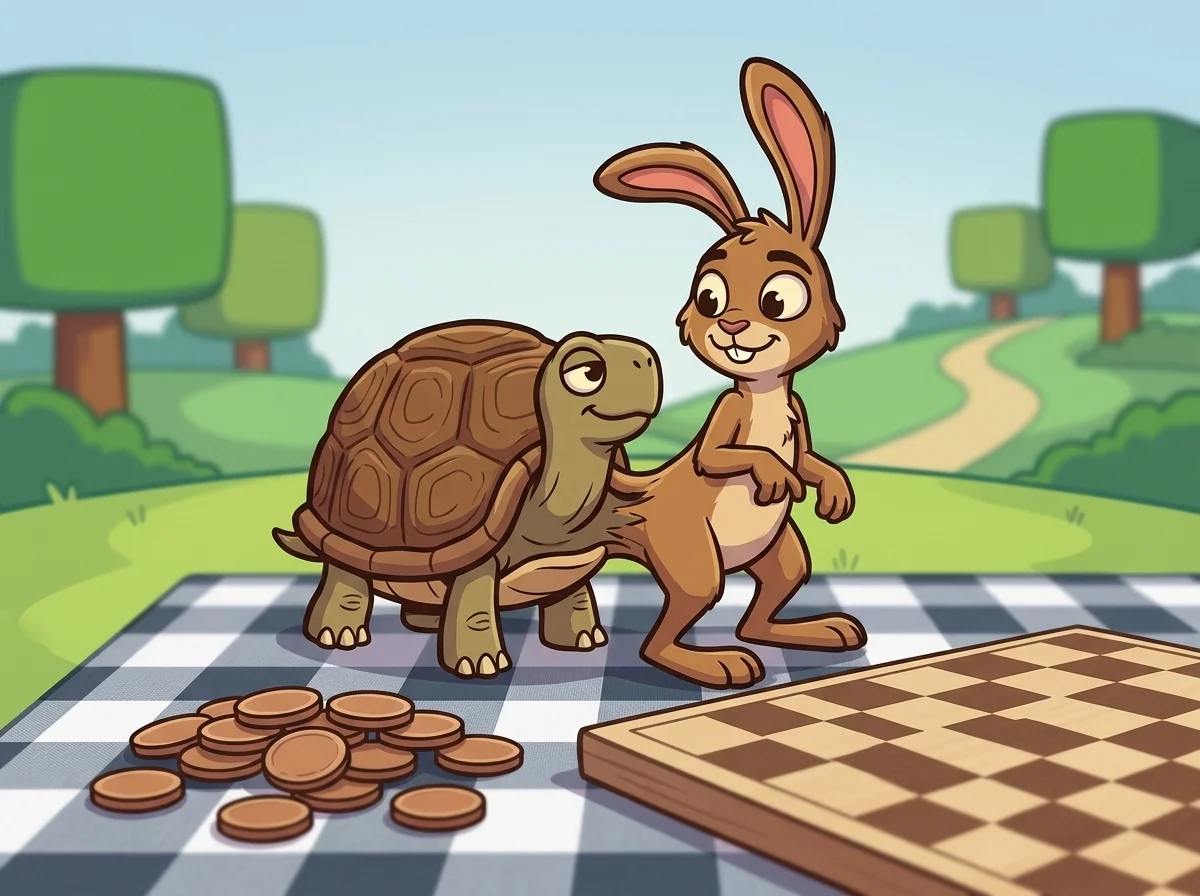
Slow-Mira drew the diagram. Fast-Mira counted. Slow-Mira read the problem twice before starting. Fast-Mira started before reading the problem all the way through. Slow-Mira checked her answer. Fast-Mira moved on.
Neither was right. Neither was wrong. Both were useful.
When Mira told Tortoise Hare about Slow-Mira and Fast-Mira, he smiled in both voices at once.
"That's how it starts," he said. "First you notice you have two voices. Then you let them argue. Then you start trusting both. Then — and this is the part nobody warns you about — they join. Not all the way. Just enough that you stop having to consciously hold the argument. The argument becomes part of how you think."
"Did that happen to you?"
"Some days. Not every day. We never fully joined. We don't think we want to. The arguing is too useful."
There was one circle Mira would remember for a long time.
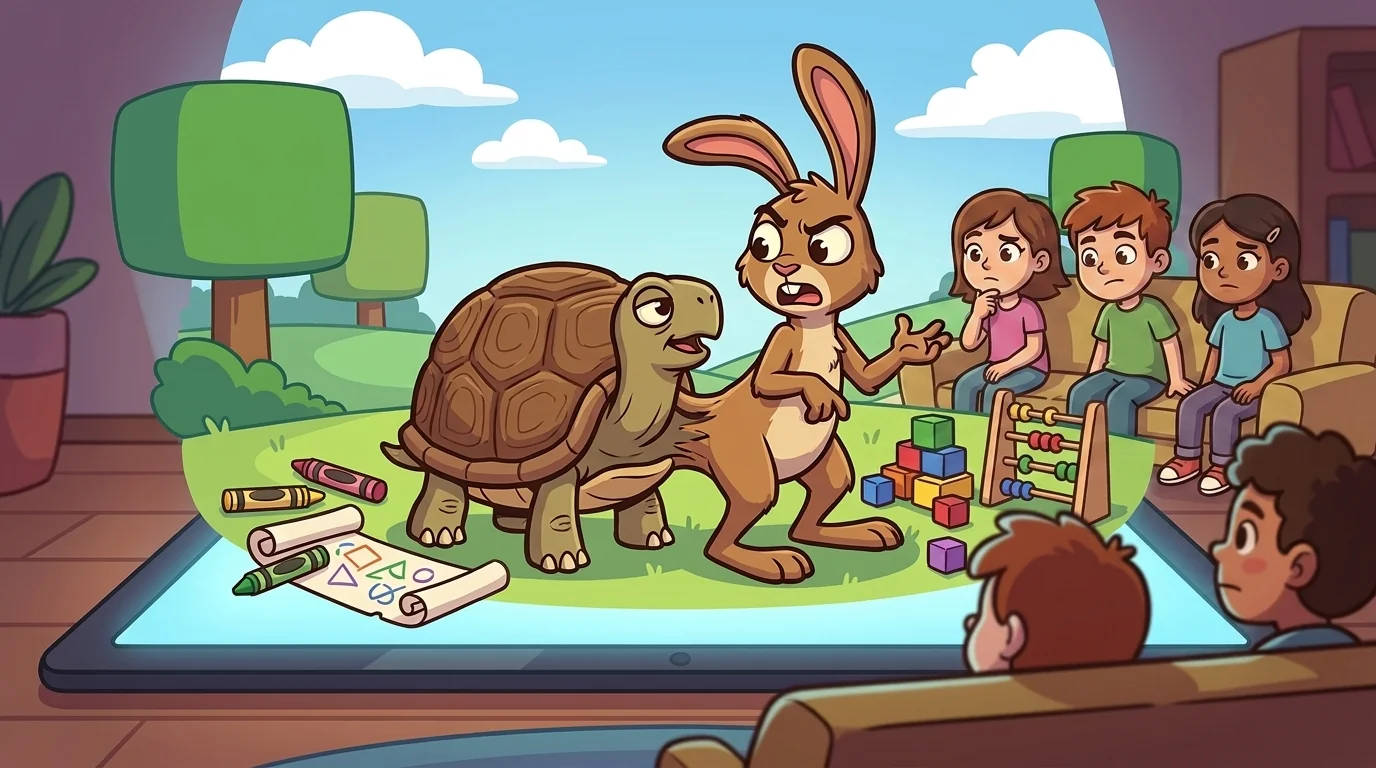
It was a circle with three kids she had not worked with before, and they were doing a problem about a chessboard and knights. The problem was hard. The four of them had spent forty minutes on it without making progress, and the room had gotten quiet in a frustrated way, and Mira had been about to suggest they take a break when Tortoise Hare had reappeared on the iPad.
He had been quiet for a moment. Both voices.
Then the Hare voice had said: "Quit."
Then the Tortoise voice had said: "Don't quit."
Mira and the three kids had stared at the screen.
"Quit," the Hare voice said again. "You've been working for forty minutes. You're tired. You can come back to this tomorrow. Quitting now is the smart move."
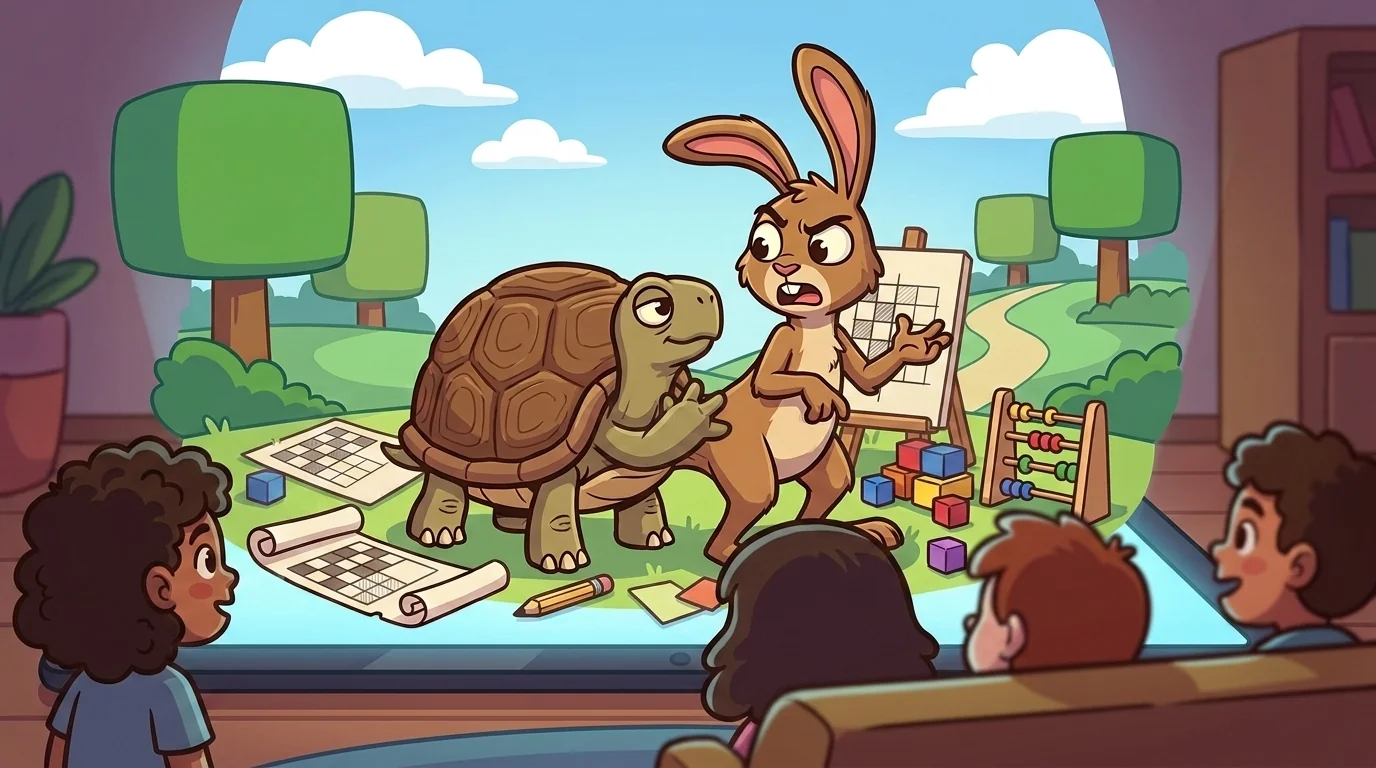
"Don't quit," the Tortoise voice said. "You're three minutes from a breakthrough. You can feel it. The breakthrough is in the next attempt. Stopping now would be a waste of the forty minutes you've already spent."
The four kids looked at each other.
"Which one of you is right?" one of the kids asked.
"We don't know," both voices said. "We have been arguing about this exact thing for thirty-five years. Sometimes the Hare is right. Sometimes the Tortoise is right. The only person who can decide is you. Your circle, your call."
The four kids talked it over. They were tired. They could feel it.
But Mira said, quietly: "Let's try one more attempt. Then we stop, whether it works or not."
The other three agreed.
The one more attempt was the breakthrough.
The knights problem cracked open. The four of them stared at the answer.
When Tortoise Hare reappeared a few minutes later, he said, in both voices: "The Tortoise was right today."
The Hare voice added, a little ruefully: "Today."
The Tortoise voice added, generously: "Last week the Hare was right."
They had argued for another minute. The four kids had watched. The four kids had grinned.
In Mira's last conversation with Tortoise Hare before she aged out of running circles for younger kids — she was fifteen, she was about to start high school, she had been running circles at the kitchen table and at school and at the community center for almost three years — she said: "Do you remember the knights problem?"
"Of course."
"You were right that day. Tortoise was right."
"Yes."
"What if you'd been wrong?"
The Tortoise voice considered. The Hare voice considered.
Both voices said: "We would have learned. We have been wrong many times. Each wrongness has gone on the card."
"What card?"
The Tortoise voice smiled — quietly, slowly. The Hare voice smiled — quickly, brightly. Together they said: "Maybe Circle Circe will tell you about the card someday. We are not the right ones to tell you. But yes — we keep a card too. Or rather, two cards. One for the Tortoise. One for the Hare. They live in the same drawer."
Mira nodded.
"I keep a card too," she said. "Slow-Mira's card. And Fast-Mira's."
Tortoise Hare laughed in both voices at once.
"That's the job," he said. "Now you know the lineage."
The MathCircle ensemble
Tortoise Hare is part of MathCircle's distributed-narrative cast. Each character embodies a different curricular primitive; together they teach the full subject.
-

Circle Circe
Meta-host who steps back to let kids talk to each other
-

Echo Edie
Listener-restater; social-fabric weaver
-
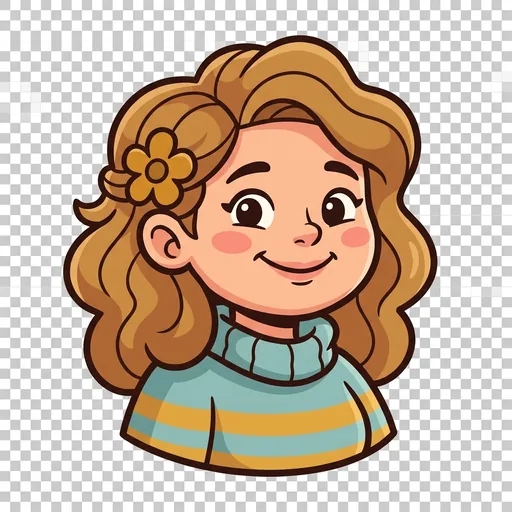
Patty Patient
Wait-time character; gentle anti-pressure presence
-
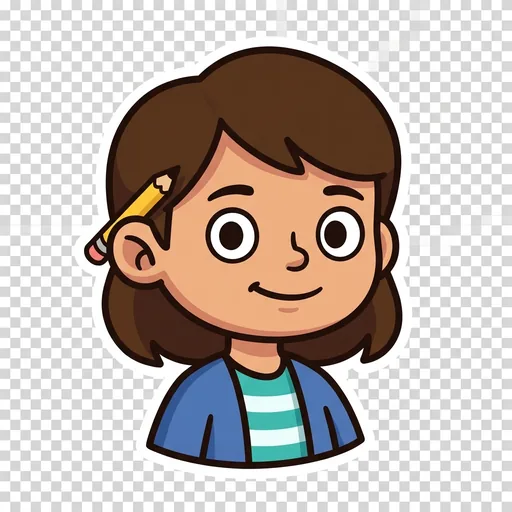
Tess Try-Small
Specializing — when a problem's too big, try the smallest version first
-
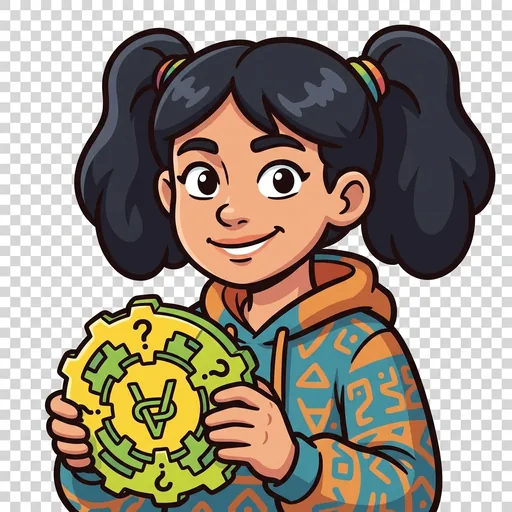
Gemma General
Generalizing — turning a pattern from a few cases into a rule for all of them
-

Hattie Hunch
Conjecturing — daring to guess boldly, then testing the guess honestly
-
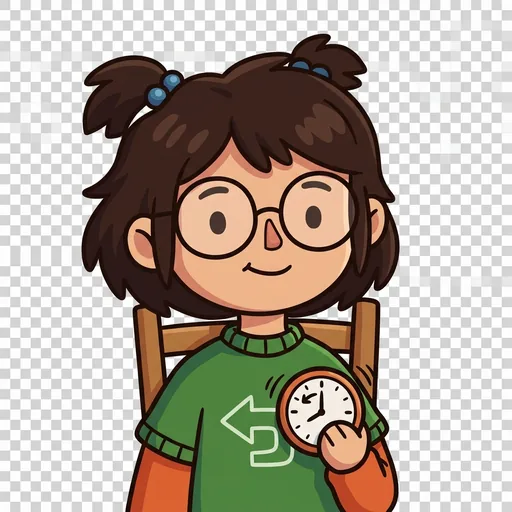
Reva Reverse
Working backwards — starting from the goal and reasoning back to the start
-

Wendy Wonder
Notice-and-wonder — slowing down to observe and ask before rushing to solve
-
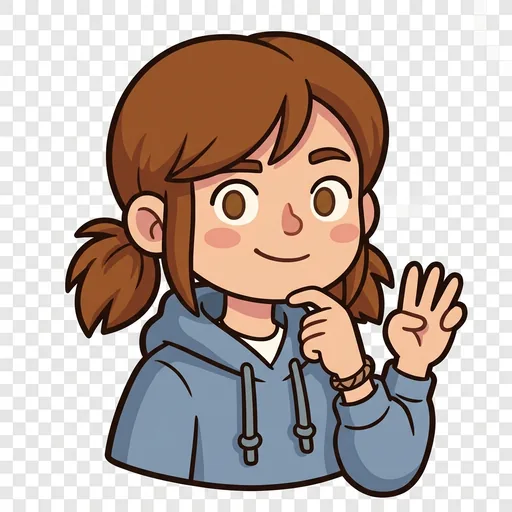
Cass Check
Sense-checking — asking whether an answer actually makes sense before trusting it