
Veil and Vow
The X-RAY — an attack that passes THROUGH a defending piece (usually an enemy piece) to threaten or strike at a piece behind it; the threat reaches further than the immediate defence
Press play to listen along. The line being read lights up as you go.
Show full transcript
Loading transcript…
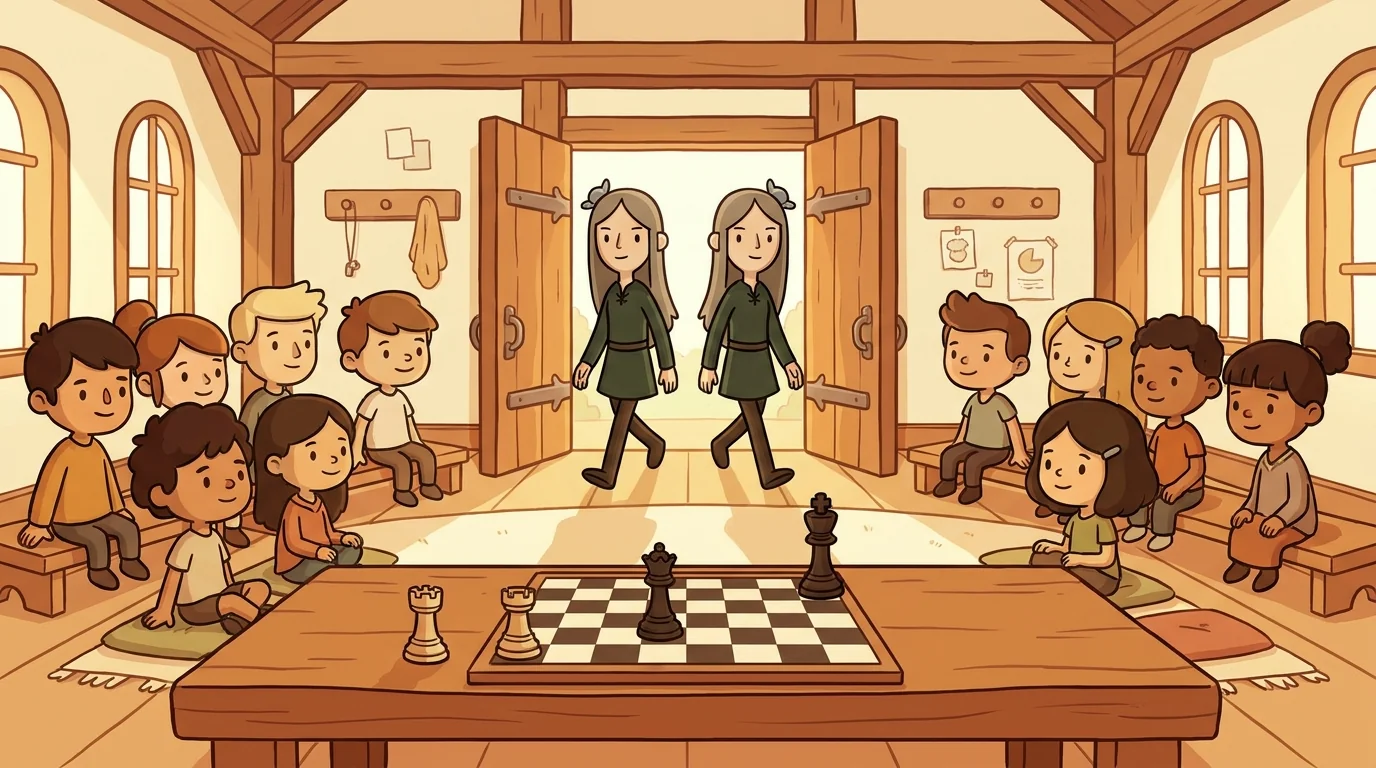
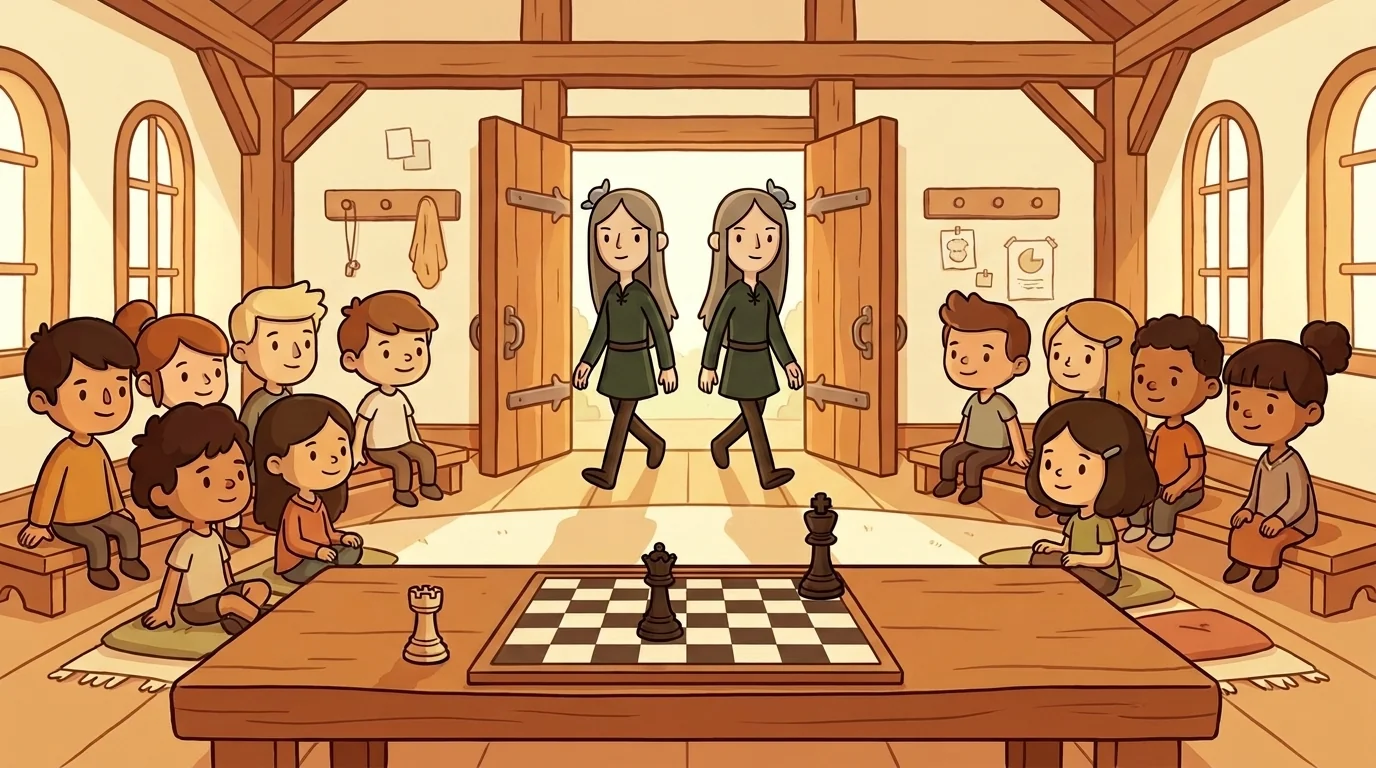
The first thing to know about Veil and Vow is that they always enter a room together, and they always enter in the same precise order. Veil comes first, half a step ahead. Vow comes second, half a step behind. They do not announce the arrangement to anyone. They do not even seem to think about the formation consciously. They simply walk in like that, the way two horses pull a cart in step without needing to be reminded, and the door of the academy training-hall opens and closes once for both of them in a single motion.
A class of nine children watches them come in this afternoon.
The sisters are tall and thin and identical down to the small grey clasps in their dark hair. They are wearing matching dark-green tunics — Veil's clasp on the left, Vow's on the right; that small detail is the only way the children will, by the end of the kit, learn to tell them apart. They walk to the front of the hall and stop in front of a long wooden practice-table that has been set up for them.
On the table, somebody has already set up a chessboard with three pieces standing on it. A white rook on a1. A black queen, in the middle of the file, on a4. A black king at the back of the file, on a8.
Veil looks at the board carefully.
Vow looks at the board carefully.
Neither of them speaks for almost ten seconds. The children, who do not yet know the sisters' particular patterns, wait — politely at first, then with growing interest. They have not seen this particular kind of teaching-silence before.
Then Veil says, in a voice barely above a breath: "The queen is in the way."
And Vow says, in a voice that carries cleanly all the way to the back of the hall without seeming to be raised at all: "But the queen is the way."
She points, very slowly, at the rook. She traces a line up the file with her index finger — past the queen, past the empty squares behind it, all the way up to the king at the top of the board.
"The rook," Vow says, "is looking at the queen. The queen is in the way of the rook. But the rook is also looking — through her — at the king behind her. The queen is the defender of the king. The queen is also the piece in front of the king. If the queen ever moves" — and Veil mirrors the motion exactly, lifting the queen off the board very gently — "the rook is already attacking the king. The rook does not have to do anything more. The rook is already there, threatening through her."
She puts the queen back on her square. The children stare at the position in silence.
"This," Veil whispers, "is the X-ray."
"This is our shot," Vow says.
The room is so still afterwards that a child near the back of the hall asks, almost involuntarily, "Do you always speak like that?"
"Yes," says Veil.
"Always," says Vow.
A few of the children laugh — quietly, the way you laugh in a chapel during a service. The sisters do not mind the laughter. They have been getting that particular laugh for nearly eight years now.
They were born in a village called Cresswell, on the western side of the kingdom, eleven minutes apart from each other one summer evening. Their real birth-names were written on the village rolls, but the rolls were kept in a wooden box that flooded one spring, and after the flood nobody could read the rolls properly, and after that nobody could quite remember what the sisters had originally been called.
Their mother had been calling them Veil and Vow since they were very small children. The names had stuck, the way names stick when they turn out to be exactly right for the person carrying them. Veil for the older sister, the one who was always at the front of any room they entered; Vow for the younger sister, the one whose voice carried across the fields and meadows behind their cottage. The girls did not, even as small children, mind the names. They had not been given a chance to mind anything else.
Their mother was a quiet woman who had been a hunter in her younger years, before she settled in Cresswell to raise the twins on her own. Their father is not in this chapter. He died when the sisters were two years old. The sisters do not remember him. Their mother carried the whole family on her shoulders alone from that point onward. She is, you should know in advance, an exceptionally good parent. She is not a character in this chapter — but she is the reason the chapter is possible.
She started teaching the sisters to shoot a bow when they were seven years old. She had grown up shooting bows herself; she did not think there was anything strange or unusual about teaching her daughters the same skill. She had two old yew bows kept in good condition and a sheaf of straight arrows that she had fletched herself, and she walked the sisters into the field behind the barn one autumn afternoon and showed them how to nock and draw and release the bowstring.
Veil was very good very quickly. By the end of the first month of practice, she was placing arrows in straw butts at thirty paces. By the end of six months, she was hitting them reliably at sixty paces. By the end of a year, she was shooting better than children twice her age and was the topic of conversation at every harvest gathering Cresswell held that season.
Vow was, for the first two years of practice, terrible.
She could not, at age nine, consistently hit a target at twenty paces. Her arrows wobbled in flight. Her grip was inconsistent across draws. She drew the bow correctly and aimed correctly and released correctly, and the arrows still seemed to find their own private routes through the air. Their mother said nothing about any of this. Their mother simply kept handing her arrows. Vow kept practising. She practised badly, but she practised every single day.
By the autumn the sisters turned ten, Vow had begun to wonder, privately, whether she was simply not made for it in some fundamental way.
What happened next changed both their careers entirely.
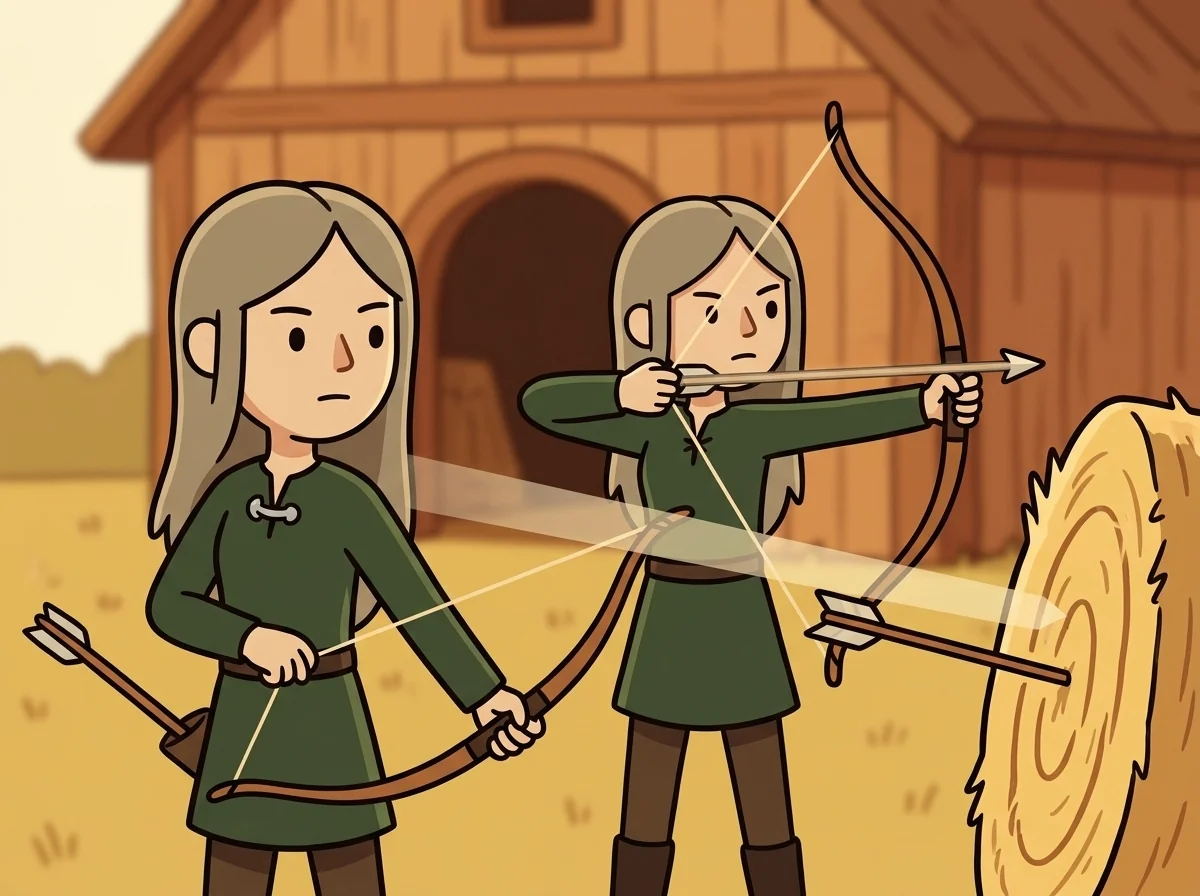
They were practising together in the field behind the barn one afternoon. Veil was at the front of the field, near the targets, perhaps fifteen paces from the closest straw butt. Vow was at the back of the field, ten paces behind her sister, both of them aiming at the same straw butt.
Veil drew her bow with her usual careful precision. She held the draw for a long moment, the way she always did before releasing. Then she released.
The arrow struck the butt cleanly, three fingers from the centre of the target.
As Veil lowered her bow, Vow — who had been about to take her own shot — looked along the line her sister had just shot. She saw, very clearly, the path the arrow had taken across the field. She saw the air the arrow had moved through. She saw, almost as a visible thing hanging in the autumn light, the line hanging in the field between her sister's bow and the butt.
She thought, very simply: Oh. That's the line.
She raised her own bow. She drew. She aimed, not at the target itself this time — at the line. The line her sister had drawn for her with her own arrow.
She released.
Her arrow followed Veil's arrow into the butt. Closer to the centre, this time. It struck almost exactly where Veil's arrow had struck a moment before.
Vow had — for the first time in her entire life — hit a target at twenty paces.
She did it again on the next shot. And the next.
When she shot without Veil in front of her, her aim was, again, poor. But when Veil was in front of her — when Veil had just shot and just shown her the line — Vow could place her own arrow along that line as if she were tracing it with her finger.
The sisters figured the principle out within a week of practising it.
Veil shot first; she opened the line. Vow shot second; she followed it through — and her arrow, because Veil's arrow had cleared the air ahead of it, kept going. Vow's arrows sometimes passed within inches of Veil's standing shoulder. Veil never flinched once. She trusted her sister completely.
By their eleventh birthday, the sisters could put two arrows through the same straw butt on successive heartbeats, one after the other, almost touching the same hole.
Their mother watched this practice from the edge of the field one afternoon and said quietly, "Veil opens. Vow finishes."
The phrase stuck.
They first introduced themselves with the phrase when they were fifteen, at the kingdom's annual archery trial in the capital. They stood in front of the judges, side by side as always, Veil half a step ahead.
Vow said, in her carrying voice: "My sister opens. I finish. We are Veil and Vow."
They won the trial decisively. They were the first sister-pair to do so in the trial's recorded history. The judges were uncertain what to do with them. The kingdom's military was politely interested but ultimately confused — there was no place in a standard infantry line for two archers who shot best in series, rather than in parallel. The trial judges spent a long week debating the matter behind closed doors. The sisters waited patiently in a small guest house behind the trial grounds, drinking weak tea and not particularly minding the wait.
A scout for the chess academy, passing through the capital on other business, heard about them in a tavern conversation. He had been at the academy for ten years by then. He understood, almost immediately, what the sisters were.
He sent word to the academy master the same evening.
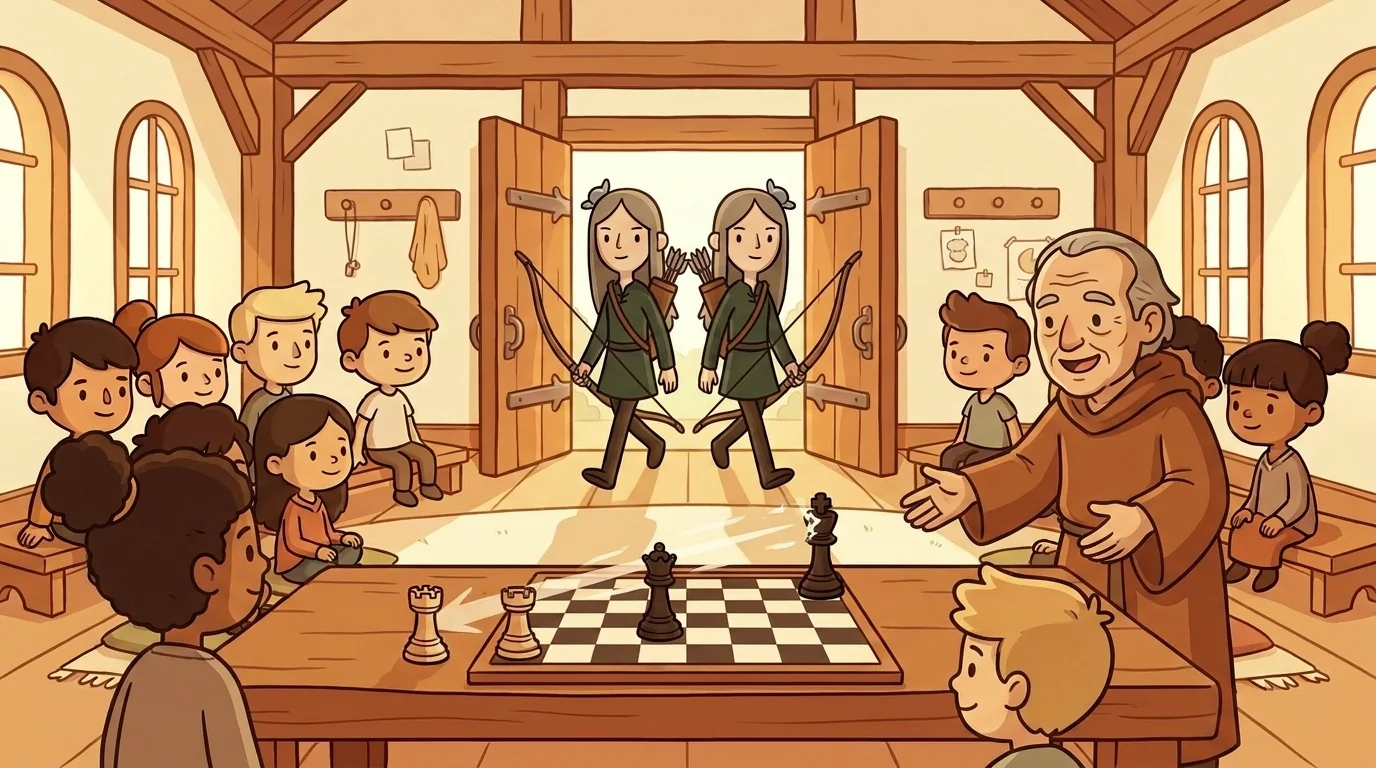
The academy master, who had been searching for someone to teach the X-ray pattern for almost a decade — the pattern where a piece threatens another piece through a third piece in between — sent for them within the week. He met them at the academy gates himself, in person. He brought them into a quiet upper classroom and set up a chessboard on the table.
A rook on a1. A black queen on a4. A black king on a8.
The sisters had never played chess in their lives. The academy master explained the rules to them, briefly. They understood quickly. They had practised in series for eight years; they understood lines.
The academy master pointed at the rook. He pointed at the queen. He pointed at the king. He said, "The rook is attacking the king. The queen is in the way. But the rook does not have to move the queen first. The threat passes through her, all the way to the king. This pattern is called the X-ray."
Vow said, immediately, "That's our shot."
Veil nodded once. "I open. She finishes."
The academy master hired them within the hour.
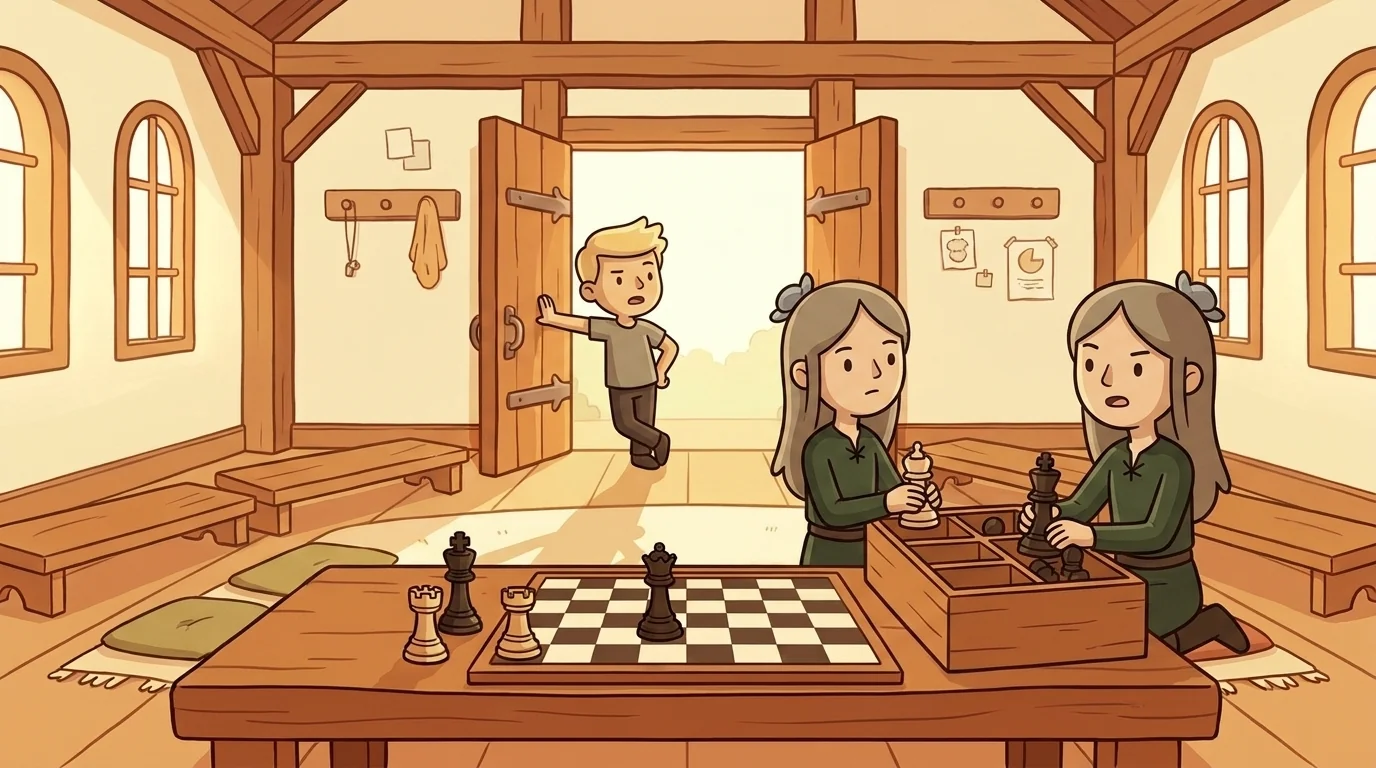
They have been teaching at the academy for eight years now. This afternoon, after the lesson has ended and the children have filed out, they stay behind in the training-hall to stack the practice-pieces back into their wooden boxes in proper order. Veil at the front, as always. Vow at the back. The hall is empty except for the two of them and, in the doorway at the back, a single small figure — Sir Pinwell, leaning on the doorframe in his quiet way, watching them work without comment.
He has been watching them for the entire lesson. They had known he was there. They always know.
He clears his throat carefully. They both look up at the same time.
"I have," he says, slowly, "been thinking. About the line. About what you do."
"Yes," says Veil.
"And?" says Vow.
Pinwell considers his words. He always considers his words before letting them out. He says, after a long deliberate pause: "I hold the row. I have always held the row. I have always been very sure that the row was, in its way, real. That a piece in the row was a piece in the way of something behind it. That a piece between two others was, by definition, between them."
"Yes," says Veil, again.
"And then you appeared," Pinwell says. "And you taught me a pattern that pretends — or perhaps does not pretend, perhaps it is true — that the row is not in the way of anything. That the threat goes through the row. That the piece between the two others is also, somehow, only the front of a longer threat that has not stopped."
The sisters say nothing. They are listening with both of their attentions.
"I have," Pinwell says, "written a footnote to myself about this. The footnote says: I will think about this. I am still thinking. I wanted you to know that I am still thinking."
Veil smiles — a very small smile, barely more than a softening of the eyes.
"Don't think about it too hard, sir," Vow says, gently. Her voice is calmer than usual, almost as quiet as her sister's. "We just go through."
Pinwell nods slowly. He pushes off the doorframe. He turns to go. At the door he pauses for a moment, looks back over his shoulder, and says, without ceremony, "The lesson was clean today. Both of you."
He walks out.
The sisters stand still in the empty hall for a long moment after he has gone. Then Veil looks at her sister and says, almost too softly to hear, "He saw us."
Vow nods. "He saw us."
They go back to packing the pieces away.
The GambitTales ensemble
Veil and Vow is part of GambitTales's distributed-narrative cast. Each character embodies a different curricular primitive; together they teach the full subject.
-

Sir Pinwell
Pin pattern — freezes pieces along a line
-

Twin Knights of Fork Hill
Fork pattern — attack two targets at once
-

Lady Skewer
Skewer pattern — force a valuable piece out of the way
-

Captain Crossfire
Double attack — one move threatens two targets
-

The Glass Lantern
X-ray attack — light pierces through to the piece behind
-

King Pumble & King Sable
Two kings — librarian and gardener; one step at a time
-
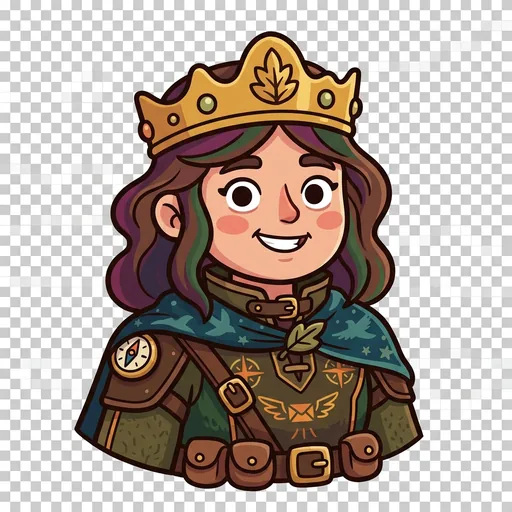
Queen Vesper
Queen — ranger-messenger; any direction, any distance
-

Captain Castle
Mentor + narrator — rook archetype; the mascot who introduces the cast + scaffolds the lesson
-

The Pawn Cohort
Ensemble piece — the four pawn-paired sets (Pawn Patrol + Sienna & Bran + Trotter & Trundle + Gable & Garrett) acting as one in the world layer