The Pawn Cohort — Pawn Patrol, Sienna and Bran, Trotter and Trundle, Gable and Garrett
The PAWN — moves one square forward at a time, captures diagonally, advances slowly; can promote to a queen (or other piece) on reaching the far rank; the foot-soldiers and citizens of the kingdom
A story read by The Pawn Cohort — Pawn Patrol, Sienna and Bran, Trotter and Trundle, Gable and Garrett
Press play to listen along. The line being read lights up as you go.
Show full transcript
Loading transcript…
You cannot tell the story of a kingdom by only telling the stories of its kings, its queens, its bishops, and its knights. If you do that, you leave out the people who actually live in it. The kings and queens know this perfectly well. (King Pumble has said so, in a letter to King Sable, several times. Sable always agrees, briefly. Sable agrees with most of what Pumble writes.)
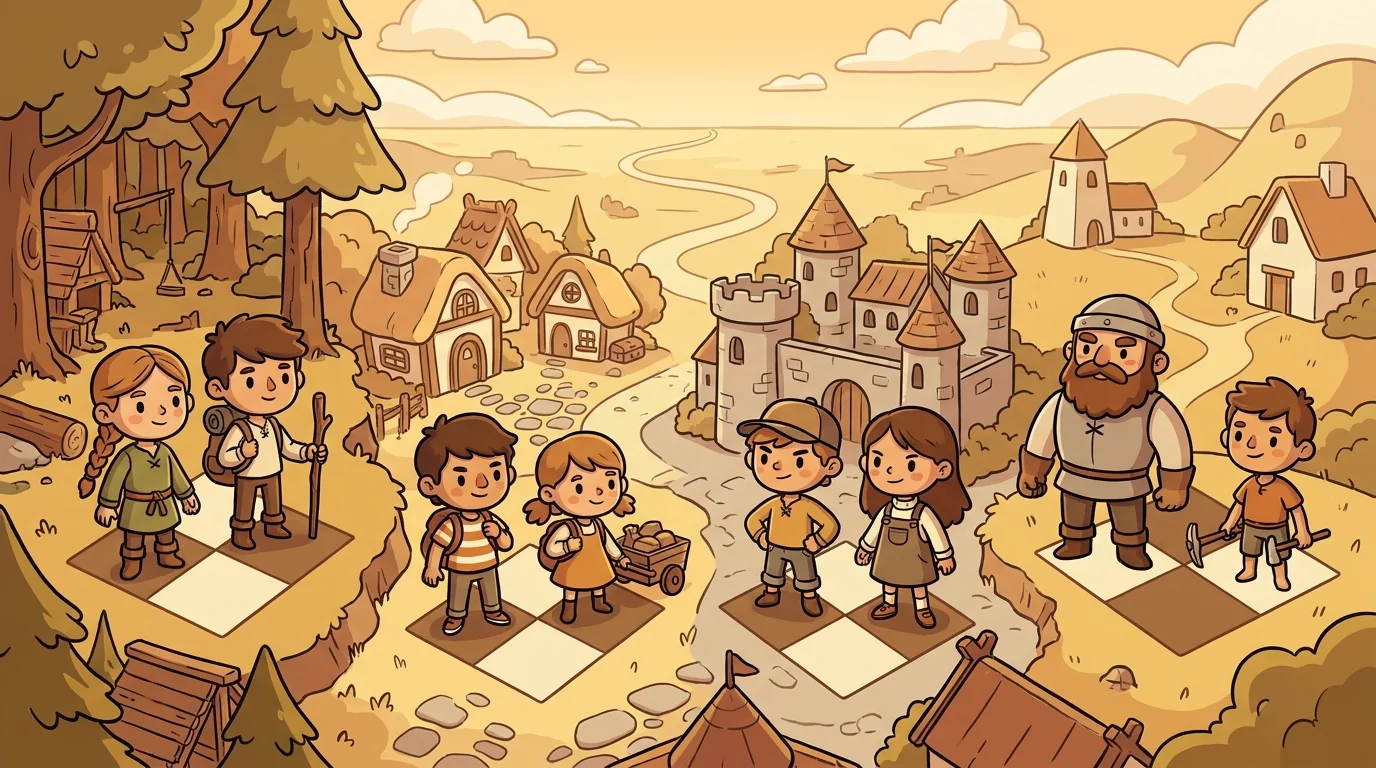
The kingdom has, broadly, four regions. Each region sends two pawn-pairs to serve when the kingdom needs them — which is, in the world of the chessboard, every game. You have probably already met one of them on the board without quite meeting them as people. This chapter fixes that.
This is the story of the eight pawns, the four towns, and the long walk they take from their first square to the eighth.
The Pawn Patrol (Steg and Sten)
The Pawn Patrol are from the border villages on the kingdom's eastern frontier. They are, of all the pawn-pairs, the most-trained. Their job, before they were called to the board, was to watch the kingdom's border crossings — the same eastern crossings, in fact, that figured in the bad winter when Queen Vesper rode across the frozen lake. (The Pawn Patrol were posted at one of the outposts that held that winter. They have, on occasion, mentioned this. They do not boast about it.)
Steg is the older of the two by about six months. He is solid, methodical, and slightly grim. He believes the word patrol is a job description, not a name, and he was deeply suspicious when their unit commander introduced them as the Pawn Patrol during their first chess-academy appearance. He has, however, accepted it. He has accepted most things.
Sten is six months younger and approximately twice as cheerful. She doesn't smile during patrols (that would, she says, be unprofessional) but she smiles afterward. She is the one who taught Steg to occasionally lean on his halberd instead of standing rigidly to attention. (She had to teach him this twice. He is still working on it.)
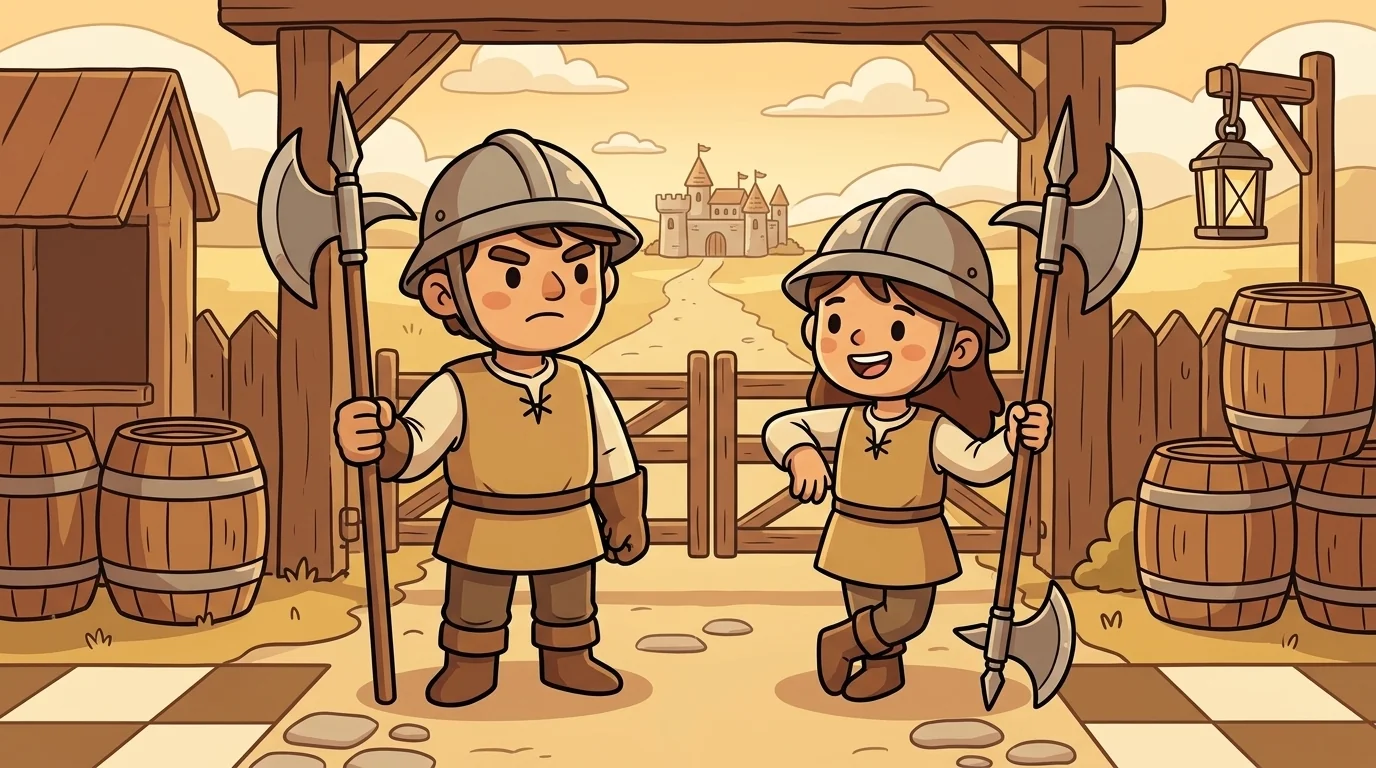
Both of them speak with the careful gruffness of people who have stood guard in cold weather for a long time. They are, in the chess kingdom's military hierarchy, the most disciplined of the pawn cohort. Captain Castle introduces them with respect.
Their job on the board is to hold the line. They are usually the centre pawns — the d-pawn and the e-pawn — and they advance only when ordered. They do not improvise.
Sienna and Bran
Sienna and Bran are siblings — fraternal twins, born on the same hour of the same evening — from a farming village called Wheatsetter in the kingdom's southern plain.
(You may notice the wheat reference. King Sable, who is from the same southern region, would say "the wheat came in" about these two if asked. He would not elaborate. He never does.)
Sienna is the elder by twenty-three minutes. She is patient. She has the patience of someone who has watched grain grow, which is a particular kind of patience that cannot be hurried. She is, in fact, slow on purpose. Children watching her on the chessboard sometimes find her almost too quiet. Castle, who has played enough games to know better, simply waits. Sienna's quiet is the kind that always pays off in the long run.
Bran is the younger. He is, in his calm way, cheerful. He does not sing while working, but he hums sometimes. He has the cheerfulness of someone who has been to the same harvest festival every year of his life. He believes — and has said so, on the board, more than once — that pawns are the backbone of any army. He is right. He is also not loud about being right.
The siblings dreamed, when they were small, of becoming queens. This is the dream of most pawns, and most pawns do not get it. Sienna and Bran did not. (Two of their cousins did. The siblings are not bitter. They are proud of their cousins. They write letters.)
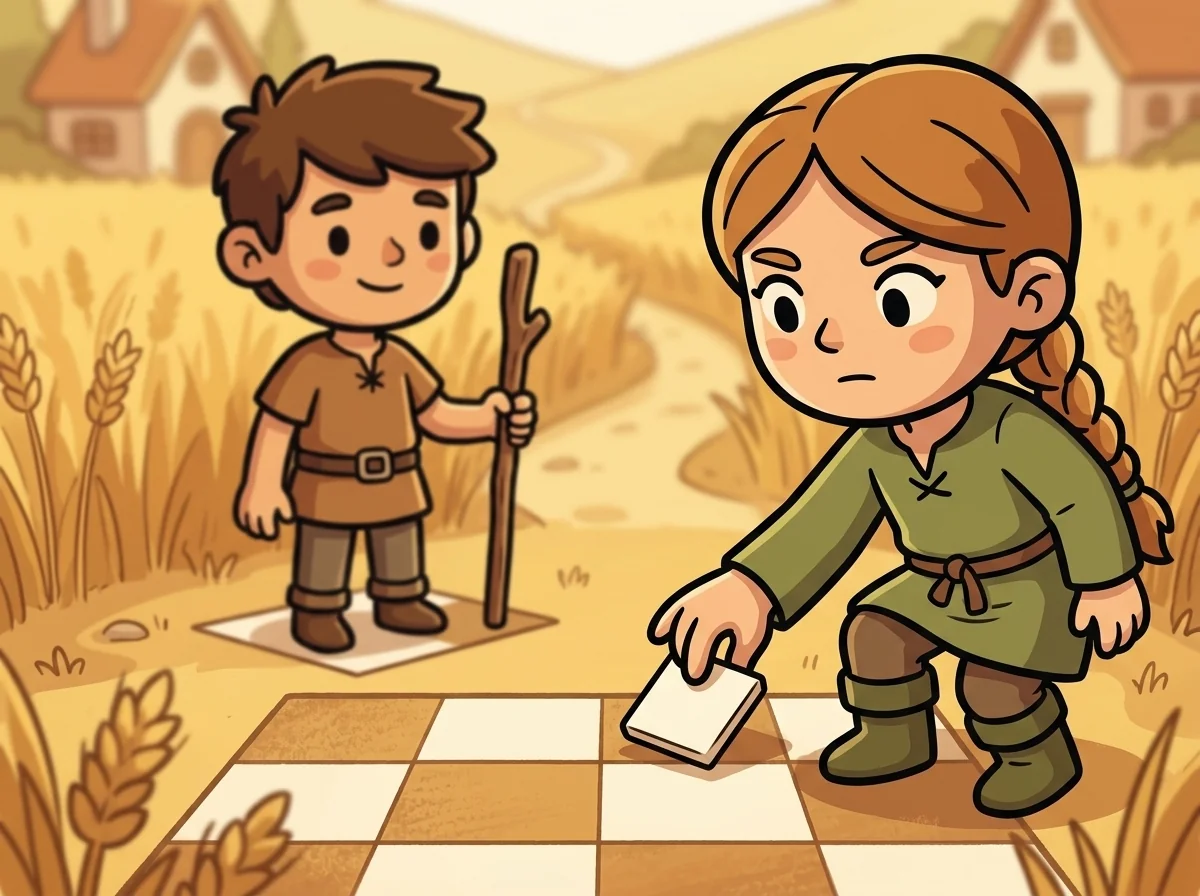
Their job on the board is to be reliable. They are usually the c-pawn and f-pawn — the supporting wing pawns — and they hold their squares stubbornly. They are the pawn-pair Captain Castle most often points to when teaching children that holding ground is, in itself, a kind of victory.
Trotter and Trundle
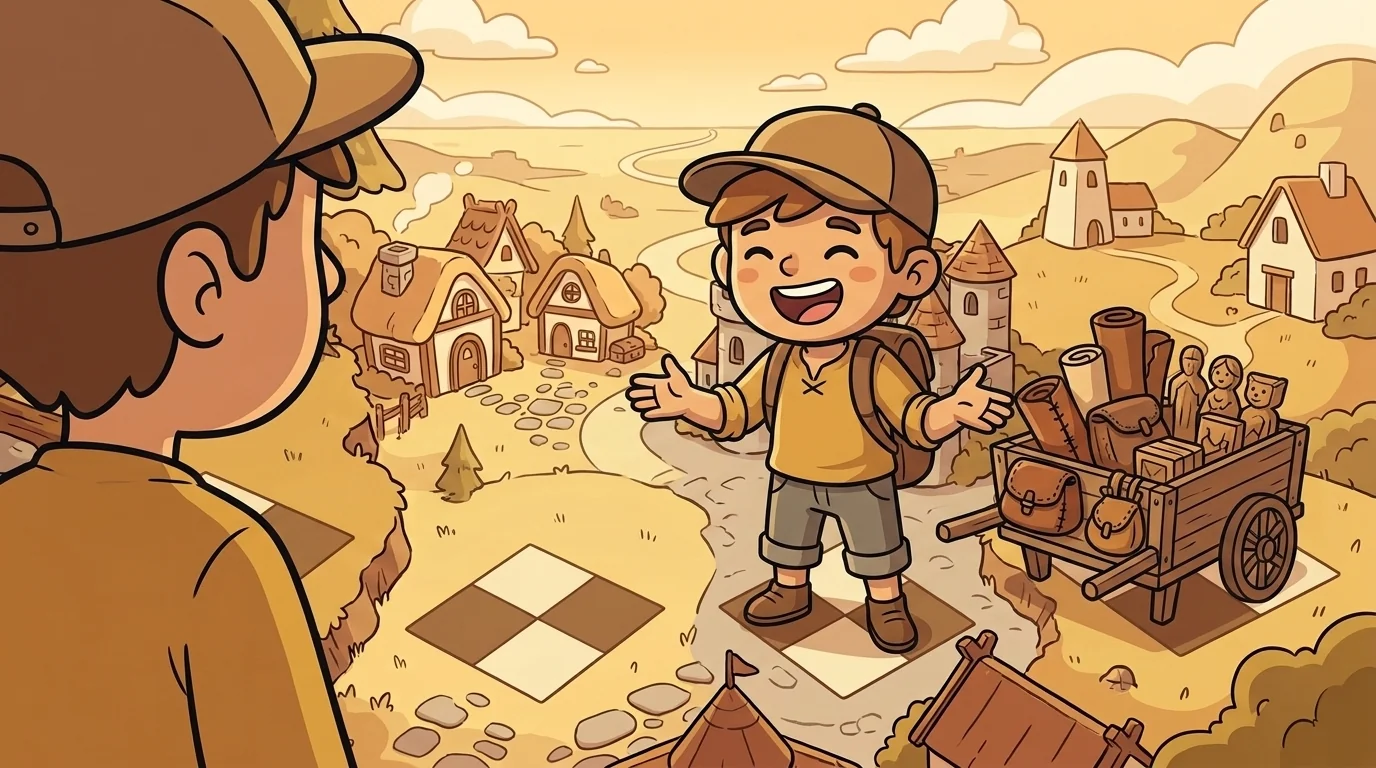
Trotter and Trundle are roadside merchants from the kingdom's western highway, a road that runs from the capital out to the trading towns near the western border. They have, in their pre-board lives, sold leather goods (Trotter) and small woodcraft (Trundle) from a cart they pulled together up and down the highway for nearly a decade.
They are the jokesters of the pawn cohort.
This may seem unusual for pawns, who are otherwise the most-serious pieces on the board, but Trotter and Trundle have a particular reason for it: they have heard, over their decade on the road, every customer's joke in the kingdom. You cannot stand at a market stall for that long and not develop a kind of patient humour about how people behave. They are, by their own admission, professionally amused.
Trotter is taller and louder. (Loud by pawn standards. Captain Crossfire would call him "merely audible.") Trundle is shorter and more dry. Their jokes are usually structured as a setup-and-payoff, alternating between them — the way the Twin Knights of Fork Hill finish each other's sentences, but with worse rhythm and better punchlines.
A typical Trotter-Trundle exchange: - Trotter: "Two squares! On our first move!" - Trundle: "And nobody noticed!" - Both, together: "Don't tell the bishop."
The chess academy was, at first, slightly uncertain about hiring them. They worried the children would get distracted. Captain Castle pointed out, mildly, that distraction is a teaching tool when handled correctly. The academy hired them.
Their job on the board is to be a- and h-pawns — the outer wing pawns. They are the pawns who, in many games, get the first chance to push two squares forward unnoticed because everyone is watching the centre. They love this. They tell jokes about it.
Gable and Garrett
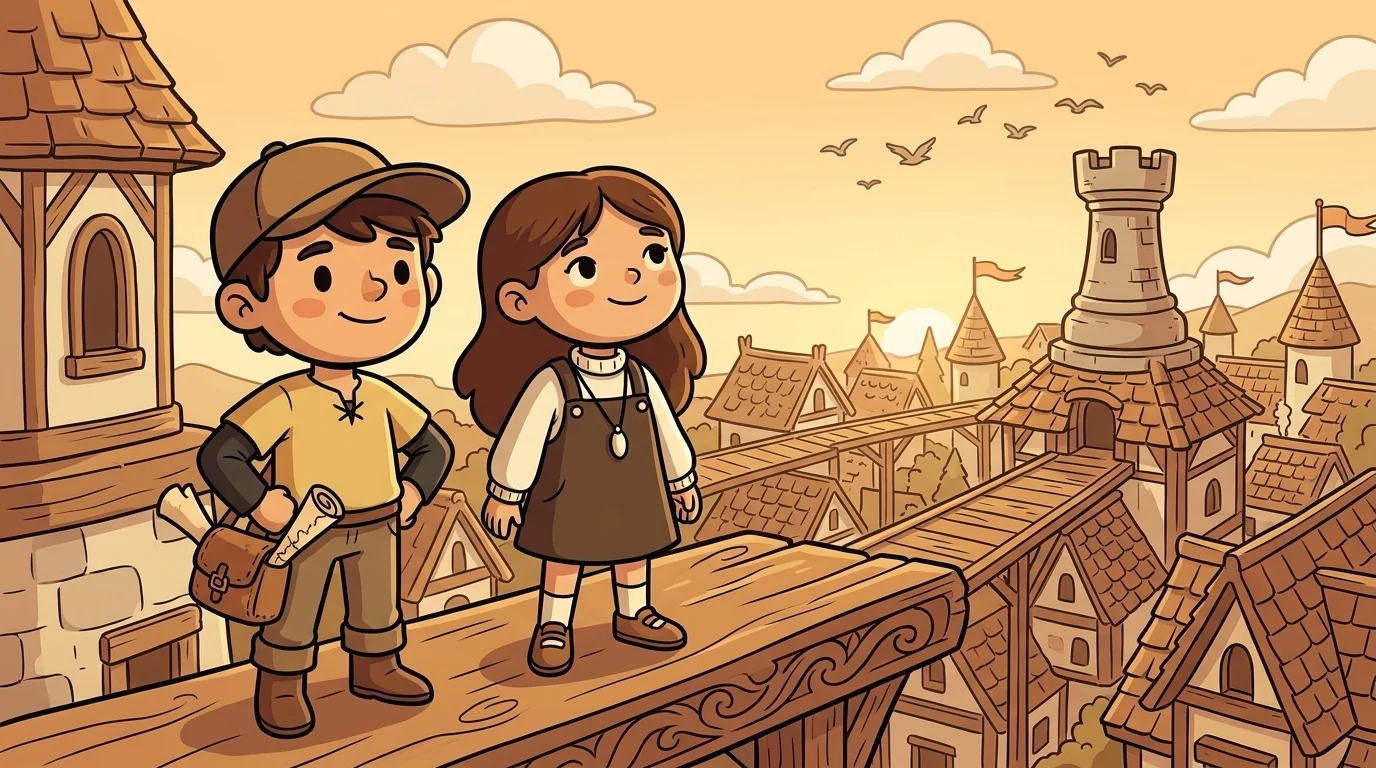
Gable and Garrett are from the town-rooftop wanderer tradition of the kingdom's northern hill towns. This requires explanation.
In the northern hills, the towns are old, and the houses are tall, and the roofs are connected. If you grow up in a northern hill town, you grow up climbing onto your neighbour's roof. You grow up walking across roof-tiles instead of streets. There is even a kind of unofficial profession in those towns: the wanderer, who walks the rooftops to deliver small messages, retrieve cats from chimneys, and notice things that ground-walking people don't notice.
Gable and Garrett are wanderers.
They are not siblings. They met when they were eleven, both walking the rooftops of the same town on the same morning, and they have walked rooftops together ever since. (They are not, in case you are wondering, twins disguised as friends. They are friends. It is allowed.)
Gable is the more thoughtful of the two. He looks down from rooftops and notices the shape of streets. He has, in his head, a perfect map of every town he has ever wandered. He is the quiet pawn of the cohort.
Garrett is the dreamer. He looks up from rooftops, mostly. He notices clouds. He notices birds. He notices the way the kingdom's banners change colour in different light. He is the pawn most likely to forget which square he's on. Gable always reminds him. Garrett always thanks Gable.
Both wanderers believe that the world looks smaller from above — which is a useful belief to have when you are a pawn on the eighth rank looking back at the long walk you've made.
Their job on the board is to be the promotion pawns. When a game reaches the endgame and a pawn looks like it might reach the far rank, it is usually Gable or Garrett. They are the dreamers. They are the ones who imagine becoming queens. Their cousins from Wheatsetter did. They might, too.
(Captain Castle has, in his eleven thousand watched games, seen Gable promote to a queen eighty-six times. He has seen Garrett promote ninety-one times. He keeps count quietly. He does not mention it.)
Why the four towns
These four pawn-pairs — eight pawns total, four regions of the kingdom — are everyone. They are the kingdom's foot-soldiers and citizens. The kings are the stakes; the queens are the messengers; the bishops, rooks, and knights are the specialists. But the kingdom is made of pawns.
When Captain Castle introduces the pawn cohort, he says only:
"They are everyone. They walk forward. They cannot go back. They sometimes become queens. They always matter."
The children always remember this part.
And on the day when one of them — a Gable, perhaps, or a Garrett, or a Sienna, or a Sten — reaches the far rank and stands up, taller, transformed, all of the cast members on the board stop for a moment. Queen Vesper nods. Sir Pinwell sets down his notebook. Lady Skewer bows slightly. Captain Crossfire — for once — shuts up. Even the Glass Lantern dims her light for a moment, in a small private salute.
Captain Castle says, very quietly: "Welcome to the job."
The walk was long. The walk was worth it. And every pawn who makes it feels the same warm, breathless swell of pride — the quiet joy of an ordinary someone who kept walking forward, one square at a time, until they became more than anyone expected.
The GambitTales ensemble
The Pawn Cohort — Pawn Patrol, Sienna and Bran, Trotter and Trundle, Gable and Garrett is part of GambitTales's distributed-narrative cast. Each character embodies a different curricular primitive; together they teach the full subject.
-

Sir Pinwell
Pin pattern — freezes pieces along a line
-
Twin Knights of Fork Hill
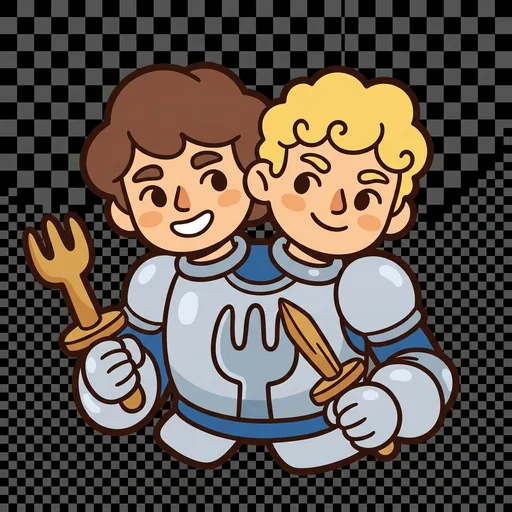
Fork pattern — attack two targets at once
-
Lady Skewer
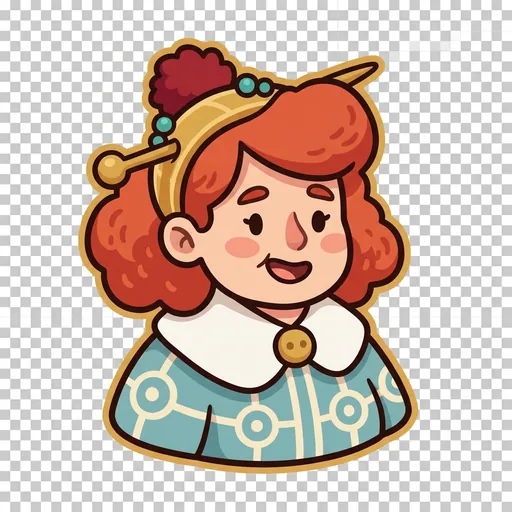
Skewer pattern — force a valuable piece out of the way
-
Veil & Vow
Discovered attack — step aside to reveal a hidden threat
-
Captain Crossfire
Double attack — one move threatens two targets
-
The Glass Lantern
X-ray attack — light pierces through to the piece behind
-

King Pumble & King Sable
Two kings — librarian and gardener; one step at a time
-
Queen Vesper
Queen — ranger-messenger; any direction, any distance
-

Captain Castle
Mentor + narrator — rook archetype; the mascot who introduces the cast + scaffolds the lesson