Captain Castle
Storytelling about chess — meta-narrator who introduces other cast members + scaffolds learning
Press play to listen along. The line being read lights up as you go.
Show full transcript
Loading transcript…
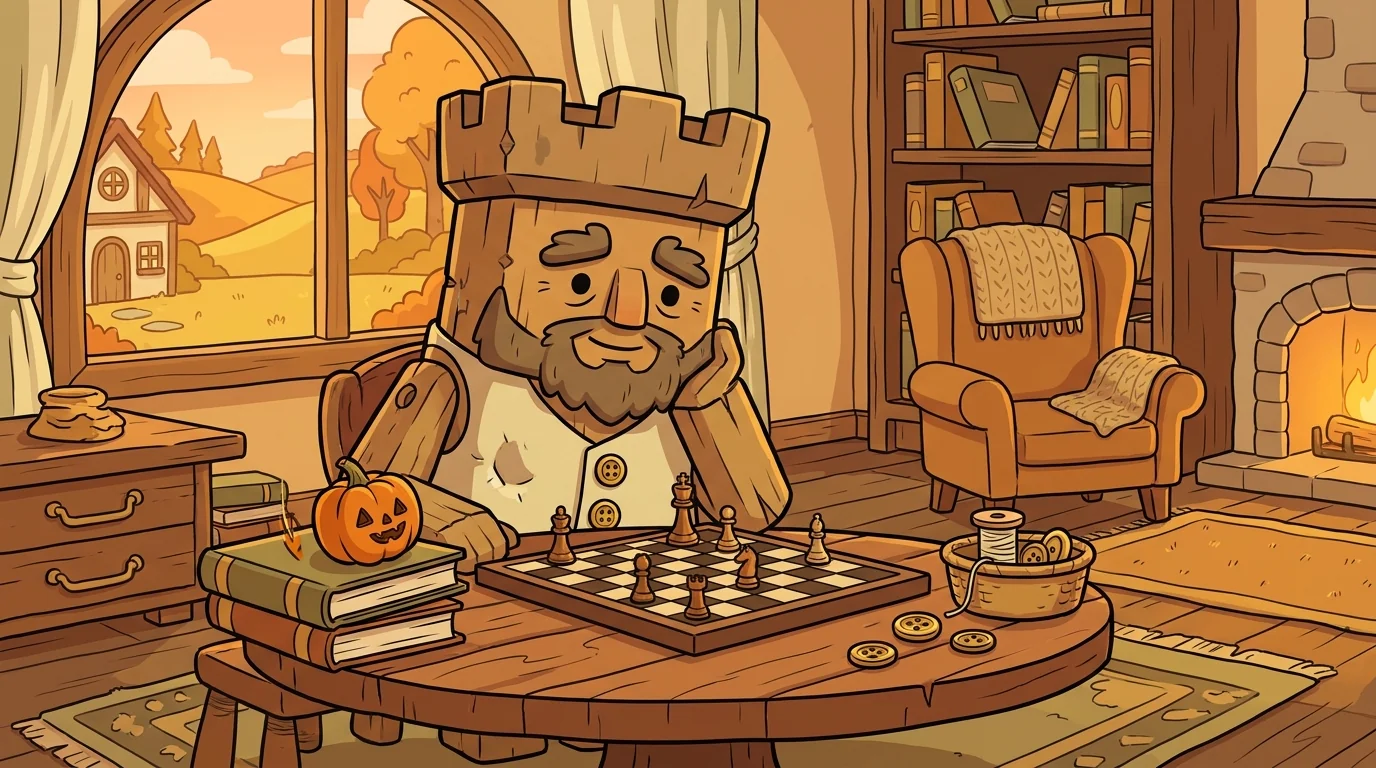
There is a question the Captain has heard a thousand times, and he has stopped trying to answer it cleverly. The question is this:
*Why did you retire?*
People assume there was a battle. They want there to have been a battle. They want Captain Castle to lean across the table with a grim sigh and say, I lost a friend in the eighth rank, my child, and I never went back. It would be a good story. It would explain the brass buttons on his waistcoat (people would assume the buttons were a tribute) and the small dent on his left flank (people would assume the dent was honourable).
But there was no battle.
The buttons were a tribute, but not to anyone heroic — they were a tribute to a tailor named Margery, who made them slightly too large because she always made them slightly too large, and the Captain liked her too much to ask her to redo them. And the dent on his left flank was from a falling pumpkin, which is not as interesting as a sword wound but is, the Captain insists, perfectly real.
He retired, in fact, on a Wednesday. An unimportant one. In early autumn. Between turns nine and ten of a slow midgame, when nothing in particular was happening and the children watching the match had begun to whisper about whether anyone was going to do anything. That is when the Captain decided.
He had not realised, until that Wednesday, that he had been deciding for some time.
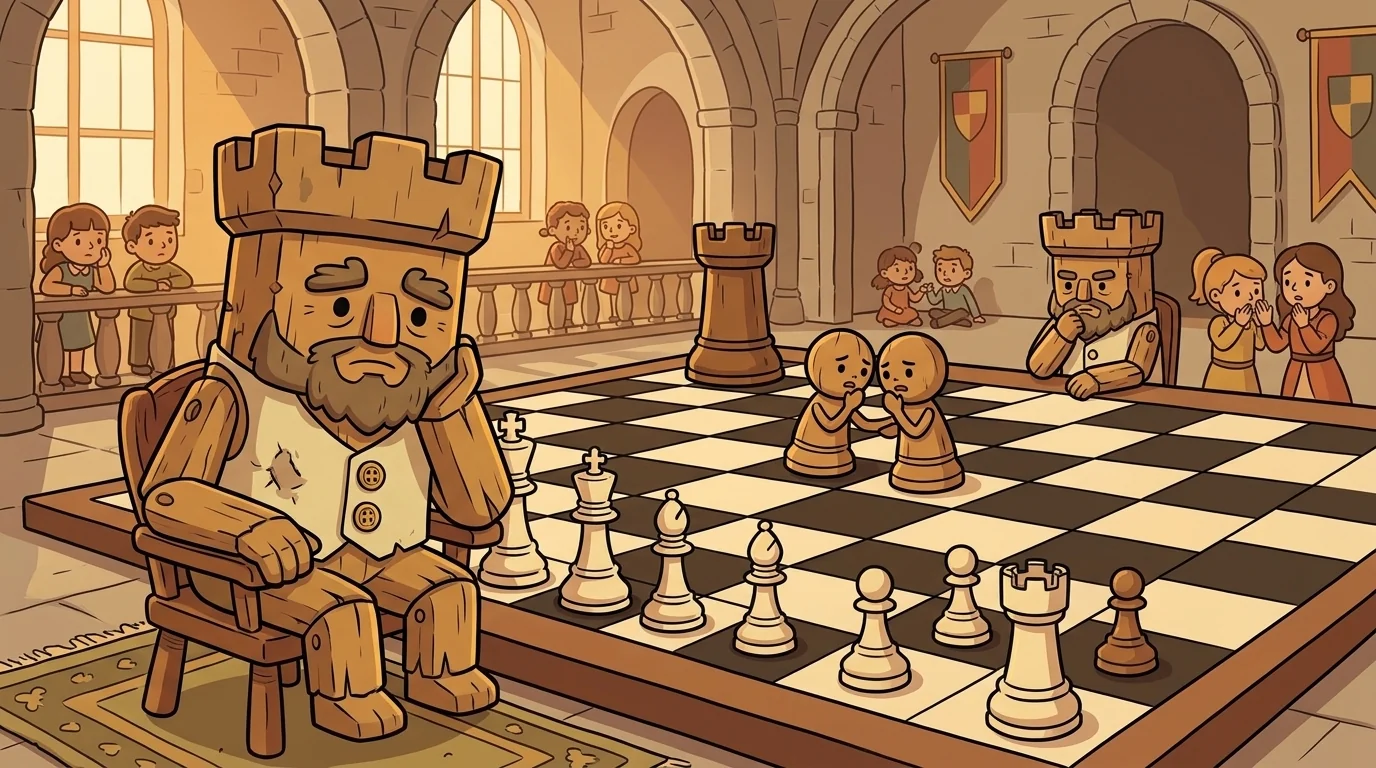
He was on his usual square — corner of the board, eighth rank, white side, exactly where rooks belong before any reasonable person has decided what to do with them — and he was thinking about how he had not moved in eleven games. Eleven games is not a long time for a rook. Some rooks do not move in their entire careers. The Captain knew rooks who had been on the same square for forty years and considered themselves busy. But on that particular Wednesday, in that particular position, the Captain found himself thinking:
If I never move again, what exactly will I have done?
Now, this is not the kind of thought you can un-think. Once a rook starts asking what he has actually done in his life, the answer tends to be: moved in a straight line, occasionally, and at the request of someone else. That is the rook's job. It is an honourable job. The Captain had never resented it. But on that Wednesday, the question sat down beside him and made itself comfortable.
He looked across the board. The opposing rook was sitting in the same kind of corner, doing the same kind of nothing. Down the file, a pair of pawns were having a small, almost shy argument about which of them would advance first. A bishop sailed past on the long diagonal, very pleased with himself for no obvious reason. Two knights leapt over each other in opposite directions, both convinced they were ambushing something.
And the Captain thought: I have watched all of this for a very long time.
He had watched, by his own count, eleven thousand games. He had been in three thousand of them. In the other eight thousand, he had simply sat — in a box, on a shelf, in a tournament hall, in the back room of a tea-house in a village whose name he could no longer pronounce. He had heard explanations of moves he himself was making, given by old players to younger ones. He had heard the same explanations, given badly, given well, given with kindness and with impatience. He had watched a child cry over a lost knight and then, two games later, watched the same child win with a knight, and watched the parent across the table fail to notice.
He thought: I know more stories than I have told.
He thought: That seems wrong.
He moved that turn — a tidy a8 to a1, picking off a careless bishop — and the game ended four moves later. The pieces were boxed up. The board was folded. The light in the room turned to that particular evening colour that boards take on after a game has finished, which is a colour Captain Castle had loved for as long as he could remember.
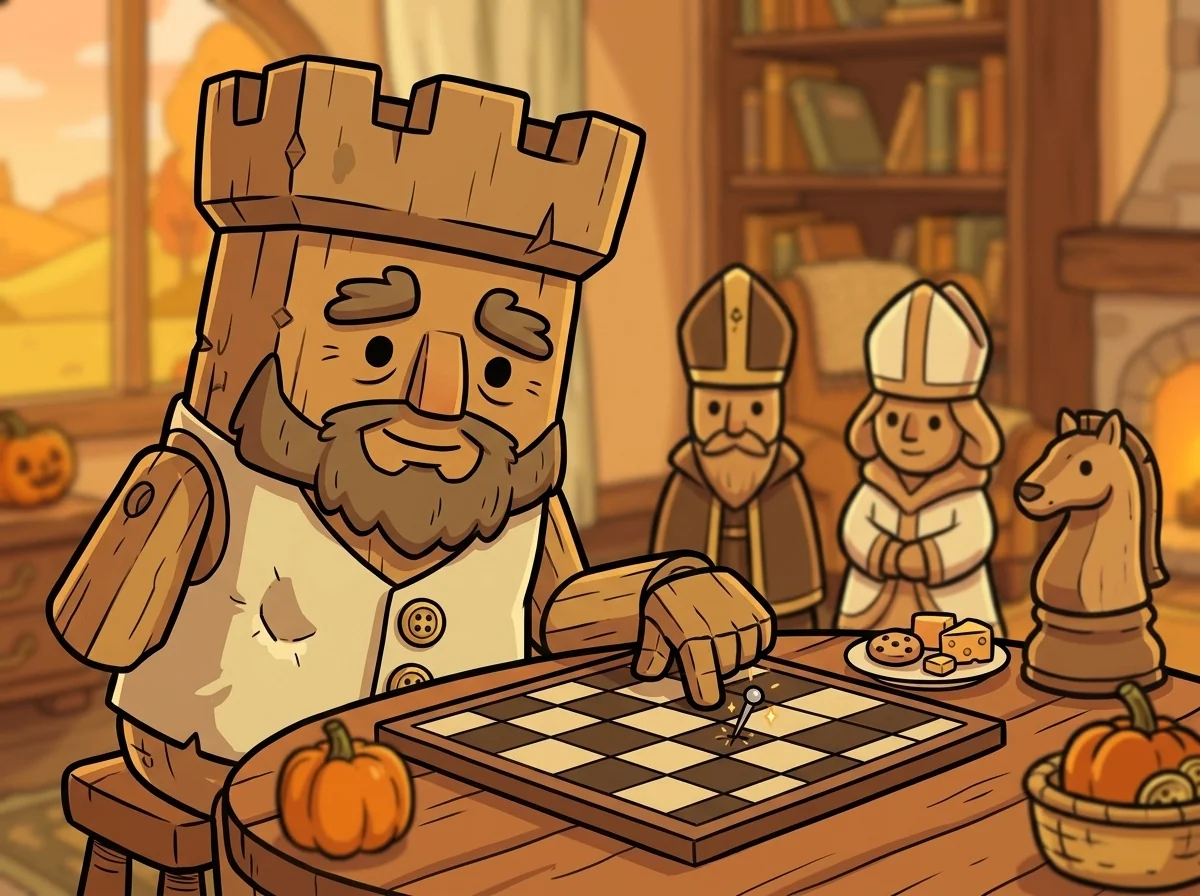
He sat in the box that night with his three closest neighbours — two bishops named Marigold and Marrow, and a knight named Ferret — and he said, quietly:
"I think I would like to talk about chess, rather than play it."
Marigold (who was sensible) said: "Talk to whom?"
The Captain said: "To children. I think I would like to tell them about the pieces. Not the moves. The pieces. Who they are. Why they do what they do."
Marrow (who was less sensible but kinder) said: "Like what?"
The Captain considered. He said: "Like — there is a librarian I have heard of, in the Slow Lake. He sees pins in books that nobody else can see. I would like to bring him to a chessboard and show the children how he sees."
Marigold said: "He sees pins. In books."
The Captain said: "Yes. Exactly."
Ferret, who had not been listening properly, said: "Will there be snacks?"
The Captain, who had a soft spot for Ferret, said: "Yes. There will be snacks."
He did not announce his retirement at a great gathering. He did not give a speech. He simply did not show up for his next tournament, and when his tournament-bag came looking for him three days later, he was already walking down the road towards the Slow Lake.
It was a long road. He stopped to talk to a baker about why his bread always rose more in the corners. He stopped to listen to a child explain a knight's tour she had invented in chalk on a bridge. He stopped, by accident, in a meadow and watched a flock of geese for almost an hour. None of these things were chess. All of them, the Captain felt, were somehow the same shape as chess. He could not yet explain why. He thought he might be able to explain it later. He was, in fact, beginning to suspect that explaining things later was going to be his entire new job.
He arrived at the library on the seventh day. He knocked on the door.
Pinwell answered the library door slowly. He was holding a teacup. He said: "Yes?"
The Captain said: "I have come to ask if you would consider teaching children about the pin."
Pinwell said, very quietly: "I suppose I should bring my notebook."
And the Captain, who had been steady on his square for eleven games in a row, felt — for the first time in a very long while — that he was about to do something interesting.
The academy was not, at first, much of an academy. It was a converted tea-house at the edge of the village. The first class had four children in it. The first lesson lasted twenty minutes, which was about ten minutes longer than the Captain had planned for, because the children kept asking follow-up questions. He had forgotten about follow-up questions. He had been on the board too long.
Pinwell taught the pin in the second half of that first class. The Captain, after introducing him with what he hoped was the right amount of dramatic restraint, stepped to the side of the room, folded his short rook-arms behind his back, and watched.
He watched the children watch Pinwell.
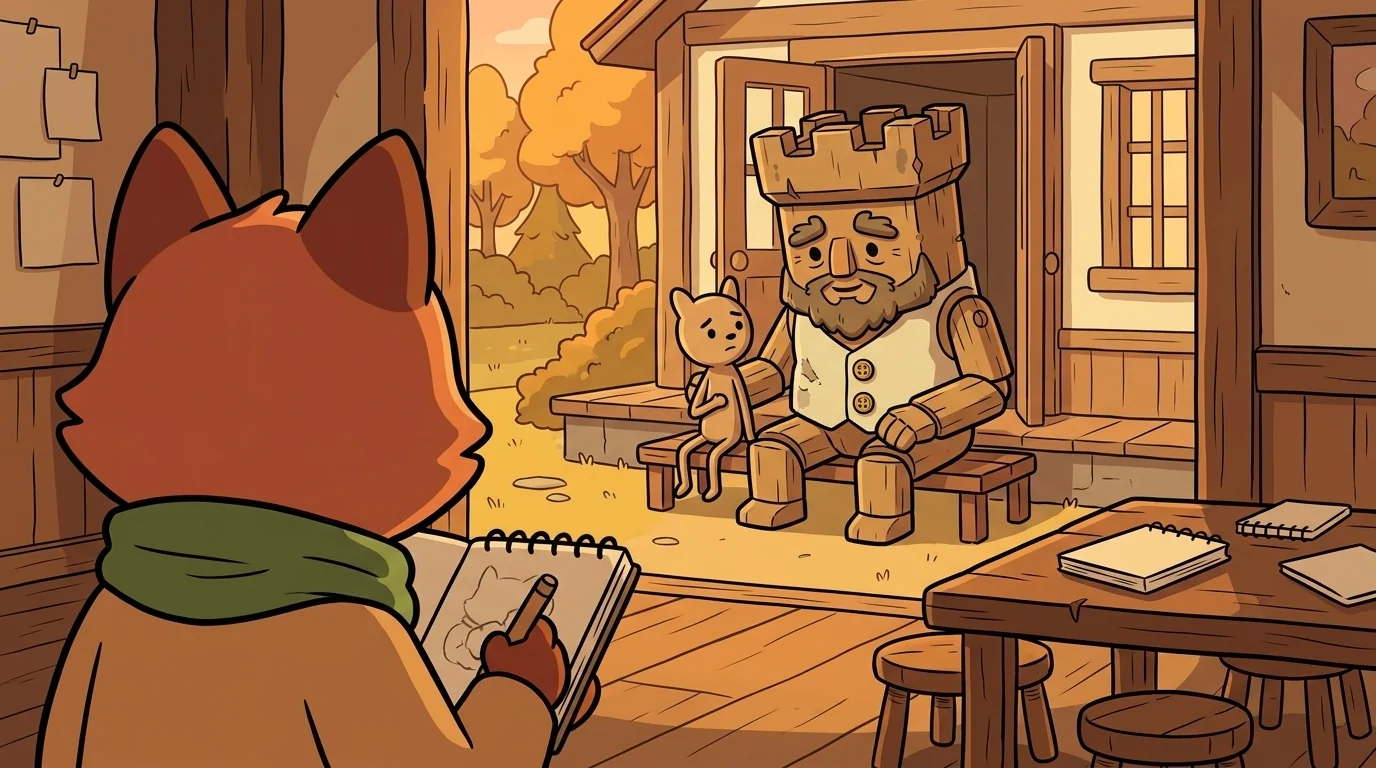
He watched the moment — and there was a moment — when the fox in the green scarf wrote a sentence in her notebook that she did not strictly need to write. She was writing it because she wanted to remember it. The Captain had seen that kind of writing eleven thousand times. He had never been the one teaching the writer.
After the lesson, he sat with Pinwell on the front step of the tea-house. The light had turned that colour again. The Captain said, slowly:
"Pinwell. Would you mind if I asked the other librarians? The ones I have heard about?"
Pinwell considered. "Other librarians?"
"In other villages. Each one sees something different. The lady in the southern village sees skewers — front piece smaller, back piece bigger. The twin foxes in the hills see forks. A grandmother in the eastern marsh sees the line behind the line — what I am told is called an X-ray. And there is a winter ranger who arrives at outposts before anyone expects her to — she does not yet know it but I think she sees the queen."
Pinwell took a sip of tea. He said: "I think they would come, if you asked properly."
The Captain wrote letters that night. He wrote them slowly, because he had not written letters in a long time, and his handwriting was rusty. He addressed them to a librarian, a southern bookseller, twin foxes in a hill village, a marsh-dwelling grandmother, and a post office in a town called Marrowmile. Each letter said roughly the same thing: I have heard of you. I would like you to come and tell the children what you see.
He licked the stamps. He posted the letters. He went home to the tea-house and considered, for the first time in his life, what he would say at his own first lesson.
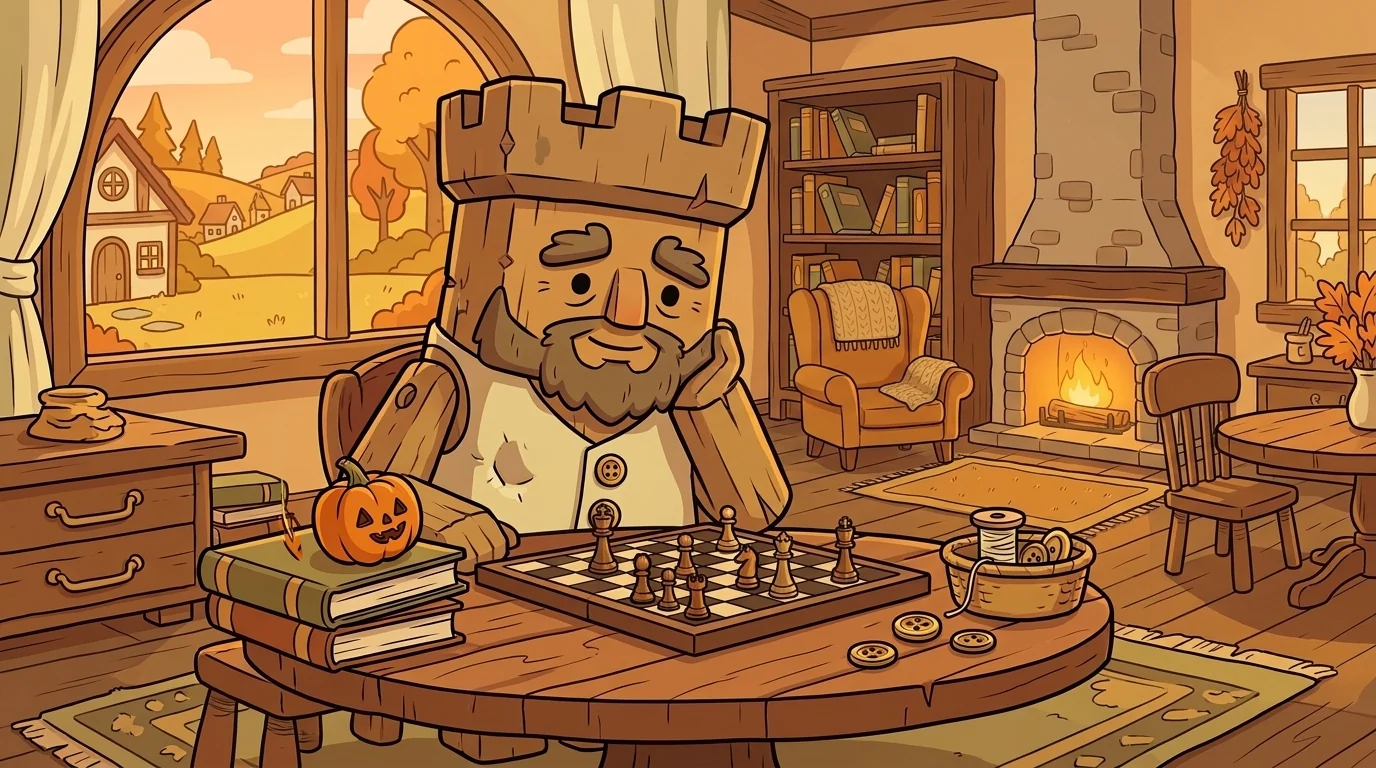
He says it the same way every time. The children expect it now.
He says: "I was once a real rook. I retired from the board to tell the stories of those still playing."
And then he sits at the front of the room and waits a beat, and adds: "I move in straight lines. I'm not proud of it, but it does narrow the conversation."
The children always laugh, even though it's the same line. The Captain doesn't mind that they have heard it before. He minds, in fact, very little of what he might once have minded.
Sometimes, in the evening, after the children have gone home and the board is folded and the light has turned that particular colour again, he sits in his usual corner of the tea-house and thinks about that Wednesday. He still does not have a clever answer for why he retired. He has tried various ones. They all sound smaller than the truth.
The truth is this:
He wanted to tell the stories.
He has been doing it ever since. He is, he thinks, going to keep on doing it for a long time. He has eleven thousand more stories where the first one came from — and he suspects, now that he has started, that the supply will go on refilling itself, because every lesson now produces children who in turn produce new stories. That had not occurred to him on the Wednesday. He thinks it is the best thing about the job.
He folds his arms across his brass buttons. He looks at the empty board. He smiles, only a little, because rooks do not have large faces and a small smile is the most he can manage. And then he goes to sleep, because tomorrow there is another class, and another set of follow-up questions, and another fox with a notebook, and another lesson to tell.
The GambitTales ensemble
Captain Castle is part of GambitTales's distributed-narrative cast. Each character embodies a different curricular primitive; together they teach the full subject.
-

Sir Pinwell
Pin pattern — freezes pieces along a line
-

Twin Knights of Fork Hill
Fork pattern — attack two targets at once
-

Lady Skewer
Skewer pattern — force a valuable piece out of the way
-

Veil & Vow
Discovered attack — step aside to reveal a hidden threat
-

Captain Crossfire
Double attack — one move threatens two targets
-

The Glass Lantern
X-ray attack — light pierces through to the piece behind
-

King Pumble & King Sable
Two kings — librarian and gardener; one step at a time
-
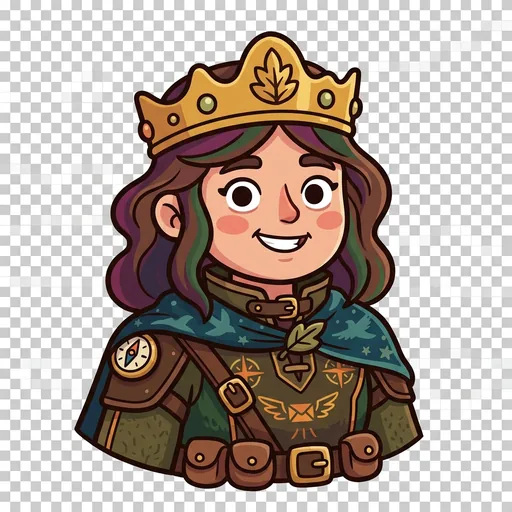
Queen Vesper
Queen — ranger-messenger; any direction, any distance
-

The Pawn Cohort
Ensemble piece — the four pawn-paired sets (Pawn Patrol + Sienna & Bran + Trotter & Trundle + Gable & Garrett) acting as one in the world layer