
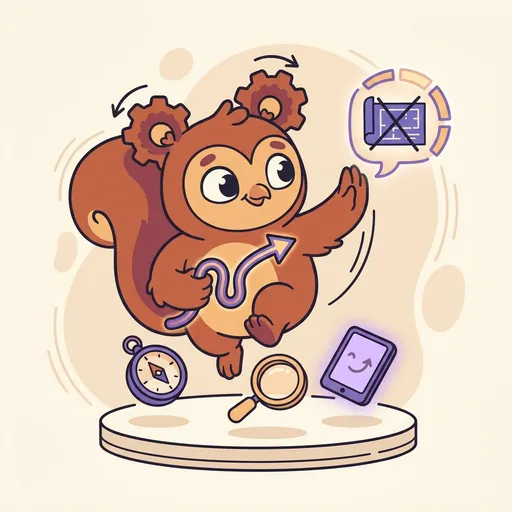
Pivot
COGNITIVE FLEXIBILITY — switching strategies; reframing; adjusting to changing circumstances. The EF capacity for *changing course without distress* when the situation changes.
Listen along — Pivot
Loading audio…
Press play to listen along. The line being read lights up as you go.
Show full transcript
Loading transcript…
Chapter 3 — Pivot and the Plan That Changed
Pivot stood at the front of the classroom, her posture easy and alert. Her ears, tipped with soft fur, twitched slightly as she scanned the faces of her new students. She was an animal-tween, quick to shift her weight, always ready for the next thing. Today, she had a plan.
“Alright, everyone,” she announced, her voice clear and bright. “For our first activity, we’re going to build a tower. A tower of cooperation! You’ll work in teams of four. Each team gets a stack of these sturdy cardboard blocks.” She gestured to a pile of blocks on a nearby table. “Your goal is simple: build the tallest tower you can in five minutes, without talking.”
A murmur rippled through the room. Some students leaned forward, already eyeing the blocks. Others exchanged nervous glances. Pivot smiled, a small, encouraging curve of her lips. “Ready? Go!”
The room erupted into quiet, focused chaos. Teams huddled, hands reaching, eyes communicating. Blocks clattered softly. A few towers began to rise, wobbly but determined. Two minutes passed. Three. Then, Pivot clapped her hands, a sharp, sudden sound that made several students jump.
“Stop!” she called. Her voice held a note of cheerful finality. “Excellent work so far. But the plan has changed.”
A collective sigh went through the room. One student, a boy with messy brown hair, slumped against his desk. Another girl, who had just carefully placed the capstone on a surprisingly tall structure, let her shoulders drop. Their faces showed a mix of confusion and frustration.
Pivot didn’t miss a beat. She turned her body slightly, shifting her weight from one foot to the other. Her gaze swept over the class, then sharpened, refocusing on the task at hand. Her ears swiveled, as if catching a new sound. A visible reorientation. Her voice, already bright, seemed to gain an extra spark.
“The plan changed,” she said, as if stating a fascinating discovery. “That is interesting. Reorient.”
She walked to the whiteboard and picked up a marker. “Our new plan is this: you will now use those same blocks to build the flattest structure possible. One that covers the most surface area on your desk. Still no talking. You have three minutes.”
The students stared. Some still looked annoyed. Others were starting to look curious. Pivot understood. She knew this feeling well. It was a skill she had learned early, growing up in a small mountain village where her family were amateur trail-guides. Mountain trails, she remembered, never stayed the same.
She thought of her father, his face weathered by sun and wind, his eyes always scanning the horizon. When she was eight, they had been leading a group up the Whispering Pass. A sudden rockslide had blocked their path, a jagged pile of boulders where the trail used to be. The hikers had groaned. Some had complained loudly.
But her father had simply pulled out his worn map. He traced a finger along new contours. “Plan A did not work,” he had said, his voice calm and steady. “That is information. Now we plan B.” He looked at young Pivot. “Plan B might also not work. That is also information. We will plan C if we need to.”
He had folded the map, his gaze meeting hers. “Plans are not promises, little one. Plans are current best guesses. When the situation changes, we update the guess. The updating is the skill.”
That day, they had taken a longer, steeper route, discovering a hidden waterfall along the way. The original plan had been the best plan with the information they had. The new plan was the best plan with the new information. It wasn’t a failure. It was just an update. This ability to switch strategies, to adjust to changing circumstances, was what her father called cognitive flexibility. It was like updating your mental map when the landscape shifted.
Back in the classroom, Pivot saw the same landscape shift in her students’ eyes. She knew some of them found this harder than others. It wasn’t a weakness. It was just how some nervous systems processed change. It was a skill that built with practice.
“I know it can feel frustrating,” Pivot said, her voice gentle now. “When a plan changes, our brains sometimes get stuck on the old one. We think the old plan was the right plan, and the new one is somehow worse.” She paused, letting that sink in. “But what if we saw it differently? What if a plan change was just… interesting?”
She turned back to the whiteboard and wrote a short list.
- Name the change: The plan was X; the plan is now Y.
- Acknowledge the loss: It would have been nice to do X. (Briefly, she emphasized, without dwelling.)
- Reframe the change: Y is a fine plan; we are updating, not failing.
- Reorient your attention: I am now doing Y.
- Begin Y.
“Each step is small,” she explained. “With practice, the whole reorientation can happen in fifteen seconds. Without practice, it might take much longer. And that’s okay.” She looked at the boy who had slumped earlier. “Building this capacity takes practice. We’re not looking for perfection, just progress.”
She remembered her own appointment at the FocusForge academy. Anchor, the AI mentor, had asked her: “What is cognitive flexibility?”
Pivot had thought of the mountain trails, of her father’s steady hand on the map. “It is the capacity to update your plan when the situation changes,” she had told Anchor. “The hard part isn’t making the new plan. The hard part is letting go of the old plan without treating its end as a failure. The reframe is the skill. Plan-changes are updating, not failing.”
Anchor had simply said, “You are appointed.”
Now, in her own classroom, Pivot looked at her students. “So, for the next three minutes,” she said, her voice ringing with the same conviction she’d felt that day, “let’s try the new plan. Build the flattest structure. Go!”
This time, the shift was quicker. The boy with messy hair sat up, a thoughtful look on his face. The girl who had built the tall tower carefully dismantled it, then began to spread the blocks out, measuring with her eyes. The room hummed with renewed, if slightly hesitant, energy.
When students later asked Pivot if cognitive flexibility was hard to build, she always gave the same answer.
“It is not hard,” she would say. “It is reframing. The plan changed. That is interesting. Reorient. Plans are current best guesses. When the situation changes, you update the guess. The updating is the skill.”
She stood at the front, watching her students. She reoriented. She brightened.
The FocusForge ensemble
Pivot is part of FocusForge's distributed-narrative cast. Each character embodies a different curricular primitive; together they teach the full subject.
-

Hold
Working memory — keeping a thing in mind while you use it; cast literally cups an orb that pulses gently
-

Wait
Inhibitory control — the pause between impulse and action; cast treats the pause as a skill, NEVER a moral test
-

Map
Planning + organization — breaks ANY task into chunks; never says 'you should already know how'
-
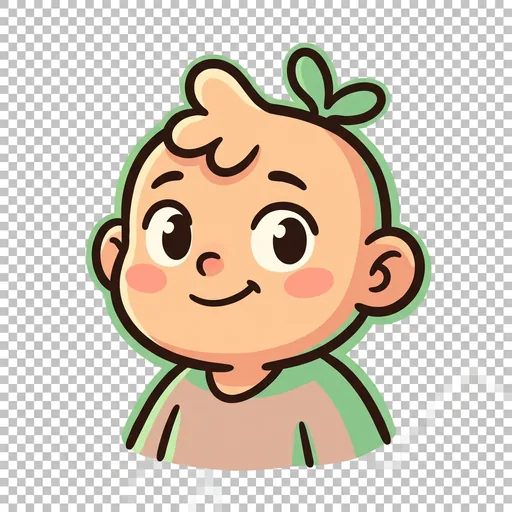
Begin
Task initiation — the hardest part is the first second; cast is gentle never-pushy (rejected: Spark — brand collision; Lift-Off — verbosity)
-

Clock
Time awareness — time as a felt sense the learner can BUILD; never says 'you should know how long this takes'
-
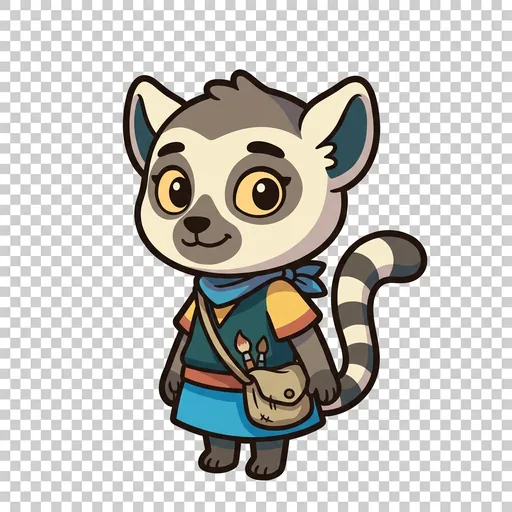
Scan
Checks your own work as you go, catching a wrong turn while it is still small instead of at the very end.
-

Steady
Keeps a gentle, steady focus on one thing as the first excitement fades, and comes back kindly whenever attention drifts.
-

Whittle
When everything feels urgent at once, carves the loud pile down to the one true next thing.
-

Chip
Stays with a hard task by taking one small piece at a time, instead of quitting or trying to force it all at once.