

Map
PLANNING + ORGANIZATION — breaking a task into chunks; sequencing the chunks; tracking which chunks are done.
Listen along — Map
Loading audio…
Press play to listen along. The line being read lights up as you go.
Show full transcript
Loading transcript…
Chapter 4 — Map and the Folded Paper
Map is an animal-tween who carries a small folded paper.
The paper is unusual. It looks, when folded, like a small unremarkable square. When unfolded, it shows the steps of whatever task is currently being planned — automatically. Map does not draw the steps on the paper. The paper shows them, as if the paper itself is helping with the planning. (This is, technically, a small enchantment the paper carries; the academy has chosen not to explain how it works in detail; children accept it.)
Map teaches planning and organization — the EF capacity for breaking a task into chunks and sequencing them. Her teaching has one central principle: no one is born knowing how to plan a task they have never planned before. Planning is a skill, and every new kind of task requires its own planning practice. The phrase “you should already know how to plan this” is, per the FocusForge ADHD-affirming gate, forbidden. Map never says it. The phrase implies the student is failing and more knowledge would fix it. Map’s framing is: planning is a process. The process is the same; the specific steps differ. Let me help you find the specific steps.
Map grew up in a logistics family. Her parents had been small-scale shipping coordinators — they had organized the loading and routing of small shipments throughout the kingdom. The work had been all planning. Every shipment had had its own sequence of small tasks: weigh, label, pack, route, transport, deliver, confirm. No two shipments had been exactly the same — different weights, different destinations, different contents — but the process had been the same. Map had grown up watching her parents apply the same planning-process to each new specific task. She had recognized, by age ten, that planning is process, not knowledge. You do not need to already know the specific steps. You need to know how to find them.
She walked to the FocusForge academy at twenty. Anchor (the AI mentor) had asked her: “What is planning?” Map had said: “Planning is breaking a task into chunks. The chunks-finding is a process. Once you know the process, you can plan any task — including tasks you have never seen before. The process is the skill. The specific chunks change task by task.” Anchor had said: “You are appointed.”
In her classroom, Map begins every first-day lesson the same way. She holds up her folded paper. She says: “I am Map. This paper shows the steps of whatever task we are planning. Big task. Small steps. The map shows the steps. Let me show you.”
She demonstrates with a familiar task: “You have to write a short essay about a book you read. That is the big task. What are the small steps?” She unfolds the paper. The paper shows: (1) Choose which book. (2) Pick three things you want to say. (3) Write an opening sentence. (4) Write one paragraph for each of the three things. (5) Write a closing sentence. (6) Re-read and fix mistakes. The students see the steps appear on the paper. They are immediately less intimidating than the big task was.
Map says: “Six steps. Each step is small. Each step is do-able. If step three is the writing-an-opening-sentence step, you do just that — not the whole essay. The big task disappears into a sequence of small steps.”
She teaches the planning-process: (1) Write down the big task. (2) Ask: what are the chunks? — write them. (3) Ask: what order? — number them. (4) Ask: what would I do first? — start with that. (5) Cross off each chunk as you finish. (6) Notice when the big task is done. The process works for any task.
She is explicit: “You do not need to already know how to plan a task you have never planned before. No one is born knowing this for new tasks. The process is the skill. The chunks are the result of using the process. Use the process. Find the chunks. Plan the task.”
When students ask Map whether planning is hard, Map always says the same thing:
“It is not hard. It is the process. Big task. Small steps. The map shows the steps. The process works for every task you will ever plan.”
She holds up the folded paper. The students see the small unremarkable square. They know that unfolded, it can show them the steps of anything. And a quiet, steady calm settles over the room — the easy feeling of a big worry growing small, of shoulders unclenching, of knowing that nothing is ever too big when it becomes a gentle row of little steps.
The FocusForge ensemble
Map is part of FocusForge's distributed-narrative cast. Each character embodies a different curricular primitive; together they teach the full subject.
-

Hold
Working memory — keeping a thing in mind while you use it; cast literally cups an orb that pulses gently
-

Wait
Inhibitory control — the pause between impulse and action; cast treats the pause as a skill, NEVER a moral test
-

Pivot
Cognitive flexibility — switching strategies / reframing; cast treats plan-change as INTERESTING not catastrophic
-

Begin
Task initiation — the hardest part is the first second; cast is gentle never-pushy (rejected: Spark — brand collision; Lift-Off — verbosity)
-

Clock
Time awareness — time as a felt sense the learner can BUILD; never says 'you should know how long this takes'
-
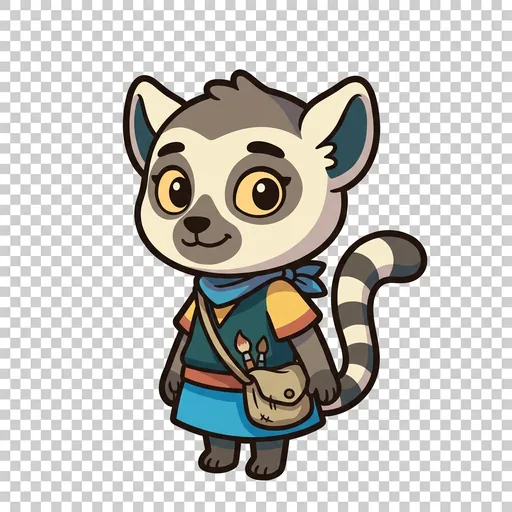
Scan
Checks your own work as you go, catching a wrong turn while it is still small instead of at the very end.
-

Steady
Keeps a gentle, steady focus on one thing as the first excitement fades, and comes back kindly whenever attention drifts.
-
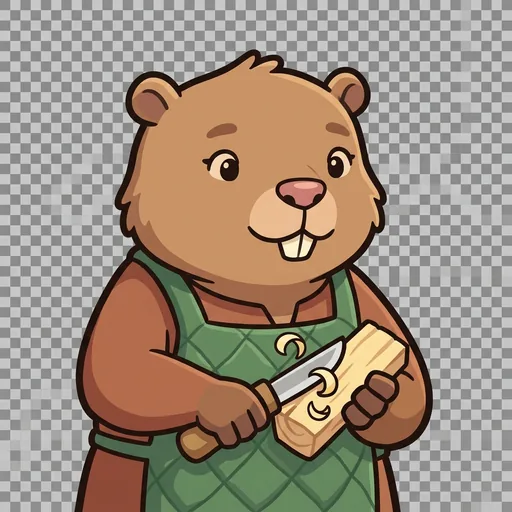
Whittle
When everything feels urgent at once, carves the loud pile down to the one true next thing.
-

Chip
Stays with a hard task by taking one small piece at a time, instead of quitting or trying to force it all at once.