

Begin
TASK INITIATION — the first second of starting; getting from *thinking about starting* to *actually starting.*
Listen along — Begin
Loading audio…
Press play to listen along. The line being read lights up as you go.
Show full transcript
Loading transcript…
Chapter 5 — Begin and the First Second of Work
The dew was still on the bean rows when Begin knelt in the dirt, one paw hovering above the first weed of the morning. She did not pull it. Not yet. She just crouched there, soft fur catching the light, watching the little green thing the way you’d watch a word you couldn’t quite say out loud.
A boy from the next garden over leaned on the fence. “You’ve been staring at that weed for a whole minute,” he said. “Why don’t you just grab it?”
Begin smiled without looking up. “Because the whole minute,” she said, “is the hard part. Not the grabbing. The getting-ready-to-grab.” Then her paw closed around the weed, and it came free with a little tug, roots and all. She set it in the basket. The next one was easier. The one after that, easier still.
That was the thing nobody warned you about gardens, Begin thought. Everyone imagined the work was the digging and the watering and the hauling. But the real work — the secret, invisible work — was the tiny gap right before any of it. The gap between knowing a row needed weeding and your hands actually moving. She had crossed that gap a thousand times. It never stopped being real. She had just gotten kind to herself about it.
She stood, brushed the soil from her knees, and looked out over the tomatoes and the lavender her family sold at the village market. Somewhere a rooster gave up on the morning. Begin took a breath and let her shoulders drop, and reached for the watering can. First second done. The rest would follow.
Begin was six the year she learned the gap had a name — or at least, that she wasn’t the only one who felt it.
She had been standing at the edge of the lavender beds for so long that her mother came looking for her. The trimming shears hung from Begin’s paw. The bushes needed shaping. She knew that. She’d known it for ten whole minutes. And still her arm wouldn’t lift.
“I can’t make myself start,” Begin whispered, and her throat went tight, the way it did when she was sure she was doing something wrong.
Her mother did not say just start. Her mother did not say stop dawdling. She crouched down in the dirt beside her, so their eyes were level, and she said something Begin would carry for the rest of her life.
“The first second is the work, little one. Once you’ve started, the rest gets easier — you’ll see. But that first second? That’s real. It costs something. Finding it hard doesn’t mean you’re weak. It means you’re a person with a nervous system, and that’s the most ordinary thing there is.”
Then her mother did a strange, small thing. She put her own paw over Begin’s paw on the shears — not pushing, just there — and said, “I’ll do the first snip with you.” And together, their two paws moving as one, they cut the first sprig of lavender. The smell rose up sweet and purple.
After that, Begin found she could do the rest alone. She trimmed the whole row. And her chest felt lighter than it had all morning, like something clenched had finally let go.
Begin was twenty-three the day she walked the long road to the FocusForge academy, a satchel of seed packets over her shoulder out of pure habit.
At the gate she met Anchor, the academy’s quiet mentor, who had a way of asking questions that felt less like a test and more like an invitation.
“Tell me about task initiation,” Anchor said.
Begin thought of her mother in the lavender. She thought of the boy at the fence, and the thousand mornings of hovering paws.
“It’s the first second,” she said. “The step from thinking about a thing to actually doing the thing. For a lot of people, that’s the hardest second of the whole task — harder than the task itself. Once you’re moving, the rest comes easier. But that first second is genuine work. It deserves real help, and it never, ever deserves a lecture.”
Anchor was quiet for a moment. “And how would you help a child across that second?”
“By crossing it with them,” Begin said simply. “Not by standing on the far side calling out that they should hurry up.”
Anchor nodded slowly, and something in the nod said welcome. “Then this work is yours,” Anchor said. “Stay gentle. Never push.”
Begin felt her shoulders come down from around her ears. She hadn’t even known they were up.
Her classroom did not look like a classroom. There was no big desk at the front. Begin sat right down on the floor among the students, cross-legged, her satchel beside her.
A girl named Priya sat with a blank sheet of paper and a pencil she would not pick up. Her whole body had gone still and stuck, the way a garden goes still before you find the courage to weed it. “I can’t start my writing,” Priya said, very small. “I’ve been trying for ages. Something’s wrong with me.”
“Nothing’s wrong with you,” Begin said. “This is the first-second, that’s all. It’s real, and it’s hard, and it tells us exactly nothing about how good you are. Here — let’s do it together.” She scooted a little closer, so she was right beside Priya, shoulder almost touching shoulder. “First, we make it tiny. Not write the story. That’s a mountain. Just — pick up the pencil. That’s a pebble. You can do a pebble.”
Priya’s paw twitched toward the pencil.
“Now say it out loud with me,” Begin murmured. “I am picking up the pencil now.”
“I am picking up the pencil now,” Priya whispered — and her fingers closed around it, as if the words had reached down her arm and moved it for her.
“Look at that. First second, done.” Begin set a little timer between them. “Five minutes. That’s the whole promise. When it rings, you get to decide about the next five. Deal?”
Priya nodded and touched pencil to paper. A word appeared. Then another. Her shoulders, which had been up by her ears, sank down an inch.
Begin did not cheer. She just stayed there beside her, close and warm, and let the girl discover for herself that the second word was easier than the first.
Later, when the room had emptied, Priya lingered at the door. “Is it always going to be that hard to start?” she asked. “The first second?”
Begin considered the question honestly. “It’ll be hard sometimes,” she said. “That’s true, and I won’t pretend it isn’t. But you have tools now — the pebble, the words-out-loud, the little timer, someone sitting beside you. The more you practice crossing that second, the more your body learns the path across it. And on the days it’s still hard?” She spread her paws. “That’s just a day when you use more tools. That’s allowed. That’s not falling behind. That’s being kind to the person you are.”
Priya thought about this. Then she smiled, and it was a real one, reaching all the way to her eyes.
“I’ll do the first second with you,” Begin said softly, “for as long as you want me there.”
And Priya went out into the afternoon feeling, for the first time all day, that the space before starting was not a wall she kept failing to climb — but a small quiet doorway she now knew how to walk through, her chest easy and light, her breath coming slow.
The FocusForge ensemble
Begin is part of FocusForge's distributed-narrative cast. Each character embodies a different curricular primitive; together they teach the full subject.
-

Hold
Working memory — keeping a thing in mind while you use it; cast literally cups an orb that pulses gently
-

Wait
Inhibitory control — the pause between impulse and action; cast treats the pause as a skill, NEVER a moral test
-

Pivot
Cognitive flexibility — switching strategies / reframing; cast treats plan-change as INTERESTING not catastrophic
-

Map
Planning + organization — breaks ANY task into chunks; never says 'you should already know how'
-

Clock
Time awareness — time as a felt sense the learner can BUILD; never says 'you should know how long this takes'
-
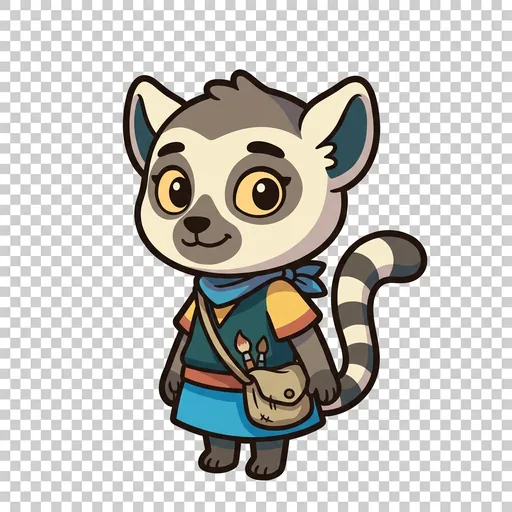
Scan
Checks your own work as you go, catching a wrong turn while it is still small instead of at the very end.
-

Steady
Keeps a gentle, steady focus on one thing as the first excitement fades, and comes back kindly whenever attention drifts.
-
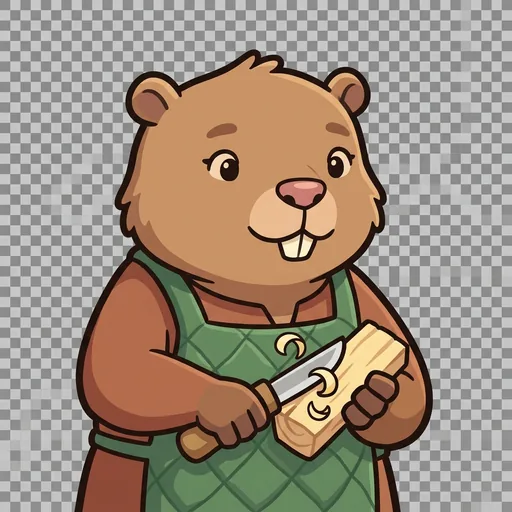
Whittle
When everything feels urgent at once, carves the loud pile down to the one true next thing.
-

Chip
Stays with a hard task by taking one small piece at a time, instead of quitting or trying to force it all at once.