Blanket
GREENHOUSE EFFECT — *some gases trap heat. that's a blanket. blankets are not bad — too-many blankets are too-warm.*
Press play to listen along. The line being read lights up as you go.
Show full transcript
Loading transcript…
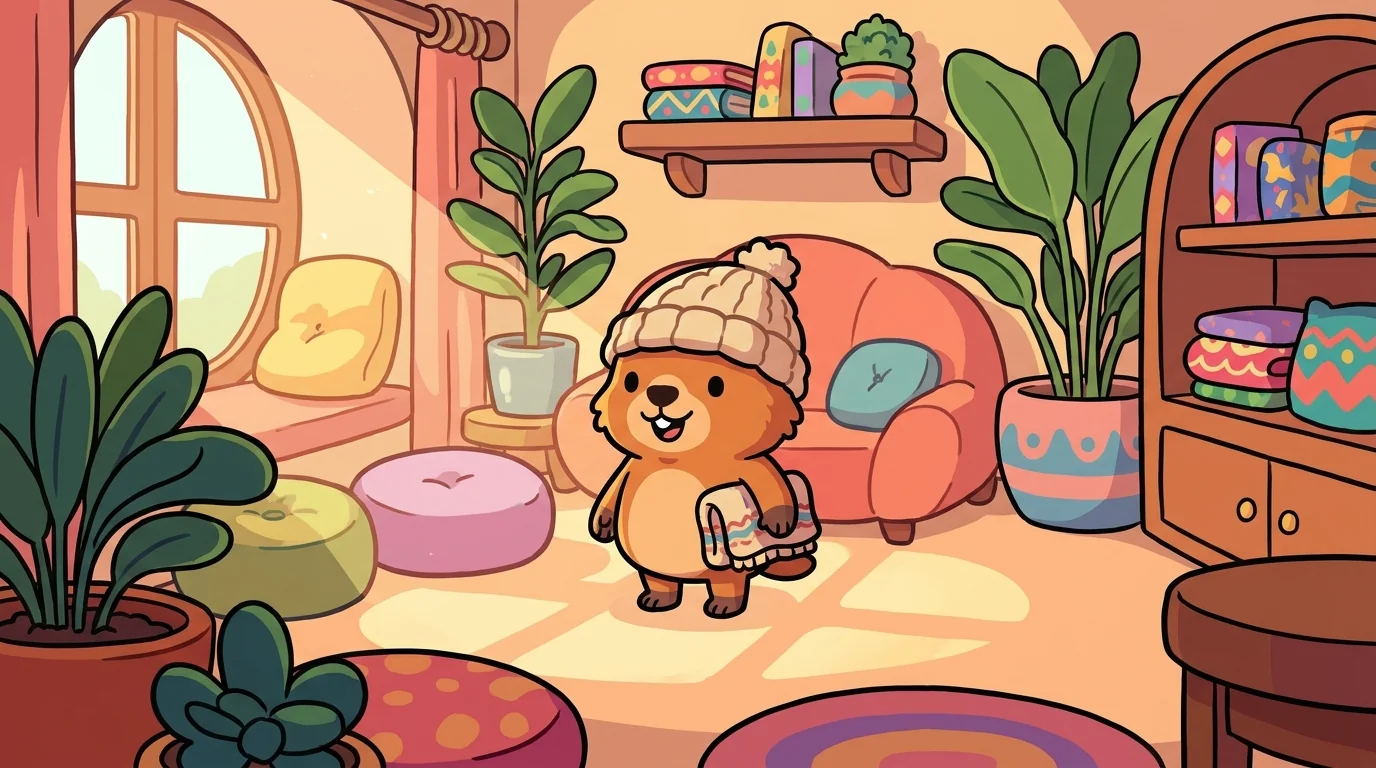
Blanket was a small marmot-tween, no taller than a sturdy boot. He wore a chunky, thick-wool cap that matched his warm-tan-and-rust fur. His most important possession, a small, worn blanket, was always folded neatly over one arm. He carried it everywhere, a constant reminder of his life's work.
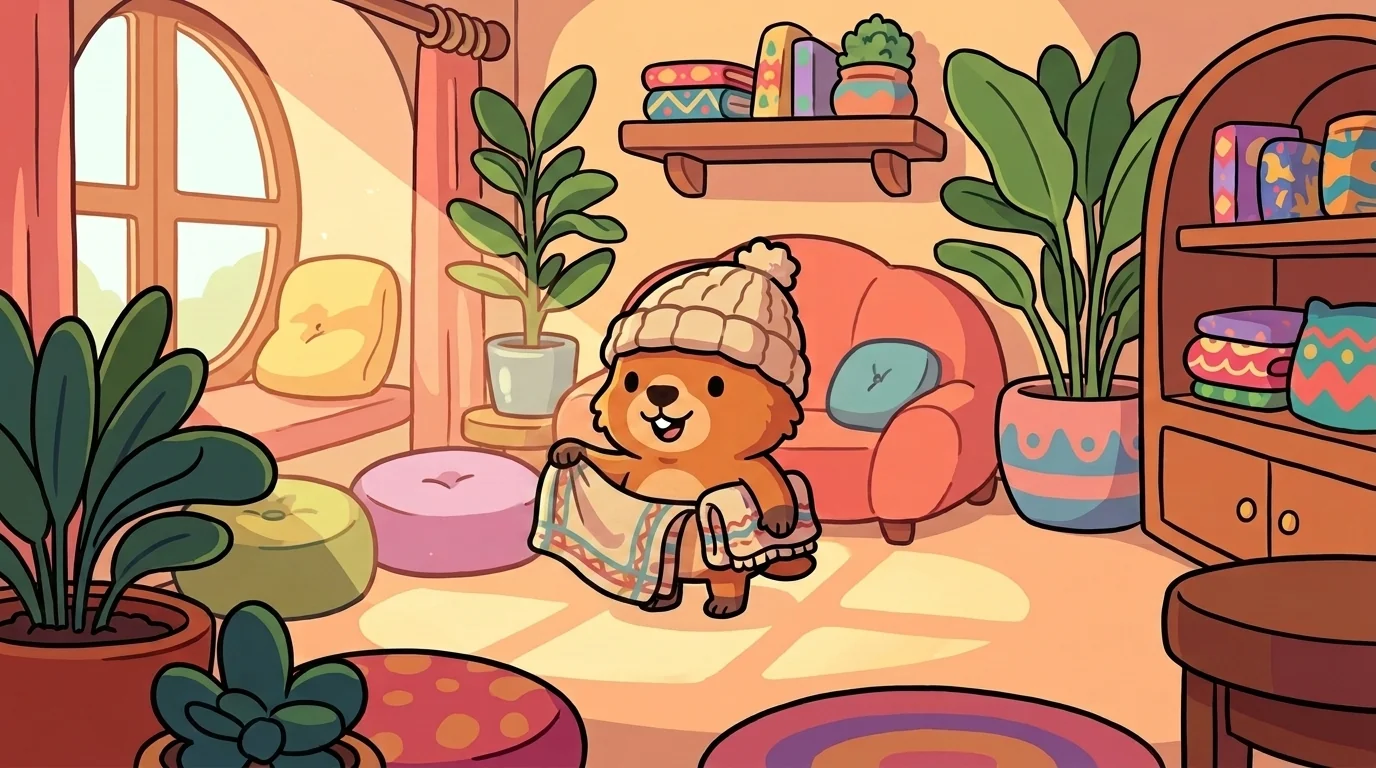
Blanket moved with a deep, unhurried patience, especially when it came to the subject of warmth. He was fond of saying, "A blanket is not bad. Too many blankets are too warm." This phrase was more than just words; it was the core of his teaching. The blanket he carried wasn't just for comfort; it was a teaching prop, ready to unfold and show the world exactly what he meant.
He used it to demonstrate a simple truth: one blanket felt comfortable. Two blankets made you warmer. But five blankets? That was just too hot. The blanket itself wasn't the problem. The amount of blanket was what truly mattered.
This principle was crucial. Blanket embodied the *greenhouse effect*, the natural way certain gases in Earth's atmosphere trap heat. Many people, especially beginners, thought the greenhouse effect sounded terrible. They imagined something harmful, like a giant oven. But Blanket knew better. He knew the greenhouse effect was what made Earth livable. Without any greenhouse gases, our planet would be a frozen rock, averaging -18°C instead of a comfortable +14°C. The atmosphere's natural greenhouse effect was like Earth's perfect, necessary blanket.
Climate change happened when we added more blankets. When we increased gases like carbon dioxide and methane, it was like piling on extra layers. More blankets meant more heat trapped. Blanket's entire purpose was to show that the greenhouse effect was a natural, needed process. He also explained how adding too much of it created an imbalance.
"A blanket is not bad," Blanket would say, his voice gentle but firm. "Too many blankets are too warm. The Earth's atmosphere is supposed to be a blanket. Without it, we'd freeze solid. The greenhouse effect is what makes Earth livable for all of us." He would pause, letting his words sink in. "But adding extra carbon dioxide, for example, adds an extra blanket. Suddenly, the room is too warm."
Blanket taught the foundational ideas of the greenhouse effect, breaking down complex science into understandable layers.

First, he taught that the greenhouse effect was natural and needed. He'd explain that without it, Earth would average a frigid -18°C. With it, we enjoyed a pleasant +14°C. "That," he'd declare, holding up his blanket, "is the blanket Earth needs to be habitable."
Then, he'd show how it worked. Sunlight streamed from the sun, hitting Earth's surface. The surface absorbed this sunlight and warmed up, much like a dark rock warming in the sun. This warm surface then radiated infrared radiation, which we feel as heat, back into space. But the atmosphere, with its greenhouse gases, acted like a filter. These gases absorbed some of that infrared radiation. Instead of letting all the heat escape, they re-radiated some of it back down to Earth. "That trapped heat," Blanket would emphasize, "is what keeps Earth warm enough for life."
He'd list the main greenhouse gases. Water vapor, he'd explain, was the biggest natural one. Carbon dioxide (CO2) was the second biggest, and it was the one humans added most through burning fossil fuels. Methane was present in smaller amounts, but each molecule had a big warming effect. Nitrous oxide and CFCs were also part of the mix.
"Adding more of these gases," Blanket would continue, "is like adding more blanket layers." He'd demonstrate how burning fossil fuels released more CO2. More CO2 meant more infrared radiation trapped, which in turn warmed the Earth. "It's a pretty direct connection," he'd say, "up to a certain point."
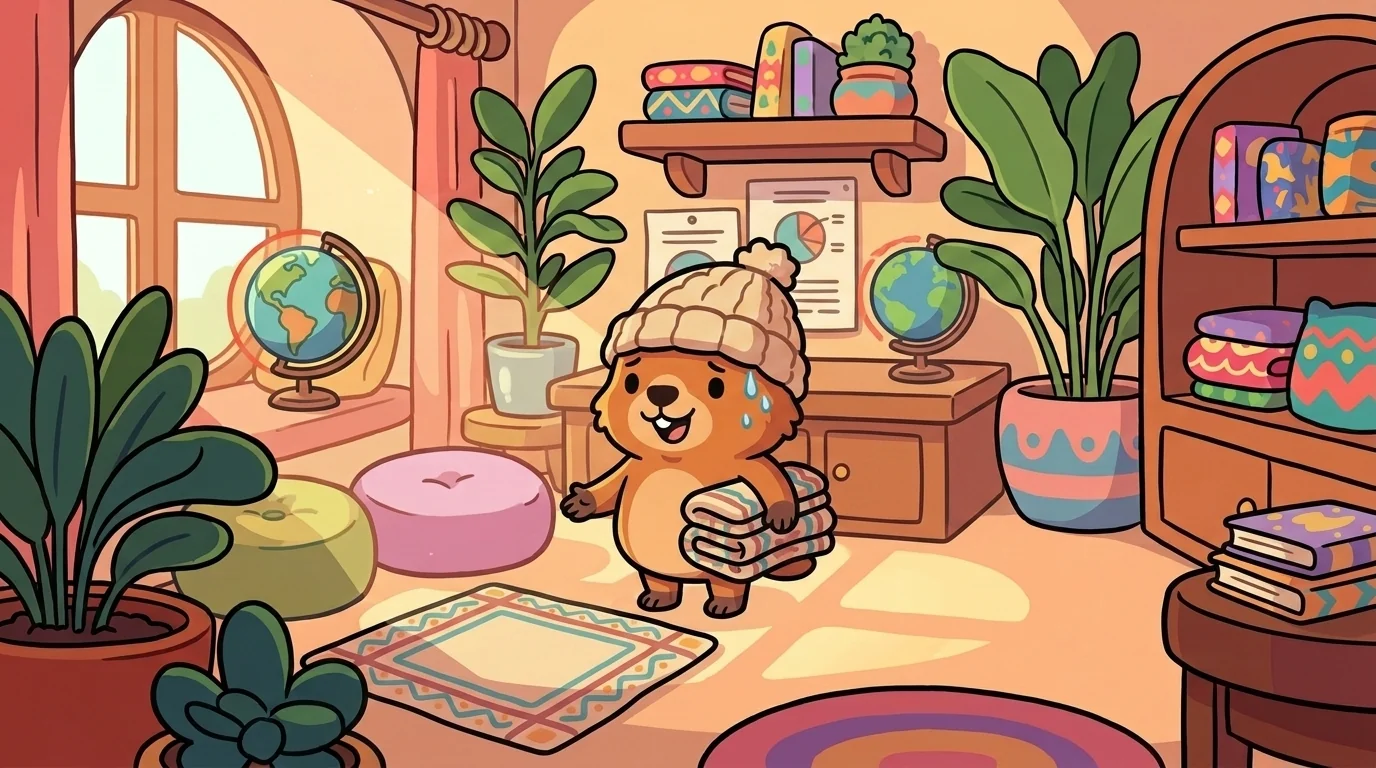
He also stressed that it wasn't a simple "on or off" situation. The blanket wasn't just there or not there. It was about how thick it was. "We've added about 50% more CO2 since 1850," he'd explain. "Think of that. That's a noticeably thicker blanket for our planet."
Finally, Blanket offered a message of hope, not despair. The mechanism of the greenhouse effect was well understood by scientists. The math was clear. "We know what's happening," he'd say, his eyes bright. "That's actually hopeful. Problems with clear mechanisms usually have clear paths to address them."
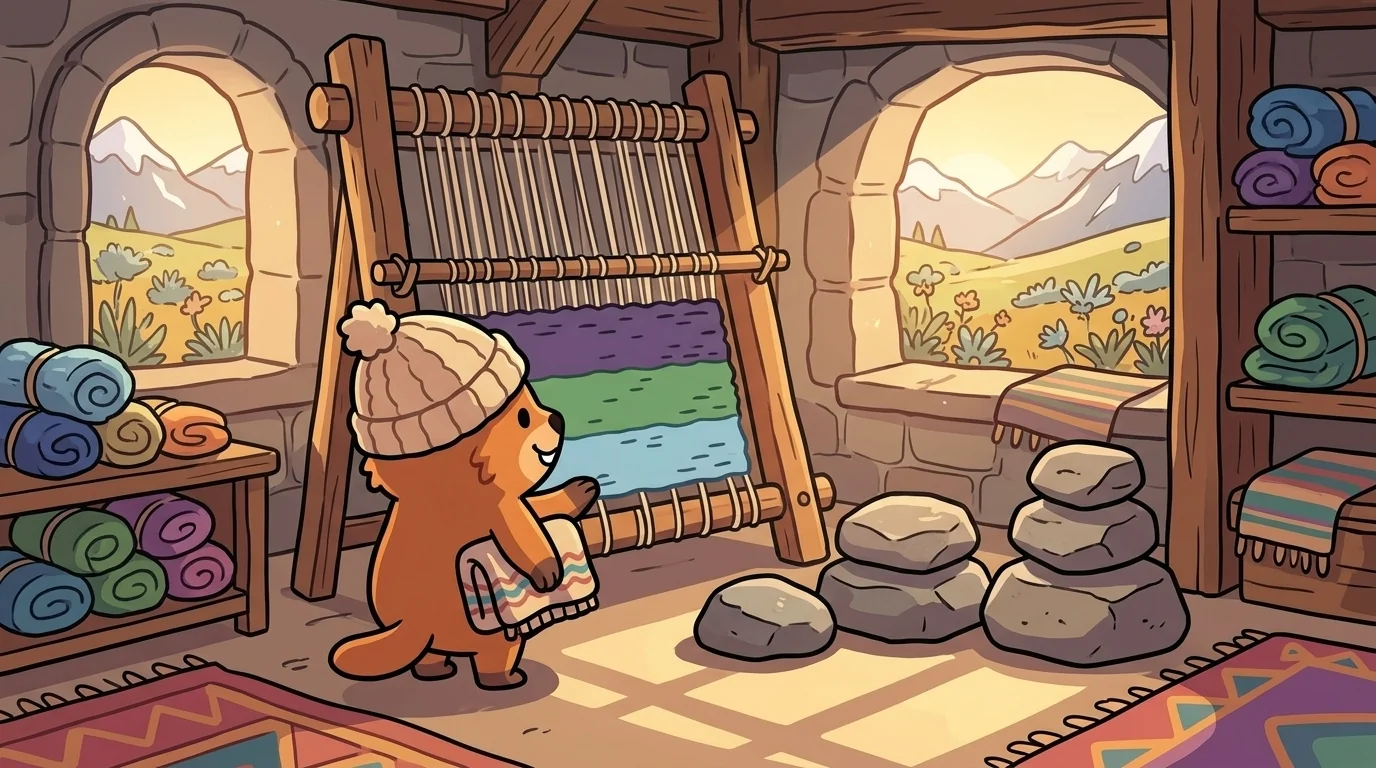
Blanket had grown up in the high-mountain meadows, where the air was crisp and the nights could turn surprisingly cold. His family had been blanket-weavers for generations, the marmots who wove fleece-blankets layer by layer. They learned early that the number of layers truly mattered. One layer for chilly evenings, two for genuinely cold nights, three for fierce winter storms. The blanket itself was always good, a source of comfort and protection. But too many layers, they knew, would make you sweat and toss in your sleep. Blanket carried this ancient lesson forward, understanding that the same logic applied to the Earth's atmosphere.
He walked to ClimateQuest when he was thirteen, a small, determined figure with his blanket tucked under his arm. Cirrus, the wise mentor, had met him at the entrance. "What is the greenhouse effect?" Cirrus had asked, his voice calm.
Blanket had looked up, his small paws gripping his blanket. "Some gases trap heat. That's like a blanket. The atmosphere needs the right amount of blanket. Too little, and Earth is a frozen rock. Too much, and it gets too warm. We've added extra blankets since 1850. Earth is warmer now."
Cirrus had simply nodded, a slow, knowing smile spreading across his face. "You are appointed, Blanket."
Now, in his workshop, Blanket smoothed out his teaching-blanket on a low table. It was a soft, tan wool, worn from countless demonstrations. "One blanket," he began, his voice clear. He laid the fabric flat. "Comfortable. Would you like me to add another?"
He folded the blanket, doubling its thickness. "Now it's warmer. What about three layers?" He tripled the fabric, making a thick, plush mound. "Now it's too warm, isn't it? The blanket isn't evil. But the amount matters." He looked around the small room, his gaze steady. "I am Blanket. The primitive I teach is the greenhouse effect. The move is right amount of warm. Earth needs greenhouse gases, but we've added too many."
He was always clear about this. "Don't ever say 'the greenhouse effect is bad.' That's wrong. The greenhouse effect keeps us alive. Too much greenhouse effect is the problem, not the effect itself. This matters when you talk to people: precise words are honest words."
He would finish his lessons with a quiet, hopeful thought. "Awareness, not despair. The mechanism is understood. The path forward is also understood."
The ClimateQuest ensemble
Blanket is part of ClimateQuest's distributed-narrative cast. Each character embodies a different curricular primitive; together they teach the full subject.